

The best wine for Christmas is the one that matches the roast you're carving, so pour Cabernet Sauvignon or Syrah with prime rib, an off-dry Riesling or a light Pinot Noir with glazed ham, and Pinot Noir or Beaujolais with turkey. If the table is mixed, or you only want to buy one style, a dry sparkling wine like Cava, Crémant or a traditional-method American brut handles almost everything from the first snack to dessert. Finish with a tawny Port if there's fruitcake, pudding or anything with nuts.
That's more useful than the usual list of six grapes, because Christmas dinner isn't one meal. It's prime rib in one house, ham in the next, seven seafood dishes on Christmas Eve in a third and a tray of tamales in a fourth. Most pages ranking for this question hand you a list of red grapes or a few vintage bottles you won't find at the supermarket, so we'll start with the main, cover the Christmas Eve and Christmas morning traditions those lists skip, and finish with what to do when the table can't agree.
What is the best wine for Christmas dinner?
The best wine for Christmas dinner is decided by the main course, and in most American homes that's turkey, prime rib, roast beef or ham. When YouGov asked 1,140 Americans to pick the better Christmas dish across a series of head-to-head matchups, turkey won 73% of its matchups, prime rib 69%, roast beef 66% and ham 62% (YouGov). Those four mains want three different kinds of wine, which is exactly why a single "best Christmas wine" list keeps letting people down.
The same poll shows how regional the meal is. Northeasterners picked lasagna 79% of the time against 61% nationally and ham 72% against 62%, while Westerners chose tamales 57% of the time against 40% for the country as a whole. Goose, the bird of old Christmas stories, won just 28% of its matchups. So look at what's going in the oven before you think about grapes.
| Christmas main | First pick | Also good | Skip |
|---|---|---|---|
| Prime rib or roast beef | Cabernet Sauvignon | Syrah, Malbec, Bordeaux blend | Light white wines |
| Glazed ham | Off-dry Riesling | Pinot Noir, dry rosé, sparkling rosé | Oaky Chardonnay |
| Roast turkey | Pinot Noir | Beaujolais, Riesling | Big tannic Cabernet |
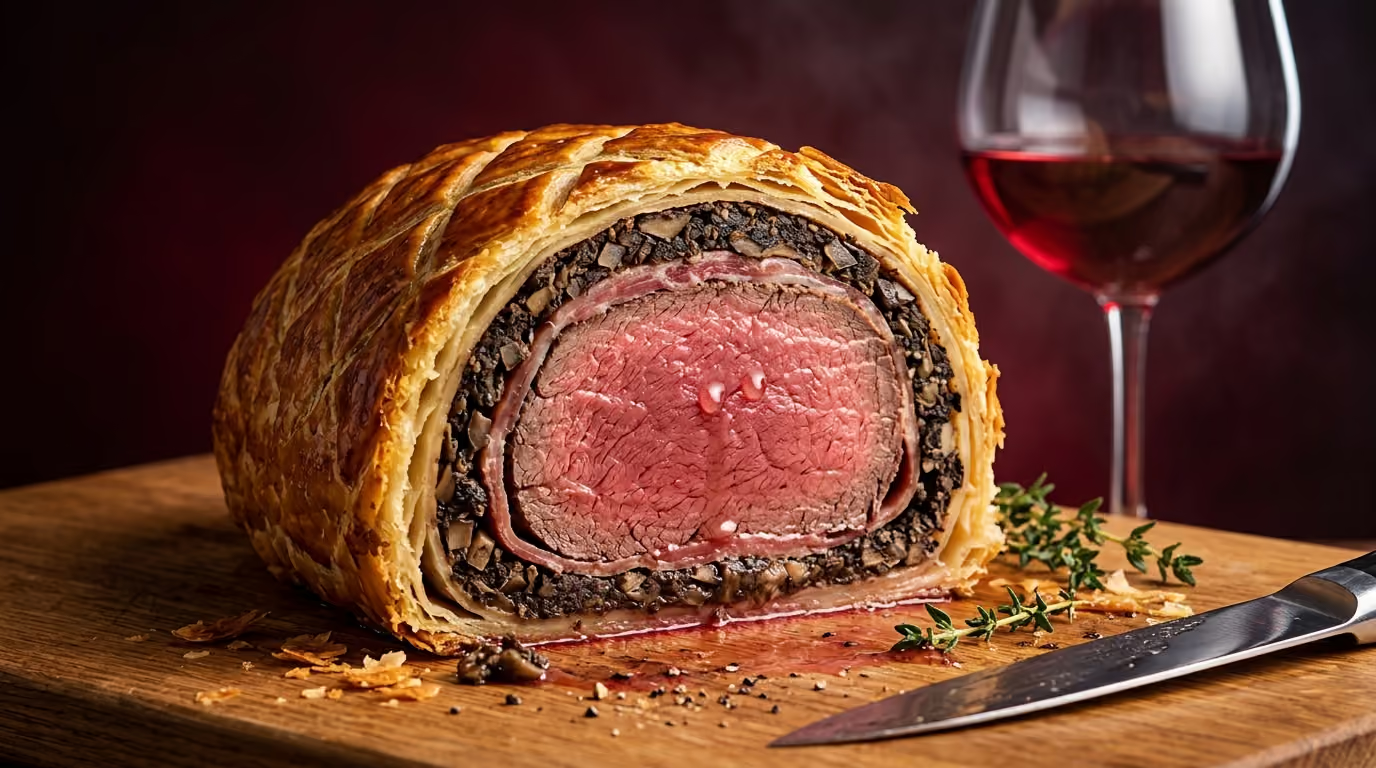
| Beef Wellington | Pinot Noir | Merlot, Right Bank Bordeaux | Young, tannic Cabernet |
| Feast of the Seven Fishes | Verdicchio or Vermentino | Prosecco, Soave, Albariño | Oaked reds |
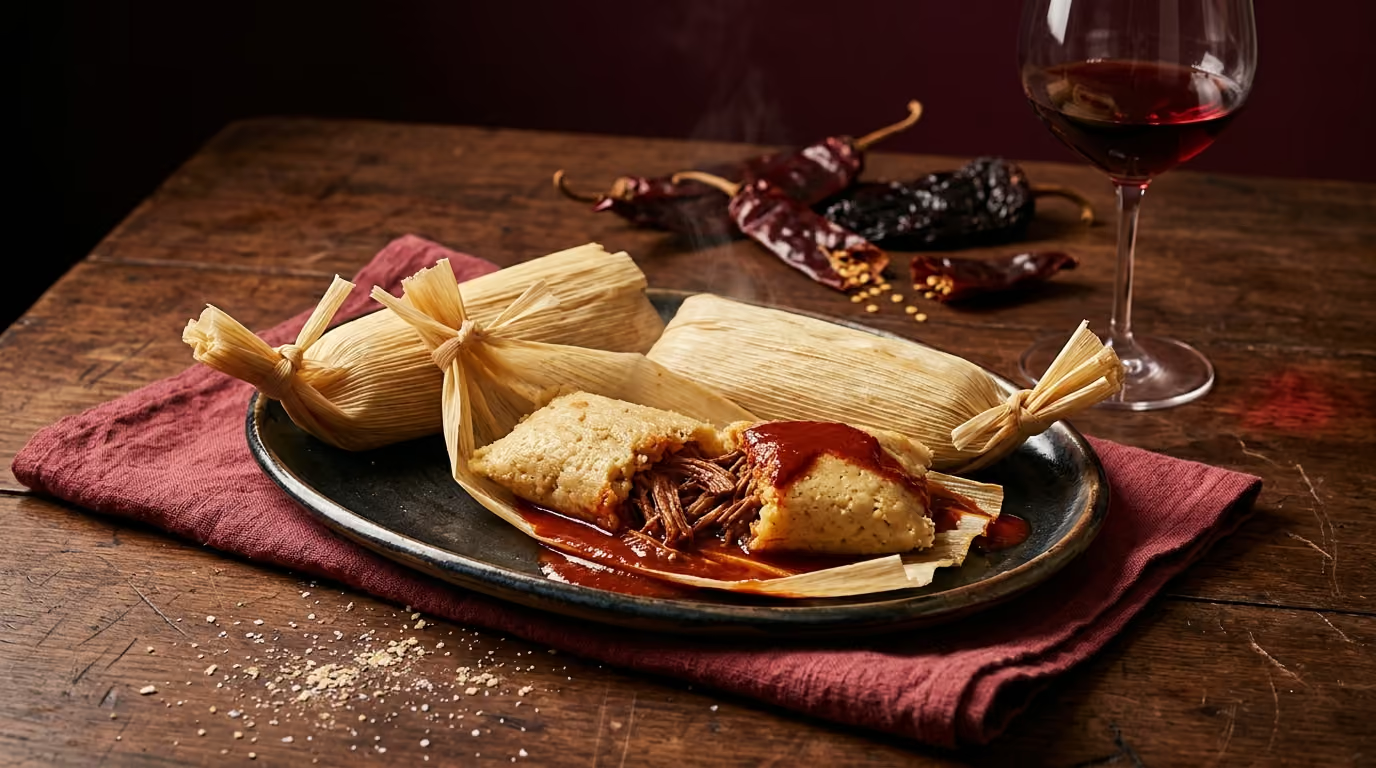
| Tamales | Grenache or Pinot Noir | Barbera, off-dry Riesling | High-alcohol Zinfandel |
| Lasagna | Chianti | Barbera, Montepulciano d'Abruzzo | Delicate whites |
Treat the table as a starting point, since the sauce, the glaze and the sides can each shift the answer, and the sections below explain why each pick works so you can adjust for your family's version of the dish.
Which wine goes with prime rib or roast beef at Christmas?
Cabernet Sauvignon is the wine for a Christmas prime rib, with Syrah, Malbec and a Bordeaux blend all close behind. Prime rib is the most heavily marbled roast most people ever cook, and a red with firm tannin and good acidity cuts through that fat so each bite tastes as good as the first. Tannin is the drying, gum-gripping feeling a young red leaves in your mouth, and it's exactly what a fatty cut of beef softens, which is why a Cabernet that tastes harsh on its own often tastes plush beside the roast.
Your seasoning should steer the choice between those reds. A heavy peppercorn crust or a horseradish cream points toward Syrah, which carries a black pepper note of its own, while a simple salt and rosemary crust with a red wine jus is where Cabernet or a Bordeaux blend shines. A table that finds Cabernet too gripping will be happier with Malbec, which has the same dark fruit with softer edges.
Leaner roast beef, say a top sirloin or an eye of round, doesn't need as much tannin, so a Merlot, a Rioja Crianza or a Côtes du Rhône is the better match there, because a big Cabernet next to lean beef can taste dry and a little bitter. Our page on the best wine for prime rib goes deeper on matching the bottle to the cut, the seasoning and how pink you like it.
What wine goes with Christmas ham?
Off-dry Riesling is the best wine for a Christmas ham, followed by a light Pinot Noir or a dry sparkling rosé. Ham is salty and fatty with a sweet glaze baked onto the outside, and a white with bright acidity and a touch of sweetness meets the glaze on its own terms while scrubbing the salt off your palate. A bone-dry wine, by contrast, tastes thin and sour next to brown sugar, honey or pineapple.

The glaze is the part that decides the bottle, more than the ham itself. A honey or maple glaze sits happily with Riesling or Chenin Blanc from Vouvray, while a bourbon and brown sugar crust has enough caramel and smoke to take a juicy, fruit-forward Zinfandel, as long as it isn't one of the very high-alcohol versions. A mustard or clove glaze with less sugar opens the door to Pinot Noir and Beaujolais, both light enough that their tannin won't clash with the salt. When you're unsure, look at the label for words like "off-dry", "feinherb" or "medium-dry", which tell you a Riesling has a little sweetness, and our explainer on off-dry white wine covers the rest of that vocabulary.
Ham is also where sparkling rosé earns its place on the Christmas table. The bubbles and acidity handle the fat, the red-fruit flavor reaches toward a cranberry or cherry glaze, and it looks festive in a way a still white doesn't. For more on how the glaze changes the pairing, see our guide to the best wine with ham.
What should you pour with a Christmas turkey?
Pinot Noir is the safest red for a Christmas turkey, with Beaujolais as the better-value alternative and Riesling as the white that works with the whole plate. Turkey is lean and fairly mild, so a big tannic red has nothing to grab onto and tastes harsh, while a light red with bright acidity and red-cherry fruit sits comfortably next to the meat, the stuffing and the cranberry sauce at once.
If your turkey comes with a sausage stuffing or a creamy gratin, you have room to go a little fuller. A Grenache from Spain or the Rhône, or a medium-bodied Zinfandel, handles sausage and dark meat well, though it's worth skipping anything around 15% alcohol or higher, since that tastes hot next to salty gravy. If you're opening more than one bottle, put a Riesling or Chenin Blanc beside the red, because both carry enough acidity for the gravy and enough fruit for the cranberry sauce. Our page on pairing wine with turkey breaks it down further, white meat against dark, and we also wrote a whole post on the best wine for Thanksgiving if you'd rather borrow the November plan wholesale.
What wine suits Beef Wellington, duck or goose?
Pinot Noir is the best wine for Beef Wellington, duck and goose alike, and it's the reason we'd keep a good bottle of it in the house through December. These showpiece mains tempt people into opening their biggest bottle, which is usually a mistake because they're rich rather than powerful. Beef Wellington is tenderloin wrapped in mushrooms and buttery pastry, softer and earthier than prime rib, and a tannic Cabernet tramples the mushrooms and makes the pastry taste like cardboard. A Pinot Noir from Burgundy, Oregon or the Sonoma Coast has the earthy, forest-floor quality that echoes the mushrooms, and a plush Merlot or a Right Bank Bordeaux, which is mostly Merlot, gives you more weight without the grip. Our post on the best wine for Beef Wellington walks through why the duxelles is the ingredient to match.
Duck and goose are fattier and gamier, and they both love a red with high acidity and cherry fruit. Pinot Noir is the classic match, while a Barbera from Piedmont or a cru Beaujolais like Morgon is cheaper and nearly as good, and a fruit sauce made with cherries, plums or orange makes either even better. For goose, which is richer still, a Syrah from the northern Rhône is worth a try if your table likes a savory, peppery red. Our page on wine for duck breast covers the sauces in more detail.
What wine goes with the Feast of the Seven Fishes?
Crisp Italian whites are the wines for the Feast of the Seven Fishes, with Verdicchio, Vermentino and Soave leading and Prosecco on hand for anything fried. The feast is an Italian-American Christmas Eve tradition that grew out of a wave of Southern Italian immigration in the early 1900s, and in Italy the night is simply called "la vigilia", the eve (National Geographic). The menu changes from family to family, but it often runs from salt cod (baccalà) and fried calamari to fried smelts, conch salad and baked clams oreganata.

That spread is mostly salt, lemon, garlic, olive oil and frying, which all ask for the same thing in a wine, high acidity and no oak. Verdicchio from the Marche has a slightly bitter almond finish that's lovely with baccalà, Vermentino brings a salty, herbal edge that suits clams and anchovies, and Soave is softer and rounder for the pasta courses. Prosecco or another dry sparkling wine is the move for the fried dishes, because bubbles cut grease the way a squeeze of lemon does. An Albariño from Spain is a good swap if your shop's Italian shelf is thin, since it shares that bright, saline character.
Red wine has a place too, mostly when a course comes in a tomato sauce. Baccalà stewed with tomatoes and olives or a seafood linguine in red sauce will take a chilled Frappato from Sicily or a light Montepulciano d'Abruzzo. Our guides to wine with shellfish and wine for oysters cover the raw bar and the clam courses.
What wine goes with Christmas tamales or lasagna?
Grenache and Pinot Noir are the best wines for Christmas tamales, while Chianti is the best wine for a Christmas lasagna. Both are regional favorites in that YouGov poll, and both get skipped by the usual holiday wine lists.
Tamales at Christmas are as much about the tamalada, the family gathering where everyone helps spread masa and fold husks, as the meal itself. Dr. Pilar Zazueta of UT Austin's Teresa Lozano Long Institute of Latin American Studies traces the tradition back to the native cultures of Mesoamerica, and explains its tie to the holidays partly through how time-consuming tamales are to make, which makes a crowd essential (Austin Chronicle). For the wine, the sauce and the heat matter more than the filling: pork in red chile likes a fruity Grenache, chicken in dark mole likes a high-acid Barbera, and a properly hot batch wants an off-dry Riesling or a chilled rosé, because tannin and alcohol both make chile taste hotter. Our page on the best wine for red chile and mole tamales has the full breakdown.
Lasagna follows the sauce in the same way. A classic beef ragù and tomato lasagna wants Chianti or another Sangiovese, whose acidity matches the tomato, while a version heavy on béchamel and cheese is easier with Barbera, which has the acid without the grip. A white lasagna made with mushrooms or spinach moves toward Pinot Noir or a lightly oaked Chardonnay. Our post on wine with lasagna sorts it by sauce, and our wider page on the best wine for Italian food helps when the Christmas table includes more than one Italian dish.
What if your table has two mains, or nobody agrees?
Dry sparkling wine plus one light red is the answer when the Christmas table has two mains or a family that can't agree. A Cava, a Crémant or a traditional-method American sparkling wine goes with ham, turkey, seafood and most sides because it has high acidity and no tannin to clash with anything. A Pinot Noir or Beaujolais then covers the guests who want red without fighting any of the mains.
For an American sparkling wine, Gruet from New Mexico was founded by a Champagne family from Bethon, France, and makes its wine mostly from Pinot Noir and Chardonnay by the traditional method, with the second fermentation in the bottle (VinePair). Our comparison of Prosecco, Cava and Champagne explains what you're paying for, and we've also covered what to open instead of Champagne.
Chill the light red for about twenty minutes before dinner, because Pinot Noir and Beaujolais both taste fresher slightly cool and flat in a warm room. And plan quantities before the shop run: a standard 750 mL bottle pours about five glasses, and our page on how many glasses are in a bottle of wine works out how many bottles a party of any size needs.
What should you open on Christmas morning and with dessert?
Prosecco or Cava is what to open on Christmas morning, and tawny Port is what to pour with Christmas dessert. A dry sparkling wine works on its own or stretched into a mimosa, and that's where a cheap, fruity Prosecco beats a serious bottle you'd rather taste unmixed. Our page on wine for brunch covers pairing it with pancakes, waffles and the rest of the morning spread.

Dessert is where most Christmas tables get the wine wrong, by pouring a dry red beside a sweet pudding, and the fix is to choose a wine at least as sweet as the dessert so it doesn't taste sour and thin. Tawny Port is the classic match for fruitcake, Christmas pudding, pecan pie and anything with nuts, because long aging in wood gives it nutty, dried-fruit and caramel flavors. Taylor's 10 Year Old Tawny is one example, and the producer says it pairs especially well with almonds, berry fruit or dark chocolate as well as blue cheese, and that it's ready to drink with no decanting needed (Taylor's). Our guide to Portuguese dessert wines explains the difference between tawny and ruby if the shelf confuses you.
A plate of sugar cookies, shortbread or gingerbread is happier with a Moscato d'Asti, which is sweet, fizzy and low in alcohol, and our post on wine with holiday cookies matches bottles to each kind of cookie. A chocolate yule log wants a sweet red like Brachetto d'Acqui or a ruby Port, and we've written a full page on wine with chocolate. For an evening after dinner by the fire, a pot of mulled wine made with a cheap, fruity red is a good way to use up the leftover bottles.
Frequently asked questions
What is the best wine for Christmas dinner if I can only buy one?
The best single wine for Christmas dinner is a dry sparkling wine like Cava, Crémant or an American traditional-method brut. Its acidity handles ham, turkey, seafood and rich sides, and it has no tannin to clash with anything. If your crowd insists on red, Pinot Noir is the most flexible single red.
What red wine is best for Christmas?
Pinot Noir is the most versatile red for Christmas because it suits turkey, ham, duck, goose and Beef Wellington alike. If you're serving prime rib or roast beef, a Cabernet Sauvignon or Syrah is the better pick, since a fatty cut of beef softens their tannin.
What white wine goes with Christmas dinner?
Off-dry Riesling is the best white wine for most Christmas dinners, especially with glazed ham and turkey, because its acidity and touch of sweetness handle salt, fat and sweet sides at once. For a seafood Christmas Eve, crisp Italian whites like Verdicchio, Vermentino and Soave are a better fit than a buttery Chardonnay.
What wine goes with Christmas pudding or fruitcake?
Tawny Port is the best wine for Christmas pudding and fruitcake, because its nutty, dried-fruit and caramel flavors echo the dessert and it's sweet enough not to taste sour beside it. A rich sweet Sherry such as Pedro Ximénez is the other classic match if you'd rather try something different.
Should I serve red or white wine with Christmas ham?
Either works, so serve both if you can. An off-dry Riesling is the safest match for a sweet glaze, while a light, low-tannin red like Pinot Noir or Beaujolais works well with a mustard or clove glaze.
What is the best Christmas wine to give as a gift?
The best Christmas wine gift is sparkling wine or tawny Port, because both suit the season and neither needs to be opened right away, though a bottle in the style the person already drinks beats the priciest one in the shop. Our page on the best wine for a gift covers what to give at each price point.
Which bottles should you buy for Christmas this week?
Buy for your main course first, then add one sparkling wine and one dessert wine. That means a Cabernet Sauvignon or Syrah for a prime rib, an off-dry Riesling for a glazed ham, a Pinot Noir or Beaujolais for turkey, Wellington, duck or goose, and crisp Italian whites with a bottle of Prosecco for the Feast of the Seven Fishes. Tamales want a Grenache or Barbera, and lasagna wants a Chianti.
Then add a dry sparkling wine for Christmas morning and the first hour of the party, and a tawny Port for the fruitcake and the cheese board. That short list covers the whole day without a vintage chart or a fortune.