Pork tamales in red chile and chicken tamales under dark mole both want a red wine with generous fruit and soft tannin, so Pinot Noir, Grenache, Barbera, and young Tempranillo are the bottles we reach for most often. When the chile is genuinely hot, a chilled rosé or an off-dry Riesling will treat you far better than any red. The sauce and the heat level decide the bottle, not whether the filling happens to be pork or chicken. Give lighter reds about twenty minutes in the fridge and the whole thing gets easier.
Most tamale pairing advice sorts bottles by filling, which sounds tidy but falls apart at a real table. A pork tamale drowned in smoky red chile and a pork tamale with a mild, almost sweet sauce are two different pairing problems, and the pork isn't the part that changed. We'd rather teach you to read the sauce, the richness of the masa, and how much the chile actually bites. Those three things will get you to a good bottle whether you're at a Nochebuena spread or picking up a dozen from the place down the street.
What wine goes best with red chile and mole tamales?
Fruit-forward, medium-weight reds with gentle tannin are the reliable answer for both sauces. Red chile brings smoke, dried fruit, and a slow warmth, while mole layers toasted seeds, nuts, warm spice, and often a little cacao on top of that. Neither sauce wants a wine that arrives with heavy oak and firm grip, because tannin and capsaicin sharpen each other and leave your mouth feeling scoured.
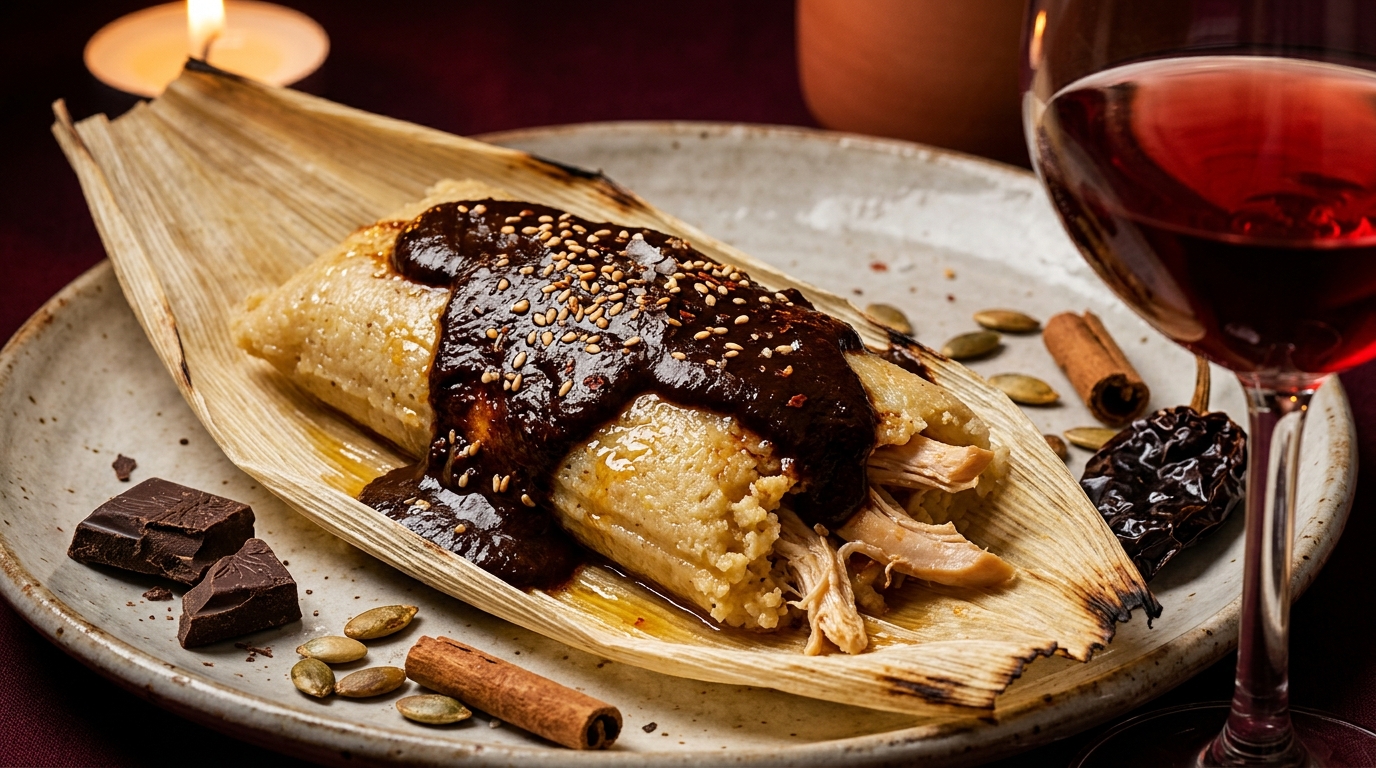
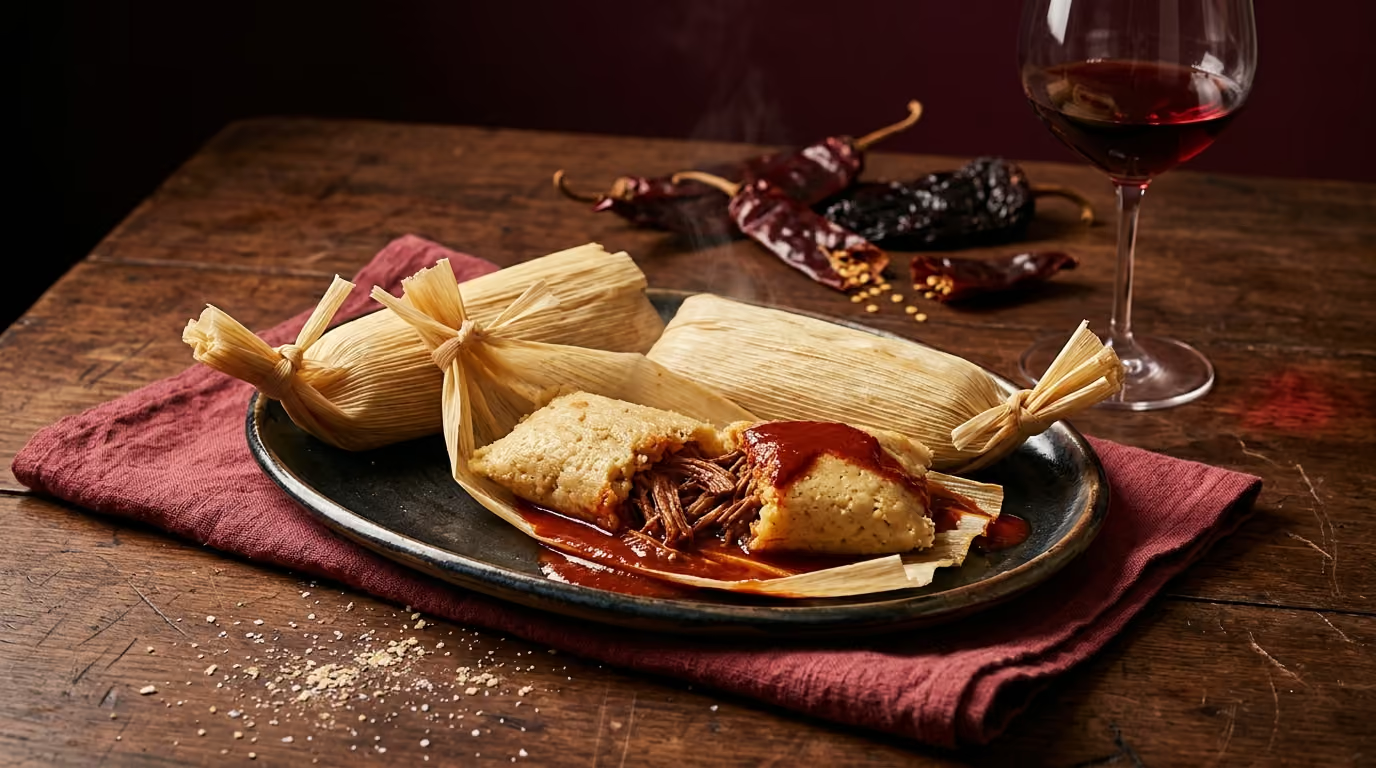
Pork tamales with red chile sauce
Pinot Noir is the safest first pick, and we say that without much hedging. Its red-cherry fruit sits comfortably next to pork fat, and its light grip lets the chile stay warm rather than turning bitter. Grenache, sold as Garnacha on Spanish labels, is the other bottle we suggest constantly, because its ripe berry character meets smoky sauce head on without adding weight.
A younger Tempranillo does lovely work when the sauce leans savory rather than hot, since it carries a little leather and dried herb that echoes the chile itself. Zinfandel can be genuinely delicious with a mild red chile, though you'll want to steer away from the jammy, high-alcohol versions. Alcohol amplifies heat on the palate, so a bottle pushing toward 15.5% will make a medium chile taste considerably hotter than it is.
Chicken or turkey tamales under dark mole
Mole has more moving parts than red chile, so it can carry a slightly fuller red as long as that red keeps its acidity. Barbera is our favorite here by some distance. It's naturally high in acid and low in tannin, which is close to the ideal shape for a sauce that's rich, faintly sweet, and clinging to soft masa.
Grenache works again when the mole leans toward dried fruit and cacao, giving you a rounder, warmer match. If the mole is more savory and spice-driven, a fresh Sangiovese has the tartness to cut through and keeps the sauce from feeling heavy by the third tamale. Skip an oak-heavy Cabernet Sauvignon, which is the single most common mistake at a mole table. Its tannin has nothing soft to grab onto and the finish turns dry and slightly bitter.
Why does the sauce matter more than the filling?
Because the sauce and the masa are what actually coat your mouth, and the filling is a smaller part of each bite than people assume. Traditional masa is enriched with lard, and that fat leaves a soft film on your palate that flattens a wine's aromatics. A wine with real acidity, or bubbles, or bright fruit cuts through that film and resets you for the next bite.
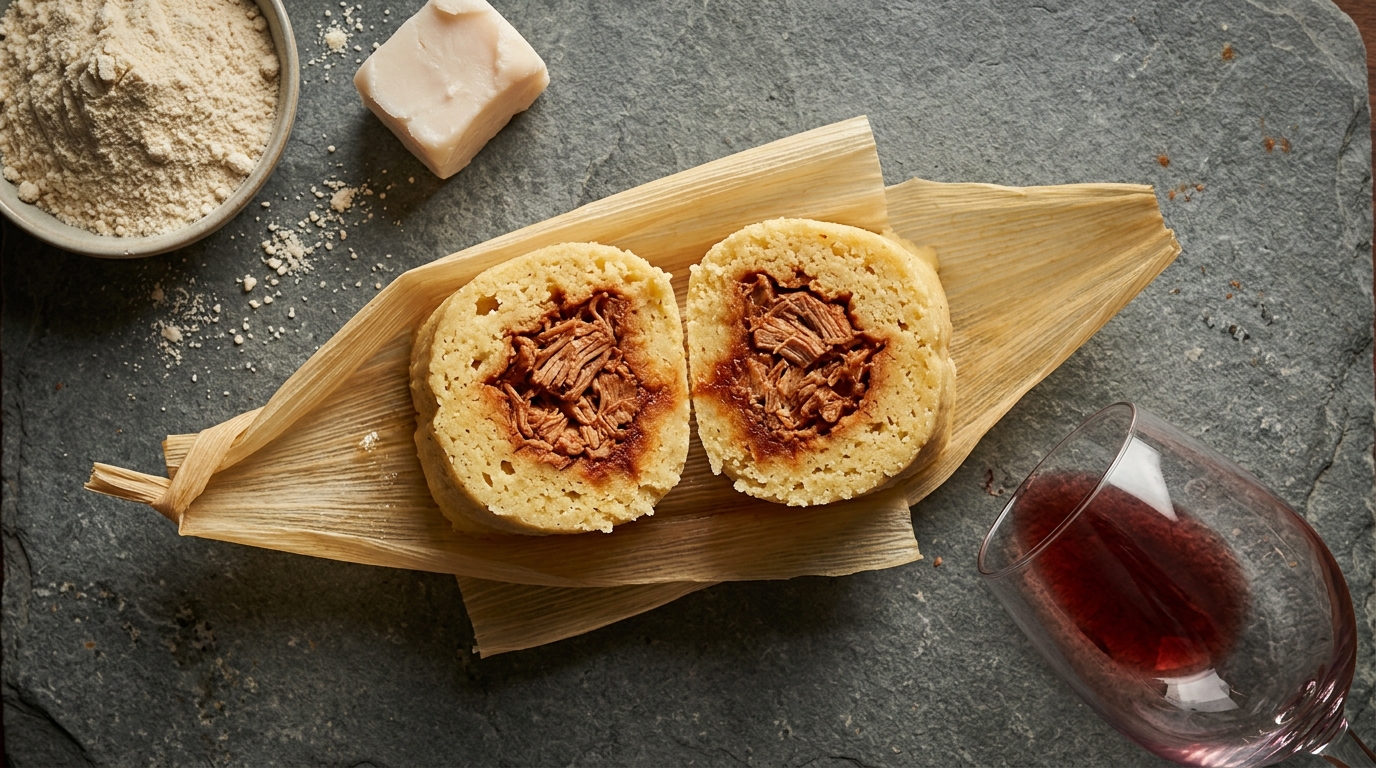
Masa made with less fat, or with oil instead of lard, feels lighter and lets the sauce take over as the main signal. Either way, chile heat outranks wine color as a decision. A hot green chile chicken tamale and a hot red chile pork tamale both want the same rescue, which is low tannin, cold serving temperature, and often a touch of sweetness.
| Tamale situation | Bottle direction | Why it works |
|---|---|---|
| Pork with mild red chile | Grenache | Ripe berry fruit meets the smoke without drying your mouth |
| Pork with hot red chile | Off-dry Riesling or chilled rosé | Low tannin and a little sweetness settle the heat |
| Chicken with dark mole | Barbera | High acidity cuts the rich sauce and the lard in the masa |
| Anything aggressively spicy | Sparkling wine | Bubbles and cold scrub the palate clean between bites |
That sauce-first habit is the same one that rescues most spicy dinners, and it's why our picks for Thai food and chile heat look so much like these. If tannin is the part you're least sure about, our explainer on what tannins actually do to your mouth is worth five minutes before your next spicy meal.
What should you pour for green chile, cheese, and sweet tamales?
A mixed platter needs a couple of flexible bottles rather than one perfect answer, and honestly that's the normal situation at any tamalada. Green chile and salsa verde taste brighter and more herbal than red chile, cheese tamales need something to cut the richness, and sweet tamales change the rules completely.
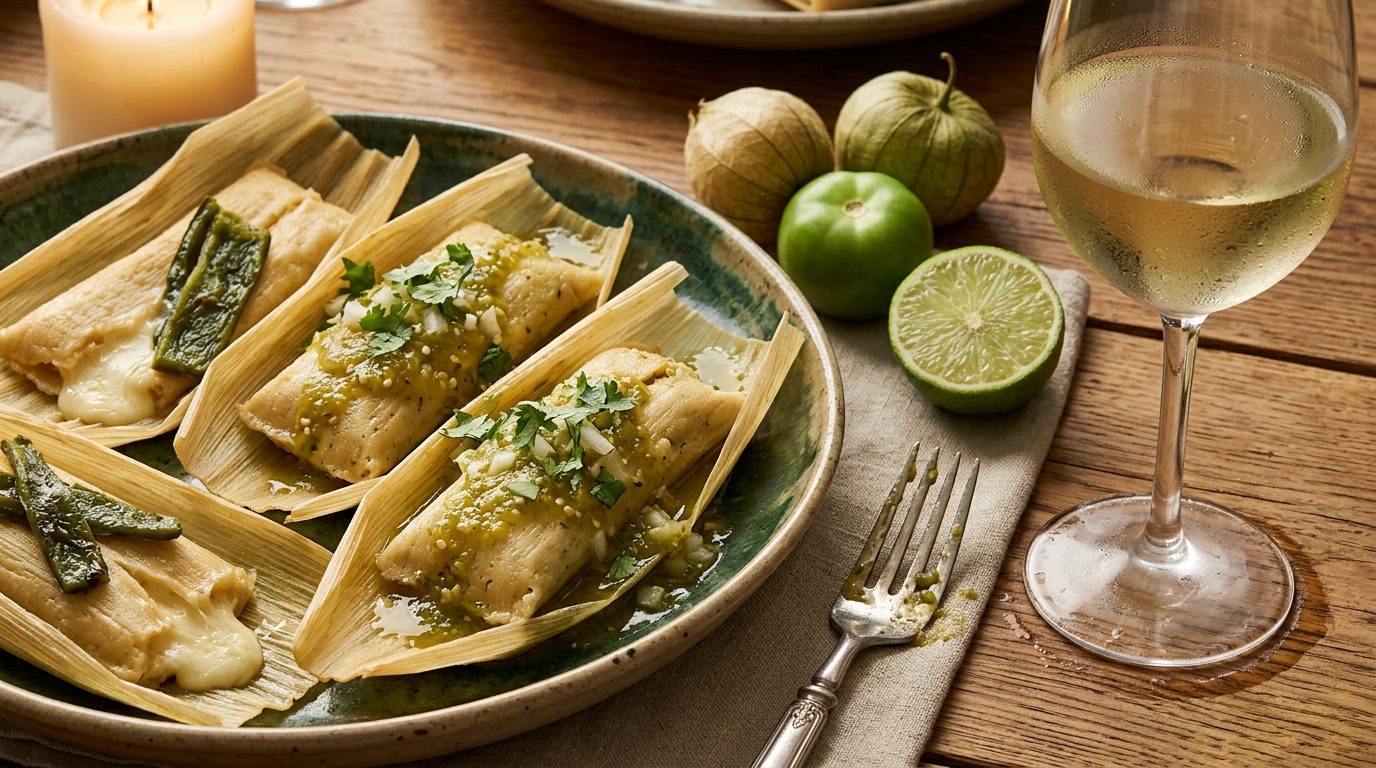
Chicken tamales with green chile
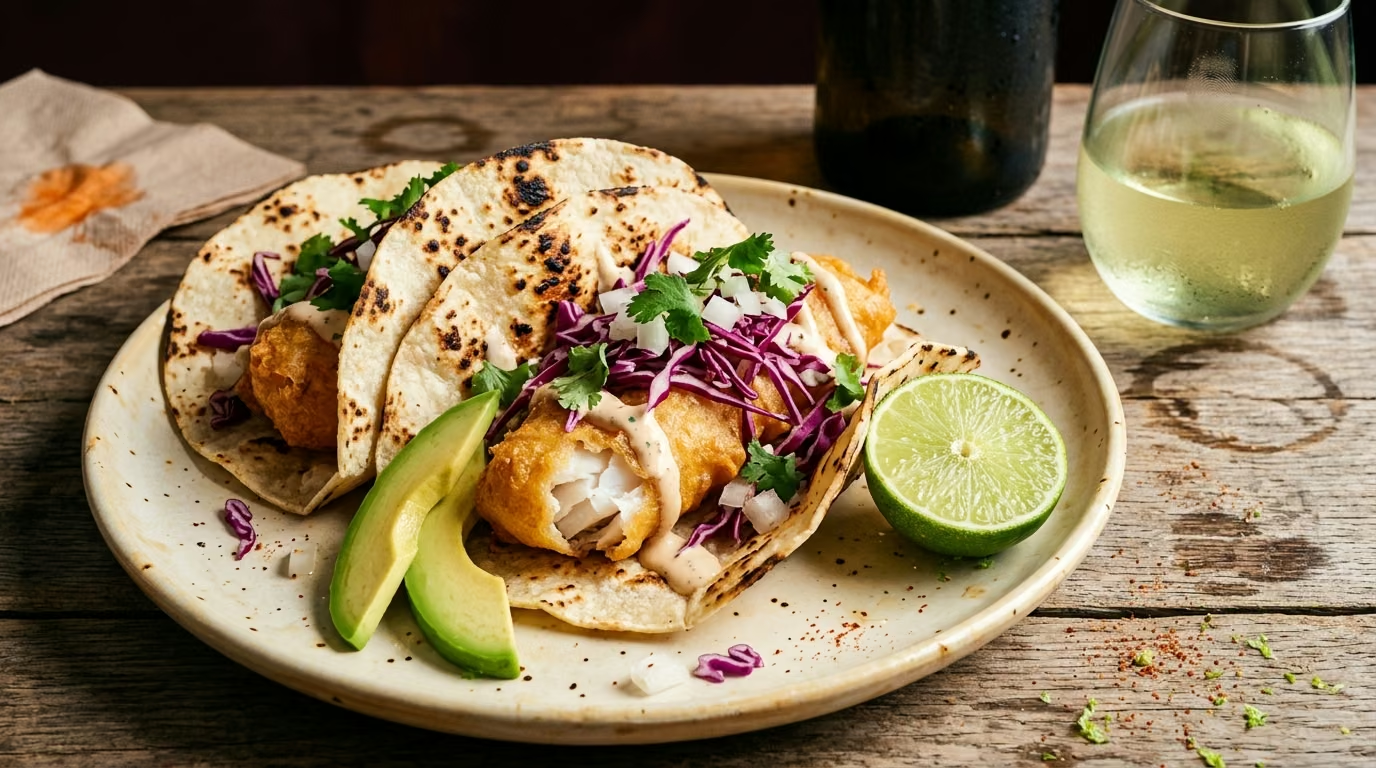
Sauvignon Blanc is the easy call, since its citrus and green herb notes run parallel to tomatillo, cilantro, and chicken. Dry Chenin Blanc and Pinot Gris both work for the same reason, and a crisp dry rosé splits the difference if half your table wants something pink. A cool glass of Beaujolais is the one red we'd pour here, served with a real chill so its fruit stays lifted. Buttery, heavily oaked Chardonnay is the bottle to leave alone unless the tamales come with a creamy sauce and very little heat.
Vegetarian and cheese tamales
Cheese tamales are richer than they look, especially with Oaxaca cheese and roasted poblano, so you want a wine that clears rather than adds. Sparkling wine is genuinely excellent here and we don't say that as a default. The bubbles and acidity strip the melted cheese off your palate in a way still wines can't quite manage. Unoaked Chardonnay is the other good route when the filling runs toward corn, squash, or a mild white cheese, keeping the fruit clean rather than creamy.
Sweet tamales with raisins, pecans, and cinnamon
The rule for sweet tamales is short and it rarely fails: the wine has to be at least as sweet as the food. A dry red poured next to a sugary tamale tastes thin and slightly bitter, which surprises people every time. Moscato is the natural fit, with enough grapey sweetness and floral lift for raisins and cinnamon, and off-dry Riesling does the same job with a little more acidity. A lightly sweet sparkling wine is our pick when sweet and savory tamales are sharing the same plate.
How cold should the wine be for spicy food?
Colder than you probably serve it, and that single change fixes more spicy-food pairings than swapping the bottle would. Twenty minutes in the fridge takes a light red down to roughly 55°F, which tightens its fruit, mutes the alcohol, and stops the chile from tasting hotter than it is. Grenache, Barbera, and Beaujolais all improve noticeably with that treatment.
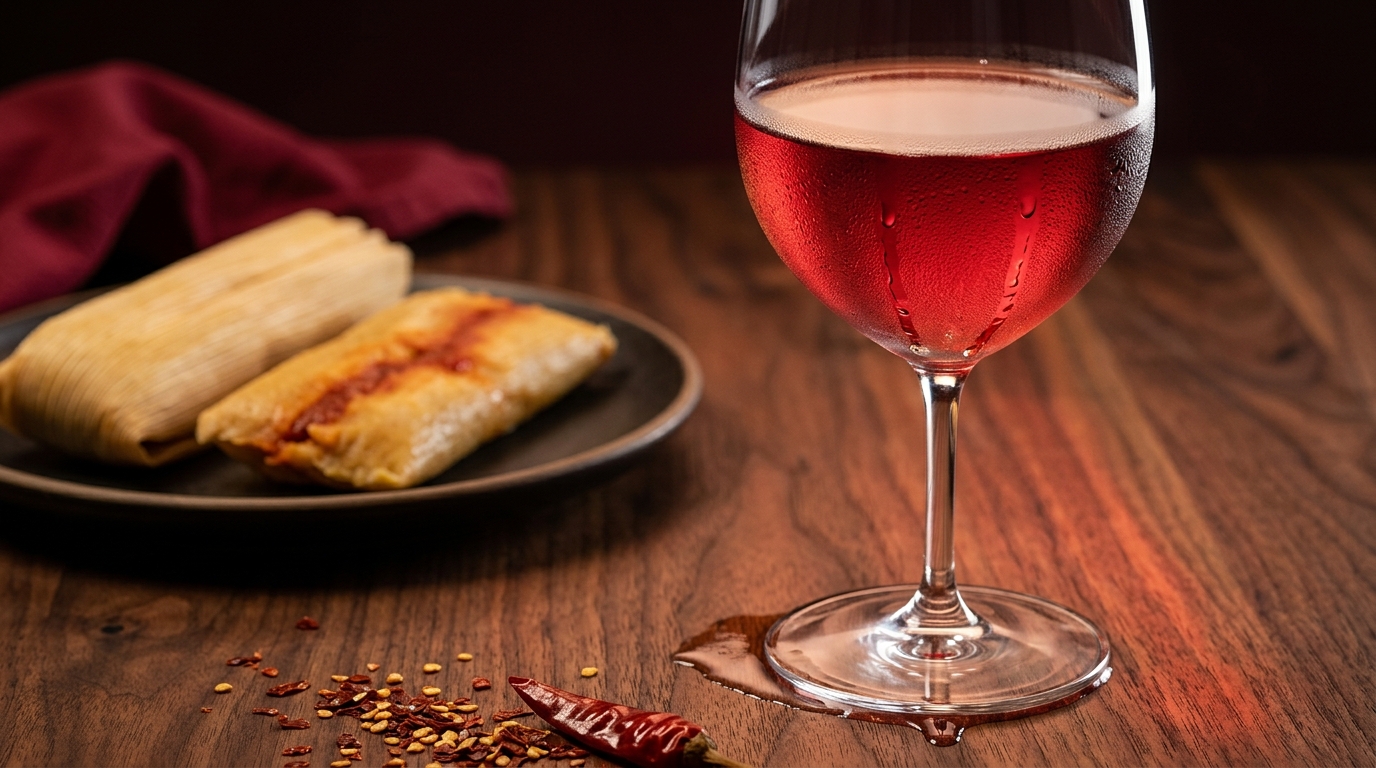
Rosé, Riesling, Sauvignon Blanc, and sparkling wine should come out properly cold, somewhere near 45°F, though not so icy that the aromatics disappear entirely. Moscato and other sweet bottles benefit from the same treatment, because cold makes sweetness read as refreshing rather than syrupy. Our full breakdown of serving temperatures by style covers the rest, and it's the least glamorous habit that improves the most dinners.
One regional note worth trying if you can find it. A medium-bodied red from Valle de Guadalupe in Baja California, usually built on Grenache or Tempranillo, is a natural partner for red chile tamales and tends to be made with exactly this kind of food in mind.
How do you pick a bottle at the shop or order one at a restaurant?
Describe the sauce and the heat, not the dish, and you'll get a much better recommendation from anyone you're talking to. A server hearing "we're having tamales with a medium-hot red chile, something fruity and not heavy" can point you straight at the right section of the list. A server hearing "what goes with tamales" will usually reach for whatever red is nearest.
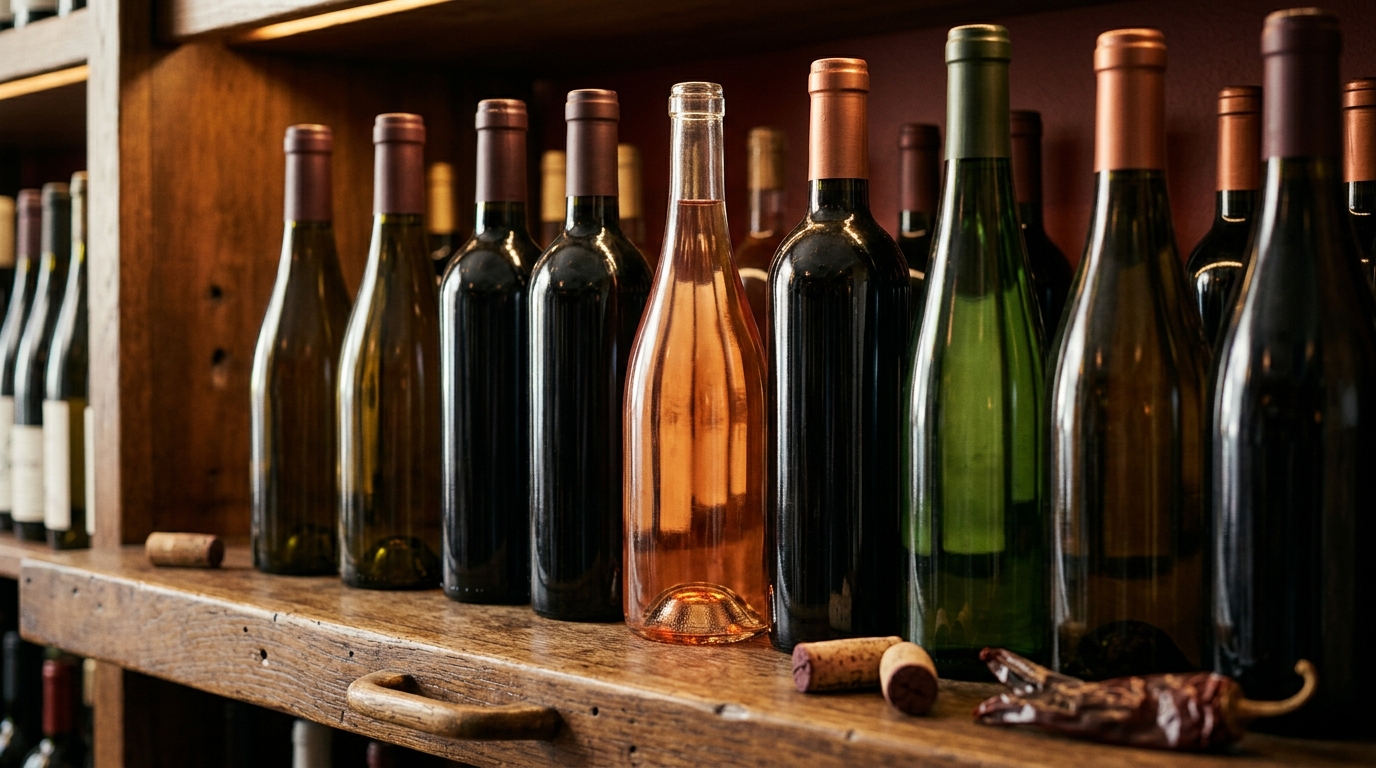
On a wine list, the words that signal a good fit are fresh, bright, red fruit, and lighter-bodied. The words to treat carefully are structured, firm, full-bodied, and oak-aged, since all of them tend to mean tannin that will fight the chile. If a tasting note calls a wine jammy, read that as riper and heavier, which usually means more warmth against spice.
In a shop, start with the grape and the region instead of hunting for one specific label that may not be stocked. A village-level Beaujolais, a Côtes du Rhône built on Grenache, a Willamette Valley Pinot Noir, or a young Rioja will all be sitting somewhere on the shelf and any of them will do the job. Buying two bottles for a mixed platter, one light red and one off-dry white, covers nearly every tamale on the table.
This is the moment Sommy is genuinely useful, because a photo of the plate beats a category. Point Pairing at your tamales and the sauce that's actually on them, and it reads the dish and matches it against what you already like drinking, which matters when your table's heat tolerance and mine are different. It's the same reasoning we use for taco night and its many salsas, where the sauce moves faster than the protein does.
Frequently asked questions
What is the best red wine for pork tamales with red chile?
Pinot Noir is the most reliable choice, since its bright red fruit flatters pork while its light tannin keeps the chile from turning harsh. Grenache is just as good when the sauce is smoky, and a young Tempranillo suits a more savory red chile.
What wine goes best with mole tamales?
Barbera, because its high acidity cuts through both the rich sauce and the lard in the masa without adding tannin. Grenache suits a sweeter, dried-fruit mole, and a fresh Sangiovese handles the more savory and spice-driven versions.
Should I drink white wine with spicy tamales?
Yes, and the hotter the chile the more we'd push you that way. Off-dry Riesling, chilled rosé, and sparkling wine all keep the heat in check, because low tannin and a little residual sugar calm capsaicin instead of amplifying it.
Does the wine for tamales need to be chilled?
Lighter reds are much better with about twenty minutes in the fridge, landing near 55°F. Whites, rosé, sparkling, and sweet bottles should be served properly cold at roughly 45°F, though stop short of ice-cold or you'll lose the aromatics.
What wine pairs with sweet tamales?
Moscato, off-dry Riesling, or a lightly sweet sparkling wine, all of which have enough sugar to stand next to raisins, pecans, and cinnamon. A dry red tastes bitter beside a sweet tamale, so save it for the savory ones earlier in the meal.
Can one bottle cover a whole tamale platter?
A chilled dry rosé comes closest, because it has the freshness for green chile and cheese and enough fruit for a mild red chile. If you can stretch to two bottles, add a light red for the pork and mole, and you've covered almost everything except dessert.
Pour something fruity and get on with dinner
Tamales are generous, social food, and the bottle shouldn't be the complicated part of the evening. Read the sauce first, notice how hot the chile really is, then pick something with fruit and freshness rather than weight and grip. A lighter red with a short chill covers most of the table, and a cold off-dry white waits in reserve for whatever turns out to be spicier than advertised.
If you take one habit from all this, make it the twenty minutes in the fridge. It costs nothing, it works on almost every red you'd want with chile, and it's the difference between a wine that fights your dinner and one that disappears happily into it.