

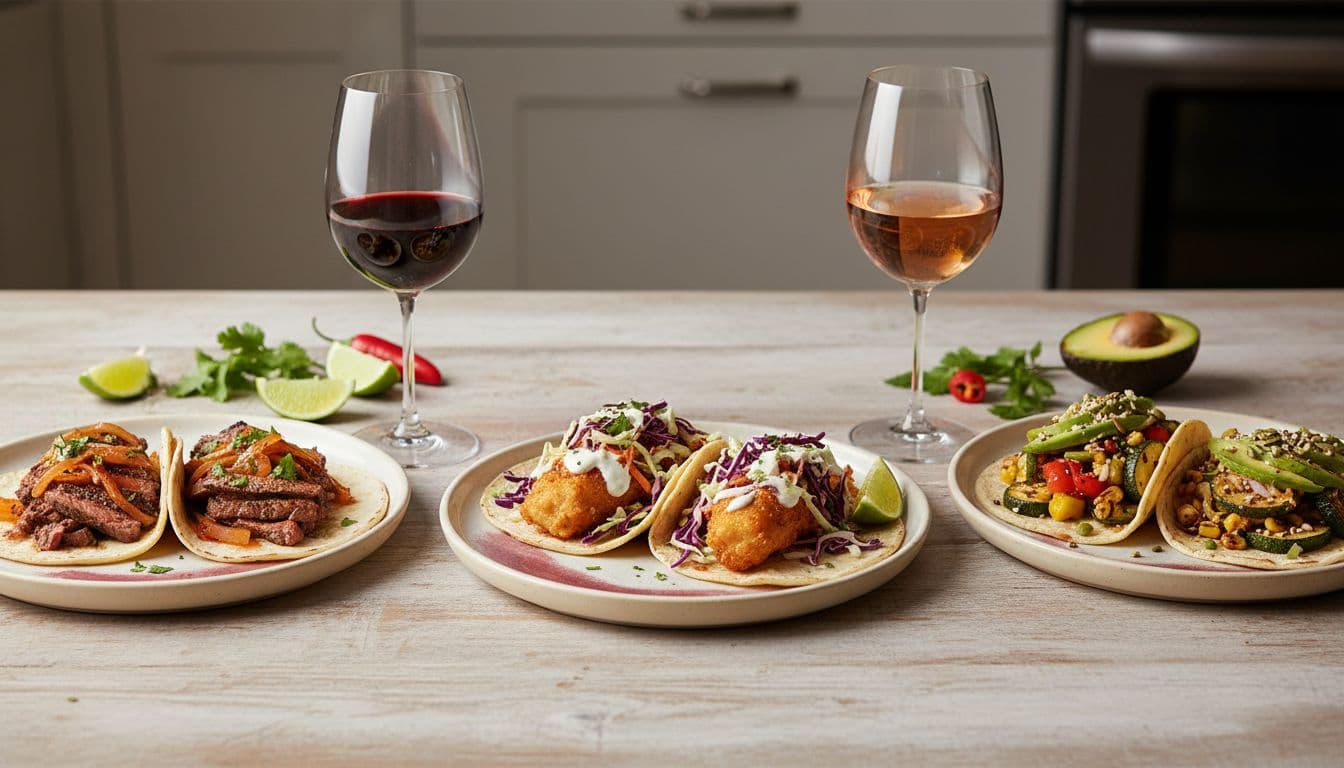
For taco night, three bottles cover nearly everything on the table: a dry rosé or a crisp Albariño for fish and shrimp tacos, a chilled Gamay or Pinot Noir for carne asada, and a fruity Zinfandel or Grenache for al pastor and other sweet-and-spicy pork. Keep the alcohol moderate and the wine cold, because heat from chiles makes high-alcohol wine taste harsher rather than richer.
The variable that decides the pairing more often than the meat does is the salsa, since a smoky chipotle and a fresh tomatillo salsa pull in genuinely different directions. Get that part right and the rest follows.
Why does wine work with tacos at all?
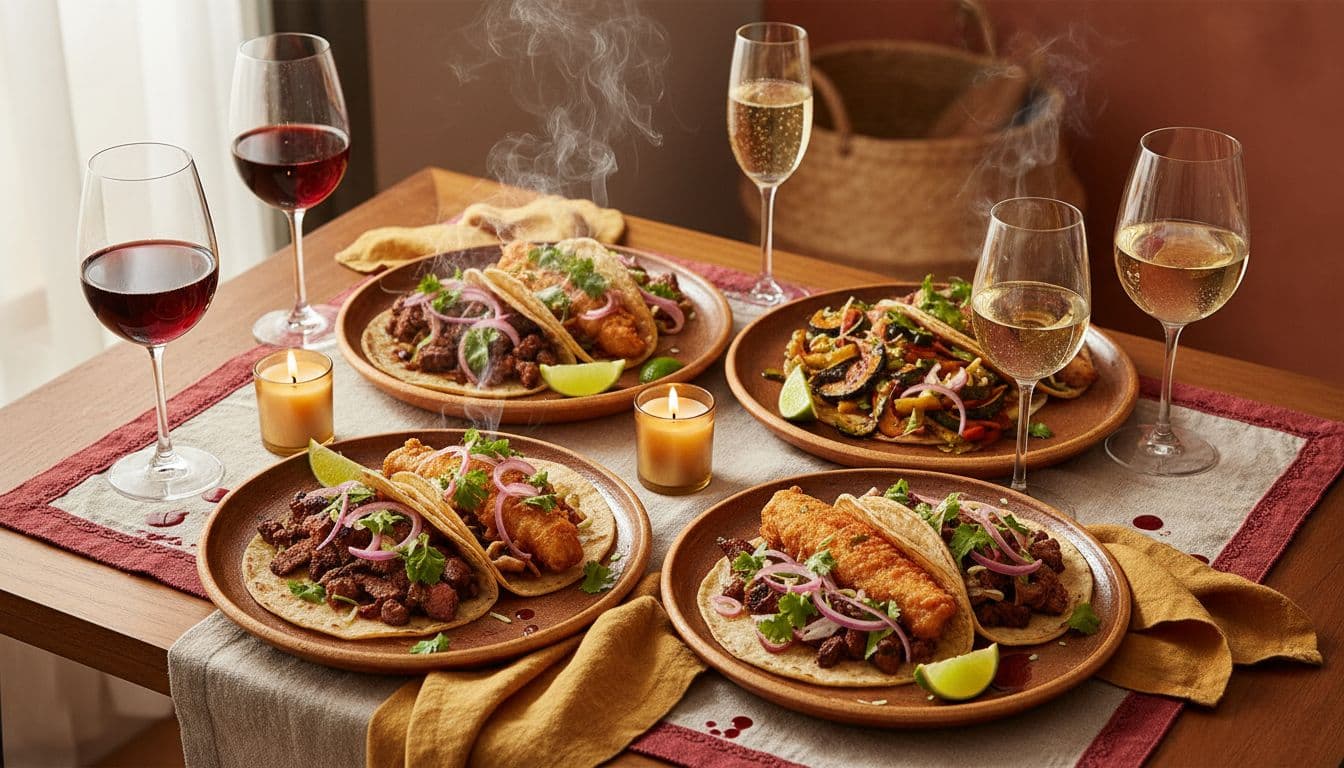
Tacos are salty, tangy, spicy and rich all at once, and that combination is exactly what acidity is good at handling. A wine with real freshness does the same job as the lime wedge you were going to squeeze over the plate anyway, cutting through crema, fried fish or fatty pork and making the next bite taste clean again.
Chile heat is the one thing that genuinely fights wine, and it does so in a specific way. Capsaicin makes alcohol feel hotter on the palate, so a 15 percent red that tastes generous on its own can turn sharp and burning next to a spicy taco. Sweetness works in the opposite direction and calms heat down, which is why a slightly off-dry Riesling handles a hot salsa far better than a bone-dry white does. Tannin behaves like alcohol here, amplifying heat rather than soothing it, so big structured reds are usually the wrong instinct. Our guide to wine with spicy food goes deeper into why that happens.
The other principle worth holding onto is matching intensity, so that a delicate fish taco gets a delicate wine and a charred, fatty carne asada gets something with more presence. If you want the general method rather than the specific pairings, our guide to pairing wine with food covers it properly.
What wine goes with carne asada tacos?
Carne asada is grilled, charred and beefy, but it arrives in a small tortilla with onion, cilantro and lime rather than on a plate as a steak, so the portion is lighter than the flavor suggests. A light to medium red with bright fruit and modest tannin gives you enough weight for the char without the drying grip that would clash with chile heat.
Gamay from Beaujolais is the pick if you want juicy and easy, and it takes a chill well, which matters more than people expect. Cool-climate Pinot Noir does the same job with a touch more elegance. A lighter Spanish red is arguably the most natural fit of all, since Tempranillo from Rioja or Ribera has a savory, slightly smoky quality that meets grilled beef head on, and our guide to Tempranillo covers how the styles differ by region.
What wine goes with al pastor and pork tacos?
Al pastor is marinated in chiles and achiote and cooked on a vertical spit with pineapple, so it lands somewhere between sweet, spicy and smoky, much like barbecue does. That sweetness is the deciding factor, because a bone-dry red tasted against it will read as thin and sour.
Zinfandel is the most reliable match, with jammy dark fruit and enough ripeness to meet the pineapple and the adobo at once. Grenache does something similar with a lighter touch and a peppery edge. A chilled dry Lambrusco is the choice worth trying if your store carries one, since the bubbles cut the fat while the dark fruit handles the sweetness, and it is genuinely fun with street food. Carnitas, being richer and less sweet, shift the balance back toward the carne asada picks, so a Gamay or a lighter Tempranillo suits them better.
What wine goes with fish and shrimp tacos?
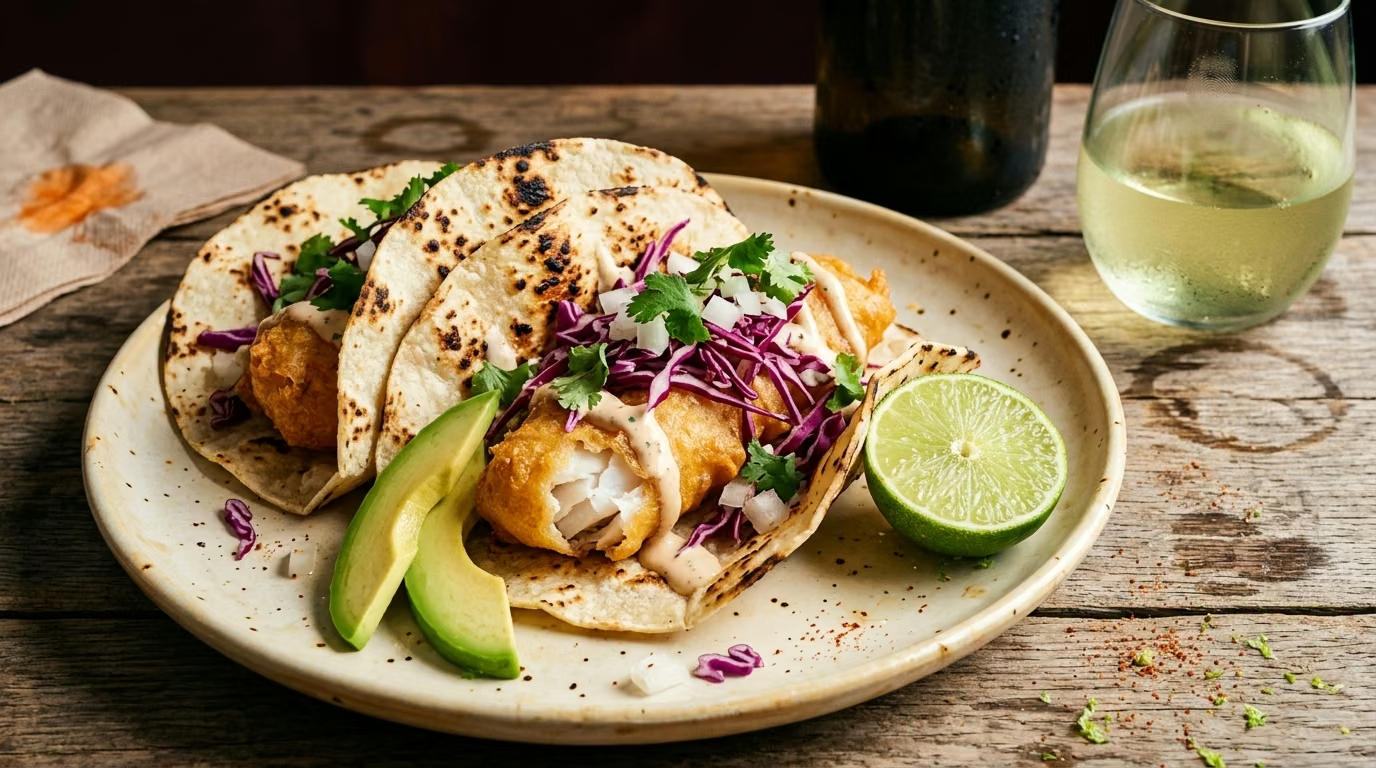
Fish tacos usually combine something fried or grilled with crema, cabbage and a heavy squeeze of lime, so the wine needs enough acidity to cut the richness and enough citrus character to sit alongside the lime rather than argue with it. Albariño from Rías Baixas is close to ideal, with firm acidity and a slightly peachy weight that stands up to batter.
Sauvignon Blanc works for the same reasons and brings a green, herbaceous note that flatters cilantro in particular. A dry Riesling is the better call whenever the salsa has real heat. If the fish is battered and fried, a Brut sparkling wine or a Cava is hard to beat, because carbonation handles fried food better than almost anything else does. We have a dedicated guide to wine with fish tacos if that is the main event, and our shellfish pairing guide covers shrimp in more detail.
What wine goes with veggie and mushroom tacos?
Vegetable tacos vary more than meat tacos do, so the filling decides. Grilled peppers, zucchini and corn are sweet and lightly charred, which suits a dry rosé with good acidity, since it has enough berry fruit to feel substantial and enough freshness to stay out of the way. Black bean and sweet potato fillings are earthier and often spiced, and they take a light red comfortably.
Mushroom tacos are the interesting case, because their savory depth genuinely suits Pinot Noir in a way that most vegetarian food does not. If you are cooking mushrooms with garlic and chipotle, that pairing gets better still.
| Taco style | What drives the pairing | Wines that work |
|---|---|---|
| Carne asada | Char and grilled beef | Gamay, Pinot Noir, Tempranillo |
| Al pastor or pork | Sweet heat from chile and pineapple | Zinfandel, Grenache, dry Lambrusco |
| Fish or shrimp | Crema, lime and fried batter | Albariño, Sauvignon Blanc, Cava |
| Veggie or mushroom | Earthy fillings and fresh toppings | Dry rosé, Pinot Noir |
| Barbacoa or birria | Rich, slow-cooked and deeply savory | Garnacha, Syrah, Malbec |
How does the salsa change the pairing?
More than the protein does, most of the time, because salsa is the loudest thing in the taco. A fresh pico de gallo is tomato, onion and lime, so it stays bright and pushes you toward crisp whites and rosé regardless of what else is in the tortilla. Salsa verde made with tomatillos is tarter and greener, which makes Sauvignon Blanc an unusually good match, since the herbaceous note in the wine mirrors the one in the sauce.
A smoky chipotle or morita salsa changes direction completely, adding both heat and a deep smokiness that wants a red with some fruit behind it, so Grenache, Zinfandel or Syrah all make more sense than a white. Habanero-based salsas are the hardest case, and the honest answer is that a genuinely hot salsa overwhelms most wine, so an off-dry Riesling with plenty of residual sugar and low alcohol is the only thing that reliably survives it. Our Riesling pairing guide explains why the off-dry styles cope so well.
What wine goes with fajitas?

Fajitas bring a hot skillet, charred peppers and onions, and usually sour cream and guacamole on the side, so there is more fat and more smoke than a taco carries. Steak fajitas can take a bolder red than carne asada tacos can, which puts Malbec, a Rioja-style Tempranillo or a mid-weight Zinfandel in range, though you still want to avoid anything heavily oaked.
Chicken fajitas are leaner and lighter, and an off-dry Riesling or a Chenin Blanc works nicely there, with the touch of sweetness cooling any chile heat while the acidity slices through the sour cream. Shrimp fajitas belong with the crisp whites and sparkling wines, so a Verdejo, an Albariño or a Cava all suit them.
What wine goes with nachos?
Nachos are mostly cheese, salt and crunch, and the pairing depends on how loaded they are. Plain queso or cheese nachos are best with a dry sparkling wine, because the bubbles and acidity cut through melted cheese and reset your palate between handfuls, and Cava is both the cheapest and among the most effective options. Our comparison of Prosecco, Cava and Champagne explains why they behave so differently.
Beef or chili nachos need a bit more substance, and a chilled Beaujolais or a young Tempranillo handles the meat and the spice without feeling heavy at a casual table. If the nachos are piled with pico, corn, jalapeños and fresh toppings, the balance tips back toward freshness, so a Sauvignon Blanc or a bright rosé is the better pour.
Should you drink Mexican wine with tacos?
It is worth seeking out, and it is a great deal easier to find in the United States than it was a decade ago. Baja California produces roughly 90 percent of Mexico's wine, and the Valle de Guadalupe in Ensenada alone accounts for an estimated 70 percent of national production, so most Mexican bottles you encounter come from that one stretch of Baja. The country's winemaking is also far older than its reputation suggests, since Casa Madero in Coahuila was founded in 1597 and is the oldest winery in the Americas.
The style suits the food, which should not be surprising. Guadalupe reds are typically warm-climate blends built on Nebbiolo, Tempranillo, Grenache and Syrah, with ripe fruit and a savory, slightly herbal edge that sits well against grilled meat and chile. The whites tend toward Chenin Blanc and Sauvignon Blanc. Prices run higher than the quality-to-cost ratio of Spanish or Argentine equivalents, largely because production is small and little of it is exported, so treat it as something to try rather than as the value pick.
How do you order wine at a Mexican restaurant?
Ask for a style rather than a grape, because most Mexican restaurants keep a short wine list and the server knows what is actually good on it. Saying you want something light, juicy and low in tannin that can handle spice will get you further than naming a bottle they may not carry, and the same goes for asking whether there is a crisp white that suits fish tacos.
Look for regions known for freshness if you are reading the list yourself, since the Loire, Beaujolais, Galicia and northern Portugal all reliably produce the kind of high-acid, moderate-alcohol wine this food wants. Wines by the glass are often served too warm in a busy room, so asking for an ice bucket, even for a light red, is a reasonable request that makes a real difference. If the list runs to Mexican bottles, that is usually the most interesting thing on it and worth a glass.
What should you buy for taco night?
Three bottles cover almost any spread, and buying by style rather than by grape keeps it simple. One crisp white such as Albariño or Sauvignon Blanc handles the fish, shrimp and anything with fresh salsa. One dry rosé covers the vegetables and works as the safe glass for guests who are not sure what they want. One light, chillable red such as Gamay or a young Tempranillo takes care of the beef and the pork.
Skip anything that advertises oak, toast or vanilla on the label, and be wary of reds above about 14.5 percent alcohol if the food is spicy. Chill everything more than you normally would, including the red, because a light red served around 55 degrees Fahrenheit tastes noticeably fresher against chile and lime than the same bottle at room temperature. If you are standing in the aisle holding something you do not recognize, Fit Check in Sommy will tell you whether it suits the way you actually drink before you commit to it.
What matters more than any of these suggestions is noticing which bottle emptied first. Taco night comes around often enough that your own record of what worked beats a chart, including this one, because it is built from your taste rather than an average of everyone else's.
Frequently asked questions
What is the best all-round wine for tacos?
A dry rosé with good acidity is the single most flexible bottle for a mixed taco spread, since it has enough fruit for grilled meat and enough freshness for fish and fresh salsa. A dry sparkling wine such as Cava is the close runner-up and is better still if there is anything fried on the table.
Does red wine go with tacos?
Light and medium reds work well, particularly Gamay, Pinot Noir, Tempranillo and Grenache, especially with beef and pork fillings. Heavy, tannic and high-alcohol reds are the ones to avoid, because both tannin and alcohol make chile heat feel sharper rather than balancing it.
What wine goes with birria or barbacoa?
Slow-cooked, deeply savory fillings can take more structure than most tacos, so a Garnacha, a Syrah or an Argentine Malbec all suit them. If the birria comes with a rich consommé for dipping, lean toward the fruitier end of those options.
Can you drink wine with a margarita on the table?
You can, though it is worth pouring the wine first, since the salt, lime and tequila in a margarita will flatten most wines that follow it. If people are drinking both, a sparkling wine holds its own better than a still white does.
What is the cheapest wine that works for taco night?
Cava is usually the best value on the shelf, with dependable bottles between $10 and $15, and a young Spanish Tempranillo sits in the same range for the red. Both outperform more expensive oaked wines with this food.