
The short answer to Riesling vs Moscato: Riesling can be bone dry, off-dry, or sweet and always has bright, mouth-watering acidity, while Moscato is almost always sweet, low in alcohol, and often gently fizzy. So the real question is not which grape is better. It is how sweet you want your glass, what you are eating, and whether you want bubbles. Choose your sweetness level first and the rest gets easy.
You are at a restaurant, the wine list reads like a foreign menu, and you just want a glass you will actually enjoy. Both of these wines are floral, fruity, and famously friendly, which is exactly why people mix them up. They are more like distant cousins than twins, though: one is crisp and food-loving, the other is soft and built for pleasure. Here is how to tell them apart and pick the right one every time.
Riesling vs Moscato at a glance
This head-to-head covers the differences people actually compare, with rough USD prices for everyday bottles.
| Riesling | Moscato | |
|---|---|---|
| Origin | Riesling grape, from Germany | Muscat grape, from Italy |
| Sweetness | Dry to sweet (your choice) | Usually sweet |
| Acidity | High and zippy | Low to moderate |
| Alcohol | 8 to 12% | 5 to 7% (Moscato d'Asti) |
| Bubbles | Usually still | Often lightly sparkling |
| Flavors | Lime, green apple, apricot, peach, a hint of petrol with age | Peach, orange blossom, ripe grape, honeysuckle |
| Price | $12 to $25 | $8 to $18 |
| Best for | Spicy food, versatile dinners, aging | Brunch, dessert, easy sipping |
If you read only one row, read acidity. That high-acid snap is what makes even a sweet Riesling taste refreshing rather than heavy, and it is the biggest single difference between these two wines.
Sweetness is a setting, not a personality
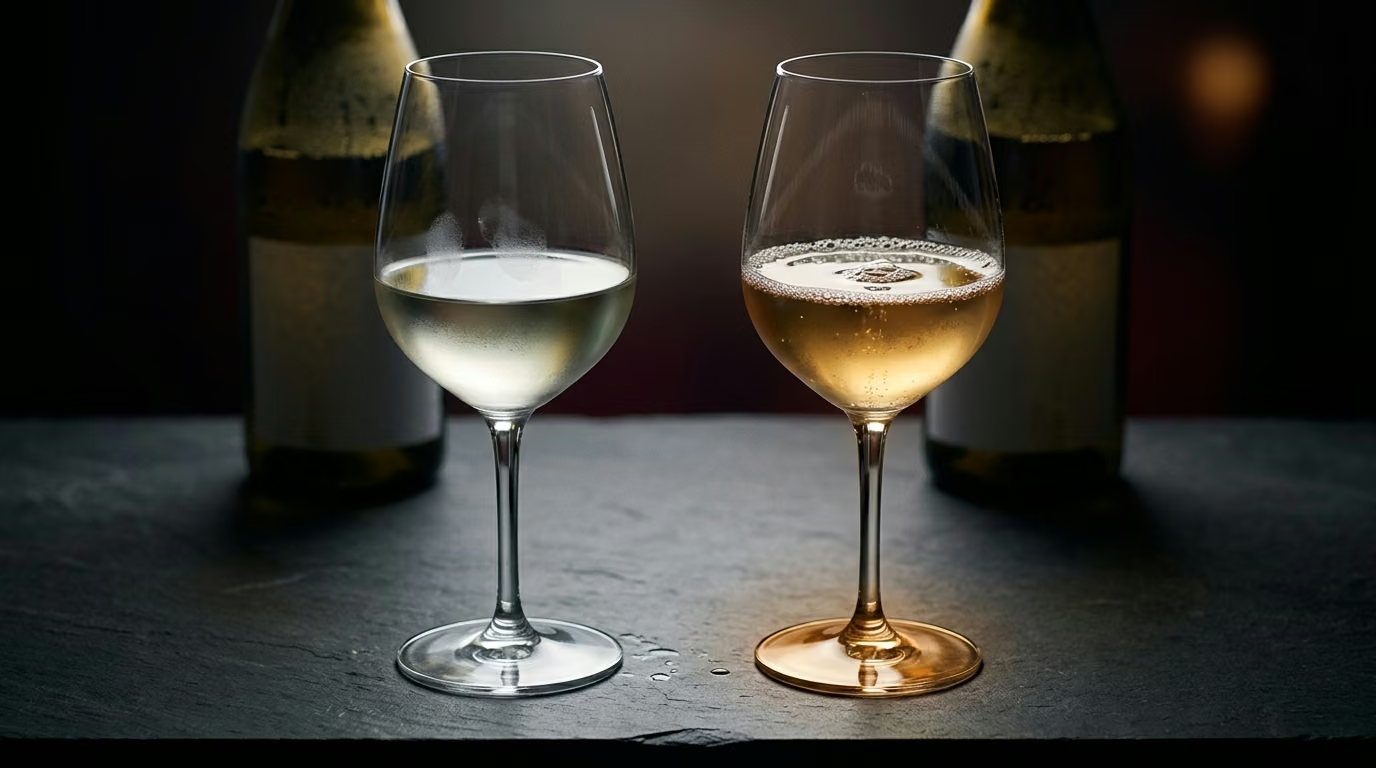
Think of sweetness like the volume knob on music. Some nights you want quiet background sound, which is dry. Other nights you want a sing-along chorus, which is sweet. Both are valid, and both can be delicious. Neither choice says anything about your taste being unsophisticated.
Photo by Bastian Riccardi
A quick way to read the moment: dry wine feels crisp, clean, and not sugary. Sweet wine feels juicy, round, and fruit-forward. Acidity is the mouth-watering snap that keeps sweetness from feeling cloying, and bubbles make a sweeter wine feel lighter and more refreshing. Riesling gives you the full sweetness range plus loads of acidity. Moscato lives at the sweet, low-alcohol, gently fizzy end. Decide how sweet you want tonight, and you have already narrowed it to one. For a broader look at where these fit, our guide to off-dry white wine maps the middle ground between bone dry and sweet.
Riesling: the shape-shifter
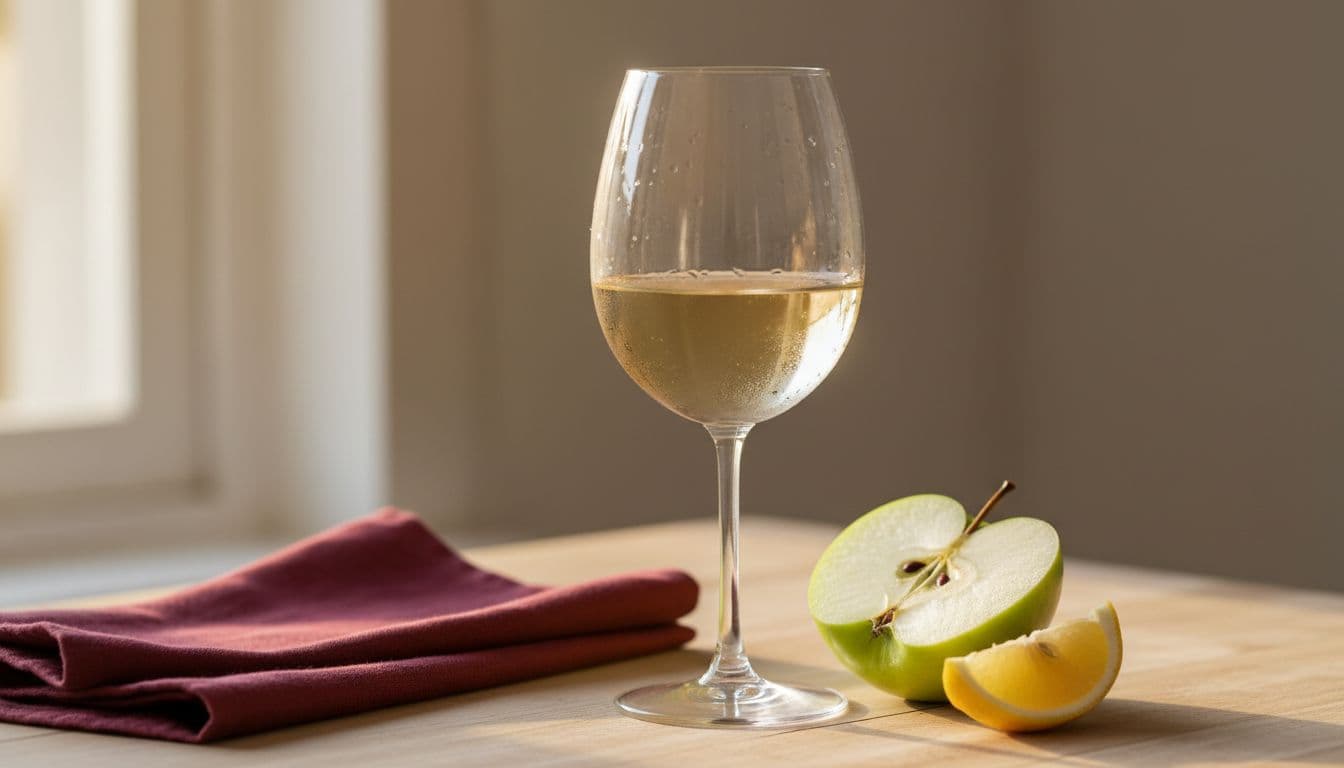
Riesling is the wine that can go bone dry, off-dry, or sweet, which is exactly why it both causes stress and saves the day. One bottle tastes lean and citrusy, the next tastes like ripe peach with a soft, sweet edge. What stays constant is the electric acidity and the perfume of lime, apple, and stone fruit. Older, finer Rieslings even develop a distinctive whiff people call petrol, which sounds odd but is prized.
How to tell if a Riesling is dry or sweet
The label usually tells you, once you know the words. On a German bottle, Trocken means dry and Halbtrocken means off-dry. Many German Rieslings also use a ripeness ladder that hints at sweetness: Kabinett is the lightest and often just off-dry, Spätlese is riper and a touch sweeter, and Auslese is sweeter still. From the United States, Australia, or France's Alsace region, a Riesling labeled dry will be crisp, while one that simply says Riesling is often off-dry. When in doubt, a lower alcohol number (around 8 to 9 percent) usually signals more sweetness, and a higher one (11 to 12 percent) usually signals dry.
At the table, Riesling is a quiet hero with spice. Its acidity and touch of fruit cool chili heat while staying clean, which is why it shows up in so many recommendations for Thai, Indian, Sichuan, and spicy takeout nights. It also loves pork, roast chicken, and anything with a sweet-savory glaze.
Moscato: light, sweet, and hard to mess up
Moscato is the friend who shows up with fruit and good vibes. Made from the Muscat grape, most Moscato you will meet is noticeably sweet, low in alcohol, and often lightly sparkling. Moscato d'Asti, the classic style from Italy's Piedmont, drinks like peach juice that learned manners, with orange blossom and a gentle fizz at around 5 to 7 percent alcohol. That low strength is part of the appeal: it is a wine you can enjoy at brunch or on a warm afternoon without it flattening the rest of your day.
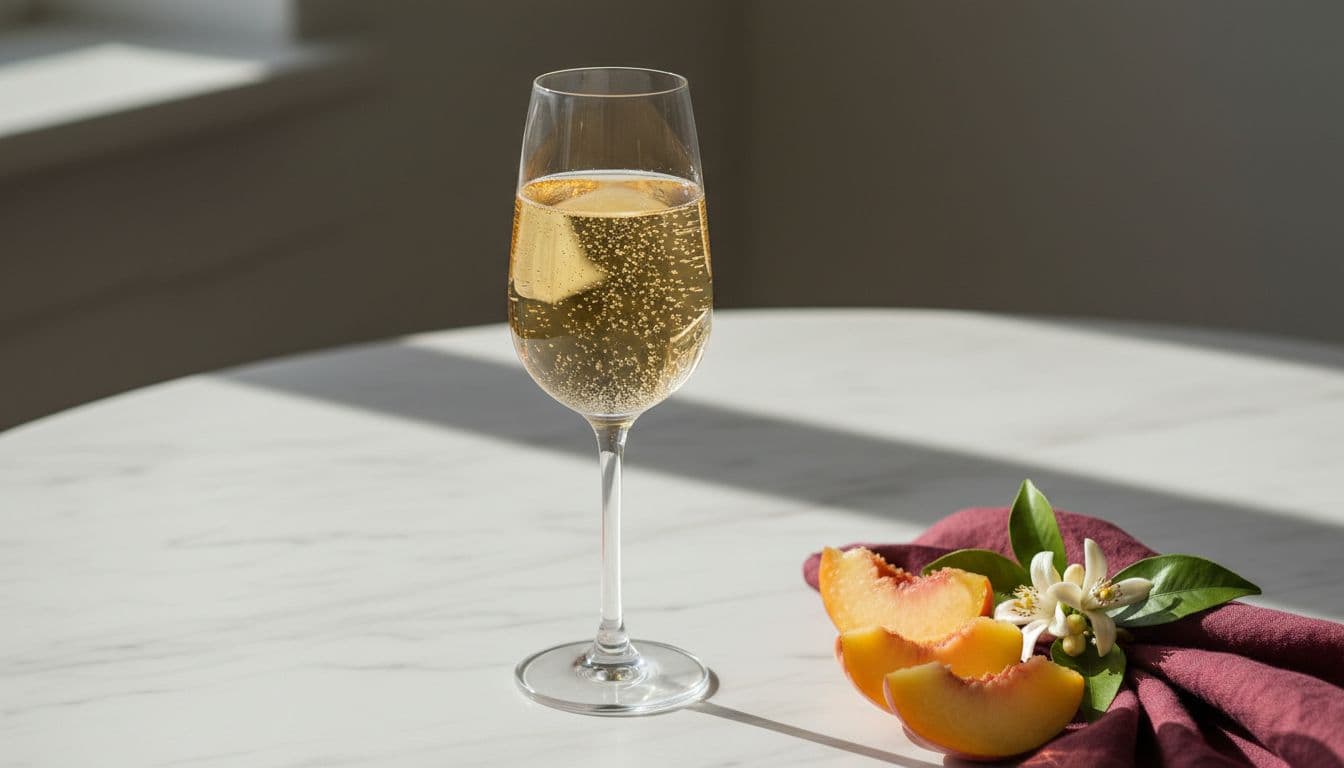
The honest caveat is simple: Moscato tastes sweet, even when it is well balanced. If you dislike sweetness, skip it. If you enjoy a sweet, fruity glass, it is one of the easiest wines to love. Moscato shines at brunch with fruit and pastries, after dinner with fruit tarts and creamy desserts, and next to spicy food when you want a softer, sweeter counterpoint than a dry white. If you are exploring this end of the spectrum, our guide to good sweet wines lists more easy options.
The real differences: acidity, alcohol, and bubbles
Beyond sweetness, three things separate these wines in practice.
Acidity. Riesling is high-acid, which is why it tastes crisp and pairs so well with rich or spicy food. Moscato has softer acidity, so it leans more purely sweet and easy. If you want a wine that cuts through a heavy plate, Riesling wins.
Alcohol. Moscato d'Asti is famously light at 5 to 7 percent, while Riesling runs 8 to 12 percent. For a daytime glass or a long, low-key session, Moscato's lower strength is a genuine advantage.
Bubbles. Moscato is often frizzante, meaning gently sparkling, which adds a playful lift. Most Riesling is still, though sparkling versions exist (Germany labels them Sekt). If you want a little fizz with your sweetness, reach for Moscato.
One more practical note on aging: fine Riesling can improve for years and even decades, developing honey and that signature mineral character, while Moscato is made to be enjoyed young and fresh. For everyday drinking, buy Moscato from a recent vintage and do not save it.
Where they come from and what to look for
Knowing a few regions helps you predict a bottle before you taste it. Riesling is German at heart, and the Mosel and Rheingau make some of the world's finest, ranging from featherlight and off-dry to lusciously sweet. Alsace in France and much of Australia (look to the Clare and Eden Valleys) specialize in bracing dry Riesling. In the United States, New York's Finger Lakes and Washington State turn out excellent bottles in both dry and off-dry styles, usually at friendly prices.
Moscato traces to the Muscat grape and its spiritual home is Asti in Italy's Piedmont, where Moscato d'Asti is made in that signature low-alcohol, lightly sparkling style. You will also find good value Moscato from California and Australia, which tend to be a touch sweeter and simpler. As a rule, an Italian label reading Moscato d'Asti is the benchmark, while a plain Moscato is usually an easygoing everyday sipper. For Riesling, the country and any dry or off-dry wording on the label tell you most of what you need to know before you buy.
Food pairings for each
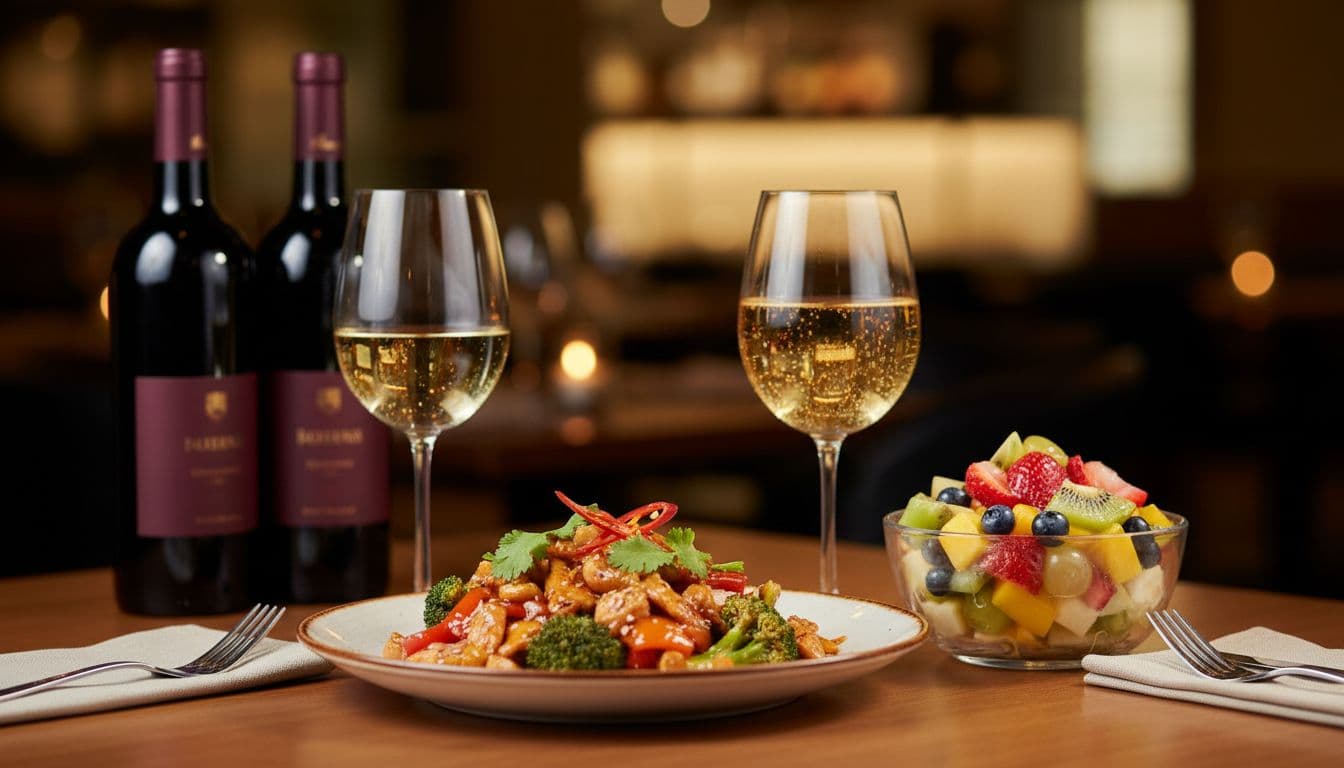
Because Riesling has more range and more acidity, it covers more of the meal. Moscato is a specialist that is unbeatable in its lane.
- Reach for Riesling with: spicy Thai and Indian dishes, Sichuan food, roast pork or ham, fried chicken, sushi, and washed-rind cheeses. A dry Riesling also handles a simple weeknight dinner as well as any white.
- Reach for Moscato with: fruit tarts, panna cotta, and light cakes, brunch spreads with pastries and fresh fruit, prosciutto and melon, and mildly spicy dishes where you want a sweet cushion.
The classic dessert rule is worth remembering: the wine should taste at least as sweet as the dessert, or the food will make the wine seem sour. Moscato's sweetness makes it a safe match for most fruit-based sweets, and our dessert wine pairing guide covers the trickier ones.
Sweet Riesling vs Moscato: the closest call
The one place these wines genuinely overlap is a sweet Riesling next to a Moscato, and even here they part ways in the glass. A sweet Riesling, such as a German Spätlese or Auslese, carries its sugar on a taut frame of acidity, so it tastes vivid and layered, with lime and stone fruit cutting through the sweetness. A Moscato is sweet in a rounder, softer, more openly grapey way, usually with lower alcohol and a little fizz that makes it feel breezy rather than intense. If you want sweetness with tension and food-friendliness, pick the sweet Riesling. If you want sweetness that is pure, light, and uncomplicated, pick the Moscato. Both are lovely, so this is a matter of mood, not quality.
Which should you choose?
Use sweetness as your first filter. If you want something crisp, food-friendly, and adjustable, choose Riesling, and specify dry or off-dry to dial in the sweetness. If you want something sweet, light, and gently bubbly for sipping or dessert, choose Moscato. For spicy food, both work, so pick Riesling if you want more acidity and structure, or Moscato if you want a softer, sweeter landing. Both are also excellent starting points if you are new to wine, and our guide to the best wine for beginners puts them in context. If you are holding a specific bottle and cannot tell whether it will suit you, Sommy's Fit Check gives an instant read on whether that wine matches your taste, so you are not gambling on a label.
Restaurant and store scripts you can use
Choices feel harder when a server is waiting or the aisle is crowded. A few plain lines take the pressure off.
At a restaurant, try one of these:
- "Do you have a dry Riesling? I do not want anything sweet."
- "Do you have Moscato d'Asti, or something lightly bubbly and sweet?"
- "I am eating something spicy and want an aromatic white that is not heavy."
In a shop, keep it to two lanes. If you want crisp, buy a Riesling labeled dry, or ask staff for a dry Riesling. If you want sweet and easy, buy Moscato, ideally Moscato d'Asti. Those two sentences cover almost every situation and cut the guesswork to nearly zero.
Frequently asked questions
Which is sweeter, Riesling or Moscato?
Moscato is almost always sweeter. Riesling ranges from bone dry to sweet, so a sweet Riesling can approach Moscato's sugar level, but a typical Moscato is the sweeter of the two and reads as sweeter because it has less acidity to balance it.
Which has less alcohol?
Moscato, clearly. Moscato d'Asti is often 5 to 7 percent alcohol, while most Riesling sits between 8 and 12 percent. That makes Moscato a nice choice for daytime or lighter sessions.
Which is better for spicy food?
Both cool heat, but for most spicy meals an off-dry Riesling is the sharper tool, because its high acidity refreshes the palate while a touch of sweetness tames the chili. Choose Moscato when you want the sweeter, softer version.
Are Riesling and Moscato good wines for beginners?
Yes. Both are aromatic, fruity, and approachable, which makes them easy first wines. Moscato is the gentlest starting point, while an off-dry Riesling is a great next step that also works with dinner.
Are they expensive?
No. Good everyday Moscato runs about $8 to $18, and quality Riesling is one of the best values in wine at roughly $12 to $25. You can drink both well without spending much.
Which is better for a party or a crowd?
Moscato is the crowd-pleaser, because its sweet, gently fizzy, low-alcohol style is easy for almost everyone to enjoy, including people who say they do not usually like wine. If the group leans toward dinner and drier tastes, an off-dry Riesling is the more flexible pick that still feels welcoming.
Do Riesling and Moscato go bad?
Unopened, everyday Moscato is best within a couple of years and should be drunk young and fresh, while quality Riesling can keep and even improve for many years. Once opened, recork and refrigerate both, and finish Moscato within a day or two so it keeps its fizz.
Conclusion
Riesling gives you range, from dry to sweet, with the acidity to handle bold and spicy food. Moscato stays sweet, light, and gently fizzy, perfect when you want an easy, low-alcohol glass or a dessert companion. Use sweetness as your first filter, match the moment, and you will choose confidently either way.
If you would rather skip the deliberation entirely, you can ask Sommy for a recommendation that fits your taste, your food, and your budget, whether you land on Riesling, Moscato, or something new.