
A good sweet wine is simply one that tastes great to you. The best options, like a light and bubbly Moscato or a rich Port, offer delicious, ripe fruit flavors with a pleasant sweetness that feels balanced and refreshing. The key is finding the style that matches the tastes you already love, which makes choosing the right bottle surprisingly easy.
How to Find a Sweet Wine You Will Enjoy
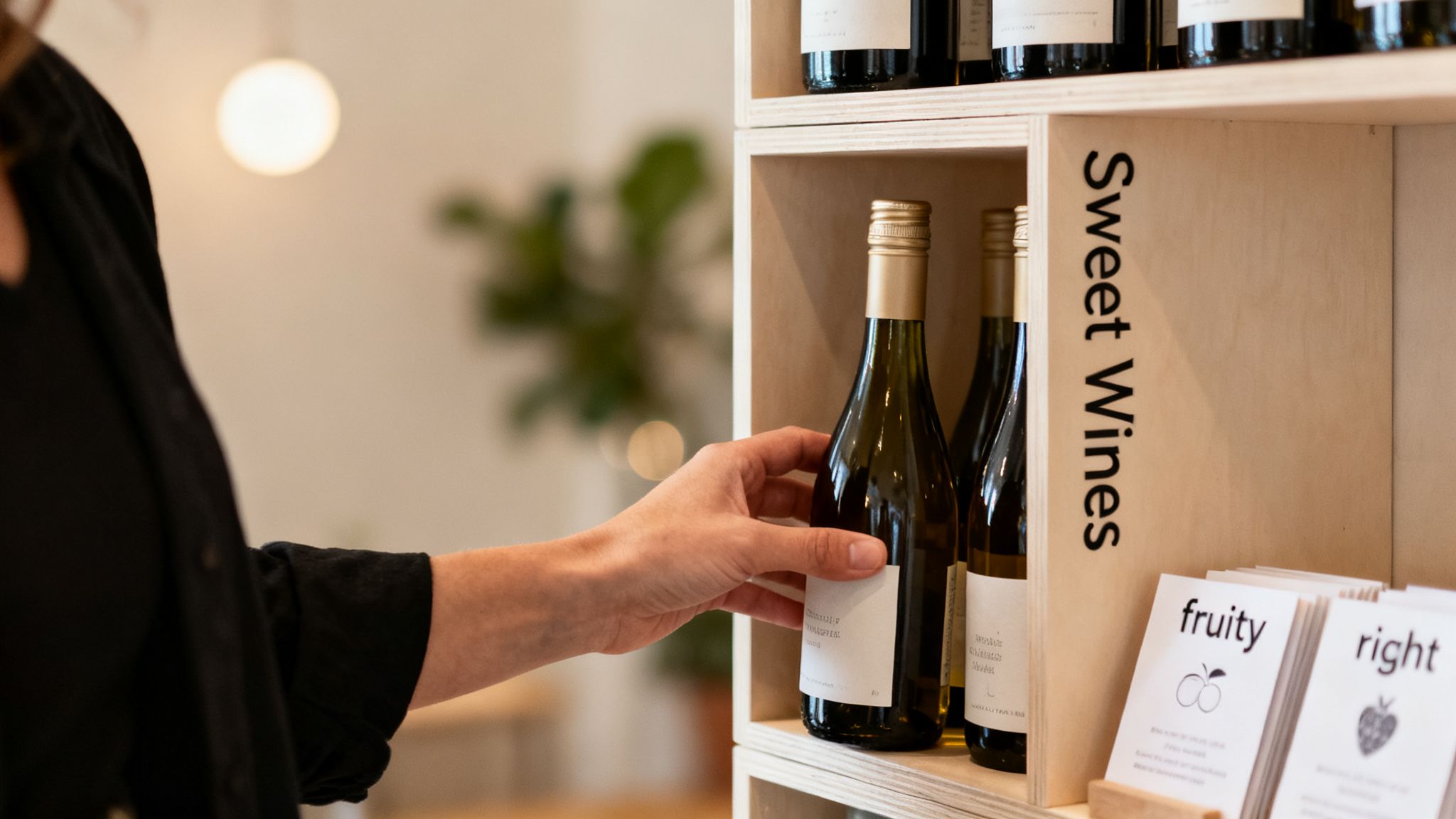
Standing in the wine aisle can feel like staring at a wall of confusing labels. The same goes for scanning a long restaurant menu. If you've ever felt a wave of anxiety, fearing you'll pick the "wrong" bottle, you’re not alone. That feeling is completely normal.
The good news? You don't need to become a wine expert to choose with confidence. The secret isn't memorizing obscure regions or complicated terms. It's about connecting the choice to flavors you already know and love. This guide gives you a simple, no-guesswork framework to find your next favorite bottle and feel relieved, not overwhelmed.
Start With Flavors You Already Know
Instead of trying to decipher a foreign-sounding label, just think about your everyday tastes. What flavors do you genuinely enjoy?
- Do you prefer light and crisp flavors? Think of biting into a juicy pear or a sweet-tart apple. If that’s you, a German Riesling might be your perfect match.
- Do you love rich, jammy, or dessert-like flavors? If things like berry jam or dark chocolate make you happy, you’ll probably enjoy a glass of Port.
- Are you in the mood for something bubbly and fun? A fizzy, fragrant Moscato d'Asti is practically happiness in a glass.
Starting with familiar tastes removes the decision friction and helps you explain what you’re looking for, even if you can’t remember a single wine name.
For a handy visual guide to different wine styles, this beginner wine chart makes comparing them a breeze.
You Are Not Alone in Loving Sweet Wines
If you've ever felt that sweet wines are somehow less "serious," think again. More and more people are embracing these incredibly approachable and delicious options.
The goal is to feel confident and ready, whether you're picking a wine for a dinner party or just a quiet night in.
What Actually Makes a Wine Taste Sweet
Ever wonder why one wine tastes like a sun-ripened peach and another is bone-dry? The answer is simpler than you’d think. It all comes down to the natural grape sugar left in the wine after it’s made.
Think of it like making lemonade. The more sugar you leave in, the sweeter it tastes. Wine works the same way, but the sweetness comes directly from the grapes themselves.
The Simple Story of Sugar and Yeast
When making wine, yeast is added to fresh grape juice. The yeast "eats" the natural sugars in the juice, converting them into alcohol. This process is called fermentation.
If the winemaker lets the yeast eat all the sugar, you get a dry wine, one with no perceptible sweetness.
To make a sweet wine, the winemaker simply hits the pause button on the fermentation. They might chill the wine or filter out the yeast before it finishes its job. This leaves some of the delicious, natural fruit sugar behind in the finished bottle.
That leftover sugar is what you taste. It’s a deliberate choice, not an accident.
The sweetness in wine isn't an additive; it's a feature. The winemaker intentionally preserves the grapes' natural fruit sugars to create a specific taste profile, just like a chef balances flavors in a dish.
This is how we get lovely sweet wines like Moscato or certain styles of Riesling. The winemaker carefully balances that remaining sugar with the wine's acidity to create something refreshing and delicious, not syrupy. You can find a more detailed comparison in our article on the key differences between dry and sweet wine.
It’s Not Just About Sugar
Our brains can sometimes be tricked into perceiving sweetness even when there’s not much sugar present. A wine bursting with fruity aromas (think pineapple, mango, or ripe cherry) can make us think a wine is sweeter than it actually is.
This is why a "fruit-forward" wine isn't always a "sweet wine," though they often appeal to the same palate.
At the end of the day, just knowing that sweetness comes from leftover grape sugar demystifies the whole concept. It’s a straightforward winemaking decision designed to create a specific, enjoyable flavor. That knowledge is all you need to start figuring out what you like.
Matching Sweet Wines to Your Favorite Flavors
Trying to pick a good sweet wine can feel like a guessing game. But what if you skipped the confusing labels and just started with flavors you already know and love?
It’s a much simpler approach. Think of it as a friendly “if you like this, try that” shortcut for the wine aisle. By connecting a wine you've never heard of to a taste you enjoy every day, you can find a bottle you’ll genuinely like without any stress.
Find Your Sweet Wine Based on Your Favorite Flavors
This table connects common, everyday flavors to specific sweet wine styles that share a similar vibe. It’s a quick cheat sheet to get you started.
| If You Love This Flavor... | You Should Try This Sweet Wine... | Why It's a Good Match |
|---|---|---|
| Green apples, lemonade, pears | Off-Dry Riesling | It has that same bright, zesty, and refreshing quality with a hint of sweetness that never feels heavy. |
| Ripe peaches, strawberries, apricots | Moscato d'Asti | This wine is bursting with juicy stone fruit and berry notes, and its light fizz makes it feel fun and festive. |
| Honey, baked apples, pineapple | Late-Harvest Chenin Blanc or Sauternes | These wines are richer and more concentrated, with deep honeyed and tropical fruit flavors that feel decadent. |
This simple matching game helps take the guesswork out of the equation. You're not just picking a random bottle; you're choosing a flavor profile you're already inclined to enjoy.
If You Like Light, Crisp Fruits
Do you reach for a crisp green apple, a juicy pear, or a glass of tangy lemonade? If those bright, clean flavors are your thing, then a lighter, off-dry sweet wine is probably your perfect match.
Your best bet is an off-dry Riesling. These wines often burst with notes of lime, green apple, and white peach. They have a fantastic zesty acidity that cuts through the sweetness, keeping everything lively and refreshing.
If You Like Sweet Berries and Stone Fruits
Maybe your happy place is a bowl of fresh strawberries, ripe summer peaches, or sweet apricots. If so, you’ll want a wine that mirrors that same luscious, fruity character. These wines are usually wonderfully aromatic and smell like a sunny afternoon.
A Moscato d'Asti is a fantastic choice here. This lightly sparkling wine from Italy is famous for its delightful aromas of peach, nectarine, and orange blossom. It’s bubbly and fun, and the gentle fizz keeps the sweetness feeling light. If you want to explore more wines in this style, our guide to the best fruity wines to try is a great next step.
This chart gives you a quick visual of how winemakers can choose to make a wine dry or sweet during fermentation.
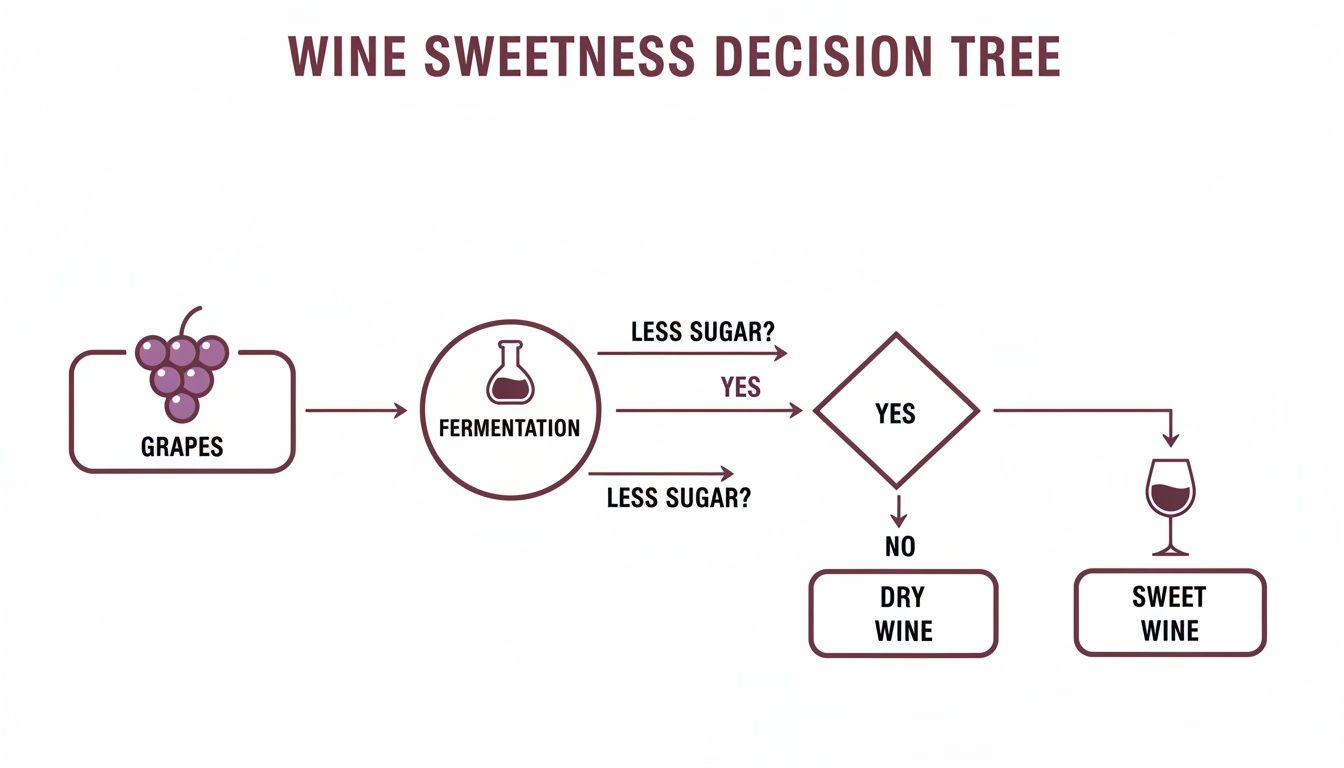
The main takeaway? Sweetness isn't an accident. It's a deliberate choice to leave some of the grapes' natural sugar behind.
If You Like Rich, Tropical, or Baked Fruits
For those who crave deeper, more intense fruit flavors (think pineapple, mango, baked apples, or honey) there are sweet wines with a much richer, more concentrated profile.These are perfect for a special occasion or a decadent dessert.
You should look into a late-harvest Chenin Blanc or a Sauternes. Winemakers leave the grapes on the vine longer for these styles, which concentrates the sugars and results in incredibly rich notes of honey, apricot, and tropical fruit.
Many people are discovering these approachable styles. The sweet wine market is projected to grow from USD 34.24 billion in 2024 to USD 60.96 billion by 2033. In North America, the US makes up a huge 82.69% of the semi-sweet white wine market, proving how popular these friendly, flavorful wines are becoming. You can dig into the full research on these sweet wine market trends if you're curious.
Perfect Moments for a Sweet Wine
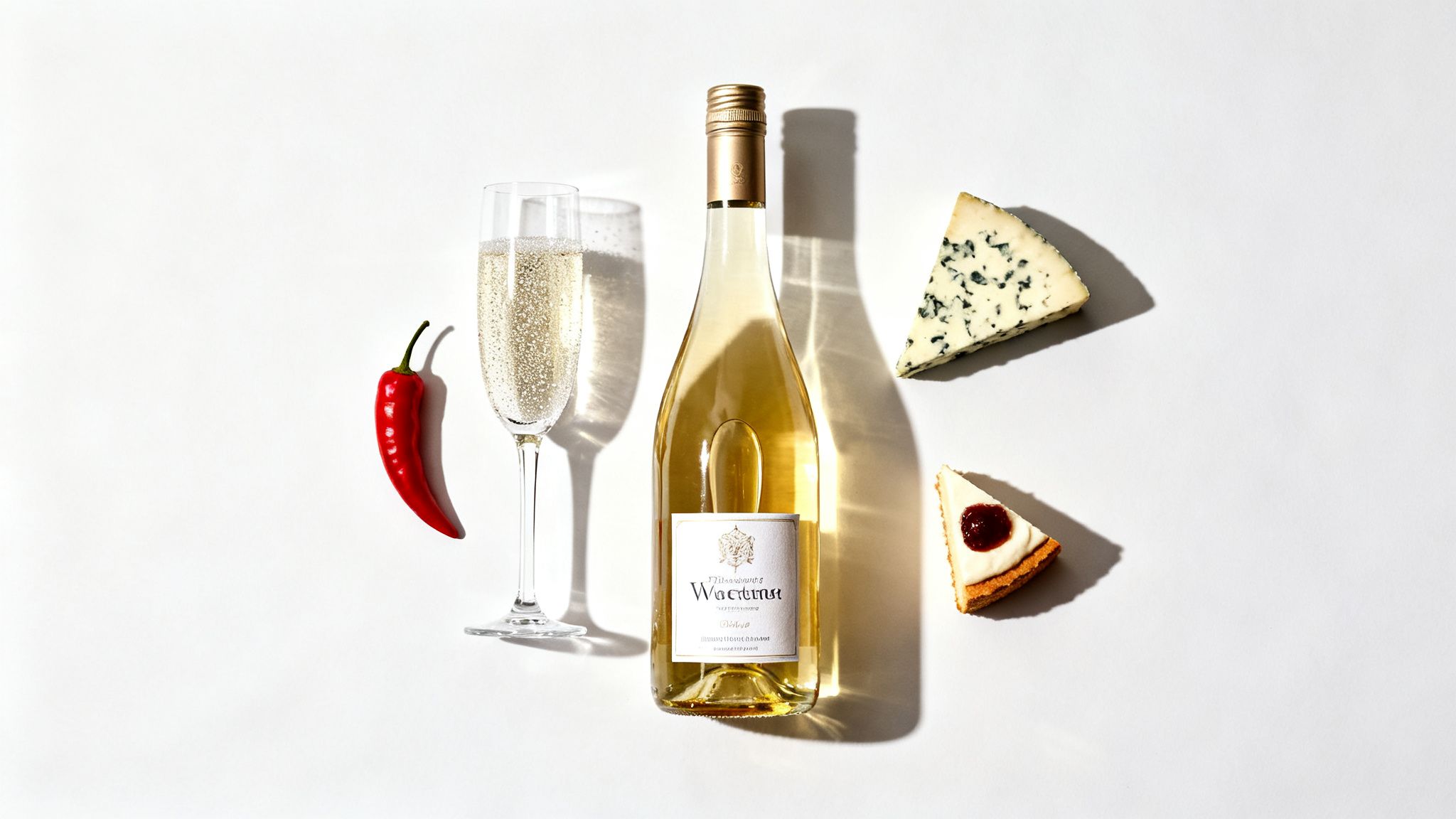
Many people think sweet wine is just for dessert, but that’s like saying pizza is only for Friday nights. A good sweet wine is surprisingly versatile and can be the perfect choice for all sorts of moments, from the start of a meal right through to the main course.
Knowing when to reach for one can make you feel confident and prepared. Think of sweetness as just another flavor, one that can either balance or complement other tastes. A chilled, slightly sweet wine can be incredibly refreshing and solve pairing puzzles that drier wines can't touch.
To Balance Spicy Foods
Have you ever taken a bite of spicy Thai or Mexican food and immediately reached for something to cool the fire? A sweet wine is the perfect antidote. The hint of sugar acts as a counterbalance to the capsaicin in chili peppers, calming the heat and letting all the other flavors in the dish shine through.
A wine like an off-dry Riesling or a Gewürztraminer is an amazing partner for spicy dishes. The sugar in the wine soothes your palate, while the wine’s acidity keeps every sip feeling bright and clean. It’s a classic pairing that works every time.
As a Refreshing Start to the Evening
A light, bubbly sweet wine is a fantastic way to welcome guests or kick off a casual get-together. It’s festive, approachable, and doesn’t demand a specific food pairing. Think of it as the perfect icebreaker in a glass.
A crisp, slightly sweet wine served chilled is one of the most refreshing and crowd-pleasing ways to begin an evening. It sets a relaxed, welcoming tone without overwhelming the palate.
A great example here is Moscato d'Asti. Its light fizz, lower alcohol, and notes of peach and orange blossom make it celebratory and incredibly easy to drink. It's a wonderful choice alongside light snacks. If you're looking for ideas, you might be interested in our guide on appetizers for a wine tasting that pair beautifully.
To Complement Salty and Savory Flavors
The "opposites attract" rule definitely applies to wine and food. One of the most exciting pairings out there is a rich, sweet wine with something intensely salty and savory, like blue cheese or cured meats. The contrast is what makes it so memorable.
The sweetness in the wine cuts right through the salt and fat of the food, creating a delicious harmony on your palate. The classic example is pairing a rich, decadent Port with a salty Stilton cheese. Each one makes the other taste better. This is a bold, confident choice that always impresses.
How to Order Sweet Wine with Confidence
Staring down a long wine list or a crowded shop aisle can be the most stressful part of the experience. But getting a wine you'll actually love is simpler than you think.
You don’t need to remember a single grape name or region. It all comes down to using plain language to describe the flavors you’re in the mood for. Instead of guessing, just give the server or shop employee the clues they need. The goal is to feel empowered, not intimidated.
Simple Scripts for Restaurants and Shops
Forget about stumbling over a French or Italian name you’ve never seen before. Instead, think of it like ordering coffee. You wouldn't try to recall the scientific name for the Arabica bean, you’d just say, "I'd like a large latte."
Try a few of these simple, conversational lines:
- "I'm looking for a sweet wine that’s light and fruity." This is a perfect, all-purpose request that gets right to the point.
- "Could you recommend something sweet but not too heavy?" This is a great way to signal that you want to avoid rich, syrupy dessert wines.
- "I usually enjoy Moscato. Do you have anything similar?" Naming a wine you already like is the ultimate shortcut.
- "We’re having the spicy curry. What sweet wine would you pair with that?" Connecting your request to the meal gives your server fantastic context to work with.
These simple phrases instantly turn the interaction from a test into a collaboration. For more pointers, check out our guide on how to read a wine list without the stress.
Use Your Phone as a Discreet Helper
When you’re in the moment, your phone can be your best ally. The sweet wine market is booming, with its value projected to grow from USD 32.14 billion in 2024 to USD 49.59 billion by 2032. That explosion means more choices are hitting shelves and menus than ever before, making a little help almost essential. You can discover more insights about these market trends.
This is the exact kind of in-the-moment decision Sommy was built for. You can discreetly scan the wine list with your phone, and the app will instantly highlight the best sweet wine options based on your personal taste preferences.
This approach lets you sidestep the anxiety completely. It feels less like asking a stranger for help and more like consulting your own trusted assistant. It gives you the confidence to either order directly or use the information to start a much more informed conversation.
Putting It All Together for a Stress-Free Sip
You don't need to become a wine expert to enjoy a great bottle. The secret to finding a sweet wine you love is understanding your own taste and having an easy way to navigate the options. It’s all about confidence, not cramming facts.
Remember the simple ideas we've walked through. Start with flavors you already know is it the crispness of a green apple or the sweetness of berry jam? Drawing a line from a familiar taste to an unfamiliar wine is the quickest shortcut to a bottle that feels right.
Next, think about the moment. Are you looking for something light and bubbly to kick off a party? A cool counterbalance to a spicy dinner? Or a decadent treat to wrap up the evening? Matching the wine's personality to the occasion makes your choice feel smart and intentional.
Finally, ask for what you want in plain English. Simple phrases like, "I'm in the mood for something sweet and fruity," are more effective than trying to remember a specific grape from a region you can't pronounce.
The next time you're faced with a wine list or a crowded store aisle, you can feel empowered instead of overwhelmed. The goal isn't to pick the "right" wine according to some expert, but the right wine for you, right now.
And if you want that extra bit of confidence in your pocket, that's what Sommy is for. Think of it as your personal wine decision assistant, helping you make a great choice in the moment by using your own taste as the guide.
Sommy is designed to make every wine decision feel easy. To see how it works, you can visit us at Sommy.ai.
Common Questions About Sweet Wine
Even with a better sense of direction, a few questions always come up. Getting straight answers can be the last piece of the puzzle, giving you that extra bit of confidence in the wine aisle or at a restaurant table.
Is Dessert Wine the Same as Sweet Wine?
Not exactly, but it's an easy mix-up. Here’s the simple version: all dessert wines are sweet, but not all sweet wines are dessert wines.
Think of "sweet wine" as a huge category. It covers everything from a lightly sweet Riesling you could have with spicy food to a bubbly Moscato. "Dessert wine," on the other hand, is a much more specific style under that umbrella. It usually refers to the rich, intensely concentrated wines like Port or Sauternes that are served in small glasses, often alongside or as dessert itself.
What Is a Good Sweet Red Wine for Beginners?
If you're curious about sweet reds but don't want to dive into something heavy, a Lambrusco Dolce is a fantastic place to start. A good one is lightly sparkling, packed with bright berry flavors, and refreshingly balanced: making it super approachable.
Another great choice is Brachetto d'Acqui, an aromatic red from Italy. It's famous for its beautiful notes of fresh strawberries and rose petals and is incredibly easy to enjoy.
How Can I Tell if a Wine Is Sweet from the Label?
This is where things can get tricky, but you can look for a few clues on the bottle.
- Look for specific words like "dolce" (Italian for sweet), "doux" (French), or the term "late harvest," which signals the grapes were picked later to build up more sugar.
- For German Rieslings, words like "Spätlese" or "Auslese" are your signposts, indicating progressively higher levels of sweetness.
But labels often don't give you the full story, which can be frustrating when you're standing in a shop.
This is exactly the kind of on-the-spot headache that Sommy was designed to fix. Instead of squinting at confusing terms and hoping for the best, you can use the app to scan a label or wine list. It gives you an instant, easy-to-read taste profile, so you know exactly what you’re getting before you buy. If you want help choosing wine with confidence, find out more at Sommy.ai.