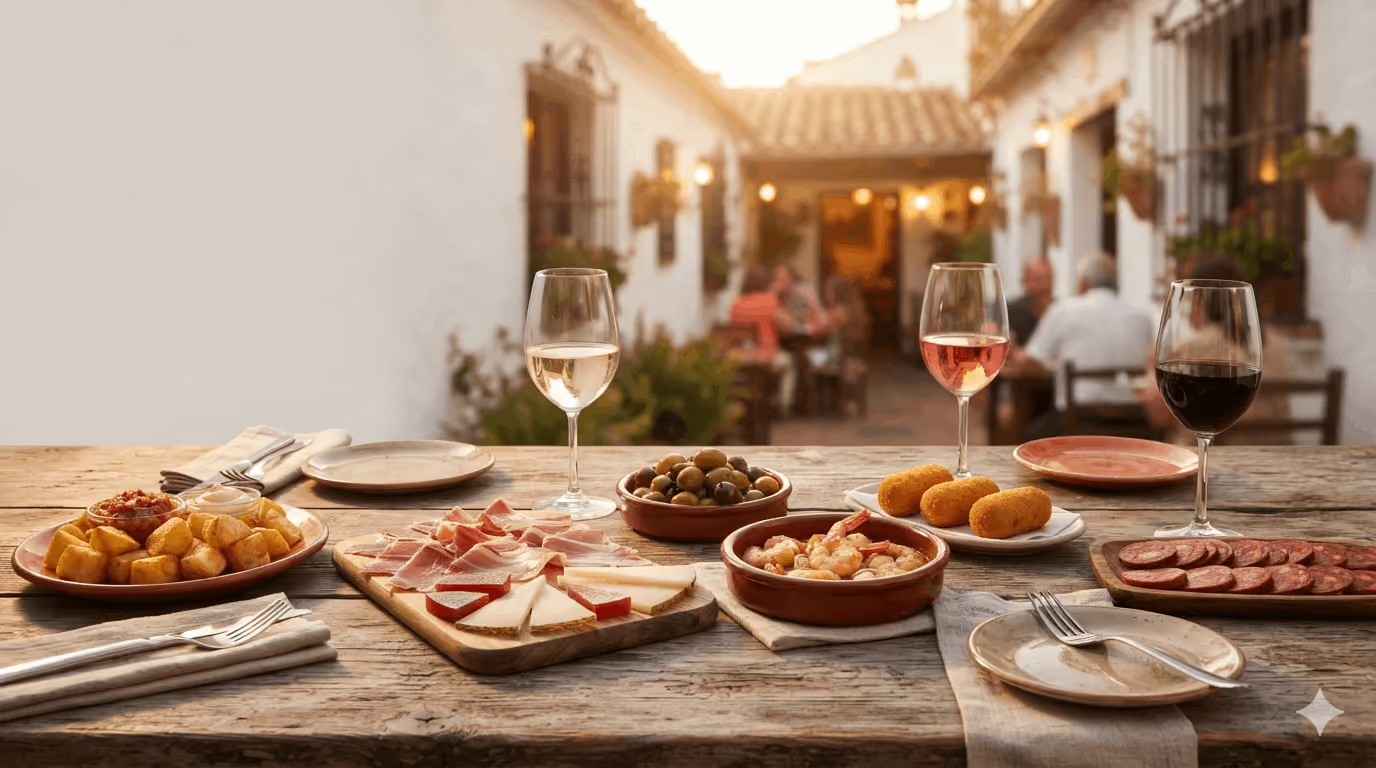

The best appetizers for a wine tasting are salty, simple bites that let the wine stay the star: a charcuterie board, a cheese selection, plain nuts, crostini, oysters, cured fish, dark chocolate, and fresh produce. For a two hour tasting, plan on one bottle of each wine per six to eight guests and four to six small bites per guest per hour, served light to bold in the same order as the wine.
Hosting a wine tasting and worrying about the snacks is normal, and the worry is usually bigger than the problem. You don't need to be a wine expert to get this right, because the food's job here is to support the wine rather than compete with it. This guide covers eight reliable ideas that work with any lineup, the amounts to actually buy, the order to serve everything in, and the few foods to keep off the table entirely.
How much wine and food do you need for a wine tasting party?
Plan one bottle of each wine per six to eight guests and four to six small bites per guest per hour, spread across two or three appetizers. A standard 750ml bottle pours about twelve tasting measures of two ounces, so a single bottle covers a table of friends with a little to spare, and it's worth buying a second of whichever wine you expect to be the favorite.
Four to six wines is the right number to pour, and our guide to how to host a wine tasting party covers the rest of the evening around them. That's enough to compare styles without wearing anyone's palate out, and a simple theme makes the whole evening easier to follow: three whites and three reds, one grape from several different regions, or a single country like Italy, France, or Spain. The food should stay deliberately light, because people came to taste wine and a full spread just fills everyone up before the reds arrive.
| Guests | Bottles for a 5 wine tasting | Small bites for 2 hours | Appetizers to put out |
|---|---|---|---|
| 6 | 5 (one of each) | 48 to 72 | 2 |
| 8 | 5 to 6 | 64 to 96 | 2 to 3 |
| 12 | 10 (two of each) | 96 to 144 | 3 |
| 20 | 15 to 16 | 160 to 240 | 3 to 4 |
Set the table so the wine is easy to read and easy to reset between pours. One glass per guest is fine if you rinse in between, and you'll want water and plain crackers to clear the palate, a spit bucket or two, small plates, and napkins. A white tablecloth costs nothing and makes the color of each wine obvious, and if your guests are new to this, how to taste wine properly is a short primer worth sending round beforehand.
Serve light to bold and match the food to that arc. Start with sparkling and crisp whites, whether that's Champagne or Prosecco, move through rosé and lighter reds, and finish with full reds and anything sweet, bringing out the delicate bites early and the rich ones at the end. With that skeleton in place, here are the eight appetizers worth building the table around.
1. Charcuterie & Cured Meats Board
The range of salty, fatty meats works with almost any wine, making it a perfect, low-stress option.
The salt and fat in prosciutto, salami, and other cured meats are great for tasting. They soften the feel of strong red wines and make the fruity flavors in both reds and whites stand out more. It's an easy way to let your guests discover what they like without any pressure, and the board stays interactive: a bite of sharp cheddar with a light red, then salty prosciutto with a crisp white, and everyone tastes how the wine shifts.
Build the board so it moves from mild to strong, with the gentler meats at one end and the bolder ones at the other, which lets guests ease into the stronger flavors rather than starting there. Slice everything thin and cut the cheese into bite-sized pieces, because the point is to taste rather than to eat a meal. Small cards naming each item help people remember what they liked, and taking the meats and cheeses out of the fridge about twenty minutes ahead makes a noticeable difference to how much you can taste.
2. Fresh Oysters & Shellfish
Fresh oysters are a sophisticated appetizer for a wine tasting, especially if you're serving crisp white or sparkling wines. The clean, salty flavor of the seafood makes the wine taste even more crisp and refreshing.
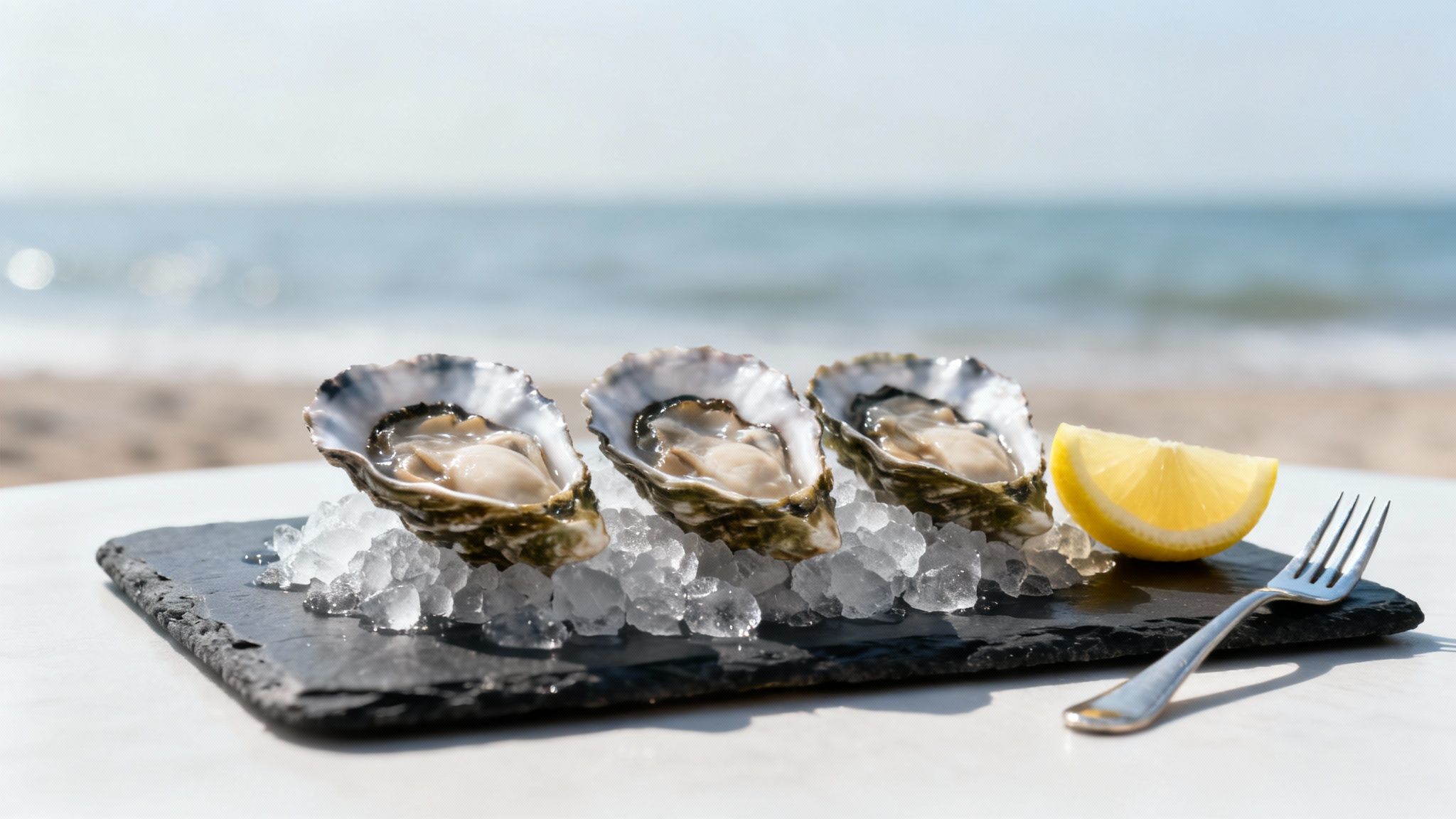
When you pair oysters with a high-acid wine like Champagne or Sauvignon Blanc, something special happens. The wine's acidity cuts through the oyster's texture, and the oyster's saltiness makes the wine's fresh, mineral notes pop. It is the kind of pairing people remember afterwards.
Why It Works for Wine Tasting
This pairing is a great way to understand the idea of "place." Just as wine tastes like where it's from, an oyster tastes like the water it grew in. Serving them together tells a story of a specific coastal spot.
Have the oysters opened as close to serving as you can and set them on a bed of crushed ice. Keep the toppings to one side, a few lemon wedges and a simple mignonette of shallots, vinegar and pepper, so guests can taste the oyster and the wine on their own first and then see what the garnish changes. Two or three oysters per person is plenty, since this is a small bite in a long evening rather than a course, and our guide to wine for oysters goes deeper on which pours suit them best.
3. Artisan Cheese Selection
A cheese board is a perfect partner for a wine tasting. A mix of soft, hard, and aged cheeses is a hands-on way to see how fat and texture change a wine.
The fat in cheese can make a bold red wine feel smoother, which is the same principle behind our guide to food to pair with red wine, while the salt in a hard cheese can make a wine's fruit flavors seem brighter. Tangy goat cheese, for example, is a classic match for a zesty Sauvignon Blanc, while a creamy brie loves a full-bodied Cabernet and a sharp blue cheese sings next to a sweet dessert wine. It's an easy, jargon-free way to learn about pairing.
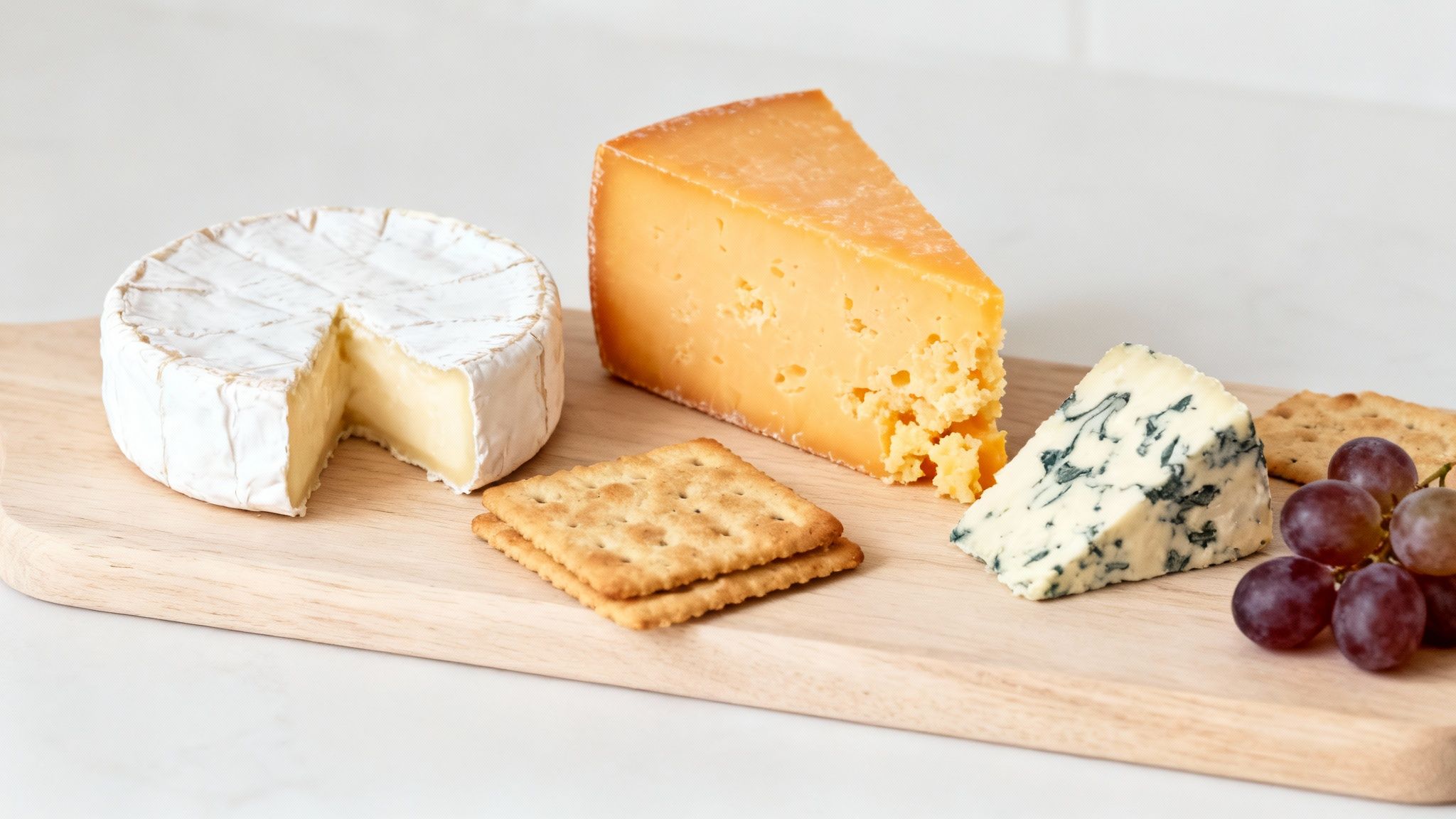
Lay the cheeses out by intensity, mild goat cheese at one end and aged cheddar or blue at the other, and give each one its own knife so the flavors don't run together. Take them out of the fridge thirty to forty-five minutes before guests arrive, because cold flattens cheese the same way it flattens wine. A little honey, fig jam, or a bunch of grapes on the board bridges the cheese and the wine and gives people something to experiment with.
4. Gourmet Nuts & Toasted Seeds
A bowl of gourmet nuts is a simple, budget-friendly appetizer that works surprisingly well for wine tastings. Their texture and savory notes suit a wide range of wines without overpowering any of them.
The natural oils in almonds and walnuts can soften the feel of red wines, while their toasty flavor can highlight similar notes in an oak-aged white wine like Chardonnay. It's a low-effort way to add another layer of flavor, and it invites subtle pairings: a Marcona almond next to a Spanish white, a richer hazelnut with a medium-bodied red.
Two or three kinds is enough, and mild almonds, richer pecans, and savory cashews between them cover most wine styles. Toasting them in a dry pan for a few minutes just before the party transforms the aroma, and a light sprinkle of salt is all they need, since heavily salted nuts bully the wine. Nuts are a common allergen, so put out a clearly visible sign naming what's in the bowl.
5. Crostini & Bruschetta Variations
Crostini (small toasted bread slices) are a perfect canvas for countless flavors, making them one of the best appetizers for a wine tasting. Topped with tomato and basil or a savory olive spread, they show how much a topping can change a wine.
A tomato bruschetta suits an Italian red and an olive tapenade suits a crisp white, which makes them a good choice when several wines are open and guests can try each topping against a couple of pours.
Slice a good baguette and toast the pieces shortly before guests arrive, because crostini go soft quickly and a limp base ruins the whole idea. Three or four distinct toppings is the right number, something like a classic tomato and basil, a savory olive tapenade, and a creamy white bean puree, each labelled and ideally with a suggested wine beside it. Keep the toppings ready but off the bread until the last moment so nothing turns soggy.
6. Cured Fish & Smoked Preparations
Cured and smoked fish, like smoked salmon or gravlax, bring a savory and sophisticated flavor to a wine tasting. Their savory depth and oily texture suit crisp whites and even some lighter reds.
The oils in the fish can soften a wine's acidity, while the saltiness highlights its fruit notes. Serving smoked trout with a delicate Pinot Noir or cured anchovies with a zesty Italian white shows how food can dramatically change the way a wine tastes. A briny, cured fish next to a high-acid white creates a clean, refreshing finish that guests remember.
Include both a smoked option like salmon and a cured one like anchovies, since the two have quite different textures and show different things about the wine. Arrange the fish on crackers or small toasts so people can pick them up cleanly, and keep the portions small. Little bowls of chopped red onion, capers, fresh dill, and lemon wedges cut through the richness, and a card naming each type helps guests track which pairing they preferred.
7. Chocolate & Dark Tasting Bites
Pairing chocolate with wine sounds tricky, but it's surprisingly simple and effective. High-quality dark chocolate has flavors ranging from bitter and earthy to fruity, which can match different wines. The key is to match the intensity of the chocolate with the body of the wine.
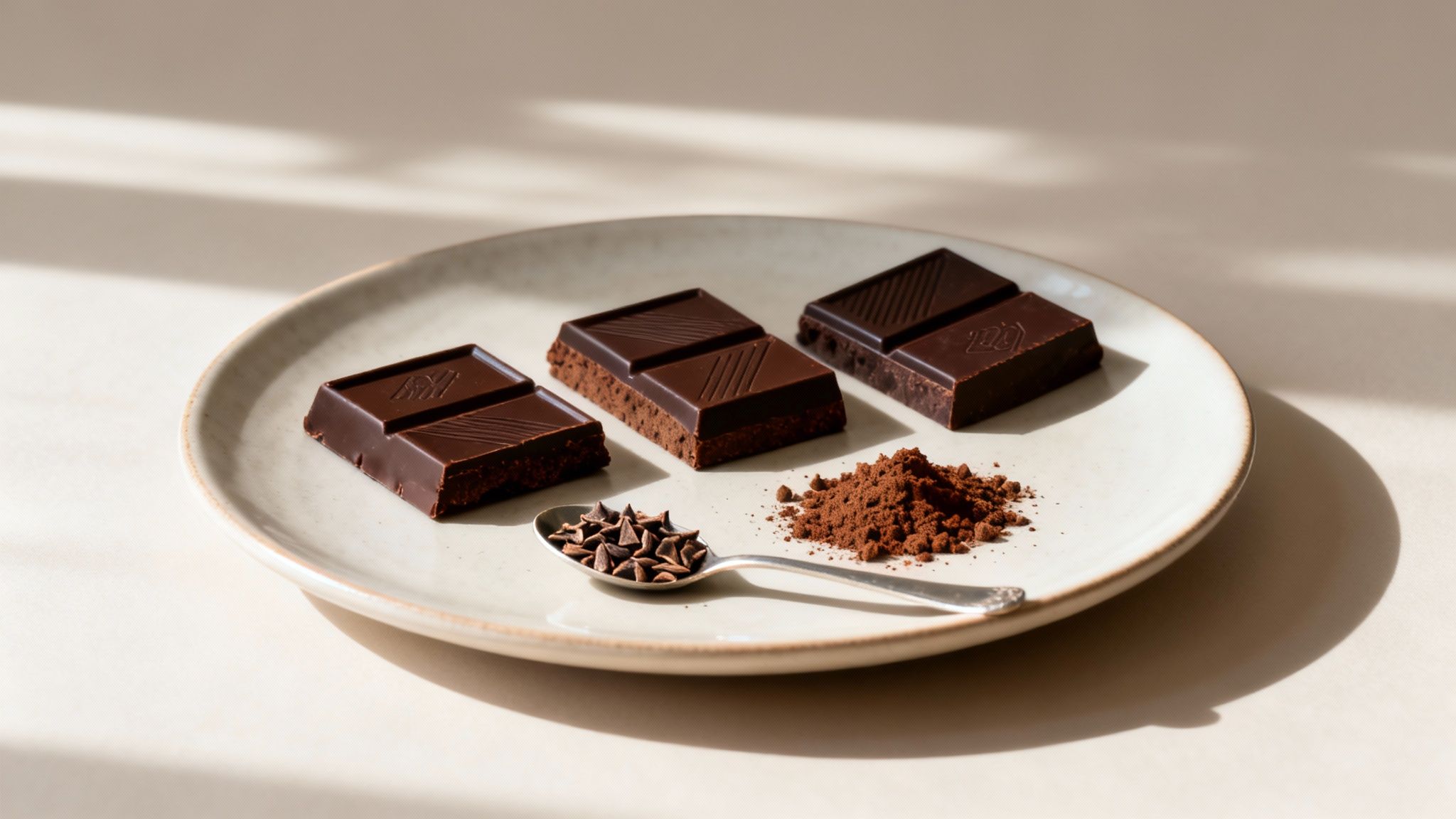
A good dark chocolate can make a bold Cabernet Sauvignon feel smoother or bring out the rich fruit flavors in a Port. That makes chocolate an excellent choice for a tasting focused on full-bodied reds or dessert wines, and a memorable way to end an event.
Why It Works for Wine Tasting
Start around 60 percent cacao and work up to the more bitter bars at 72 percent and above, breaking everything into thumbnail-sized squares. This is a flavor interaction rather than a dessert course, so the pieces should be small. Label the percentage and the origin on a card, and keep the chocolate cool but not cold, somewhere around 65 to 68 degrees Fahrenheit, so it melts properly on the tongue instead of sitting there.
8. Fresh Produce & Plant-Based Selections
A platter of fresh fruit, vegetables, and plant-based dips is a vibrant, refreshing appetizer that works with almost any wine. It cleanses the palate and covers guests with dietary restrictions.
The acidity in citrus matches the brightness in a Sauvignon Blanc, the sweetness of peaches suits a rosé, and the earthy note in a beet hummus draws out something similar in a Pinot Noir. It also resets the palate between pours, which is why it earns its place next to the richer boards.
Pick fruit and vegetables at their seasonal peak, since a flavorless out-of-season strawberry does nothing for anybody's wine. Cut everything close to serving so it doesn't brown, and offer a few different dips, a basil hummus, a smoky baba ganoush, or a zesty romesco, all of which get along with a wide range of wines. Label the more unusual items so guests can find their way back to whatever they liked.
What foods should you avoid at a wine tasting?
A wine tasting is one of the few times what you leave out matters as much as what you serve. A handful of foods fight almost every wine, so save them for another night:
- Very spicy dishes. Chili heat amplifies the burn of alcohol and flattens fruit, especially in bold reds.
- Heavy vinegar and citrus dressings. Sharp acid makes most wines taste dull and thin by comparison. Go easy on vinaigrettes.
- Raw garlic and raw onion in quantity. A little is fine, but a garlic-forward dip can bully delicate whites.
- Artichokes and asparagus. Both contain compounds that can make wine taste oddly sweet or metallic. Serve them cooked and buttered, or skip them.
- Super-sweet desserts before dry wines. Sugar makes a dry wine taste sour, so keep anything very sweet for the end, paired with a sweet wine.
None of this means banning flavor, it just means matching the food to what the wine has to do tonight.
Which appetizer should you choose for your tasting?
| Appetizer | Effort and cost | Pours it flatters most |
|---|---|---|
| Charcuterie board | Medium effort, medium to high cost | Bold reds, and almost anything else |
| Oysters and shellfish | High effort, high cost | Champagne, Muscadet, Sauvignon Blanc |
| Cheese selection | Medium effort, medium cost | The whole lineup, reds especially |
| Toasted nuts | Low effort, low cost | Oaked whites and medium reds |
| Crostini and bruschetta | Medium effort, low cost | Italian reds and crisp whites |
| Cured and smoked fish | Medium effort, high cost | High-acid whites and light reds |
| Dark chocolate | Low effort, medium cost | Full reds and dessert wines |
| Fresh produce board | Low effort, low cost | Rosé and light whites |
Frequently Asked Questions
How many appetizers do I need for a wine tasting?
Plan two or three appetizers for the group, not one per wine. Aim for about 4 to 6 small bites per guest per hour. A cheese or charcuterie board plus one lighter option, like crostini or a produce platter, covers most tastings of 6 to 10 people.
How much wine should I buy?
Buy one 750ml bottle of each wine for every 6 to 8 guests. A bottle pours about 12 tasting-size servings of 2 ounces, which is plenty when everyone is trying several wines. Add a spare bottle of any wine you think will be popular.
What appetizers go with red versus white wine?
Whites and sparkling wines love bright, salty, or oceanic bites: oysters, goat cheese, smoked fish, citrusy crostini. Reds prefer richer, savory food: cured meats, aged cheese, roasted nuts, and dark chocolate with bolder bottles. When in doubt, match the weight of the food to the weight of the wine.
What kind of food goes well with wine at a party?
Salty, simple, room-temperature food goes best with wine at a party, because salt and fat both flatter wine while strong seasoning fights it. Cured meats, hard and soft cheeses, plain toasted nuts, olives, crostini, and cured or smoked fish are the reliable spine of any wine table. Keep anything vinegary, very spicy, or heavily sweet off to one side, since those three are what actually make a wine taste wrong.
What are some good finger foods to serve at a wine tasting party?
The best finger foods for a wine tasting are ones people can eat in a single bite without a plate or a fork: crostini with a spread, cubes of hard cheese, thin-sliced prosciutto, marcona almonds, olives, smoked salmon on a cracker, and squares of dark chocolate. Everything should be small enough to clear the palate quickly, because a large or messy bite means guests stop tasting and start eating. Two or three of these done well beats six done thinly.
What is a good appetizer to serve with wine?
A cheese board is the single best appetizer to serve with wine, because the fat softens tannin in reds and the salt lifts fruit in both reds and whites, so it flatters almost anything you pour. If you only put out one thing, make it a board with a mild goat cheese, a hard aged cheese, and something creamy. Add plain toasted nuts as the second item and you've covered most of a tasting lineup for very little work.
In what order should I serve everything?
Move from light to bold. Pour sparkling and crisp whites first with delicate bites, then rosé and lighter reds, and finish with full-bodied reds and a sweet wine alongside chocolate. This keeps early wines from tasting weak after something rich.
What should I avoid serving at a wine tasting?
Skip very spicy dishes, heavy vinegar dressings, lots of raw garlic, and artichokes or asparagus, since they fight most wines. Keep very sweet desserts for the end, paired with a sweet wine, so they don't make your dry wines taste sour.
Choose Your Appetizers with Confidence
You now have a simple toolkit for choosing the perfect appetizers for a wine tasting, along with a plan for how much to buy and the order to serve it in. Whether you're pairing sparkling wine with oysters or a bold red with dark chocolate, the basics are the same. The goal is a fun, relaxing experience, not a test.
The most important thing to remember is that pairing is about balance, not rules. Keep these ideas in mind:
- Match weight with weight: Light appetizers go with light wines. Richer foods go with bolder wines.
- Complement flavors: Earthy foods go with earthy wines. Citrusy foods go with citrusy wines.
- Use contrast: A little salt can make a crisp wine taste even more refreshing.
- Prep ahead: Get as much ready in advance as you can, so you can enjoy the party with your guests.
Feeling good about the food but still unsure which wines to pour? Instead of guessing in the wine aisle, let an AI assistant like Sommy give you a personalized recommendation in seconds. Tell it what appetizers you're serving, and it suggests bottles that match your taste, so you can host with confidence.