

You see ‘Whole Cluster Pinot Noir’ on a wine list and your brain stalls. Is this a secret code for wine experts? Not at all. It’s a simple signpost telling you to expect a Pinot Noir that is spicier, more aromatic, and has a savory twist: think black tea or fresh herbs mixed with the usual cherry and raspberry flavors. It's a fantastic choice if you want a red wine with a little more complexity than just pure fruit.
This feeling of uncertainty when choosing wine is completely normal. The goal isn't to become a wine expert, but to feel confident picking a bottle you'll actually enjoy. 'Whole cluster' is just a clue to help you do that.

A Simple Decision Framework: Whole Cluster vs. Regular Pinot Noir
To make your choice easier, here’s a quick comparison. This isn't about which is "better". It's about what you're in the mood for right now.
| You Might Prefer... | Whole Cluster Pinot Noir If... | Regular (Destemmed) Pinot Noir If... |
|---|---|---|
| Aromas | You like spicy, herbal, or floral smells (like black tea, thyme, rose). | You prefer straightforward fruit smells (like cherry, raspberry). |
| Flavor | You want red fruit balanced with savory, earthy notes. | You're looking for bright, clean, pure fruit flavors. |
| Texture | You enjoy a silky wine with a fresh, slightly grippy finish. | You prefer a wine that feels soft and round in your mouth. |
| Overall Vibe | You're feeling adventurous and want something complex and energetic. | You want a classic, smooth, and fruit-forward red wine. |
This isn't wine theory; it's just about matching a wine style to your personal taste. Knowing this simple difference can turn a moment of indecision at a restaurant into a confident choice.
What Does 'Whole Cluster' Mean for the Taste?
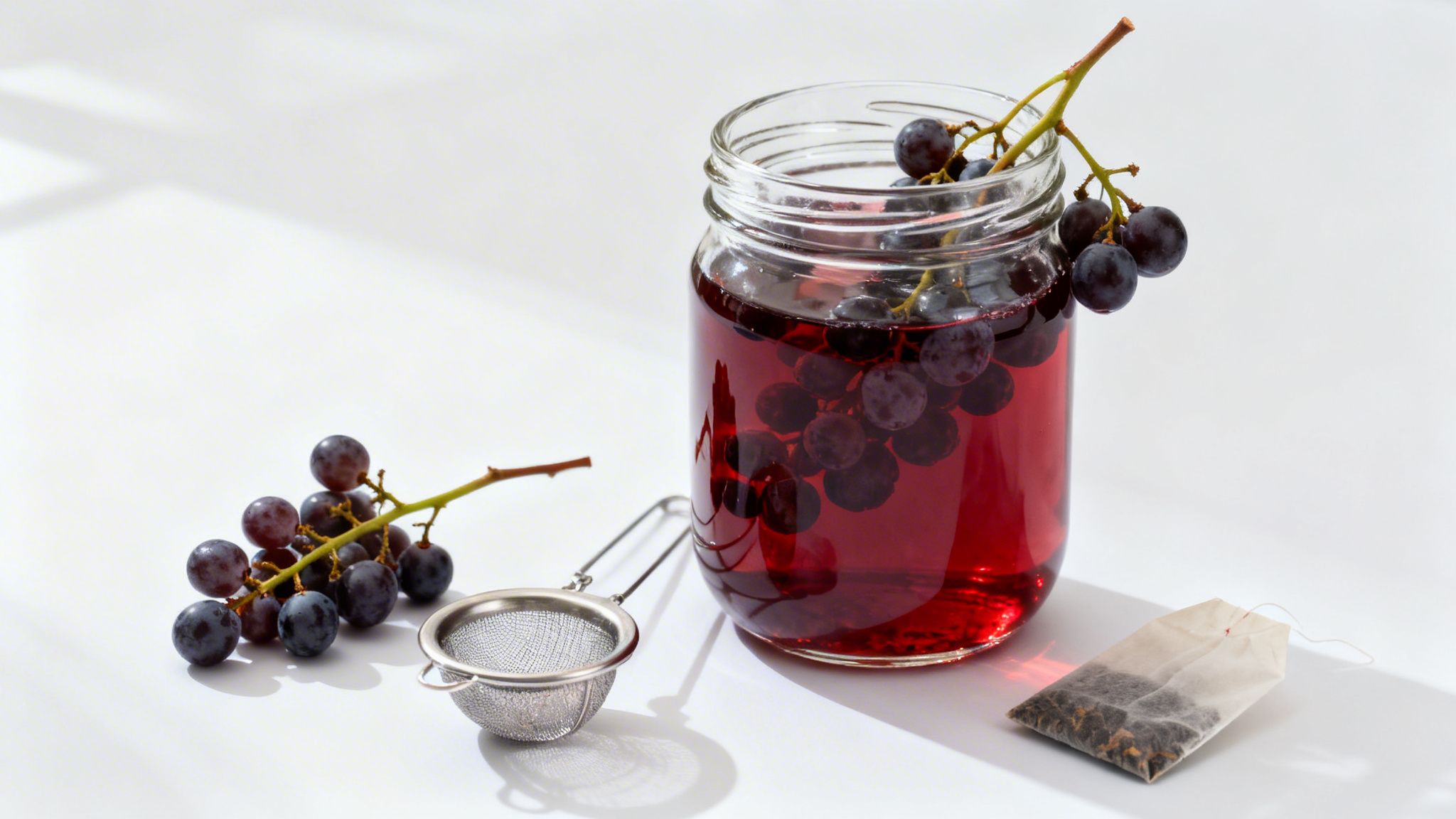
Let's demystify the term ‘whole cluster’ with a simple tea analogy.
Imagine making tea. Most wine is like using a tea bag. You get the pure flavor of the leaves (the grapes). Whole cluster fermentation is more like brewing loose-leaf tea where the stems are left in with the leaves.
Why would a winemaker do this? Those stems add an extra layer of flavor and texture. It's a deliberate choice to build a more interesting wine. The stems contribute a savory spice and a subtle structure that makes the wine feel more complex. That structure comes from stem tannins. If that "grippy" feeling in red wine is new to you, our simple guide explains what tannin is in wine without the jargon.
In a Willamette Valley whole cluster Pinot Noir, this simple technique creates a wine with intriguing notes of fresh-cut flowers and baking spices that mingle with the familiar cherry flavors.
Suddenly, that technical-sounding term on the bottle becomes a useful clue about the taste inside. It helps you know what to expect, so you can choose with confidence instead of guessing.
Why This Style Works So Well in the Willamette Valley

There’s a reason ‘whole cluster’ and ‘Willamette Valley Pinot Noir’ appear together so often. The region’s cool climate is the secret ingredient.
The grapes here ripen slowly, which means the stems also have time to mature. They turn woody and brown, losing the green, bitter taste they might have in a hotter region. This allows winemakers to include the stems, adding that desirable spicy, savory complexity without overpowering the wine's delicate fruit.
The cool nights also help the grapes maintain their natural zingy quality. That bright, refreshing feeling is a signature of Willamette Valley wines. If you're curious about what makes a wine feel refreshing, you can learn more in our simple explanation of acidity in wine.
This perfect match between place and technique is why the region has become a star for Pinot Noir. What started as just a few acres in the 1970s has grown into a world-class wine region.
Pairing Food with This Wine: Keep It Simple

The good news is that Willamette Valley whole-cluster Pinot Noir is one of the most food-friendly wines you can choose. Its mix of bright acidity, earthy notes, and savory spice makes it incredibly versatile.
You don't need to memorize complicated pairing rules. Just think about these simple connections:
- For rich dishes: The wine’s brightness cuts through the richness of salmon or duck.
- For earthy dishes: Its savory notes are a perfect match for mushrooms or root vegetables.
- For herb-seasoned dishes: The wine's own spicy, herbal character complements dishes like roasted chicken or pork loin with herbs.
This is exactly the kind of in-the-moment decision that Sommy helps with. Instead of worrying if you're making the "right" choice, you can use the AI assistant to see which dishes on the menu are a great fit for your wine. For a few more confidence-building tips, check out our guide on how to pair wine with food.
How to Choose a Bottle Without the Guesswork
You're standing in the wine aisle, faced with a wall of Pinot Noir. How do you find the right one?
First, look for clues on the label. Winemakers are often proud of this technique and will print "whole cluster" or "whole bunch" on the bottle. If you're tired of squinting at labels, our guide on how to read wine labels can help.
You might notice these bottles sometimes have a higher price tag. This reflects the Willamette Valley's well-earned reputation. If you're curious about the region's history, the team at Skurnik.com have a great history of the region.
But there’s an easier way than memorizing producer names or squinting at back labels.
This is where an AI assistant like Sommy becomes your personal wine guide. Just scan a label in the store, and the app will tell you if the wine has that spicy, complex "whole cluster" style and, more importantly, if it matches your personal taste preferences. It turns an overwhelming choice into a simple, confident decision.
A Few Final Questions, Answered
Feeling more confident about this wine style is the goal. Here are a few common questions, answered simply, to remove any lingering confusion.
| Question | The Simple Answer |
|---|---|
| Is this style good for beginners? | Yes. It sounds technical, but it's just a delicious wine. It's a great next step if you enjoy red wines and want to try something with more than just fruit flavor. |
| What does it taste like again? | Think classic Pinot Noir (cherry, raspberry) with an added savory kick of black tea, spices, and fresh herbs. |
| Why is Willamette Valley so famous for Pinot Noir? | A Willamette Valley Pinot Noir famously beat top French Burgundies in a blind tasting in 1979, which put Oregon on the world wine map. You can read more about the region's top-tier status on PantherCreekCellars.com. |
| Do I have to drink this with food? | Not at all. Its bright, aromatic character makes it a great wine to enjoy on its own. |
The key takeaway is that you don't need to be an expert. You just need a little information to feel good about your choice. If you’re ready to explore more, our guide to finding the best Pinot Noir for your taste offers more simple tips.
Decades ago, a blind tasting proved Oregon could make world-class wine. You can learn more about Oregon's wine origins on skurnik.com. Today, you don't need to choose blind.
Instead of trying to memorize wine facts, let Sommy be your guide. The AI-powered assistant helps you choose the right bottle in seconds, right from the restaurant table or store aisle. Learn more at https://www.sommy.ai and make your next wine choice a confident one.