
Staring at a wall of wine can feel like trying to solve a puzzle with no instructions. Every bottle has a story to tell, but it's written in a foreign language of geography, grapes, and the winemaker's personal touch.
Think of the label as your personal decoder ring. Once you know what to look for, you can make confident choices, whether you’re in a tiny boutique shop or a massive supermarket.
Your Decoder Ring for Wine Labels
Most of what you need to know is right there on the front label, broken down into a few key pieces of information. Getting comfortable with these five elements will transform how you shop for wine.
Here are the fundamentals you'll find on almost every bottle:
- Producer: Who actually made the wine? A trusted name can be your best guide to quality and a reliable shortcut when you're in a hurry.
- Region: Where were the grapes grown? This is a massive clue to the wine's style. A sun-drenched Californian climate produces very different flavors than a cool, rainy corner of France.
- Grape Variety: What's it made from? Many labels will proudly state a single grape like 'Chardonnay' or 'Pinot Noir,' while others will simply hint at a traditional blend.
- Vintage: What year were the grapes picked? The vintage tells you about the weather during that specific growing season, which can have a huge impact on the final taste.
- Alcohol Content: The ABV (Alcohol by Volume) gives you a hint about the wine's body and style. Higher alcohol often means a richer, fuller-bodied wine.
Of course, for instant clarity, a tool like the Sommy wine scanner app can translate all this information for you in a matter of seconds, providing tasting notes and food pairings tailored to your preferences.
But let's quickly summarize what you're looking for. Think of it as a cheat sheet for the wine aisle.
The 5 Key Elements of a Wine Label at a Glance
This table breaks down the most critical information you’ll find on a wine label and what it really tells you about the liquid inside the bottle.
| Label Element | What It Tells You | Why It Matters |
|---|---|---|
| Producer | The winery or person who made the wine. | Reputation is everything. A good producer is often a safe bet, even in a challenging vintage year. |
| Region | The geographic origin of the grapes. | This is your biggest clue to the wine's style. Climate and soil dictate the flavor profile. |
| Grape Variety | The type of grape used (e.g., Merlot, Sauvignon Blanc). | This tells you the primary flavors and characteristics to expect—like citrus notes or dark berry flavors. |
| Vintage | The year the grapes were harvested. | Informs you about the quality of the growing season and the wine's age and readiness to drink. |
| ABV | Alcohol by Volume percentage. | A quick indicator of the wine's body. Lower ABV (under 12.5%) often means lighter; higher ABV (over 14%) suggests fuller and richer. |
Mastering these five points is like learning the basic grammar of wine. It gives you the power to look past the fancy artwork and understand the story the bottle is trying to tell you.
Old World vs. New World Labeling Styles
One of the biggest clues on a wine label is its origin, and that little detail tells you a lot about how to read it. The wine world is often split into two camps: the Old World (Europe) and the New World (pretty much everywhere else). Understanding this single difference is the key to quickly making sense of a bottle.
It really just boils down to what the winemaker decides to put front and center.
In the classic Old World regions—think France, which pumped out 48 million hectoliters in 2023, along with Italy and Spain—labels are all about the 'where'. They emphasize the specific region, known as the appellation, and assume you know which grapes are permitted there. This place-first approach is steeped in centuries of tradition and protected by strict laws, making the origin itself a powerful mark of quality.
On the flip side, New World labels from places like the USA, Australia, or South America are all about the 'what'. They shout the grape variety—like Cabernet Sauvignon or Chardonnay—right from the front label. It's a much more direct, consumer-friendly style that gets straight to the point.
This simple graphic shows you the three main pillars of information you'll find.
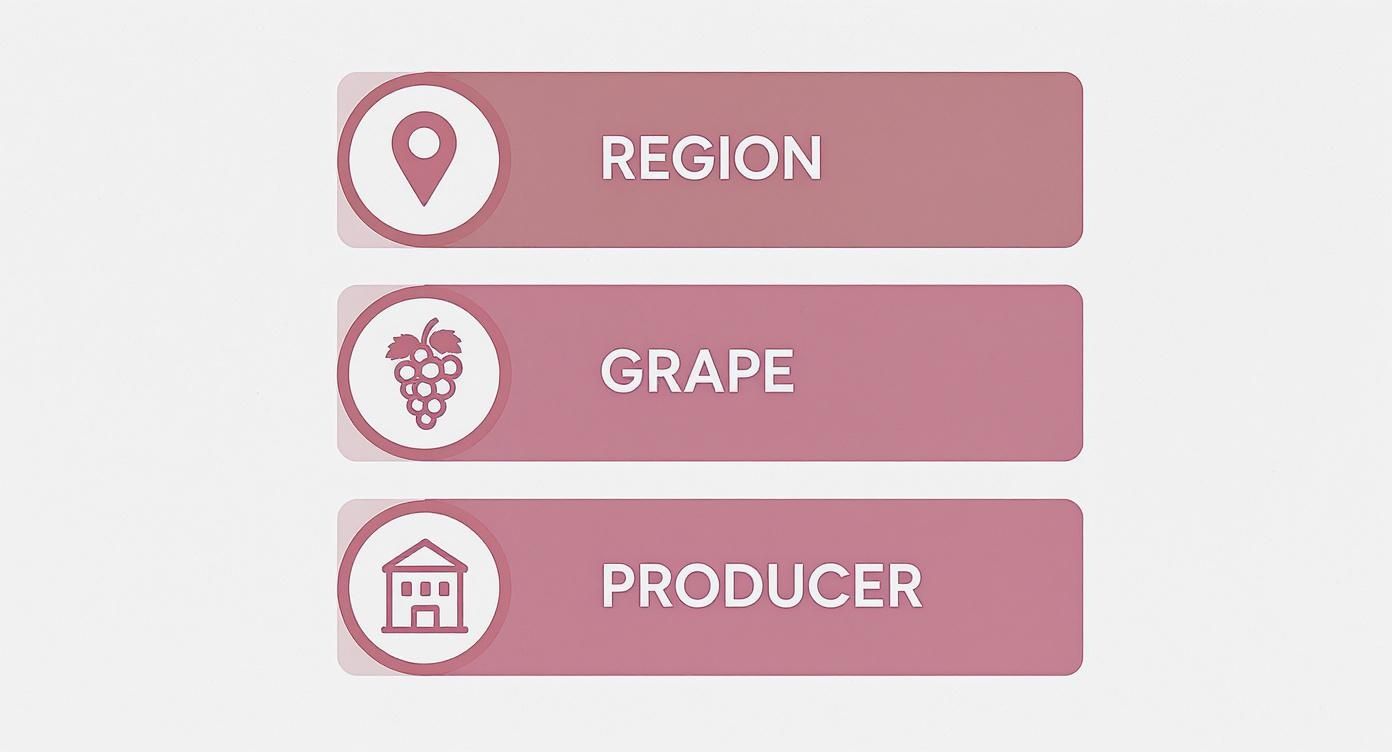
The order of importance for Region, Grape, and Producer really depends on where the bottle comes from. This is especially true when you're staring down a restaurant menu. If you need a little help with that, check out our quick guide on how to read a restaurant wine list.
Old World Label vs. New World Label: A Direct Comparison
To see this difference in action, let's compare two hypothetical bottles side-by-side. Imagine a classic red from Bordeaux and a bold red from California. The information is all there, but the priority is completely different.
| Information Priority | Old World Example (Bordeaux, France) | New World Example (Napa Valley, USA) |
|---|---|---|
| Top Priority | Region: Pauillac | Grape: Cabernet Sauvignon |
| Second Priority | Producer: Château Lafite Rothschild | Producer: Stag's Leap Wine Cellars |
| Third Priority | Classification: Premier Grand Cru | Region: Napa Valley |
| Fourth Priority | Vintage: 2018 | Vintage: 2019 |
| Assumed Knowledge | Grapes: Cabernet/Merlot blend | Blend Details: Maybe on back label |
Notice how the Old World label leads with the place, expecting you to know what that implies about the wine's style and grapes. The New World label, however, leads with the grape, telling you exactly what's in the bottle in plain terms. Neither approach is better—they're just different languages. When you encounter an unfamiliar Old World label, Sommy can be your translator, instantly identifying the grapes behind the region. It helps to know up front what a wine identifier app can and cannot tell you.
Diving into the Finer Details on a Wine Label
Once you've got the basics down, you’ll start noticing other terms on the label. These aren't just filler; they’re clues that can point you toward a higher-quality bottle or a very specific style of winemaking.
Learning to spot these phrases is like getting an inside scoop on what the winemaker was aiming for. It's how you move from just picking a wine to really choosing one.
Take a term like "Estate Bottled." This is a big deal. It’s a guarantee that the winery grew every single grape and made the wine right there on their own property. Think of it as the ultimate farm-to-table promise, signifying total control from the vineyard soil to the final cork. That level of oversight often translates directly into a better, more distinctive wine.
Clues from the Vineyard and Cellar
Other phrases give you hints about the grapes themselves or how the wine was aged. Spotting these can often lead you to wines with more concentration and complexity.
- Vieilles Vignes (Old Vines): While there’s no strict legal definition, this term usually means the wine comes from vines that are at least 25 years old. Why does that matter? Older vines produce fewer grapes, but the ones they do grow are packed with intense, concentrated flavor.
- Reserve: This one is a bit tricky because its meaning changes depending on where you are. In some regions, like Spain or Italy, it’s a legally defined term that requires longer aging. In other places, it might just be the winery's way of flagging what they consider a premium batch.
A wine's classification acts as a roadmap to its origin and quality. Systems like DOCG in Italy, AOC in France, and AVA in the United States legally define where and how a wine was made, ensuring its authenticity.
Of course, nobody expects you to memorize every single term on the spot. When you're standing in a wine shop, an app like Sommy can scan the label and give you simple, clear explanations in seconds, telling you exactly what "Riserva" means on that specific bottle of Chianti.
And as you get better at decoding labels, you'll want to get better at describing what you're tasting. For that, our guide on creating a wine tasting notes template is the perfect next step.
Putting Your Knowledge into Practice
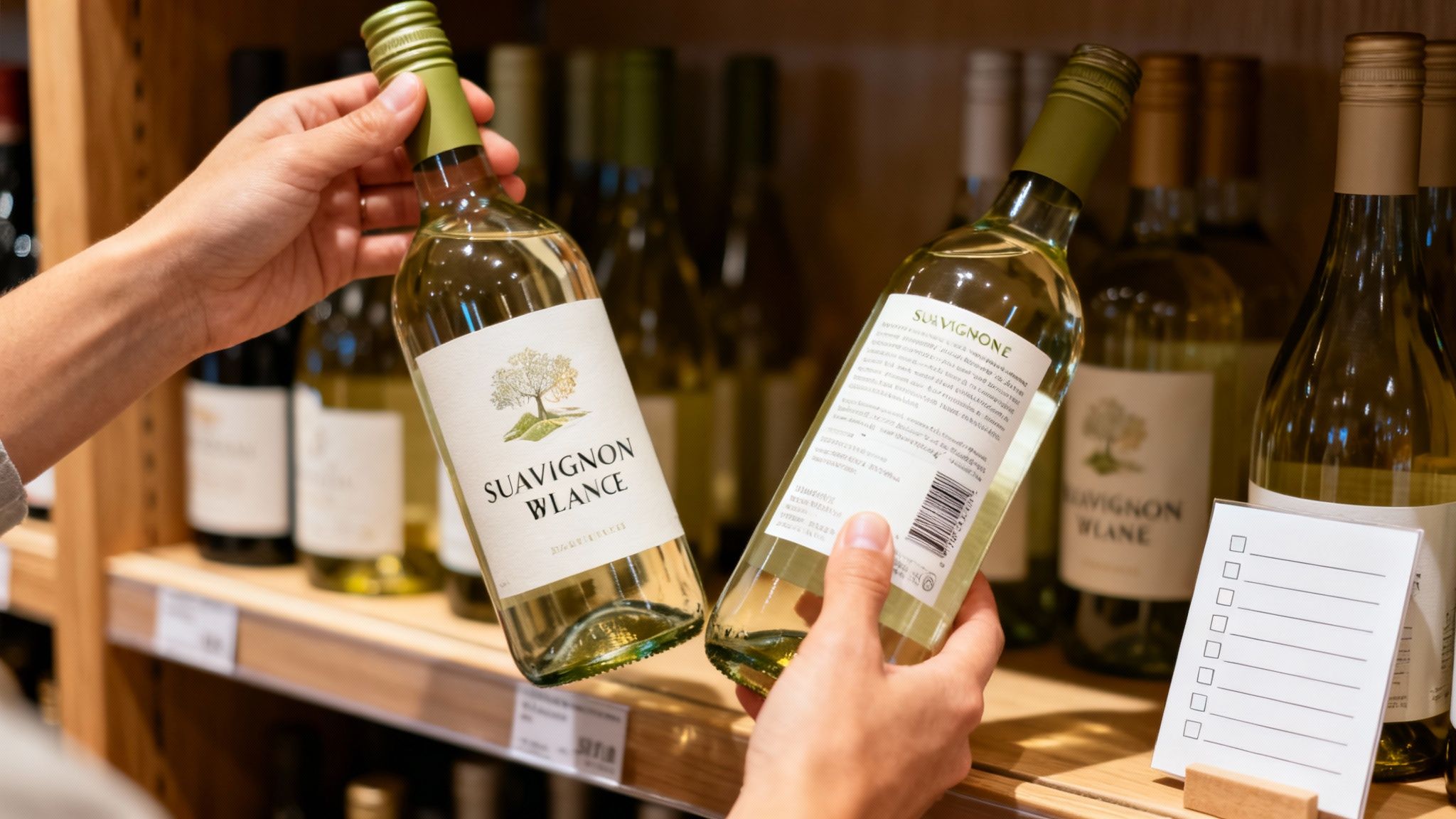
Alright, this is where the theory ends and the fun begins. Let's walk through a real-world scenario you'll face a dozen times: standing in a wine shop, trying to pick between two bottles that look pretty similar.
Imagine you're staring at two bottles of Sauvignon Blanc. How do you decide?
One label says it’s from Marlborough, New Zealand. Your new label-reading skills tell you this is a New World region famous for its zesty, punchy style bursting with grapefruit and passionfruit. The other is from Sancerre, an Old World French appellation known for its elegant, mineral-driven, and flinty expressions of that exact same grape.
Just by reading the region, you immediately know these two wines will offer completely different experiences. That’s the power of the label.
Quick Decision Making in the Aisle
When you're in a busy shop on a Tuesday evening, you don’t have time for a research project. You need a few mental shortcuts to make a smart choice, fast.
Here are a couple of my favorite tricks for making a snap judgment:
- Check the Importer: For any wine that’s traveled to get to you, flip it over and look for the importer’s name on the back label. Great importers are curators. They build their reputation on finding quality wines, so a familiar importer's mark is often a reliable seal of approval.
- Look for Specificity: Does the label just say “California,” or does it get more granular, naming an AVA like “Russian River Valley?” More geographic detail is almost always a sign of a higher-quality, more distinctive wine. The winemaker is proud of exactly where those grapes grew.
A truly personalized choice comes from layering your preferences on top of the label info. Scanning the bottle with an app like Sommy gives you instant access to ratings, tasting notes, and food pairing ideas that are actually relevant to your taste. For instance, if you've told Sommy you love citrusy white wines, it might recommend the Marlborough Sauvignon Blanc over the Sancerre.
Knowing how to read the signposts on the label is the first step. The real goal, though, is to connect that information back to what you actually enjoy drinking. To figure that part out, our beginner's guide to building your personal wine profile is the perfect place to start.
Why the Back Label Is Your Secret Weapon
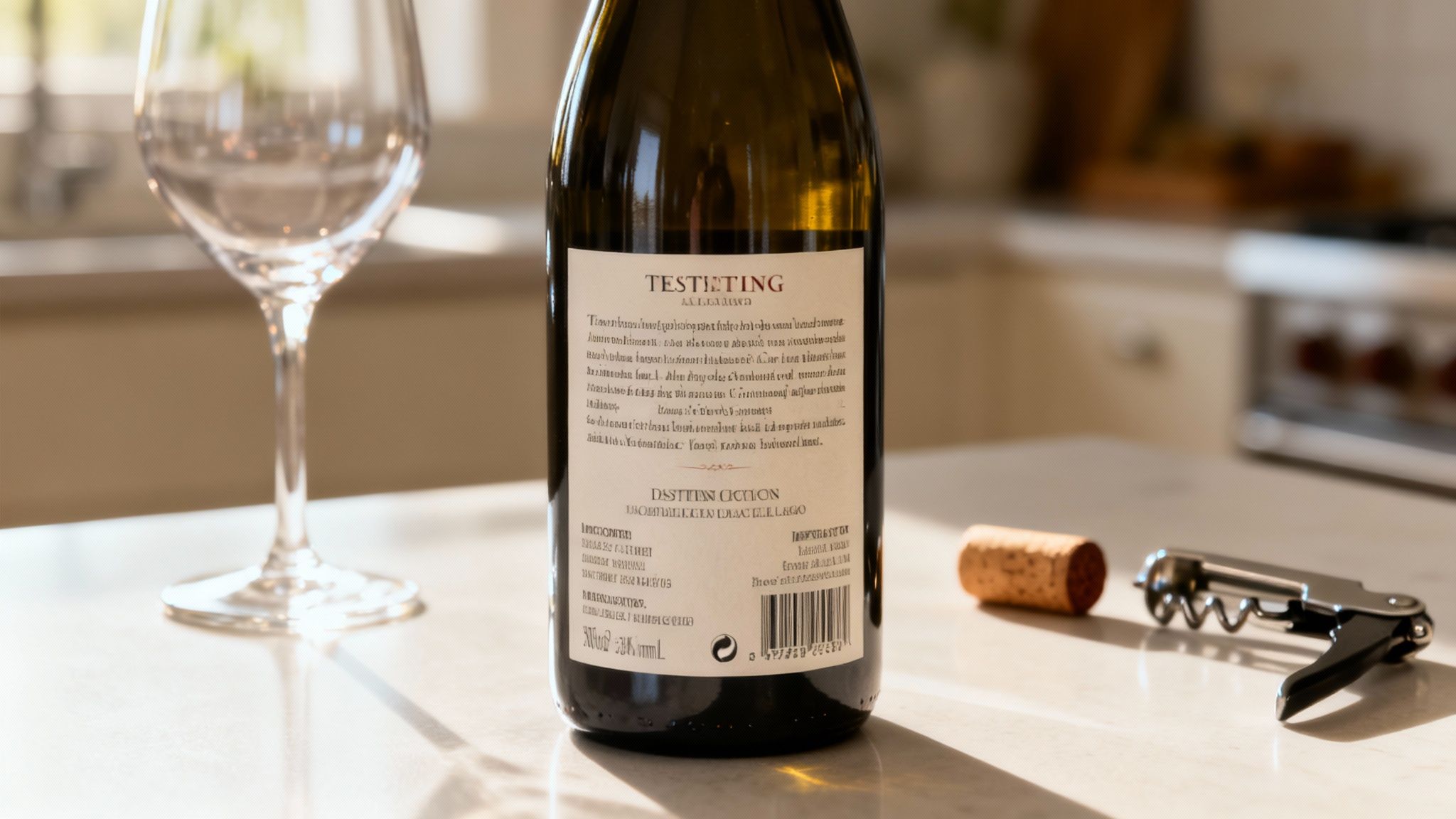
The front label is all about marketing—it’s designed to grab your attention on a crowded shelf. But the back label? That’s where the real conversation happens.
Think of it as your inside source. This is often where you’ll find the practical details that turn a good guess into a great choice. It’s easily one of the most overlooked tools for figuring out what’s actually inside the bottle.
This is also where the winemaker gets to tell their story. You’ll often find their personal tasting notes, which is like getting a direct hint about the flavors and aromas you can expect. This little blurb can be your best guide to deciding if a wine’s style is going to be a good fit for you.
What to Look For on the Back
Beyond the flavor clues, the back label is packed with logistical info and quality signals. Keep an eye out for these key details:
- Food Pairing Suggestions: Many producers take the guesswork out of dinner by suggesting exactly what dishes will make their wine sing.
- Importer Information: For international wines, the importer’s name can be a huge sign of quality. Reputable importers stake their entire brand on finding and sourcing excellent wines. If you recognize the name, it's a good sign.
- Sustainability Practices: If it matters to you, look for certifications or notes about organic, biodynamic, or sustainable farming. Winemakers who are proud of their methods will often mention them here.
The global wine label market hit $2.88 billion in 2023, and it's projected to keep growing. Why? Because consumers are demanding more distinctive and informative labels. You can dig into the wine label market trends at VerifiedMarketResearch.com.
Paying attention to these small details gives you a much richer, more complete picture of the wine. It's the fastest way to start choosing bottles with a lot more confidence.
A Few Common Questions You'll Run Into
Once you get the hang of the basics, you'll find a few questions tend to pop up again and again, especially when you're standing in a shop or staring at a wine list. Let's get those sorted out so you can feel even more confident in your picks.
What’s the Single Most Important Thing on the Label?
It's a great question, and the honest answer is: it depends.
But if I had to pick just one thing, it's the producer. A talented winemaker is your best bet for quality, even if they're working in a tough vintage or from a less-famous area. They're the ones who make the hundreds of small decisions that turn good grapes into great wine.
That said, for Old World wines, the region (or appellation) is a very close second, since it dictates the grapes and style. For New World bottles, the grape variety often tells you the most about what to expect.
So, an Older Wine is a Better Wine, Right?
Nope! This is one of the biggest myths in the wine world.
"Vintage" simply tells you the year the grapes were picked. And while a small fraction of high-end wines are built to age for years and develop incredible complexity, the vast majority—we're talking over 90% of all wine—is meant to be enjoyed fresh, usually within a year or two of its release.
So don't hold onto that crisp Sauvignon Blanc or light-bodied rosé for a special occasion five years from now. It will likely be tired and well past its prime. Drink it while it's vibrant!
How Can I Tell if a Wine is Sweet or Dry?
This can be a little tricky, but the label almost always leaves clues if you know where to look.
- Look for specific terms. For German Riesling, "Trocken" means dry. For Champagne and other sparkling wines, "Brut" is the driest style.
- Check the alcohol. This is a surprisingly good tell. A white wine with a low alcohol by volume (ABV), say 8-10%, often has some leftover sugar, giving it a touch of sweetness. A white wine over 13% ABV is almost certainly dry, as the yeast has converted all the sugar into alcohol.
What Does 'Contains Sulfites' Actually Mean?
You'll see this on nearly every bottle, and it's simply a legally required warning. Sulfites are a natural byproduct of fermentation and a tiny amount is often added to keep the wine from spoiling. They keep it fresh. For the vast majority of people, they’re completely harmless. For perspective, many common foods like dried apricots and french fries contain way more sulfites than a glass of wine.
Still feeling stuck in the wine aisle? Let Sommy.ai be your pocket expert.
Just scan any label or wine list for instant answers and recommendations that match your taste. Find your next favorite bottle at https://sommy.ai.