
To find out which wines you like, taste three deliberately different bottles side by side, describe each one using four simple dials, and write down which you'd buy again. That single evening tells you more about your own taste than a year of picking bottles at random, and it gives you a short description of yourself that works in any shop or restaurant.
Most advice on this either hands you a personality quiz that's forgotten the moment you close the tab, or tells you to buy six bottles and take notes alone. This guide keeps the useful part of that and cuts the cost, then shows you how to turn the result into something you keep using rather than a one-off experiment.
What is a personal wine profile?
It's a short, plain-language record of what you enjoy and what you don't, written in words that mean something to you. Think of it as a taste profile for bottles: a handful of styles you reliably like, a couple you've ruled out, and the words you'd use to ask for more of the first kind.
The goal isn't to sound like a sommelier. It's to be able to say "I like smooth reds and crisp whites, nothing too drying" and actually get handed something you'll enjoy. That sentence is worth more in a wine shop than any amount of memorized theory, because it's the only thing that lets someone else help you.
Notice what's missing from it: scores, vintages, regions, and tasting-note poetry about cigar boxes and wet stone. None of those help you choose. What helps is knowing that you found one wine too bitter, another too heavy, and a third light and juicy and worth buying again.
How do you start from what you already drink?
Begin with your existing habits, because your coffee and beer preferences already predict a surprising amount about your wine taste. Bitterness and body are the same sensations across every drink, so if you already know where you sit on them, you're partway there.
People who drink black coffee and hoppy beer usually get on well with bolder, more tannic reds, since they're comfortable with bitterness and a bit of grip. People who prefer lattes, sweeter cocktails, or cider tend to land on softer, juicier, fruit-forward wines, and often on whites with a touch of sweetness. Neither one is more sophisticated than the other, whatever anyone tells you.
So before you open anything, place yourself roughly on that scale. Then every wine you try becomes a comparison rather than a blank slate, and you can ask the only question that matters: is this lighter or heavier, sweeter or drier, smoother or more drying than what I normally drink?
Your food habits point the same direction. If you reach for lemon and vinegar and like sharp, salty things, you'll probably enjoy high-acid wines that other people find tart. If you gravitate toward creamy, buttery, slow-cooked food, richer and rounder wines will suit you better. These aren't rules so much as a decent opening guess, and the whole point of the tasting below is to check that guess against something real rather than trusting it.
What are the four taste dials?
The four dials are sweetness, body, acidity, and tannin. Those four cover almost everything you'll notice in a glass, and unlike the flowery vocabulary, you can feel all four without any training at all.
| Taste dial | What you actually feel | How you might say it |
|---|---|---|
| Sweetness | Sugar on the tip of your tongue | "Too sweet" or "nice and dry" |
| Body | Weight and thickness in your mouth | "Light like water" or "heavy like cream" |
| Acidity | Tang, and whether your mouth waters | "Crisp and fresh" or "a bit sharp" |
| Tannin | Dry, grippy feeling on your gums | "Smooth" or "too rough" |
Acidity is the one most beginners miss, so it's worth a moment. Swallow, wait a few seconds, and notice whether your mouth starts watering. Lots of watering means high acidity, which is what people are describing when they call a wine crisp, fresh, or zippy.
Tannin is the other one worth learning early, because it explains most of the reds people say they dislike. That drying, furry feeling on your gums and the inside of your cheeks is tannin, and it's the same sensation as over-steeped black tea. If you've decided you don't like red wine, there's a good chance you've only met high-tannin reds and would be perfectly happy with a soft Gamay or Pinot Noir.
How do you run the side-by-side tasting?
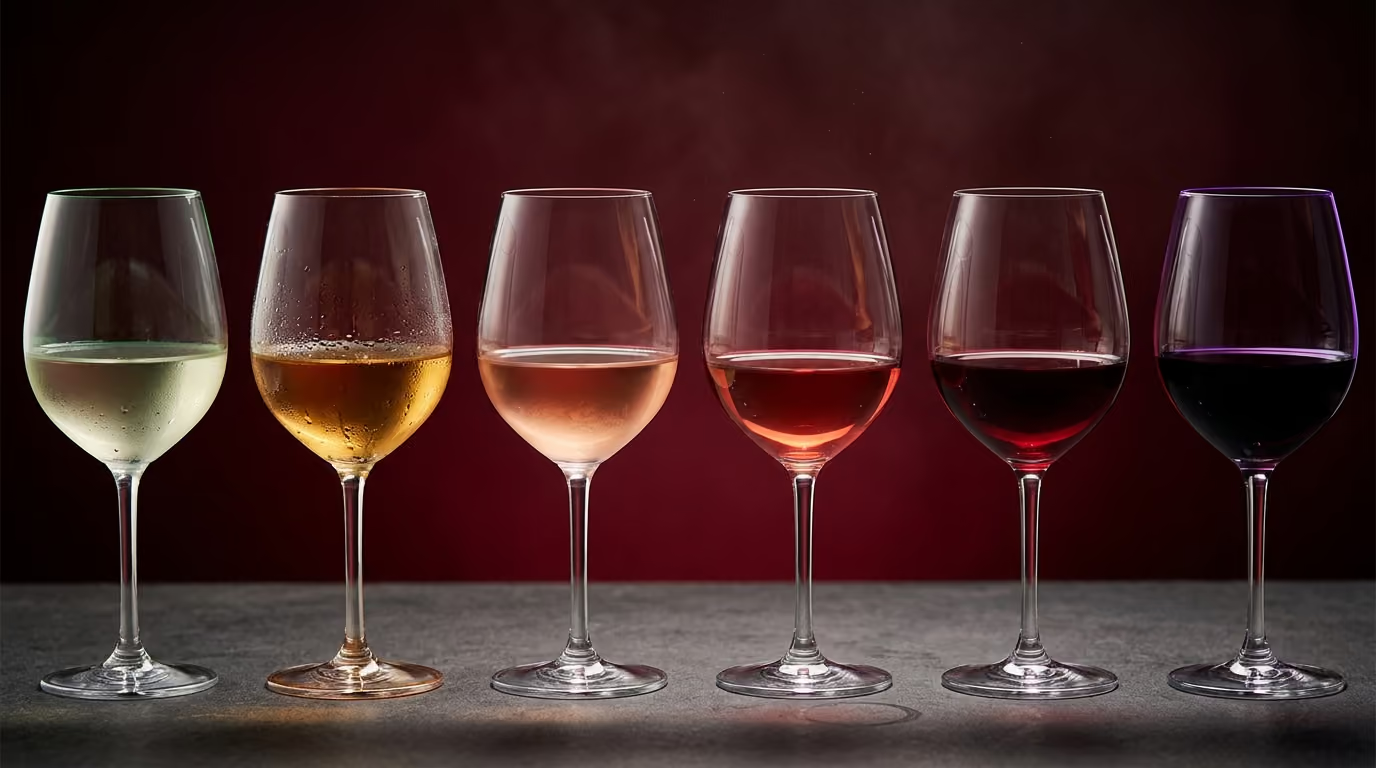
Open three deliberately different bottles on the same evening and taste them against each other. Tasting wines side by side is the whole trick, because differences that are invisible in a single glass become obvious the moment you have something to compare against.
Three bottles is enough, and you don't need to spend much. Pick one light red, one full red, and one crisp white, or swap in a rosé if reds aren't your thing yet, and choose things that are as unlike each other as possible. A Pinot Noir, a Cabernet Sauvignon, and a Sauvignon Blanc will show you more than three carefully chosen bottles from the same region ever would. Split the evening with a friend or two if six glasses feels like a lot, since you only need a small pour of each.
Two practical details change the result more than people expect. Serve whites cool but not freezing, around 45 to 55 degrees Fahrenheit, and reds slightly below room temperature, around 60 to 65, because an over-chilled white tastes of almost nothing and a warm red tastes flabby and alcoholic. Twenty minutes out of the fridge for a red and twenty minutes in it for a white gets you close enough without a thermometer, and our guide to wine serving temperatures has the details if you want them. Use the same glass shape for all three so you're comparing wines rather than glassware, and any decent-sized glass with a slight inward curve will do.
Then work through them one at a time, rate each dial in your own words, and finish by ranking all three from favorite to least favorite. That ranking matters more than the individual notes, because a month from now you won't remember whether bottle two was medium-bodied, but "I liked the light one best and the heavy one least" stays useful forever.
How do you turn a tasting into a record you'll use?
Write down the style, the rough price, a few words on each dial, and a plain verdict of buy again or skip. Keep it somewhere you'll actually have with you in a shop, which in practice means your phone rather than a notebook at home.
The verdict is the part people leave out and the part that does the work. A note that says "medium body, low tannin, quite tangy" is a description, but "medium body, low tannin, quite tangy, would buy again at $18" is a shopping instruction. After six or eight bottles you'll see the pattern in your own words, and that pattern is your profile.
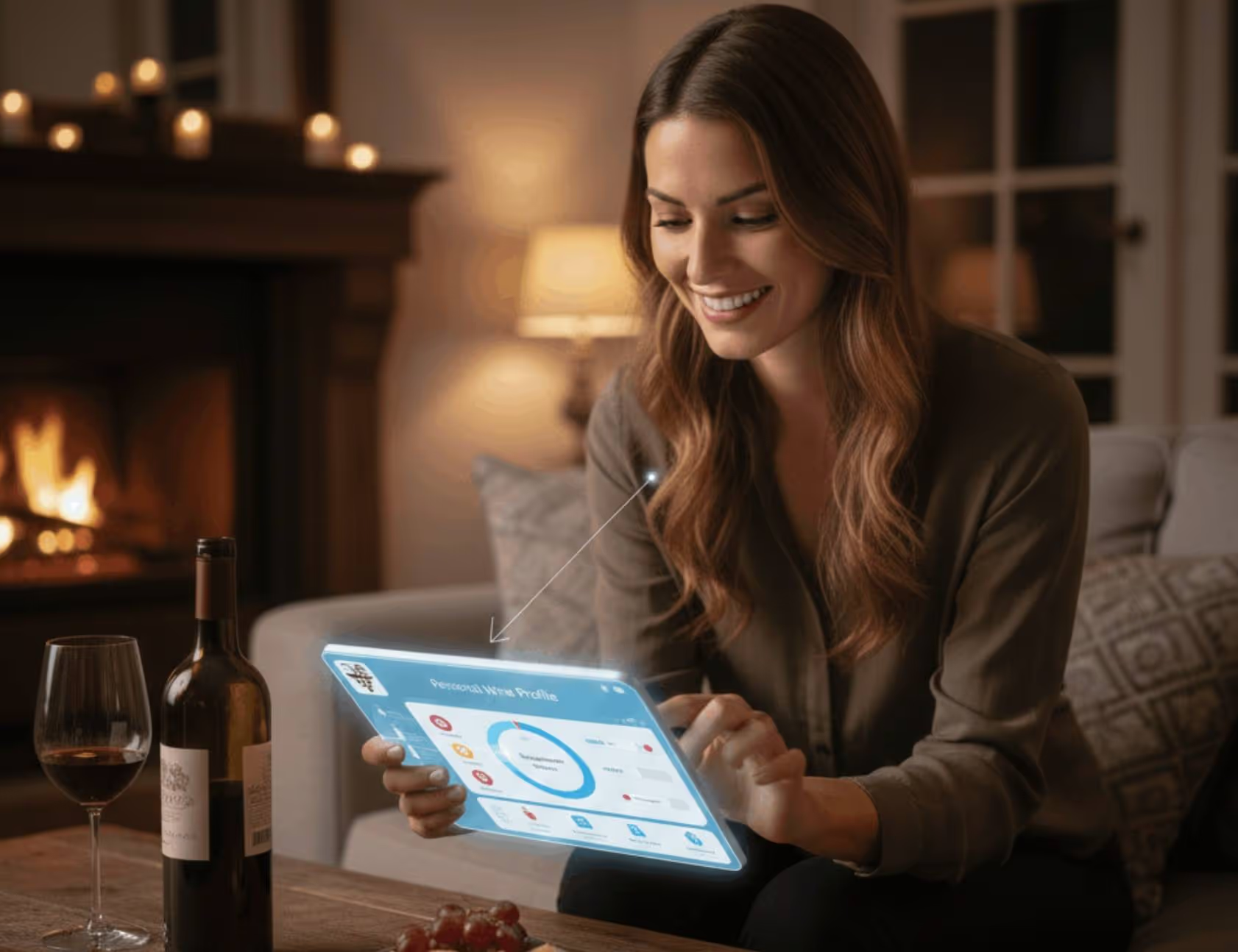
Doing this by hand works perfectly well. It's also exactly what Sommy's Taste Profile automates, since it's the living picture of your palate that sharpens every time you rate something, and it turns those ratings into recommendations without you having to spot the pattern yourself. If you already rate wines elsewhere, Vivino Import brings that history across so the profile starts from what you've already learned rather than from nothing.
How do you use your profile in a shop or restaurant?
Turn it into one sentence with a style, a texture, and a price, then hand that sentence to whoever is helping you. Something like "I like light, smooth reds, nothing too drying, around $20" gives a server or shop assistant everything they need, and it's the difference between being sold something and being helped.
In a restaurant, your profile does the narrowing before you even open the list. You already know whether you lean light or full and dry or slightly sweet, so most of the page stops being relevant immediately. Our guide on how to read a wine list goes deeper into that moment, and if the list is genuinely enormous, Sommy's Current Venue feature filters a restaurant's actual wine list down to what suits your taste.
In a shop, start in your usual price band and look for the styles you've already liked, then let one bottle each trip be a deliberate experiment next to something familiar. Scanning a label with Vision gives you a Fit Check verdict on whether that unfamiliar bottle actually suits you, which is a faster answer than reading the back label and hoping.
At home, your profile doubles as a pairing shortcut. Ask whether the dish is light or rich and whether it's tangy, creamy, or spicy, then match the weight and let your own preferences break the tie. If you dislike grippy tannin, don't force a big Cabernet Sauvignon with steak just because a chart says so, and pour the smoother red you know you enjoy instead. Our guide to pairing wine with food covers the mechanics if you want them.
What mistakes slow people down?
Writing off an entire grape after one bad bottle is the big one. Sauvignon Blanc from New Zealand and Sauvignon Blanc from the Loire taste noticeably different, and a cheap example of anything is a poor test of the style, so "I hate Chardonnay" usually means "I didn't enjoy one warm, heavily oaked Chardonnay in 2019".
Sticking to one safe bottle forever is the other. Plenty of people find something drinkable early and stop there for years, which is a bit like eating the same meal every night because you know you like it. One unfamiliar bottle per shopping trip, chosen next to something you already trust, keeps the profile growing without risking a whole evening.
Trying to taste like a critic is the last one, and it's the most discouraging. You don't need to find gooseberry or graphite in a glass, and hunting for them mostly makes people feel like they're failing. Whether you'd drink it again is the only judgment your profile actually needs, and taste is personal enough that nobody else's verdict can overrule yours.
One more habit is worth avoiding, which is judging a bottle by its first sip alone. Wine changes in the glass over ten or fifteen minutes as it meets air, and reds in particular often soften and open up noticeably in that time. Pouring, tasting immediately, and deciding you dislike something can write off a wine you'd have enjoyed twenty minutes later, so give anything you're unsure about a second look before you record the verdict.
Common questions about building a wine profile
How many wines do I need to try before I know my taste?
Six to eight bottles is usually enough for a clear pattern, especially if some of them were tasted side by side. You'll have a rough sense after the first tasting evening, and it sharpens steadily from there.
Do I need to spend a lot on the bottles?
No, and cheaper bottles are arguably better for this. You're learning the difference between styles rather than judging quality, and a $15 Pinot Noir shows you what light red feels like just as clearly as a $60 one.
Does my taste in wine change over time?
Yes, and usually in the same direction. Most people drift from sweeter and softer toward drier and more structured as they drink more, so it's worth revisiting your profile once a year rather than treating it as settled.
What if I don't like any of the wines I try?
Then you've probably been handed the wrong styles rather than the wrong drink. People who dislike everything they've tried have often only met dry, tannic reds, so try an off-dry Riesling or a light sparkling wine before concluding that wine isn't for you.
Is a wine quiz good enough on its own?
A quiz is a decent starting guess and a poor substitute for tasting. It can point you at a style to try first, but it can't tell you how tannin actually feels in your mouth, and it forgets you the moment you close the page.
Should I write notes while drinking or afterwards?
Write them during the first few sips, while the impression is fresh and before the food arrives. A one-line verdict added later is fine, but the dial descriptions get vague fast once you're halfway down the glass.
Where to go from here
Building a wine profile comes down to tasting a few different bottles against each other, describing them with four dials in your own words, and keeping a verdict you can act on. Do that once properly and you'll walk into a wine shop with a sentence that gets you a good bottle, which is the entire point.
If you'd rather the pattern-spotting happened on its own, that's what Sommy is for. Every rating you give feeds your Taste Profile, Sommy Chat answers questions in plain language, and the recommendations get more like you the longer you use it. For starting points worth tasting first, our guide to the best wine for beginners covers bottles that make good side-by-side comparisons, and the wine quiz is a quick way to get a first direction before you open anything.