
The best Pinot Noir is the one you personally enjoy, not what an expert tells you to drink. The secret is to stop worrying about picking the "wrong" bottle and instead learn to identify which style you're in the mood for. Answering one simple question—do you prefer light and fruity or rich and earthy?—is all you need to choose with confidence.
This guide will help you feel calm, clear, and certain the next time you're facing a wall of wine.
The Best Pinot Noir Is the One You Actually Enjoy
Staring at a row of Pinot Noir bottles can feel overwhelming. That anxiety is normal, but it’s completely avoidable. The key to choosing a great Pinot Noir isn't memorizing regions or critic scores—it's about figuring out what you like in simple terms.
It all comes down to a single decision: are you in the mood for something light and fruity, with flavors of fresh strawberries and cherries? Or do you prefer something more rich and earthy, with notes of mushrooms, baking spices, and damp forest floor?
Just answering that one question cuts your options in half and makes the whole process easier.
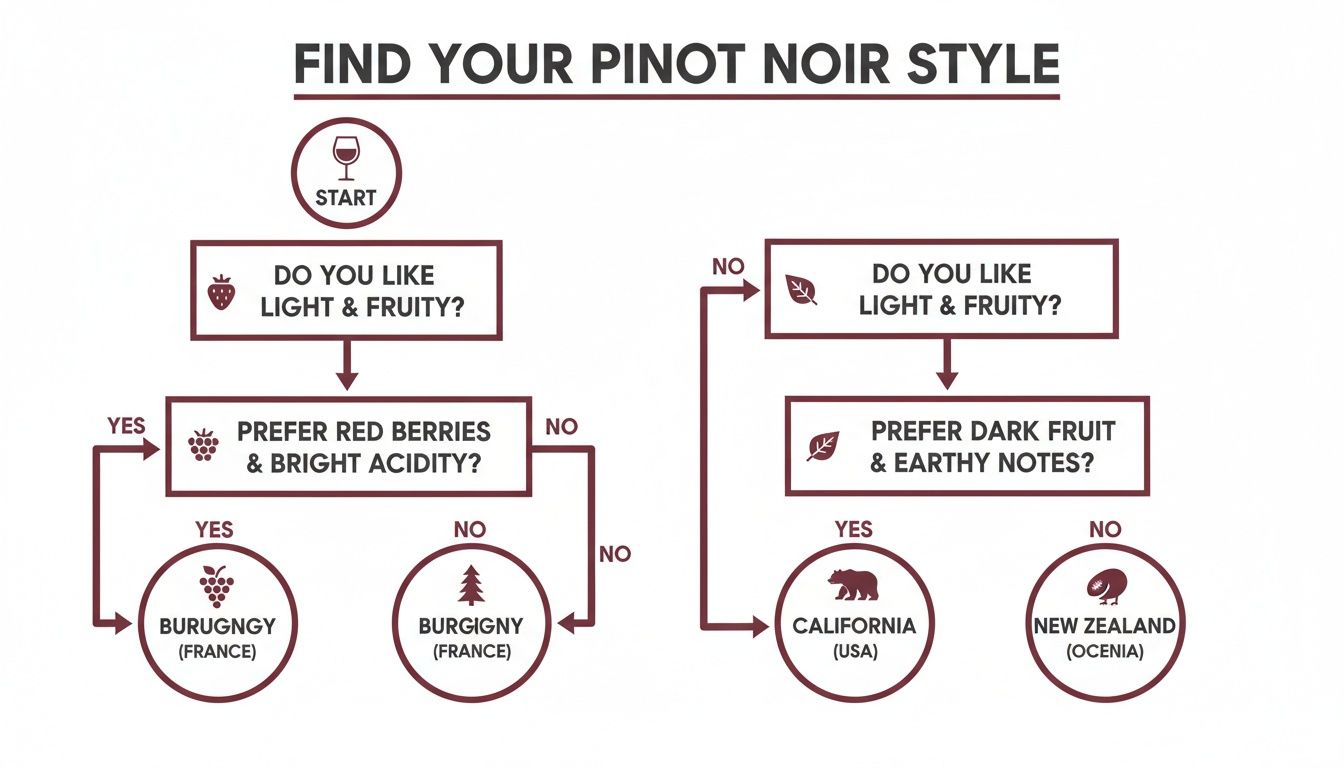
Think of it as a simple "this or that" choice. Once you know which style you prefer, you can pick a bottle with confidence.
To make it even simpler, here's a quick cheat sheet for a few common styles you’ll see on labels.
A Quick Guide to Common Pinot Noir Styles
Use this simple breakdown to find a style that matches your preferences.
| If You Like... | Look for Pinot Noir From... | You Can Expect It to Taste Like... |
|---|---|---|
| Light & Silky reds with fresh berry flavors | Burgundy (France) | Red cherry, raspberry, mushrooms, subtle spice, bright |
| Rich & Fruity reds with a bit more power | California (Sonoma Coast, Russian River Valley) | Ripe black cherry, cola, vanilla, plum, smooth |
| Earthy & Bright reds with a savory side | Oregon (Willamette Valley) | Cranberry, cherry, damp earth, clove, refreshing |
| Bold & Juicy reds that are easy to drink | New Zealand (Central Otago) | Ripe strawberry, dark cherry, sweet spice, vibrant fruit |
This isn't an exhaustive list, but it's a great starting point for finding a Pinot Noir you're likely to enjoy.
A Simple Framework for Confidence
Instead of getting lost in details, just focus on the style you want. This approach puts you in control and removes the anxiety from choosing.
The best wine choice is always the one that makes you feel relaxed and happy, not the one someone else tells you is "correct." It’s about your moment and your enjoyment.
This is exactly the kind of decision the Sommy app helps with. Rather than forcing you to guess, the app learns what you like and gives you simple, clear recommendations when you need them most.
Building this personal taste map is the first step. For more on how to do that, check out our beginner's guide to building your personal wine profile without fancy jargon. By focusing on what you truly enjoy, you turn a stressful task into a simple, satisfying choice.
What Does Pinot Noir Actually Taste Like?
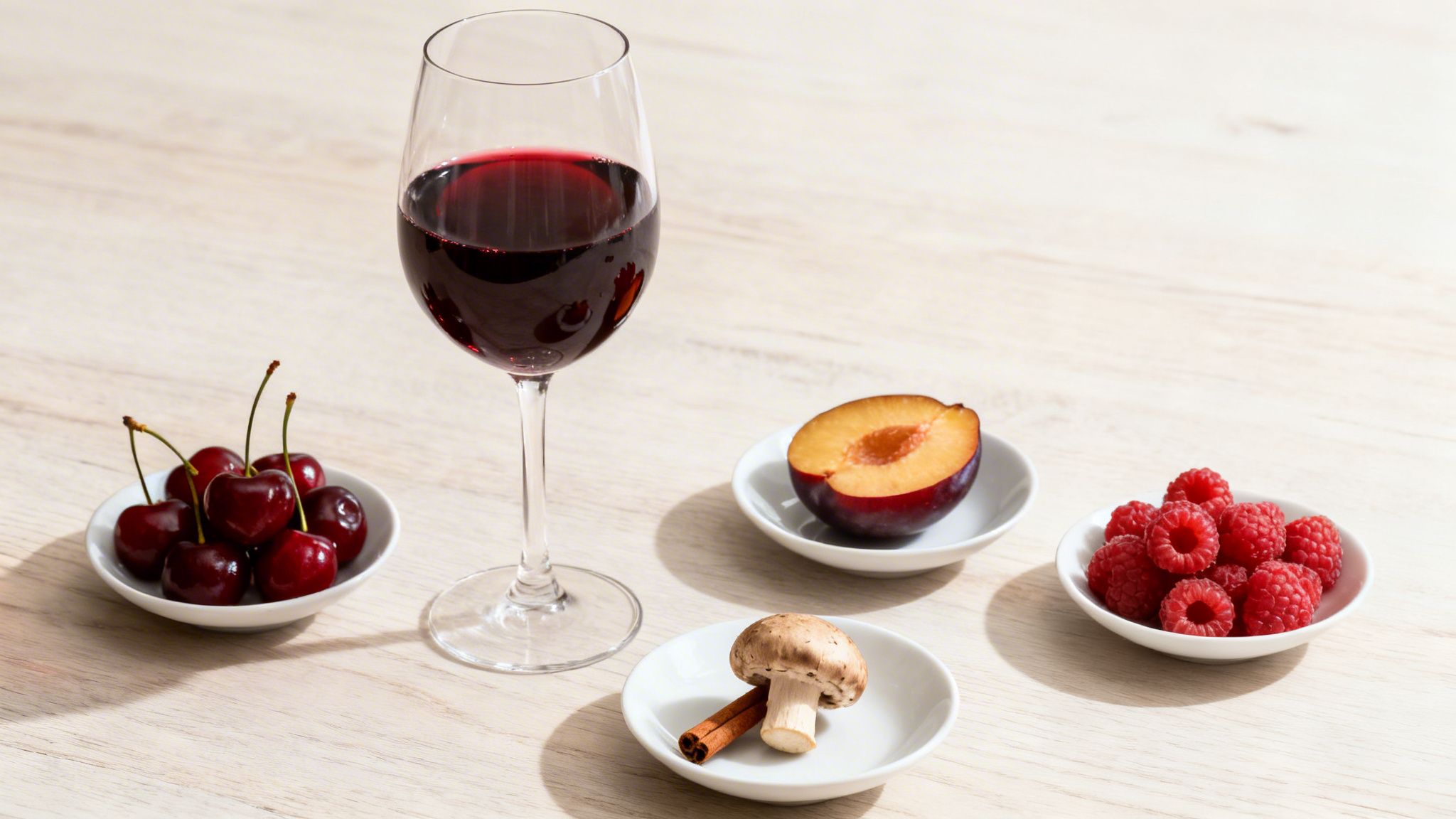
If you ask ten people what Pinot Noir tastes like, you might get ten different answers. That's because its flavors change dramatically depending on where it’s grown.
Instead of a single taste, think of Pinot Noir as having a few different personalities. Learning to spot them is the key to finding a bottle you’ll love.
The Three Main Flavor Personalities
Most Pinot Noirs lean into one of three main styles. Once you know them, wine descriptions and menu listings start to make much more sense.
- Vibrant Red Fruits: This is the classic, bright style many people think of first. It’s all about fresh, crunchy fruit flavors like cherry, raspberry, and cranberry. If you enjoy reds that are lively and fruit-forward, this is your happy place.
- Deeper, Darker Fruits: When Pinot grows in a warmer spot, it gets a little richer. The flavors turn toward black cherry, ripe plum, and sometimes a hint of cola. These wines feel a bit fuller and plusher in your mouth.
- Earthy and Spicy Notes: This is where Pinot Noir gets its famous complexity. These are the savory, non-fruit flavors that add depth, like mushrooms, damp forest floor, baking spices (think clove or cinnamon), and a touch of vanilla from time spent in oak barrels.
The “best” Pinot Noir for you might be all about the fruit, or it could be a balanced mix of all three. That ability to be both fruity and savory in the same sip is what makes it so special.
If you want to get better at putting words to what you’re tasting, our guide on how to describe wine taste breaks it down into simple, practical terms.
Forget the Rules: How to Choose Pinot Noir by Its Home
You don’t need to memorize a world map to pick a great bottle of Pinot Noir. The single biggest clue to what’s inside the bottle is printed right on the label: its home.
Think of the region as a shortcut. It gives you a strong hint about the wine's personality before you even pull the cork. Knowing just a few key places is the fastest way to skip the guesswork and grab a bottle you’ll actually enjoy.
A Quick Tour of Pinot Noir Personalities
Let's take a quick trip through four of the world's most famous Pinot Noir hubs. We won't focus on soil chemistry or fermentation science. Instead, let's focus on the feeling and flavor you can expect from each.
- Burgundy, France: This is the original, the blueprint for Pinot Noir. These wines are all about elegance and earth. Think subtle red fruits like cherry and raspberry mixed with a savory, forest-floor character—like damp leaves or mushrooms. They are typically lighter-bodied, silky, and complex.
- Oregon, USA: If you love bright, vibrant red fruit with a silky texture, Oregon is your spot. These Pinots often sing with cranberry and cherry notes, layered with an earthy spice that feels a bit like clove or cinnamon. They feel balanced and full of life.
- California, USA: For a richer, plusher, more fruit-forward style, look to California. The sunshine gives these wines a bolder personality, with flavors of black cherry, ripe plum, and sometimes a distinctive hint of cola. They’re often smoother and more powerful.
- New Zealand: Known for pure, almost electric fruit intensity. New Zealand Pinot Noir is juicy and forward, bursting with ripe strawberry and dark cherry flavors. You'll often find a touch of sweet spice that makes them incredibly easy to love.
The goal isn't to become a geography expert. It’s about feeling confident when you see "Sonoma Coast" or "Willamette Valley" on a label. Just knowing that California generally means richer fruit can be the only clue you need to make a choice.
This simple framework helps you understand the bigger picture of Old World (like France) versus New World (like the US or New Zealand) styles. To see how this applies to other grapes, check out our guide on Old World vs. New World wines.
This knowledge turns a confusing wine aisle into a set of clear, simple choices. You can stop staring and start picking—quickly, confidently, and with a much better shot at loving what’s in your glass.
How Price and Vintage Affect Your Choice
Let’s be honest: the two numbers on a wine label that cause the most stress are the price tag and the year. Does a bigger price automatically mean a better Pinot Noir? And how much do you really need to worry about the vintage?
The short answer is: price points to a style, not just quality, and you can usually ignore the year. A higher price often reflects expensive land in a famous region, the cost of hand-harvesting, or pricey oak barrels. A less expensive bottle can still be absolutely delicious; it was just made more efficiently.
Breaking Down the Price Tag
Think of Pinot Noir prices in a few simple tiers. This isn't a hard-and-fast rule, but it’s a great way to set expectations when you’re standing in the wine aisle.
- Under $20: Expect a wine that’s all about bright, pure fruit. These are clean, simple, and incredibly easy to drink, with straightforward flavors like fresh cherry and raspberry. It’s your perfect weeknight pizza or pasta wine.
- $20 to $40: This is where things get more interesting. You’ll start to find more complexity and a silkier texture. The fruit feels more concentrated, and you might notice subtle earthy or spicy notes peeking through. These bottles often come from more specific, well-regarded areas.
- $40 and Up: Here, you're paying for intensity and detail. These bottles typically come from premier vineyards and are made with hands-on methods. Expect layers of flavor—a beautiful dance of fruit, earth, and spice—and a long, memorable finish.
Pinot Noir is a smart buy, and it’s only getting more popular. The global market for it is expected to grow from USD 2,266.85 million in 2025 to USD 2,983.02 million by 2032. As demand climbs, knowing these price tiers helps you pinpoint real value. You can read more about how global wine production trends might affect the bottles on your local shelf.
What About the Year on the Bottle?
That year on the bottle? It just tells you what the weather was like that growing season. While a "great vintage" can certainly make a difference for high-end, cellar-worthy wines, you don't need to worry about it for most everyday bottles.
Good winemakers know how to make fantastic wine even when the weather doesn't perfectly cooperate.
For the vast majority of Pinot Noir you’ll buy—especially anything under $40—the wine is made to be opened and enjoyed right now. Don't stress about memorizing good or bad years. Just focus on finding a style you love at a price that feels right.
Finding great value is possible at every level. For more tips on this, check out our guide on the best grocery store wines. It’s all about removing budget anxiety so you can choose confidently and get back to enjoying your wine.
Simple Food Pairings for Pinot Noir
Trying to pair wine with food can feel like a high-stakes test you didn't study for. But here's the good news: Pinot Noir is one of the most food-friendly wines you can possibly choose.
Think of it as the perfect dinner guest. It has great conversation but never steals the spotlight, making everything at the table just a little bit better.

The secret is its balance. Pinot Noir has bright acidity that cuts through rich flavors and just enough texture to stand up to food without overpowering it. This combination makes it a wonderfully safe bet when you're just not sure what to order.
A 'Yes, Please' List for Easy Pairings
Instead of getting tangled up in rigid rules, it’s easier to remember a few classic matchups where Pinot Noir absolutely sings.
- Roasted Chicken or Turkey: This is a slam dunk. The wine’s bright acidity slices through the richness of the bird, while its savory side beautifully echoes roasted herbs.
- Duck Breast: A truly classic, almost perfect pairing. The wine's vibrant fruitiness provides a brilliant contrast to the rich, savory flavor of the duck.
- Salmon or Tuna: Unlike bigger, bolder reds that would crush these dishes, Pinot Noir is light on its feet. It’s delicate enough to complement flavorful fish, especially when grilled or seared.
- Mushroom Dishes: Any time mushrooms are the star—think risotto, earthy pasta, or simple sautéed mushrooms—Pinot Noir is your answer. Its own forest-floor aromas create a seamless connection.
- Pork Tenderloin: The cherry and spice notes common in Pinot Noir are fantastic with the subtle sweetness of simply prepared pork.
The real goal of a good food and wine pairing is simple: both the food and the wine should taste better together. Pinot Noir is a champion at this because it elevates food without overpowering it.
Once you have these simple pairings in your back pocket, your confidence will soar. The next time you see duck or salmon on a menu, you’ll know exactly which direction to go on the wine list.
And for those in-the-moment decisions, this is precisely what an app like Sommy is built for—helping you scan a menu and instantly find a bottle that works with your meal, your palate, and your budget.
How Sommy Helps You Choose Confidently
Memorizing every region, flavor profile, and food pairing rule is not a realistic goal. So what if you had a quiet expert in your pocket, ready to help you decide in the moment? That’s where Sommy comes in. It’s built to cut through the noise and make choosing a great wine feel simple.
Imagine standing in a crowded wine aisle or staring at a long restaurant list. Instead of guessing, you just point your phone’s camera at the shelf or menu. Sommy instantly flags a Pinot Noir that matches your specific taste preferences and fits your budget. That stressful moment is over in seconds.
Here’s a look at how Sommy gives you clear, simple information to make your choice.
This clean, simple view shows you only what matters for your decision. It’s all about what you like, not some confusing critic’s score.
Think of Sommy as a quiet AI assistant that learns your palate. The more you use it, the smarter its recommendations get. It’s designed to turn an overwhelming decision into an easy, confident one.
The goal is to get rid of the guesswork and the fear of picking the “wrong” bottle. When a tool understands your personal taste, you can explore new wines knowing you’re probably going to enjoy them.
This is where wine selection is heading. It’s not about making everyone a wine expert; it’s about giving you a trusted guide. You can learn more about how this helpful AI wine assistant works, but the best part is that you don’t have to. You can just focus on enjoying the wine.
Your Pinot Noir Questions, Answered
Here are a few quick answers to the questions we hear all the time. Think of this as your cheat sheet for feeling more confident next time you're choosing a bottle.
Why Is Pinot Noir So Popular Anyway?
Pinot Noir is popular because it’s incredibly versatile and easy to love. It hits that perfect sweet spot with bright fruit flavors like cherry and raspberry, a smooth texture, and a body that isn't too heavy.
It's the ultimate 'in-between' red wine. It’s not as light as a rosé, but it won’t weigh you down like a big Cabernet Sauvignon. That bright acidity also makes it a dream to pair with food, playing well with everything from salmon and chicken to earthy mushroom dishes.
Should I Chill My Pinot Noir Before Drinking?
Yes, absolutely. Serving Pinot Noir with a slight chill is one of the best things you can do for it. Unlike heavier reds, its delicate aromas and flavors really pop when it’s served a little cooler than room temperature.
You’re aiming for about 55-60°F (12-15°C). The easiest way to get there? Just stick the bottle in the refrigerator for about 20 minutes before you plan to open it. That small chill helps lift the fruit notes and makes the wine feel more refreshing in the glass.
What’s the Real Difference Between Burgundy and California Pinot Noir?
Think of it as the difference between a classic trench coat and a stylish leather jacket. One is about timeless elegance; the other is about bold, modern confidence.
- Burgundy (France): This is the historic home of Pinot Noir. These wines are typically more elegant, subtle, and earthy. You'll taste delicate red fruits alongside savory notes that might remind you of mushrooms or a walk through a damp forest.
- California (USA): Grown in a much warmer climate, California Pinots tend to be bolder and more fruit-forward. Here, you'll find richer flavors of black cherry, ripe strawberry, and sometimes even a hint of cola or spice.
Neither style is 'better'—it just depends on what you're in the mood for. Are you feeling something restrained and classic (Burgundy), or something lush and powerful (California)? Knowing this one difference gives you another simple way to pick the perfect bottle for the moment.
Choosing the right wine is less about memorizing facts and more about understanding what you actually enjoy. This is exactly the kind of decision Sommy helps with, turning a long list of confusing options into a few clear choices picked just for you.
If you're tired of guessing and want clear, personalized recommendations right when you need them, see how Sommy can help you choose the perfect wine every time.