

To describe wine taste, start with simple words you already know. Ask yourself: is it fruity or earthy? Does it feel light or heavy in your mouth? Is the texture smooth or sharp? Answering these three questions gives you a clear and confident way to describe any wine and discover what you truly like.
Finding Words When "Good" Is Not Enough
You’re at a restaurant, you take a sip of wine, and your friend asks, "So, what do you think?" Your mind goes blank. You know you like it, but the only words that come to mind are 'good' or 'dry.' This is a normal feeling.
Most of us have been there. Wine can feel like it has its own secret language, leaving you feeling unsure or anxious about saying the wrong thing. This guide is your way in. We'll show you how to talk about wine taste using a simple framework that feels natural, not forced.
Ditching the Expert Language
This isn't about memorizing a long list of obscure terms to sound like a sommelier. It's about connecting what you taste to a handful of easy words so you can feel sure of yourself next time, whether you're at a dinner party or just browsing the grocery store aisle.
The whole point is to take the anxiety out of choosing the "wrong" bottle. By focusing on what you actually experience in the glass, you start building a personal taste profile, and that's far more useful than any critic's score.
The most powerful wine description is simply the one that makes sense to you. If a wine reminds you of fresh cherries or your grandmother's apple pie, that’s a perfect, and genuinely useful, starting point.
Building Your Confidence, One Sip at a Time
Every time you try a new wine, you're just gathering clues about your own preferences. You don't need to know about "malolactic fermentation" or "terroir" to decide if you enjoy something. You just need a way to organize your thoughts.
This is exactly the kind of decision Sommy helps with. Instead of guessing, the AI-powered assistant translates your simple preferences into confident choices. If you want a place to start, using a wine tasting notes template can give your thoughts some structure.
Here's a simple way to get started. We've put the most basic terms into a quick-reference table to help you put words to what you're sensing.
Your Simple Wine Description Toolkit
This table is a great starting point. It's designed to give you a few go-to words for the most common sensations, without any intimidating jargon.
| What You Notice | Simple Words to Use | What It Means |
|---|---|---|
| The "weight" on your tongue | Light, Medium, Full or Heavy | How rich or delicate the wine feels. Think skim milk vs. whole milk. |
| The flavors you taste | Fruity, Earthy, Spicy, Floral | The main "families" of flavors you can pick out. |
| How your mouth feels | Smooth, Crisp, Sharp, Harsh | The texture. Is it soft and round, or does it make your mouth pucker? |
| The aftertaste | Short, Lingering, Clean, Warm | How long the flavor sticks around after you've swallowed. |
Think of these as your building blocks. Just picking one word from each category gives you a solid, useful description.
Our approach is all about removing the pressure. We'll walk you through a few core ideas, flavor, body, and feel, that give you a complete picture of any wine. By the end, you'll have a practical toolkit for describing what's in your glass and, more importantly, for choosing your next bottle with zero stress.
Your First Three Questions for Any Wine
Forget the pressure to find exotic tasting notes like “crushed violets” or “wet stone.” When you're just starting, all you need are three simple questions to describe any wine with confidence. This method cuts through the jargon and helps you focus on what you’re actually experiencing.
The goal isn't to guess the 'right' answer. It's to check in with your own palate. Think of this as a reliable starting point for learning how to talk about wine in a way that feels natural and, most importantly, helps you remember what you like.
Is It Fruity or Earthy?
This is the first and most important fork in the road. Does the wine’s main character remind you of something grown on a tree, vine, or bush? Or does it taste more like things from the ground?
- Fruity notes are often the easiest to pick out. For red wines, does it taste like red fruits (strawberry, cherry) or darker fruits (blackberry, plum)? For whites, is it more citrus (lemon, grapefruit) or orchard fruit (apple, pear)?
- Earthy or savory notes are the opposite of fruity. These are flavors like mushroom, damp soil, dried herbs, or even tobacco. A wine that leans more earthy than fruity is often described as “savory.”
There’s no perfect answer; most wines have a little of both. Just decide which direction the wine leans. This single decision tells you a huge amount about its style.
Is It Light or Heavy?
Next, think about how the wine feels in your mouth. This is what people call body. The easiest way to wrap your head around it is to compare it to milk.
Does the wine feel light and refreshing, almost like skim milk? Or does it feel richer and more substantial on your tongue, closer to whole milk? A light-bodied wine is often zippy and easy to drink, while a full-bodied wine feels more powerful and weighty.
Pinpointing a wine’s body is a key step in understanding your own taste. If you consistently enjoy "heavy" red wines, you're likely a fan of full-bodied styles like Cabernet Sauvignon. This is exactly the kind of simple preference Sommy uses to find your next favorite bottle.
Is It Smooth or Sharp?
Finally, how does the wine feel as you swallow? A wine’s texture is mostly driven by its acidity and, for red wines, its tannins.
A sharp feeling usually comes from acidity. It’s that mouth-watering, zesty quality that makes a wine feel crisp and refreshing, think of the sensation of tasting lemonade. It can make your cheeks pucker just a little.
Answering these three questions, fruity or earthy, light or heavy, and smooth or sharp, gives you a complete, practical description for any wine. From here, you can start layering in more detail, which is something we cover in our guide on how to taste wine properly.
Connecting Wine Flavors to What You Already Know
The biggest secret to picking out flavors in wine? You already know them. You don't need a super-palate or years of formal training. All you have to do is connect the dots between what's in the glass and the tastes and smells you experience every day.
Think of your last trip to the grocery store. When you sip a red wine, does it remind you of the red fruits, bright cherry, strawberry, raspberry? Or does it feel darker, more like blackberries, plums, or even blueberries?
The same goes for whites. Is it zesty and citrusy, like lemon or grapefruit? Or is it softer, more like a crisp apple, juicy pear, or ripe peach? Trust that first gut reaction. It's almost always pointing you in the right direction.
This simple three-question framework is a great way to start describing pretty much any wine you come across.
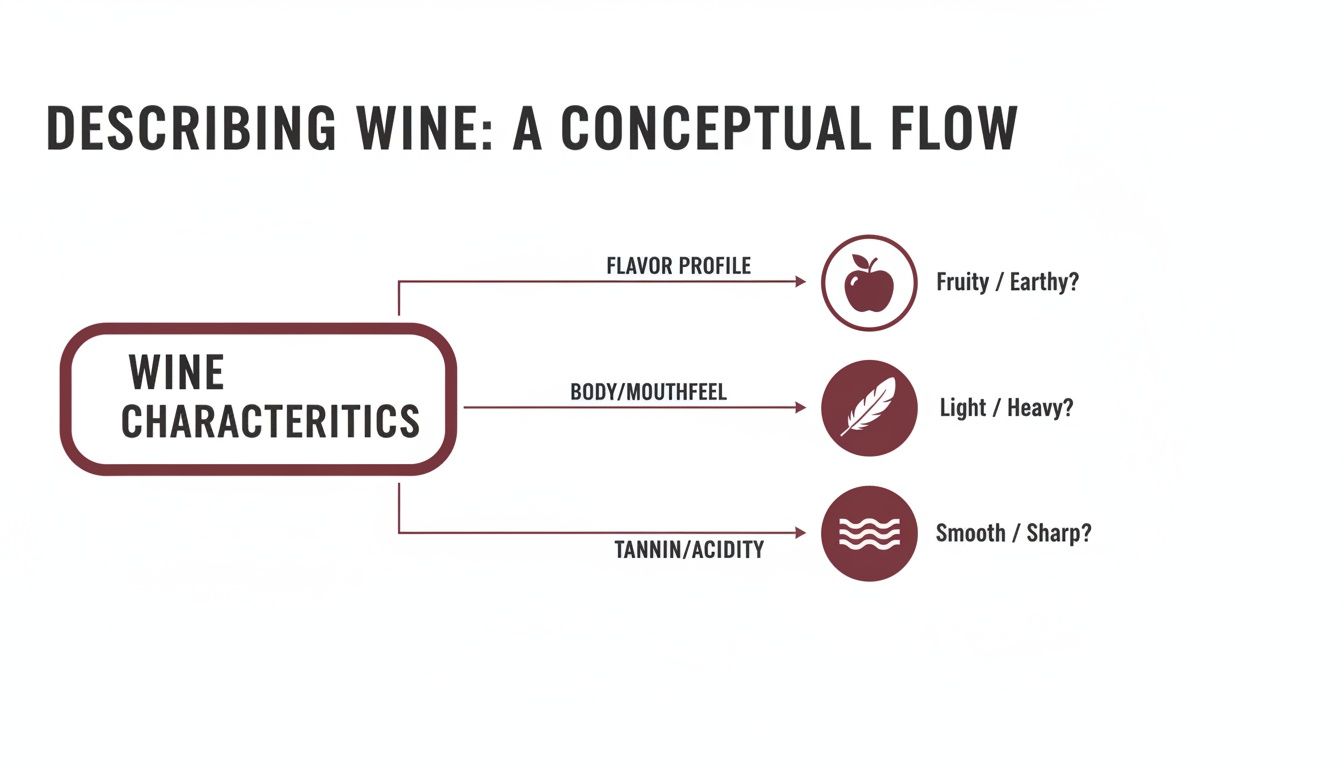
This little guide breaks it all down into easy questions about flavor, body, and texture, the real building blocks of any good wine description.
Look Beyond the Fruit Bowl
Once you get a feel for the main fruit character, you can start to notice other layers that make a wine interesting. And just like with fruit, you already know these aromas and flavors, too.
- From the Spice Rack: Lots of red wines have a kick of black pepper or clove. Some whites might remind you of vanilla or cinnamon.
- From the Garden: Ever get a "green" or grassy note? That's super common in whites like Sauvignon Blanc. If a Cabernet Sauvignon reminds you of the green bell peppers you chopped for dinner last night, you're not wrong. That's a classic descriptor.
- From the Bakery: Wines that spend time in oak barrels often pick up toasty, warm notes like toast, butter, or even caramel.
The goal here isn't to be "right". It's to build a vocabulary that actually means something to you. Your personal taste is the only guide that matters.
This process of creating your own personal flavor library is exactly how you can get the most out of an AI assistant like Sommy. When you can tell it you prefer "dark fruit" flavors over "red fruit" ones, it can instantly filter a wine list to find bottles you’re more likely to love. It's a much more practical approach than trying to memorize wine theory.
Common Flavors by Wine Type
To help you start making these connections, here's a little cheat sheet. Think of it as a starting point for linking common flavors to popular wine styles.
| Wine Type | You Might Taste Red Fruits (Cherry, Raspberry) | You Might Taste Dark Fruits (Blackberry, Plum) | You Might Taste Other Notes (Spice, Earth, Herbs) |
|---|---|---|---|
| Cabernet Sauvignon | Sometimes | Yes, very common | Bell pepper, black pepper, tobacco |
| Pinot Noir | Yes, very common | Sometimes | Mushroom, clove, potting soil |
| Merlot | Yes, very common | Yes, very common | Chocolate, vanilla, bay leaf |
| Sauvignon Blanc | No | No | Grass, jalapeño, grapefruit, passion fruit |
| Chardonnay | No | No | Apple, pear, butter, vanilla, lemon |
| Riesling | No | No | Lime, peach, beeswax, petrol (in aged examples) |
Don't treat this table like a test. Just use it to spark ideas the next time you have a glass in your hand.
Building up this personal flavor bank is a skill you develop one sip at a time. If you’re looking for a more structured way to get started, our guide on building your personal wine profile without fancy jargon is a great next step.
Going Beyond Flavor with Texture and Feel
While flavors are the stars of the show, how a wine feels in your mouth is just as critical. This "texture" piece of the puzzle is a huge shortcut to figuring out what you truly enjoy.
Thinking about these sensations gives you a whole new vocabulary for describing wine, no jargon required. Once you start noticing texture, the entire picture gets sharper. We can break this down into four simple concepts.
Acidity: The Refreshment Factor
Ever take a sip of tart lemonade and feel your mouth immediately start to water? That’s acidity. In wine, it shows up as a crisp, zesty, or sharp feeling that makes the wine feel refreshing.
Acidity isn’t a bad thing; in fact, it’s essential for balance. It’s what makes a Sauvignon Blanc feel so cleansing or a great Pinot Noir so vibrant. If you find yourself gravitating toward wines you’d call "bright" or "mouthwatering," you're probably a fan of good acidity.
Tannin: The Structure of Red Wine
Tannin is a sensation you’ll find almost exclusively in red wines. It’s that slightly fuzzy, drying feeling that grips your tongue and gums. The easiest comparison is sipping a cup of strong black tea that’s been steeping too long, that astringent quality is tannin.
Tannins come from the grape skins, seeds, and stems, and they give a red wine its backbone. Some people love that grippy feeling, while others prefer reds that are softer and smoother. If you enjoy wines that feel "bold" or "structured," you might be a tannin fan. You can dive deeper into how this works in our guide explaining what tannin in wine is.
Body: The Weight in Your Mouth
Body is simply how heavy or rich a wine feels on your palate. This is one of the easiest concepts to grasp with a quick comparison.
- Light-bodied wines feel delicate, almost like water or skim milk. They’re often refreshing and easy to drink.
- Full-bodied wines feel much heavier, closer to whole milk or cream. They coat your mouth and often feel rich and powerful.
- Medium-bodied wines land somewhere in the middle, offering a perfect balance.
Nailing down the body you prefer is one of the fastest ways to find wines you'll consistently love. It’s a core preference that an AI assistant like Sommy uses to quickly narrow down choices on a long wine list.
Putting It All Together: Instead of just saying "I like this," you can now say, "I like this because it's a full-bodied red that feels smooth, not too tannic." You've just given a complete and incredibly useful description.
Sweetness: Dry vs. Fruity
Finally, there’s sweetness. Most wines you’ll encounter are technically "dry," which just means there's very little residual sugar. However, a wine can taste intensely "fruity" without actually being sweet. Think of biting into a perfectly ripe strawberry. It’s full of fruit flavor, but not necessarily sugary.
The key is to ask yourself if you’re tasting actual sugar or just very ripe, sweet-tasting fruit. This helps you clarify whether you prefer truly dry styles or those with just a hint of sweetness.
How to Talk About Wine Without Sounding Snobby
We've broken down the building blocks—flavor, body, and feel. Now, let’s put them together into actual sentences. You don’t need flowery language or a wine dictionary to talk about what's in your glass. The whole point is to describe your own experience, not to perform for others.
Instead of feeling pressured to sound like an expert, just say what you notice. Being direct and using simple words always comes across as more confident than fumbling with jargon you don't really mean.
Simple Sentence Starters for Any Wine
Think about how you’d describe a really good coffee or a piece of fruit. You’d use straightforward language, and the same approach works perfectly for wine.
Here are a couple of real-world examples that are clear, confident, and completely jargon-free:
- For a red wine: "This is a light-bodied red. It tastes more like red fruits and feels really smooth."
- For a white wine: "I like this, it’s refreshing. It reminds me of grapefruit."
You’ve just described the wine in a way that’s actually useful and easy for anyone to understand. You’ve communicated its weight, its main flavor profile, and how it feels in your mouth.
A Simple Framework for Your Thoughts
If you want a mental shortcut, here's a simple formula to structure your description on the fly. It's a reliable way to organize your thoughts so you never feel like your mind has gone blank.
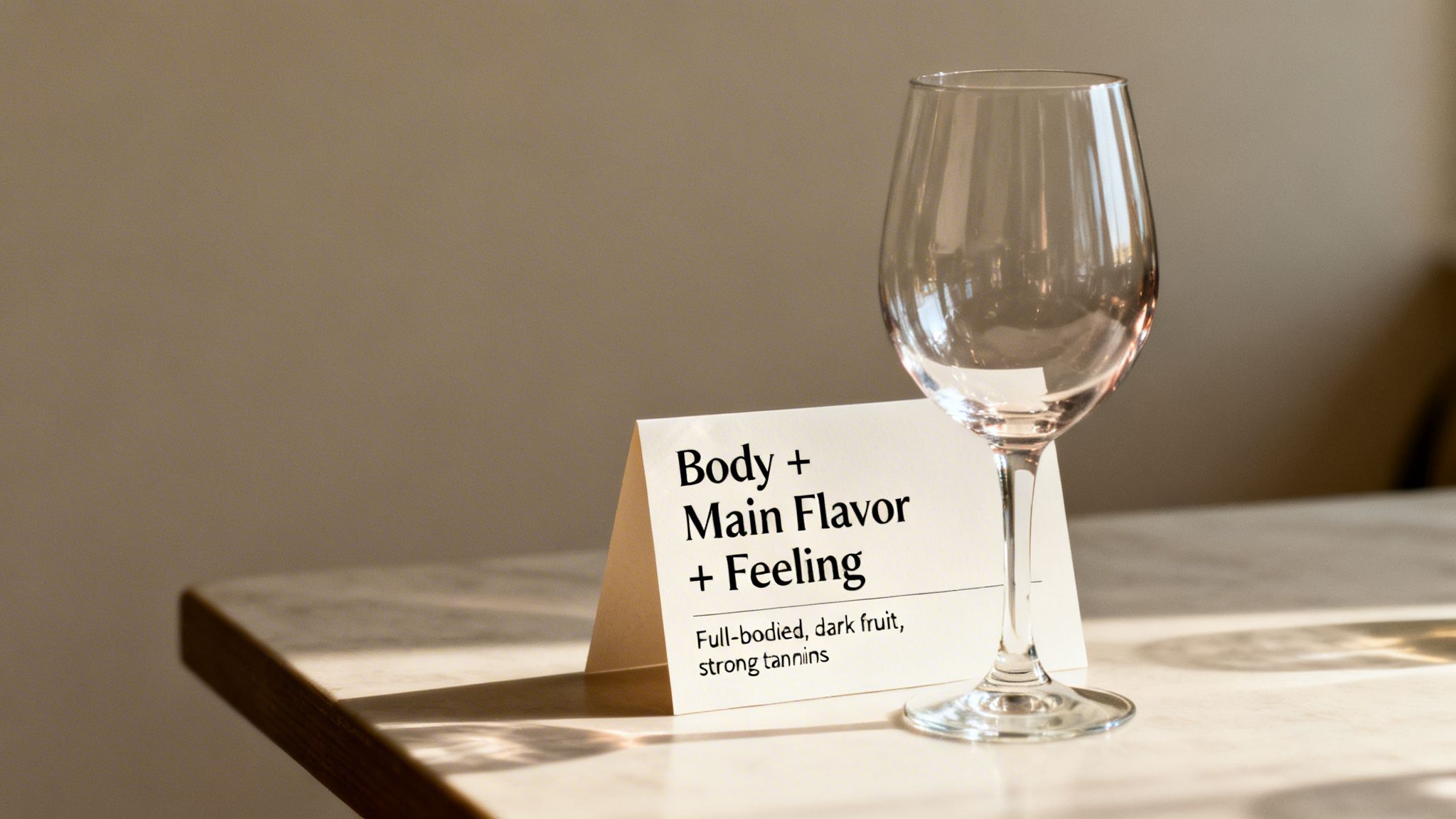
Just think: [Body] + [Main Flavor] + [Feeling].
This structure helps you cover the most important aspects of any wine quickly and confidently. You're not just saying you like it; you're explaining why in a way that helps you remember what you prefer for next time.
For example: "It's a full-bodied red (body) with dark fruit flavors (main flavor), and it feels pretty smooth (feeling)."
This kind of clear, simple feedback is exactly what helps an AI assistant like Sommy learn your unique palate. When you can tell it you prefer "light-bodied whites that remind you of grapefruit," it can instantly scan a wine list and find the bottle that fits your taste. You get a great recommendation without ever needing to know the specific grape or region.
Talking about wine shouldn't be a test. It’s just about sharing what you experience. For more ways to build this skill, check out our other wine tasting tips for beginners.
Common Questions About Describing Wine
Even with a simple framework, a few questions always pop up when you're trying to put words to what you're tasting. Getting these cleared up can be the final piece of the puzzle to feeling truly confident. Let’s tackle the most common hurdles so you can get back to simply enjoying the wine.
The goal here is clarity, not complexity.
What’s the Difference Between Flavor and Aroma?
Simply put, aroma is what you smell, and flavor is what you taste. But the two are deeply connected. Your sense of smell accounts for a huge part of what you taste—some experts say as much as 85%.
Think about how bland food tastes when you have a stuffy nose. The best way to approach this in wine is to notice what you smell first. Then, take a sip and see if you can find those same notes, plus any new ones that pop up on your palate.
Is It Okay If I Don’t Taste What Others Do?
Absolutely. This is probably the most important question, and the answer is a resounding yes. Your palate is uniquely yours, shaped by your own experiences, memories, and even your biology. There is no single "correct" answer when describing a wine.
The goal is never to guess what a critic or your friend is tasting. It’s to identify what the wine reminds you of.
If you taste bright cherry and the person next to you gets ripe raspberry, you’re both right. Your personal description is the only thing that can help you find another bottle you'll love down the road.
This personal connection is what makes wine fun. It’s a sensory experience, not a multiple-choice test.
How Can I Get Better at Identifying Flavors?
The simplest way to improve is to pay more attention to the world around you, not just to wine. You can build a "sensory memory" every single day.
- At the grocery store: Really smell the different fruits. Notice the subtle difference between a lemon, a lime, and a grapefruit. Sniff the fresh herbs.
- While you're cooking: Pay attention to the aroma of spices like black pepper, cinnamon, or vanilla as you use them.
- During meals: When you eat a strawberry, take a second to really think about its specific taste and smell.
The more you consciously build this library of smells and tastes in your mind, the more easily you’ll recognize those same notes when they appear in a glass of wine. It’s all about being more mindful of what you already experience every day.
This whole process is about connecting what you taste to what you know. When you can confidently say, "I like full-bodied red wines that taste like dark fruits," you have a powerful tool for making decisions. This is exactly how Sommy works. It takes your simple, personal preferences and uses them to find the perfect bottle for you on any menu or store shelf. If you want a little help making that next choice, you can try the AI-powered wine assistant at https://www.sommy.ai.