
Diving into the world of wine can feel as complex as a vintage Bordeaux, but it doesn't have to be. The journey from simply drinking wine to truly tasting it is a rewarding adventure that deepens your appreciation and transforms every sip into an experience. This guide is designed to break down the essential skills and knowledge you need, moving beyond generic advice to provide actionable, practical steps for your development.
We'll explore the foundational techniques used by sommeliers, from analyzing a wine's color and aroma to understanding the crucial role that temperature and glassware play in what you taste. Each tip is structured to build your confidence, helping you identify flavors, understand grape varieties, and articulate what you enjoy in a wine.
We will also reveal how modern tools, like your personal AI sommelier, Sommy.ai, can accelerate your learning curve. Imagine having an expert in your pocket to scan labels for quick insights, suggest food pairings on the fly, and help you build a digital journal of your tasting notes. Get ready to elevate your palate with these eight fundamental wine tasting tips for beginners, designed to make you a more confident and knowledgeable enthusiast, one glass at a time.
1. The Five Senses Approach: Observe, Smell, Taste, Feel, Think
The single most important of all wine tasting tips for beginners is to stop drinking wine and start tasting it. The foundational method for this is the Five Senses Approach, a systematic process that engages your sight, smell, and taste to build a complete picture of the wine. Used by Master Sommeliers and wine critics worldwide, this structured technique helps you identify nuances you would otherwise miss.
This approach breaks tasting down into five distinct, manageable steps:
- Observe: Hold the glass against a white background. Look at the wine’s color, clarity, and viscosity (the "legs" or "tears" that run down the side of the glass after swirling). Is it a deep ruby red or a pale straw yellow?
- Smell: Swirl the wine gently in the glass to release its aromatic compounds. Then, put your nose deep into the glass and inhale. What do you smell? Think in broad categories first: fruity, earthy, spicy, or floral.
- Taste: Take a small sip and let it coat your entire palate. Identify the primary flavors and how they compare to the aromas you detected.
- Feel: Pay attention to the wine's texture and body in your mouth. Is it light and crisp like water, or full and creamy like milk? This is its "mouthfeel."
- Think: Finally, consider the overall impression. Did you enjoy it? Was it balanced? Did the taste linger (the "finish")?
Key Insight: This structured approach transforms a simple sip into a mindful sensory experience. By isolating each sense, you train your brain to notice details, building a powerful memory bank of aromas and flavors.
To put this into practice, try tasting two different wines, like a Sauvignon Blanc and a Chardonnay, side-by-side using this method. Note the differences in color, aroma, and body. As you build your sensory library, you can use a tool like Sommy.ai to create a wine journal. By logging your observations, you can effectively teach an AI your unique palate preferences, leading to more personalized future recommendations.
2. Proper Glassware Selection and Handling
It may seem like a minor detail, but the glass you use is one of the most influential tools in wine tasting. Far from being just a vessel, a proper wine glass is designed to enhance a wine's specific characteristics. The shape of the bowl concentrates aromas, the thinness of the rim delivers the wine precisely to your palate, and the stem allows you to hold it without affecting its temperature.
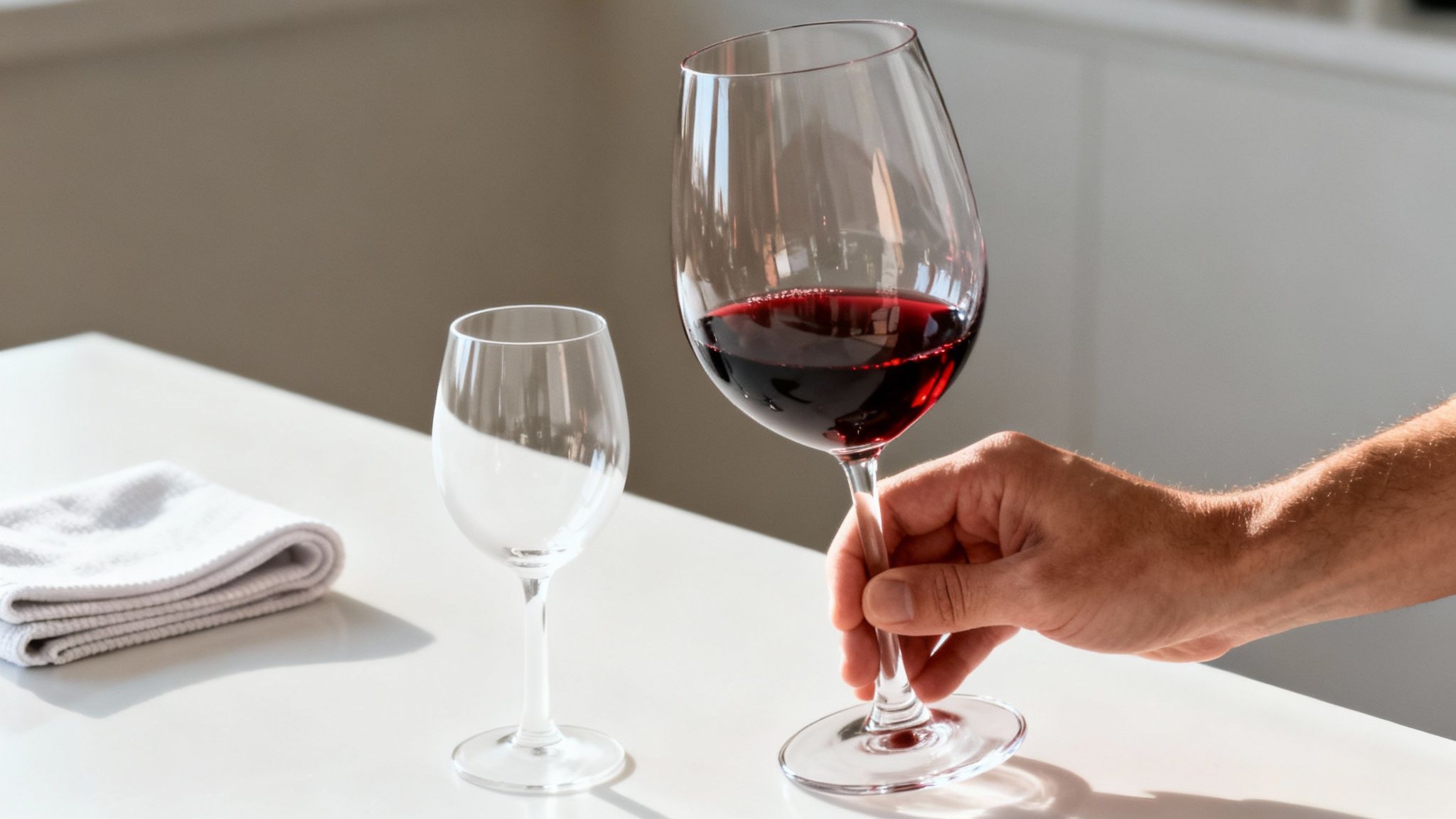
This concept was popularized by manufacturers like Riedel, who designed glasses specific to grape varietals. For example, a wide-bowled Burgundy glass allows the delicate aromas of Pinot Noir to accumulate, while a tall, slender glass for Champagne preserves its fine bubbles. Here are a few simple ways to leverage glassware:
- Hold by the stem: Always hold your glass by the stem or base. Holding the bowl transfers body heat to the wine, altering its temperature and aroma profile. This also keeps fingerprints off the bowl, allowing for clear observation.
- Fill correctly: Pour wine only to the widest part of the bowl, or about one-third full. This provides ample surface area for the wine to breathe and leaves room for you to swirl it effectively without spilling.
- Start with a universal glass: As a beginner, you don’t need a cabinet full of different glasses. Investing in a set of quality "universal" glasses, like those from Zalto or Spiegelau, provides a great tasting experience for almost any wine.
- Keep it clean: Ensure your glasses are polished and free of detergent residue or lint, as these can interfere with the wine's aroma and appearance. Use a lint-free microfiber cloth for the best results.
Key Insight: The right glass is not about etiquette; it's about engineering. The shape directly influences how aromas are collected and presented to your nose, which is responsible for the vast majority of what we perceive as flavor.
As you become more advanced, you can explore varietal-specific glasses to see the difference for yourself. When you log a wine in your Sommy.ai journal, consider adding a note about the glassware you used. Over time, you may notice patterns in how different glasses affect your perception of similar wines, further refining your tasting skills and knowledge.
3. Understanding Wine Color and Clarity Analysis
Before you even swirl or sniff, your eyes offer the first crucial clues about a wine’s story. Among the most fundamental wine tasting tips for beginners is learning to interpret a wine’s visual cues. Analyzing its color, clarity, and intensity provides a sneak peek into its age, grape variety, and even the climate where it was grown, setting the stage for everything your nose and palate will experience next.
This visual assessment is the first step in the formal tasting process and requires just three things: a glass, good light, and a white background.
- Tilt and Observe: Hold the glass by the stem and tilt it at a 45-degree angle against a white surface, like a napkin or a piece of paper. This allows you to see the true color without distortion.
- Assess the Core and Rim: Look at the color in the center of the wine (the core) and compare it to the color at the edge (the rim or meniscus). A significant color variation often indicates age, especially in red wines.
- Check for Clarity: Note whether the wine is clear and brilliant or hazy and cloudy. While some unfiltered wines can be hazy by design, cloudiness can also be a sign of a flaw.
- Evaluate Intensity: Is the color pale and watery, or deep and opaque? This hints at the grape variety and concentration. A deep purple Syrah looks very different from a pale, translucent Pinot Noir.
Key Insight: A wine's color is its visual timeline. Pale straw-yellow in a Sauvignon Blanc suggests youth and freshness, while a deep golden hue in a Chardonnay may indicate oak aging or maturity. Similarly, a vibrant ruby red Cabernet Sauvignon will develop brick-red or garnet edges after several years in the bottle.
To start building your visual memory, compare two reds like a young Merlot and an aged Cabernet Sauvignon. Notice the bright, purplish-red tones of the Merlot versus the mellow, brick-colored rim of the Cabernet. Capturing these observations in a digital journal like Sommy.ai is a great way to track how wines evolve visually over time, helping you connect a wine's appearance with its ultimate taste profile.
4. Mastering the Smell Phase: Identifying Aromas and Bouquet
While taste seems like the main event, up to 80% of what we perceive as flavor actually comes from our sense of smell. This makes mastering the "smell phase" one of the most impactful wine tasting tips for beginners. The aromas in wine reveal crucial clues about its origin, grape variety, and winemaking process long before you take a sip.
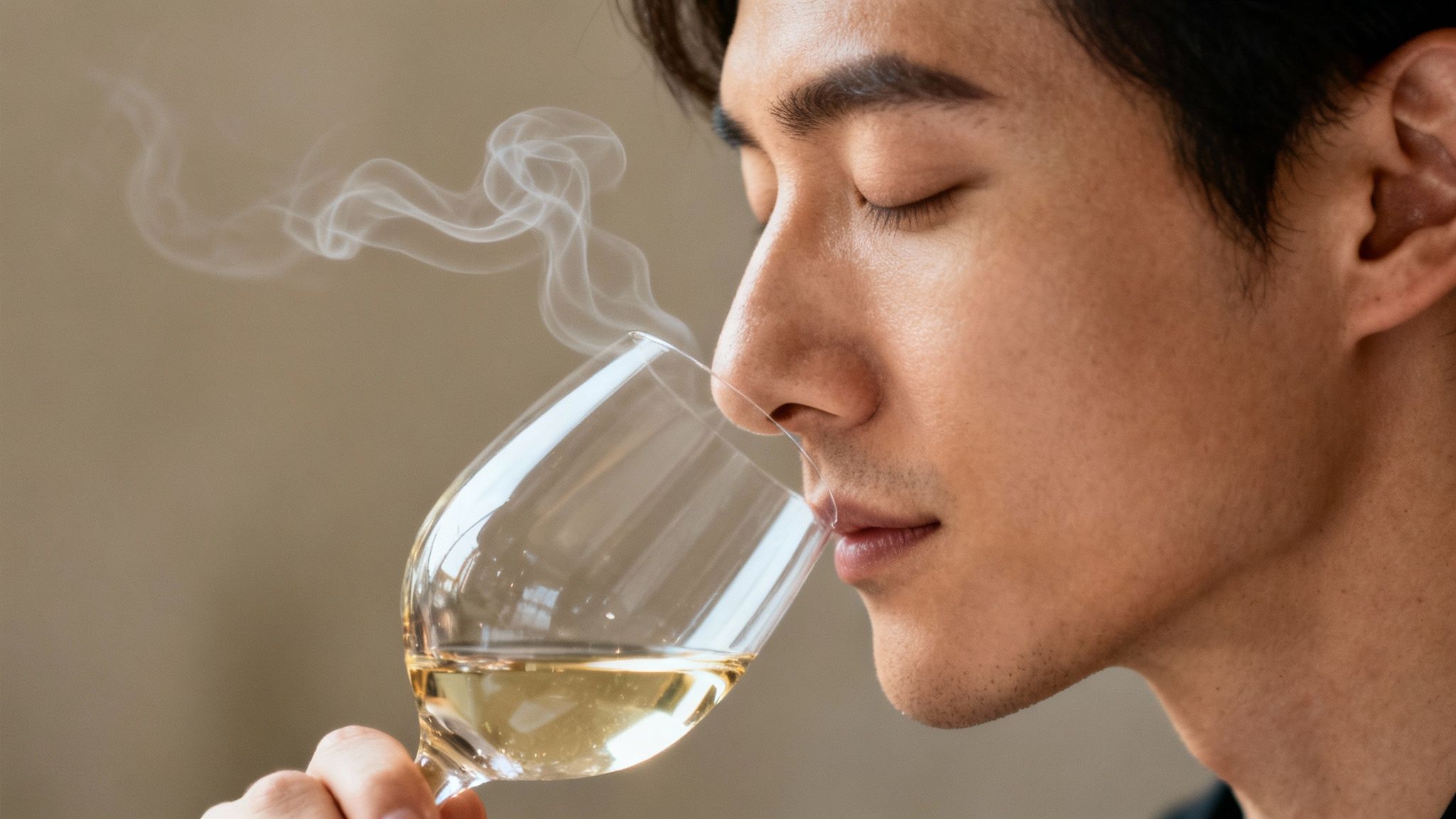
Wine aromas are generally grouped into three categories that tell the wine’s life story:
- Primary Aromas: These come directly from the grape and the environment (terroir). Think fruity and floral notes like cherry in a Pinot Noir or grapefruit in a Sauvignon Blanc.
- Secondary Aromas: These develop during the fermentation process. Common examples include yeast-driven scents like sourdough or biscuit, often found in Champagne.
- Tertiary Aromas (Bouquet): These arise from the aging process, often in oak barrels or in the bottle. They include complex notes like vanilla, leather, tobacco, or nuts.
To start identifying these scents, swirl the glass for about 10 seconds to aerate the wine and release its aromatic compounds. Then, bring the glass to your nose and take a few short, gentle sniffs. Avoid one long, deep inhalation, as this can overwhelm your senses. Try to link what you smell to familiar scents from your memory, like fruits, spices, or flowers.
Key Insight: Your nose is a powerful tool that can detect thousands of scent compounds your tongue cannot. By learning to identify key aromas, you can predict a wine’s flavor profile and quality, dramatically enriching your tasting experience.
To accelerate your learning, use an aroma wheel (popularized by Dr. Ann C. Noble) to guide your descriptions. When you log a wine in the Sommy.ai journal, make it a habit to list at least three distinct aromas you detect. The app will then use your inputs to recognize patterns and suggest new wines with aromas you are likely to enjoy based on your preferences.
5. Temperature Control and Its Impact on Wine Tasting
One of the most overlooked yet critical wine tasting tips for beginners is understanding the power of temperature. Serving a wine too warm or too cold can dramatically alter its aroma, flavor, and texture, masking its true character. Proper temperature control ensures that the wine’s volatile aromatic compounds are expressed correctly and its structural elements like acidity and tannins are perceived in balance.
Temperature affects a wine's profile in several key ways:
- Aromatics: Colder temperatures suppress a wine’s aromas. A complex Cabernet Sauvignon served straight from the fridge will seem muted and closed off. Conversely, a wine served too warm will release its alcohol vapors too quickly, creating a harsh, “hot” sensation that overpowers its delicate fruit or floral notes.
- Flavor and Structure: Chilling accentuates acidity and tannins, making a wine feel crisper but also potentially more bitter. Warmth softens tannins but can make a wine taste flabby or overly alcoholic. A warm Sauvignon Blanc, for example, loses its refreshing zest and can taste flat.
- Mouthfeel: The perceived body of a wine changes with temperature. A full-bodied red like a Malbec feels thinner and less luscious when over-chilled, while a light white can feel heavy and syrupy if served too warm.
Key Insight: Temperature is not about personal preference; it's about chemistry. The right temperature range allows a wine’s components to present themselves harmoniously, giving you the most accurate and enjoyable tasting experience.
To put this into practice, aim for these general ranges: Light-bodied whites (Sauvignon Blanc, Pinot Grigio) at 45-50°F (7-10°C), full-bodied whites (Chardonnay) and rosés at 50-55°F (10-13°C), light-bodied reds (Pinot Noir) at 55-60°F (13-16°C), and full-bodied reds (Cabernet, Merlot) at 60-65°F (16-18°C). A simple trick is to put a red wine in the refrigerator for 15-20 minutes before serving. You can easily log these details in a wine journal, like the one in Sommy.ai, to remember how temperature impacted your perception of a particular bottle.
6. Learning Flavor Families and Grape Varieties
One of the most empowering wine tasting tips for beginners is moving from tasting individual wines to understanding the "family" they belong to. Just like apples have different varieties (Granny Smith is tart, Fuji is sweet), grapes do too. Learning the characteristic flavor profiles of major grape varieties provides a mental roadmap, helping you anticipate a wine's taste before you even open the bottle.
This knowledge forms the foundation for confident wine selection. It helps you understand why a Cabernet Sauvignon often has notes of blackberry and cedar, while a Sauvignon Blanc typically bursts with grapefruit and grassy aromas. Understanding these patterns is key to navigating any wine list or store aisle. Consider these common examples:
- Cabernet Sauvignon: Known for dark fruit flavors like blackcurrant and plum, often with notes of tobacco and cedar from oak aging.
- Pinot Noir: A lighter red with notes of cherry and raspberry. Burgundy (France) versions are often more earthy, while those from California can be jammier.
- Sauvignon Blanc: A crisp white wine. Those from the Loire Valley in France often have grassy, mineral notes, while New Zealand versions are famous for pungent passion fruit and gooseberry flavors.
- Riesling: An aromatic white that can range from bone-dry to very sweet, with typical notes of green apple, lime, and jasmine.
Key Insight: Associating grape varieties with specific flavor profiles is like learning a new language. The more "words" (grapes) you know, the more fluently you can express your preferences and understand the story each bottle tells.
To start, focus on mastering 6-8 major international varieties. A great exercise is to taste two versions of the same grape from different climates, like a French Chardonnay versus a Californian one, to see how terroir impacts the final product. As you learn what you like, Sommy can help you discover other grapes with similar profiles. For more guidance on this, you can learn how to choose wine based on these profiles. This foundational knowledge is your shortcut to consistently finding wines you'll love.
7. Taking Tasting Notes and Building a Personal Flavor Reference Library
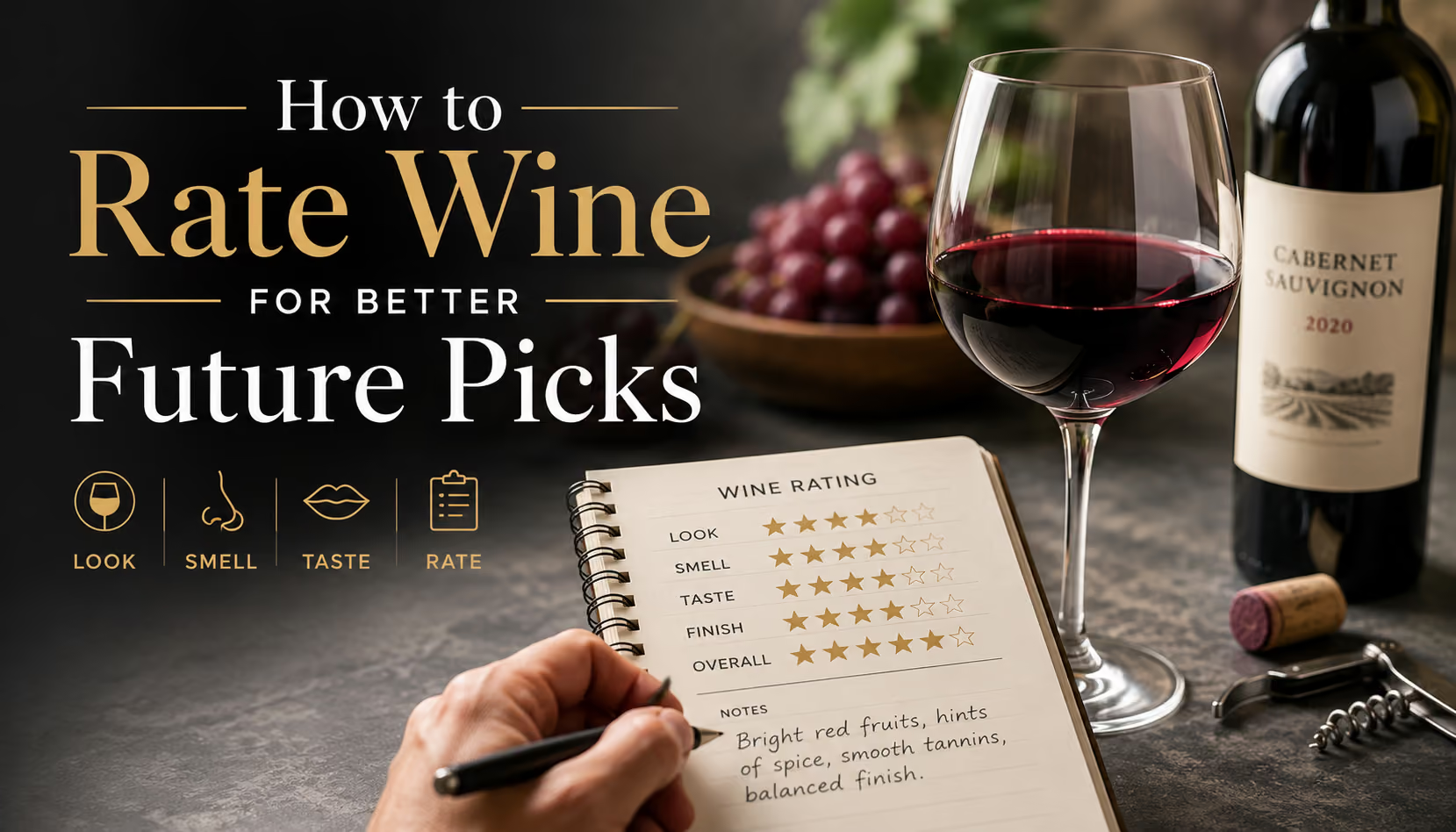
One of the most powerful wine tasting tips for beginners is to transition from simply tasting to actively recording. Taking systematic notes creates a personal record of your experiences, helping you retain information, recognize patterns in your preferences, and build a reliable flavor reference library. This practice is the bridge between tasting a wine once and truly understanding your palate over time.
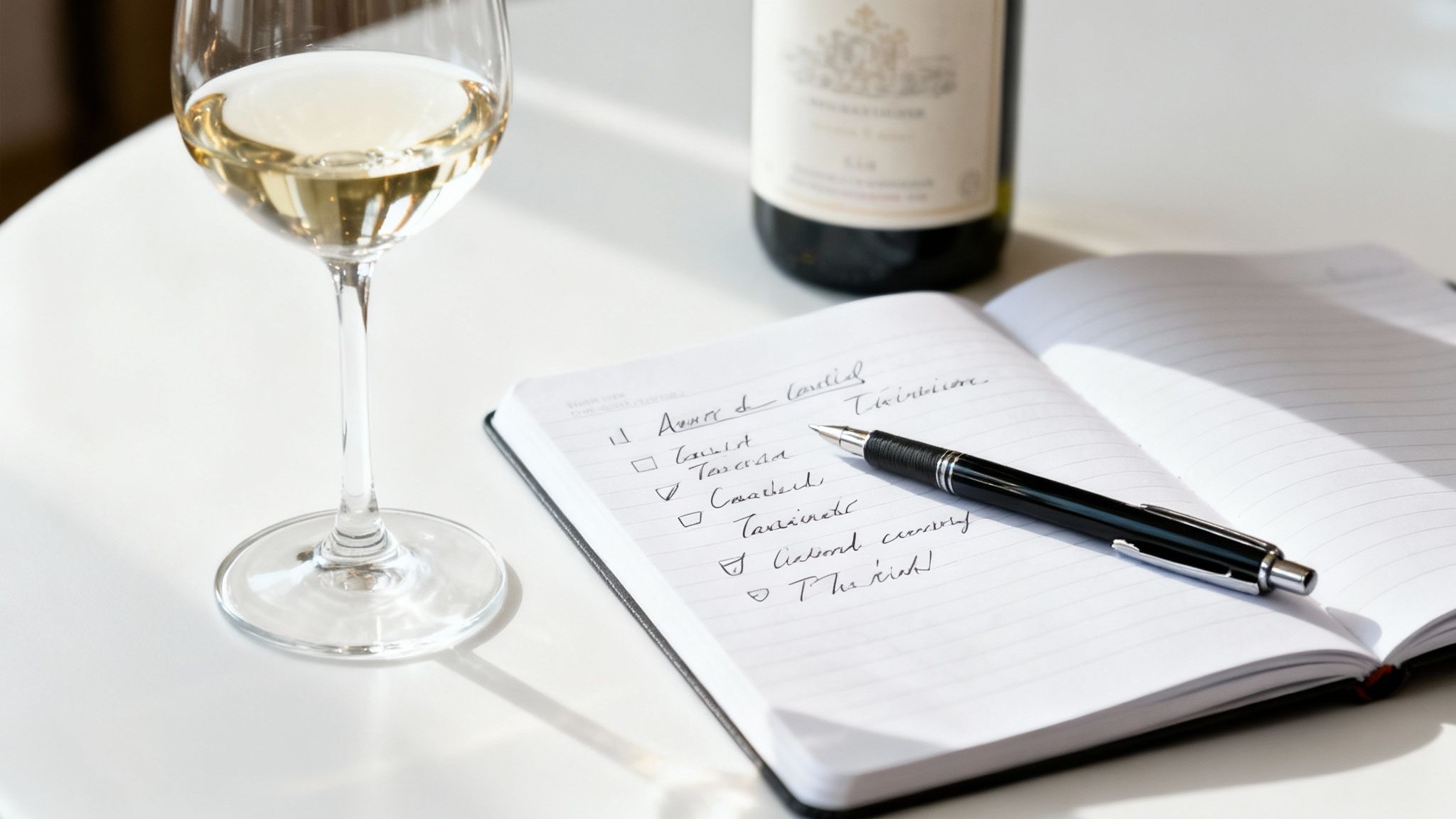
This process involves more than just jotting down "good" or "bad." It's about capturing the key details of a wine in a structured way to make them useful later. A good set of notes typically includes:
- Basic Information: Record the wine’s name, producer, region, vintage (year), and grape variety (or blend).
- Sensory Details: Use the Five Senses Approach to note its appearance (color), aromas (what you smell), and palate (flavors, acidity, body, finish).
- Personal Impression: Did you like it? Was it good value for the price? What foods would it pair well with?
- Context: Where did you drink it? Who were you with? Sometimes the setting influences your perception.
Key Insight: Your tasting notes are a personalized map of your wine journey. They transform fleeting sensory moments into lasting knowledge, empowering you to buy with confidence and articulate exactly what you like.
To start, you don't need a complex system. Use a simple notebook or a digital app. A great way to ensure you capture the right details is by using a structured guide; you can explore a simple and effective wine tasting notes template to get started. For a modern approach, a wine tasting app like Sommy.ai lets you scan a label, add your personal ratings and notes, and digitally build your flavor library, making it easy to recall your favorites on the spot.
8. Avoid Common Beginner Mistakes and Develop Proper Palate Technique
One of the fastest ways to improve your wine tasting skills is to learn what not to do. Many beginners inadvertently develop bad habits that hinder their ability to accurately assess a wine. Understanding these common mistakes, from palate fatigue to improper tasting technique, helps you build a solid foundation for more meaningful and enjoyable tasting experiences.
Correcting these pitfalls is about creating a clean sensory slate. Here are the most critical mistakes to avoid:
- Rushing the Process: Don't just sip and swallow. Dedicate 5-10 minutes to each wine, using the Five Senses Approach. Let the wine sit on your palate for at least 3-5 seconds to ensure it contacts all your taste receptors.
- Ignoring Pre-Tasting Prep: Strong flavors and scents can overwhelm your senses. Avoid coffee, spicy food, mints, or perfume for at least 30 minutes before tasting. Cleanse your palate between different wines with a sip of still water.
- Tasting in the Wrong Order: Always taste wines from light-bodied to full-bodied. Starting with a powerful Cabernet Sauvignon will overpower a delicate Pinot Grigio tasted afterward. A typical order is sparkling, light white, full-bodied white, rosé, light red, then full-bodied red.
- Overloading Your Palate: Limit any single tasting session to 8-10 wines. Beyond this, palate fatigue sets in, making it difficult to distinguish nuances. Professional tasters spit to sample dozens of wines, a crucial technique for extensive tastings.
- Judging by Price or Appearance: A high price tag or a deep, rich color doesn't guarantee quality. Judge each wine based on its aroma, flavor, and structure alone.
Key Insight: Proper technique isn't about being pretentious; it's about giving each wine a fair chance to express its true character. By controlling external variables and avoiding common errors, you can trust your own sensory perceptions more confidently.
To see these principles in action, observe how a professional approaches tasting. The structured discipline they employ is designed to maximize sensory accuracy and prevent burnout. Understanding this methodology, as detailed in resources exploring what exactly a sommelier does, can elevate your own practice from casual sipping to intentional tasting. By adopting these professional habits early, you build a reliable palate and accelerate your learning curve.
8-Point Wine Tasting Tips Comparison
Your Next Pour: Turning Knowledge into Confident Enjoyment
You’ve journeyed through the foundational pillars of wine appreciation, from mastering the five S's (See, Swirl, Sniff, Sip, Savor) to understanding the critical role of temperature and glassware. We've explored how to decipher a wine's story through its color, identify its aromatic secrets, and organize those discoveries in a personal tasting journal. By learning to avoid common pitfalls and focusing on developing your palate, you have officially moved beyond simply drinking wine to truly tasting it. This is the turning point where every glass becomes an opportunity for discovery and deeper enjoyment.
The true value of these wine tasting tips for beginners isn't about memorizing complex terminology or perfectly identifying every obscure note. It’s about building a personal connection with what's in your glass. It’s the confidence to walk into a wine shop, describe what you like, and walk out with a bottle you’ll genuinely love. It's the ability to sit down at a restaurant, look at the wine list with excitement instead of anxiety, and choose a pairing that elevates your meal. Each tip, from analyzing clarity to taking structured notes, is a tool to sharpen your senses and build your personal flavor library.
Key Takeaways and Your Path Forward
As you continue your exploration, remember these crucial takeaways:
- Trust Your Palate: There is no "right" or "wrong" answer in what you taste. Your perception is your reality, and the goal is to understand and articulate your own preferences.
- Practice Makes Progress: Your palate, like any muscle, gets stronger with use. Taste different wines, compare them side-by-side, and actively think about what you are sensing. Consistency is more important than expertise.
- Leverage Modern Tools: You don't have to rely on memory alone. This is where technology becomes your personal sommelier. When you encounter a new bottle, use a tool like Sommy.ai to instantly scan the label and pull up details. Log your impressions in its digital journal to build a searchable history of your tastes.
This journey is a marathon, not a sprint. The most experienced wine lovers are simply those who have remained curious and continued to learn with every pour. Embrace the process, celebrate your discoveries, and don't be afraid to revisit the basics. By applying these foundational techniques, you are not just learning about wine; you are building a lifelong skill that enhances meals, enriches social gatherings, and opens up a world of culture and history, one bottle at a time. Cheers to the many delicious discoveries that lie ahead!
Ready to put these tips into practice with a smart assistant by your side? Download Sommy.ai to scan labels, get instant food pairing recommendations, and build your digital wine journal. Start your journey from beginner to confident enthusiast today at Sommy.ai.