
Choosing the right wine doesn't have to be a complicated puzzle. It really just boils down to a simple game plan: think about the occasion, set a budget, and consider your meal.
Get these three things straight, and that intimidating wall of wine bottles suddenly looks a lot more manageable. You'll walk out with a bottle that's perfect for the moment, every time.
Conquering the Wine Aisle with a Simple Game Plan
Staring at hundreds of wine bottles can feel overwhelming, but a clear plan turns that confusion into confidence. The secret isn't knowing every obscure grape from every corner of the world. It’s about understanding what you need right now.
Before you grab a single bottle, just ask yourself a few basic questions.
A casual Tuesday night pizza calls for something completely different than a big anniversary dinner. A summer picnic is practically begging for a crisp, cold Sauvignon Blanc, while a larger dinner party often does best with a crowd-pleasing Pinot Noir.
Next, be real about your budget. A higher price doesn't automatically mean better wine, especially when there are so many incredible bottles in the $15-$25 range. Letting go of the "expensive equals good" myth is the first step to becoming a smarter wine buyer.
Finally, what's for dinner? The goal is always balance. You want a light-bodied wine to go with a delicate dish, or a big, robust red to stand up to a rich, savory meal. Nailing these fundamentals makes the whole process smoother and way more fun.
This simple decision flow (occasion, budget, and meal) is the key to narrowing down your options.
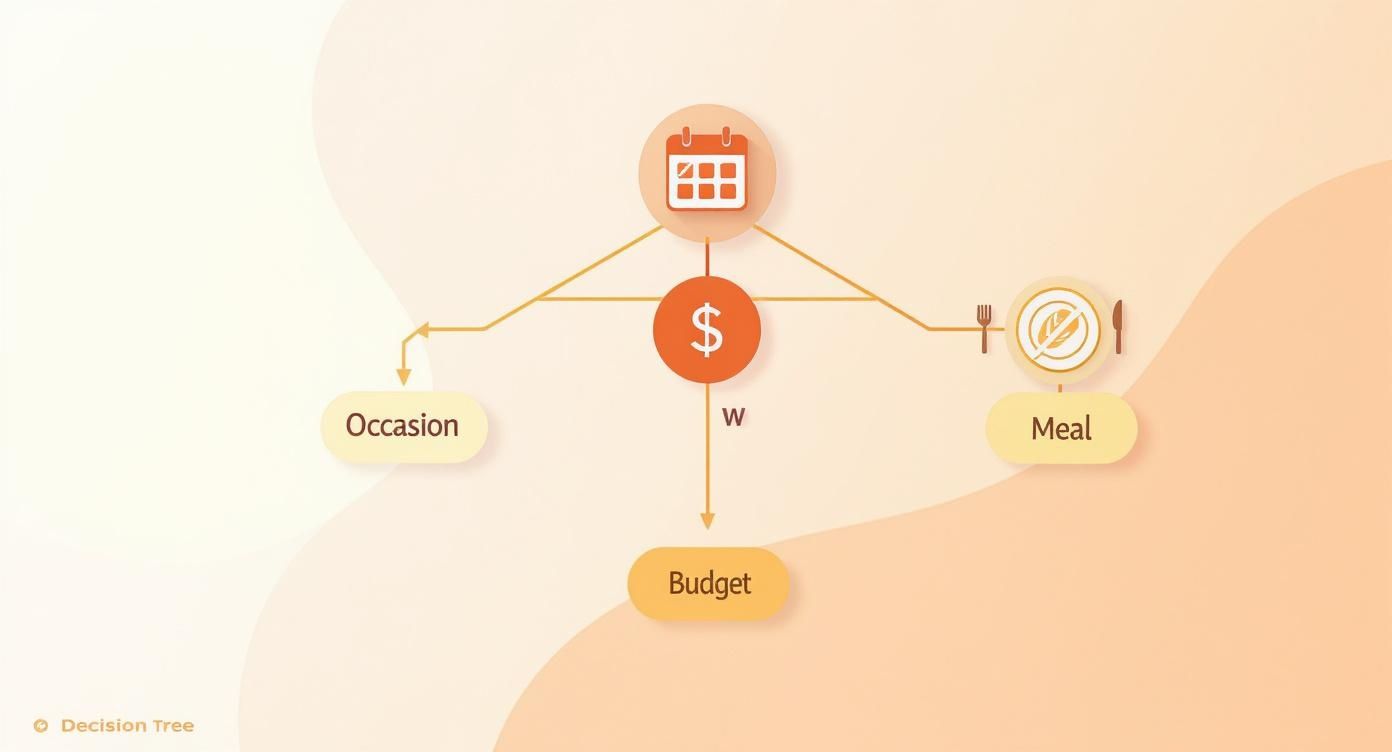
Follow this path, and you'll stop guessing and start making confident, intentional choices every time you buy wine.
Discovering Your Personal Wine Style
Let's get one thing straight: the best wine isn't the most expensive one or the bottle with a 95-point score. It's the one you actually love to drink. Period. Learning how to choose a wine that hits the spot starts with figuring out your own palate.
Forget trying to memorize vague terms like "dry" or "full-bodied" for now. Instead, let's connect wine flavors to tastes you already know from everyday life. This is the secret shortcut to understanding what you like.
Think about the foods you crave. Do you love the sharp, mouth-watering zing of a green apple or a fresh squeeze of lemon in your water? If so, you'll probably appreciate acidity in wine, which is what makes a crisp Sauvignon Blanc so ridiculously refreshing.
Or maybe you're more of a black coffee or dark chocolate person. In that case, you might find yourself drawn to reds with noticeable tannin: that slightly grippy, mouth-drying sensation you get from a bold Cabernet Sauvignon.
Find Your Go-To Grapes
Knowing just a few key grape personalities gives you a real vocabulary to work with. It's the difference between fumbling for words and confidently describing what you're looking for.
Here are a few to get you started:
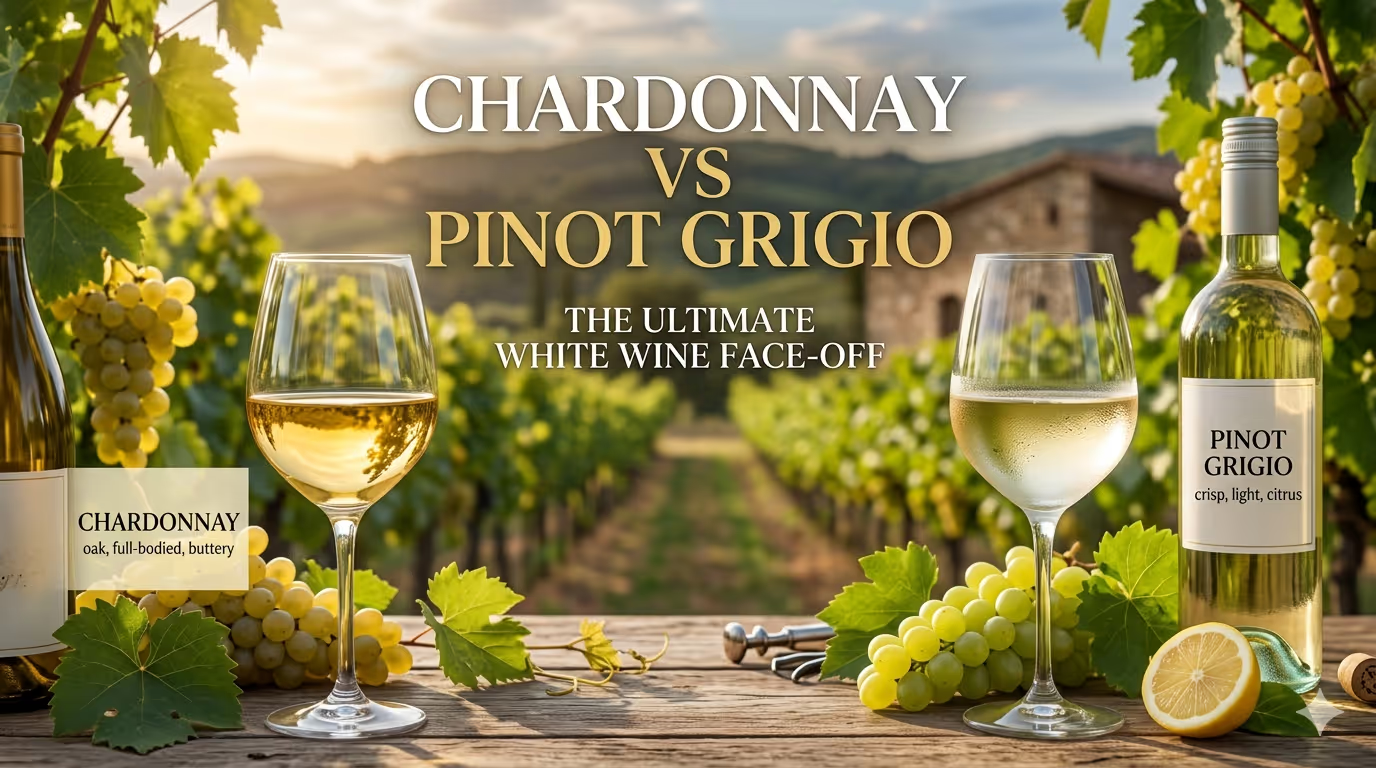
- Chardonnay: This one's a chameleon. It can be crisp, clean, and unoaked (think Chablis from France), or it can be rich, creamy, and buttery when it's been aged in an oak barrel.
- Malbec: Famous for its deep, dark fruit flavors like blackberry and plum. It's usually bold but finishes smooth, making it a total crowd-pleaser.
- Pinot Noir: A much lighter-bodied red, Pinot Noir is all about delicate notes of cherry, raspberry, and sometimes a cool, earthy hint of mushroom or forest floor.
Armed with this, you can walk into a wine shop and ask for something specific, like "a full-bodied red that isn't too tannic." You're giving the expert real clues, which means you'll walk out with a recommendation you’ll actually enjoy.
To really nail this down, start keeping track of what you try. A simple notebook works, but for a more structured approach, an AI tool like Sommy can help you log wines and build a personal taste profile. Over time, it learns what you like and can make smarter recommendations. Check out our guide on using a wine tasting notes template to make remembering what you loved (and hated) even easier.
Creating Perfect Food and Wine Pairings
Pairing the right wine with your meal can take a good dinner and make it an unforgettable one. Forget the old, rigid rules you might have heard. Modern pairing is all about creating balance and making the flavors on your plate pop.
The key is to think about matching the intensity of the food with the intensity of the wine. It's a simple concept that works wonders.
Think about a big, juicy steak with its rich, savory flavors. It needs a wine that can stand up to it, not get lost in the background. That's why a Cabernet Sauvignon, with its firm tannins and bold fruit, is such a classic choice. The wine’s structure cuts right through the richness of the meat in the best way possible.
On the flip side, a delicate piece of flaky fish would be completely steamrolled by that same Cabernet. A much better fit would be a zesty Pinot Grigio or a crisp Sauvignon Blanc. Their acidity brightens the whole dish without overpowering its subtle flavors.
Finding Balance on Your Plate
Think of it as a duet. Neither the food nor the wine should steal the show. The goal is harmony.
- Complementary Pairings: This is all about matching similar flavors. An earthy Pinot Noir with a mushroom risotto, for example, really leans into those shared woodsy, savory notes.
- Contrasting Pairings: Here, you're using opposite flavors to create a beautiful balance. A slightly sweet Riesling can be a stunning counterpoint to the heat of a spicy Thai curry.
The most exciting pairings happen when the wine brings out a new flavor in the food you wouldn’t have noticed otherwise, and vice versa. It’s all about experimenting and finding what you love.
To give you a head start, here is a quick reference guide for some of the most common pairings.
Classic Food and Wine Pairing Cheat Sheet
| Food Type | Classic Wine Pairing | Why It Works |
|---|---|---|
| Steak & Red Meat | Cabernet Sauvignon, Malbec | The wine's bold tannins cut through the fat, cleansing your palate for the next bite. |
| Roast Chicken | Chardonnay, Pinot Noir | A creamy Chardonnay complements the richness, while a light Pinot Noir matches the earthy flavors. |
| Spicy Dishes (Thai/Indian) | Off-Dry Riesling, Gewürztraminer | A touch of sweetness in the wine cools the spice and balances the heat beautifully. |
| Delicate Fish (Sole, Flounder) | Sauvignon Blanc, Pinot Grigio | The high acidity and citrus notes act like a squeeze of lemon, brightening the fish. |
| Creamy Pasta Sauces | Oaked Chardonnay, Viognier | The wine's creamy texture mirrors the sauce, creating a rich, harmonious match. |
| Tomato-Based Pasta | Chianti, Barbera | The high acidity in these Italian reds stands up to the acidity of the tomatoes. |
| Oysters & Shellfish | Champagne, Muscadet | Crisp, mineral-driven wines with high acidity cut through the brininess of the seafood. |
| Earthy Mushroom Dishes | Pinot Noir, Nebbiolo | The earthy, forest-floor notes in these wines perfectly complement the mushrooms. |
This table is a great starting point, but don't be afraid to break the rules once you get the hang of it!
For pasta dishes, the sauce is always your guide. To see why a zesty white wine sings with a creamy Alfredo while a rustic red is perfect for Bolognese, check out our deep dive into what wine goes with pasta.
Feeling stuck at a restaurant? An app like Sommy can act as your pocket sommelier. Just scan the menu, tell it what you're eating, and it will suggest the best wine to match your dish, taking all the guesswork out of the moment.
How to Read a Wine Label Like an Expert
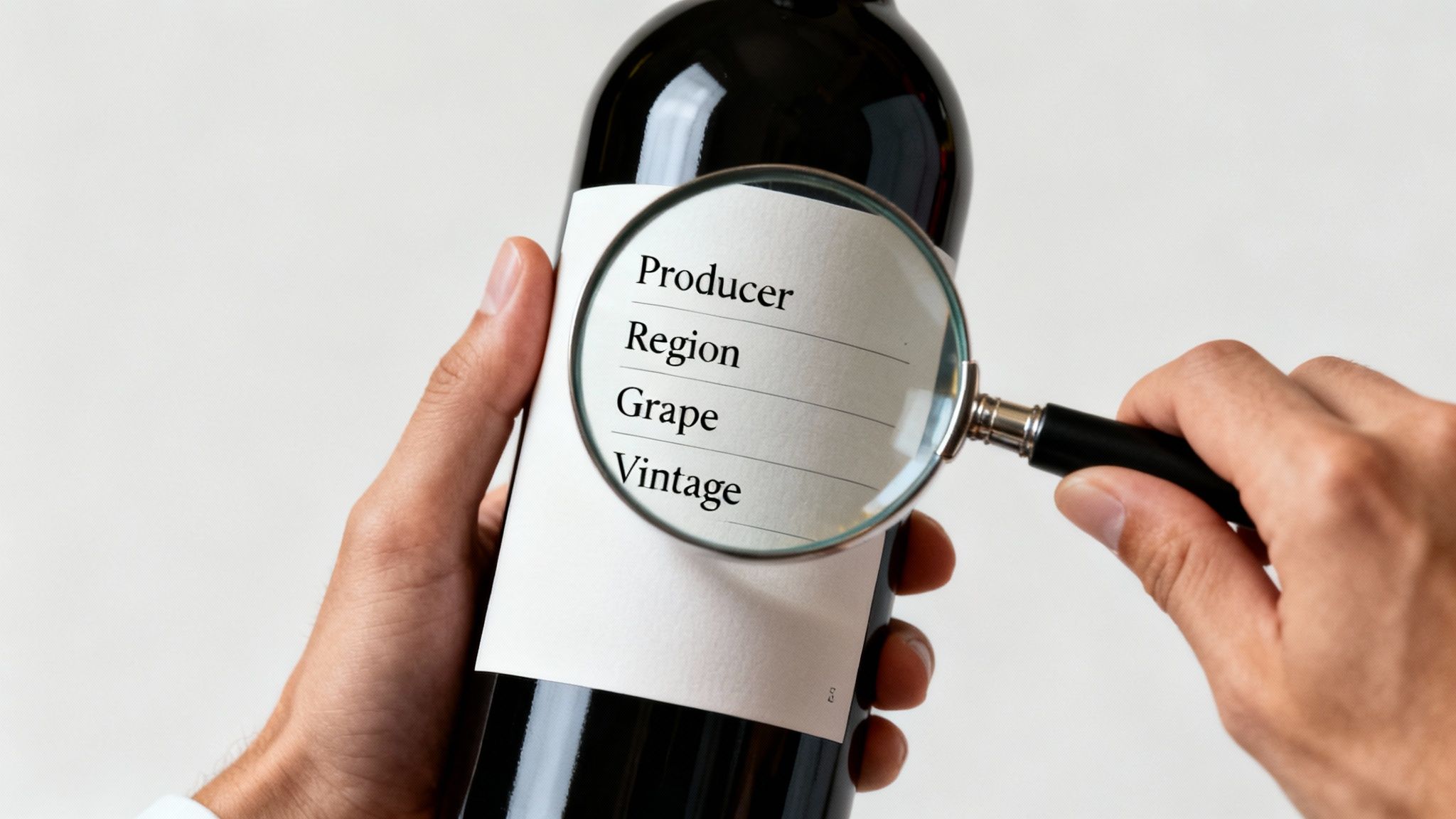
Think of a wine label as your personal cheat sheet. If you know how to speak its language, it tells you a story about what’s waiting inside the bottle. Cracking this code isn't just a party trick; it's a core skill that turns a confusing jumble of words into your most powerful tool for picking a great wine.
The first thing to figure out is where the wine is from. This one piece of information splits most wine labels into two camps:
- Old World (Europe): Labels from places like France or Italy lead with the region. When you see a bottle simply labeled "Sancerre," it's not hiding the grape. It's telling you it’s a Sauvignon Blanc from that specific, famous French region. The place is the story.
- New World (Everywhere Else): Labels from the USA, Australia, or Chile tend to put the grape variety front and center. Think "California Cabernet Sauvignon." They tell you the what before the where.
What Really Matters on the Label
Just knowing that Old World vs. New World distinction gives you a huge head start in guessing a wine’s style. A Chianti from Italy is going to taste wildly different from an Australian Shiraz, and the label is your first clue.
This same logic helps when you're staring down a menu at a restaurant. If you want to get more comfortable with that, we've put together some tips on how to read a restaurant wine list without feeling lost.
It also helps to have a sense of what's happening in the wine world. For example, Australia is on track to be the Southern Hemisphere's top producer in 2025, cranking out 11.6 million hectoliters. That's an 11% jump from 2024. Knowing little facts like this explains why you might suddenly see more great Aussie wines on the shelf. If you're curious, you can discover more insights about global wine production on OIV.int.
Making Your Final Choice With Modern Tools
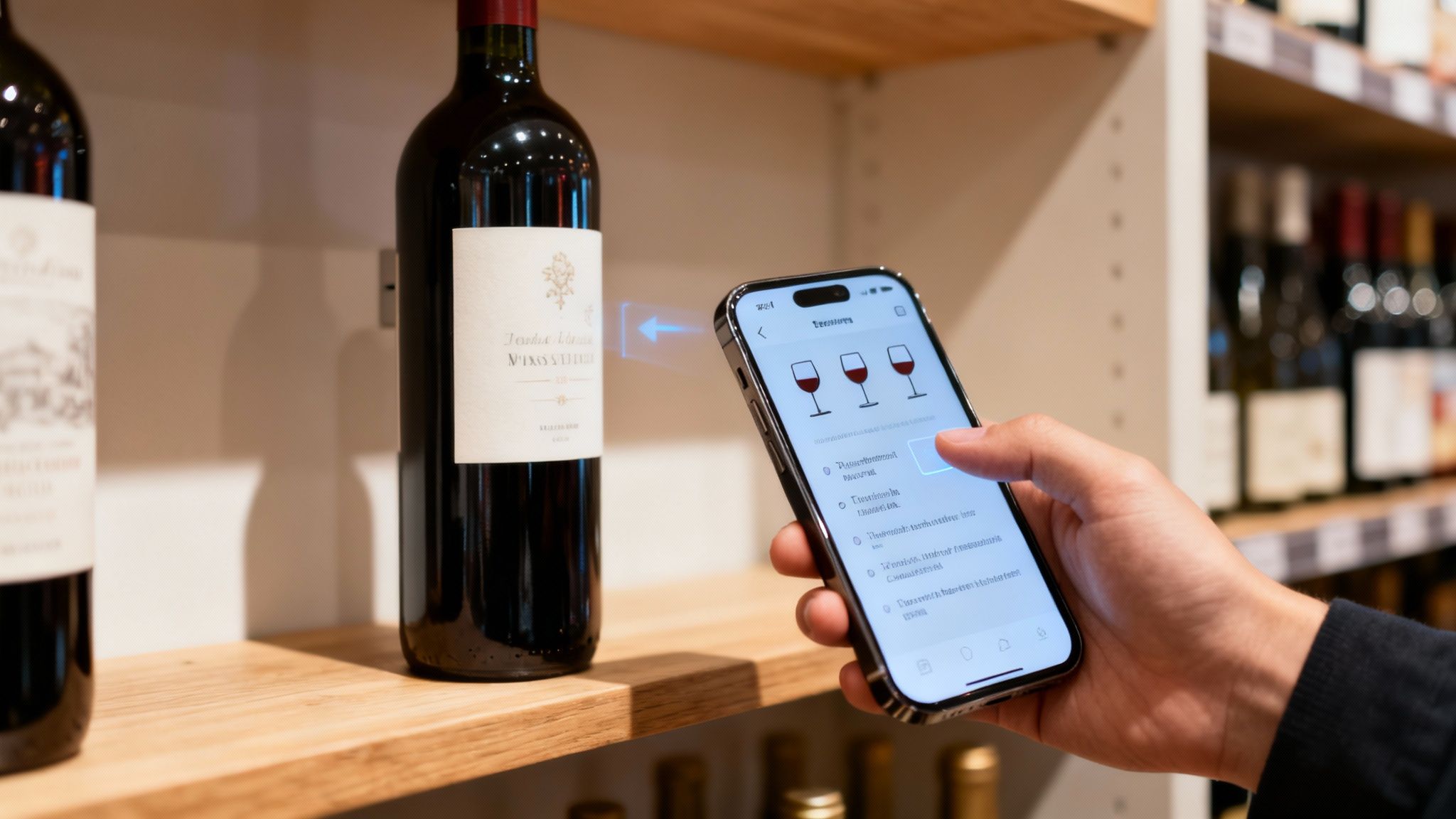
You’ve done the hard work. You’ve thought about the occasion, your budget, and what you’re eating. Now you’re standing in the wine aisle, staring at a wall of bottles, and it's time to make the final call.
This is where a little tech in your pocket can make all the difference, turning lingering doubt into a confident choice. An app like Sommy.ai basically puts a personal sommelier on your phone.
Just scan the label of a bottle that catches your eye. Instantly, you’ll get real-world tasting notes, see what other people think of it, and find out what food it plays well with. For instance, if Sommy knows you prefer bold but smooth reds, it can tell you if that Malbec on the shelf is likely to be a hit or a miss for your palate. If you want to see how this works in practice, check out how a wine scanner app is becoming a go-to tool for enthusiasts.
Getting a Smarter Recommendation
Let’s be clear: asking for help from the store staff is a great move. But you have to be strategic about it.
Walking up and saying, "I need a good red," is a shot in the dark. Instead, give them something to work with. Try this: "I'm grilling steak tonight and I'm looking for a Malbec or a Cab under $25. I want something full-bodied but not a total tannin bomb. What have you got?"
See the difference? That kind of specific request helps them zero in on a bottle you’ll actually love.
Ultimately, your best guide is your own palate. Every time you try a wine, make a quick note of it in an app like Sommy. Did you love it? Hate it? Was it just okay? Over time, you build a personal library that becomes your most trusted resource. You’ll stop guessing and start knowing.
Knowing a little about what's happening in the wine world helps, too. The global wine market is expected to reach an eye-watering $537.45 billion by 2032. Things like tariff hikes can suddenly make your favorite imported bottles in the $15-$30 range more expensive. A little market awareness can help you spot the real value on the shelf. For a deeper dive, you can read the full research on wine market trends on metastatinsight.com.
Common Questions You'll Run Into
Even with the best plan, a few questions always pop up just as you’re about to grab a bottle. Let's clear up some of the most common ones that can trip you up.
How Much Does Vintage Really Matter?
The vintage, the year the grapes were picked, can be a huge deal, but its importance really depends on what you're buying. For a high-end wine from a place with tricky weather, like Bordeaux or Burgundy, a great vintage can be the difference between a good wine and a legendary one.
But for most of the wines we drink on a Tuesday night? Winemakers are aiming for a consistent style year after year. A really hot or cool year might tweak the flavors a bit, but it’s rarely a deal-breaker. Don't sweat the vintage on your everyday bottle.
What Does "Reserve" Actually Mean on a Label?
This one is tricky because it means different things in different places. In some countries, the term is legally protected. In Spain (Reserva) and Italy (Riserva), it means the wine has been aged for a specific minimum amount of time before release. It’s a genuine mark of a higher-quality bottling.
But in many other places, including the United States, the word "Reserve" has no legal definition. It’s mostly a marketing term a winery uses for what they consider a better batch. It can be a great wine, but the word itself isn't a guarantee of anything.
How Do You Pick a Wine as a Gift?
When you’re flying blind and don’t know someone’s specific taste, the goal is to choose something with broad appeal that feels special. You almost can't go wrong with these three options:
- A quality Sparkling Wine: A bottle of real Champagne or a top-tier Prosecco is festive, celebratory, and almost universally loved. It’s the safest bet in the wine world.
- A crowd-pleasing red: A smooth Pinot Noir from a well-respected region like Oregon or California’s Sonoma Coast is elegant, food-friendly, and rarely offends.
- A crisp, refreshing white: You can’t miss with a zesty Sauvignon Blanc from New Zealand’s Marlborough region. It’s consistently delicious and a massive crowd-pleaser for a reason.
Ready to find your next favorite bottle with zero guesswork? Sommy.ai is your personal AI sommelier. Scan any wine list or store shelf for instant, personalized recommendations that match your taste and budget. Never feel lost in the wine aisle again. Discover your perfect bottle at https://sommy.ai.