
A sommelier is so much more than just the ‘wine person’ at a fancy restaurant. Think of them as a highly trained, deeply knowledgeable professional who lives and breathes wine. They’re certified experts responsible for everything from crafting the wine list you hold in your hands to managing the restaurant’s entire cellar.
The True Role of a Modern Sommelier
Forget the image of a stuffy waiter who just pours wine. A great sommelier is part culinary guide, part sensory expert, and part master storyteller, all rolled into one. Their real job is to make your dining experience better by finding the perfect wine for your meal, your personal taste, and your budget.
They’re the critical link between the chef’s creations in the kitchen and the liquid treasures tucked away in the cellar. This role goes miles beyond just pointing to a popular bottle. A sommelier’s expertise is built on a deep understanding of geography, the science of grape growing (viticulture), and the delicate art of winemaking.
More Than Just a Waiter with Wine Knowledge
The duties of a sommelier are a fascinating blend of hospitality and sharp business sense. Their work starts long before the first guest walks in and doesn’t end until the last bottle is accounted for.
Some of their key responsibilities include:
- Curating the Wine List: They carefully select every single wine to match the restaurant's food, vibe, and price point. This is an art form in itself.
- Inventory and Cellar Management: This involves sourcing wines, sometimes from rare distributors, organizing the cellar so bottles age correctly, and keeping track of every last drop.
- Staff Education: A huge part of their job is training the rest of the staff—from servers to bartenders—on new wines, proper service, and the basics of pairing.
- Guest Interaction: This is the part you see. On the floor, they connect with diners, making a complex wine list feel approachable and translating weird tasting notes into descriptions you can actually understand.
To give you a clearer picture, here’s a quick breakdown of where a sommelier focuses their energy.
A Sommelier's Core Responsibilities at a Glance
This table provides a quick summary of the multifaceted duties of a professional sommelier, breaking down their role into key areas of expertise.
| Area of Responsibility | Key Duties |
|---|---|
| Guest Experience & Service | Recommending wines, decanting, and ensuring proper service temperature and glassware. |
| List & Menu Curation | Designing the wine list, pairing wines with dishes, and sourcing unique bottles. |
| Cellar Management | Purchasing, inventory control, organizing the wine cellar, and managing stock rotation. |
| Financial & Business | Pricing wines, managing budgets, and working with suppliers to secure the best deals. |
| Staff Training & Education | Conducting tastings and teaching servers about regions, grapes, and pairing principles. |
As you can see, it's a role that requires a huge range of skills, from a refined palate to a head for numbers.
A sommelier doesn't just sell wine; they create an experience. They listen to what you like and find a bottle that tells a story, turning a simple dinner into something memorable.
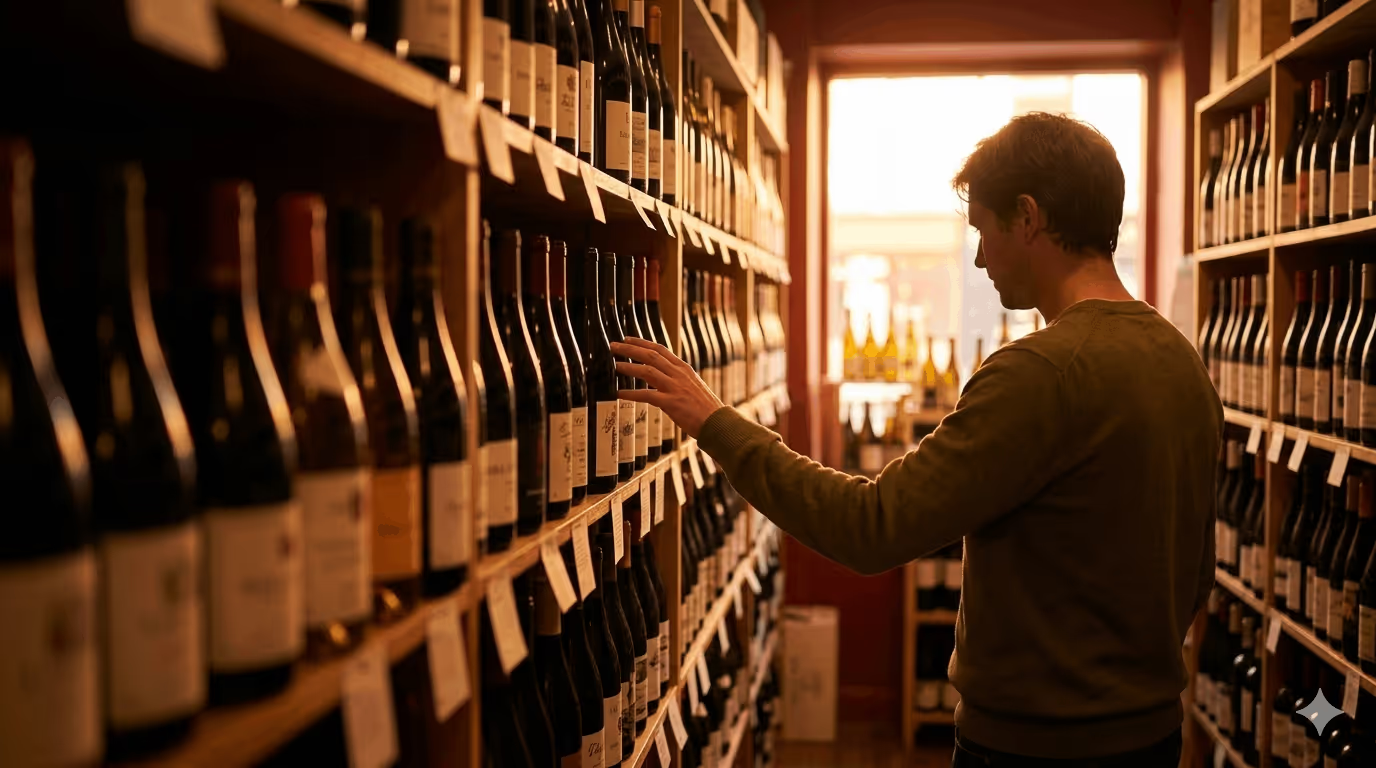
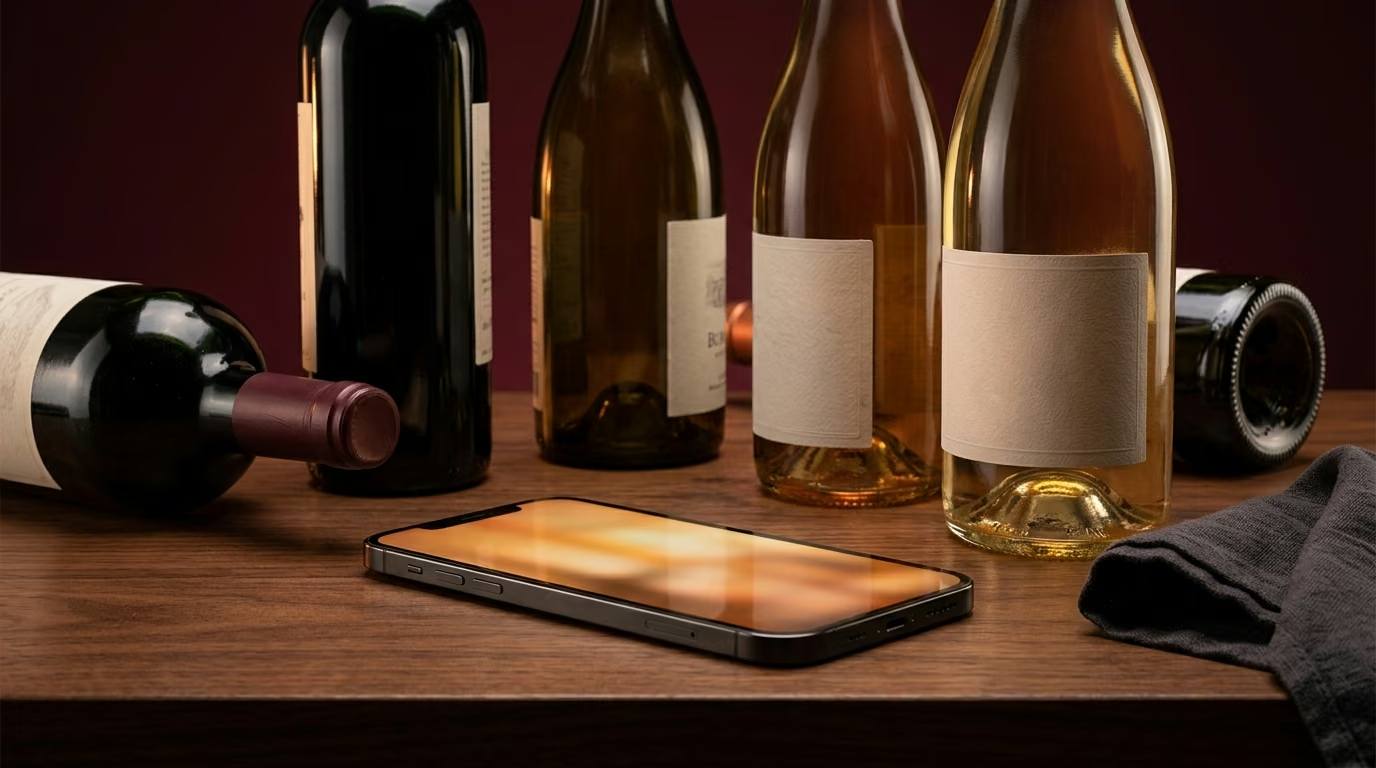
While a human sommelier provides that personal touch in a restaurant, digital tools are now appearing to offer similar guidance in other settings. For instance, an app like Sommy can act as your personal AI sommelier when you’re staring at a wall of wine in a shop or need a quick pairing idea at home. It captures the logic of a sommelier to help you make choices with confidence.
Ultimately, the goal—whether from a human or an AI—is the same: to make the world of wine feel more accessible and fun for everyone.
The Path to Becoming a Wine Expert
Becoming a sommelier isn't just about swirling nice wine and calling out tasting notes. It’s a demanding path of intense study, discipline, and a genuine passion for the craft. Forget the idea of it being a casual hobby; this is a serious professional pursuit that requires you to master geography, history, agriculture, and service all at once.
This commitment to formal education is fueling serious growth in the wine world. The global market for sommelier certifications was valued at $128 million in 2024 and is expected to hit $320 million by 2033. North America is leading the charge, making up about 37% of that market, which shows just how much restaurants and diners value certified expertise.
The Major Certification Bodies
When someone decides to officially chase the title of sommelier, they usually turn to one of a few globally recognized institutions. Each one offers a structured curriculum that builds your knowledge piece by piece.
Two of the most respected organizations are:
- The Court of Master Sommeliers (CMS): Famous for its incredibly tough four-level program, the CMS is often seen as the gold standard in the service industry. The exams are heavy on blind tasting, theory, and performing practical service skills under immense pressure.
- The Wine & Spirit Education Trust (WSET): While WSET programs are great for sommeliers, they're also designed for a broader audience, from industry pros to serious collectors. WSET is known for its academic approach, digging deep into the "why" behind every aspect of wine production.
Earning a pin from one of these bodies signals a high level of skill and opens doors to some of the best jobs in the industry.
The Levels of Sommelier Certification
Climbing the certification ladder is steep. Each level demands a whole new depth of knowledge and skill. Think of it like earning belts in martial arts—each new color represents a much deeper mastery of the discipline.
The Court of Master Sommeliers’ exam process is legendary for its difficulty. The final exam for the Master Sommelier diploma has a pass rate that often dips below 10%, making it one of the most exclusive professional titles in the world.
The typical journey through the Court of Master Sommeliers has four key milestones:
- Introductory Sommelier: A two-day course and exam that covers the fundamentals of wine, spirits, and proper service. It’s the first step.
- Certified Sommelier: This is the first major hurdle. Candidates have to pass separate exams in tasting, theory, and service. It's the baseline certification for a working professional sommelier.
- Advanced Sommelier: An intensive level that requires a much deeper understanding of the entire wine world and flawless service skills.
- Master Sommelier: The absolute pinnacle of the profession. Getting this title takes years of preparation and passing an exhaustive three-part exam that tests every bit of your knowledge.
This journey shows that becoming a sommelier is about so much more than memorizing facts. It's about learning how to turn all that expertise into an unforgettable experience for the guest. Just as a seasoned sommelier builds a mental library of tastes, an app like Sommy helps any wine enthusiast build their own personal taste profile, making it easier to remember favorites and explore new styles with confidence.
A Day in the Life of a Sommelier
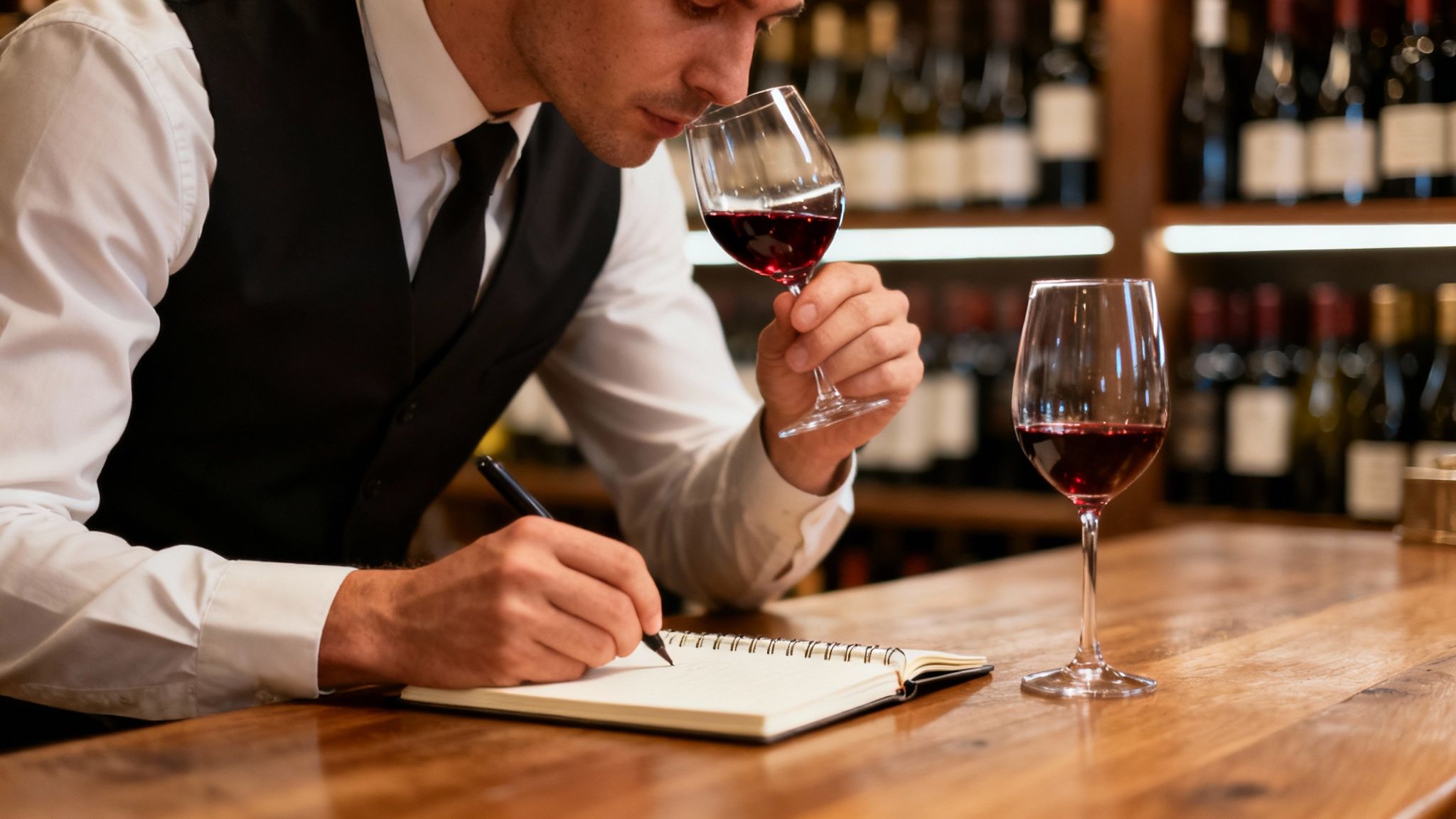
The life of a sommelier is a balancing act, part meticulous logistics and part pure artistry. Forget the romantic image of starting the day with a glass of wine. The real work begins long before the first guest arrives, down in the quiet, cool confines of the cellar. This is where the unseen work happens.
Mornings are for management. A sommelier reviews inventory reports, checks in new shipments, and obsesses over cellar conditions like temperature and humidity. Their job is to make sure every single bottle is aging gracefully. It’s not glamorous, but a well-organized cellar is the absolute foundation of a successful wine program.
The Bridge Between Kitchen and Cellar
As the day moves on, the focus shifts from inventory to collaboration. One of the most dynamic parts of a sommelier’s job is working hand-in-hand with the culinary team. This creative partnership is where the magic of food and wine pairing truly begins.
The sommelier and chef will taste new dishes together, debating flavors, textures, and aromas.
- Does the sharp acidity in this Sauvignon Blanc cut through the richness of a goat cheese salad?
- Will the aggressive tannins in a young Cabernet Sauvignon completely overpower this delicate piece of fish?
- Can a slightly sweet Riesling stand up to the spice in the new curry dish?
These conversations are vital. The goal isn't just to find a "good" wine, but to create a pairing that elevates both the food and the wine, making the combination more memorable than either would be alone. After these sessions, the sommelier often leads staff training, giving servers the confidence and language to talk about new arrivals with diners.
Showtime on the Restaurant Floor
When evening service kicks off, the sommelier’s role transforms entirely. They step onto the dining room floor and become a guide, an educator, and a trusted advisor. This is where their deep knowledge and hospitality skills shine, turning a potentially intimidating wine list into an exciting map of possibilities.
They move from table to table, acting as a conversational bridge to the world of wine. By asking a few simple questions—what a guest typically enjoys, what they're eating, and their budget—they can quickly narrow hundreds of options down to the perfect few.
A sommelier is part psychologist, part matchmaker. Their job is to listen intently and translate a diner's vague desires into the perfect bottle for that specific moment, meal, and mood.
This interaction is the very heart of what a sommelier does. They don’t just recommend a beverage; they curate a personalized experience. They ensure each guest leaves with a new story to tell and a newfound appreciation for finding that perfect pairing.
Where Do Sommeliers Share Their Craft
When you picture a sommelier, you probably see someone gracefully gliding across a fine-dining restaurant floor, silver tastevin hanging from their neck. That image is iconic for a reason, but it only shows a tiny sliver of where their skills can take them.
A sommelier’s craft isn’t just about service. It’s a powerful combination of deep knowledge, a sharp palate, and a real knack for communication. Those talents are pure gold across the entire wine world, opening doors to careers built on curation, education, and management.
This diverse skill set means many sommeliers become private client advisors, helping enthusiasts and serious collectors build and manage personal cellars. Think of them as a wealth manager, but for wine—sourcing rare bottles and shaping a collection that reflects a client’s unique taste and investment goals. For those using an app like Sommy to get a home collection started, these pros are the next logical step for truly bespoke curation.
Beyond the Restaurant
The journey of a wine professional can lead to some amazing places far outside traditional hospitality. At their core, sommeliers are educators and guides, which makes them a natural fit for roles where they can teach and lead.
Many of the world's most talented sommeliers eventually step into roles like:
- Wine Retail Management: Running a top-tier wine shop takes a sommelier’s touch. You need their expertise to build an interesting selection, guide customers, and create a loyal community around the store.
- Import and Distribution: Some work for distributors, using their palates to spot wines that will fly off the shelves. They also train entire sales teams on the stories and nuances of their portfolio.
- Brand Ambassadorship: Wineries often hire sommeliers to be their face and voice, traveling the world to share the story behind their wines with trade partners and consumers.
- Education and Writing: Sharing their passion through teaching courses or writing is a natural move. For more insights on the broader wine industry, check out the resources on the Sommy.ai blog.
A Growing Field of Experts
You can see this trend in the explosion of global demand for wine education. The Wine & Spirit Education Trust (WSET), the world's largest provider of wine qualifications, has certified over half a million people since 1969.
Just look at the numbers. In the 2016/17 academic year alone, WSET saw a record 85,487 candidates, with the United States market rocketing up by 48% in just one year.
At the end of the day, a sommelier's career is all about connecting people to wine in a way that feels meaningful. Whether that connection happens over a dinner table, in a classroom, or across a retail counter, the mission is always the same.
How to Confidently Talk to a Sommelier
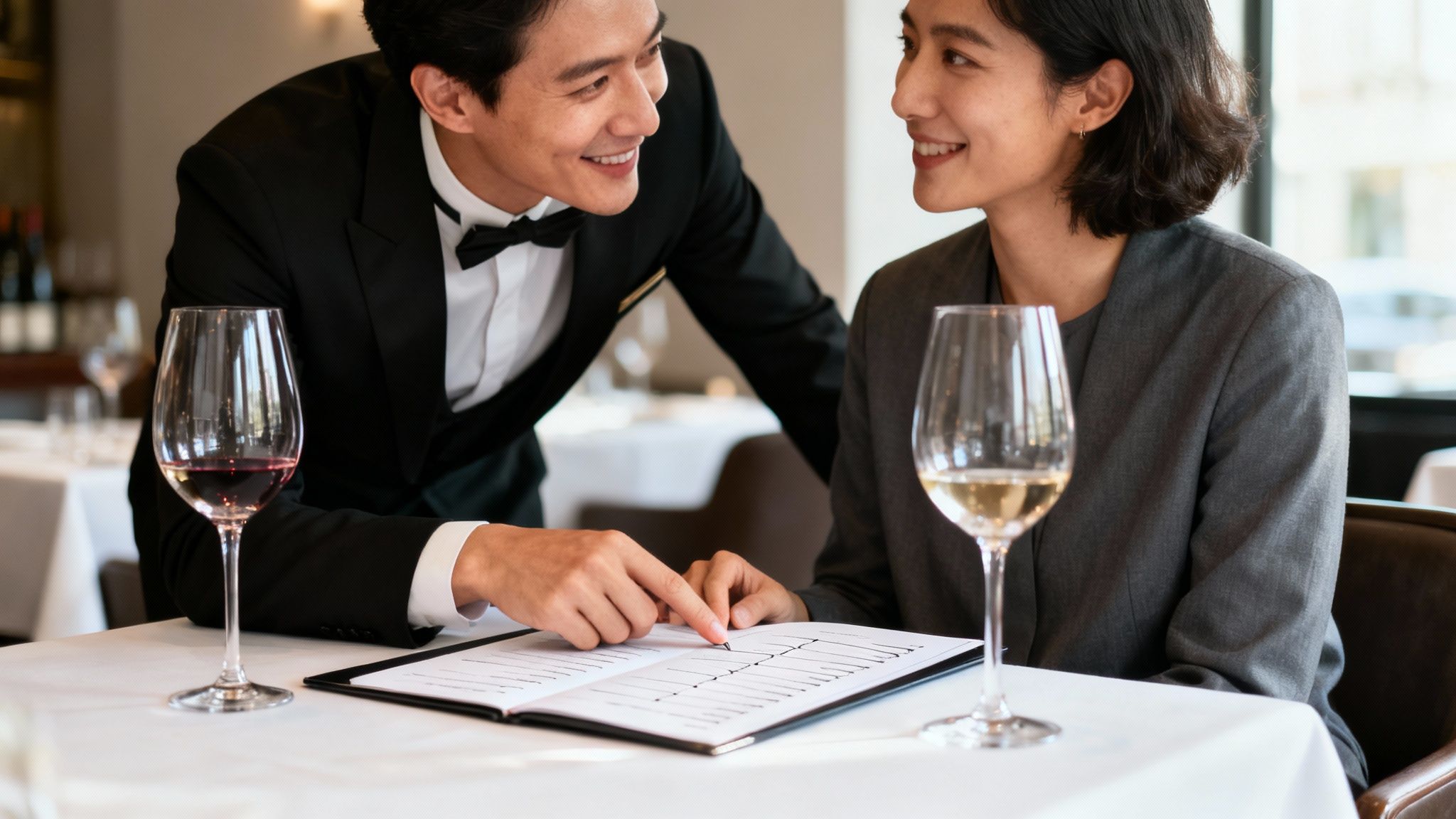
The moment a sommelier approaches your table can feel a bit like a pop quiz you didn’t study for. It's a common feeling. Many of us worry we don't know the right words, or worse, that we'll be judged for our budget or taste.
Here's the truth: a professional sommelier is your greatest ally in the restaurant. Their job isn’t to intimidate you; it's to help you find a bottle you will absolutely love. Think of them as a friendly guide, not a gatekeeper. They want to make your meal better.
The key is simply knowing how to kick off the conversation.
Use Your Own Words
Forget trying to sound like a wine expert. You don't need fancy jargon to get your point across. The best thing you can do is describe what you already know you enjoy in plain, simple terms.
Here are a few easy ways to start:
- "I usually drink Pinot Noir at home. Can you suggest something on your list that's in a similar style?"
- "We're having the steak and the salmon. Is there a bottle that could bridge the gap and work with both?"
- "I'm in the mood for a crisp, dry white wine—something without a lot of that buttery, oaky flavor. What do you recommend?"
These simple questions give the sommelier a perfect starting point. If you want a few more ideas, check out these simple tips for selecting wine at a restaurant with confidence.
Be Upfront About Your Budget
Talking about money can feel awkward, but it doesn't have to be. A good sommelier has zero interest in pushing you into a price range you're not comfortable with. In fact, they respect your budget and will find a fantastic wine right within it.
There's no need for a big, uncomfortable announcement.
A wonderfully discreet trick is to simply point to a price on the wine list while saying, "I was hoping to find something in this neighborhood." This gesture communicates everything they need to know, clearly and privately.
They actually appreciate this directness. It saves everyone time and helps them narrow down hundreds of options to just the few that are perfect for you. A sommelier's real goal is to make sure you leave happy, and that includes finding a wine that feels like a great value, no matter the price.
The Future of Wine Service and Technology
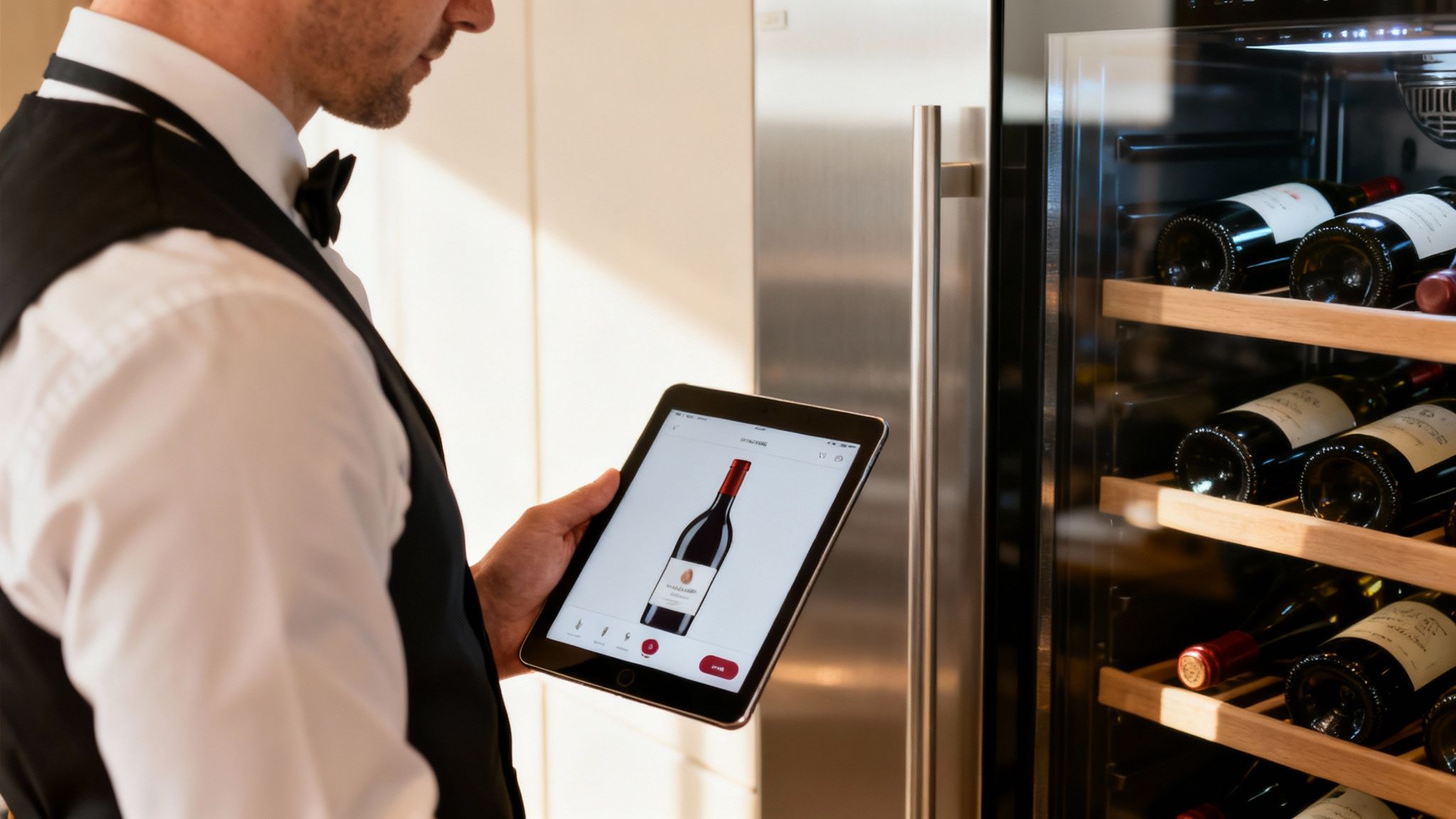
The world of wine is standing at a fascinating crossroads where centuries-old traditions are finally shaking hands with modern tools. And no, technology isn’t here to replace the human sommelier. It’s becoming a powerful partner, handling the tedious stuff so the expert can focus on what actually matters—the guest.
Think about the endless hours a sommelier used to spend buried in inventory. Digital cellar management software puts an end to that, freeing them from the tyranny of clipboards and spreadsheets. That reclaimed time is pure gold. It gets reinvested into training staff, discovering exciting new wineries, and actually talking with diners on the floor.
Empowering the Wine Lover
This shift is just as big for the person ordering the wine. Personal wine apps are completely changing how people interact with wine, making it feel less intimidating and far more personal. These tools help you explore your own tastes and build confidence long before you even sit down for dinner.
An app like Sommy, for example, is like having a personal AI sommelier right in your pocket. It gives you the power to:
- Track Your Wins: Keep a running log of wines you've tried and loved. You’ll never forget that perfect bottle again.
- Get Instant Answers: Scan a restaurant wine list or a bottle on a store shelf for suggestions tailored to you.
- Learn Your Palate: See the patterns in what you like and discover the specific flavors and styles you gravitate toward.
Technology isn't the end of the sommelier. It’s a tool that sharpens their focus. When a guest walks in with a clearer idea of what they enjoy, the conversation becomes richer, deeper, and more collaborative.
Instead of starting from square one, the sommelier can jump straight into a more nuanced discussion about hidden gems or perfect pairings. This partnership between an informed diner and a knowledgeable expert just makes the whole experience better for everyone. If you're curious, you can get a peek behind the curtain and learn more about how AI taste profiles work to make these kinds of suggestions happen.
Ultimately, the goal of all this tech isn't to remove the human touch. It’s to enhance it. By getting rid of the administrative headaches and empowering guests, technology helps the professional sommelier do what they do best: create unforgettable moments around a great bottle of wine.
A Few Lingering Questions About Sommeliers
Even after breaking down the role, a few common questions always seem to pop up. Let's clear up some of the most frequent ones so you have a complete picture of these fascinating experts.
Do Sommeliers Drink on the Job?
It might look like the best gig in the world, but when you see a sommelier take a sip of wine on the floor, it's strictly business. They're tasting a tiny amount to check for flaws—like a wine being "corked"—before it ever reaches your glass.
Think of it as professional quality control, not a happy hour. It’s a crucial step that ensures every guest gets the best possible experience.
Is a Sommelier the Same as a Winemaker?
Nope, but they're two sides of the same coin. A winemaker is the artist and scientist in the vineyard and cellar, the one who actually grows the grapes and turns them into wine.
A sommelier is the hospitality pro who acts as the final link in that chain. They curate the wine, tell its story, and connect the winemaker's creation to the diner's palate.
It’s like this: the winemaker writes the book, and the sommelier is the expert librarian who knows exactly which book you'll fall in love with and why.
What is a Master Sommelier?
Becoming a Master Sommelier (MS) is the Mount Everest of the wine world. The title represents the absolute pinnacle of the profession, awarded only after passing an exam legendary for its brutal difficulty.
Candidates are tested on every imaginable facet of wine theory, blind tasting, and service under crushing pressure. It's so tough that as of 2018, only 282 people worldwide had ever earned the diploma from the Court of Master Sommeliers. The final exam has a pass rate that often hovers between just 3-8 percent, making it one of the hardest professional certifications on the planet. Learn more about the Court of Master Sommeliers' rigorous standards.
Wrap Up
Ready to feel as confident as a sommelier when choosing your next bottle? Let Sommy.ai be your personal guide. Scan any wine list to get instant, personalized recommendations that match your taste and budget. Start your journey to smarter, more enjoyable wine discovery at https://sommy.ai.