You scroll a long wine list, your eyes glaze over, and an app quietly highlights three bottles that feel like they were picked by a sommelier who knows you. That is the promise of AI wine recommendations.
It feels almost magical. In reality, it is math, pattern-spotting, and a record of what your taste buds enjoy. Once you understand how AI taste profiles work, you can use them to discover wines with more confidence and less guesswork.
This guide walks through what an AI taste profile is, how it learns from you, what data it uses, and how privacy and fairness fit into the picture.
What Is An AI Taste Profile?
Think of your taste profile as a long-running tasting note about you, not about a wine.
Instead of saying "this wine is bold and dry," the system learns "you often enjoy bold and dry wines with dark fruit and smooth tannins." It turns your likes and dislikes into a pattern.
Over time, the profile becomes:
- A summary of the flavors you enjoy
- A record of how you react to different regions and grapes
- A guide that helps the AI rank future bottles for you
If you have ever noticed how a music app learns that you prefer acoustic playlists at night, you already understand the idea. AI wine profiles work in a similar way, they just track flavors instead of songs.
The Building Blocks Of Your Digital Palate
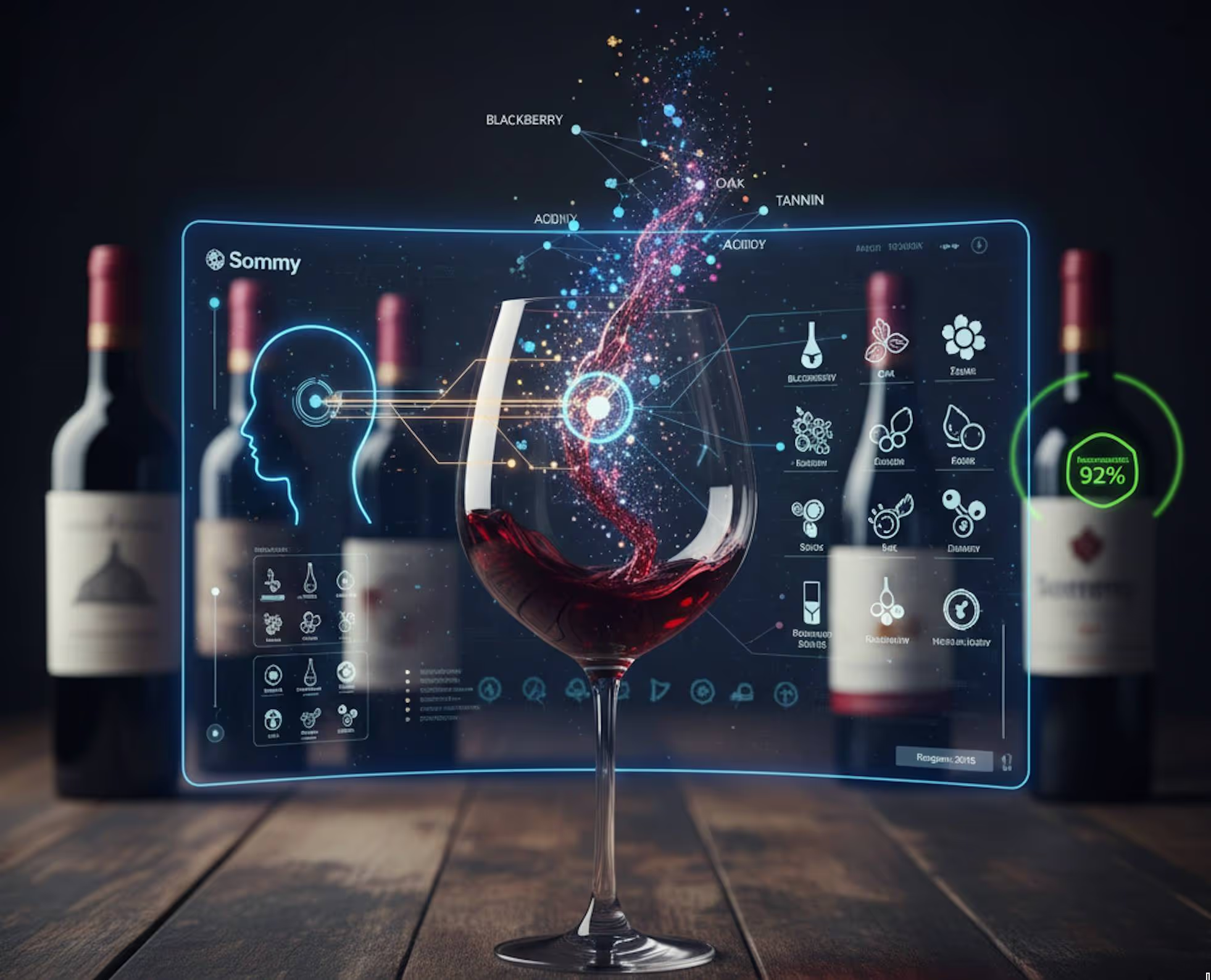
To make good AI wine recommendations, the system needs a way to describe both wines and people in the same "language." That language is usually a set of taste dimensions.
Here is a simple way that might look:
Taste dimension: What it means in your glass.
How AI tracks it: Sweetness, Dry, off-dry, or sweet.
Your ratings of dry vs sweet wines: Acidity, Crisp and zesty or soft and round.
How often you like sharp, tangy wines: Body Light, medium, or full.
Which weight you rate higher: Tannins Grip and structure in reds.
Whether you enjoy that firm, drying feel: Aromas/flavors Fruit, spice, floral, earthy, oak, etc.
Tags pulled from wine data and reviews: Alcohol level Lower, medium, or higher, and which range you tend to prefer.
Behind the scenes, each wine gets numbers for these traits. Your profile then becomes a set of numbers that describe what you tend to like.
Researchers have started to model this more formally. For a deeper dive into how AI can score wine quality and preference, the article on AI in wine evaluation and recommendations from MIT Press gives a clear overview.
How AI Wine Recommendations Learn From You
Your profile does not pop into existence in one go. It is built in layers as you interact.
Most systems watch for three kinds of signals:
- Direct feedback
- Ratings, thumbs up or down, "favorite" tags
- Comments like "too oaky" or "too sweet"
- Behavioral clues
- Which wines you tap to see more detail
- How often you re-order the same style
- What you buy for home versus restaurants
- Context
- What you drink with food versus by itself
- Season or occasion, such as summer patio or winter dinner
Behind the curtain, a few techniques are common:
- Content-based filtering:
The AI looks at traits of wines you liked and finds more with similar flavor fingerprints. - Collaborative filtering:
The AI looks for people with taste profiles similar to yours, then surfaces wines that they loved that you have not tried yet. This is similar to how streaming services suggest shows.
Thought pieces like this one on personalized AI wine recommendation engines walk through several of these methods from a data science point of view.
Concrete Taste Profiles: Three Everyday Examples
So what does this feel like as a wine lover? Here are three simple profiles and how an AI might respond.
1. "Bold reds with dark fruit and smooth tannins"
You often rate:
- Cabernet Sauvignon and Syrah highly
- Full-bodied wines with blackberry, plum, or cocoa notes
- Wines with noticeable but not harsh tannins
Your AI taste profile may lean toward:
- Full body
- Medium to high tannin, but low bitterness
- Dark fruit and subtle oak flavors
On a list, an AI might push up:
- A Chilean Cabernet with soft tannins
- A modern Rioja with ripe fruit and gentle spice
It might push down:
- Very light Pinot Noir
- Lean, herbal reds with high acidity
2. "Crisp whites with citrus and minerality"
You:
- Love lime, lemon, or green apple flavors
- Often pair wine with seafood or salads
- Prefer wines that feel refreshing, not creamy
Your profile will likely show:
- High acidity
- Light to medium body
- Citrus and mineral flavor tags
The system might suggest:
- A Loire Sauvignon Blanc over a heavily oaked Chardonnay
- A dry Riesling instead of a richer Viognier
3. "Low-alcohol, fruity, easygoing wines"
You:
- Dislike heady, 15-percent reds
- Enjoy gentle fizz, fruitiness, or slight sweetness
- Drink more casually, maybe with snacks or tv
Your profile trends toward:
- Lower alcohol ranges
- Medium body at most
- Red or tropical fruit, low tannin, softer acidity
On a shelf, AI may bump up:
- Lower-alcohol Lambrusco or Vinho Verde
- Light red blends that can be chilled
Over time, every choice sharpens the model. The more you interact, the more your AI feels like a friend who knows your mood.
What Data Is Collected And How It Is Used
To do its job, an AI wine companion usually collects:
- Your ratings, reviews, and favorites
- Wines you scan or search for
- Basic account details like name, email, and sometimes region
- Optional context like budget, food pairings, and occasions
This data feeds two loops:
- Your personal loop
The system updates your taste profile, so your next suggestions improve. - The global loop
Anonymous or aggregated data can reveal that "people who like bright Italian whites also tend to like X," which then shapes recommendations for others with similar tastes.
Responsible tools explain what they store, how long they keep it, and whether they share it with partners. Articles on setting AI sommelier preferences often stress being clear about what you want saved and what you do not.
If privacy matters to you, it helps to:
- Read the app's privacy page
- Turn off location sharing if you do not need it
- Use rating and tasting notes without adding sensitive personal details
Fairness, Bias, And Keeping Your Options Open
AI can fall into habits, just like people. If most users drink wines from a few popular regions, the algorithm may over-recommend those areas and overlook smaller producers.
Common bias patterns include:
- Favoring big, well-distributed brands
- Repeating the same styles you already drink
- Under-recommending niche regions or unusual grapes
Some systems fight this by:
- Adding a bit of "exploration" so you see a few wild cards
- Balancing scores so classics and hidden gems both appear
- Giving you controls like "surprise me" or "show more natural wines"
As a user, you can help by:
- Trying one new style every few weeks
- Rating bottles you did not enjoy, not just favorites
- Telling the app when you want to explore, not just play it safe
A good technical overview of how algorithms weigh preferences, pairings, and variety appears in this piece about technology in personalized wine pairings.
How To Get Better AI Wine Recommendations
You do not need to be a sommelier to train your profile well. A few simple habits go a long way.
- Rate regularly
Give quick thumbs up, stars, or short notes. "Too oaky" or "loved the freshness" is enough. - Be honest about occasions
Say when you want "pizza night," "gift," or "special dinner." Context sharpens the match. - Notice patterns
Look at the grapes, regions, and styles in your favorites list. Tell the app when it gets one very right or very wrong. - Update your budget
If you often skip suggestions because of price, adjust your range so the model learns what is realistic.
Over time, your AI taste profile becomes a map of your wine life. It remembers what you enjoyed at a wedding, what disappointed you on a trip, and what you kept buying for weeknight dinners.
Bringing It All Together
AI taste profiles are not magic, just smart guesses built from your habits, your feedback, and shared patterns across many drinkers. When they work well, AI wine recommendations compress years of trial and error into a handful of well-matched bottles.
Next time an app suggests a wine, pause and ask yourself why it picked that one. Think about the sweetness, body, region, and mood it is aiming for. A little awareness turns the experience from mystery into a friendly partnership between your palate and the algorithm behind it.
Of course, we'd like you to use Sommy as your AI wine recommender :)

EntreprEngineur. Runs on lattes. Creates with the intensity of a downhill run. Fast, slightly chaotic, ideally followed by a glass of wine.