

Tasting wine properly means running the same five steps in the same order every time: see, swirl, sniff, sip and savor. The order matters because each step feeds the next one, and your nose does far more of the work than your tongue does. The point of the ritual is not to perform it correctly in front of other people. It's to end up with a description of the wine that is specific enough to be useful the next time you're standing in a shop deciding what to buy.
What are the five S's of wine tasting?
The five S's are the standard sequence that tasting rooms, wine schools and competition panels all teach in some form. Each one is a separate act of attention rather than a separate skill, and none of them takes longer than a few seconds once you stop thinking about it.
| Step | What you do | What you are after |
|---|---|---|
| See | Tilt the glass over something white | Depth of color and how clear it is |
| Swirl | Rotate the glass on the table for a few seconds | Aroma compounds lifting out of the wine |
| Sniff | Nose into the glass, two short sniffs | Fruit first, then anything that isn't fruit |
| Sip | A real mouthful, held for a moment | Sweetness, acidity, tannin, alcohol, weight |
| Savor | Swallow, then wait and count | How long the flavor stays with you |
You can do the whole sequence in under a minute, and doing it on a Tuesday night with a supermarket bottle is worth more than doing it once at a formal tasting. Repetition is what builds the memory, not ceremony.
Smelling before sipping is the step people skip, and it's the one that carries the most information. Your tongue only reports five basic tastes, so nearly everything you think of as the flavor of a wine is actually smell, reaching your nose from the back of your throat while the wine is in your mouth. That is why a cold you barely notice can flatten a good bottle completely, and why swirling first genuinely changes what you taste a moment later rather than just looking the part.
What your eyes tell you before you smell anything
Tilt the glass to about 45 degrees over a napkin or a sheet of paper and look at where the wine thins out at the rim. Depth of color tells you roughly how much skin contact the wine had, which usually tracks with how heavy it will feel, so a red you can't see through will almost always be fuller in the mouth than one you can read print through. The rim is where age shows up. Reds lose their purple edge and drift toward brick and garnet as they get older, while whites travel the other way, deepening from pale straw toward gold.
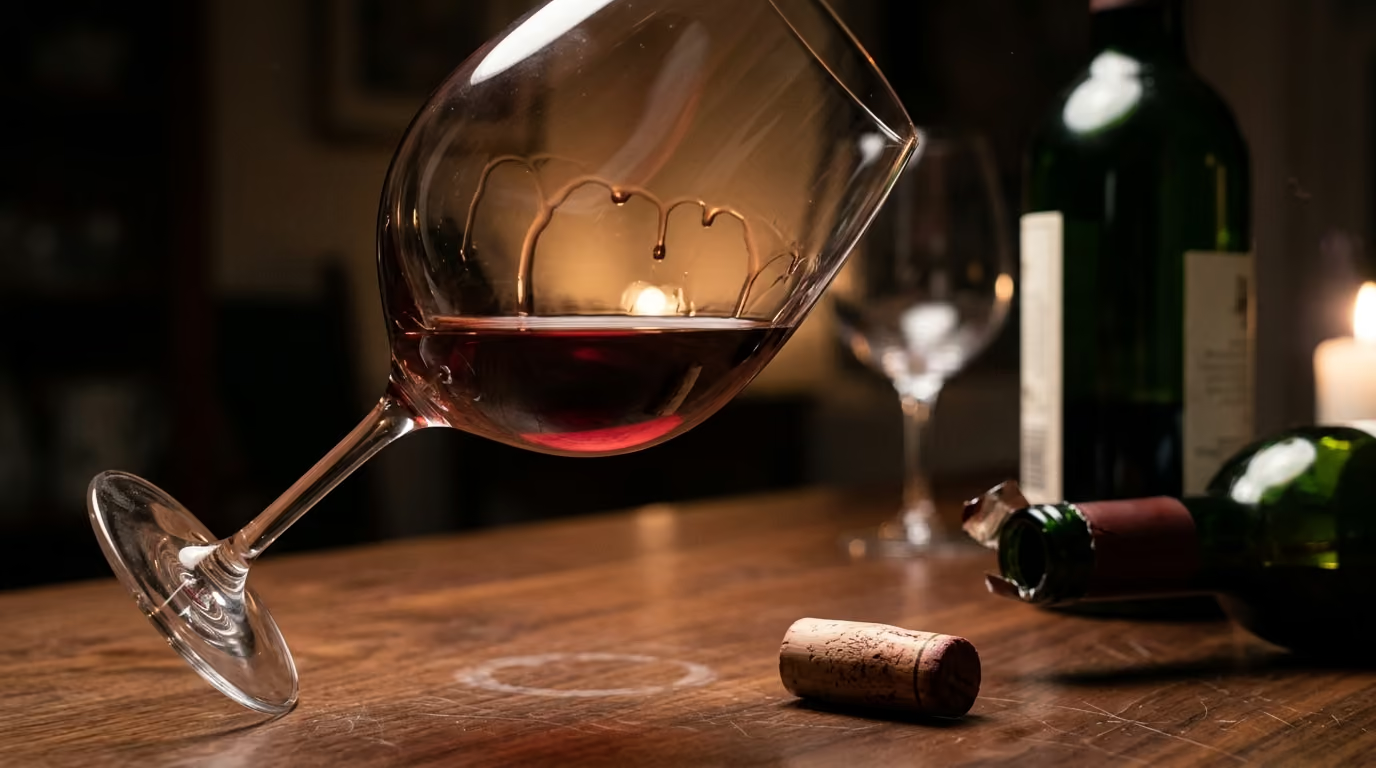
The legs are worth ignoring entirely. Those streaks running down the inside of the glass after a swirl come from alcohol evaporating faster than water does, so they tell you a wine is higher in alcohol and nothing else at all. They are not a sign of quality or concentration, whatever anyone at the table says.
How to smell wine when you can't name what you're smelling
This is where most people quietly decide they're bad at wine, and it isn't really a nose problem so much as a vocabulary problem. Almost everyone can tell two wines apart by smell, and almost nobody can produce the word "gooseberry" on demand, so the trick is to stop reaching for specific fruit names and sort what you smell into broad buckets instead.
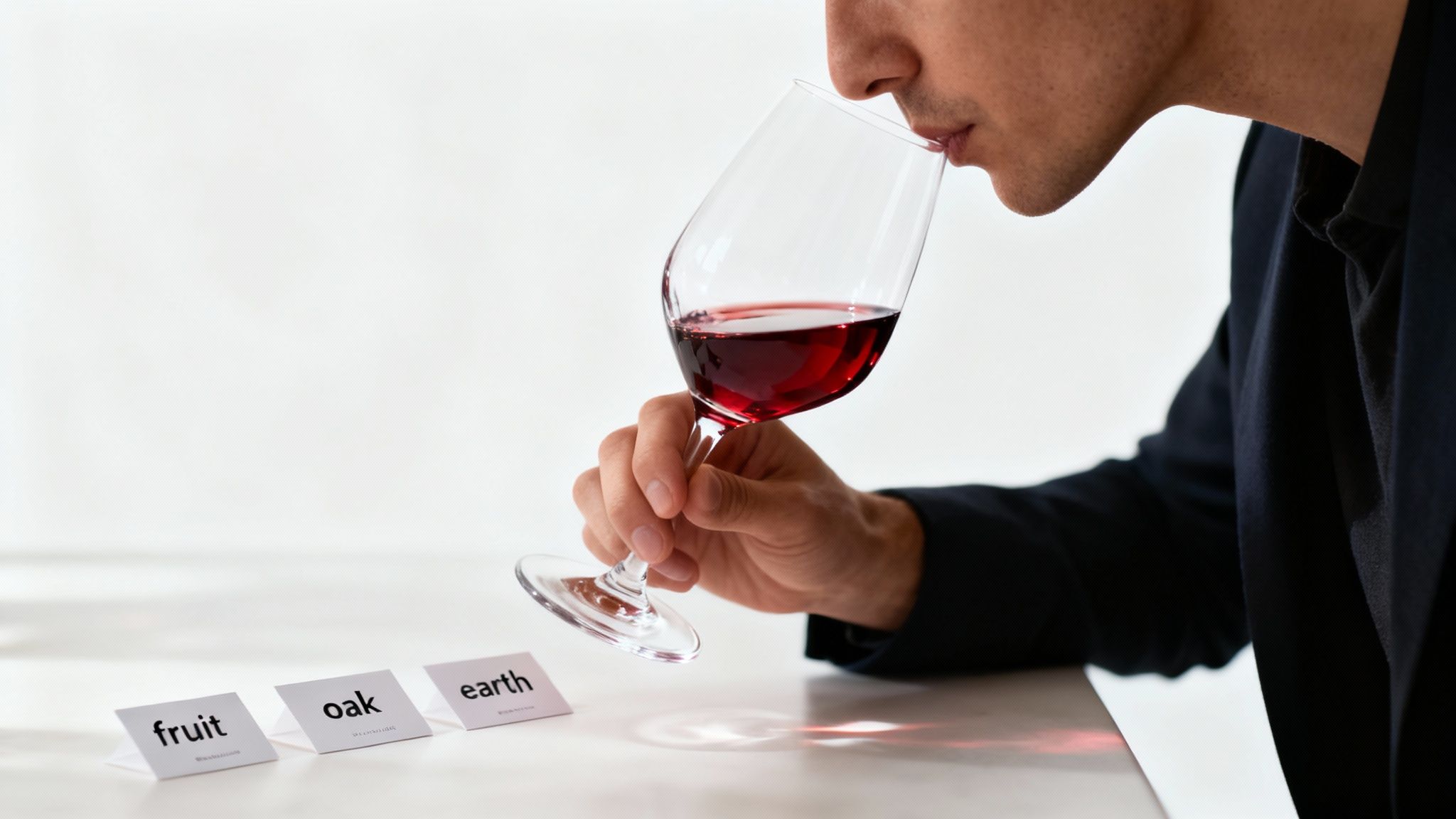
Start with one question: is the fruit red, black or citrus and orchard? That single call already separates most red wines from each other and most whites from each other. Then ask whether anything in the glass is not fruit, because that second layer is where the interesting information lives. Vanilla, toast, coconut and baking spice usually mean oak. Butter and cream usually mean a fermentation step called malolactic conversion. Leather, tobacco, mushroom and dried leaves usually mean bottle age. You don't need to know the chemistry to use any of that, you just need to notice which bucket the smell belongs to.
Two short sniffs work better than one long one, since your nose adapts to a smell within seconds and stops reporting it. If you draw a blank, put the glass down, wait a minute and come back to it. Our guide to describing what you taste goes further into finding words that mean something to you rather than words borrowed from a wine critic.
What to notice once the wine is in your mouth
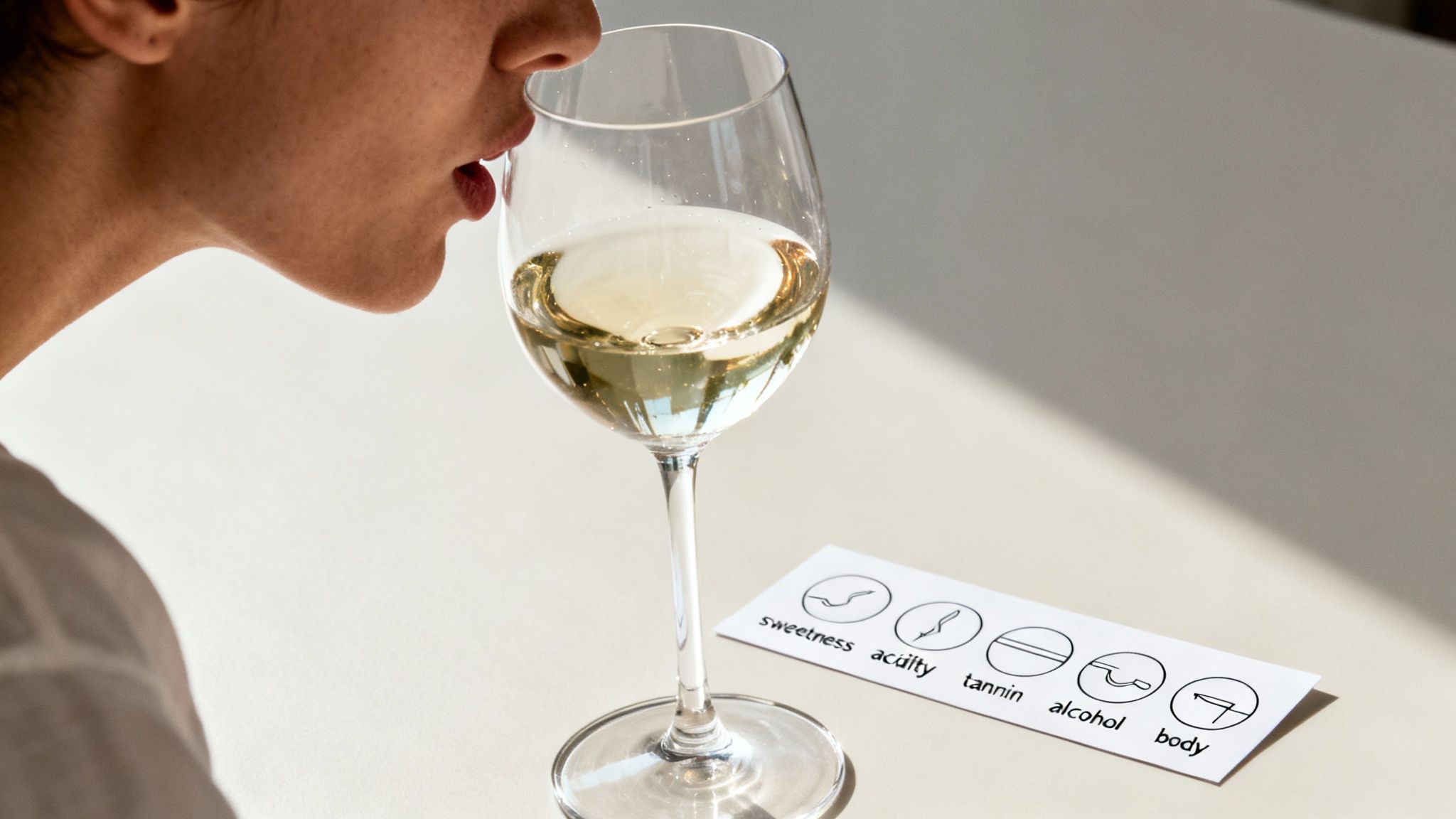
Take a bigger sip than feels natural and hold it for a couple of seconds so it reaches every part of your mouth. Five things are worth separating out, and they are structure rather than flavor, which is why they stay useful even when you can't name a single fruit.
Sweetness registers first, on the tip of your tongue, and most wines described as fruity are actually dry. Acidity shows up as a mouth-watering feeling along the sides of your tongue, the same reflex you get from lemon, and it's what makes a wine feel fresh rather than heavy. Tannin is the drying, slightly grippy sensation on your gums that strong black tea also gives you, and it comes from grape skins. Alcohol arrives as warmth at the back of your throat. Body is the sum of all of it, the difference in weight between skim milk and cream.
Two of those cause more confusion than the rest. If acidity and tannin still feel like the same thing to you, our explainers on what tannins really are and on acidity in wine are worth ten minutes before your next bottle. Once you swallow, start counting, because a finish that vanishes in three seconds and one that is still there after twenty tells you more about how well the wine was made than the price tag does.
Is it normal to not like the taste of wine?
Completely normal, and it's usually the specific wine rather than wine in general. Most people who say they don't like wine have mainly met dry reds with firm tannin, which is the least forgiving style there is for a new palate, and reacting badly to that is a sensible response rather than a failure of taste.
Bitterness sensitivity varies a lot between people, so a tannin level that reads as pleasantly grippy to one person genuinely tastes harsh to another. If reds have never worked for you, the useful experiment is not to try harder with the same style. Go to the opposite corner of the map instead, somewhere with low tannin, bright acidity and a touch of sweetness, which in practice means an off-dry Riesling, a Moscato or a light chilled red. Liking those is not a beginner phase to grow out of, it's information about your palate, and plenty of people who taste for a living drink that way at home.
What is the 20-minute wine rule?
Take white wine out of the fridge 20 minutes before you pour it, and put red wine in the fridge 20 minutes before you pour it. That is the whole rule, and it exists because both wines are usually served at the wrong temperature in a normal house.
Straight from the fridge, a white is so cold that its aromas stay locked in the glass and all you get is acidity, which is why cheap cold white tastes sharper than it really is. A red sitting in a modern heated room is warmer than any cellar it was made for, and that warmth pushes the alcohol forward and flattens the fruit. Reds generally show best between 60 and 65F and whites between 50 and 55F, and 20 minutes in either direction gets most bottles close enough without a thermometer. If you have ever thought a wine improved over the course of an evening, temperature was probably doing most of that work.
How to tell a flawed wine from one you just don't like
A flawed bottle is not the same as a bottle that isn't to your taste, and knowing the difference is what gives you the confidence to send one back without feeling awkward about it.
Cork taint is the common one. A compound called TCA gets into the cork and strips the wine of its fruit, leaving a smell most people describe as a damp basement, wet cardboard or an old book. It's harmless to drink and unmistakable once you have met it. How often it happens is genuinely disputed: cork industry figures put failure at around 1%, while independent tasting panels have reported rates in the 3 to 7% range, and part of that gap is simply that sensitivity to TCA varies enormously from person to person. Our guide to spotting a corked wine walks through the check in more detail.
Oxidation is the other one you'll meet. Too much air, from a failed seal or a bottle left open too long, turns whites deep gold and reds dull brown, and the smell goes nutty and stale like bruised apple or old sherry. Both faults are worth returning at a restaurant, and neither is your fault or the server's. Anything else, including a wine that is simply more tannic or drier than you hoped, is a preference rather than a fault.
How to take a note you'll actually use
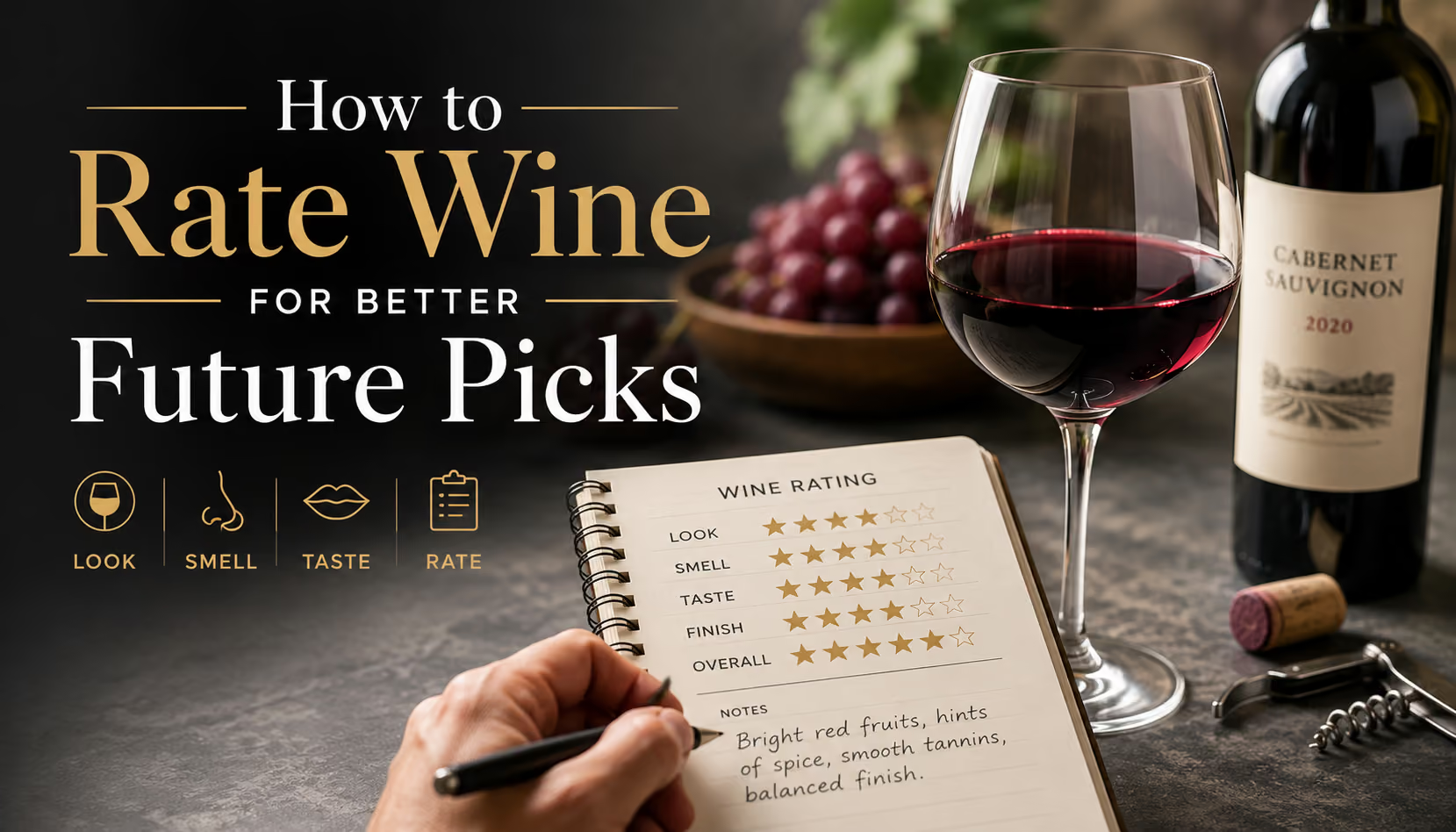
The reason to write anything down is that you will not remember the bottle in three weeks when you're back in the shop, and "it was nice" cannot be acted on. A note becomes useful the moment it contains something you could ask for by name, so aim for four short pieces: how deep the color was, one or two smells, whether the acidity and tannin were high or low, and how long the finish lasted.
Add one line that no professional note includes, which is what you were eating and who you were with, because that context is usually why you liked it. Over a couple of months those notes stop being a diary and start being a pattern you can shop from, which is the same thing Sommy's Taste Profile is doing when you rate bottles in the app, quietly turning your own history into the answer to what to buy next. If you'd rather start on paper, our tasting notes template gives you the structure, and running a tasting at home is the fastest way to build the comparisons that make notes worth keeping.
Comparative tasting is the single best exercise for a palate. Open two bottles that differ in exactly one way, an oaked Chardonnay next to an unoaked one, or a Loire Sauvignon Blanc next to a New Zealand one, and the thing you're trying to learn stops being abstract because you have both versions in front of you at once.
What actually improves with practice
Your senses are not what gets better. Most people already detect far more than they can describe, and a year of tasting will not make your nose physically more sensitive. What improves is recognition, which is the ability to smell something and connect it to a wine you met before, and that only happens if you gave the earlier wine enough attention to file it somewhere.
The practical consequence is that tasting five wines carefully beats tasting twenty carelessly, every time. It also means the ritual pays off in the shop rather than at the table, because the whole point of building that library is being able to look at an unfamiliar label and make a reasonable guess about what's inside it. If you want a shortcut into the same territory, our roundup of wine tasting tips collects the habits that make the biggest difference early on.
Common questions about tasting wine
What is the best glass for tasting wine?
A clear, uncolored glass with a bowl wide enough to swirl in and a rim that narrows to gather the aromas. One decent universal shape covers every wine you're likely to open, and buying a different glass for each grape makes far less difference than simply not filling the glass more than a third full.
How many wines should I taste in one session?
Three to five if you want to remember any of them. Palate fatigue is real and sets in faster than people expect, so water and plain bread or crackers between wines will do more for your accuracy than pushing on to bottle number eight.
Do I have to spit the wine out?
Only when you're tasting a lot of wines and need your judgment intact, such as at a trade tasting or a winery flight. At home with two bottles over dinner there's no reason to spit, as long as you let each mouthful move around properly before you swallow it.
What is the 75-85-95 rule for wine?
Those are American labeling thresholds rather than tasting advice. A US wine has to be at least 75% of a grape to name that grape on the label, at least 85% from a named growing area to claim it, and at least 95% from a single year to carry a vintage on an appellation wine. Our guide to which wine words are legally defined covers the terms that are backed by rules and the ones that mean nothing at all.