

You’re standing in front of a wall of bottles, prices look almost suspiciously low, and none of the labels seem familiar. That’s a normal Grocery Outlet wine moment. It can feel like a lucky dip, but it doesn’t have to. A few simple checks can turn that aisle from stressful to manageable, even if you don’t know much about wine.
Finding Great Wine at Grocery Outlet Is Possible
Grocery Outlet wine works best when you stop expecting a neat, predictable shelf and start treating it like a fast-moving bargain section. That sounds less comforting at first, but it’s good news. You do not need expert knowledge to shop it well. You need a calm process.
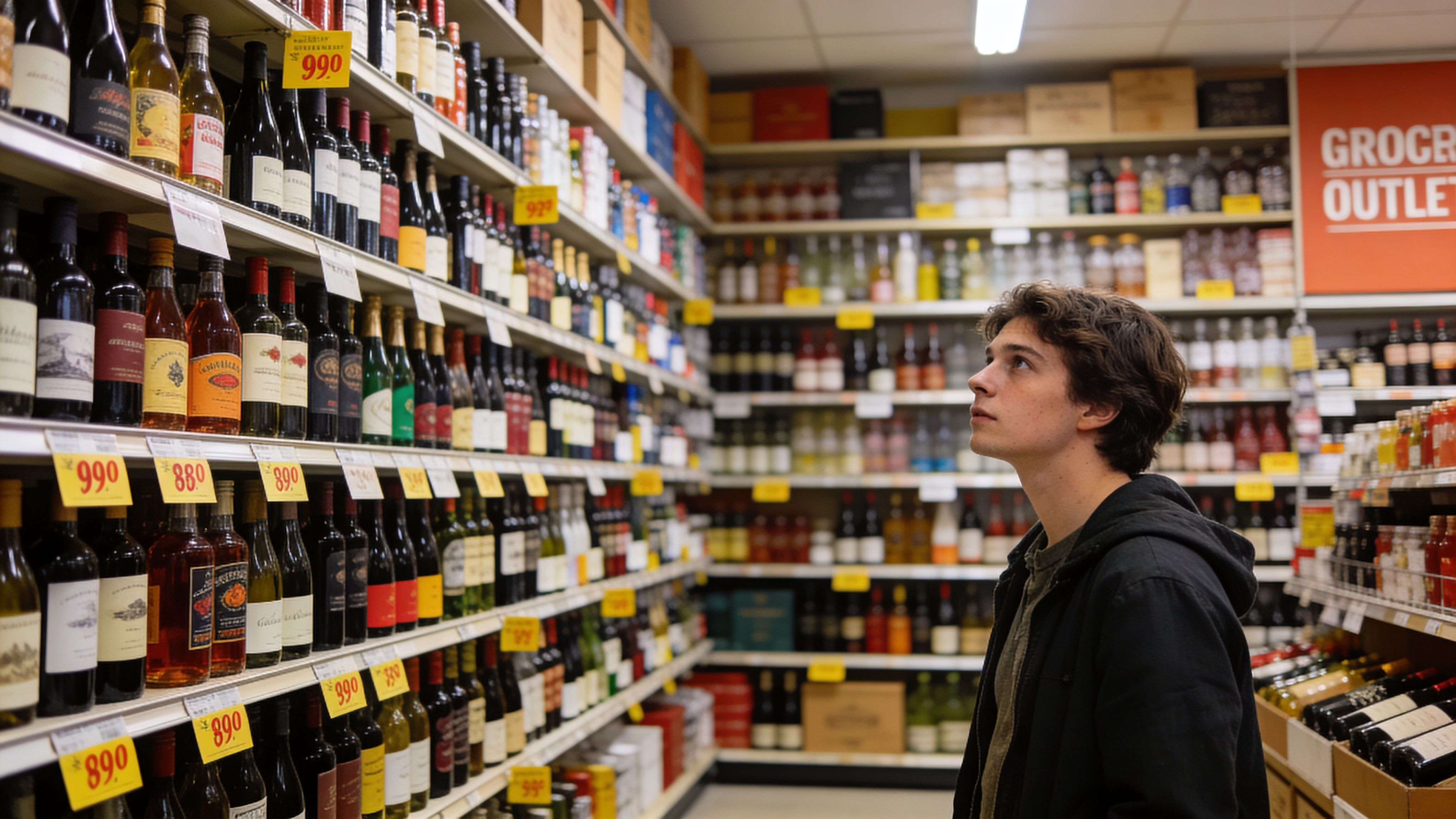
A typical Grocery Outlet store carries about 350-400 wine SKUs, and the shopper sweet spot is often $4-$6 per 750-ml bottle, according to Market Watch’s reporting on Grocery Outlet wine growth. That explains why the aisle can feel packed with possibility and confusion at the same time.
What makes it worth the effort
The upside is simple. You can find bottles that feel far better than their price suggests.
The downside is just as real. The shelf can be noisy, inconsistent, and full of names you’ve never seen before. Some bottles are smart buys. Some are there because someone needed to move inventory.
Bottom line: Grocery Outlet wine rewards shoppers who filter first and choose second.
That’s the mindset shift. Don’t try to evaluate every bottle. Narrow fast, then decide.
A helpful way to think about it is this. You are not shopping for the single “best” wine in the store. You are trying to find one bottle that fits tonight, feels low risk, and gives you good value.
If you want a broader look at how to approach affordable store shelves in general, these grocery store wine tips can help.
Why the Wine Aisle Feels So Chaotic
The chaos has a reason. Grocery Outlet doesn’t build its wine set the way a traditional grocery chain does. Its wine buying depends heavily on closeout lots, extra inventory, and discounted remainders from wineries and wholesalers. That buying style is why one visit can feel exciting and the next can feel random.
The shelves change because the supply changes
If a winery has too much stock, leftover cases, or branded wine it needs to sell off discreetly, a discount chain can buy it at a deep markdown. That’s how shoppers sometimes find a surprisingly good bottle at a price that seems out of line with the label.
But that same system creates instability.
A bottle you love may disappear by next week. A different store across town may have a completely different lineup. You can’t rely on a friend’s recommendation the same way you would at a normal supermarket with a stable shelf set.
Why recommendations often fail here
There’s also very little public detail about how Grocery Outlet handles wine sourcing, quality control, or stocking decisions. That lack of transparency is part of why the “treasure hunt” label sticks. As noted in this discussion of Grocery Outlet wine unpredictability, inventory can vary dramatically by location, and shoppers get very little visibility into why one bottle appears and another doesn’t.
That matters because uncertainty creates stress.
You’re not just choosing between red and white. You’re trying to figure out whether the low price means hidden gem, aging stock, or a bottle that was never very good in the first place.
Grocery Outlet wine can be exciting, but excitement and confidence are not the same thing.
The trade-off is real
Here’s the practical trade-off:
| What works | What doesn’t |
|---|---|
| Staying flexible about the exact bottle | Walking in for one specific wine |
| Using the label to screen options | Trusting the price alone |
| Accepting that each store is different | Assuming all locations stock the same kinds of bottles |
That trade-off is what frustrates people most. The store can offer strong value, but the value is uneven. Once you understand that, the aisle starts to make more sense.
A good Grocery Outlet wine shopper thinks less like a collector and more like a spotter. You’re scanning for signs that a bottle is a good bet today, in this store, for this meal. That’s a much easier job than trying to master wine in general.
A Simple Strategy for Finding Good Bottles
The best approach is a quick filter. Not a long study session. You can usually narrow the shelf to a few promising choices in under a minute if you know what to check.
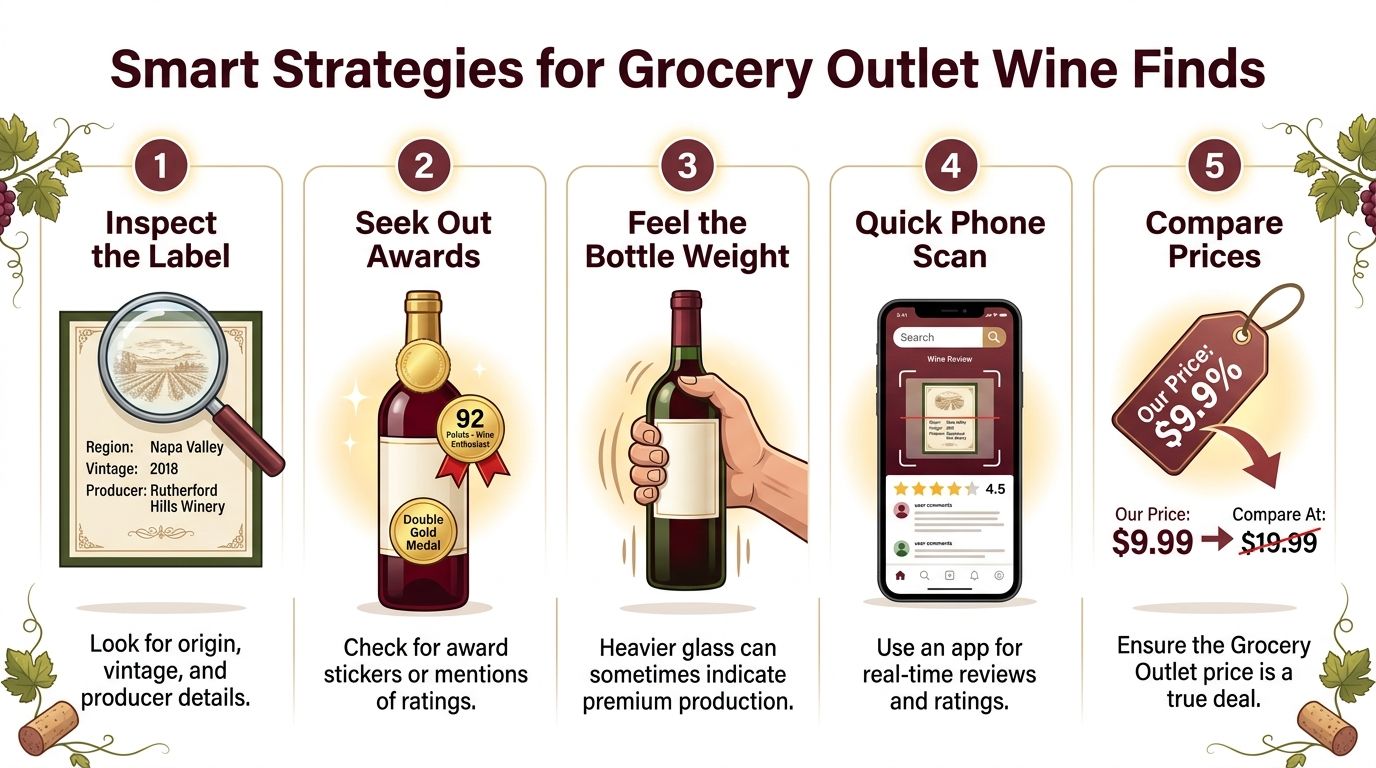
Start with the back label
The most useful clue is often hidden in plain sight. A wine labeled “Produced and Bottled by” the winery is often a stronger sign of a higher-quality, estate-grown product than looser wording on the label, based on Chelsea Pearl’s practical guide to Grocery Outlet wine shopping.
That doesn’t guarantee you’ll love the wine. It does give you a cleaner starting point.
Look for:
- Produced and Bottled by. Often a better sign than vague bottling language.
- Specific producer details. More information usually helps.
- A label that feels direct. If the back label says almost nothing useful, that’s not ideal.
Be more cautious with bottles that use wording suggesting the wine was sourced and assembled more loosely. Those aren’t automatic rejects. They just deserve more skepticism.
Check the vintage, especially on white wine
Vintage matters more in discount wine than many shoppers realize. Older white wines are one of the easiest places to make a bad cheap-wine choice.
The practical rule from the source above is simple. Be careful with older white wines, especially post-2022 vintage references in that guidance, because they rarely improve in the way some reds can. For a fast store decision, freshness usually beats complexity.
Practical rule: If you’re choosing a white for tonight, lean younger and fresher unless you have a specific reason not to.
For reds, age isn’t automatically bad. But don’t treat age itself as proof of quality. A random older bottle on a discount shelf is still a random older bottle.
Watch for smoke and other known problems
Some Grocery Outlet wine misses come from bottles with flaws that won’t show up in a quick glance unless you know what to watch for. One example raised in the same source is wine from smoke-affected vintages that reviewers have flagged as flawed.
That means you should be careful when a bottle’s deal looks unusually dramatic but the online chatter around it sounds rough. The issue isn’t whether a wine was expensive once. The issue is whether it still tastes good now.
Use a quick green-flag and red-flag screen
Here’s a simple shelf test you can remember.
| Green flags | Red flags |
|---|---|
| “Produced and Bottled by” on the label | Vague bottling language |
| Clear producer and origin details | Thin or confusing back-label info |
| Younger white wine for near-term drinking | Older white wine sitting on a discount shelf |
| Bottle looks well kept and clean | Signs of damage, seepage, or poor storage |
A better way to narrow the aisle
When the shelf is crowded, don’t compare twenty bottles. Compare three.
Try this:
- Pull only bottles that pass your label check.
- Remove any older whites you’re unsure about.
- Set aside anything with obvious warning signs on the bottle or label.
- Choose the bottle that feels simplest to understand and easiest to serve with your meal.
That last step matters. A bottle that fits dinner beats a bottle that requires explanation.
If you want a plain-English reference for common wine styles while you shop, this beginner wine chart can make the final comparison easier.
Use Your Phone to Remove the Guesswork
The shelf check gets you most of the way there. Your phone handles the last bit of uncertainty.

Once you’ve narrowed your choices to two or three bottles, stop trying to solve the rest in your head. It's easy to get stuck here. The labels all seem “fine,” the prices are close, and now you’re guessing again.
What your phone is good for
Your phone can help with three practical tasks:
- Checking whether the bottle is a real match for your taste
- Seeing whether the price feels fair compared with what else is out there
- Getting quick pairing help for dinner
That’s much more useful than reading a bunch of wine jargon while standing in the aisle.
A good wine decision tool doesn’t need to teach you wine. It needs to help you choose.
One thing to keep in mind is that Grocery Outlet stock changes fast. So the goal is not building a perfect library of every bottle you might see. The goal is making a clear decision in the moment, with the bottle in your hand.
Why scanning beats guessing
A camera-based tool is especially helpful in a store like this because many labels are unfamiliar. If you’ve never heard of the producer, your brain has very little to work with. You either freeze, or you grab the cheapest familiar-sounding option and hope for the best.
Scanning reduces that pressure. It gives you a quick second opinion right where the decision happens.
A short walk-through can help if you haven’t tried that kind of shopping method before. This guide to using Sommy in a crowded supermarket aisle shows how a phone can help when the shelf is packed and time is short.
Here’s a simple example of what that looks like in practice. You’ve narrowed your options to a local Pinot Noir, a Chardonnay, and an unfamiliar red blend. You scan each one, compare how each fits your usual taste and dinner plans, and pick the option that sounds most likely to please the people drinking it.
A quick visual can make that easier to picture:
Keep the decision small
Don’t ask your phone to make the whole trip for you. Use it after you’ve done your basic filtering.
That order matters.
If you scan the entire aisle, you’ll overload yourself again. If you first cut the shelf down to a few decent bets, the phone becomes a tie-breaker. That’s where it shines.
After You Buy Your Grocery Outlet Wine
A good Grocery Outlet wine experience doesn’t end at checkout. A few small habits after you get home make a big difference.
Store it somewhere boring
Wine likes stable conditions more than fancy conditions. A cool, dark place in your home is usually better than a warm, bright kitchen corner.
Keep bottles away from:
- Top-of-fridge heat
- Sunny windows
- Places with big temperature swings
If the bottle is for dinner in the next few days, you don’t need to overthink it. You just want to avoid treating it badly between the store and the glass.
Know when a bottle is a miss
Some disappointing bottles are just not your style. Others are flawed.
If a wine smells off, tastes obviously damaged, or seems spoiled, don’t force yourself to drink it because it was cheap. Discount shopping only feels smart when the bottle still delivers a decent experience.
Worth remembering: A bad bottle is not a personal failure. Sometimes the bottle is simply bad.
That mindset helps a lot with Grocery Outlet wine. The aisle invites experimentation, and experimentation includes occasional misses.
Make your next trip easier
The best shoppers don’t rely on memory alone. They keep simple notes.
You do not need a formal tasting ritual. Just remember what worked at home with real food and real people. Did the bottle disappear quickly at dinner? Did it feel too heavy for a weeknight? Did you want a second glass?
Those details matter more than sounding knowledgeable.
A plain-English tasting habit can help you notice your own preferences without making wine feel like homework. If you want that kind of simple framework, this guide to tasting wine without overcomplicating it keeps the focus on what you liked, not what you were “supposed” to notice.
Use the changing inventory to your advantage
Because the stock rotates, your goal is not to find the exact same bottle forever. It’s to spot patterns.
You might notice you keep liking bottles from a certain region, or bottles with clearer producer information, or younger whites with simple labels. That turns future trips from random browsing into faster, calmer choices.
Your New Grocery Outlet Mindset
Grocery Outlet wine gets easier the moment you stop asking the aisle to feel organized. It isn’t organized in the way a normal wine shelf is. It’s a changing collection of opportunities, mixed with a few traps. Once you accept that, the stress drops.
Think process, not perfection
A good trip doesn’t require wine expertise. It requires a repeatable filter:
- Use the label to screen for better bets
- Be careful with older white wines
- Cut the shelf down to a few choices
- Use your phone only for the final decision
That’s enough.
You don’t need to memorize regions, decode fancy terms, or prove anything to anyone. You just need a bottle that fits tonight and feels like money well spent.
Confidence comes from fewer decisions
Most wine anxiety comes from the fear of choosing wrong. Grocery Outlet adds another layer because the shelf changes so much and the low prices can make every bottle feel like either a hidden gem or a mistake.
Your edge is not secret wine knowledge. Your edge is having a system.
Shopping Grocery Outlet wine is easier when you treat it like pattern recognition, not a test.
That’s a much calmer way to buy wine. You are not chasing the perfect bottle. You are making a smart, low-stress choice with the information available.
If wine has ever felt like a subject you were supposed to “learn” before you were allowed to enjoy it, this take on learning about wine more simply may feel like a relief.
If you want help choosing wine in the moment, Sommy.ai is built for exactly that kind of decision. It works like a quiet personal wine assistant, helping you scan bottles, match wine to your taste, and make a confident pick without needing to become a wine expert.