
Ever take a sip of red wine and feel your mouth suddenly go dry? That chalky, puckering feeling on your tongue and gums is called tannin. It's not a flavor, but a texture that gives red wine its structure. If you’ve ever let a black tea bag steep too long, you already know exactly what tannin feels like.
Understanding this one feeling is the key to choosing red wines you'll actually enjoy, without needing to become a wine expert.
The Drying Feeling in Red Wine, Explained
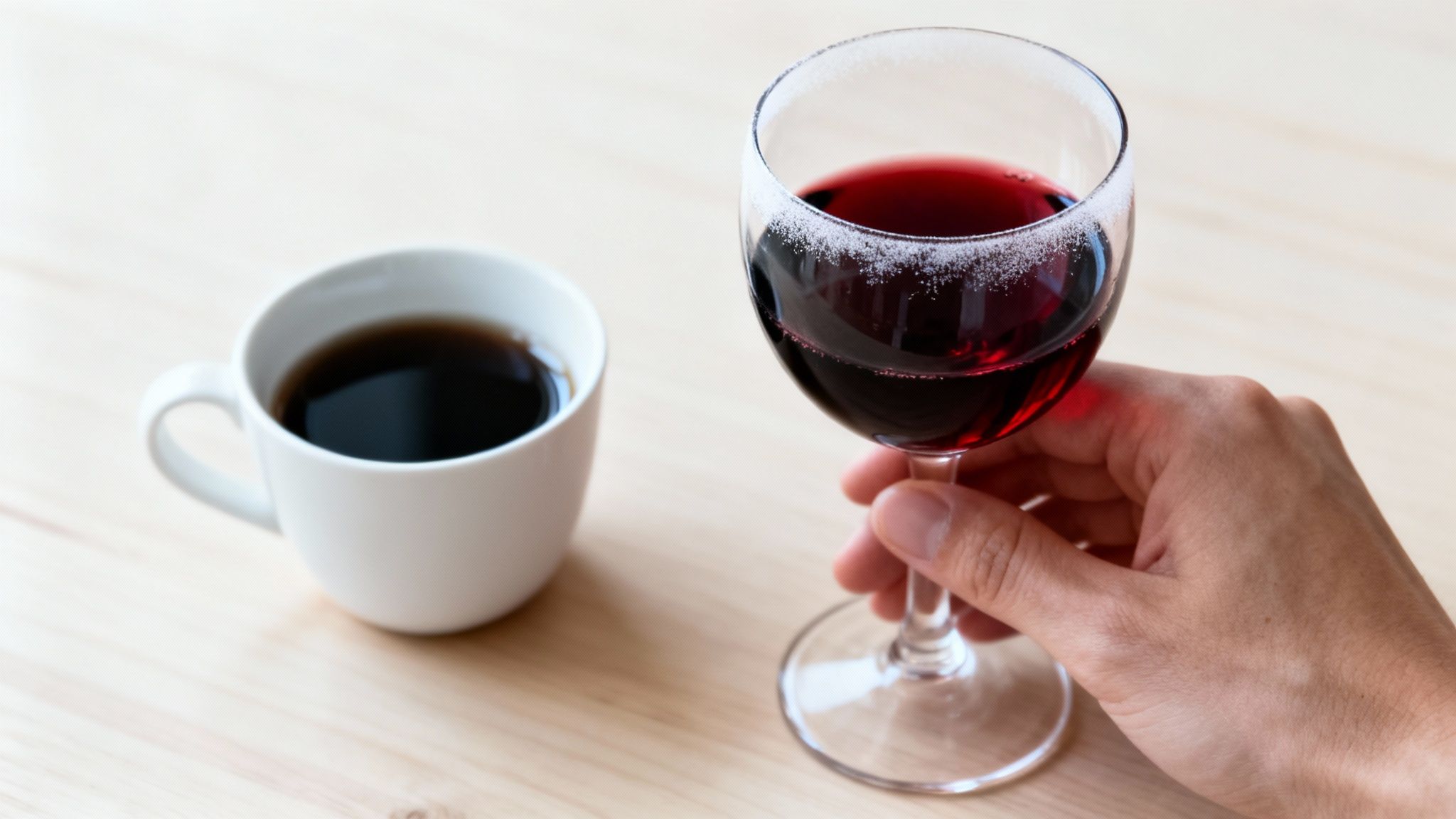
That slightly grippy, fuzzy sensation you feel from some red wines isn't a flaw; it's a core part of the wine's personality. It’s the same feeling you get from a strong cup of black tea, a handful of walnuts, or a bite of dark chocolate.
Feeling overwhelmed by wine choices is normal. The good news is, you don’t need to learn complicated wine theory. Just noticing whether you like this drying texture is a simple shortcut that makes choosing the right bottle much easier.
What’s Happening in Your Mouth?
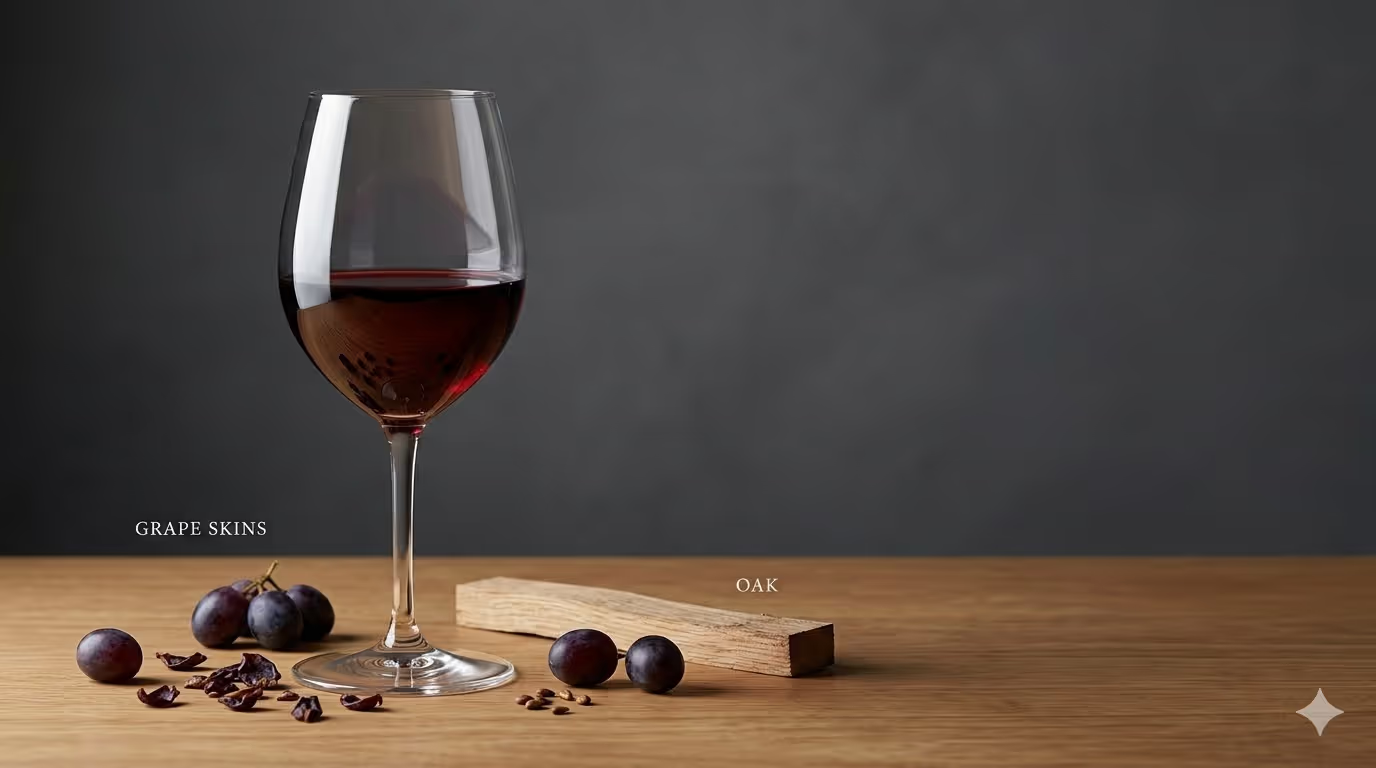
Tannins are natural compounds that come from the skins, seeds, and stems of grapes. When you take a sip, these compounds interact with the proteins in your saliva, which creates that signature drying sensation.
This feeling can be subtle, like smooth velvet, or it can be powerful and assertive, making your mouth pucker.
It's important not to confuse "tannic" with "dry." A wine is called "dry" when it doesn't taste sweet. A wine can be both dry (not sweet) and tannic (that drying texture). Knowing this difference helps you describe what you like more clearly. You can learn more about the distinction between dry vs. sweet wine.
The level of tannin varies a lot from wine to wine. A bold Cabernet Sauvignon is famously high in tannin, which gives it a powerful, grippy feel. On the other hand, a delicate Pinot Noir has very low tannin, making it feel much softer and smoother.
The key takeaway is simple: Tannin is a texture, not a taste. It’s the feeling of dryness in your mouth. Noticing it is the only skill you need to start figuring out your personal preference.
The next time you're looking at a wine list, just ask yourself if you’re in the mood for something grippy or something silky. This one piece of self-awareness makes the decision much less stressful.
A Quick Guide to Tannin Levels
To make it even simpler, here’s a quick cheat sheet. Use it to connect the feeling in your mouth to the types of wines that cause it.
| Tannin Level | What It Feels Like | Common Wine Examples |
|---|---|---|
| High | A strong, drying, and grippy sensation. Coats your tongue and gums. | Cabernet Sauvignon, Nebbiolo, Syrah, Malbec |
| Medium | A noticeable but balanced dryness. Feels structured but not overpowering. | Merlot, Sangiovese, Zinfandel |
| Low | A smooth, soft, and gentle texture. Barely any drying feeling at all. | Pinot Noir, Gamay (Beaujolais) |
If you discover you love the powerful grip of a Cabernet, you'll probably enjoy other high-tannin wines. If you prefer the gentle touch of a Pinot Noir, you know to look for wines in that "low" category. It’s that simple.
Why Some Red Wines Feel Drier Than Others
Why does one red wine feel silky and smooth, while another makes your mouth feel like a desert? The answer is simple: it comes down to the grape and how the wine was made.
Think of it like making tea. A tea bag steeped for one minute gives you a light, soft tea. Leave it in for five minutes, and the tea becomes strong, bitter, and drying. That’s because more tannins have been extracted from the tea leaves. Winemaking follows a similar principle.
Red wines get their tannic grip because the grape skins, seeds, and stems are left to soak with the juice. This process is what gives red wine its color and that signature drying texture. For most white wines, the skins are removed almost immediately, which is why they feel so different.
The Grape Makes the Difference
The biggest factor in a wine’s tannin level is the grape variety itself. Grapes with thicker skins simply have more tannins to give.
- Thick-Skinned Grapes: Grapes like Cabernet Sauvignon, Nebbiolo, and Syrah have tough, thick skins packed with tannins. Wines made from them feel bold and structured.
- Thin-Skinned Grapes: Grapes like Pinot Noir and Gamay have delicate, thin skins. Wines made from them have much lower tannin levels and feel smoother and softer.
This is exactly why a Cabernet Sauvignon can feel so powerful while a Pinot Noir feels gentle. Our guide comparing Merlot vs. Pinot Noir digs deeper into how this simple difference creates two completely different experiences in the glass.
Winemaking Choices Matter, Too
The winemaker’s decisions also play a big role. Just like steeping tea, the longer the winemaker leaves the grape skins in contact with the juice, the more tannins get extracted.
Aging the wine in new oak barrels adds another layer. The wood itself has tannins, which it slowly adds to the wine, contributing to the overall structure and adding flavors like vanilla or spice.
This simple concept of skin thickness shapes the entire wine world. Once you understand it, you can predict how a wine will feel before you even take a sip, which helps take the guesswork out of choosing. The experts at Coravin offer some great insights on this.
How to Find Your Personal Tannin Preference
You don’t need to be a wine expert to figure out what you like. Finding your tannin preference is as simple as paying attention to how a wine feels in your mouth.
Is it making your mouth feel a bit dry and grippy? Or does it feel silky and smooth? That texture is tannin, and just noticing it is the first step.
There’s no right or wrong answer. Some people love the bold, structured feel of a high-tannin wine, while others prefer something gentle and soft. Once you know which you prefer, choosing a bottle gets so much easier. You're no longer guessing; you're choosing based on a feeling you know you enjoy.
A Quick Guide to Common Tannin Styles
To help you connect that feeling to the wines on a menu, here's a simple breakdown.
- You Might Like High-Tannin Wines If: You enjoy the bold bitterness of strong black tea or dark chocolate. The texture feels substantial and "chewy."
- You Might Like Medium-Tannin Wines If: You want a wine with some structure but don't want your mouth to feel overly dry. These are versatile crowd-pleasers.
- You Might Like Low-Tannin Wines If: You prefer a smooth, silky, and gentle texture. These wines feel soft and are often described as easy to drink.
This simple decision tree shows how a grape's skin thickness is the main driver behind whether a wine will feel grippy or smooth.
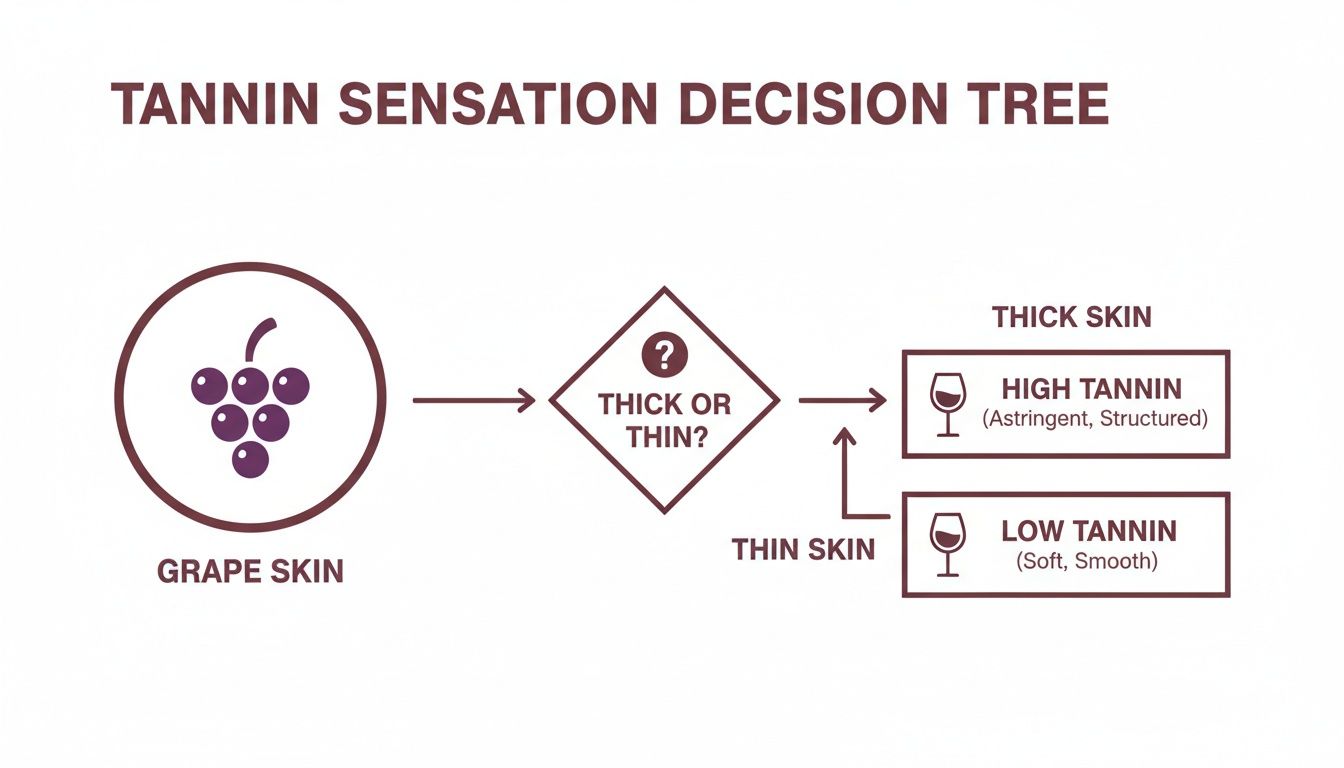
As the visual shows, it’s a direct relationship. Thick-skinned grapes naturally lead to high-tannin wines, while thin-skinned grapes produce softer, low-tannin styles.
Finding Wines That Match Your Texture
Ready to put this knowledge into action? The table below groups common red wines by their typical tannin style. Think of this as a cheat sheet for your next trip to the wine aisle.
Common Red Wines by Tannin Style
This table is a great starting point to help you find wines that match your preferred texture, whether you're after something bold or something gentle.
| High Tannin (Grippy & Bold) | Medium Tannin (Smooth & Balanced) | Low Tannin (Silky & Gentle) |
|---|---|---|
| Cabernet Sauvignon | Merlot | Pinot Noir |
| Syrah / Shiraz | Zinfandel | Gamay (Beaujolais) |
| Nebbiolo (Barolo) | Sangiovese (Chianti) | Grenache |
| Malbec | Cabernet Franc | Barbera |
If you already know you love a bold Cabernet Sauvignon, you can confidently try a Syrah next time. This is a core part of figuring out your preferences. For more tips on this, check out our guide on building your personal wine profile without fancy jargon.
The goal is to feel relieved, not overwhelmed. Knowing whether you prefer a "grippy" or "silky" wine is a powerful shortcut that removes the guesswork and helps you choose with confidence.
Using Tannin to Create Perfect Food Pairings
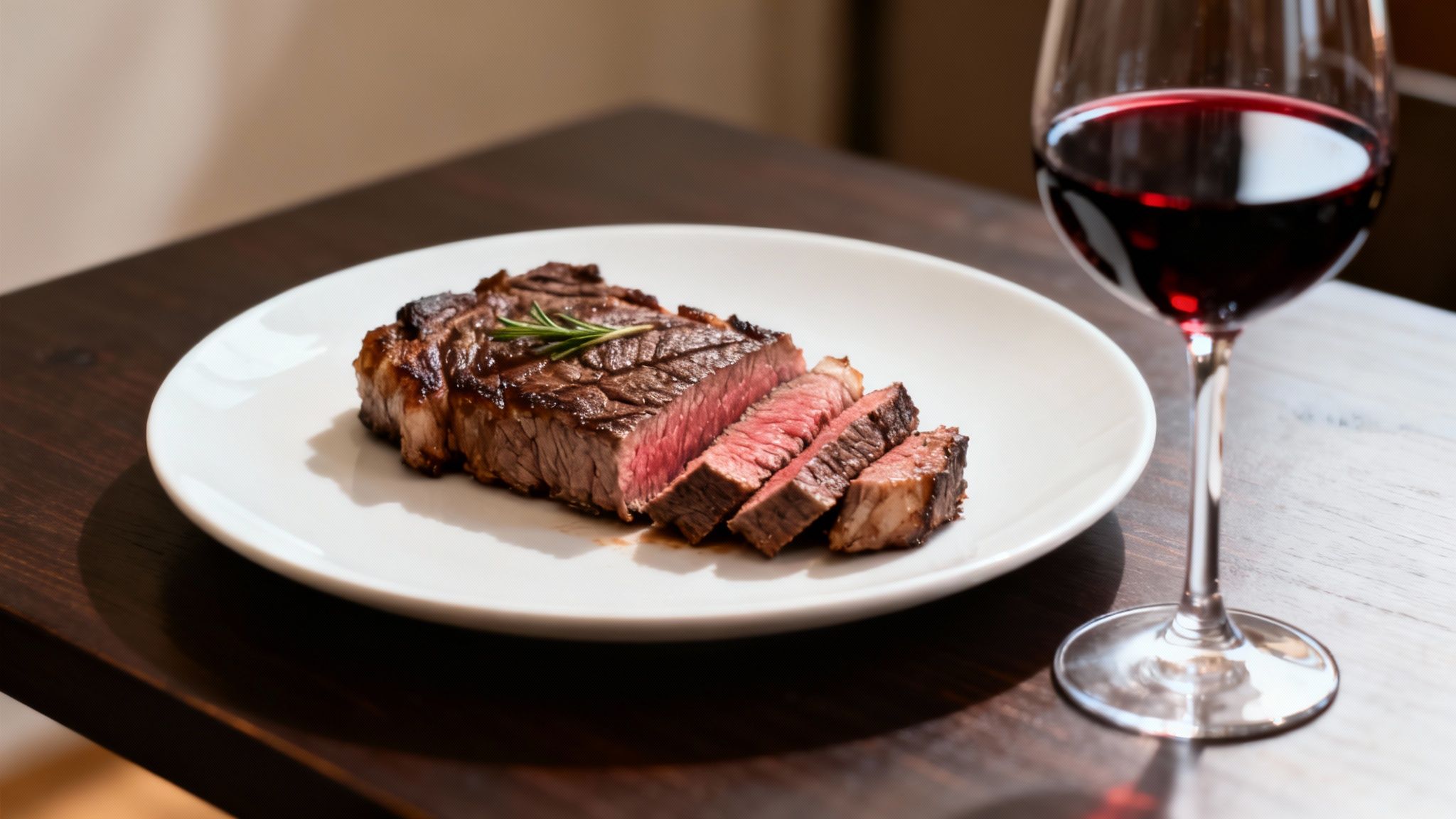
Have you ever wondered why a big, grippy red wine tastes so amazing with a rich, fatty steak? The secret is tannin.
Tannins act like a palate cleanser. They bind to the fats and proteins from the meat, scrubbing your mouth clean after each bite. This makes every sip of wine feel smoother and every bite of food taste just as flavorful as the first.
Simple Rules for Great Pairings
You don’t need a complicated chart to make great choices. The idea is simple: pair bold tannins with rich, fatty foods. The fat in the food softens the wine’s assertive grip, while the wine cuts through the heaviness of the dish.
Here are a few classic examples:
- Cabernet Sauvignon with a Burger: The Cab's high tannins are a perfect match for the richness of the beef and cheese.
- Syrah with BBQ Ribs: A firm Syrah stands up to the bold, smoky flavors of the barbecue.
- Nebbiolo with a Creamy Pasta: The powerful tannins slice right through a heavy butter or cream sauce, keeping everything in balance.
On the flip side, high-tannin wines can overpower lighter dishes. A bold red would steamroll a delicate piece of fish, making both taste bitter. For lighter meals, a low-tannin red like Pinot Noir or most white wines are a much better choice.
The rule of thumb: Match the wine’s intensity to the food’s richness. A grippy wine needs a rich dish to soften its edges.
Putting It All Together
Once you get this simple concept, the guesswork of pairing disappears. When you're looking at a menu, just think about the weight of your dish. Are you ordering a rich steak or a light salad?
This is the kind of practical guidance that makes choosing wine easier. If you want to go a little deeper, our guide on how to match wine with food offers more simple tips.
Instead of feeling stressed, you can feel confident that you’re making a choice that will make your entire meal better.
How Tannins Help a Wine Get Better with Age
Ever hear someone say a wine needs time to “soften up”? They’re talking about tannins.
Tannins provide the structural backbone a wine needs to evolve gracefully over many years. They also act as a natural preservative, protecting the wine from oxygen as it develops more complex flavors.
When a red wine is young, its tannins can feel aggressive and grippy. But with time, magic happens.
From Grippy to Silky
Inside the bottle, a slow chemical process is taking place. Over years, individual tannin molecules link together into longer chains. As these chains grow, they become too heavy to stay suspended in the wine and fall to the bottom as sediment.
This process completely changes how the tannins feel in your mouth. What once felt sharp and drying slowly melts into a texture that’s soft, smooth, and velvety. The wine’s initial bite gives way to an elegant, silky finish.
This evolution is the heart of wine aging. The goal is to open the bottle at that perfect moment when its tannins have softened into a seamless, beautiful texture.
This change is most dramatic in high-tannin reds, which can contain up to 2.5 grams per liter of tannins, while white wines usually have less than 0.3 g/l. Studies show that while the total amount of tannin doesn't drop much in the first few years, its chemical structure changes profoundly. This creates that sought-after silky mouthfeel. For more on this, check out this guide to red wine characteristics.
Understanding this helps you decide whether to drink a wine now or let it rest. You’re just choosing between the bold energy of its youth and the gentle grace of its maturity.
Putting It All Together: No More Guesswork
So, that word, tannin, isn't some secret code for wine experts. It's just a texture: that grippy, drying feeling in a red wine. Now you know exactly what it is.
By simply noticing whether you like a wine that feels bold and structured or one that feels soft and silky, you've unlocked a huge piece of the puzzle. That one preference is powerful enough to guide you to better, more confident choices.
Your Personal Wine Assistant
The goal is to feel sure of your choice, not overwhelmed. This is precisely the kind of moment Sommy was built for. Instead of memorizing which grapes have thick skins, you have a much simpler path.
Think of Sommy as a personal wine assistant that already understands your taste. You don’t need to be the expert, because the AI does the heavy lifting, translating what you like into a perfect recommendation.
It's about making the process calm, quick, and confident. When you just want a bottle you’ll actually love without all the guesswork, Sommy can give you a personalized recommendation based on the textures you enjoy. The result? You feel relieved and happy with your choice, every time.
A Few Common Questions About Tannin
Let's clear up a few common questions. Think of this as a quick reference to make sure the core ideas stick.
Are Tannins in Wine Bad for You?
For most people, no. Tannins are natural antioxidant compounds found in many plants, including tea, nuts, and dark chocolate. They are a core part of what gives red wine its structure and ability to age.
While a very small number of people may have a sensitivity they link to headaches, for the vast majority, tannins are a harmless part of the wine experience.
Can White Wines Have Tannins?
Generally, no. Red wines get their tannins from grape skins, which are removed almost immediately when making white wine.
There are two exceptions:
- Oak-Aged Whites: Wines like Chardonnay aged in new oak barrels can pick up a small amount of tannin from the wood. It adds a subtle texture but nothing like a red wine.
- Orange Wines: These are white wines made like reds, where the skins are left to soak with the juice. This gives them their amber color and a noticeable tannic grip.
How Do I Find a Red Wine with No Tannins?
Finding a red wine with zero tannin is impossible, but finding one that feels like it has none is easy.
You're looking for low-tannin red wines that feel silky smooth. Ask for wines made from thin-skinned grapes, like Gamay (the grape in Beaujolais) or a lighter-style Pinot Noir. They are known for their soft, gentle texture.
Does a Higher Price Tag Mean More Tannins?
Not at all. Price is not a reliable indicator of tannin levels. A wine’s texture comes from the grape variety and the winemaker's choices, not the cost. You can find affordable wines all along the tannin spectrum. Focus on the style you know you like, not the price tag.
Instead of memorizing grape profiles or guessing in the wine aisle, tell the AI assistant at Sommy.ai what you're looking for, like a "smooth red wine with low tannins", and get a smart recommendation in seconds.
You can find your next favorite wine with confidence at Sommy.ai.