
Dry wine has almost no leftover sugar and sweet wine has a lot, and the dividing line sits around 10 grams per liter. Wine Folly's threshold is that anything under 1 percent sweetness reads as dry, above 3 percent tastes off-dry, and above 5 percent is clearly sweet. The complication is that most people can't taste sugar below about 1.5 percent at all, so plenty of wines you think of as bone dry actually contain some. Acidity and tannin both mask sweetness too, which is why a sharp wine with real sugar in it can still taste austere.
Everything below is the practical version: the actual numbers, the label words that give sweetness away, the one sparkling wine term that catches almost everybody out, and how to work out which side you're on before you spend money.
What does dry actually mean in wine?
Dry means not sweet, and nothing else. It isn't a comment on quality, seriousness or price, and a dry wine isn't more sophisticated than a sweet one. During fermentation yeast converts grape sugar into alcohol, and if it runs to completion there's almost nothing left, which is a dry wine. Stop it early and the leftover sugar stays in the bottle, which winemakers call residual sugar.
Madeline Puckette of Wine Folly sets out the working thresholds in her guide to wines listed from dry to sweet. Below 1 percent sweetness a wine counts as dry, above 3 percent it tastes off-dry or semi-sweet, above 5 percent it's noticeably sweet, and dessert wines generally start somewhere around 7 to 9 percent. One percent sweetness equals 10 grams per liter of residual sugar, which works out to slightly less than two carbohydrates in a five ounce glass.
The number that reframes everything is the detection threshold. Puckette notes that the average wine drinker can't detect sweetness below about 1.5 percent, while trained tasters can estimate within roughly 0.2 percent. A lot of commercially popular wines sit in that gap deliberately, carrying a few grams of sugar that most people never consciously taste but which makes the wine rounder and easier to drink.
Getting a wine to stop sweet takes deliberate work. Yeast will happily eat every gram of sugar if left alone, so the winemaker has to intervene, usually by chilling the tank until the yeast goes dormant, by filtering the yeast out, or by adding spirit to raise the alcohol past the point where yeast can survive. That last method is fortification, and it's how Port keeps so much sweetness alongside 20 percent alcohol.
Adding sugar after fermentation is a different thing and is generally frowned upon in still wine, as Puckette notes, with sparkling wine being the accepted exception. So when a still wine tastes sweet, that sweetness almost always came from the grapes themselves rather than from a bag of sugar, which is worth knowing before anybody sneers at your Moscato.
Why does a dry wine sometimes taste sweet?
Because your palate reads several things at once and sugar is only one of them. Ripe fruit flavor is the biggest culprit, since a wine bursting with jammy blackberry or tropical pineapple character reads as sweet even at zero residual sugar. Your nose is telling you sweet and your tongue never gets a vote.
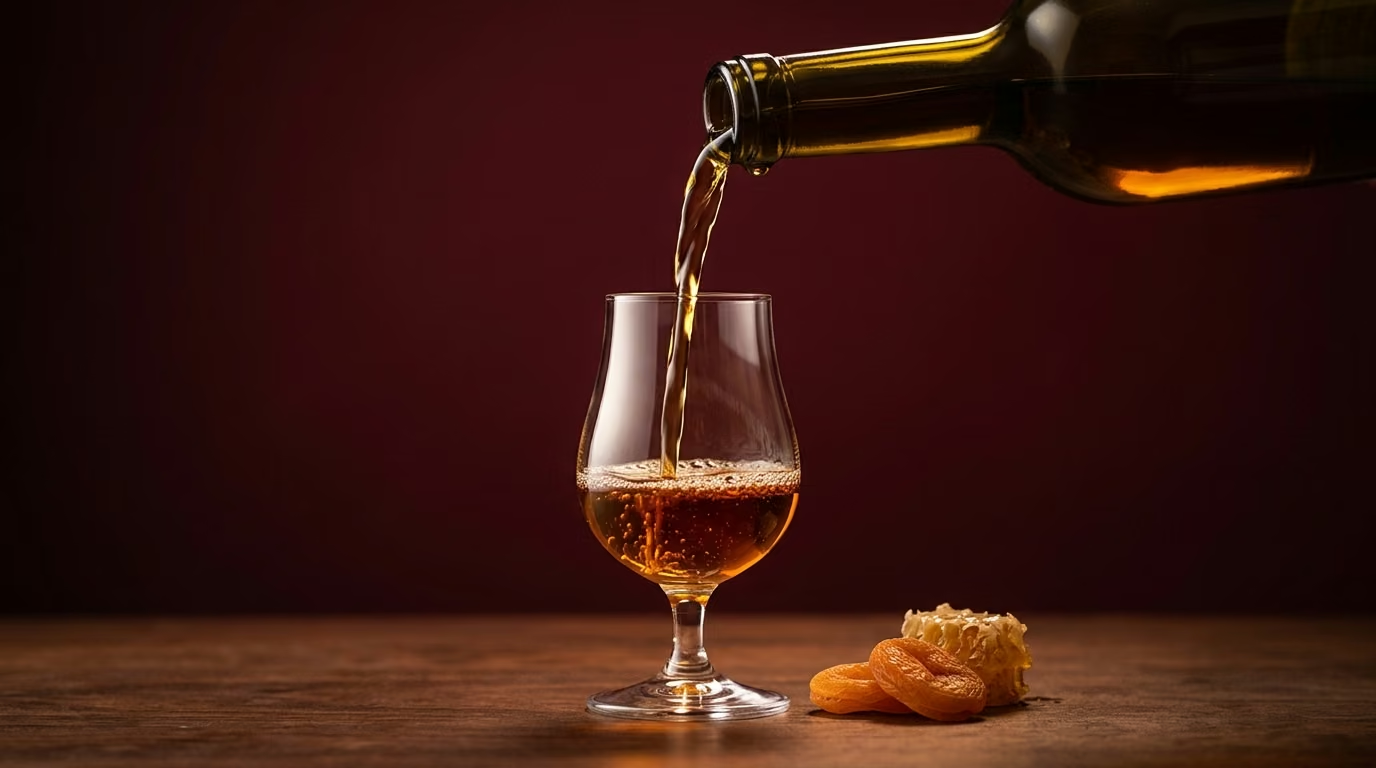
The reverse happens too, and Puckette explains the mechanism plainly, which is that both bitterness from tannin and acidity actively reduce the perception of sugar. A high acid German Riesling with genuine sweetness in it can taste crisp rather than sugary because the acidity is holding the sugar in check. Take the same amount of sugar and put it in a low acid wine and it would taste cloying.
Alcohol adds a third layer, because higher alcohol carries a faint sweetness of its own along with a warming sensation. This is why a big fruity 15 percent Zinfandel with no residual sugar gets described as sweet by people who then find a genuinely off-dry Riesling too austere. The words we use for sweetness are doing several jobs at once.
Tannin causes the opposite confusion and it's worth separating out. That drying, grippy feeling across your gums after a mouthful of young Cabernet is a physical sensation rather than a taste, caused by tannins binding with proteins in your saliva. People frequently describe such a wine as very dry, meaning the texture, when the term properly refers to sugar. A wine can be grippy and tannic while carrying more residual sugar than a soft, smooth one, and our explainer on wine tannins untangles which sensation is which.
Which wines are usually dry and which are usually sweet?
Style tends to run with the grape and the region rather than the color, and any grape can be made either way. On the reliably dry side you'll find Sauvignon Blanc, Pinot Grigio, Albariño, Grüner Veltliner, Chianti, Pinot Noir, Cabernet Sauvignon and most Bordeaux and Rhone reds.
Reliably sweet means Moscato, Port, Sauternes, Icewine and anything labeled late harvest. The genuinely variable one is Riesling, which is made across the full range from bone dry to intensely sweet, and it's the grape people most often get wrong. A German Riesling can be either, and the label is what tells you.
Rosé splits the same way and catches people out for the same reason. Provence style rosé is usually dry and pale, while darker pink American blush wines are frequently off-dry. Our comparison of Riesling and Moscato works through sweetness and alcohol across those two, and what makes a good sweet wine covers the sweeter end properly.
What do the label words mean?
Sparkling wine has the most precise vocabulary and the most misleading one, because Extra Dry is sweeter than Brut. Puckette's Champagne sweetness scale gives the actual grams per liter for each term, and the ordering surprises nearly everyone who hasn't seen it.
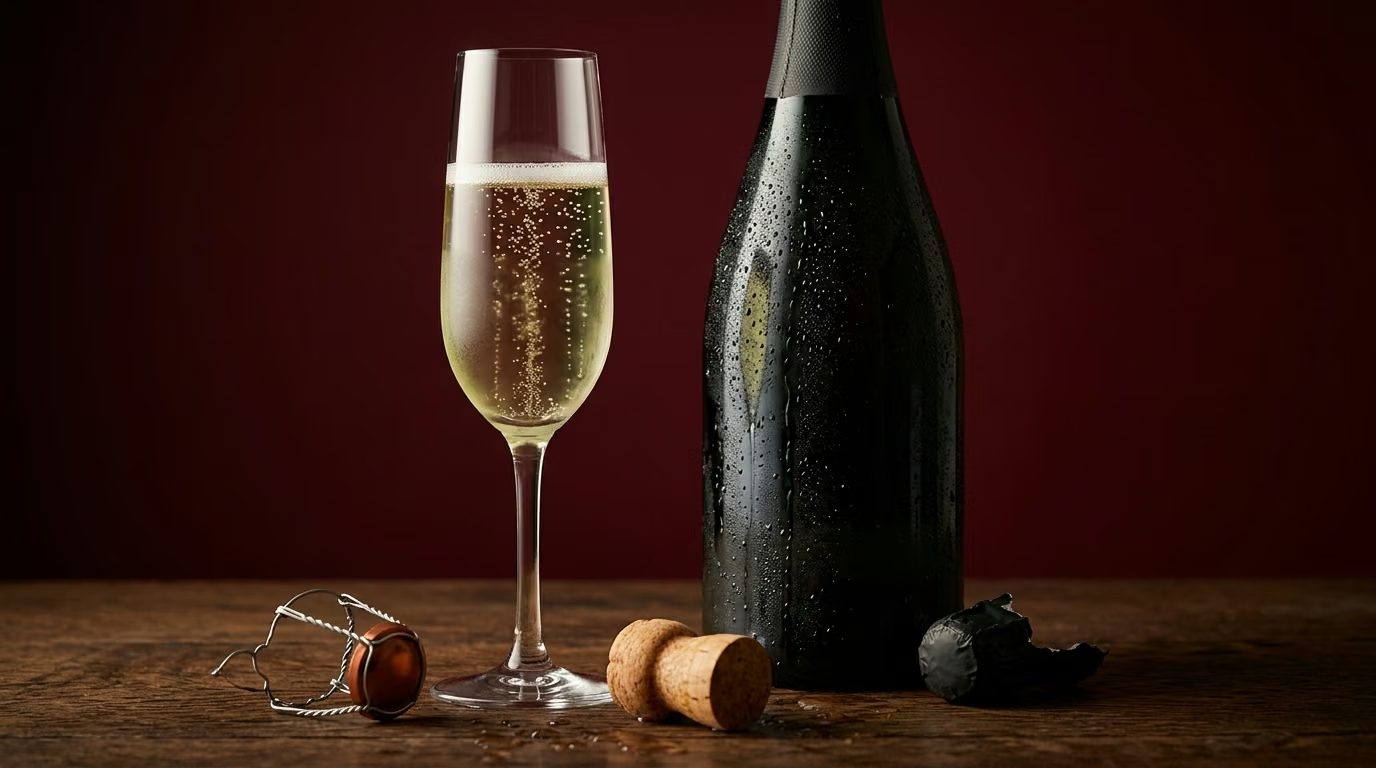
Brut Nature carries 0 to 3 grams per liter, Extra Brut runs 0 to 6, and Brut covers 0 to 12. Extra Dry sits above all of them at 12 to 17 grams, Dry is higher again at 17 to 32, Demi-Sec runs 32 to 50, and Doux is anything above 50. So a bottle marked Dry is one of the sweeter styles available, and if you want genuinely bone dry fizz you want Extra Brut or Brut Nature rather than anything with the word dry on it.
That sweetness gets added deliberately at a stage called the liqueur d'expédition, just before final corking. Sparkling wine is extremely acidic, and the small sugar addition exists to round off the sourness rather than to make the wine taste sweet, much like a little sugar in coffee. Still wine labels are looser, but German terms carry real information, with Trocken meaning dry, Halbtrocken meaning off-dry, and Spätlese or Auslese indicating riper grapes and usually more sweetness.
A handful of other terms are worth recognizing on sight. Secco and Amabile on Italian labels mean dry and semi-sweet respectively, while Dolce means sweet outright. French still wines use Sec for dry and Moelleux or Liquoreux for progressively sweeter styles. Late harvest, Vendange Tardive and Icewine all signal grapes picked with concentrated sugar and will be sweet without exception. If a label carries none of these words at all, a still wine from a mainstream region is far more likely to be dry than not.
How much sugar is actually in a glass of wine?
Far less than in most other drinks people order without thinking about it. Puckette's comparison puts a five ounce glass of Brut sparkling wine at about 2 grams of sugar and a Brut Nature at roughly half a gram, against 14 grams in a gin and tonic, 17 in a grande latte made with 2 percent milk, 20 in a margarita made with simple syrup, and 33 in a Jack and Coke.
Even Demi-Sec sparkling wine, which tastes distinctly sweet, comes in around 8 grams per glass, still under a gin and tonic. The reason wine tastes sweeter than those numbers suggest is that it has far less to hide behind, since there's no citrus, no mixer and no milk masking anything.
Alcohol level gives you a rough shortcut on still wine, though it's a weak one. A white below about 11 percent has often had its fermentation stopped early, which leaves sugar behind, while most fully dry table wines land between 12 and 14.5 percent. Treat it as a hint rather than a rule, because low alcohol dry wines and high alcohol sweet wines both exist.
Which side are you likely to prefer?
Your existing drink habits predict this better than any wine vocabulary. If you take coffee black, enjoy bitter IPAs, reach for sparkling water and like dark chocolate, you'll probably land on the dry side and find off-dry wines cloying.
If you sweeten your coffee, prefer cocktails with fruit juice or syrup, and enjoy soda or bubble tea, a little residual sugar will likely make wine more approachable rather than less. There's nothing to apologize for in that, and starting with an off-dry Riesling or a Moscato is a perfectly sensible way in.
The useful part is that preferences move. People who start on sweeter wines very often drift drier over a year or two as they get used to acidity and tannin, and there's no need to force it. Our guide to the best wine for beginners covers starter bottles at both ends, and how to describe wine taste helps you put words to what you noticed.
How does sweetness change food pairing?
Sweetness is the single most useful lever you have with difficult food, and spicy dishes are the clearest case. A touch of sugar tempers capsaicin heat, so an off-dry Riesling with Thai curry or hot wings genuinely works better than a bone dry white, which tends to make the burn sharper.
Salty and fried food goes the other way and wants dry wine with high acidity, ideally with bubbles. Dry sparkling wine against fries, fried chicken or salty snacks works the same way a squeeze of lemon does, cutting the fat and resetting your palate between bites.
Dessert follows one firm rule, which is that the wine must be sweeter than the plate. Serve a dry wine alongside chocolate cake and the wine tastes sour and thin, because the sugar in the food resets your palate's baseline. Port or Sauternes with dessert works precisely because it clears that bar. More of this is in our guide to pairing wine with food.
Frequently asked questions
Is dry wine healthier than sweet wine?
Dry wine has less sugar and slightly fewer calories, but the difference across a normal glass is small compared with the alcohol, which supplies most of the calories either way. A five ounce glass of Brut sparkling carries about 2 grams of sugar against roughly 8 for a Demi-Sec.
Is Brut sweeter than Extra Dry?
No, and this trips up almost everybody. Brut allows up to 12 grams of residual sugar per liter while Extra Dry runs from 12 to 17, so Extra Dry is the sweeter of the two despite how the name reads.
Is red wine dry or sweet?
The vast majority of red wine sold is dry, including Cabernet Sauvignon, Merlot, Pinot Noir and Chianti. Ripe fruit flavor makes some of them taste sweet without any actual sugar, and genuinely sweet reds like Port or Lambrusco Dolce are the exception rather than the norm.
How can you tell if a wine is dry before buying it?
Check the grape, the region and any sweetness term on the label, and use alcohol as a rough backup since most dry table wines sit between 12 and 14.5 percent. Producers' technical sheets list the exact residual sugar if you want certainty.
Why does my dry wine taste sweet?
Most likely because it's high in ripe fruit flavor or alcohol, both of which the brain reads as sweetness even at zero sugar. It may also carry a few grams of residual sugar below the level most people can consciously detect, which is under about 1.5 percent.
Does sweet wine keep longer once opened?
Sweeter and fortified wines generally last longer after opening, because sugar and higher alcohol both slow spoilage. A dry white or red is usually best within three days, while a Port can stay good for weeks.
Choosing between them without the guesswork
The whole thing reduces to a few facts worth keeping. Dry means under about 10 grams of sugar per liter, most people can't detect sweetness below 1.5 percent, acidity and tannin both hide sugar, and Extra Dry sparkling wine is sweeter than Brut. Riesling and rosé are the two styles where you genuinely have to read the label rather than assume.
After that it's a matter of taste, and your coffee order is a better predictor than any chart. If you'd rather not track it yourself, Sommy's Taste Profile picks up where you sit on the sweetness scale from what you rate and steers recommendations accordingly.