
An AI wine assistant is an app that learns your taste from the wines you rate, then recommends bottles that fit you personally, whether you're holding a restaurant list, standing in a shop aisle, or deciding what to open with dinner tonight. It reads labels and menus through your phone camera, translates tasting notes into words you already use, and gets more accurate every time you tell it what you thought of a bottle. The better ones genuinely save you money on wine you'd never finish. They also miss in specific, predictable ways that nobody selling one wants to talk about, so we're going to cover both halves honestly.
What is an AI wine assistant, exactly?
An AI wine assistant is software that builds a working model of your personal taste and uses it to shrink the wine world down to the bottles you're likely to enjoy. That last part is what separates it from a wine database. A database can tell you that a bottle exists, what region it came from, and what strangers thought of it. An assistant is supposed to tell you whether it's right for you, tonight, with the food in front of you.
Three things have to be true before an app earns the name. It needs memory, so the bottle you loved in March still counts in November. It needs eyes, because most wine decisions happen in front of a shelf or a menu rather than at a keyboard. And it needs to answer in ordinary language, since "brambly with graphite minerality" helps almost nobody decide anything. Sommy builds all three around your Taste Profile, the living picture of your palate that sharpens with every wine you rate.
The word "assistant" is doing real work there. It isn't meant to hand down verdicts from on high, and it isn't a search engine with a chat window bolted to the front. A good one behaves like a friend who happens to remember every bottle you've ever had an opinion about, which is a genuinely useful thing to have in your pocket at 7pm on a Tuesday.
How does an AI wine assistant learn your taste?
It learns from your ratings, and from the pattern underneath them rather than the individual bottles. When you mark a juicy Argentinian Malbec as a hit and a lean, high-acid Sancerre as a miss, the useful signal isn't those two labels. It's that you lean toward ripe fruit and soft texture, and that sharp acidity puts you off. That pattern is what gets applied to the thousand bottles you've never tried.
Every assistant has a cold start problem, and how it handles the first ten minutes tells you a lot. Some ask you a short series of questions about flavors you already know from coffee, fruit, or food, which gets you a rough starting point in about a minute. Some let you import ratings you've already built up elsewhere, which is the fastest route if you've been logging wines in another app for years. Sommy does both, through Find Your Taste for a standing start and Vivino Import if you're arriving with history.
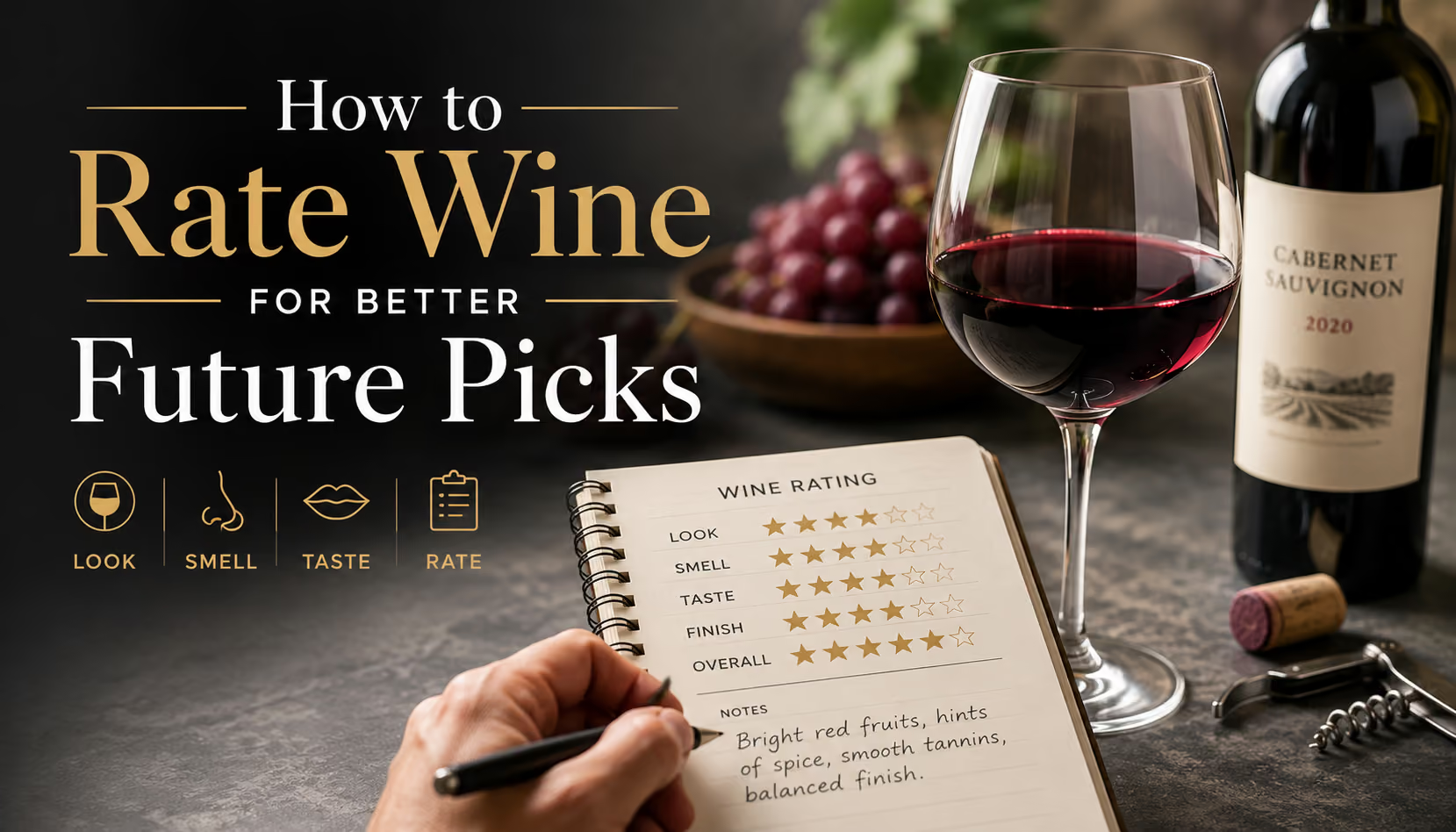
The habit that improves your recommendations fastest is rating the wines you didn't like. Most people log their favorites and quietly skip the disappointments, which leaves the model with a picture of what you enjoy and no idea what to steer you away from. A dislike is worth as much as a like, sometimes more, because it draws a hard edge around your comfort zone.
Context matters too, and it's easy to skip. Noting that a bottle was perfect on a hot patio, or too heavy after a rich meal, teaches the app something about how you drink rather than only what you drink. Over a few months that's the difference between a recommendation that's technically correct and one that fits the evening you're actually having.
What can it do when you're actually choosing a bottle?
It handles the three moments where people get stuck, which are the restaurant list, the shop shelf, and dinner at home. Each one fails in a different way, so each gets a different tool.
At a restaurant, the problem is volume and pressure. You're handed forty bottles you've never heard of while someone waits for an answer. Pointing your camera at the list lets Sommy read it and filter it down to what suits you, either the moment you sit down with Current Venue or ahead of time with Planned Visit if you'd rather not decide under the table's gaze. If you want to understand what you're looking at rather than just be told, our walkthrough on how to read a wine list covers the structure most lists follow.
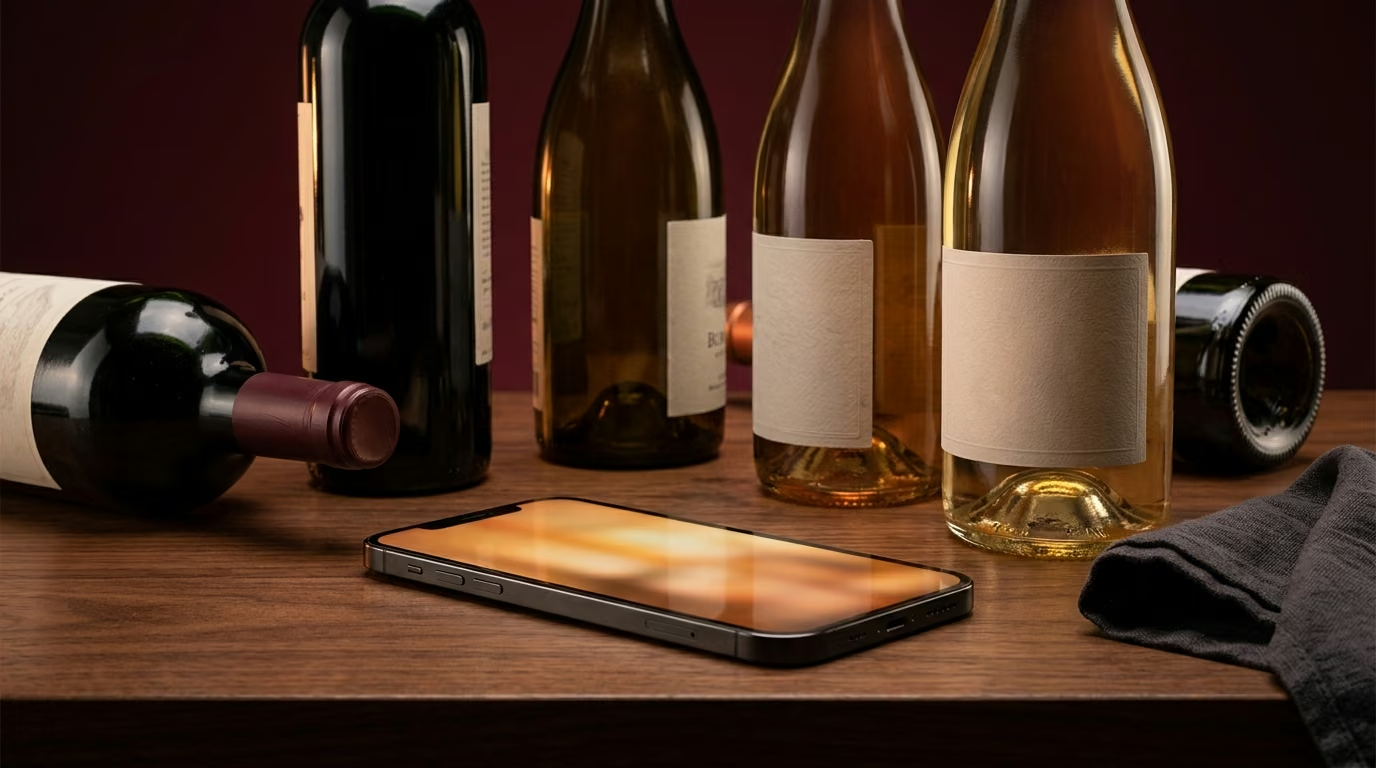
In a shop, the problem is the opposite. Nobody's rushing you, but there are eight hundred labels and no honest way to tell them apart, since the packaging is designed to sell rather than inform. Scanning a whole shelf or a single label with Vision gives you a read on what's in front of you, and Fit Check gives a straight verdict on whether one specific bottle is your style. It won't hand you a number out of a hundred to argue with, which is deliberate, because a score averaged across thousands of strangers tells you almost nothing about your own palate.
That distinction matters most in the $12 to $20 range, where the choice is widest and the marketing is loudest. Two bottles at the same price from the same country can be built completely differently, one ripe and soft and the other lean and sharp, and nothing on either label reliably tells you which is which. Being able to point a camera at both and get an answer aimed at your taste is worth more here than it is at $60, where you're usually buying something you already know.
At home, the question is usually pairing, and it's the one people most often get backwards by starting from the wine. Telling Sommy what you're cooking, either by describing it, photographing the plate, or scanning the recipe, works from the meal outward. That's the same order a sommelier would use, and it's why pairing wine with food tends to go better when the food leads.
How is it different from a scanner app or ChatGPT?
A scanner app identifies the bottle, while an assistant judges it against you. That distinction sounds small and turns out to be the whole thing. Label recognition has been solved for years, and plenty of apps will read a label and show you an average rating from thousands of people who aren't you. That's genuinely handy for confirming you've picked up the right vintage and much less handy for deciding whether you'll enjoy it. We went through the trade-offs in detail in our piece on the best wine scanner app.
General chatbots sit at the other extreme. Ask a large language model about Barolo and you'll get a fluent, accurate, genuinely useful explanation, because that information is well documented and sitting in the training data. Ask it which of the six Barolos on the list in front of you suits your taste and it has nothing to work with, since it doesn't know what you've enjoyed before, can't see the list, and won't remember the conversation next month. We wrote about that gap in ChatGPT knows wine, Sommy knows your wine.
The practical test is whether the app's answer would change if a different person asked the same question. If it wouldn't, you're using a reference tool, and there's nothing wrong with that as long as you know which one you've got.
Where does an AI wine assistant get it wrong?
It gets things wrong in five fairly predictable places, and knowing them makes the tool considerably more useful rather than less. Any app that claims otherwise is selling you something.
The first few recommendations are always the weakest. Before you've rated much, the app is working from a sketch rather than a portrait, so early suggestions skew toward safe crowd-pleasers. That's not a flaw so much as arithmetic, and it resolves quickly once you've logged a couple of dozen honest reactions. Judging an assistant on its first week is like judging a new colleague on their first meeting.
Coverage thins out at the edges. Big commercial labels are documented everywhere, but a small grower's bottling, a restaurant's private-label house wine, or an obscure import can come back with nothing at all, or worse, match to a different wine with a similar name. Vintage confusion is the common version of this, where the app recognizes the label but not the year, and a 2019 and a 2022 from the same producer can be noticeably different wines.
The third limit is the one people forget: no software can actually taste anything. Every recommendation is a prediction built on patterns, so a bottle that's been cooked in a hot warehouse or spoiled by a bad cork will still read as a perfect match right up until the moment you pour it. That failure sits with the bottle rather than the software, but the app can't warn you about it, and learning to recognize a corked or oxidized wine yourself stays worth the ten minutes it takes.
Personalization can also quietly become a cage. An assistant that only ever shows you more of what you already like will keep you comfortable and stop you growing, and palates genuinely do move over the years. The fix is to ask for the stretch deliberately, since most apps will happily suggest something adjacent to your profile rather than dead center if you tell them to. Someone who drank nothing but oaky Chardonnay in 2020 is often ready for something leaner by now, and the app won't work that out unless you push it.
Anything leaning heavily on crowd scores drags toward the average. Popular wines are popular because they're broadly inoffensive, and broadly inoffensive is rarely what makes a bottle memorable to one particular person. This is exactly why we don't publish numeric ratings, a position we argued in why wine ratings don't help you choose.
How do you get better recommendations out of it?
Rate more honestly and more often, because everything else follows from the quality of what you feed it. A handful of small habits separate the people who end up relying on these apps daily from the people who try one for a fortnight and conclude it doesn't work:
- Log the weeknight $12 bottles, not just the special occasions
- Rate the wines you disliked, and say what put you off
- Add where and what you drank it with, in your own words
- Ask follow-up questions in plain speech rather than wine vocabulary
That last one trips people up more than it should. There's a temptation to perform expertise at the app, asking for something with "good structure and length", when what you actually want is a red that isn't too dry for pizza night. Assistants handle the second phrasing far better, because it describes an outcome rather than a wine-trade abstraction, and it's genuinely how you'd ask a friend.
It's also worth rescanning rather than relying on memory. People are confident they'd recognize a bottle they loved and are wrong about it constantly, particularly with producers who use near-identical labels across an entire range. Ten seconds with the camera settles it, and the scan lands in your history where it can do some good.
The other habit worth building is reacting the same evening rather than a week later. Wine memory decays fast and reconstructs itself around the story of the night instead of the liquid, so a bottle you rated four days after a good dinner tends to score the dinner. Logging while the glass is still in front of you gives the model something closer to your actual reaction, which is the entire input it has to work with.
Common questions about AI wine assistants
These come up constantly, both from people considering an AI wine assistant for the first time and from people a few months in who've hit one of its edges.
Is an AI wine assistant accurate?
Accuracy depends almost entirely on how much you've told it. After a dozen or so honest ratings most assistants get noticeably better at avoiding bottles you'd dislike, which is the more valuable half of the job. Predicting a new favorite is harder than filtering out a probable miss, and both improve steadily with use.
Are AI wine assistants free?
Most offer a free tier that covers scanning and basic recommendations, with paid plans adding depth. Pricing changes often enough that it's worth checking the current terms in the App Store or on the app's own site rather than trusting an article, including this one.
Can an AI wine assistant replace a sommelier?
Not for what a good sommelier actually does, which is read a room, work within your budget without embarrassing you, and pull something surprising off a list they know intimately. An AI wine assistant covers the everyday version of that job, on the roughly 360 nights a year when there's no sommelier standing at your table.
Do I need to know anything about wine to use one?
No, and the people who benefit most tend to know the least at the start. The whole point is that you describe wines in your own words and the app handles the translation, so beginners can skip the vocabulary entirely and still build a useful profile.
Does an AI wine assistant work offline?
Generally not for scanning or recommendations, since both need to reach a server. Most apps keep your saved bottles and notes readable offline, which is enough for a cellar in a basement with no signal, but expect to need a connection for anything involving the camera.
What happens to my wine data?
That varies by app and deserves an actual look at the privacy policy before you import years of ratings. The reasonable question to ask is whether your taste history is used to serve you recommendations or sold on to someone who wants to sell you wine, and any app worth using will answer that plainly.
Making an AI wine assistant part of how you drink
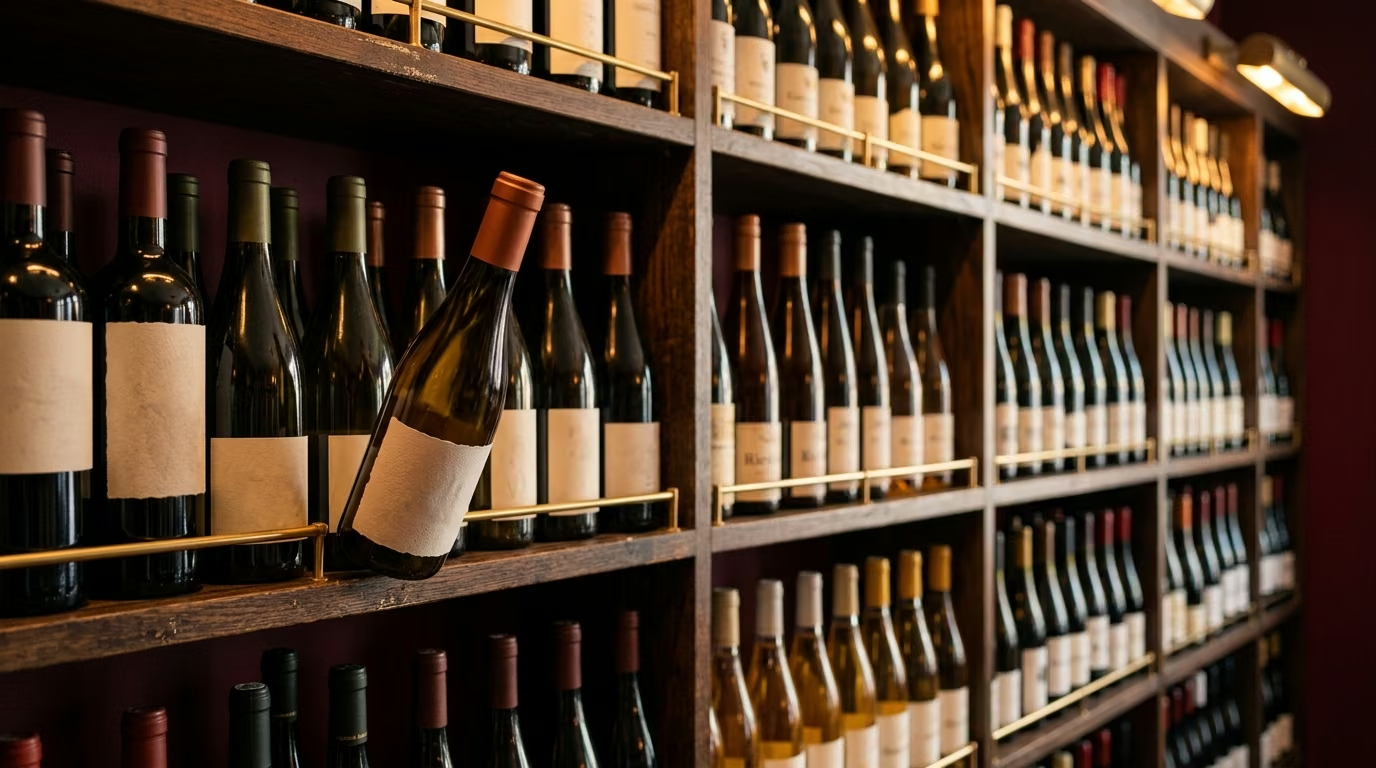
The wine wall that looked like static at the start of this article doesn't get smaller, but your slice of it does. That's the honest description of what an AI wine assistant does for you: it doesn't make you an expert, and it doesn't need to, because it turns a wall of unfamiliar labels into a short list you can trust and gets sharper every time you tell it something true.
Start by rating ten wines you already have opinions about, including the ones that disappointed you. Use it in the three places decisions actually happen, which are the restaurant, the shop, and your own kitchen. Treat the early recommendations as a rough draft, keep feeding it, and give it a couple of months before you judge it. If you'd like ours to be the one you try, Sommy is built around exactly that loop.