
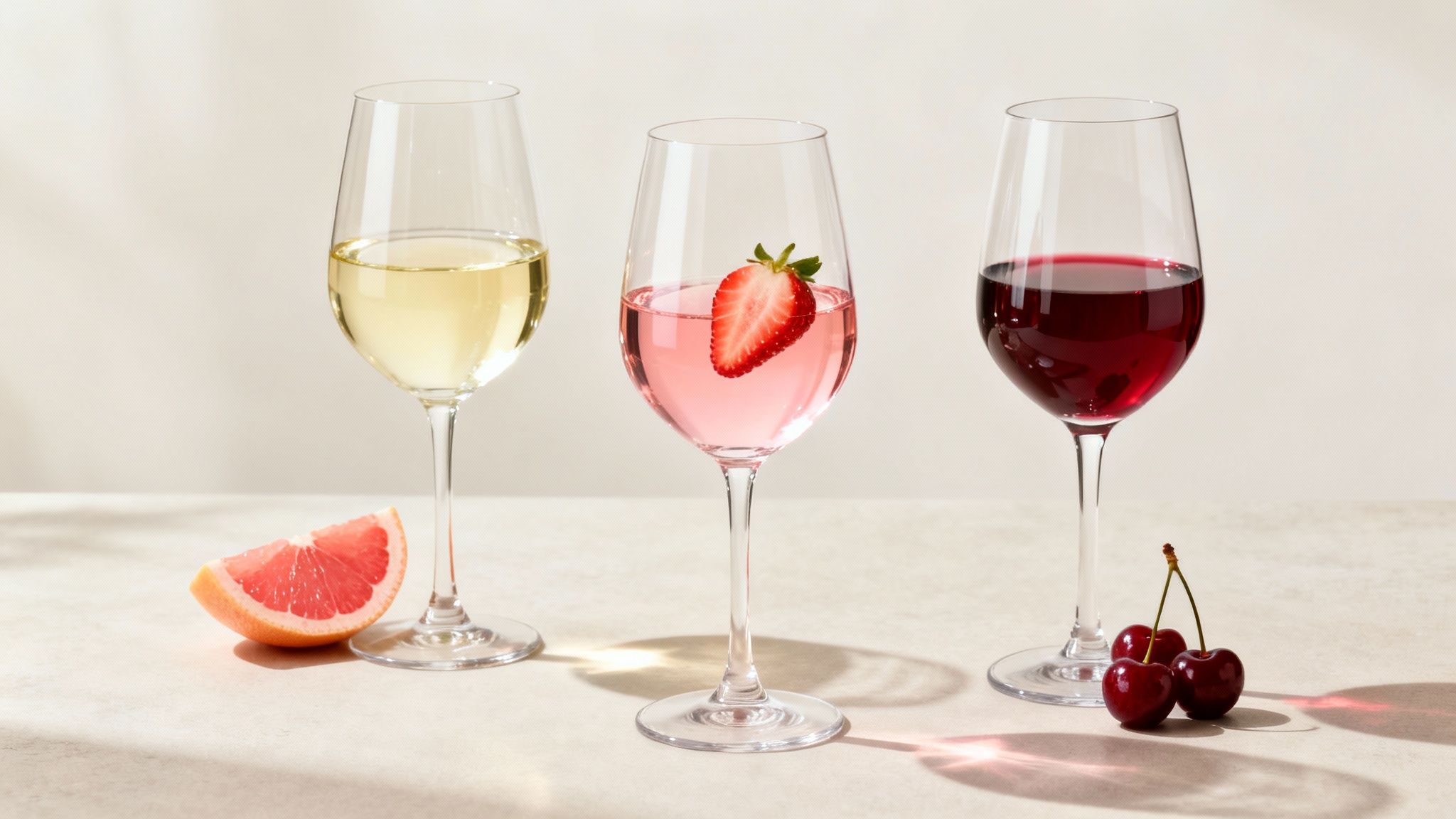
The best fruity wines deliver vibrant fruit flavors without necessarily being sweet. Top examples include Sauvignon Blanc (grapefruit notes), Beaujolais (fresh cherry), and dry Rosé (strawberry). A wine's fruitiness comes from aromatic compounds in the grapes, enhanced during fermentation, while sweetness comes from residual sugar. This distinction is key to finding wines you will love.
What Defines the Best Fruity Wines
In the context of wine, "fruity" and "sweet" describe different characteristics. Fruity refers to the aromas and flavors derived from the grapes, such as citrus, berry, or tropical fruit notes. Sweetness, however, refers to the literal taste of residual sugar on the palate.
A wine can be high in fruit character but be completely dry (not sweet). For example, a crisp green apple has a distinct fruit flavor but is tart, not sugary. This is the same principle that applies to wine.
A wine's fruitiness originates from aromatic compounds within the grapes, which our brains interpret as familiar fruit scents and tastes. These can range from lemon in a Pinot Grigio to blackberry in a Zinfandel. Sweetness is determined by the amount of sugar left after fermentation. A wine can be bone-dry and still be bursting with fruit character.
Fruity vs Sweet Wine At a Glance
Understanding this difference is crucial for navigating wine selections. It allows you to move beyond the sweet wine category and explore a wider variety of styles. This is a common point of confusion for those new to wine, but mastering it makes wine tasting more rewarding. For a deeper analysis of these concepts, explore our guide on the best wine for beginners.
This table provides a direct comparison:
| Characteristic | Fruity Wine | Sweet Wine |
|---|---|---|
| Primary Sensation | Aroma and flavor profile, such as the smell of fresh pineapple or berries. | A physical taste sensation of sugar on the tongue. |
| Source of Flavor | Grape variety, climate (terroir), and winemaking techniques. | Unfermented grape sugar remaining in the finished wine. |
| Sugar Level | Can be dry (low sugar) or have some sweetness. | Always has a noticeable, measurable amount of residual sugar. |
| Example | A dry Sauvignon Blanc with intense grapefruit and passionfruit notes. | A dessert wine like Port or a late-harvest Riesling. |
This table clarifies the distinction: fruity is what you smell and taste; sweet is what you feel on your palate.
Why This Matters for You
Grasping this difference enables you to make more precise requests, such as asking for a "fruity but dry red wine." This ensures you receive a wine with prominent cherry and raspberry flavors but without cloying sweetness.
This knowledge also empowers you to interpret wine labels and menus effectively. Instead of guessing, you can identify grape varieties known for fruit-forward profiles or look for tasting notes that mention specific fruits. This shift in understanding simplifies the process of discovering new wines.
What Actually Makes a Wine Fruity?
A wine's fruity character is not an artificial additive but a natural result of compounds in the grapes that are expressed during the winemaking process. The best fruity wines achieve a balance between fruit expression and structure, resulting in a refreshing profile that can be dry or slightly sweet.
The factors that determine a wine's fruitiness can be categorized into three main areas: the grape variety, the growing environment (terroir), and the winemaker's decisions.
A grape variety contains a specific set of flavor precursors. For example, Sauvignon Blanc grapes naturally contain compounds that produce grapefruit and passionfruit aromas. Gamay grapes are genetically predisposed to yield notes of cherry and raspberry. These are known as primary aromas and form the basis of a wine's fruit profile.
The Role of Terroir and Climate
Terroir is a term that encompasses the entire environment in which grapes are grown, including soil, topography, and climate. It significantly influences the final fruit character of the wine.
Warmer climates, such as those in parts of California or Mendoza, Argentina, allow grapes to achieve full ripeness, developing rich, jammy fruit flavors. A Zinfandel from a warm climate might taste of blackberry jam, while a Chardonnay could exhibit notes of baked apple and pineapple.
Conversely, cooler climates, like those in Germany or northern France, produce grapes with higher acidity and more delicate fruit notes. A cool-climate Riesling might have prominent green apple and lime flavors, while a Pinot Noir could offer tart cranberry and sour cherry notes.
A general principle is: More sun often means riper, bolder fruit flavors. Grapes grown in sunny conditions accumulate more sugar, leading to richer, more tropical fruit profiles. Grapes from cooler climates retain more acidity, resulting in zesty, citrus-forward wines.
This knowledge allows you to predict a wine's style based on its origin. A Malbec from sunny Mendoza will typically be fruitier and more plush than one from a cooler, high-altitude vineyard.
How Winemaking Enhances Fruitiness
Winemakers use various techniques to accentuate a wine's natural fruit characteristics. Key decisions during the production process can amplify or subdue the fruit profile.
Common techniques to boost fruitiness include:
- Fermentation Temperature: Fermenting white wines at cooler temperatures helps preserve delicate floral and fruit aromas that would otherwise volatilize. This is why many crisp white wines are highly aromatic.
- Yeast Selection: Winemakers can select specific yeast strains that are known to produce more esters, the compounds responsible for many fruity and floral aromas. Certain yeasts can enhance notes of banana or pineapple, while others can boost red berry scents.
- Minimal Oak Influence: While oak aging adds complexity (e.g., vanilla, spice), it can sometimes overshadow a wine's primary fruit flavors. To maintain a fruit-forward profile, many winemakers use stainless steel tanks or neutral oak barrels that do not impart strong flavors.
The interplay between the grape, its environment, and the winemaking process creates the vast diversity of fruity wines available. It also explains how a wine can be intensely fruity without being sweet. To learn more, our article on dry vs sweet wine provides a detailed breakdown.
Exploring the Spectrum of Fruity Wines
Fruit-forward profiles are found across all wine categories, including white, red, rosé, and sparkling wines. Familiarity with the grape varieties known for these vibrant characteristics is the first step toward confidently selecting a bottle you will enjoy.
The global demand for expressive, accessible wines is growing. The market for fruit-flavored wines was valued at approximately USD 12 billion in 2023 and is projected to reach nearly USD 20 billion by 2032. This trend indicates a strong consumer preference for beverages with distinct, appealing flavors. You can explore more about this market growth to understand the drivers behind it.
The infographic below illustrates the three primary sources that contribute to a wine's flavor profile.
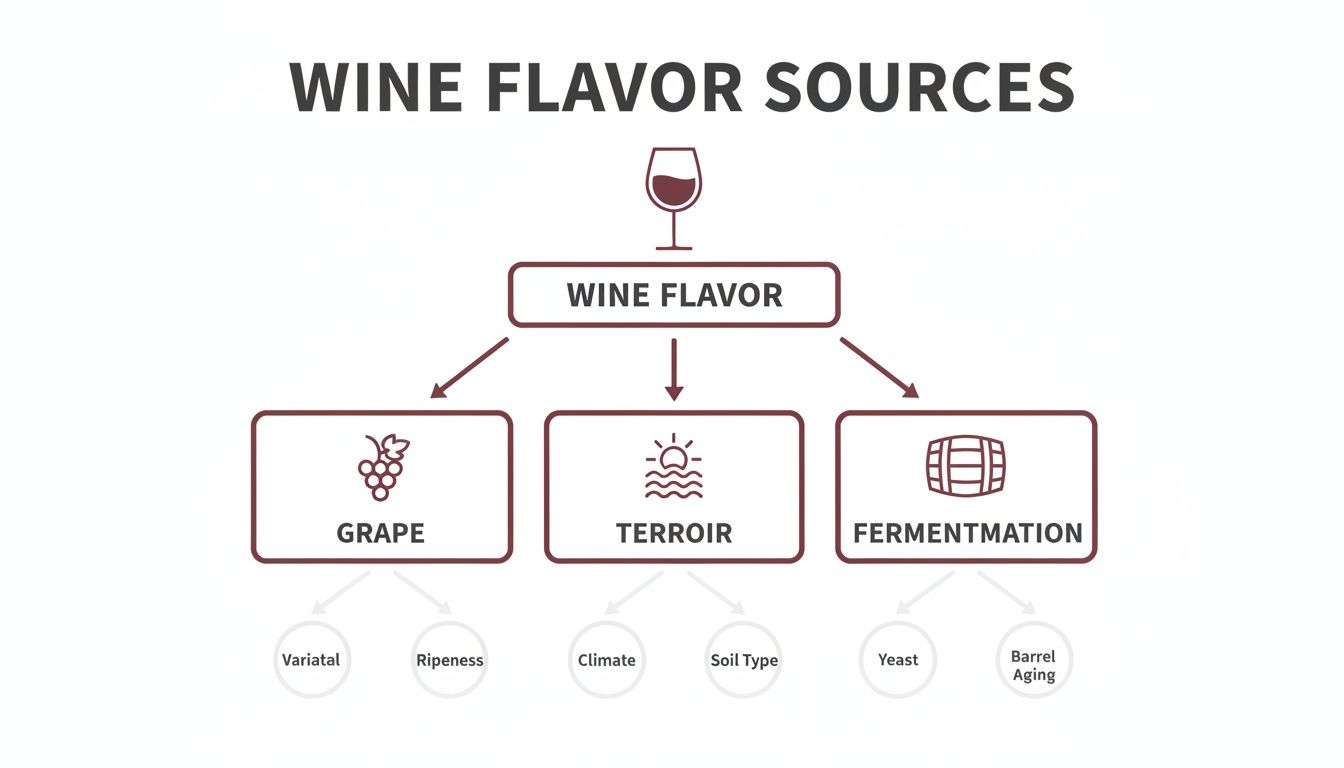
As shown, a wine's final character is a result of the grape variety, the terroir, and the winemaker's interventions.
Bright and Zesty White Wines
Fruity white wines are often characterized by their light body, refreshing acidity, and notes of citrus, stone fruit, or tropical fruit.
Key grape varieties include:
- Sauvignon Blanc: A globally popular grape known for its zesty notes of grapefruit, lime, and passionfruit, particularly from cooler regions like Marlborough, New Zealand.
- Albariño: A crisp, aromatic variety from Spain, featuring flavors of apricot, green apple, and a distinct citrus-peel finish.
- Gewürztraminer: Known for its intense aromatics, this grape offers notes of lychee, rose petals, and ginger. It can be powerfully fruity while remaining completely dry.
- Riesling: A versatile grape that can range from dry to sweet, almost always displaying bright fruit flavors like green apple, peach, and lime.
Juicy and Approachable Red Wines
Fruity red wines are typically lighter in body with smooth tannins and prominent fresh berry flavors. They are versatile for food pairing and serve as an excellent introduction to red wines that are vibrant rather than heavy.
It is a misconception that all red wines are heavy and tannic. Many popular red wines are celebrated for being light, bright, and fruit-forward. The key is to know which grape varieties to select.
These varieties consistently produce a fruit-forward style:
- Gamay: The grape behind Beaujolais, known for its exuberant flavors of sour cherry, raspberry, and sometimes banana. It is light-bodied with low tannins and is best enjoyed young.
- Pinot Noir: While capable of great complexity, Pinot Noir often displays elegant notes of fresh strawberry, red cherry, and raspberry with a silky texture.
- Zinfandel: Particularly from California, Zinfandel is known for its bold, jammy fruit profile, including blackberry, blueberry, and ripe strawberry, often with a peppery finish.
Refreshing Rosé and Sparkling Wines
Rosé and sparkling wines are often designed to be fruity. Their production methods are focused on preserving the fresh, primary fruit characteristics of the grapes.
A quality dry Rosé, especially from Provence, offers delicate flavors of strawberry, watermelon, and redcurrant with a crisp finish.
Sparkling wines like Prosecco provide lively notes of green apple, pear, and honeydew melon, enhanced by carbonation. Even dry Champagne often exhibits subtle hints of lemon, white cherry, and apple, demonstrating that fruity notes are fundamental to nearly every wine style.
How to Taste and Describe Fruity Flavors
Transitioning from simply drinking wine to actively tasting it involves a structured approach to engaging your senses. This practice helps you identify a wine's full fruit profile and build a mental library of your preferences, making it easier to find the best fruity wines in the future.
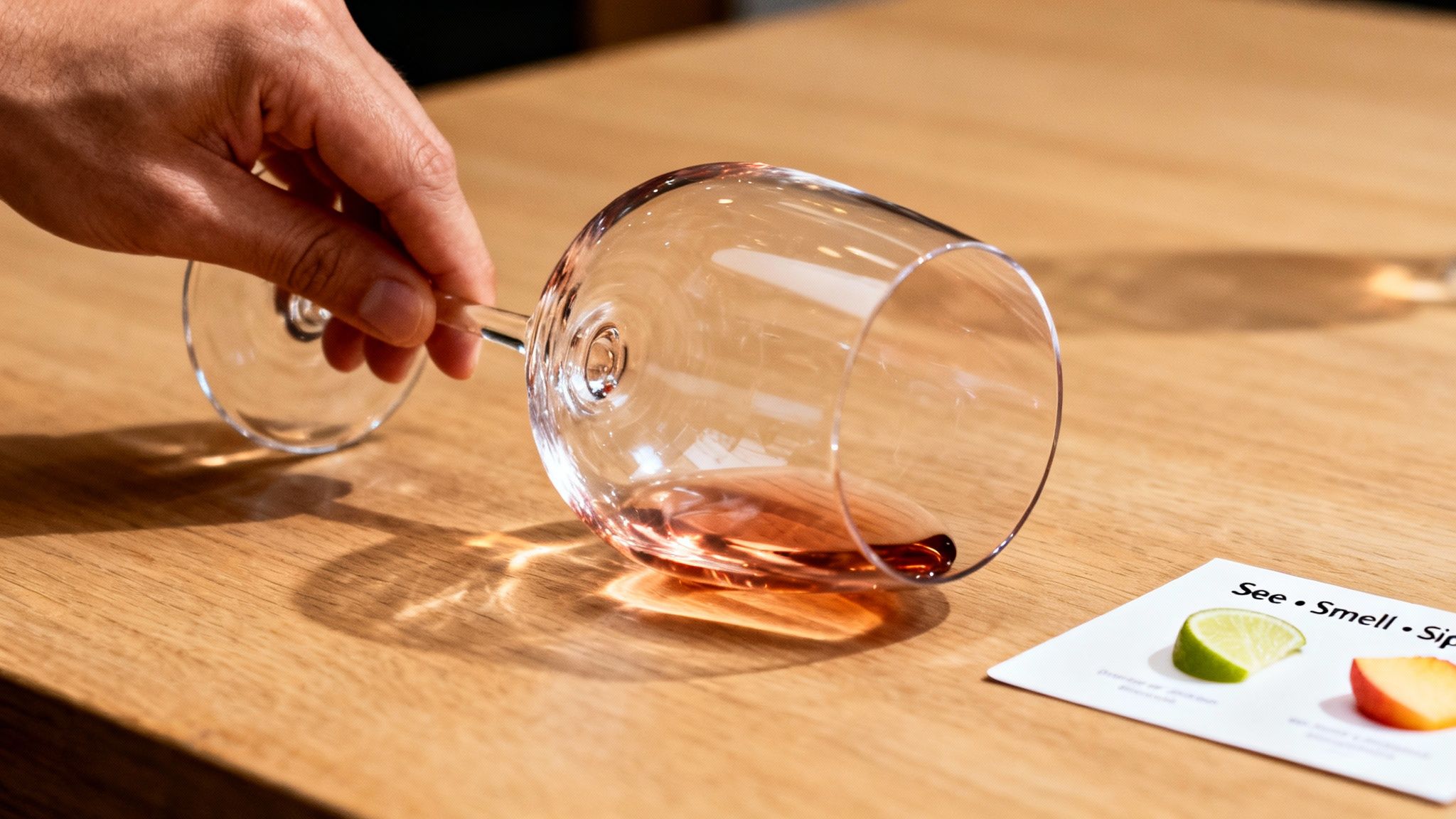
A simple three-step process (see, smell, and sip) can reveal clues about the wine's character and help you pinpoint specific fruit notes.
Step 1: See the Clues in the Glass
Visual assessment can provide initial information about a wine.
Tilt the glass against a white background. The wine's color can indicate its age and concentration.
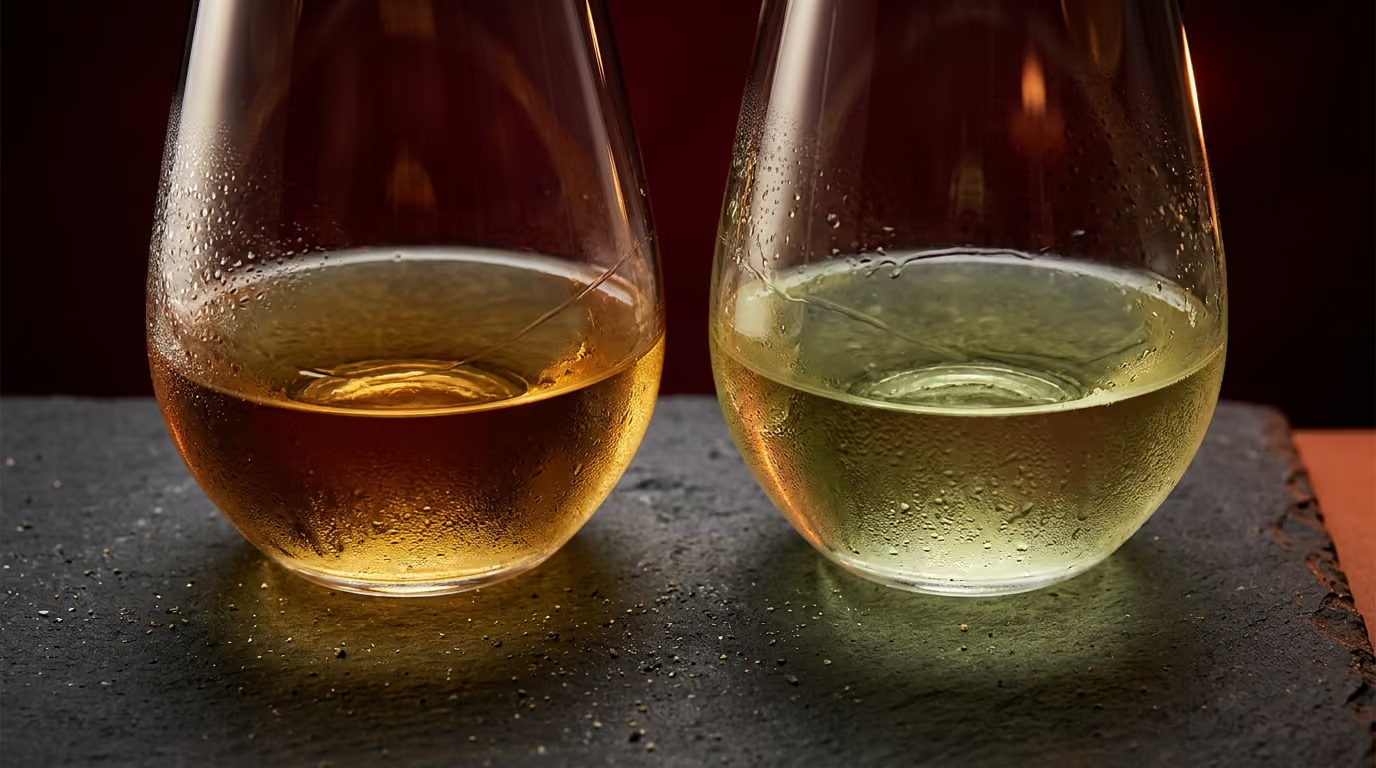
For white wines, a pale, greenish hue often suggests a young, zesty wine with notes of lime or green apple. A deeper golden color may point to a richer, riper wine with flavors like pineapple or baked pear.
Similarly for red wines, a vibrant ruby color often signals fresh red berry flavors, while a purplish tint can indicate darker fruits like plum or blackberry.
Step 2: Smell the Aromas
The sense of smell is the most critical tool for wine tasting, as up to 80% of what we perceive as "taste" is derived from aroma.
Gently swirl the wine in the glass to increase its surface area and release aromatic compounds. Place your nose in the glass and inhale deeply.
The initial aromas are often the most revealing. Attempt to identify specific fruit categories. Is it citrus (lemon peel), tropical (mango), red fruit (strawberry), or dark fruit (black cherry)?
This step involves making connections between scents and your memory. With practice, identifying specific aromas becomes faster and more accurate.
Step 3: Sip and Savor the Flavors
Finally, take a small sip and allow the wine to coat your entire mouth. As you taste, consider whether the flavors align with the aromas you detected.
A useful technique is to draw a small amount of air into your mouth while the wine is on your palate. This process, called retro-nasal olfaction, helps release more aromatic compounds and intensifies the fruit flavors, turning a general "berry" sensation into a distinct note of raspberry jam.
Developing a descriptive vocabulary is key to remembering your preferences. Use a simple framework:
- Fruit Type: Is it citrus, orchard, tropical, red, or black fruit?
- Fruit Condition: Is the fruit ripe and jammy, or is it tart and underripe (e.g., fresh strawberry vs. strawberry candy)?
- Acidity: Does the wine cause your mouth to water? High acidity can enhance fruit flavors and make a wine feel vibrant.
Using a wine tasting notes template can help structure your observations and build a personal log of your tasting experiences, making it easier to recall wines you have enjoyed.
How to Pair Fruity Wines with Food
Pairing fruity wine with food is about creating balance, where both the wine and the dish are enhanced. The principles are straightforward and do not require a complex set of rules. For example, a zesty Sauvignon Blanc can cut through a rich cream sauce, while a juicy Beaujolais complements savory roasted chicken.
Matching Weight With Weight
The most fundamental guideline is to match the wine's body with the food's weight.
A light-bodied, fruity white wine like Pinot Grigio, with its delicate green apple and citrus notes, pairs well with lighter dishes such as grilled fish, fresh salads, or shrimp scampi. Its crispness cleanses the palate without overpowering the food's subtle flavors.
Conversely, a full-bodied, fruity red like a California Zinfandel requires a dish with comparable intensity. Its flavors of blackberry, cherry, and spice are a good match for hearty meals like BBQ ribs, burgers, or spicy sausages.
Using Acidity and Fruit to Your Advantage
Acidity in wine is a key element in food pairing, particularly with rich or fatty dishes. A wine with high acidity, such as a dry Riesling, acts as a palate cleanser, cutting through richness and creating a balanced mouthfeel. This is why a crisp Sauvignon Blanc is a classic pairing for goat cheese.
The fruit flavors in wine can either complement or contrast with the food. A Gamay with red berry notes complements the flavors of roasted poultry. In contrast, a white wine with tropical fruit notes can provide a striking contrast to a spicy Thai curry.
Exploring both complementary and contrasting pairings is a way to discover new flavor combinations. For more advanced strategies, our complete guide on how to match wine with food offers additional tips.
Fruity Wine and Food Pairing Cheat Sheet
This table offers reliable pairings for popular fruit-forward wine styles.
| Wine Style | Tasting Notes | Pairs Well With |
|---|---|---|
| Sauvignon Blanc | Grapefruit, Lime, Passionfruit | Grilled fish, goat cheese, green vegetables, and herb-driven sauces. |
| Dry Riesling | Green Apple, Peach, Lime | Spicy Asian cuisine, pork dishes, and roasted chicken. |
| Gamay (Beaujolais) | Cherry, Raspberry, Cranberry | Roasted turkey, charcuterie boards, mushroom dishes, and baked ham. |
| Dry Rosé | Strawberry, Watermelon, Citrus | Light salads, grilled seafood, Mediterranean dishes, and picnic fare. |
| Prosecco | Green Apple, Pear, Honeydew | Appetizers, cured meats, fried foods, and light pasta dishes. |
Use this as a starting point for experimentation. The best pairing is ultimately a matter of personal preference.
Never Forget a Great Fruity Wine Again
You now have a framework for identifying, tasting, and pairing fruity wines. However, retaining this information when faced with a wide selection can be challenging. A tool like a personal wine assistant can act as a digital memory, helping you recall past experiences and make confident choices.
For example, an AI assistant like Sommy can help you apply your knowledge practically, ensuring you remember wines you enjoyed and avoid those you did not.
Instantly Decode Any Wine Label
A wine label scanner can provide immediate information about a wine's taste profile. By pointing your phone's camera at the label, you can access a breakdown of its dominant fruit notes, acidity, and body. This is particularly useful when exploring unfamiliar wines, offering a clear profile that is often more specific than the back label description. This functionality provides on-demand information, similar to having a sommelier available for consultation.
Fine-Tune Your Personal Taste Profile
An AI assistant can learn your preferences over time. Each time you scan a bottle or record a note, the system refines its understanding of your taste. If you prefer jammy Zinfandels over tart Gamays, you can adjust your preferences to create a personalized recommendation engine.
- Rate wines: Simple ratings build a history of your tastes.
- Specify flavor notes: Indicate preferences for certain fruit profiles (e.g., tropical fruit) and aversions to others (e.g., green apple).
- Set your budget: Ensure recommendations align with your spending habits.
This feedback loop results in increasingly accurate suggestions tailored to your specific palate.
Build Your Personal Wine Journal
A wine journal is an effective tool for developing your palate and knowledge. It serves as a personal database of every wine you have tried, turning passive consumption into active learning.
Maintaining a simple journal is the fastest way to accelerate your wine education. You begin to connect grape varieties, regions, and the flavors you enjoy most.
Your journal can capture key details:
- Wine name and vintage.
- Your tasting notes (e.g., "bright raspberry, a little bit of spice").
- A photo of the label for easy recall.
- Contextual information, such as the location and occasion.
This feature makes it easy to recall a specific wine you enjoyed months ago, removing the pressure to memorize every detail. With the right tools, finding the best fruity wines becomes a streamlined process. Your next great bottle is always just a quick search away at https://www.sommy.ai.
A Few Final Questions About Fruity Wines
This section addresses common questions about fruity wines to clarify key concepts and help you navigate your selections with confidence. Remember the core principle: fruity does not mean sweet.
Are Fruity Wines Always Sweet?
No. This is the most common misconception. "Fruity" describes the aromas and flavors derived from the grapes and winemaking process. "Sweet" refers to the level of residual sugar in the wine. A wine can be completely dry (lacking perceptible sugar) while still being intensely fruit-forward. A New Zealand Sauvignon Blanc, with its notes of grapefruit and passionfruit, is a prime example of a dry, fruity wine.
What Are Some Good Fruity Wines for Beginners?
For those new to wine, it is best to start with wines made from expressive grape varieties where the fruit character is prominent and easy to identify.
Recommended starting points:
- For White Wines: A German Riesling (peach, apricot) or a New Zealand Sauvignon Blanc (passionfruit, lime). Both are highly aromatic and refreshing.
- For Red Wines: Gamay from Beaujolais, France, is a classic light, juicy red with cherry and raspberry notes. For a bolder option, an Australian Shiraz offers flavors of jammy blackberry and plum.
How Can I Tell If a Wine Is Fruity from the Label?
A wine label contains several clues. First, consider the grape variety. Grapes like Gamay, Zinfandel, Riesling, and Sauvignon Blanc are known for their fruit-forward characteristics.
Second, look at the region. Grapes from warmer climates tend to be riper and produce wines with more intense, concentrated fruit flavors. A California Zinfandel is a typical example.
The tasting notes on the back label are the most direct indicator. Phrases like "notes of black cherry and plum" or "aromas of green apple and citrus" signify a fruity wine.
For a more precise analysis, a tool like Sommy can scan the label and provide a detailed fruit profile, eliminating guesswork.
Finding that perfect bottle is easier than ever with Sommy. Use your phone to scan any wine label or menu for personalized recommendations that hit all your fruity notes. Discover your next favorite at https://www.sommy.ai.