
The best wines for beginners are gentle on the palate, moderate in alcohol, and full of familiar fruit flavors. Five reliable starters are Pinot Grigio, Merlot, Riesling, Grenache rosé, and Prosecco. Once you understand four simple things in every glass, sweetness, body, acidity, and tannin, you can walk into any shop and choose with confidence. This guide gives you quick picks, plain-English tasting rules, a first-tasting plan, and honest buying advice to get you sipping happily.
Five great wines to start with
Walking into a store can feel like facing a wall of unfamiliar labels. Start with a few approachable styles, get comfortable, then branch out. These five are easy to find, budget-friendly, and forgiving.
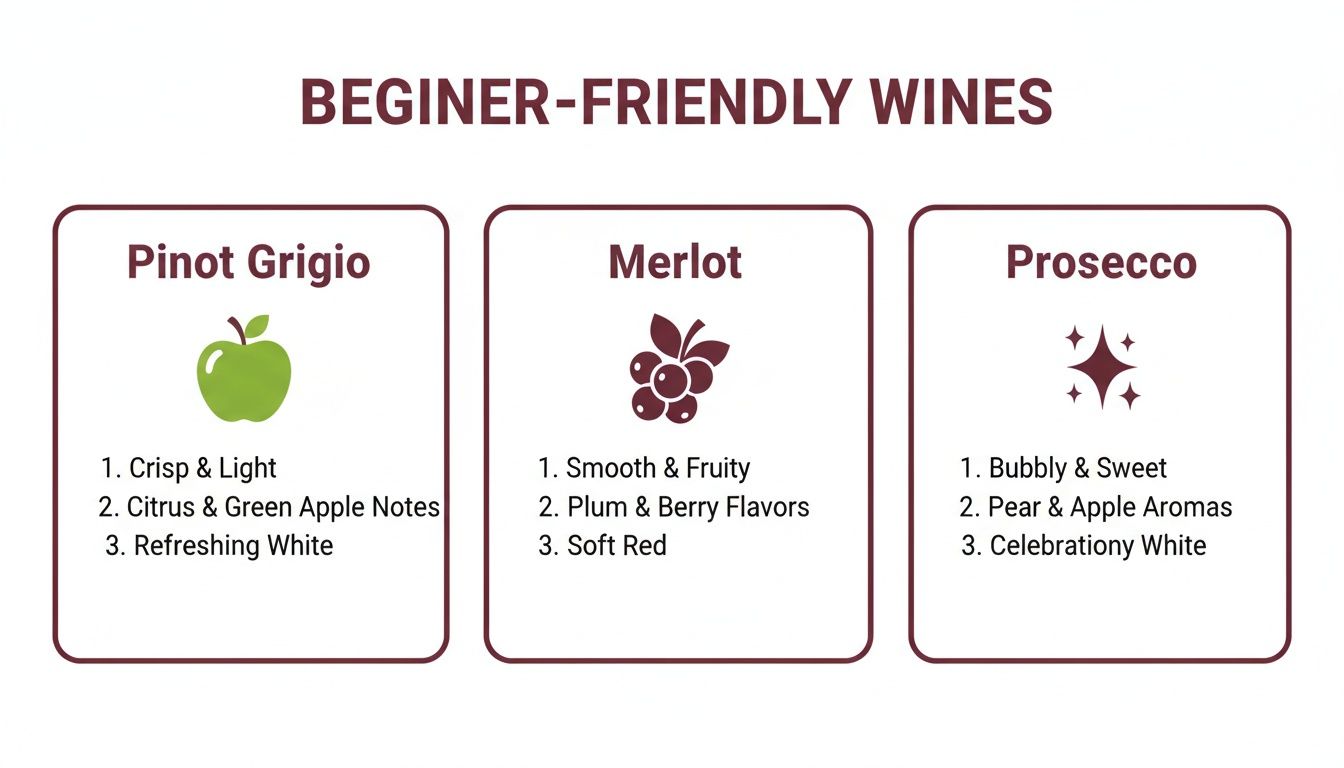
- Pinot Grigio: a crisp, light white with green apple and pear, very low tannin, easy to love.
- Merlot: a soft, plush red with berry fruit and gentle, rounded edges, the least intimidating red.
- Riesling: an off-dry white where juicy peach and apricot are lifted by bright acidity.
- Grenache rosé: a dry pink wine with strawberry and watermelon in a light, refreshing body.
- Prosecco: gentle bubbles with pear and apple, festive and forgiving.
Here they are side by side, so you can match one to your mood and budget in USD.
| Wine | Body | Sweetness | Alcohol | Price |
|---|---|---|---|---|
| Pinot Grigio | Light | Dry | 11 to 12% | $8 to $15 |
| Merlot | Medium | Dry | 13% | $10 to $18 |
| Riesling | Light | Off-dry | 9 to 12% | $10 to $18 |
| Grenache rosé | Light | Dry | 12 to 13% | $9 to $16 |
| Prosecco | Light | Off-dry | 11 to 11.5% | $12 to $20 |
Understand your taste: the four things in every glass
Every wine is a mix of four elements. Learn them and the labels start to make sense. The easiest way in is to tie each one to a flavor you already know.
- Sweetness is how much sugar is left after fermentation, from bone dry to dessert sweet. Think unsweetened iced tea versus lemonade.
- Body is the weight on your tongue. A light white feels like skim milk, a full red feels like cream.
- Acidity is the mouth-watering zing, like a squeeze of fresh lemon. It makes a wine taste crisp and refreshing.
- Tannin is the drying, slightly grippy feeling you get from strong black tea. It shows up mostly in reds and gives them structure.
Put them together and you can predict what you will like. If you enjoy unsweetened tea, a dry Sauvignon Blanc will feel right. If you love smooth hot cocoa, a plush Merlot with soft tannins fits. If you go for fruit-forward sweetness, an off-dry Riesling balances juice with zip. The fastest way to find your lane is simply to notice which of these you reach for again and again. Sommy's Taste Profile builds that picture for you as you rate a few bottles, so its recommendations get sharper the more you use it, but you can also just keep a note on your phone. For a hands-on start, see our guide to building your personal wine profile without the jargon.
The main kinds of wine you will see
Before the grapes, it helps to know the big buckets. Almost everything on a shelf falls into one of these, and knowing the category tells you roughly what to expect.
- White: made from green or yellow grapes, usually light and crisp, served chilled. The easiest entry point.
- Red: made from dark grapes with more body and tannin, served slightly below room temperature. Range from soft (Merlot) to bold (Cabernet).
- Rosé: made from red grapes with only brief skin contact, giving a pink wine that drinks like a fruity, refreshing white.
- Sparkling: any wine with bubbles, from everyday Prosecco to Champagne, crisp and celebratory.
- Dessert and fortified: sweeter, richer styles like Port or Moscato, best in small pours after a meal. You can save these for later.
For a beginner, the first four cover almost everything you will drink. Start there and treat dessert and fortified wines as a fun detour once your palate is warmed up.
The beginner-friendly grapes, a quick tour
You do not need to memorize hundreds of grapes. A short list covers most of what you will meet, and knowing each one's personality helps you choose fast.
Easy white grapes:
- Pinot Grigio: light, crisp, green apple and citrus, almost no oak.
- Sauvignon Blanc: zesty and herbal, with grapefruit and fresh-cut grass. Great if you like things tart.
- Chardonnay: the most flexible white. Unoaked versions taste bright and appley, while oaked ones feel richer, with vanilla and butter.
- Riesling: ranges from bone dry to sweet, so start with off-dry for peach, apricot, and lively acidity.
Easy red grapes:
- Merlot: soft, plush, blackberry and plum with gentle tannins.
- Pinot Noir: light-bodied, bright cherry, silky and food-friendly.
- Gamay: the grape in Beaujolais, juicy and low in tannin, lovely with a slight chill.
- Malbec: a smooth, fruit-forward red from Argentina with dark plum and a velvety feel, easy value around $12 to $18.
- Cabernet Sauvignon: the boldest of this group, with firm tannin and blackcurrant. Save it for when you are ready for more grip, ideally alongside a steak.
Rosé sits between white and red, with strawberry and watermelon and a refreshing lift, while sparkling wines like Prosecco and Cava add playful bubbles and green-apple crispness. If reds feel scary, our roundup of easy to drink red wines is a gentle on-ramp, and if you are still deciding between styles, red wine versus white wine lays out the differences.
Your first three bottles: a simple starting plan
If you want a concrete plan rather than a list, buy these three bottles on your next trip and taste them over a week. It is the quickest way to learn your own preferences without spending much.
- A crisp white: a Pinot Grigio or unoaked Chardonnay ($10 to $15). Notice how acidity makes your mouth water.
- A soft red: a Merlot or Malbec ($12 to $18). Notice how gentle tannin feels compared with strong tea.
- An off-dry white or a rosé: a Riesling or a dry Grenache rosé ($10 to $16). Notice whether you prefer a touch of sweetness or a bone-dry finish.
After these three, you will already know whether you lean crisp or smooth, dry or off-dry, white or red. That is the foundation, and every future bottle is just a variation on what you learned.
How to buy wine on a budget
Shopping for wine should not feel like cracking a code. The $10 to $20 range is the sweet spot for beginners: well above the thin, bargain-basement bottles, and well below the pricey names you are not ready to judge yet. Within that range, a few label clues point you toward quality.
- Estate bottled means one winery handled everything from grape to glass, a good sign of care.
- Region names like Marlborough (Sauvignon Blanc), Mendoza (Malbec), or Rioja (Spanish reds) each carry a recognizable flavor signature.
- Varietal labels that name a single grape, like Merlot or Pinot Grigio, keep things simple while you learn.
- Vintage year matters for freshness. For bright everyday wines, choose bottles from the last three to five years.
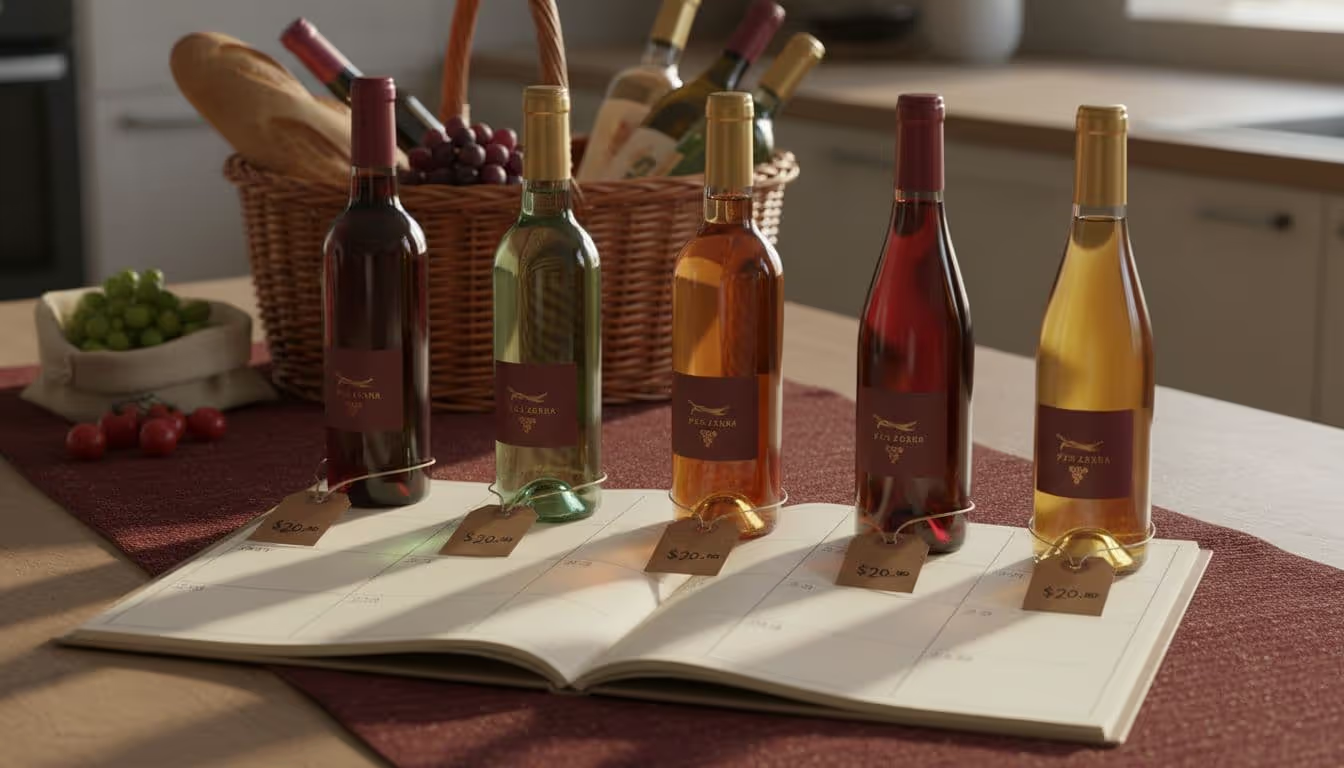
Do not be shy about asking a shop employee for help. Tell them your budget, what you are eating, and one wine you have enjoyed before, and they will point you to something good. For reliable options you can grab almost anywhere, our list of the best grocery store wines is a handy shortcut.
How to order wine at a restaurant
A wine list can feel more intimidating than a shop shelf, because someone is waiting for your answer. A few habits keep it calm. Give the server a short, honest brief: your budget, what you are eating, and one style you like. Something like "a crisp white around $12 a glass to go with the fish" is all a good server needs, and naming a number out loud is completely normal.
If you would rather not ask, scan the list for the friendly grapes you already know from this guide: Pinot Grigio, Sauvignon Blanc, Merlot, Pinot Noir, or a rosé. Ordering by the glass is smart while you are learning, because it lets you try two different styles in one meal for the price of a bottle. And if a wine arrives that you do not love, that is useful information, not a failure. Note what put you off and steer around it next time.
How to taste wine, in four easy steps
Tasting is not a test. A simple ritual helps you notice more and remember what you liked.
- Look: hold the glass to the light and note the color and depth. It is a small habit that gets you paying attention.
- Smell: give it a gentle swirl, then sniff. Most of what we call flavor is actually aroma, so this step matters more than people expect.
- Taste: take a slow sip and let it cover your tongue. Notice sweetness first, then the zing of acidity, then whether a red leaves that drying tannin grip.
- Pair: think of weight like clothing. Light wines suit salads and seafood, medium wines suit chicken and pasta, and bold reds stand up to steak.
| Wine type | Food match | Why it works |
|---|---|---|
| Light white | Seafood, salads | Delicate flavors stay balanced |
| Medium red | Chicken, pasta | Soft tannins do not overwhelm |
| Bold red | Steak, stews | Rich texture holds its own |
| Rosé or sparkling | Appetizers, spicy food | Refreshing and versatile |
Common beginner mistakes to skip
A few easy fixes make wine more enjoyable from the start.
- Serving everything too warm or too cold. Straight-from-the-fridge whites taste muted, and room-temperature reds taste heavy in a warm kitchen. Whites and rosés shine at 45 to 55 degrees Fahrenheit, reds at 55 to 65.
- Assuming pricier means better. Plenty of $12 bottles outperform $40 ones, especially for everyday drinking. Taste, do not spend, your way up.
- Starting with the boldest reds. A big, tannic Cabernet is a tough first date. Begin soft with Merlot or Pinot Noir.
- Thinking you need to detect twenty flavors. If you can say fruity, crisp, smooth, or sweet, you already have the vocabulary that matters.
Frequently asked questions
What makes a wine beginner-friendly?
Balanced acidity, moderate alcohol, and smooth, low tannins. Those traits make a wine easy to sip on its own, without the grip or heat that can put new drinkers off. Pinot Grigio, Merlot, and off-dry Riesling all fit.
Should I start with white or red?
Whites and rosés often feel lighter and easier on a first taste, so many people begin there. If you prefer reds, start with soft ones like Merlot or Pinot Noir rather than a bold Cabernet. There is no wrong order, so follow your own taste.
How do I find a good beginner wine under $15?
Look to value regions and grapes like Malbec from Argentina, Grenache, or a Portuguese red, and ask a shop employee for a recommendation in your price range. Our guide on dry versus sweet wine helps you say what you want.
How should I store and serve wine?
Keep bottles in a cool, dark spot. Chill whites and rosés to 45 to 55 degrees Fahrenheit and reds to 55 to 65, and give a red a few minutes of air after opening. That is all most everyday wine needs.
Is it okay to like sweet wine?
Absolutely. Sweet and off-dry wines like Riesling and Moscato are a completely valid place to start, and plenty of lifelong wine lovers still enjoy them. Sweetness is a preference, not a beginner mistake. If you want to explore that lane, our comparison of Riesling versus Moscato is a good next read.
Do I need special glasses?
No. Any clean glass with a bowl you can swirl in will do to start. A basic all-purpose wine glass helps the aromas gather, but you do not need a cabinet full of shapes. Upgrade later only if you get curious.
How long does an open bottle last?
Recork it and refrigerate, and most wines stay good for three to five days. Sparkling wine fades fastest, so drink it within a day or two, ideally with a stopper. When in doubt, a wine that has lost its fresh fruit is past its best but not unsafe.
Conclusion
Getting into wine is not about memorizing regions or scores. Start with a few forgiving bottles, pay attention to sweetness, body, acidity, and tannin, and notice what you reach for again. Your taste is the only expert that matters, and it sharpens fast once you start paying attention.
If you want a shortcut while you learn, you can ask Sommy for beginner-friendly picks matched to your taste and budget, so your next bottle is a little easier than the last.