
To order wine at a restaurant, tell the server three things: what you're eating, how you want the wine to feel, and the price range you want to stay inside. That single sentence does more for you than any amount of memorized grape names, because it hands the person with the wine knowledge everything they need to narrow a long list down to two or three bottles you'll actually enjoy.
Most people freeze at the wine list because the decision feels public and rushed, not because they lack knowledge. What follows is the sequence that removes the guesswork, from reading the list to saying the words out loud.
Why does ordering wine at a restaurant feel so hard?
You sit down, the menu lands, and then the wine list shows up like a small novel.
A lot of smart people freeze right there. They don't want to look uninformed, overspend, or order something that clashes with dinner. That reaction is normal. Wine often feels hard because the decision is public and fast.
A big reason is that restaurant choices often lean on familiar prestige names. Safe labels make people feel protected. They don't always make the choice more personal.
Good wine recommendations aren't about proving you know wine. They're about lowering the chance of regret.
That changes the question from "What should a knowledgeable person order?" to "What will I enjoy tonight?"
What usually doesn't work
A few habits make the moment harder:
- Scanning for the most famous bottle usually pushes you toward defaults, not preference.
- Asking for the best wine is too vague to be useful.
- Trying to decode every region and grape eats time and builds stress.
- Copying the table next to you might get you a good bottle, but not the right one.
What works better
Use a short decision process:
- Name the style you like
- Match it to the food
- Set a clear spending limit
- Ask for help in plain language
If you want a little help reading the list before you decide, Sommy's guide on how to read a wine list keeps the process simple.
You don't need to become a wine person tonight. You just need a few useful clues and a way to act on them.
How do you work out what you like before you order?
Most good wine recommendations get better when you stop describing wine with wine words.
You already know more than you think. You know whether you want something crisp or soft. You know whether you like fresh fruit flavors or darker, richer ones. You know whether you're in the mood for something easy or something more intense.
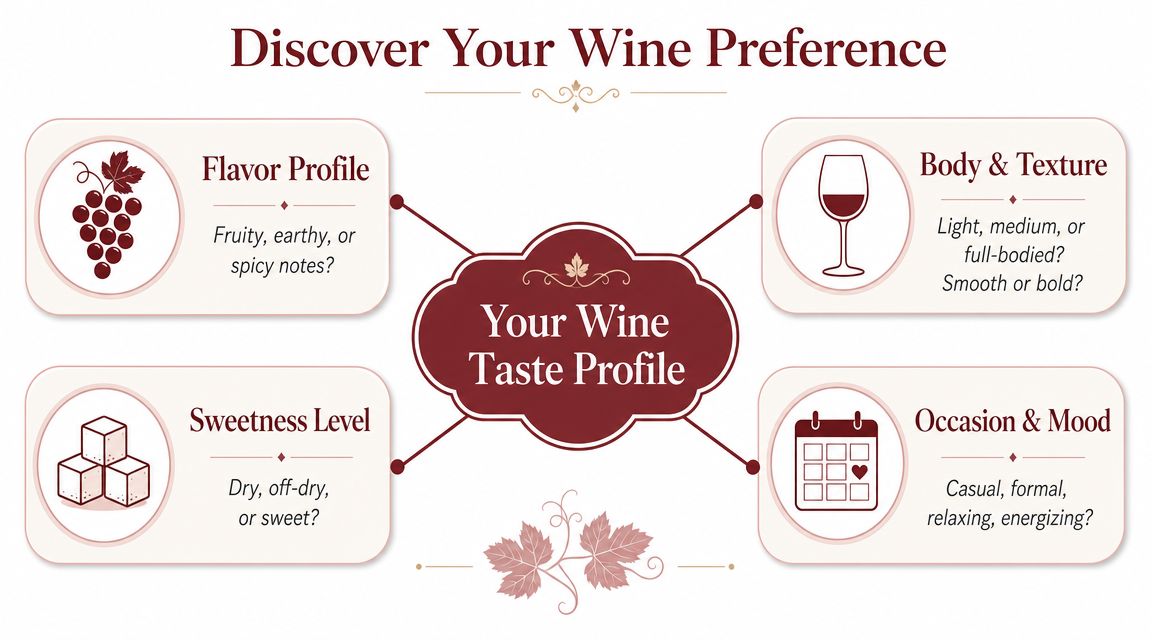
Professional wine tasting uses a structured process that breaks wine into objective clues like aroma, fruit profile, and structure. A simplified version built around 4 to 5 key preferences is an effective way for regular drinkers to get a good recommendation without formal training, as outlined in the Deductive Tasting Grid discussion.
Ask yourself these first
Start with plain questions:
- Color first
Do you want red, white, rosé, or sparkling? - Weight next
Do you want something light and refreshing, medium and easy, or fuller and richer? - Fruit level
Do you like brighter fruit flavors or something more savory and earthy? - Dry or a little soft
Do you want very dry, or do you enjoy a touch of softness? - Mood
Is this for a casual glass, dinner, a date, or a group meal?
Translate body into everyday language
"Body" sounds technical, but it isn't.
Think about milk:
- skim feels light
- whole milk feels fuller
- cream feels rich
Wine works the same way. If you don't want something heavy, say you want light or medium-bodied. If you want something with more weight, say you want fuller and richer.
Use simple taste phrases
You only need a short profile. Something like:
- Crisp, dry, light
- Smooth, medium, fruity
- Rich, bold, not too harsh
- Fresh, easy, not sweet
Practical rule: If you can describe your coffee order, cocktail preference, or favorite dessert, you can describe your wine taste well enough to get a useful recommendation.
A helpful next step is building a short taste profile you can reuse. Sommy has a clear primer on building your personal wine profile without fancy jargon.
What people get wrong
Many people jump straight to grape names or countries. That's often too narrow.
A better move is to say what you enjoy in the glass. Staff can work with that faster than a half-remembered label. So can an app, a friend, or your own notes.
When you know just a few things about your taste, good wine recommendations stop feeling mysterious. They become a matching problem. That's much easier to solve.
How do you match the wine to your meal and your budget?
You are sitting with a menu, the server is waiting, and one bottle that sounds impressive is twice the price of the others. The fastest way to make a good choice is to narrow the decision to two things first. What are you eating, and what do you want to spend?
A wine can be good and still feel wrong at the table. Guidance on wine service points out that food pairing and serving conditions change how a wine shows up in the glass, which is why meal-aware and budget-aware filtering works better in practice than chasing grape names alone (expert wine recommendation guide).
Match weight, not rules
Skip the old idea that every dish has one correct wine. Start with weight and intensity instead.
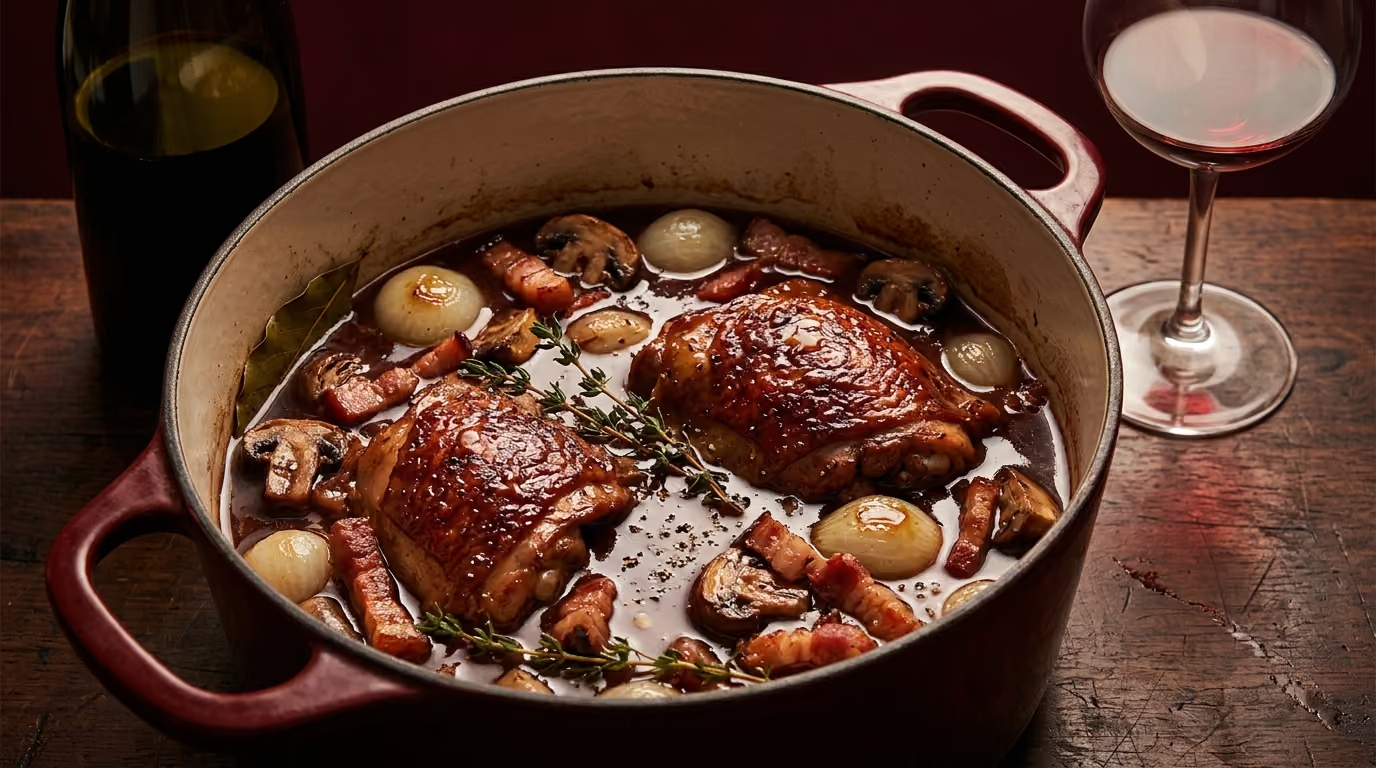
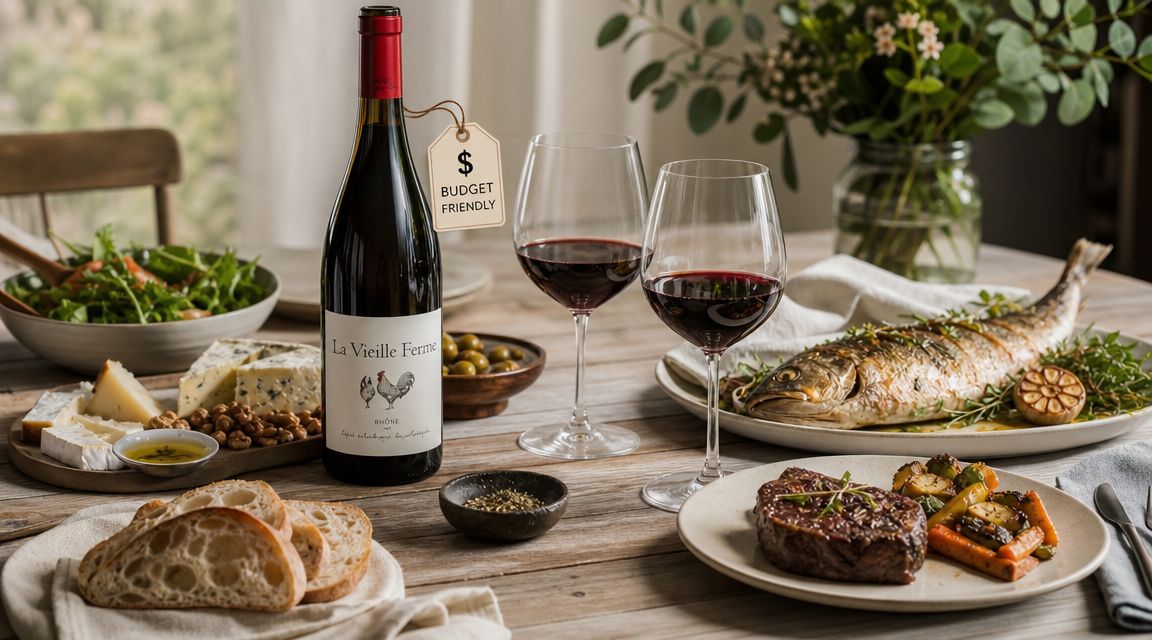
Lighter meals usually want a lighter touch in the glass. Fish, salads, simple chicken, and fresh pasta can feel crowded by a heavy, tannic red. Richer meals can handle more structure and more flavor. Steak, lamb, mushrooms, roasted dishes, and creamy sauces often need a wine with enough body to stay present.
Spicy food is its own case. High alcohol and aggressive tannin can make heat feel sharper, so softer styles usually give you a better result.
This is a trade-off, not a rulebook. A big wine can overpower a delicate dish. A very light wine can disappear next to a rich one. You are trying to keep one from drowning out the other.
Set your ceiling before you scan the list
Budget works best as a filter, not as an apology.
Pick your ceiling first. Then choose within that range as if those are the actual options, because they are. That keeps you from drifting toward the most expensive bottle just because it looks safer.
If you want a shortcut for spotting bottles that overdeliver for the price, Sommy has a practical guide to best value wine and liquor.
A quick visual guide can also help if you're making a dinner choice at home or in a restaurant.
Build one line you can actually use
Give yourself a short decision sentence before you order.
Medium-bodied red, smooth, not too heavy, for roast chicken, under my budget.
That is enough for a server, a shop employee, or an AI assistant to work from. Good wine recommendations get much easier once you turn the choice into a simple matching process.
How do you read the wine list without getting lost?
Nearly every restaurant list follows the same shape once you know to look for it, which means you can skip most of the page instead of reading it top to bottom. The list is almost always grouped by color first, then broken into styles running from lighter to fuller inside each group. When the list has nothing on it you want, the other route is to carry your own bottle in, which turns the question into whether the corkage fee beats the restaurant's markup.
Narrow it to one section before you read a single label
Decide whether you want red, white, or something sparkling before your eyes go anywhere near the individual bottles, because that one decision removes roughly two thirds of the page immediately. Within the section you've chosen, the wines are usually ordered from light to rich, so knowing you want something on the lighter end tells you which half to read.
Use the tasting notes as filters rather than descriptions
The short blurb under each wine is doing a job for you, and words like crisp, dry, smooth, or bold are the ones that matter while everything about terroir and vineyard history can be safely ignored at the table. Find two or three bottles carrying the words that match what you already know you like, and you have a shortlist without having recognized a single producer.
Say the budget without saying the number out loud
If you'd rather not announce a price in front of the table, point at a bottle sitting in the range you're comfortable with and tell the server you're looking for something along these lines. They understand exactly what that means, it happens constantly, and nobody at the table learns anything about your budget.
What should you say to the server or sommelier?
You are at the table, the server is waiting, and the wine list is longer than the food menu. The fastest way out of that moment is not wine knowledge. It is a clear request.
People who sell wine for a living are matching patterns under time pressure. Give them a few useful constraints, and the list gets smaller fast. Stay vague, and you usually get the safest, broadest answer.
What to say in a restaurant
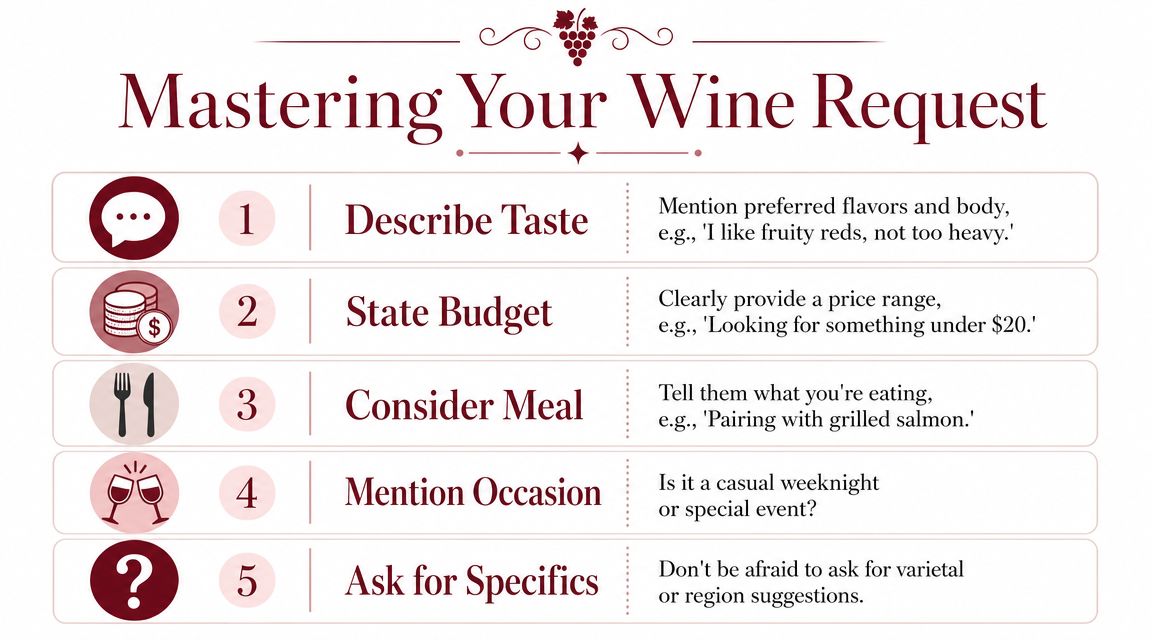
A good request has three parts. What you are eating, how you want the wine to feel, and what range you want to spend in.
Skip "What's your best red?" That question pushes the server toward their default pick, not your best fit.
Try language like this instead:
- For dinner
"I'm having the chicken. I like reds that feel smooth and medium-bodied. I'd like to stay around this price range." - For a lighter option
"I want a white that's crisp and dry, but not too sharp." - For a group
"We're sharing a few dishes. Can you suggest something flexible that works across the table?" - If you know one thing you dislike
"I want to avoid anything too heavy or too oaky."
One specific dislike can be as useful as a full preference. I use that trick often because people usually know what they do not want before they know the exact bottle they do.
Why specific requests work better
Good recommendations come from narrowing the decision, not from proving the wine is important. A bottle can be well made and still be the wrong call for your meal, your group, or your budget.
That is the trade-off. Broad requests feel easier to ask, but they often produce generic answers. Specific requests take five more seconds and usually save you from an expensive miss.
If you want help turning that process into a quick prompt, this guide to using an AI wine assistant for recommendations shows how to phrase the same request clearly.
Copy these lines
Use these as-is if you freeze up:
- "I want a red that's smooth, medium-bodied, and good with pasta."
- "Can you suggest a white that's fresh and dry for seafood?"
- "I'm buying for people with mixed tastes. Something easy and crowd-friendly would help."
- "I usually like softer wines. Can you point me away from anything too intense?"
Clear beats clever. Once you can ask for wine this way, getting a good recommendation becomes a repeatable process, not a test.
How do you get better at this after tonight?
A good recommendation gets easier after the second or third bottle, not because you learned wine terms, but because you started keeping track of your own reactions.
You can do that with a note in your phone. Save the bottle name if you have it. If you do not, save what you remember: crisp and dry, smooth and easy, too heavy, too sweet, great with pasta, bad with spicy food.

Keep a tiny record
A useful note has only three parts:
- What you drank
Bottle, menu item, or even just "red at Italian place" - How it felt
Light, smooth, fresh, rich, sharp, soft - Whether you'd want it again
Yes, no, or only with a certain meal
That is enough.
After a few entries, patterns start to show up without much effort. You might notice that you like lighter reds with dinner but richer ones on their own. You might find that "fresh" and "dry" keep showing up in the wines you finish, while "soft" and "sweet" show up in the ones you leave behind.
Why this builds confidence
The goal is not to build a wine education. The goal is to make the next decision faster and more accurate.
That small record gives you something concrete to use at a restaurant, in a shop, or with an AI assistant. Instead of starting from scratch, you can say, "I usually like crisp whites under $25," or "I want a red that feels smooth, not jammy." Those are useful inputs. They lead to better recommendations than asking for "something good."
A "no" is still useful data. Every bottle you dislike makes the next recommendation easier.
If you want a tool that keeps track of those shifts, Sommy explains the idea in what is PalateDrift and how Sommy tracks your evolving wine taste.
Good wine recommendations come from a repeatable process: notice what you liked, save it in plain language, and use that record the next time you need to choose.
Common questions about ordering wine at a restaurant
What should you say if you know nothing about wine?
Say precisely that, then add one thing you like and one number you want to stay under, because servers hear this every night and a request like a smooth red for the steak, somewhere around this price gets you further than any attempt to sound informed.
Is it rude to order the second cheapest bottle?
Nobody is judging you for it, though the more useful move is to name your ceiling and ask what performs best underneath it, since restaurants often place their strongest value somewhere in the middle of the list rather than at either end.
Should you order by the glass or by the bottle?
Order by the glass when people at the table want different things or you're only having one, and order the bottle once two or more of you are drinking the same wine, because the bottle is usually better value at that point. There's more on this in our guide to ordering wine by the glass.
What if the wine you ordered arrives and you don't like it?
A wine that is faulty can be sent back and any restaurant will replace it without argument, but a wine that is simply not to your taste is generally yours to keep, which is the best argument for describing what you want clearly before it gets poured.
If you want help choosing wine in the moment, Sommy.ai is built for exactly that kind of decision. You can scan a list, describe what you like in plain language, and get a recommendation without turning dinner into a wine exam.