Reach for a dry, medium-bodied red with bright fruit and lively acidity, and go easy on the tannin. Nero d'Avola from Sicily or a Chianti made from Sangiovese are the two easiest bottles to grab. When the sauce leans hard on anchovies and capers, a crisp white such as Falanghina can be even happier next to your plate. Skip the big, high-alcohol reds, because they make the chile taste hotter and the salty bits taste sharper.
That's the whole decision in a nutshell. The rest of this guide walks you through why the pick works, which reds and whites earn a place at the table, and how to order one without turning dinner into a quiz.
What wine pairs best with pasta puttanesca?
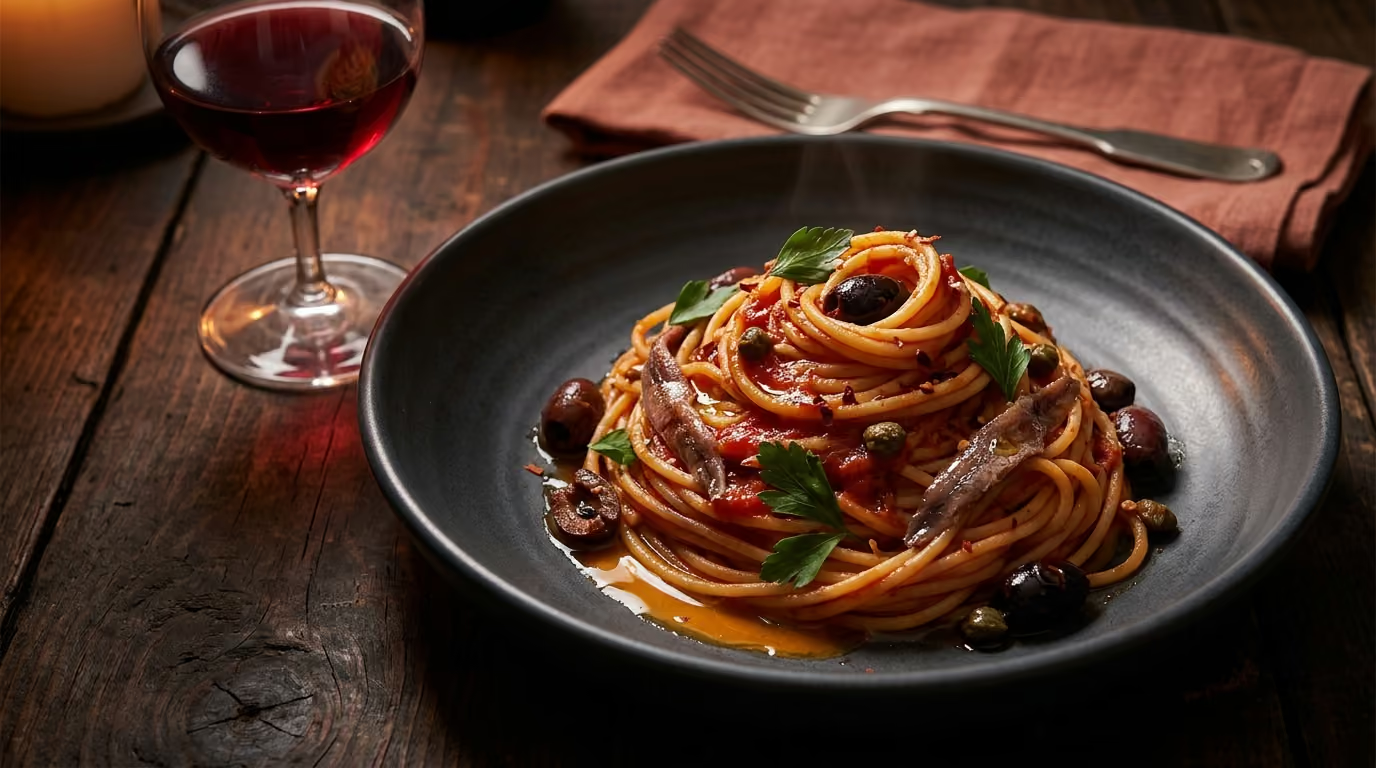
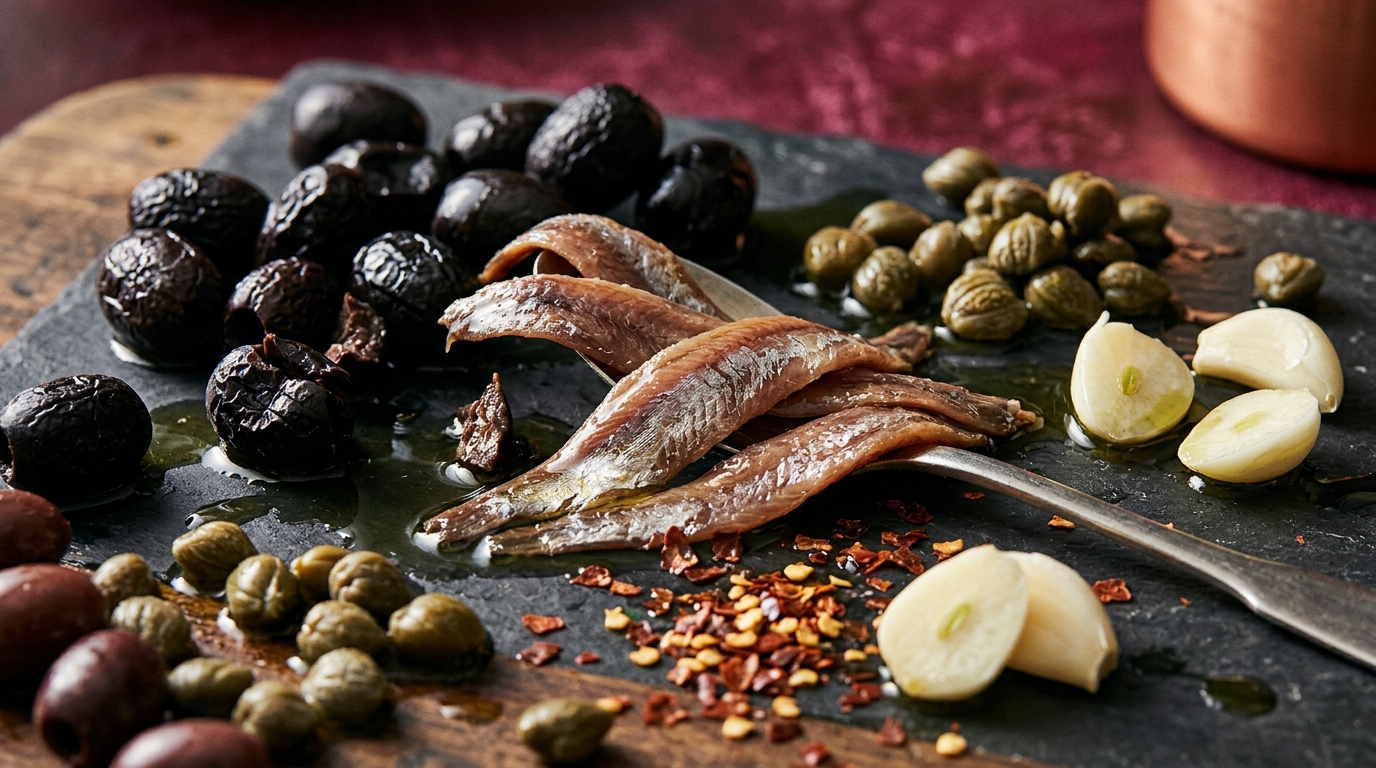
The best match for pasta puttanesca is a fresh, dry red that carries fruit and acidity without leaning on heavy tannin. Spaghetti alla puttanesca packs a tomato base with garlic, anchovies, capers, olives, olive oil, and red pepper flakes, so the wine has plenty of salt and tang to answer. A bottle with real freshness keeps every forkful awake, while a soft or sweet one just gives up next to all that punch.
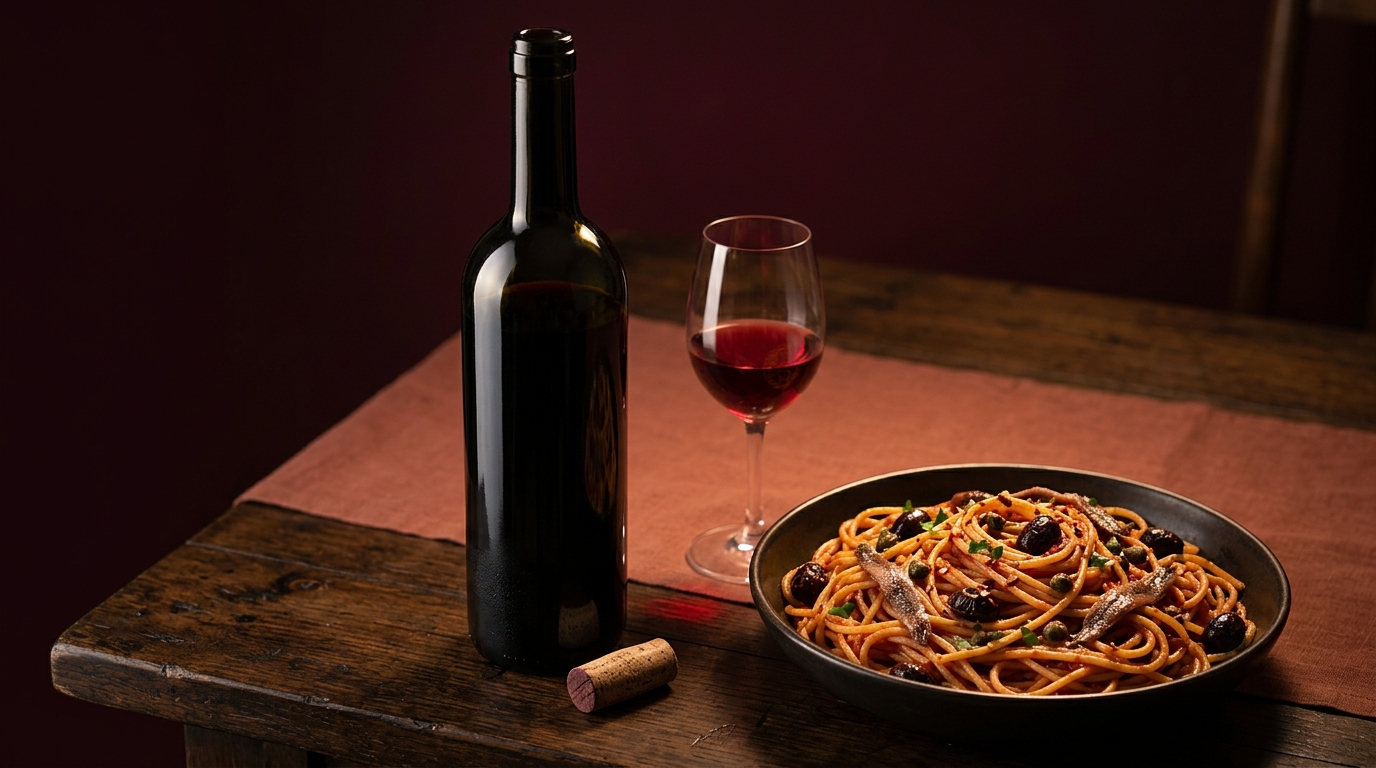
Nero d'Avola from Sicily is the friendliest place to start, because it brings dark cherry and plum fruit without the drying weight that flattens the pairing. A Chianti built on Sangiovese is the other reliable order, its tart cherry edge sitting neatly beside a tomato-led sauce. If you want a third option that almost never misses, Barbera gives you high natural acidity and low tannin, which is exactly what a briny, tangy plate wants.
One simple rule saves you every time. Match the wine to the intensity of the sauce, not to the color of the pasta. Spaghetti is traditional and bucatini catches the sauce in its hollow center, yet the shape doesn't change your bottle. A gentle version can happily take a crisp white, while a generous, chile-heavy version calls for a focused red with some acidity behind it.
Why do anchovies, capers, and chile change the bottle?
Anchovies, capers, and chile change the bottle because they load the dish with salt, brine, and heat that reshape how wine tastes in your mouth. Each of those flavors pulls the pairing in its own direction, so the bottle that flatters a mild tomato sauce can fall apart next to a fiery, fish-forward one. Reading those signals is most of the skill here, and it takes about ten seconds once you know what to look for.
Salt does something helpful and something tricky at the same time. It softens the bitterness and grip you notice in a tannic red, which is the rough, mouth-drying feeling you get from strong black tea. The catch is that puttanesca carries very little fat, so there's nothing to cushion a heavily tannic pour, and the salty fish can start to taste harsh instead. A red with gentle tannin sidesteps the whole problem.
Tomatoes bring acidity, and acidity wants a partner. A soft, low-acid red tastes flat and tired beside a sharp tomato sauce, while a brighter wine holds its shape because it meets the dish on the same level. There's a bit of olive oil in the sauce, and it does cushion the wine a little, yet it never coats your palate the way a cream or cheese sauce would, so the wine still needs its own freshness to carry the meal.
Chile is the last piece, and it matters more than people expect, since alcohol amplifies the burn of spicy food. A hot, high-alcohol red will taste peppery and warm next to red pepper flakes, so when the heat climbs, drop the alcohol and lean on fresher fruit. The reverse is true as well, and a version with barely any chile opens the door to riper, rounder bottles that would clash with a fierier plate. If you want the deeper logic behind moves like these, our guide on how to match wine with food covers the same principles across other dishes.
Which reds work, and which should you avoid?
The reds that work best are Southern Italian and other high-acid styles with soft tannin, and the ones to avoid are the big, oaky, high-alcohol bottles. Nero d'Avola leads the pack for a classic plate loaded with olives and capers, giving you ripe fruit and a savory edge without turning heavy. Chianti is right behind it whenever the sauce tastes tomato-forward and bright, thanks to the tart lift that Sangiovese brings.
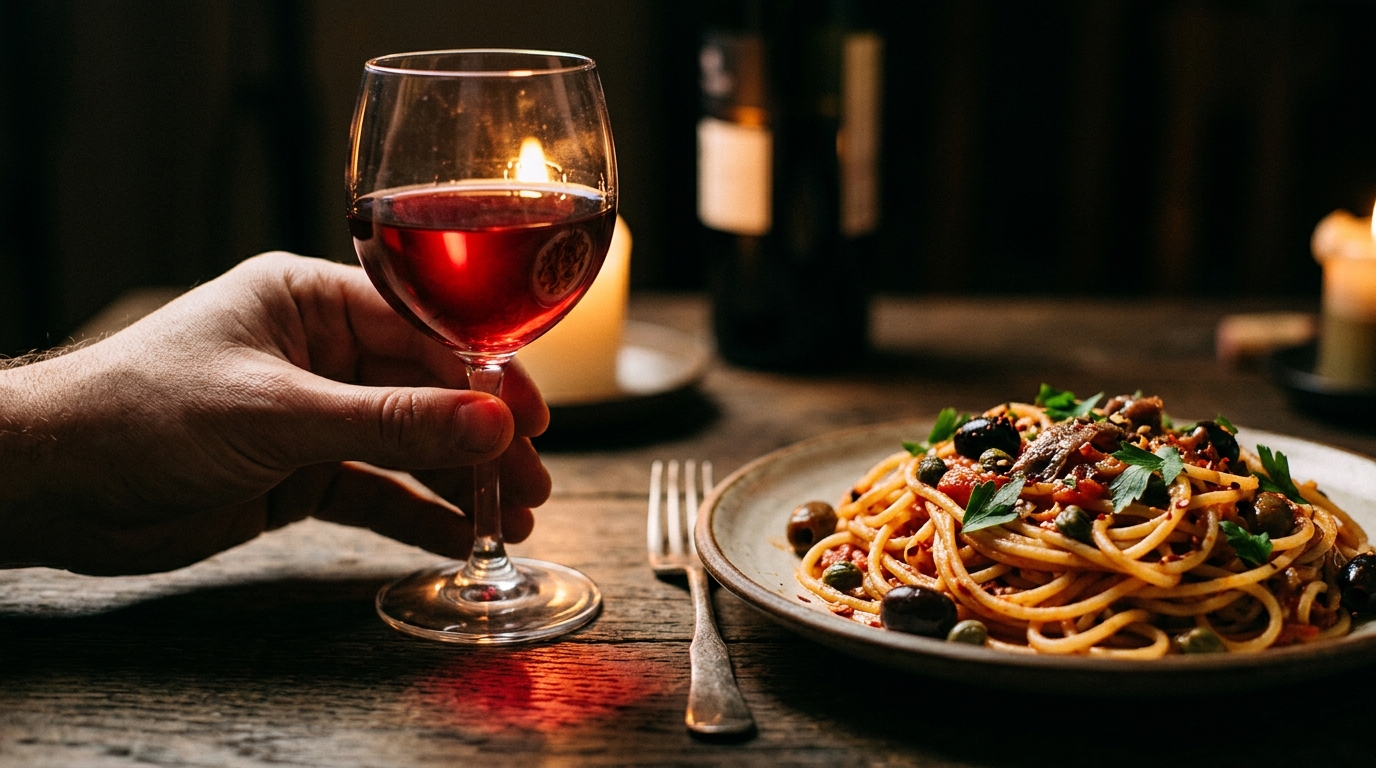
Chianti is worth understanding a little, since Sangiovese is the grape doing the work, and its acidity is the reason the match feels so natural. If you want to know whether the style suits your taste, our Sangiovese wine guide breaks down what to expect from the glass. Beyond those two, Barbera deserves a shout for its bright acidity and easy tannin, and Cerasuolo di Vittoria gives you a lighter, elegant Sicilian option when you want something juicy and soft.
Here's a quick reference you can lean on when the list or the shelf starts to blur together.
| Sauce style | Wine to pour | Why it works |
|---|---|---|
| Classic, olive and caper heavy | Nero d'Avola | Ripe dark fruit and a savory edge without drying weight |
| Tomato-forward and bright | Chianti (Sangiovese) | Tart cherry and acidity that meet the sauce head on |
| Extra tangy, gentle heat | Barbera | High natural acidity and soft tannin for a briny plate |
| Milder, riper preference | Cerasuolo di Vittoria | Juicy and light with tannin that stays out of the way |
| Anchovy-driven, very salty | Falanghina | Citrus freshness and body that handle the salt |
| Spicy and chile-heavy | Dry rosé | Fresh fruit and low tannin that calm the burn |
A few reds ask for a little care. Primitivo and Zinfandel can be delicious with a milder puttanesca, though the ripest, most alcoholic examples will play up the chile, so ask for a fresher style. Grenache, Syrah, and Mourvèdre all suit the dish when they're made in a lively, moderate way, which is why a lighter GSM blend often lands so well. Aglianico is trickier, because young bottles run firm and drying, so save it for a version with less anchovy and less chile, or one with a bit of age.
You don't have to stay on the Italian map either. A humble Southern Italian carafe red does the job, and so does a fresh red from further afield, like a silky Alentejo bottle from Portugal or a peppery cool-climate Syrah. The thread tying all of them together is fruit and freshness, never sheer power. What you genuinely want to skip is anything described as big, rich, opulent, or heavily oaked, since that profile fights the salt and fans the heat. This same fruit-forward, low-tannin thinking carries over to other red-sauce pasta, like the reds we recommend for wine with baked ziti.
When should you pour a white, rosé, or sparkling instead?
Pour a white, rosé, or sparkling wine when the anchovies and brine lead the dish rather than the tomato and chile. A salt-driven, fish-forward puttanesca often sings louder next to something crisp and cold than it does beside a red, and a lighter bottle keeps the whole meal from feeling heavy. This is also the easy answer for a table where one person wants red and another wants white.
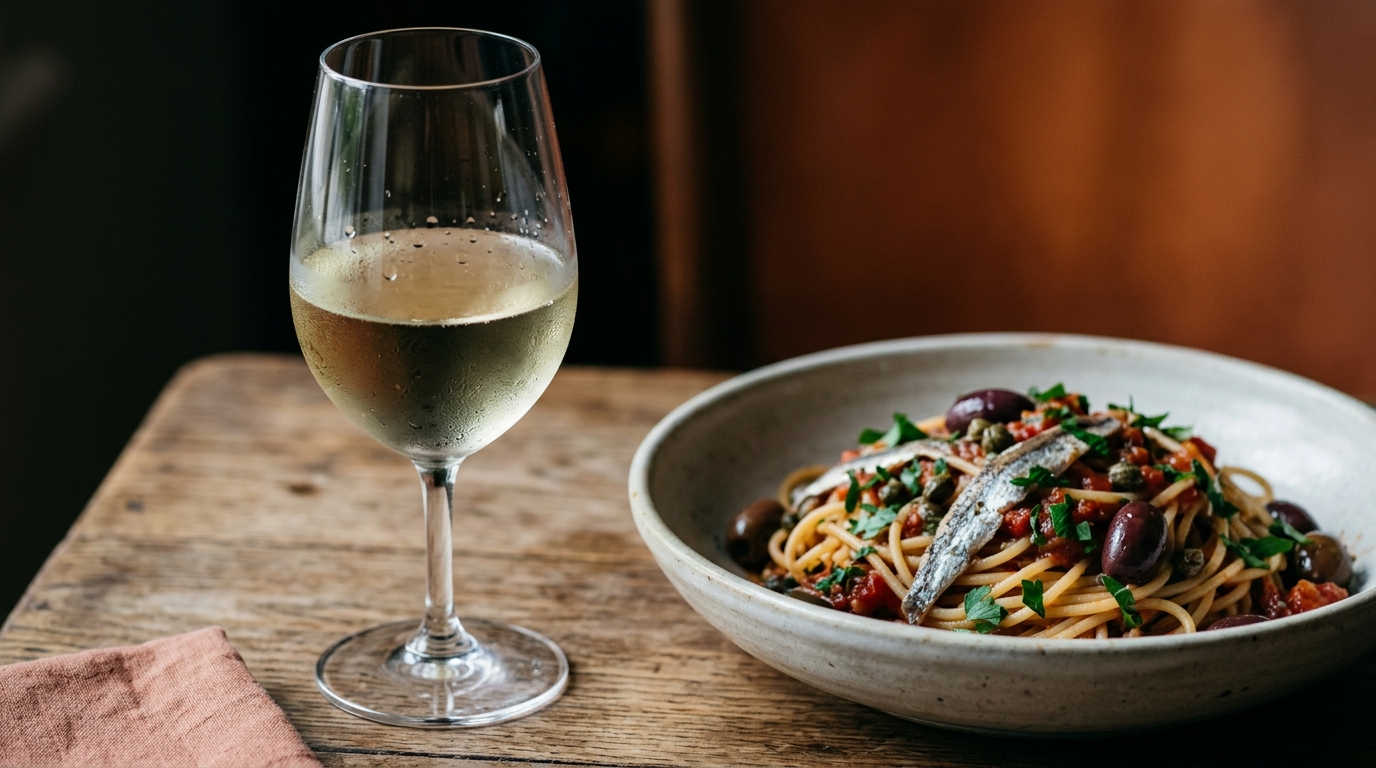
Falanghina from Campania is one of the standout choices, with citrus-like freshness and enough body to stand up to olive oil and salty fish without vanishing. Fiano works when you prefer a rounder, gentler white, especially if the dish runs light on chile, and a dry Greek Assyrtiko brings a saline, high-acid snap that echoes the capers and anchovies beautifully. Dry rosé sits in the middle of all this, bridging red and white as long as you choose one that tastes properly dry rather than sweet.
Bubbles earn their spot at the table too. Lambrusco secco, the dry style of Lambrusco, gives you berry fruit, a clean finish, and enough fizz to refresh your palate between salty, garlicky forkfuls. A brut rosé does much the same, cutting through the oil and salt while keeping things light on their feet. The fizz acts almost like a palate reset, scrubbing away the salt and brine so the next bite tastes as lively as the first.
One thing worth remembering with the whites and rosé is temperature, since a wine that's too warm loses the crispness that makes it click with the sauce. Pull the bottle from the fridge a few minutes before serving so it isn't ice cold, then let the glass warm slightly as you eat. If you cook a lot of pasta and want a fuller map of the options, our roundup of what wine goes with pasta goes well beyond this one sauce.
What about serving the wine and ordering a bottle out?
Serve a light red with a short chill and keep the whites and rosé properly cold, so their freshness lands right against the salty sauce. Fifteen to twenty minutes in the fridge does wonders for a Nero d'Avola, a Barbera, or a Cerasuolo, waking up the fruit and firming up that useful acidity. You don't need to decant anything or fuss over glassware, since puttanesca is a fast, rustic dish and the wine should feel just as unfussed.
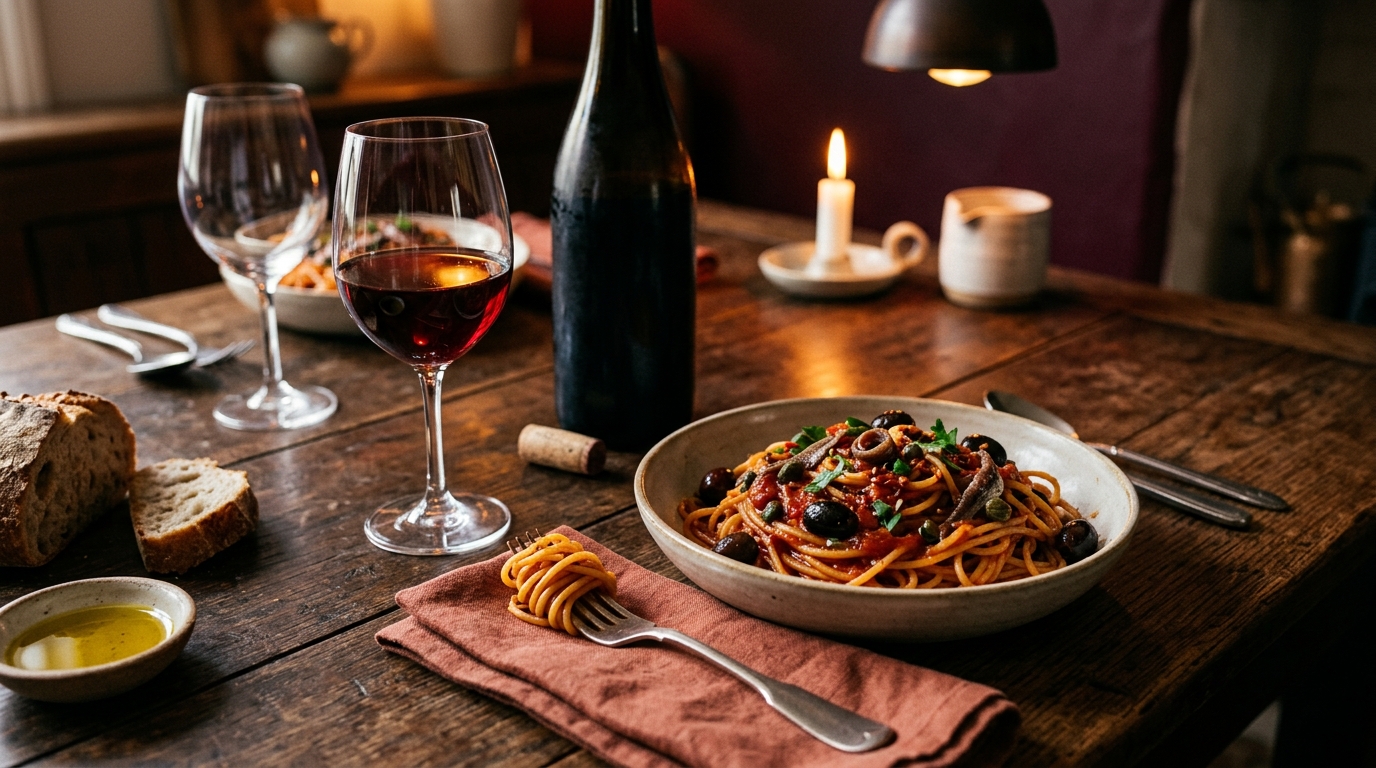
Ordering out gets easier when you speak in plain terms instead of grape names. Tell the server you'd like a fresh, dry red for a spicy puttanesca and nothing too heavy, and they'll steer you straight without a lecture. If the plate is especially anchovy-forward, ask for a crisp white or a dry rosé instead, and mention that you want something with lively acidity. On the grocery shelf, the label does the talking: words like fresh cherry point to a lively red, crisp citrus signals a bright white, and medium-bodied tells you it won't overpower the sauce.
Sometimes you've got the puttanesca already bubbling on the stove and no clear idea what to open. That's the moment Sommy's Pairing feature earns its keep, since you can snap a photo of the finished plate or even the recipe, and Sommy reads the sauce and matches a bottle to both the dish and your Taste Profile. It turns a shelf full of unfamiliar names into a pick that actually fits what you're cooking and what you like to drink. For the broader picture across Italian cooking, our take on the best wine for Italian food rounds out the rest of the menu.
Frequently asked questions about puttanesca and wine
What is the best wine with pasta puttanesca?
A dry, medium-bodied red with bright fruit and lively acidity is the easiest match for pasta puttanesca. Nero d'Avola and Chianti lead the field because they handle the tomato, olives, capers, and anchovies without steamrolling the sauce.
Can you drink white wine with pasta puttanesca?
Yes, and white wine shines especially when the anchovies and brine take the lead in the dish. Falanghina, Fiano, and dry Assyrtiko all bring the freshness and body that suit the tomatoes, olive oil, and salty flavors.
Is red wine good with spicy puttanesca?
Red wine works well with spicy puttanesca as long as it stays fresh, juicy, and moderate in alcohol. Steer clear of big, high-alcohol, heavily oaked reds, because they make the chile feel hotter and the salt taste sharper.
What wine should you order at a restaurant with puttanesca?
Ask the server for a fresh, dry red for a spicy puttanesca and nothing too heavy. If the dish is especially anchovy-forward, request a crisp white or a dry rosé with lively acidity instead.
Does a chilled wine help with a spicy puttanesca?
A short chill genuinely helps, because a cooler temperature sharpens the wine's acidity and tames the impression of alcohol. Give a light red fifteen to twenty minutes in the fridge, and keep any white or rosé properly cold before you pour.
The bottle worth opening tonight
For spaghetti or bucatini alla puttanesca, choose a wine with enough freshness to meet the tomatoes, capers, anchovies, and chile without wrestling them. A medium-bodied Sicilian red is the simplest answer, a Chianti or Barbera works just as happily, and a crisp white or dry rosé takes over whenever the salty, briny flavors run the show. If a lively red isn't around, a fresher Grenache or Mourvèdre makes a dependable fallback.
The through line is easy to hold onto after tonight. Pick a bottle that tastes bright rather than powerful, give it a light chill if it's red, and let the sauce stay the loud one at the table. That's the confident choice, and it leaves you free to twirl another forkful and pour a second glass.