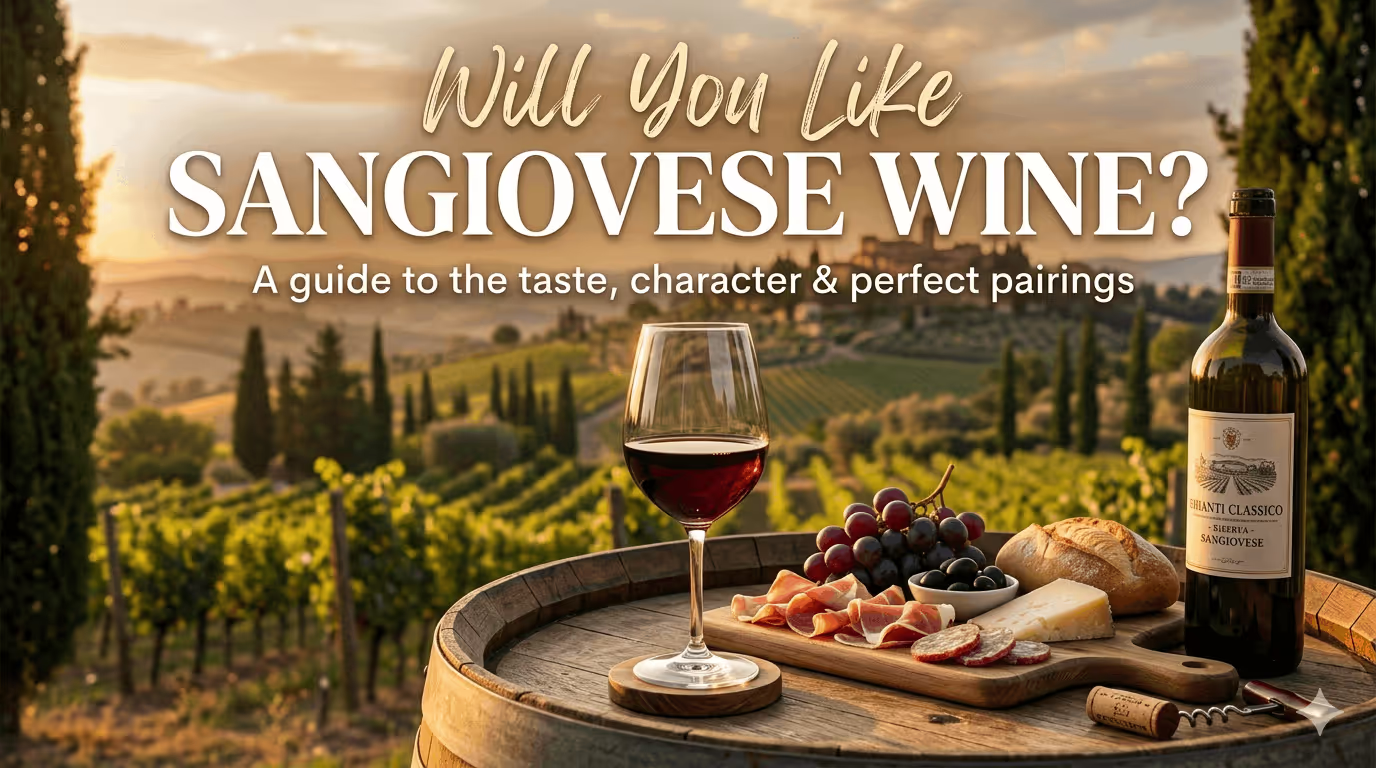

Standing in front of a wine shelf or menu, Sangiovese can feel like a coin toss. The short answer is clear: you'll probably like sangiovese wine if you enjoy dry reds with cherry flavor, fresh acidity, and enough structure to wake up food. You'll probably skip it if you want plush, jammy reds that feel soft and almost sweet.
Most people don't need wine school. They need friendly wine advice that makes the next bottle easier to choose. Start with taste, then think about food, and the answer comes fast.
The fastest way to tell if Sangiovese is your kind of red
Sangiovese lands between light and heavy. It isn't as airy as Pinot Noir, and it usually isn't as thick or dark as Cabernet Sauvignon. Merlot drinkers often find it a little firmer. Fans of bold, jammy reds may find it leaner than expected.
That difference matters, because many wine recommendations miss the point. A bottle isn't right because it is famous. A bottle is right when it matches what you like to drink.
If you want a quick answer on how to choose wine, ask yourself three things. Do you like dry reds? Do you enjoy a bright, mouth-watering finish? Do you want a red that works well with dinner? If you said yes more than once, Sangiovese deserves a place on your list.
Use this quick filter before you order or buy.
| If you usually like... | Sangiovese may feel... |
|---|---|
| Pinot Noir | a bit firmer and more savory |
| Merlot | brighter, drier, less plush |
| Cabernet Sauvignon | lighter, tangier, less heavy |
| Zinfandel or jammy reds | leaner, less sweet, more food-focused |
People who dislike Sangiovese often wanted softness first. People who love it usually wanted energy and freshness. That single split explains most reactions.
Maybe you love red wine but hate the sleepy, syrupy feeling some bottles leave. Sangiovese often fixes that. On the other hand, if your ideal red is velvety, dark, and soft enough to sip without food, you may respect it more than love it.
A lot of wine confusion disappears when you stop asking what is "best" and ask what feels right tonight. A broader look at how to choose wine confidently can help on other nights. For Sangiovese, that table is enough for most decisions. A simple wine guide works better than a long lecture, and a modern wine guide should help you decide in under a minute.
What Sangiovese tastes like, in plain English
Sangiovese usually smells and tastes like red cherry, sour cherry, dried herbs, and sometimes a little earth or tea leaf. For readers who want wine tasting notes explained, those words point to a wine that feels fresh, dry, and lively, not thick or sugary.

In your mouth, the first thing you notice is lift. Acidity gives it a tart snap, close to the edge you get from fresh cherries or tomatoes. Tannins, the drying feeling on your gums, are often present but not harsh. As a result, many bottles feel energetic rather than heavy.
For people who want wine explained simply, Sangiovese is a red with brightness and backbone. It isn't a couch-blanket red. It has more of a dinner-table personality. That makes it easy to love with food and a little less lovable if you're sipping alone and want something plush.
If you want a red that wakes up dinner instead of sitting on top of it, Sangiovese is a strong bet.
Style still varies. Some bottles taste juicy and easy. Others feel more savory, with dried herbs, leather, or earthy notes. Many drinkers meet Sangiovese through Chianti, so if you enjoyed Chianti before, you already have a useful clue.
Body matters too. Most Sangiovese sits in the middle, so it doesn't disappear with food and it doesn't crowd the meal. That balance is why many people enjoy it at restaurants even if they can't name the grape.
Simple wine explanations matter here. When you read "cherry," "herbs," or "bright acidity," picture a red that feels alive and clean. When you read "oak," "vanilla," or "jammy," picture something rounder and softer. Sangiovese usually leans toward the first group.
Why Sangiovese works so well with dinner
Sangiovese often shines brightest with food. Its bright edge cuts through tomato sauce, cheese, roasted meat, and olive oil without crushing the plate. In other words, it acts like a helpful squeeze of lemon, but in red-wine form.
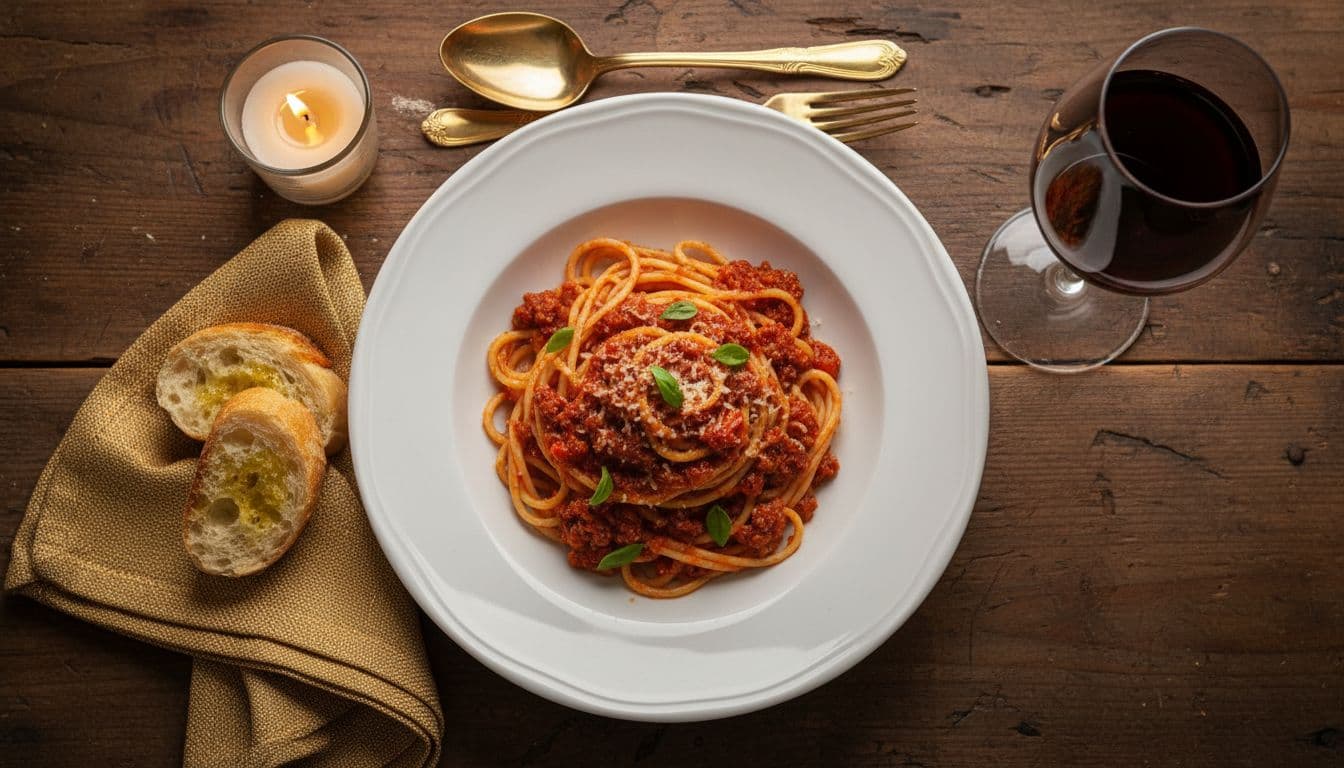
If you want a one-minute wine pairing guide, keep Sangiovese near savory food and away from dishes that are very sweet. That simple move solves most of the guesswork.
You don't need a perfect pairing for it to work. Sangiovese is forgiving, which is why it shows up in so many easy dinner situations. When a table has pizza, pasta, salad, and chicken, it can cover a lot of ground without drama.
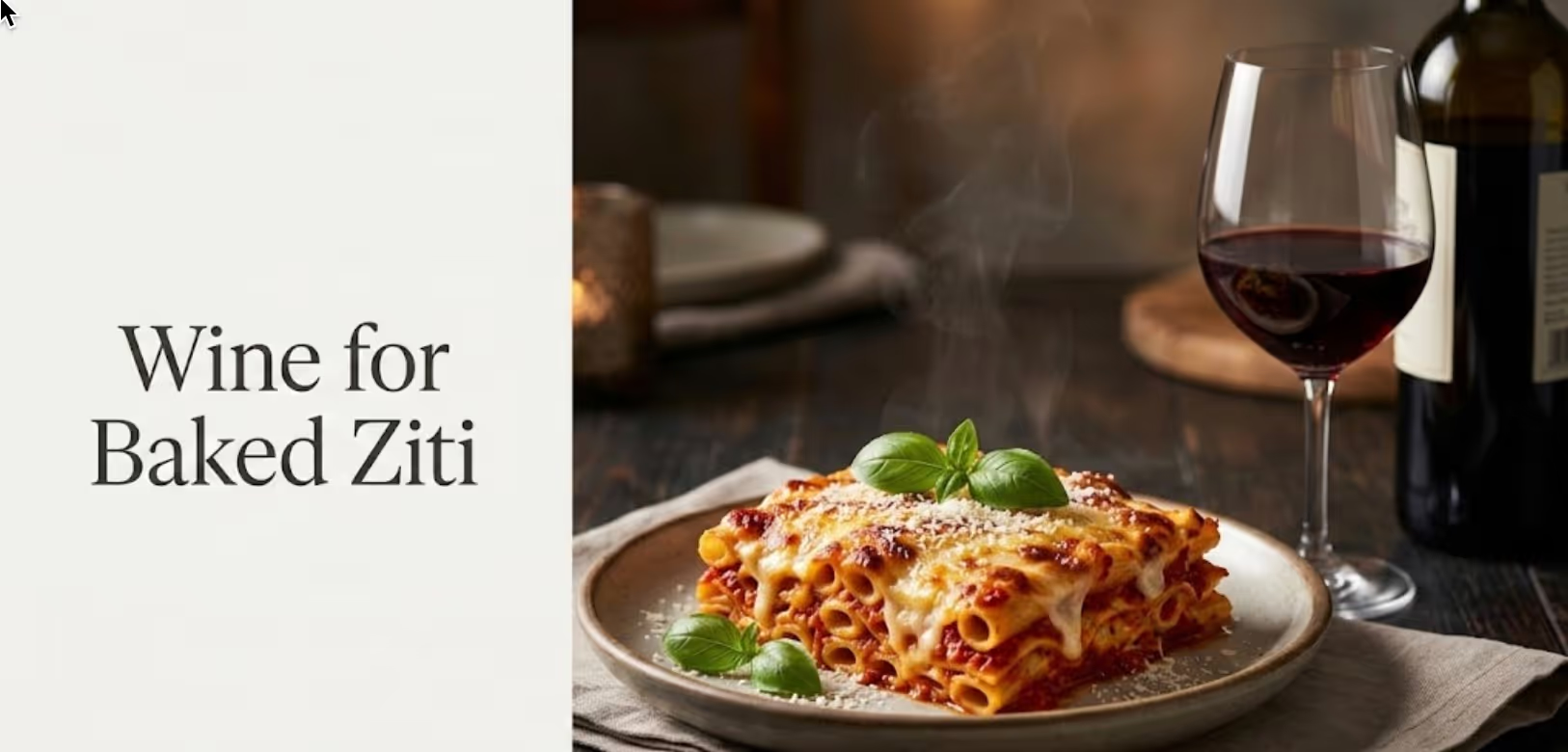
- Pizza, lasagna, and pasta with tomato sauce are easy wins.
- Meatballs, sausage, burgers, and roast chicken work well too.
- Mushroom dishes, grilled vegetables, and aged cheeses are strong matches.
- Spicy-sweet barbecue sauce can make the wine feel sharper than you want.
A fuller look at how to match wine with food can help when the menu gets messy. Still, one rule carries most of the weight: pair Sangiovese with savory meals that have some salt, fat, acid, or herbs.
Weeknight food is where it often feels best. A bowl of pasta, a slice of pizza, or leftover roast chicken can make the wine click fast. Among all simple wine tips, that may be the most useful one. Sangiovese isn't hard. It simply wants food nearby.
How to buy or order Sangiovese without stress
Buying Sangiovese doesn't need to feel like a pop quiz. A few clear wine recommendations help more than scanning thirty labels and hoping luck shows up.
In the store
For grocery store wine picks, start with Italy, especially Tuscany. Many bottles labeled Chianti or Chianti Classico are built on Sangiovese, so those names are often an easy entry point. Rosso di Montalcino can also put you near the same flavor family.

Look for label words like "dry," "cherry," "herbs," or "medium-bodied." Price helps less than style, so don't assume the most expensive bottle will fit you best. A short guide on reading wine labels easily can make that shelf feel less noisy.
Store shelves can make any wine feel harder than it is. Focus on two clues, origin and style words. Once those line up, the rest of the label matters less.
If you want everyday wine advice, skip bottles that sound sweet, jammy, or heavily oaked unless that's already your thing. Sangiovese usually wins by being fresh and food-friendly, not by being huge.
On a restaurant list
On a restaurant list, Sangiovese is one of the easiest reds to use. It plays well with pasta, pizza, roast chicken, herb-forward dishes, and plenty of simple meat dishes. Good restaurant wine tips start with the plate, not the bottle.
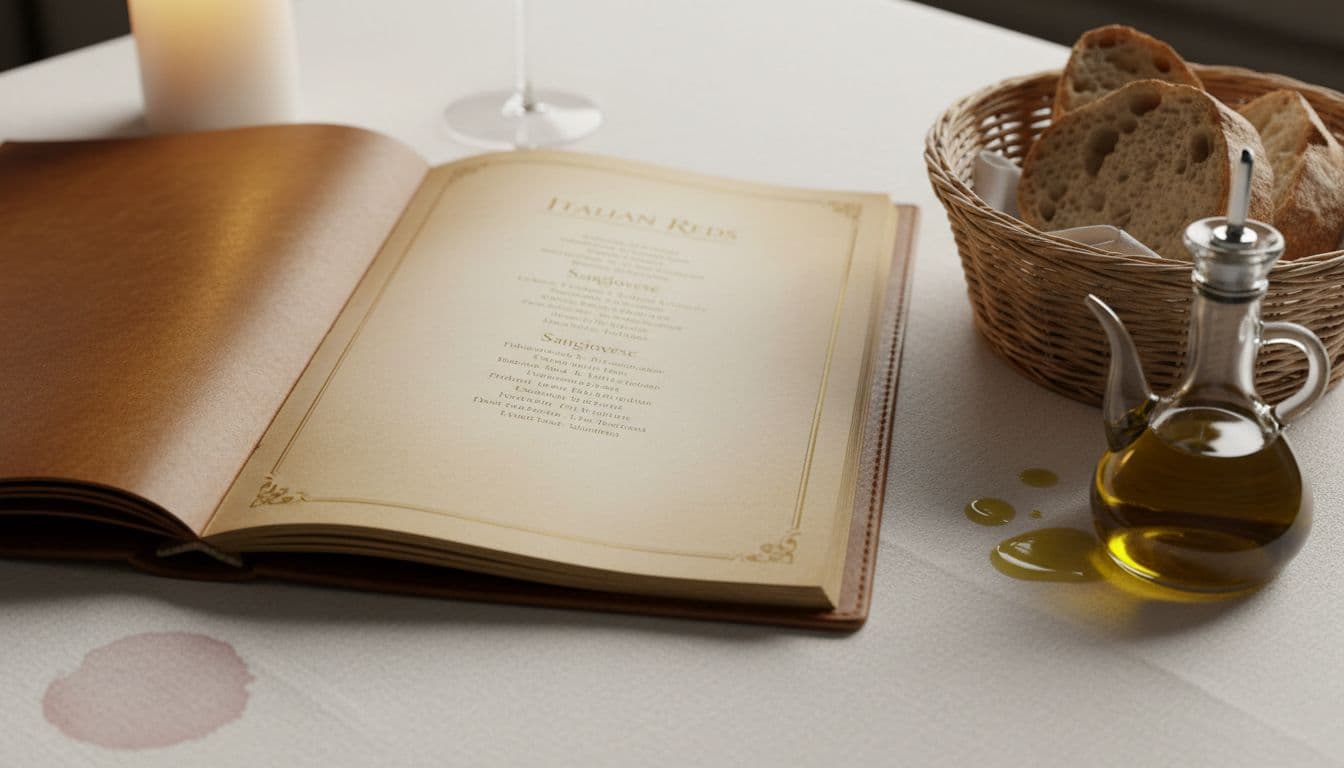
Good wine list tips are plain. Look for Sangiovese, Chianti, or Chianti Classico. Stay in the middle of the price range if the list is huge. Ask for a dry Italian red with good acidity if you don't see the grape named. A guide on how to read a restaurant wine list can help when the menu feels like a wall of code.
Among all restaurant wine tips, one matters most: give the server a taste direction, not a fake expert speech. "I want something fresh, dry, and good with pasta" is enough. That approach works better than trying to recite regions from memory.
If you want help choosing wine in the moment, Sommy is an AI wine assistant built for exactly that job. It learns your taste and turns it into personalized wine recommendations, personalized wine picks, and smart wine recommendations based on your meal, budget, and bottles you've liked before. Generic wine app suggestions can feel random because they don't know your preferences. Sommy gives smart wine picks and clear wine recommendations, which is the kind of everyday wine advice most people want at a shelf or table.
Final thoughts
Sangiovese is easy to like if you want a red that feels fresh, dry, and made for food. It may not suit you if you want softness first and acidity low.
Fear of choosing wrong makes wine seem harder than it is. Keep one small filter in mind, bright cherry, dry finish, great with dinner, and you'll know when Sangiovese fits. That little bit of confidence goes further than memorizing grapes ever will.