
Pinot Noir is the safe, classic answer for duck, and it shows up in over 70% of top pairing guides surveyed between 2020 and 2025. If you want one bottle to grab without overthinking it, start there, then adjust only if your duck dish leans sweet, smoky, or spicy.
You can feel the pressure with duck in a way you don't with roast chicken or pasta. The dish looks special, it took effort, and the wine suddenly feels like the final decision that could mess up the whole meal.
That stress is normal.
Duck sounds harder to pair than it is. Once you know one simple rule, wine and duck pairings get much easier: rich food usually wants a wine that feels fresh, not heavy. That's why one go-to answer works so often, and why a few small adjustments can help when the dish changes.
You Cooked the Perfect Duck Now What
You pull the duck out of the oven, the skin looks crisp, the kitchen smells great, and dinner is almost saved by the sight of the platter alone. Then someone asks, “What wine are we opening?” That's the moment a lot of people freeze.
The main dish is done. The hard part should be over. But wine can still feel like the place where you could choose wrong in front of everyone.

Duck adds extra pressure because it feels more “serious” than a weeknight dinner. People assume there must be a perfect answer, or a wrong answer, or some secret wine rule they missed. Most of the time, there isn't.
Practical rule: You don't need the perfect bottle. You need a bottle that keeps the meal feeling balanced.
That's the relief point. A good duck pairing isn't about memorizing regions or sounding informed. It's about avoiding the common mistake of picking a wine that fights the food.
A simple food-and-wine framework can help if you want a little more confidence before you pour. This guide to pairing wine with food breaks the process down in plain language, but for duck, you can keep it even simpler than that.
Think of the meal in one sentence: duck is richer than chicken, so the wine needs enough freshness to keep each bite from feeling heavy. Once you hold onto that, the decision gets calmer fast.
The One Wine to Remember for Duck
If you remember only one wine for duck, make it Pinot Noir.

That answer is popular for a reason. In expert analyses, Pinot Noir was cited in over 70% of top duck pairing guides surveyed between 2020 and 2025, and the pairing goes back to 1760s French culinary texts that linked Pinot Noir from Côte de Nuits with game birds like duck, as noted in Wine Spectator's look at what wine goes best with duck.
Why Pinot Noir works so often
Pinot Noir tends to do three useful things at once:
- It stays fresh enough for rich meat. Duck has real richness, and Pinot Noir usually has the kind of brightness that keeps the meal from feeling weighed down.
- It doesn't bully the dish. Some reds come in too strong and make duck taste harsher or heavier. Pinot Noir usually lets the food stay in front.
- It fits the savory side of duck. The fruit is there, but it usually sits beside the meat instead of competing with it.
That's why it works for roast duck, duck breast, and a lot of restaurant duck dishes without requiring you to decode the whole wine list.
What to look for on a list or shelf
You don't need a lecture on grape growing. You just need a few plain cues.
Look for a Pinot Noir that sounds:
- Fresh
- Elegant
- Red-fruited
- Earthy, if the dish has mushrooms or a deeper savory feel
Try to avoid a bottle that sounds jammy, hot, or overly oaky if the dish is delicate. Duck can handle flavor, but it usually looks better with a wine that stays composed.
If you want a little extra help narrowing down the style, this Pinot Noir guide can make shelf choices less annoying.
A short visual can also help if you're deciding in the moment:
Pinot Noir is the bottle to order when you want to stop thinking and start enjoying dinner.
How Wine Balances the Richness of Duck
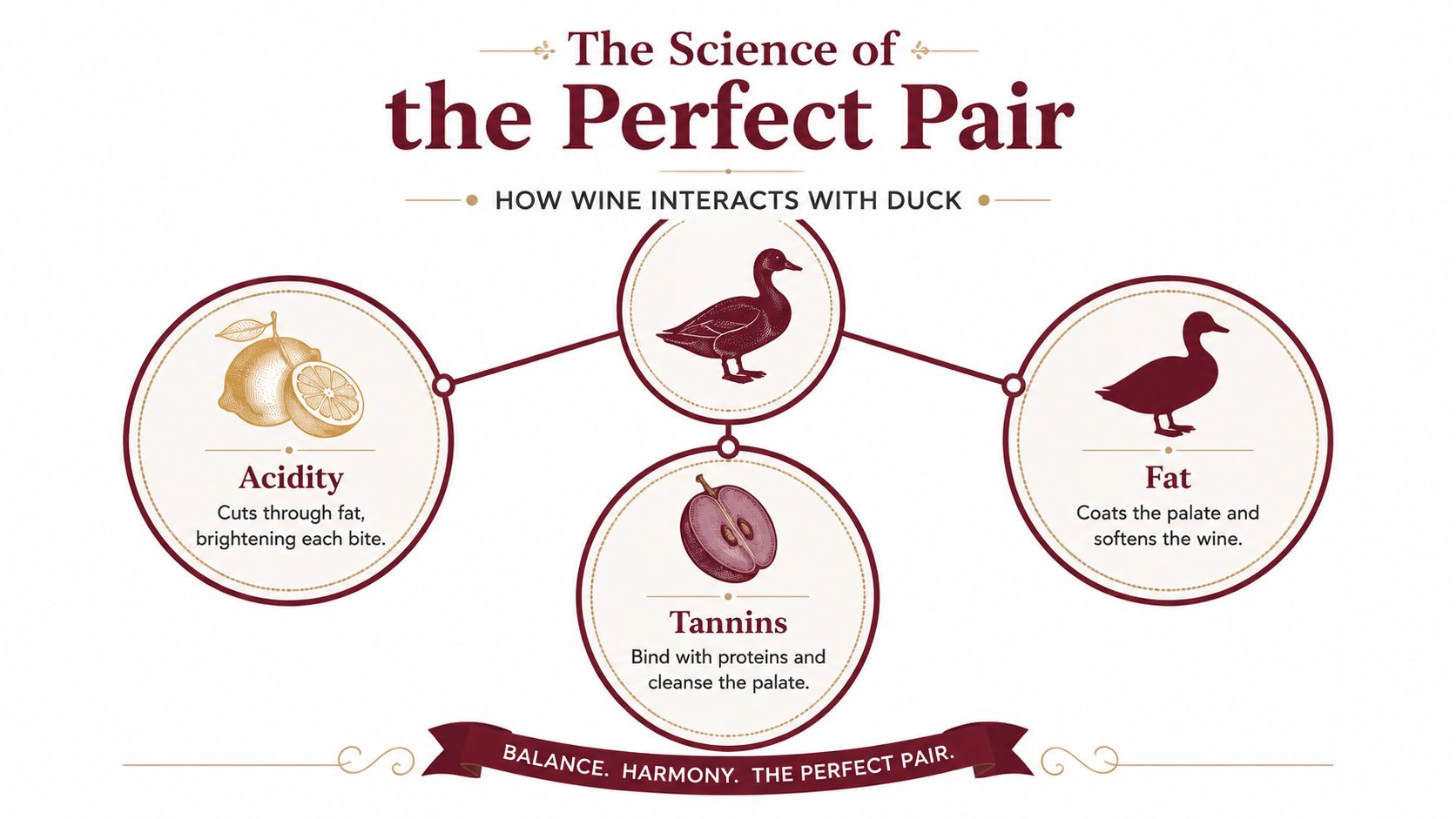
Duck works best with wines that feel lively. The reason is simple. Duck is rich, and rich food can coat your mouth.
A fresh wine resets your palate between bites, a lot like a squeeze of lemon can wake up fried food. You don't need wine theory to use that idea. You just need to know what relief tastes like.
The simple mental model
Duck breast contains approximately 28% to 39% total lipid, and guidance on pairing points toward wines with higher acidity, around pH 3.2 to 3.6, and moderate tannins, because that freshness cuts through rendered fat and helps the meal stay balanced, according to Kendall-Jackson's guide to pairing wine with duck.
That sounds technical, but the takeaway is plain: when the food is rich, a fresher wine keeps the next bite enjoyable.
What helps and what hurts
Here's the quick version.
- Freshness helps: Wines with good acidity make duck feel less heavy.
- Moderate structure helps: A little grip can be useful. Too much can make the pairing feel tough.
- Huge power usually hurts: Very heavy reds can overwhelm the meat or make the whole meal feel dense.
A duck pairing should make you want the next bite, not reach for water.
That's why duck so often lands in the sweet spot for lighter reds and a few flexible whites. The wine should clean up after the richness a little, not pile on top of it.
A better way to think about tannin
Tannin is the drying feeling you get with some red wines. With duck, a little can work. A lot can turn the meal more severe than you wanted.
If you've ever had a bold red that made a good piece of meat feel oddly hard or bitter, you've felt the trade-off. Duck usually prefers restraint.
A quick explainer on wine acidity in plain English can help if you want that one concept to click. Once it does, a lot of wine and duck pairings start making sense without memorizing bottles.
Matching Wine to Your Specific Duck Dish
The easiest way to stay calm with duck is to look at the whole plate, not just the protein. A simple roast duck, a salty confit, and duck with a sticky orange glaze all need slightly different wines.
Pinot Noir is still the default. The useful adjustment is knowing when to stay with it and when to switch.
Duck and Wine Pairing Cheat Sheet
| Duck Dish | Best Red Wine Style | Alternative Wine Style | Why It Works |
|---|---|---|---|
| Classic roast duck | Pinot Noir | Dry rosé or fuller white | Freshness keeps the richness in check without crowding the meat |
| Duck confit | Pinot Noir with a little more body | Sparkling wine | Salt, crisp skin, and richness need lift and contrast |
| Seared duck breast | Pinot Noir | Lighter, fresh red | Clean fruit and moderate structure fit the meat without turning harsh |
| Duck with cherry or berry sauce | Pinot Noir | Off-dry white | Fruit in the wine can sit comfortably beside fruit in the dish |
| Duck with orange glaze | Pinot Noir | Riesling-style white | Brightness helps with sweetness and sauce |
| Spicy or Asian-style duck | Lighter red with freshness | Off-dry aromatic white | A touch of softness handles spice and sweet-savory flavors better |
Classic roast duck
Classic roast duck is the low-stress version of this pairing.
Best move: Pinot Noir.
Crisp skin, savory meat, and moderate richness give you plenty of room to succeed. In a restaurant, this is the bottle I would order first unless the dish comes with a noticeably sweet sauce. In a wine shop, look for something described as fresh, bright, or red-fruited. Skip bottles that sound heavily oaked, smoky, or very full-bodied.
A dry rosé or a fuller white can also work well if the seasoning is simple and your table prefers white wine.
Rich duck confit
Duck confit needs a little more from the glass. It is saltier, denser, and richer than roast duck, so a very delicate wine can fade.
Best move: Pinot Noir with a bit more body.
There is a real trade-off here. Too light, and the wine disappears. Too big, and the meal starts to feel heavy halfway through. The sweet spot is a red with enough flavor to keep up, but enough freshness to keep each bite from dragging.
Sparkling wine is also a smart option with confit. The lift helps a lot with salt and richness.
If the duck tastes rich and salty, the wine should feel awake.
Seared duck breast
Seared duck breast usually wants precision more than power. The meat is leaner in feel than confit, and the crisp skin already gives the dish plenty of character.
Best move: Pinot Noir again, especially a bottle that feels clean and steady.
A lighter, fresher red also works well here. If a wine list pushes you toward bolder red wine styles, it helps to pause and ask whether the dish needs that much structure. Usually it does not. Duck breast tends to look stronger than it drinks.
Duck with a sweet fruit sauce
Cherry, berry, plum, or orange sauce changes the job of the wine. Now it has to sit comfortably next to sweetness as well as richness.
Best move: Pinot Noir, if the sauce is more tart than sugary.
The common mistake is picking a stern, very dry red. That can make the fruit sauce taste sweeter and the wine taste harder. A red with some visible fruit is usually the safer choice.
White wine is often the easier answer if the sauce is glossy, citrusy, or clearly sweet. That is not a compromise. It is often the cleaner pairing.
Restaurant shortcut
If you need to decide fast, use this order:
- Start with Pinot Noir if the duck is roasted, seared, or served without complex additions.
- Shift to a fresher white especially if the duck dish is sweet, spicy, or glazed.
- Avoid the heaviest reds unless the server says the sauce is very deep and savory.
That is usually enough to make a good choice without overthinking it.
Beyond Pinot Noir Other Great Options
Pinot Noir is the easy answer. It isn't the only answer.
Sometimes the best pairing is the one that fits how you like to drink. If you don't enjoy Pinot Noir much, forcing it won't make dinner better. A calm decision that suits the dish and your taste is better than following a rule you don't even like.
If you want something lighter and fruitier
A lighter red can be a very comfortable choice with duck, especially if the dish is simple and you want something cheerful rather than serious. Think of it as the “easy drinking but still appropriate” lane.
That kind of bottle can be a great fit when the meal is relaxed and the duck isn't covered in a thick sauce.
If the dish is sweet, spicy, or Asian-style
Duck with hoisin, glaze, spice, or sweet-savory flavors often opens the door to white wine. An off-dry aromatic white can be excellent here because it softens spice and sits more naturally beside sweetness.
That's a useful trade-off to remember. Dry, tannic red can feel sharp with sweet sauce. A slightly softer white can feel far more comfortable.
If you prefer bigger reds
You can go bigger, but be selective. Duck usually doesn't want the most aggressive bottle on the list.
If your instinct is always to order a fuller red, try aiming for one that still feels fresh rather than heavy. These bold red wine ideas can help you think through where that line is. The goal isn't to ban bigger wines. It's to avoid choosing one that turns the meal stiff.
Personal taste matters. The best pairing is the one that makes you want another sip and another bite.
Stop Guessing and Start Enjoying
Wine and duck pairings get much easier once you stop treating them like a test. Duck is rich. Wine with freshness usually helps. Pinot Noir is the safest place to start.
From there, keep the dish in view. A simple roast wants balance. A richer confit can handle a bit more weight. Sweet or spicy duck may be happier with a softer white than with a stern red.
That's enough to make a good choice.
You don't need to know every grape, region, or producer. You just need one clear answer, one simple principle, and permission to keep it practical. It is common for individuals to feel hesitant not because wine is too complex, but because they don't want to choose wrong.
A calm, good-enough decision is what gets dinner back on track. If you want a little extra support in the moment, this guide to choosing wine with more confidence is a helpful next read.
If you want help choosing wine in the moment, that's exactly the kind of decision Sommy.ai is built for. You can use it as a quiet wine decision assistant when you're looking at a restaurant list, a store shelf, or a dinner menu and want a confident answer without turning the evening into homework.

I have spent four decades building software. Wine was the one thing I never quite cracked: an ocean of possibility with no reliable way in. I wanted a tool that could tell me whether I'd like a bottle, not whether a critic did, and waited years for the technology to make it possible. Sommy is that tool. I write about wine from the data side. What 150,000 bottles look like when you try to predict a single person's palate.