
At Home
Pairing
Pair with any dinner
Red with meat, white with fish. It's the one rule everybody knows, and it falls apart the moment you cook something real. Roast chicken with a lemon and caper sauce isn't red or white. Neither is a mushroom risotto, a bowl of pho, or whatever you improvised out of the fridge on a Tuesday.
Pairing works from the actual dish instead of the category, and there are three ways to hand it one.
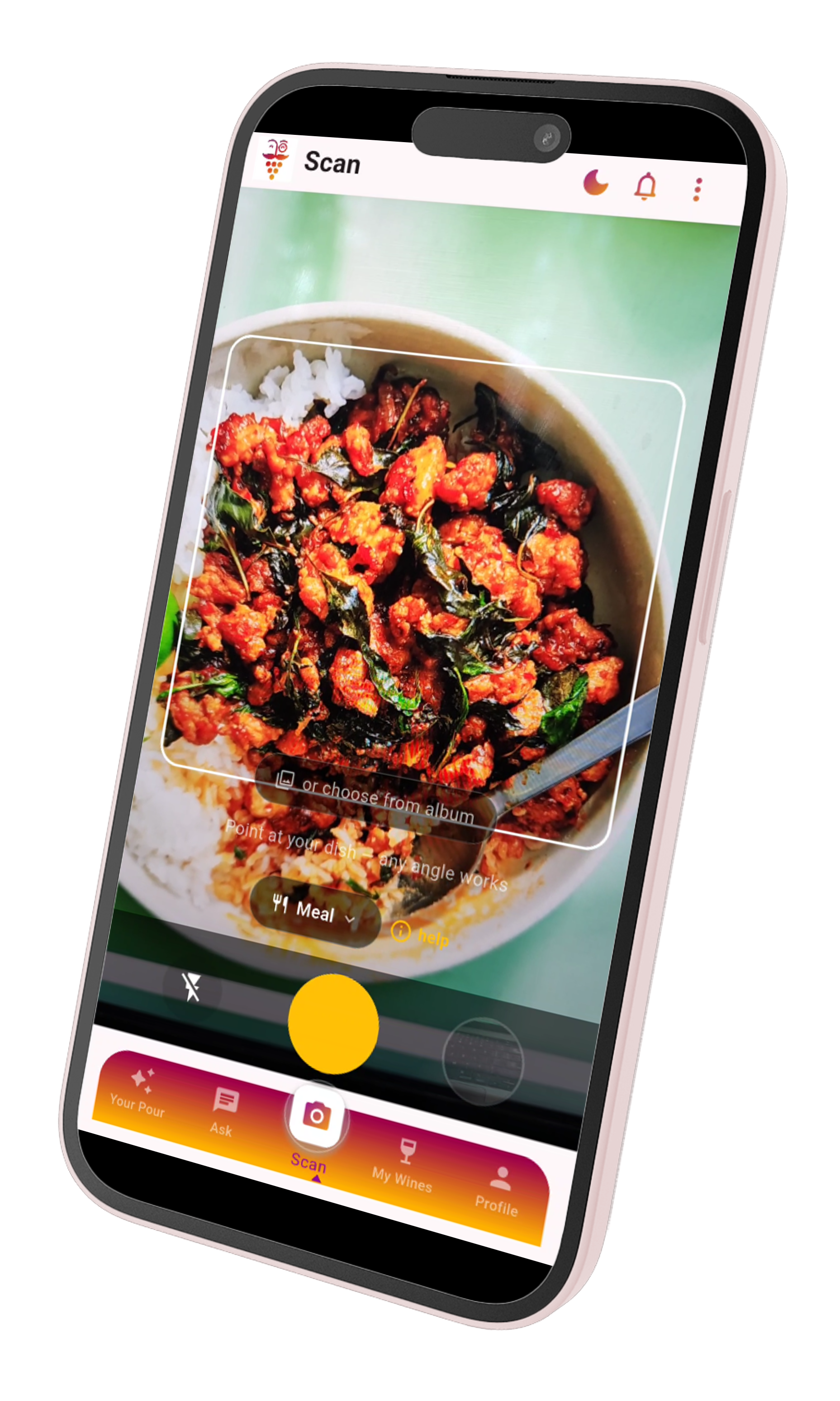
Photograph the plate
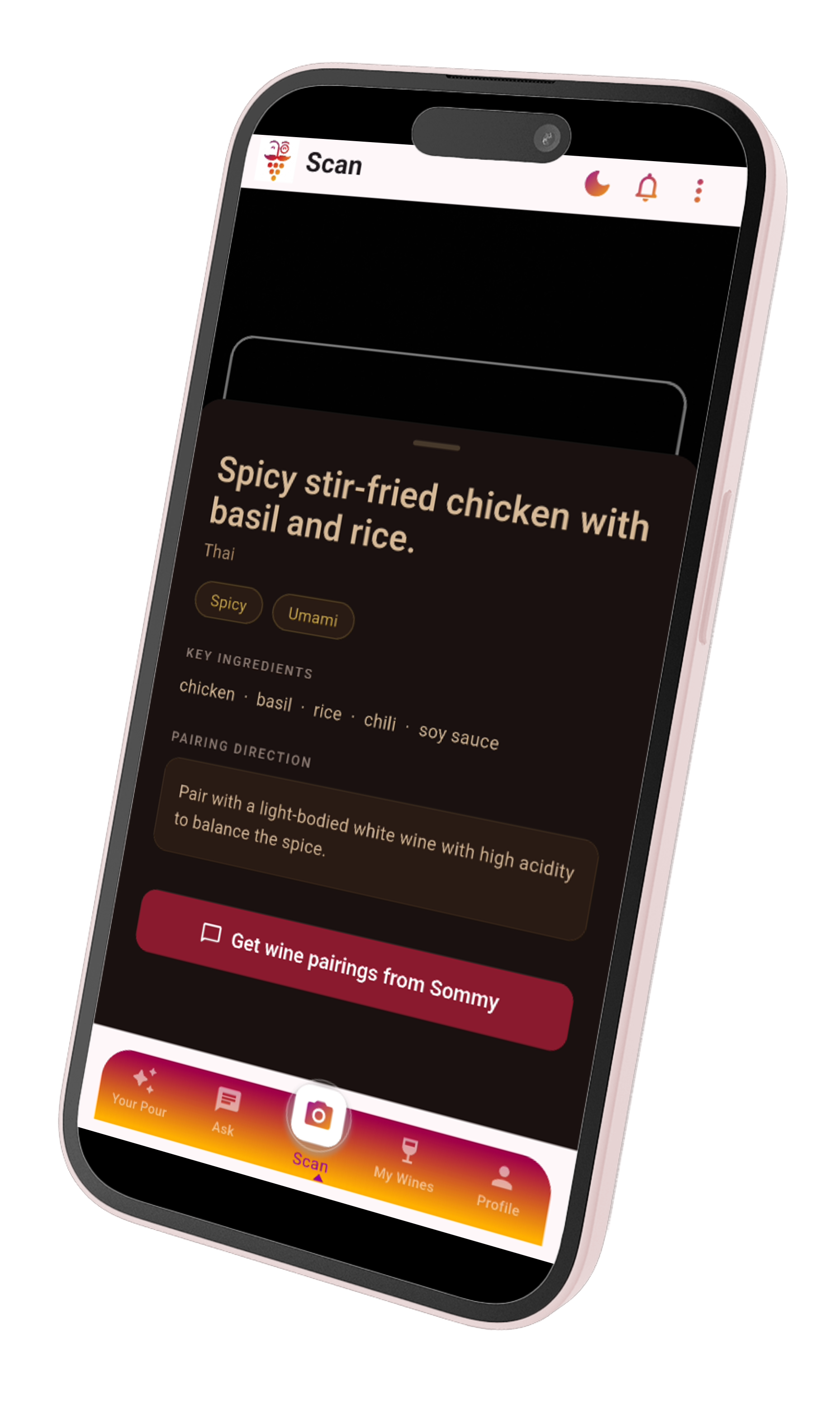
Point the camera at dinner and Vision works out what the dish is, what's in it, and how it behaves on the four things that decide a pairing: richness, acidity, spice, and umami.
This is the one for food you didn't cook. A dish at a friend's table, something that arrived at a restaurant, a takeaway container with no ingredient list. You don't need to know what's in it for Sommy to read it.
Bring a recipe
If you're cooking from a recipe, hand Sommy the recipe itself and it pairs for what you're about to make rather than what you've already made.
Paste a link from any recipe site and Sommy reads the page, pulls the ingredient list, and picks out the ones that actually drive the pairing. A recipe has twenty ingredients and maybe four of them matter to the wine. Salt and flour don't change what you open. Cream, anchovy, chilli and lemon do. If you've already copied a recipe link, Sommy offers to use it rather than making you paste it.
Cooking from a book instead? Photograph the page. Sommy reads the recipe off the paper, shows you what it understood so you can confirm it, and when a page could plausibly be more than one dish it asks rather than guessing.
Or just ask
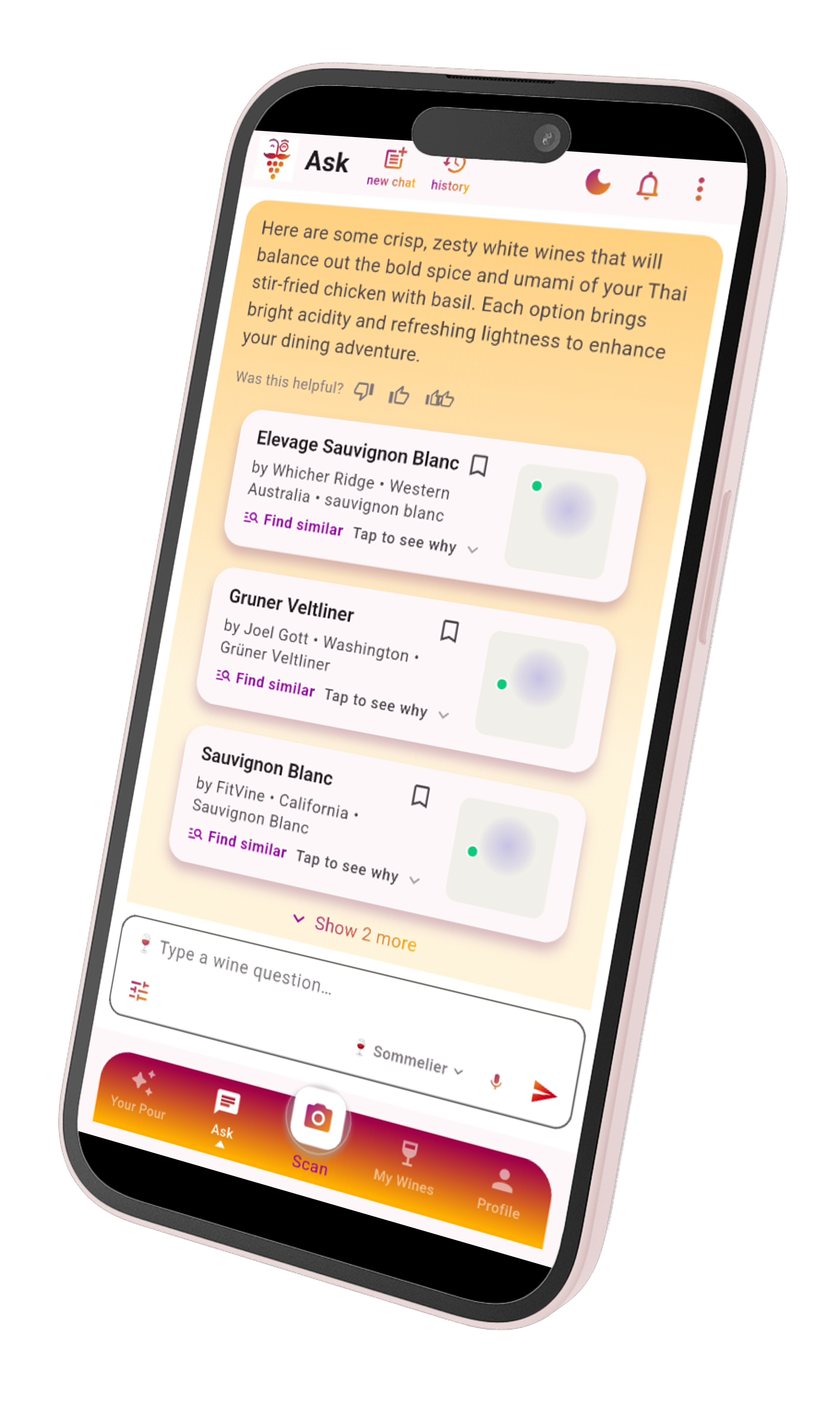
Sometimes you don't have a plate or a recipe, you have a question. Sommy Chat takes pairing in plain language, and it understands the occasion as readily as the dish.
"Something for short ribs" works. So does "wine for a dinner party", "what should I drink tonight", and "we're doing Thanksgiving for nine". Chat also remembers your history, so it can answer in the context of what you've liked before and what's already in your cellar.
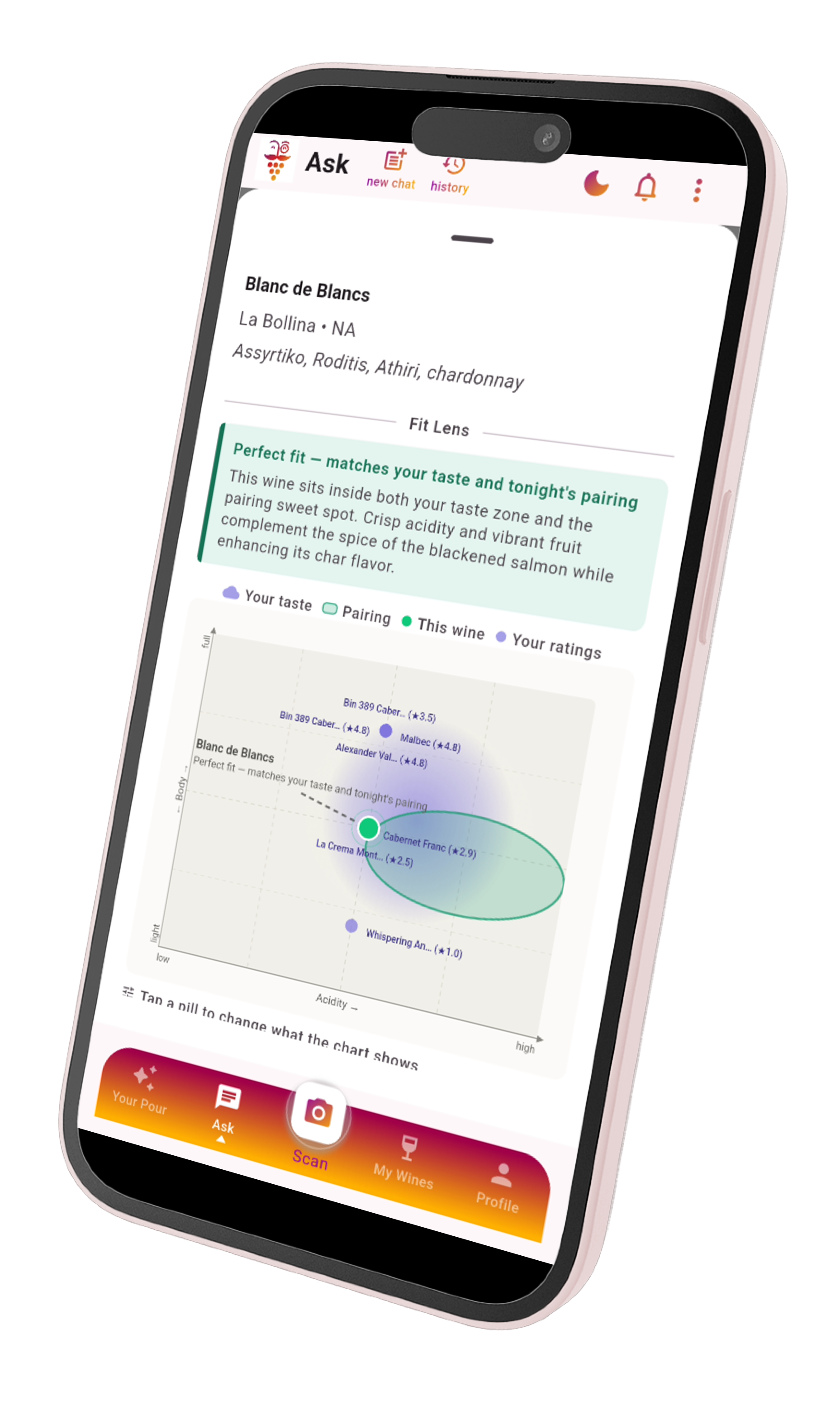
How the recommendation is decided
Sommy sorts wine into nine styles: full, medium and light reds, full, crisp and aromatic whites, rosé, sparkling, and dessert. A dish doesn't map to one of them. It gets a spread of affinities across several, weighted by what's actually on the plate.
From that spread Sommy works out which styles genuinely suit the dish, and how much weight the wine needs, on a scale running from light through to full. A cream sauce pulls that number up. A squeeze of lemon pulls it back down.
Then your own palate goes on top. The bottles you see have to suit the food and suit you, which is why two people scanning the same dinner get different recommendations. Sommy can also look at your Cellar first, since the real question is usually not what would be perfect but what you should open from the bottles already in the house.
The same dinner, different bottles
Hand the same roast chicken to two people and Sommy recommends differently to each of them. The dish half of the calculation is identical. The palate half is not.
Every candidate bottle is scored against where your taste actually sits, across the same characteristics Fit Check uses: body, acidity, tannin, and sweetness. Someone whose ratings cluster around big tannic reds gets a different shortlist from someone who keeps coming back to crisp light whites, for the same dish on the same evening. Neither one is the generic answer, because there isn't a generic answer.
It also means your own results move. A pairing Sommy suggests this year may not be the one it suggested last year, because it knows more about you now. That is the intended behaviour rather than inconsistency, and it is why rating what you drink matters more than any single setting.
Why you sometimes get a red and a white for the same dish
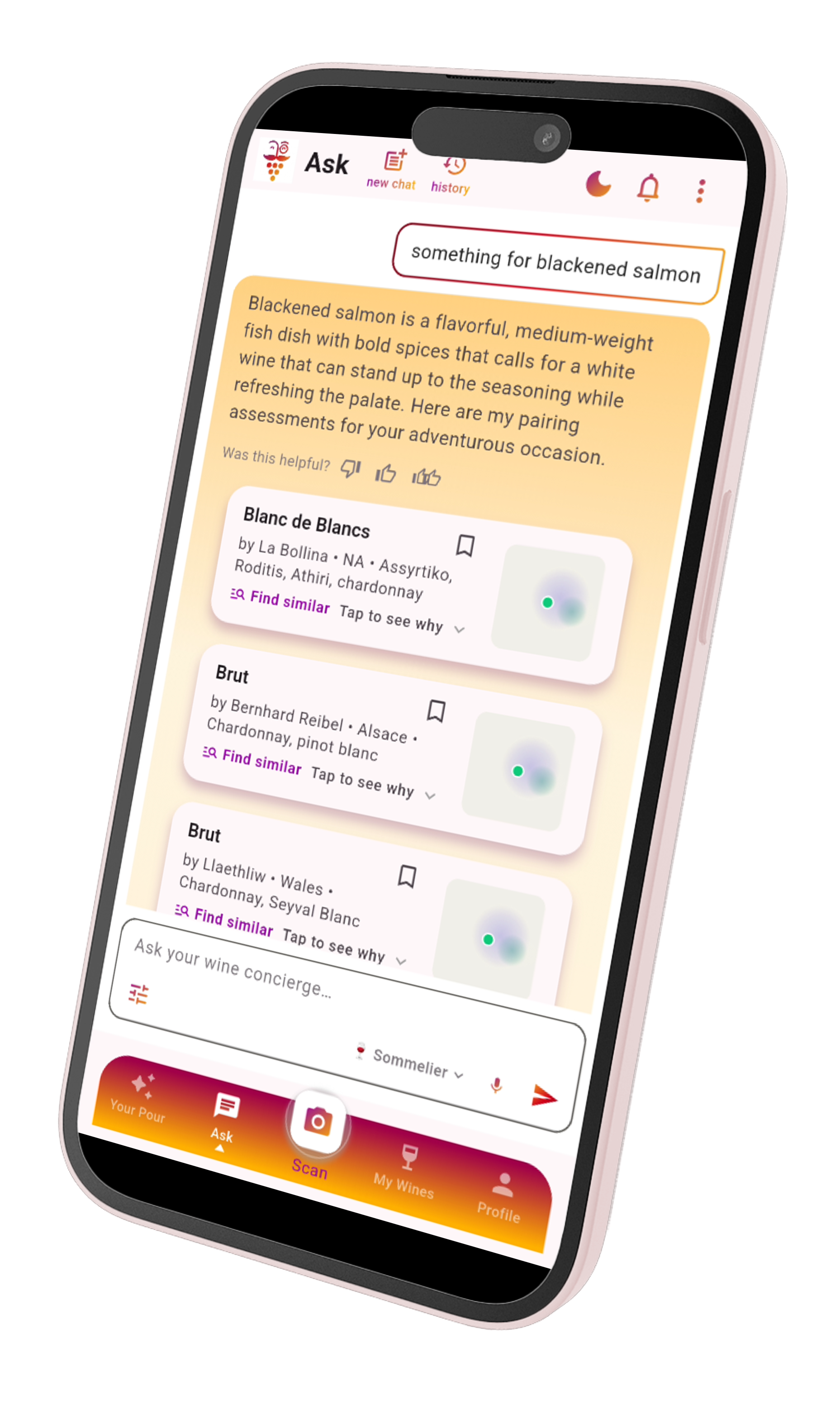
Because plenty of dishes genuinely work both ways, and pretending otherwise is how the old rules got it wrong. When a dish has real affinity with more than one style, Sommy shows you more than one rather than forcing a single answer.
Salmon is the usual example. It takes a light red as comfortably as a full white, and which one is right depends on how you cooked it and what you like. Our guide to pairing wine with food goes further into why the mechanics matter more than the rules.
Pairings you can keep
Every pairing is saved, so the combination you liked in March is still there in December. Mark the ones you actually tried, browse everything you've paired before, and share a pairing when someone asks what you opened with that.
When it helps, and when it doesn't
It earns its keep on the dishes the rules don't cover: anything with a sauce doing the heavy lifting, anything spicy, anything with a lot going on. Weeknight cooking, in other words.
It's least useful when you already know what you're opening. And like everything else in Sommy, recommendations sharpen as your taste profile fills in, so early suggestions lean more on the food than on you.
Do I need a photo, or can I just type the dish?
Either works. Typing is quickest for something simple, a photo is better when the dish is complicated or you didn't cook it, and a recipe link is best when you're pairing before you cook.
Can it pair from what's already in my cellar?
Yes. Sommy can recommend from the bottles you own before it suggests anything you would have to go and buy.
What if I disagree with the pairing?
Say so. Telling Sommy you don't get on with oaky whites, or that you would rather not drink red with fish, is picked up as a preference and applied to what you're offered next. That's the fastest way to correct a pairing you don't agree with.
Rating works too, from the other direction. The wines you rate highly are what shape your taste profile most, so the more you log the bottles you genuinely enjoyed, the closer the pairings land.