Your Palate
Sommy Chat
A somm who remembers
Ask a general-purpose chatbot what wine to drink and you get a confident paragraph written for nobody in particular. Ask it again next week and it has no idea you already had this conversation.
Sommy Chat starts from what it already knows about you. Every wine you've rated, every bottle in your cellar, every pairing you kept. You never have to re-explain your taste.
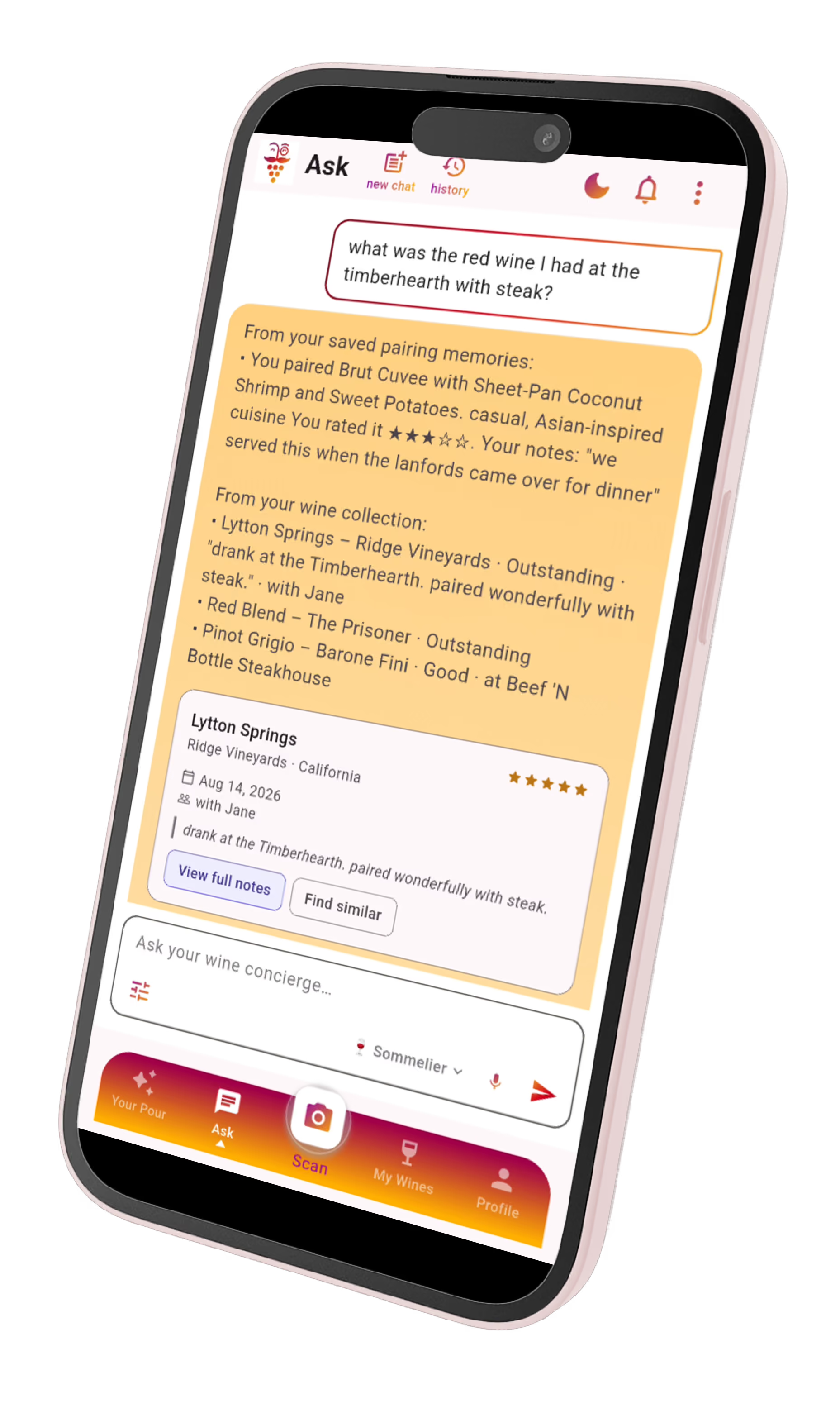
It remembers what you drank
You can ask about your own history directly, in the vague way people actually remember wine. That Rioja you liked at the beginning of the year. The bottle you brought to a dinner in the spring. The white you kept reordering last summer.
Sommy treats those as real questions with real answers, because your history is stored rather than summarised away. It's also the reason its recommendations don't repeat a wine you've already told it you didn't enjoy.
Different questions get different answers
"What should I drink tonight" and "what's the difference between Barolo and Barbaresco" are not the same kind of question, and answering both with the same generic paragraph is why most wine chatbots feel thin.
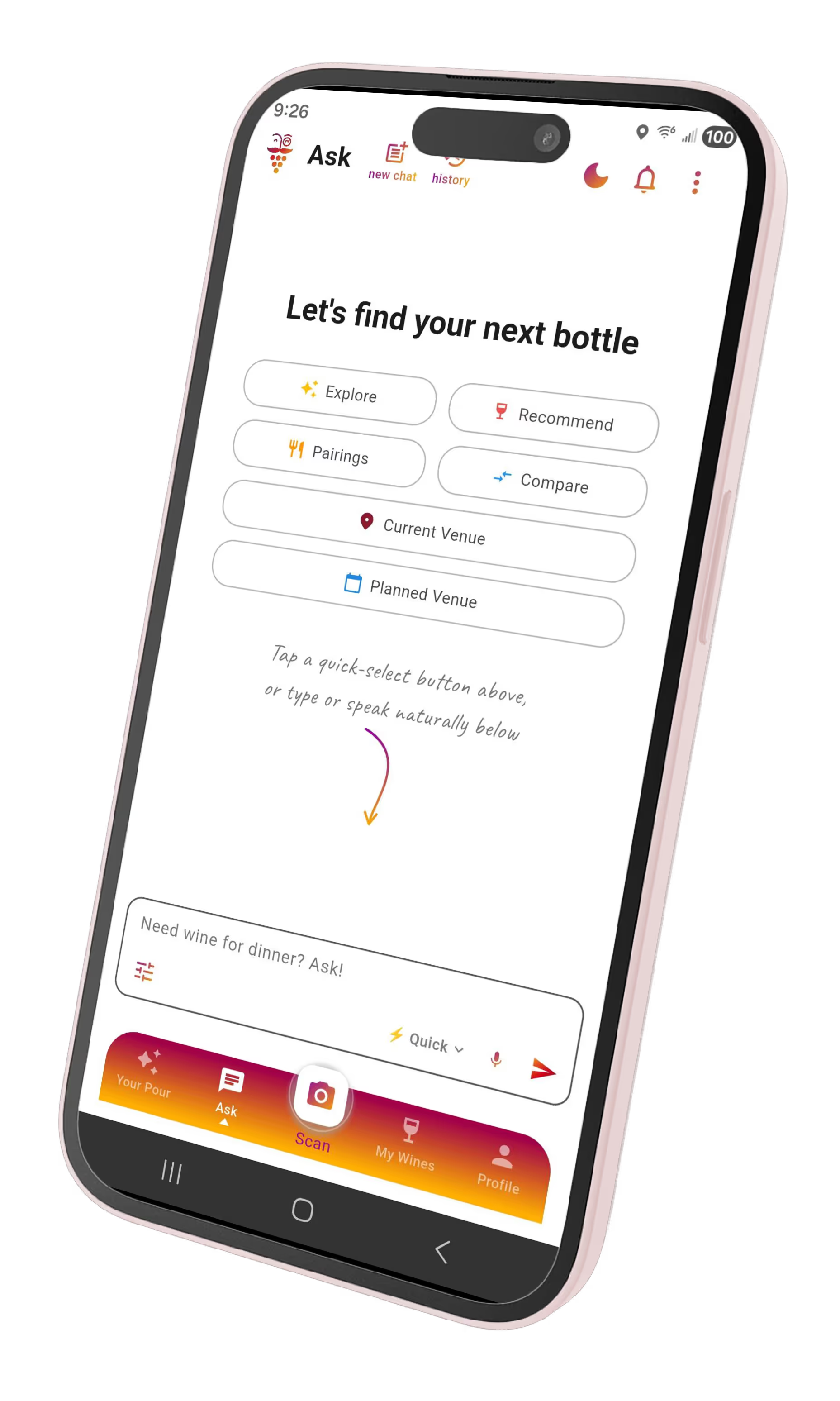
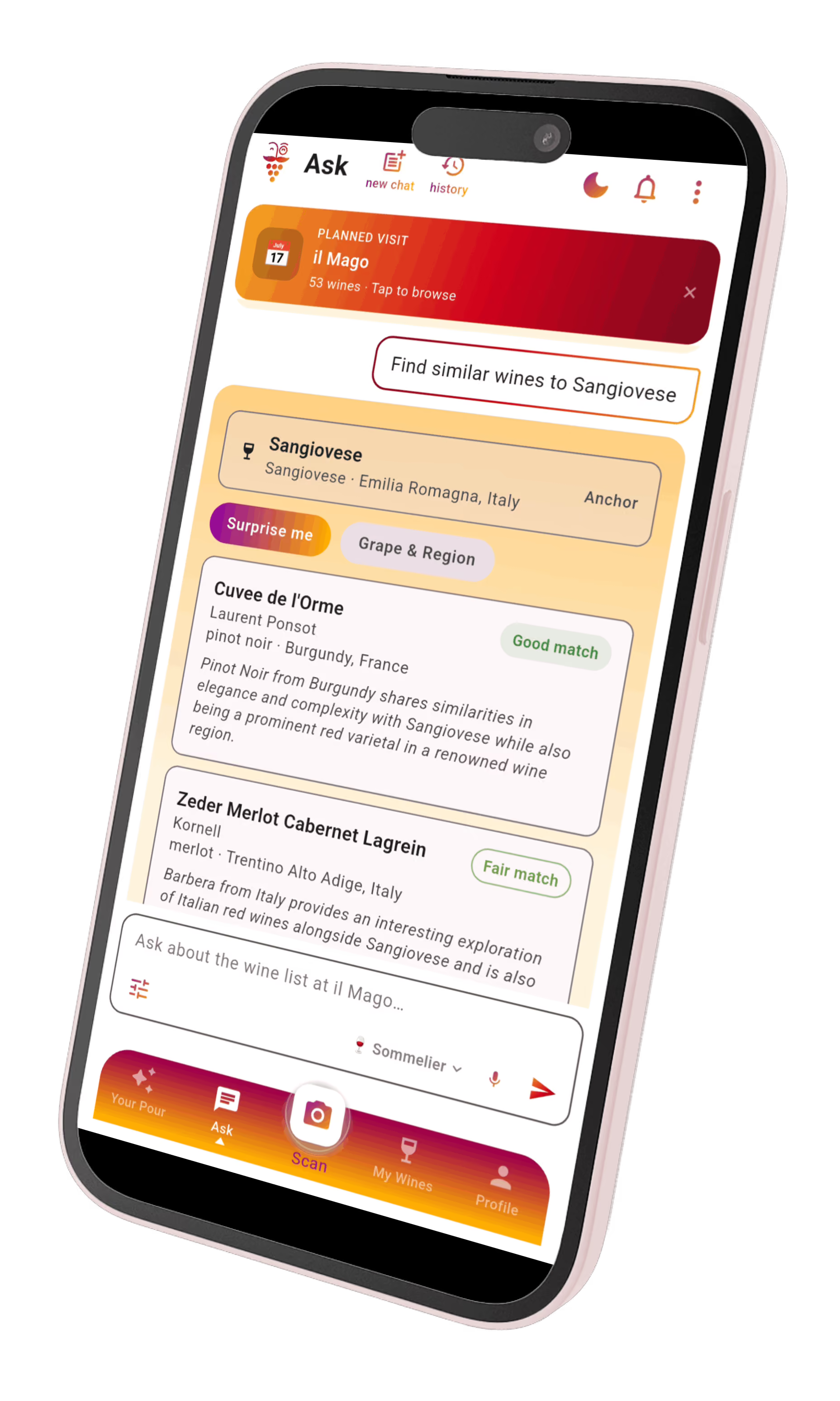
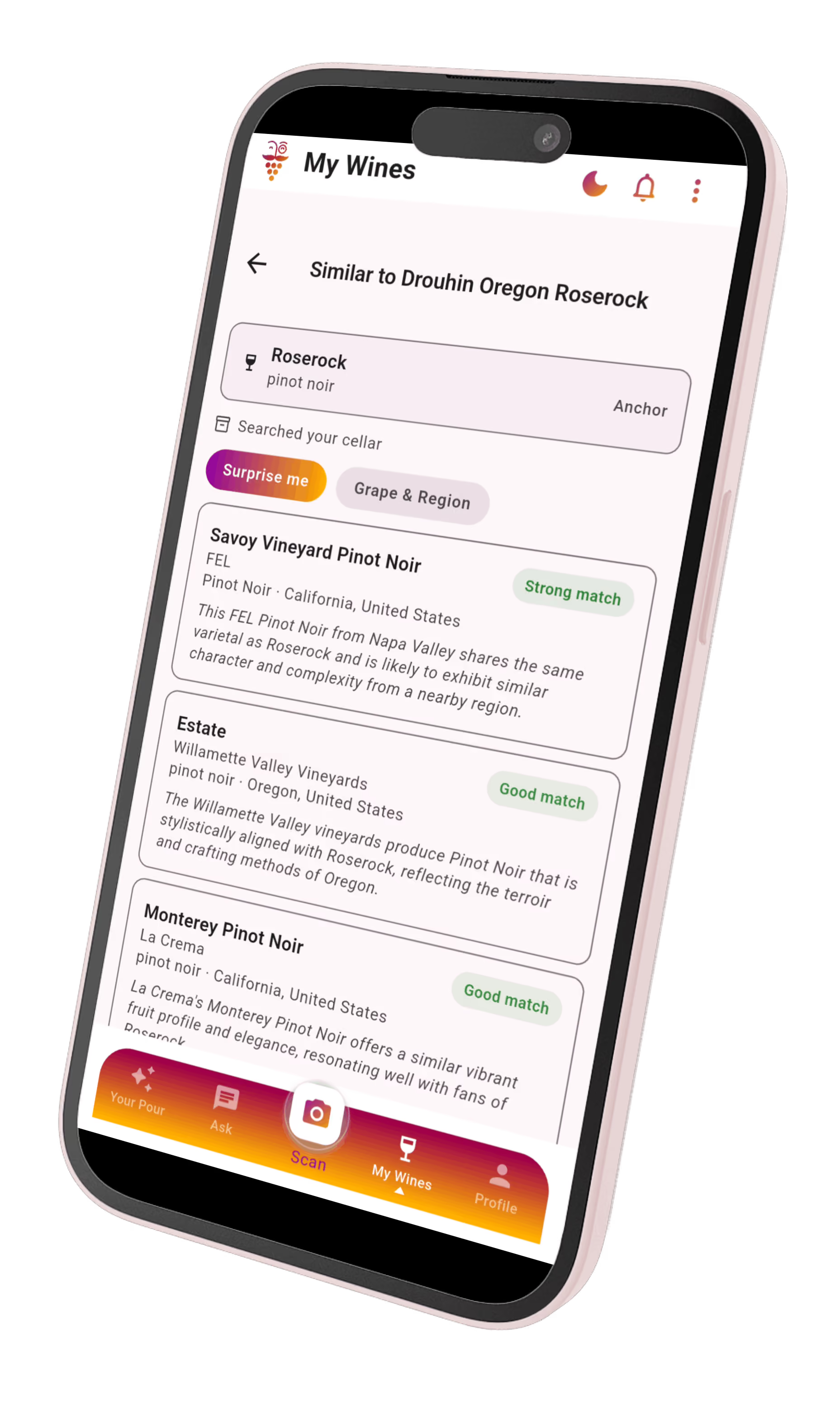
Sommy works out what you're actually asking first, then hands it to the part of the system built for that job. Asking for a recommendation runs the recommendation engine. Asking whether a specific bottle suits you runs Fit Check. Asking what goes with dinner runs Pairing. Comparisons, wines like one you name, questions about your own history, and straightforward "explain this to me" questions each take their own path.
You never see any of that. You just get an answer shaped like the question you asked.
Explanations come from somewhere
When you ask Sommy to explain something, whether that's what tannin actually does or why Chablis tastes different from Napa Chardonnay, the answer draws on the wine writing we publish rather than being improvised on the spot.
That matters because wine is a subject where a fluent-sounding wrong answer is easy to produce and hard to catch. Grounding the explanations in our own material keeps them consistent with everything else we've said.
Change your mind mid-conversation
Recommendations are a starting point, not a verdict. Ask for something cheaper, something lighter, something you can find in a supermarket, something more interesting, and Sommy adjusts rather than starting over.
That back-and-forth is usually how you get to the right bottle. It's also how Sommy learns: preferences you express in conversation are picked up and applied to what you're offered later, so saying you don't like oaky whites has an effect beyond that one exchange.
It admits when a question isn't for it
Sommy will tell you when it hasn't understood, rather than inventing an answer to a question you didn't ask. It's a wine assistant, and it's straightforward about what falls outside that.
When it helps, and when it doesn't
Chat is the right surface when the question is fuzzy, conversational, or about you. When you can't name what you want, when you're deciding between things, when you half remember a bottle, or when you want to understand something rather than be handed a shortlist.
It's the slower option when you already know exactly what you want to check. Holding a specific bottle, scanning it with Label Scan is quicker than describing it. And like everything else, answers get more personal as your taste profile fills in.
Does Sommy remember previous conversations?
Yes. Your ratings, your cellar, and the preferences you've expressed carry across sessions, so you can pick up where you left off instead of reintroducing yourself.
Can I ask about a wine I drank a long time ago?
That's one of the things it's built for. Ask in whatever terms you remember it, and Sommy searches your own history rather than the internet.
Is it just ChatGPT for wine?
No. A general assistant knows nothing about you and starts from zero every time. Sommy answers against your taste profile, your history and your Cellar, and routes each question to the part of the app built to answer it.