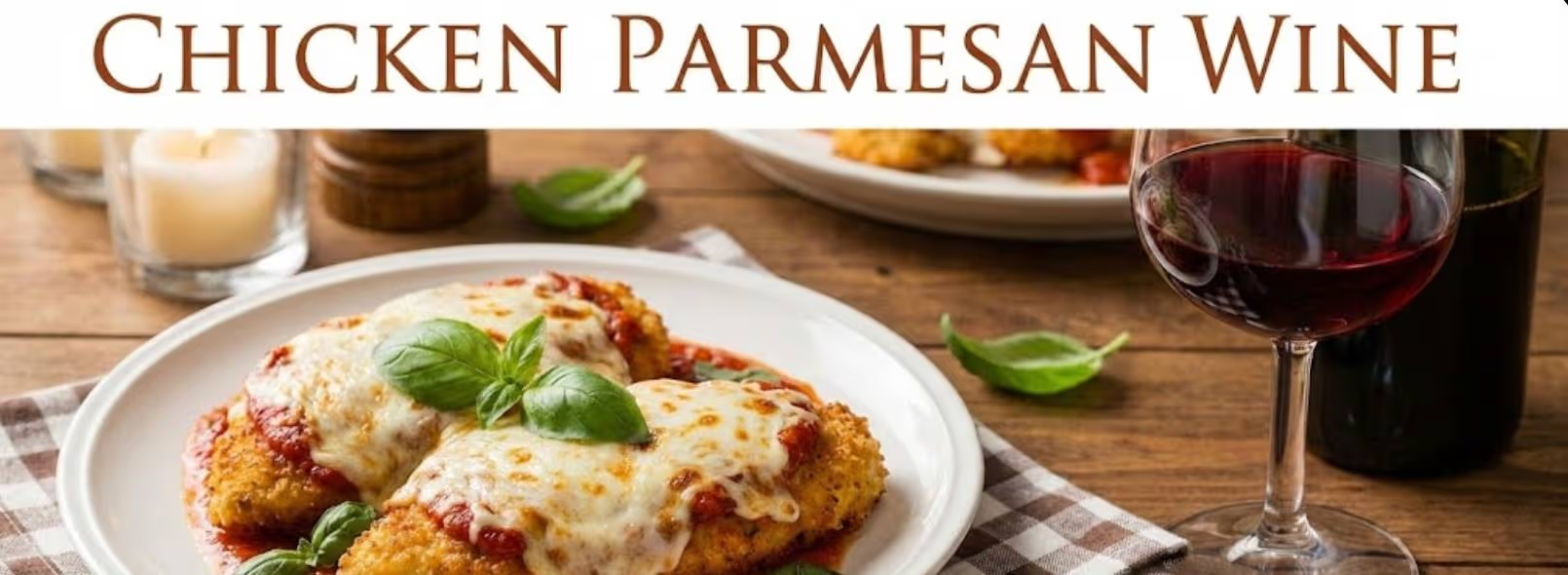


The best wine for chicken parmesan is a medium-bodied, high-acidity Italian red like Chianti Classico, Barbera d'Asti, or Montepulciano d'Abruzzo. Those bottles match the tang of the tomato sauce, stay friendly with the melted mozzarella, and won't fight the crispy breading. A dry rosé or a crisp Italian white works too, and sparkling Lambrusco is a fun curveball. The wine to skip is anything big, oaky, and heavy.
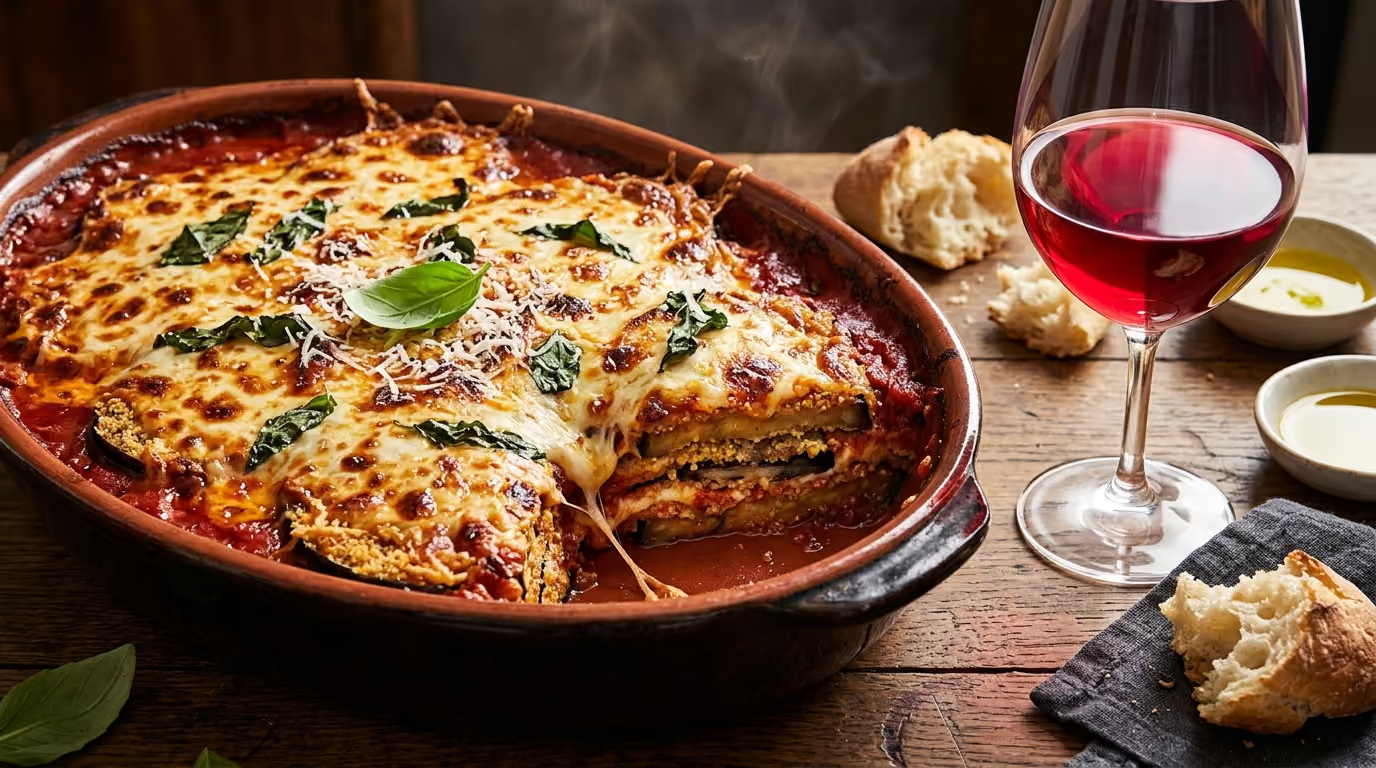
Chicken parmesan, chicken parm, and chicken parmigiana all name the same Italian-American plate, so the pairing advice below applies whichever way the menu spells it. Worth knowing that in Italy, parmigiana on its own means the baked eggplant dish rather than a breaded cutlet.
If you want one safe pick right now, reach for a Chianti Classico or a Barbera and you're set. Everything below explains why those work, what else is worth trying, and how to choose whether you're at a restaurant or standing in the grocery aisle at home. We love this dish, and we love how many good wines play nicely with it.
Does red or white wine go with chicken parmesan?
Red wine is the easiest match for chicken parmesan, though white and rosé both work when you pick the right style. The dish reads more like a red-sauce pasta than a plain chicken dinner, because the tomato sauce and cheese do most of the talking. That's why a medium-bodied Italian red tends to feel most natural next to it. Swap the tomato for a mushroom and marsala pan sauce and the deciding flavors change, which is why the best wine with chicken marsala steers toward Pinot Noir first. Swap it once more for a cream and sun-dried tomato sauce and the answer turns white, which is why wine for creamy Tuscan chicken starts with a dry Pinot Grigio.
Here's the quick way to decide. Go red when you want the most reliable, table-pleasing option, especially a Sangiovese-based bottle. Go rosé when you have a mixed group and want one bottle everyone will happily drink. Go white when you personally lean crisp and citrusy and want something lighter on a warm evening. Any of those three can be excellent, so the real question is what you're in the mood for. If you like the sound of a red-sauce pairing in general, our guide to the best wine for Italian food covers the same logic across a wider menu.
Why does acidity matter so much with chicken parmesan?
Acidity matters because chicken parmesan is three rich, salty, tangy things at once, and a bright wine is what keeps the whole plate feeling fresh instead of heavy. Think of the dish as three jobs the wine has to handle together. The tomato sauce is tart and juicy, the mozzarella and Parmesan are salty and fatty, and the fried breading adds oil and crunch. A wine with real acidity ties all of that together.
The tomato sauce is the part that trips people up. Tomatoes are naturally acidic, so a low-acid wine tastes flat and dull right next to them, almost washed out. A high-acid wine meets the sauce on equal footing, which is why the flavors stay lively. If you've ever wondered what acidity in wine actually means, this dish is the perfect place to feel it in action.
The cheese and the fried coating pull in a second direction. Melted mozzarella coats your mouth with salt and fat, and the crispy cutlet adds richness on top. A wine that's fresh and a little zippy scrubs your palate clean between bites, so the next forkful tastes as good as the first. That refreshing snap is doing quiet work all through the meal. Big tannins do the opposite, because salt and fat make firm tannins taste rougher and more drying, so gentle-to-medium tannins are the goal.
The short version is pretty simple. You want a wine that feels bright and juicy, with enough body to stand up to the chicken but not so much grip that it turns harsh. Keep that picture in mind and almost everything else falls into place.
Which red wines work best with chicken parmesan?
The best reds for chicken parmesan are high-acid, medium-bodied Italian bottles built for tomato sauce, led by Sangiovese-based wines. These grapes grew up alongside red-sauce cooking, so they're a natural fit. Below are the ones we reach for most, with a quick note on why each one works and what it tends to taste like.
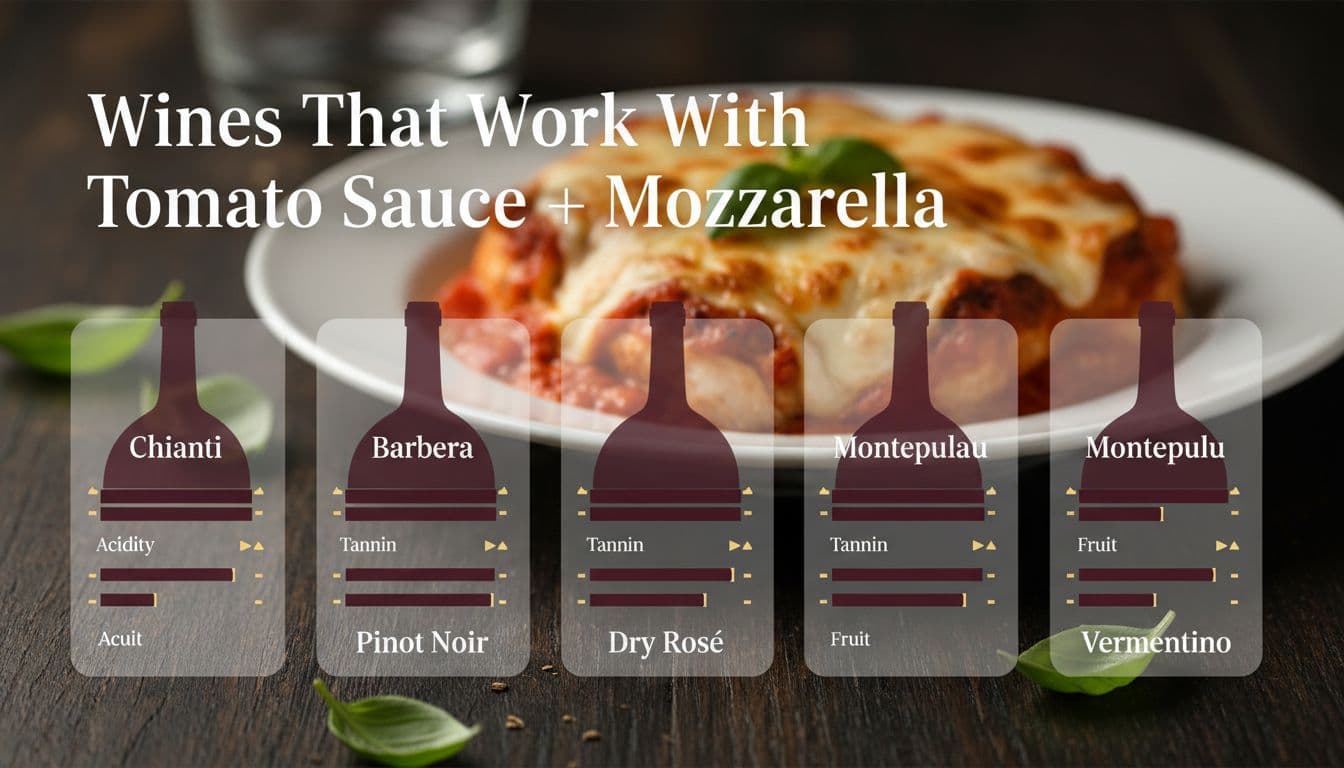
Chianti Classico (Sangiovese). This is our top all-around pick, and it's the one we'd hand a nervous first-timer. Sangiovese brings bright cherry fruit, a savory herbal edge, and the kind of mouth-watering acidity that was made for tomato sauce. The body sits right in the medium range, so it stands up to the fried cutlet without steamrolling the cheese. If you're curious whether the grape suits your palate, our take on whether you'll enjoy Sangiovese is a good primer before you buy.
Barbera d'Asti. Barbera might be the single most food-friendly red on this list. It has loads of juicy red fruit, very soft tannins, and naturally high acidity, which means it slides alongside tomato and cheese without any friction. It drinks easy on a weeknight and rarely costs much, so it's a smart house-red choice for chicken parm.
Montepulciano d'Abruzzo. When you want a touch more weight and a darker fruit profile, this is the move. Montepulciano d'Abruzzo leans toward dark cherry and plum with a smooth, easygoing texture and soft spice. It's a little fuller than Chianti but still keeps the acidity you need, so it flatters a heavily sauced, cheese-loaded plate.
Valpolicella. This northern Italian blend is light on its feet and packed with fresh red-berry flavor. The tannins are gentle and the acidity is bright, which makes it a lovely pick if you like your reds on the lighter, more refreshing side. Reach for a standard Valpolicella here rather than the richer, higher-alcohol Amarone, which would overwhelm the dish.
Nero d'Avola. From Sicily, Nero d'Avola offers ripe plum and a hint of violet with a smooth, approachable feel. Its acidity still cuts through the tomato while the medium body matches the richness of the chicken. It's a great choice when you want something a little sunnier and more fruit-forward than a classic Chianti.
One more soft option is a lighter, low-oak Pinot Noir, whose gentle tannins won't bully the cheese. If you find reds too grippy, learn how to spot a low-tannin red wine, because those are the ones that shine here.
What white, rosé, or sparkling wines pair with chicken parm?
If you'd rather not drink red, choose a crisp white, a dry rosé, or dry sparkling wine, and steer clear of anything creamy or oaky. The rule is the same one that guides the reds. You want freshness and acidity, not weight, so the wine cleans up the fat and meets the tomato instead of getting buried by it.

Dry rosé is the quiet hero of this whole pairing. A dry rosé from Provence, or a Sangiovese-based Italian pink, has enough fruit to feel playful with tomato and enough crisp acidity to reset your palate after all that cheese. On a menu with a mixed table, it's often the least risky single bottle you can order.
For still whites, we lean on bright Italian options that grew up around this food. Verdicchio is a favorite, with citrus, a light almond note, and a clean finish that slices through the fried breading. Vermentino brings a slightly saline, herby snap that loves tomato and basil. Soave, made from the Garganega grape, is soft, fresh, and gentle, which makes it an easy crowd-pleaser. Any of these three keeps things lively without adding richness, and if you enjoy this style, our roundup of the best white wines from Italy has more to explore.
Sauvignon Blanc and dry Pinot Grigio also work, as long as they're genuinely crisp rather than sweet or flabby. Avoid the watery, characterless versions, because you want a wine with real zip.
Dry sparkling wine is almost unfairly good with anything fried. The bubbles and acidity scrub the breading clean between bites. Prosecco or a dry sparkling rosé does the job, and chilled Lambrusco, the lightly fizzy red from Emilia-Romagna, is a regional classic with red sauce. Pizza fans will notice the overlap, since the same bright picks also make some of the best wine with pizza.
What wines should you avoid with chicken parmesan?
Avoid big, oaky, high-tannin, or jammy wines, because they clash with the tomato acidity and turn the cheese unpleasant. This is the part that saves an otherwise good dinner, so it's worth knowing the usual culprits before you pour.
Big, oaky Cabernet Sauvignon is the classic mismatch. Its firm tannins collide with the salt and fat of the mozzarella, which can make the cheese taste faintly metallic, and the tannin fights the bright tomato. Heavy, jammy Zinfandel fails from the other direction: its ripe sweetness and high alcohol overwhelm the sauce and leave the pairing feeling hot and flat.
On the white side, skip a big, buttery, oaky Chardonnay. That creamy richness stacks weight on top of the cheese and fried coating, and the tomato can make the oak taste bitter. None of these wines are bad, they are just built for richer, less acidic food. When a server describes a red as huge, structured, or jammy, take that as a signal to look elsewhere on the list.
What is traditionally served with chicken parm, and does it change the wine?
The classic American plate is chicken parm over spaghetti with marinara, with garlic bread on the side and something green nearby. None of those sides overturns the pairing, because tomato and cheese still run the plate, but two of them nudge it.
- Spaghetti with marinara. More tomato, more acidity on the plate, which makes a high-acid red even more comfortable. Chianti or Barbera stays the answer.
- Garlic bread. More fat and salt, which is the argument for bubbles. If the table is heavy on bread and cheese, a dry sparkling or Lambrusco earns its place.
- A sharp green salad. Vinaigrette is the one side that can fight your wine, because a hard acidic dressing makes a low-acid wine taste flat. Another reason to keep the wine bright rather than soft.
- Broccoli rabe or sauteed greens. Genuine bitterness, which softer reds handle better than tannic ones. Barbera and Valpolicella cope well; a grippy Cabernet would not.
- Eggplant instead of chicken. Eggplant parmigiana is earthier and a touch sweeter, so it takes the same reds happily and suits Nero d'Avola particularly well.
The through line is that every one of these sides rewards acidity, which is the same quality the sauce demands. That is why one bottle covers the whole table here.
What should you order at a restaurant versus cook at home?
At a restaurant, order a by-the-glass Italian red or a dry rosé and ask the server for a bright, medium-bodied option; at home, grab a Chianti or Barbera off the shelf in a comfortable price band. The strategy shifts a little depending on where you are, so here's how we handle each.
In a restaurant, you don't need to perform any wine knowledge. Say what you want in plain words: "I'd love a bright, medium-bodied red for chicken parmesan, what's good by the glass?" That one sentence gets a fast, useful answer, and a by-the-glass pour keeps costs sensible. If the list only offers heavy reds, pivot to a dry rosé or a crisp white. If you're stuck in front of a long, unfamiliar list, that's the moment to open Sommy Chat and let it point you to a bottle on that page.
At home, the grocery store makes this easy. A Chianti, Barbera, or Montepulciano d'Abruzzo under $15 covers the classic pairing, with plenty of solid choices around $10 to $12; our guide to the best grocery store wines under $15 lines up almost perfectly with this dish. Feeding a crowd, buy two styles, a Sangiovese-based red and a dry rosé, and every guest is covered.
What temperature should you serve the wine?
Serve the red slightly cool, around 60 to 65 degrees Fahrenheit, and the white or rosé well chilled, around 45 to 50 degrees. A medium-bodied red served a touch below room temperature tastes fresher and shows off the acidity that makes it work here. Room temperature in most homes is warmer than ideal, which flattens the fruit and pushes the alcohol forward, so about 20 minutes in the fridge before pouring makes a real difference.
Whites, rosés, and sparkling wines want a firmer chill so they stay crisp against the rich food, and an ice bucket with water and ice cools a bottle far faster than the freezer. For the full breakdown by style, our notes on wine serving temperatures spell out the sweet spots.
Frequently asked questions
What is the best wine for chicken parmesan overall?
The best wine for chicken parmesan is a high-acid, medium-bodied Italian red, with Chianti Classico as our top all-around pick. Its Sangiovese fruit and lively acidity match the tomato sauce while staying gentle enough for the melted cheese. Barbera d'Asti and Montepulciano d'Abruzzo are excellent alternatives if you want something a little softer or a little fuller.
Is red or white wine better for chicken parm?
Red wine is usually the easier match because chicken parm behaves like a red-sauce dish, and a bright Italian red handles the tomato and cheese with no fuss. That said, a crisp white like Verdicchio or Vermentino, or a dry rosé, works well too if you prefer lighter wine. Choose based on your own taste, since all three can pair beautifully.
What red wine goes with chicken parmesan on a budget?
Barbera d'Asti and everyday Chianti are the best budget reds for chicken parmesan, and both are easy to find under $15 at most grocery stores. They deliver the fresh acidity and soft tannins the dish needs without asking you to spend much. A basic Montepulciano d'Abruzzo is another wallet-friendly winner in the same range.
Can I drink white wine with chicken parm?
Yes, a crisp, unoaked white is a genuinely good chicken parm wine pairing as long as you skip anything creamy or buttery. Verdicchio, Vermentino, Soave, dry Pinot Grigio, and dry Sauvignon Blanc all bring the freshness that cuts through the fried breading and salty cheese. A big, oaky Chardonnay is the one white to leave on the shelf.
What wine should I avoid with chicken parmesan?
Avoid big, oaky Cabernet Sauvignon, heavy jammy Zinfandel, and rich oaky Chardonnay, because they clash with the tomato acidity and can make the cheese taste harsh or metallic. Those wines aren't flawed, they're simply built for less acidic, richer food. Stick with bright, medium-bodied options and the pairing takes care of itself.
What about sparkling wine or Lambrusco?
Dry sparkling wine is a delightful match, since the bubbles and acidity refresh your palate against the fried coating and cheese. Prosecco or a dry sparkling rosé works, and chilled Lambrusco, the fizzy red from Emilia-Romagna, is a regional classic with red sauce. Serve any of them well chilled for the best effect.
Is chicken parmigiana the same as chicken parmesan?
Yes. Chicken parmesan, chicken parm, and chicken parmigiana are three names for the same Italian-American dish of breaded chicken cutlet with tomato sauce and melted cheese, so pair them all the same way. In Italy, parmigiana by itself usually refers to the baked eggplant version instead.
What wine goes well with Parmesan cheese on its own?
Aged Parmigiano Reggiano is salty, nutty, and crystalline, and it suits a bright Sangiovese, a Lambrusco from the same corner of Italy, or a nutty fortified wine such as a dry Marsala or an Amontillado sherry. On the plate with chicken parm the mozzarella matters more than the Parmesan, which is why acidity beats power there.
What drink pairs with chicken parmesan if you do not want wine?
A crisp Italian lager or a pilsner does the same job the wine does, cutting the fat with carbonation and a clean finish, and an amber ale suits a heavily browned, cheese-loaded plate. For a cocktail, keep it tart and low in sugar: a Negroni Sbagliato, an Americano, or a spritz all bring the bitterness and bubbles that a rich red-sauce plate wants. Sweet or creamy drinks are the ones to avoid, for the same reason sweet wines struggle here.
Start with a Chianti or a Barbera, keep it fresh and medium-bodied, and you'll have a great night. If you'd like picks matched to your own taste every time, that's what Sommy is built to do.