
How Many Glasses Are in a Bottle of Wine? And How Many Bottles You Need
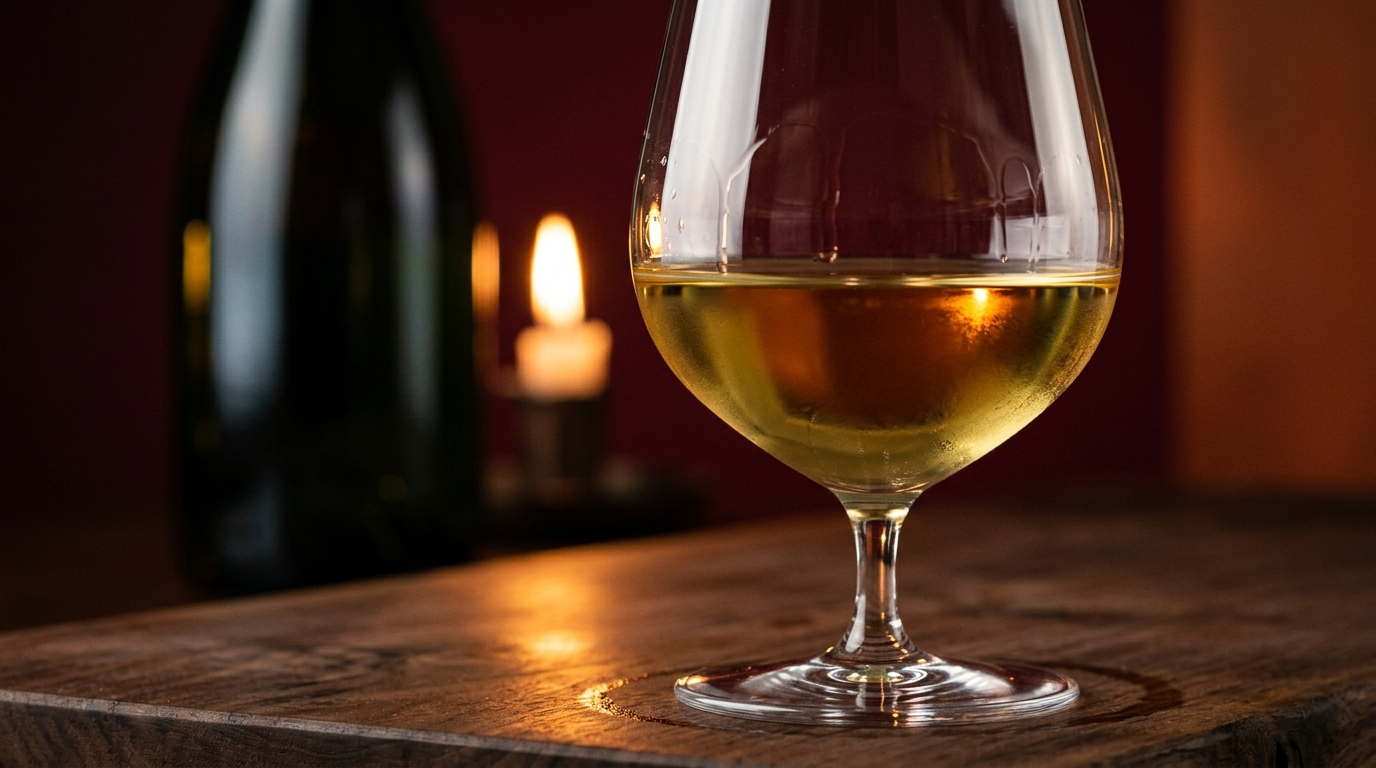
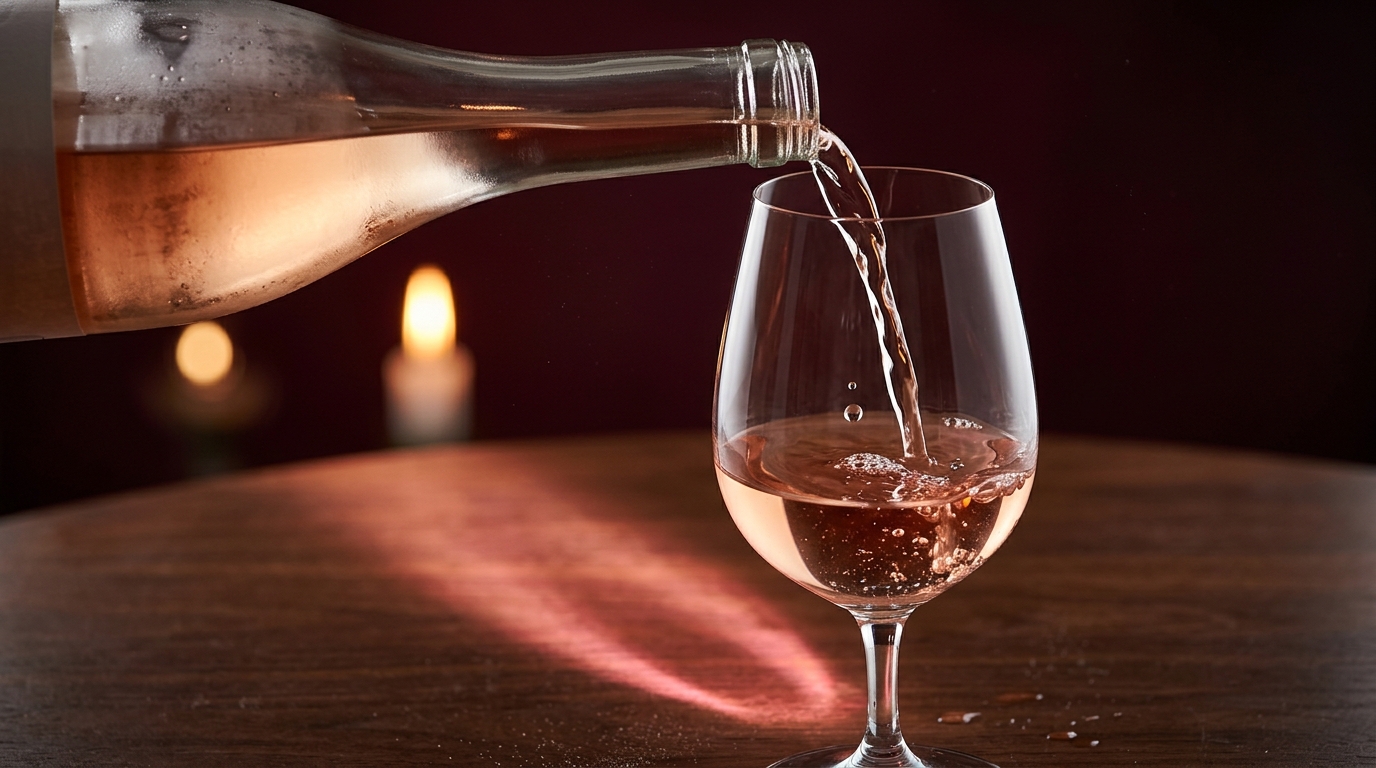
A standard 750 mL bottle of wine holds about 25.4 fluid ounces, which gives you five glasses at the standard 5 ounce pour, with a small splash left in the bottom. Pour six ounces instead and you get four glasses. Pour two ounces for a tasting and the same bottle stretches to roughly twelve.
That's the whole answer, and most articles stop there. The more useful question is the one you are probably actually asking, which is really how many bottles to buy for the people coming over on Saturday. We'll do that math too, along with the bottle sizes you will meet in a shop, and the restaurant arithmetic that tells you whether a bottle beats ordering by the glass.
How many glasses are in a bottle of wine?
A standard wine bottle holds 750 milliliters. Converted to US fluid ounces that is 25.36, so call it 25.4 on the shelf and in your head. Divide that by a 5 ounce pour and you land on 5.07, which is five full glasses and a splash that isn't quite a sixth.
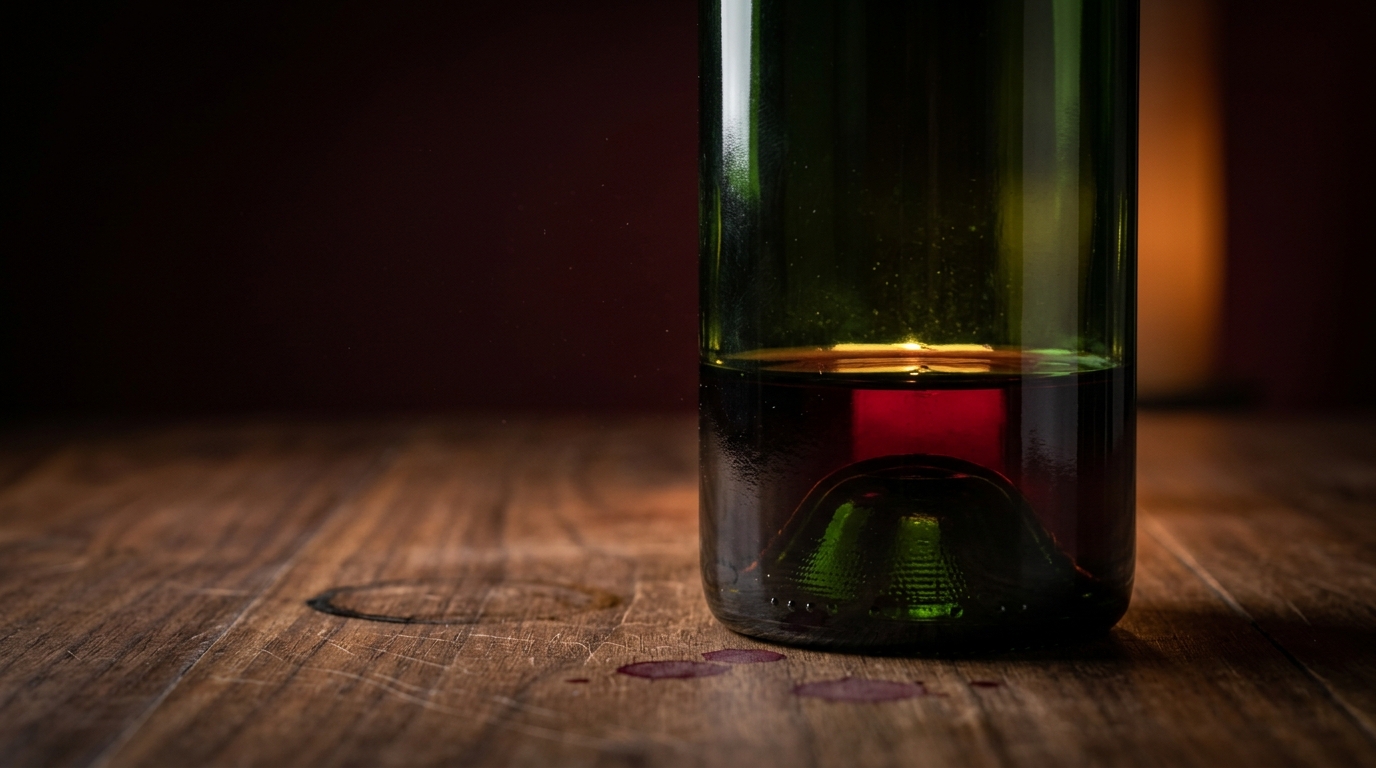
That leftover splash is why the answer feels slippery. If you've ever poured a bottle among five people and watched it run dry a moment early, nobody cheated. Somebody poured five and a half ounces, and half an ounce across five glasses is more than a bottle has spare. The arithmetic is unforgiving in a way a generous host rarely notices until the last glass.
Does the wine itself change the count?
No, and the color makes no difference here. Red, white, rosé and orange wine all arrive in the same 750 mL format, so a bottle of Cabernet Sauvignon and a bottle of Sancerre pour the same number of glasses. Alcohol content varies a great deal between them, from roughly 11 percent in a German Riesling to 15 percent in a warm-climate Zinfandel, but that changes the strength of the pour rather than the volume of the bottle.
Sparkling wine is the interesting exception, and not for the reason people expect. A Champagne bottle also holds 750 mL. Flutes are usually smaller than still wine glasses though, so a bottle poured into flutes often stretches to six or seven servings rather than five.
What counts as a standard pour of wine?
The five ounce figure isn't a wine-world tradition. It comes from the US definition of a standard drink, and the National Institute on Alcohol Abuse and Alcoholism defines one standard drink as 5 fluid ounces of table wine at about 12 percent alcohol, alongside 12 ounces of regular beer and 1.5 ounces of spirits. Each one carries roughly 0.6 fluid ounces of pure alcohol.
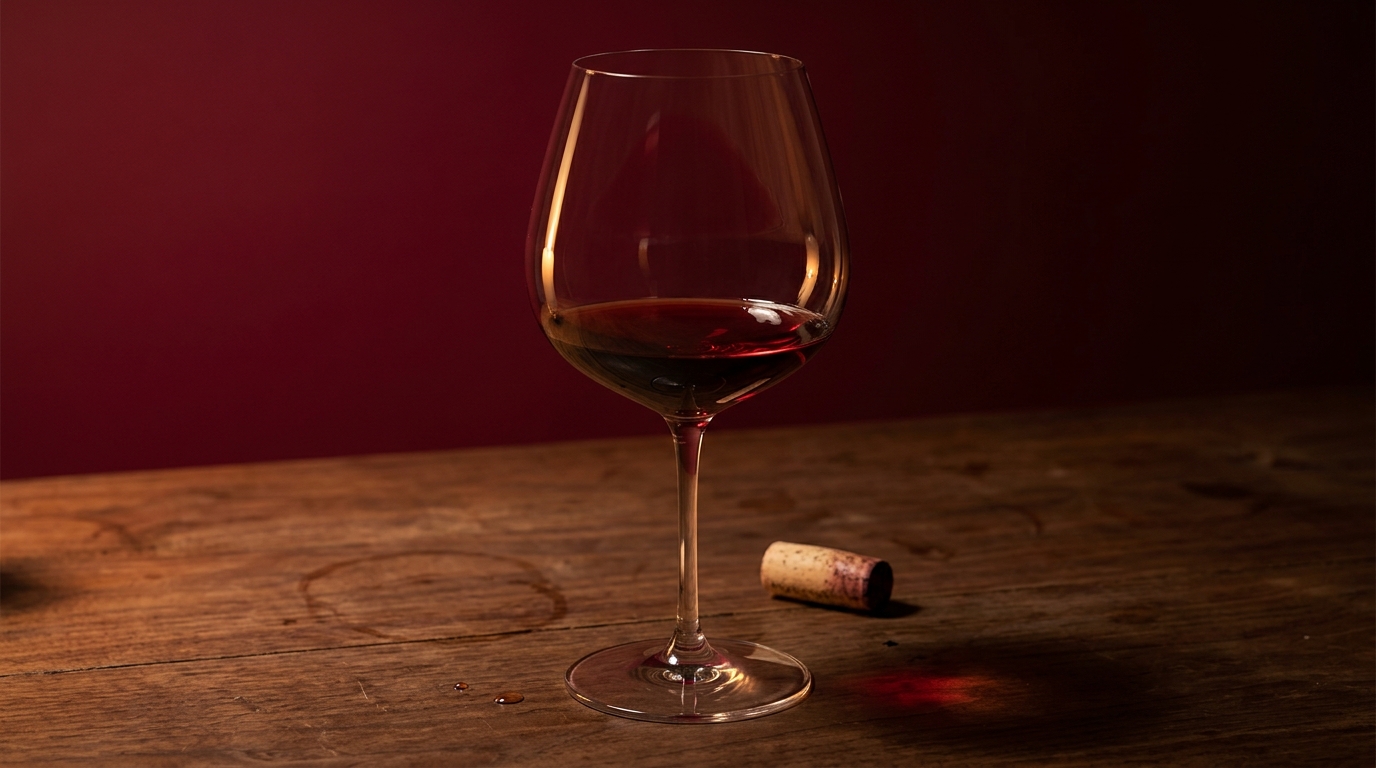
Worth knowing: that same page says plainly that standard drink amounts "may not reflect customary serving sizes." It's a unit of measurement rather than an instruction about how full to fill a glass. We are using it here because it is the number every chart and every restaurant list is quietly built on, which makes it the right baseline for all the math here.
Why the glass in your hand lies to you
Modern wine glasses are much bigger than they used to be. A common Bordeaux bowl holds 20 ounces or more to the brim, so a correct 5 ounce pour sits shallow and looks stingy, barely covering the widest part of the bowl. Your eye reads that as a small drink and your hand corrects for it.
Pour five ounces into a measuring cup once, tip it into the glass you actually use at home, and photograph it. You'll recalibrate permanently in about fifteen seconds, and you'll stop being surprised when a bottle serves four people rather than five. It's the single most useful thing in this article.
What restaurants actually pour
By-the-glass pours in US restaurants typically run five or six ounces, and the list rarely tells you which. A six ounce house pour means the bottle behind the bar yields four glasses, which is exactly why a by-the-glass program prices the way it does. Some places pour a deliberately short four ounce taste for expensive bottles, and a few pour eight, which turns a bottle into three servings.
If you want to know, ask. Servers answer this question all the time and nobody thinks it's rude.
How does pour size change the number of glasses?
Pour size is the only variable that matters once the bottle's a standard 750 mL. Here is the whole range in one place.
| Pour size | Glasses per 750 mL bottle | When you would use it |
|---|---|---|
| 2 oz | About 12 | Tasting flights and side-by-side comparisons |
| 3 oz | About 8 | Fortified wine, dessert wine, a late nightcap |
| 4 oz | About 6 | A long dinner where the bottle has to last |
| 5 oz | About 5 | The standard pour, and the default on every chart |
| 6 oz | About 4 | A generous restaurant glass or a relaxed evening |
| 8 oz | About 3 | A very full pour in a large bowl |
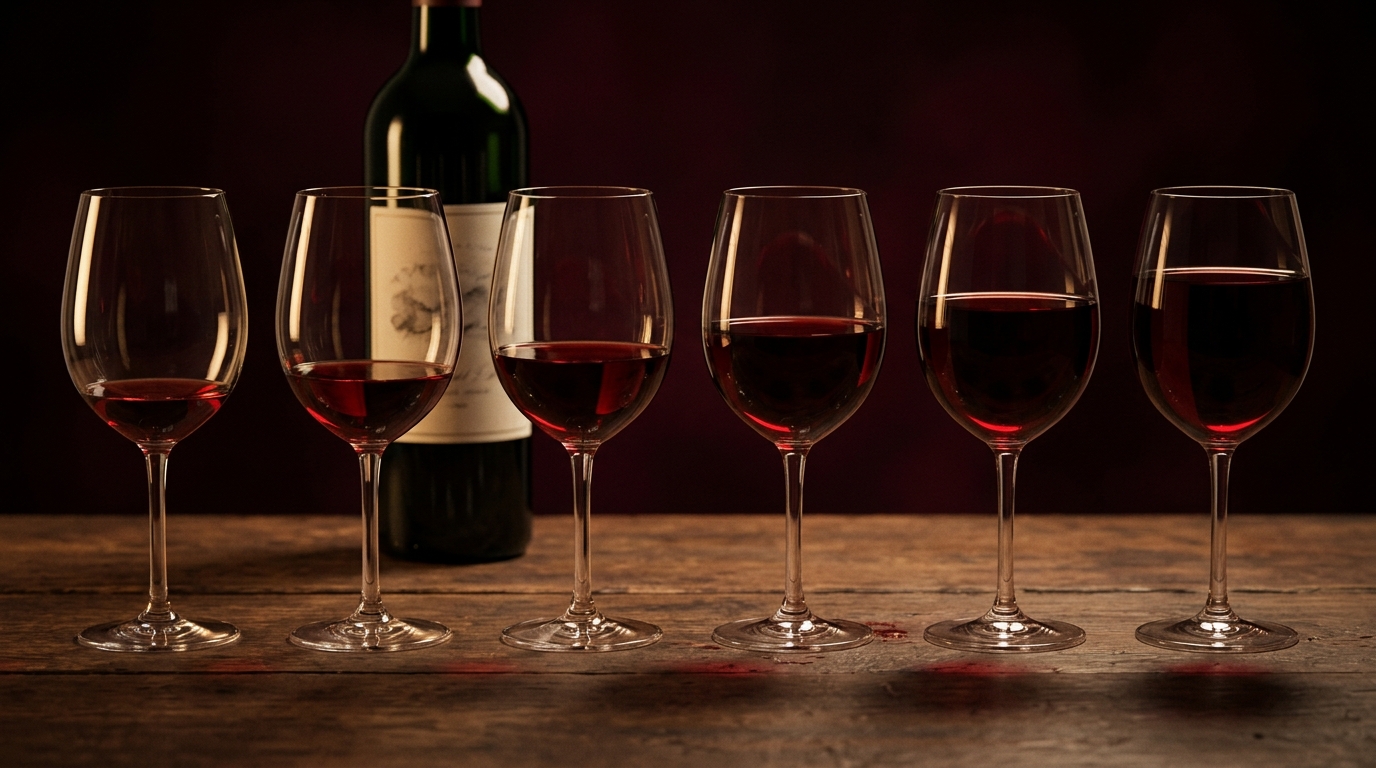
Tasting pours go much further than people plan for
At two ounces a bottle gives roughly twelve tastes, which is why a single bottle of each wine covers six to eight guests comfortably at a tasting. People routinely over-buy here, opening a bottle per person for an event where everyone is sampling six wines and drinking the equivalent of two glasses total.
If you're setting one up, our guide to hosting a wine tasting party walks through the running order and the pour sizes together. Keep water on the table and something plain to eat, and don't put out more than six or seven wines.
Fortified and dessert wines use a smaller measure
Port, sherry, Madeira and Sauternes are poured in two to three ounce servings, partly because of the higher alcohol and partly because they are intense. At three ounces a 750 mL bottle of Port gives about eight servings, and a 375 mL half bottle of Sauternes gives four. That's why dessert wine so often arrives in the half bottle format.
How many glasses are in other bottle sizes?
The 750 mL standard is the reference point for every other format, and the large ones carry names borrowed from the Old Testament. Wine Folly keeps a reliable chart of wine bottle sizes if you'd like the full list up to an 18 liter Solomon.
| Format | Volume | Standard bottles | Glasses at 5 oz |
|---|---|---|---|
| Piccolo or split | 187.5 mL | One quarter | About 1 |
| Demi or half | 375 mL | One half | About 2 |
| Standard | 750 mL | One | About 5 |
| Magnum | 1.5 L | Two | About 10 |
| Double magnum | 3 L | Four | About 20 |
| Methuselah or Imperial | 6 L | Eight | About 40 |
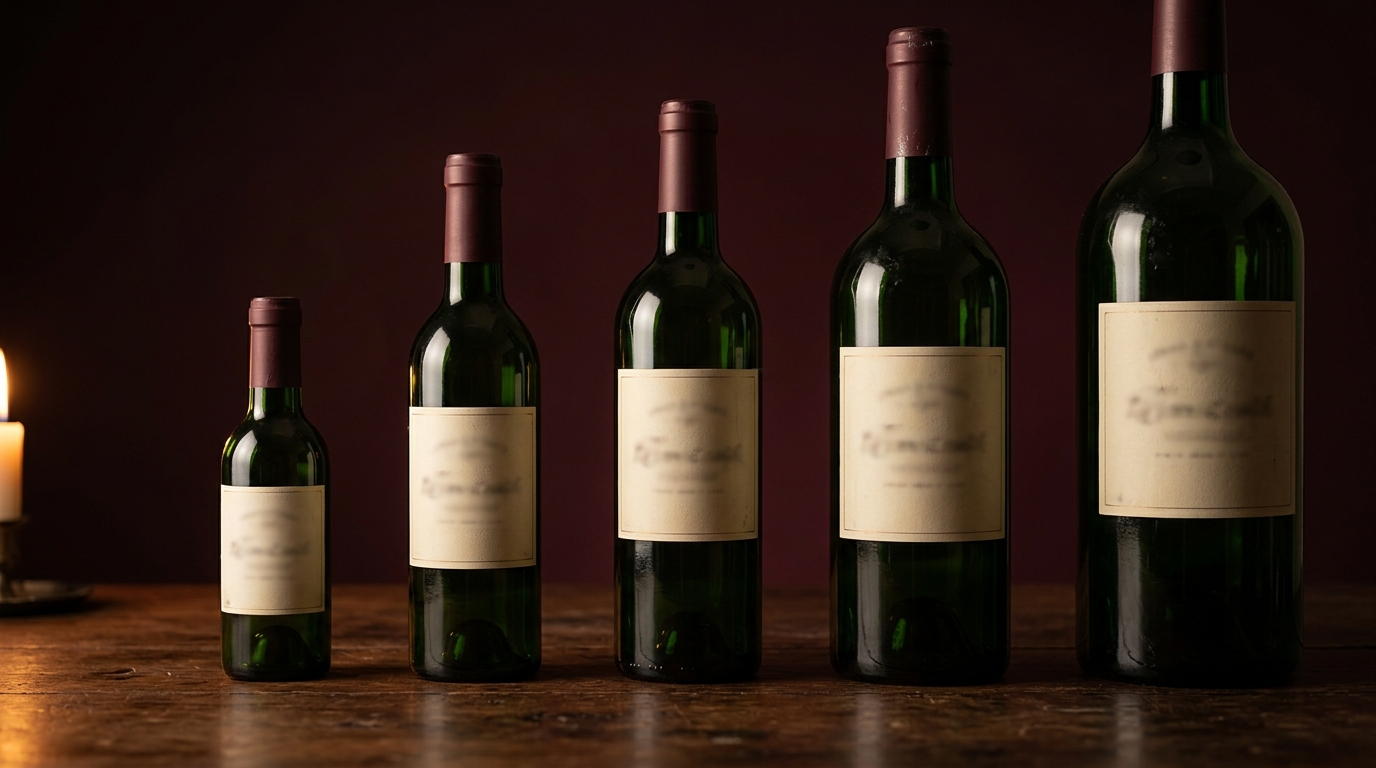
Half bottles earn their place
A 375 mL half bottle gives you two glasses, which is about right for one person on a weeknight or for two people who want a different white before the red. They're also the honest way to try an expensive bottle, and the format is far more common in Bordeaux, Burgundy and the dessert wine aisle than people realize.
Magnums are a hosting tool
A magnum holds two bottles worth of wine and pours about ten glasses. For a party that means fewer corks, fewer empties and less interrupting yourself. Wine also ages more slowly in a magnum, because the ratio of wine to the oxygen in the neck is more favorable, which is why collectors like them for wines meant to keep.
Cans and boxes need the same division
Canned wine comes in several sizes and the label's the only way to know. A 250 mL can is about 8.5 ounces, near enough two small glasses. A 375 mL can is a half bottle. Boxed wine is usually 3 liters, so it holds four standard bottles and pours around twenty glasses, and the bag inside keeps air off the wine for weeks rather than days.
How many bottles do you need for a dinner party?
Start from half a bottle per guest, which works out to two and a half glasses each across an evening. That rule of thumb assumes wine's the main drink, dinner runs two to three hours, and people are eating while they drink. Adjust upward for a longer night and downward if you're also pouring cocktails or beer.
| Guests | Bottles for a 2 to 3 hour dinner | With a spare |
|---|---|---|
| 4 | 2 | 3 |
| 6 | 3 | 4 |
| 8 | 4 | 5 |
| 12 | 6 | 7 |
| 20 | 10 | 12 |
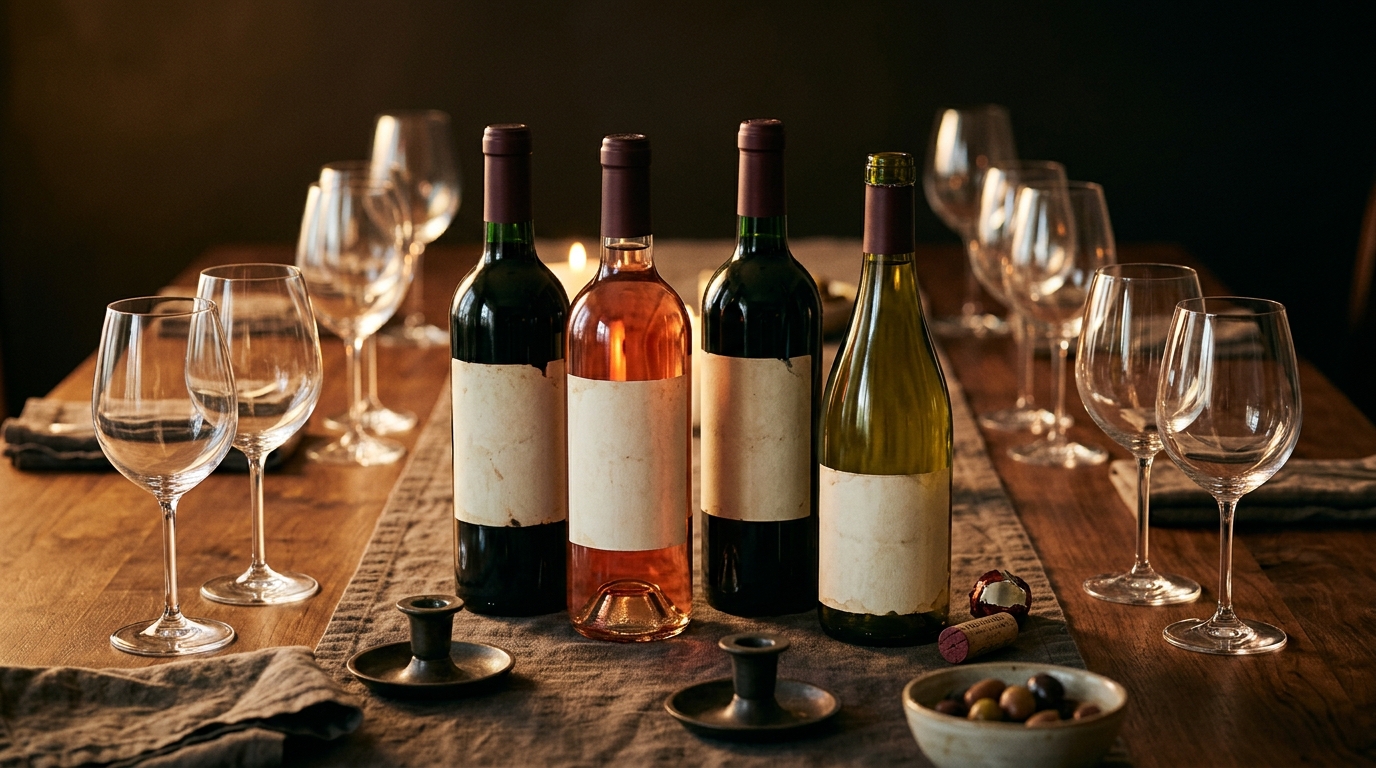
Buy the spare, and buy across styles
An unopened bottle keeps for years in the rack. A dinner party that runs dry at nine o'clock does not recover, so the extra bottle is cheap insurance and it goes back in the rack if you don't need it. Our guide to choosing wine for a dinner party covers what to actually pick once you know the number.
Spread the bottles across styles rather than buying six of the same thing. A white, a red and a rosé give people somewhere to go, and they cover a table where one person is eating salmon and another is eating steak. Getting the serving temperatures roughly right matters more than the extra bottle does, because a warm white and an overchilled red both taste worse than they should.
Is a bottle better value than ordering by the glass?
Do the division at the table. A bottle gives you five glasses at a standard pour, or four if the restaurant pours six ounces. Divide the bottle price by the by-the-glass price for something comparable, and if the answer's less than four, the bottle is ahead the moment your table wants a fourth glass.
Two people having two glasses each are usually at or past the break-even point already. The bottle also tends to be the better wine, because by-the-glass lists are built around bottles that survive a few days open, and that constraint narrows what a restaurant can offer.
Glasses win when your table wants different things, when the list is unfamiliar, or when one person isn't drinking much. We wrote about that trade-off in more detail in our guide to ordering wine at a restaurant. If you'd rather not decode an unfamiliar list at all, Sommy's Current Venue feature pulls up the venue's own wine list and filters it by grape, by glass or bottle, and by a price range you set, then ranks what is left against your Taste Profile, which turns a two page list into two or three real options.
What about the wine you do not finish?
A bottle opened for two people usually leaves a glass or two behind, and that wine's fine tomorrow if you treat it properly. Recork it, put it in the fridge whatever color it is, and drink it within a couple of days. We go through the details in storing open wine, including why the fridge helps a red as much as a white.
Frequently asked questions
How many glasses are in a bottle of Champagne?
A Champagne bottle holds the same 750 mL as a still wine bottle, so the math starts identically at 25.4 ounces. Flutes and coupes are smaller than still wine glasses though, so a bottle poured into flutes commonly gives six to seven servings rather than five. For a toast where everyone gets a shallow pour, plan on eight.
How many glasses of wine are in a magnum?
A 1.5 liter magnum holds 50.7 fluid ounces, which is ten glasses at the standard 5 ounce pour and about eight at a generous six ounce pour. That makes one magnum the right size for a table of five people having two glasses each.
Is a 5 ounce pour the same everywhere?
It is the US convention and the basis of nearly every serving chart, but it isn't a law and restaurants vary between four and eight ounces. The UK uses metric measures of 125, 175 and 250 milliliters, which work out to roughly 4.2, 5.9 and 8.5 fluid ounces. Always check what you're actually being poured before you compare.
How many glasses does one person get from a bottle across a week?
At a 5 ounce pour a bottle gives one person five evenings with a glass each, which is more evenings than an open bottle can survive. Practically you're looking at two or three days before the wine tires, so a 375 mL half bottle or a canned format suits solo drinking far better than stretching a full one.
Does a heavier bottle mean more wine inside?
No, a heavier bottle doesn't hold any more wine. Heavy glass, deep punts and thick shoulders are packaging choices, and the bottle still holds 750 mL by law. A dramatically heavy bottle tells you what a producer spent on presentation rather than anything about the wine or the volume.
Five glasses, and a plan for the sixth
The short version is worth keeping in your head: 750 mL, 25.4 ounces, five glasses at five ounces each, four if you pour generously, twelve if you are tasting. Half a bottle per guest gets your shopping list right, and the spare bottle is always worth buying.
The part no chart can do for you is the bottle itself. Every number here works out the same whether the wine turns out to be one you love or one you finish out of politeness, and that's the gap worth closing next. Pour five ounces into your own glass tonight and see what five really looks like.

I have spent four decades building software. Wine was the one thing I never quite cracked: an ocean of possibility with no reliable way in. I wanted a tool that could tell me whether I'd like a bottle, not whether a critic did, and waited years for the technology to make it possible. Sommy is that tool. I write about wine from the data side. What 150,000 bottles look like when you try to predict a single person's palate.