

A wine tasting party needs six to eight guests, four to six bottles, one glass each and about two hours. Pour two ounce tastes in order from lightest to heaviest, put out plain crackers and water between wines, and give each bottle roughly fifteen minutes before you move on. At around $15 to $20 a bottle that comes to somewhere near $20 a head including food, which is less than most people spend taking the same friends out for one round of drinks.
Everything below is the running order rather than a lecture on tasting technique. You don't need to know anything about wine to host one of these well, because your job on the night is timekeeping and pouring, not teaching.
How do you actually run a wine tasting party?
Pour one wine at a time, give the room a few minutes with it, then move on before anyone gets bored. That is genuinely the whole format. The reason tastings feel intimidating is that people picture a silent room of experts, when the version that actually works is closer to a dinner party where the food arrives in small installments and everyone has an opinion about each one.
Fifteen minutes per wine is the pace that holds. That gives you time to pour, say a sentence about where the bottle comes from, and let the conversation run its course before it starts to sag. Six wines at that pace fills about ninety minutes, which is a comfortable evening once you add arrivals and the point where everyone stops tasting and just drinks.
Your one real job as host is to make it clear there are no wrong answers, and the fastest way to do that is to ask questions nobody can fail. Rather than asking about tannin, ask whether a wine feels smooth or a bit grippy. Rather than asking for tasting notes, ask what the first thing they smell reminds them of. Everyone can answer both, and the room relaxes about ten minutes in once two or three people have disagreed out loud and nothing bad happened.
How many bottles do you need, and what does it cost?
Four to six bottles covers six to eight guests, and one bottle of each wine is genuinely enough. A 750ml bottle holds just over 25 ounces, so at a two ounce tasting pour you get twelve tastes out of it, and at a more generous three ounces you still get eight. Either way a single bottle goes round the table with room to spare, which is the part most first-time hosts get wrong by buying double what they need.
The cost follows directly from that. Six bottles between $15 and $20 lands you at $90 to $120, and a cheese and charcuterie board for eight adds somewhere around $40, so the whole evening sits near $130 to $160, or about $20 a head. Asking guests to bring one bottle each against a stated rule, such as any rosé under $25, drops your share to almost nothing and doubles as the theme.
Keep the guest list at six to eight rather than stretching it. Beyond that you need two bottles of each wine, the pouring takes long enough to kill the pace, and the quieter guests stop saying anything at all. Ten is the point where it turns into a normal party that happens to have wine at it, which is fine, but it isn't a tasting.
Which theme should you pick?
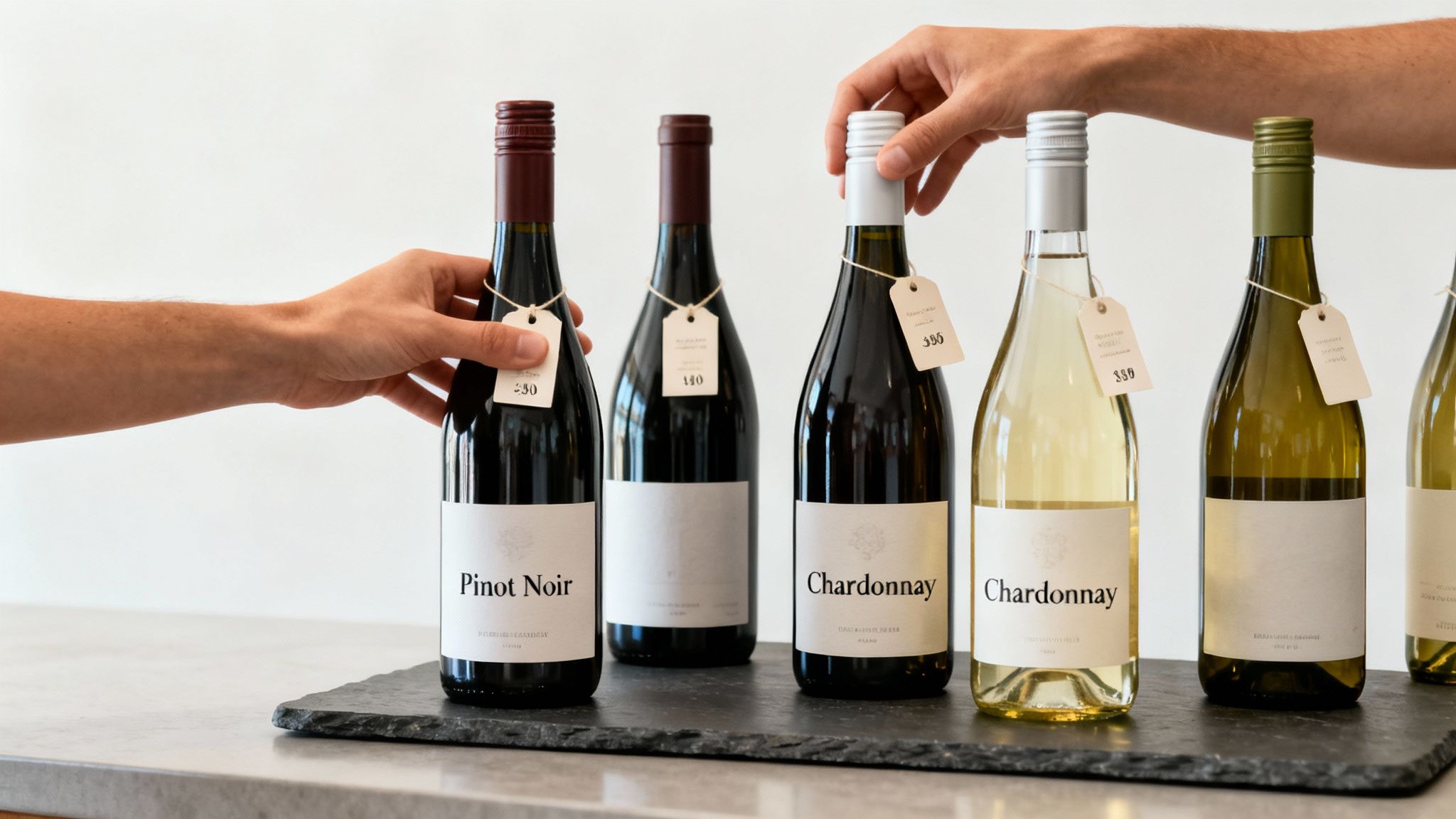
Pick one that turns a wall of a thousand bottles into a shelf of six, because that's the only job a theme has to do. Walking into a shop with "wine for a tasting" in your head is how people end up buying at random and paying too much for it. Walking in with "Pinot Noir from four countries" means you're finished in ten minutes.
Three themes work reliably enough to recommend. A tour of one country gives you natural variety, so an Italian night might run Prosecco, then a northern Pinot Grigio, then Chianti Classico, then a Primitivo from Puglia. One grape from several places is the version that produces the loudest reactions, since nobody expects a Burgundy, a Sonoma Coast bottle, a Willamette Valley one and a Central Otago one to taste as different as they do. A price ceiling, such as best reds under $20, keeps the night cheap and turns the shopping itself into the game.
Choosing the actual bottles inside a theme is where people stall, particularly if the shop staff are busy. That's the moment Sommy Chat is useful, since you can describe the theme and your budget per bottle and get specific suggestions while you're standing in the aisle rather than guessing from label design. Our guide on how to choose wine covers the same problem for ordinary shopping trips.
What order should you pour the wines in?
Lightest to heaviest, always, because a big red wipes out your ability to taste anything delicate that follows it. The order below holds for almost any lineup you'll assemble:
- Sparkling wine first, as a palate opener.
- Light whites such as Pinot Grigio or Sauvignon Blanc.
- Fuller whites such as an oaked Chardonnay.
- Light reds such as Pinot Noir or Gamay.
- Bold reds such as Cabernet Sauvignon or Malbec last.
Rosé goes after the light whites and before the fuller ones. If you have a sweet wine, it goes at the very end regardless of color, since sugar rewrites your palate for everything after it. Dry before sweet and light before heavy are the only two rules you need, and they cover every case you're likely to meet.
Water between every wine matters more than the order does. A mouthful of water and a plain cracker resets things enough that the fourth wine gets a fair hearing, and without it the back half of the tasting turns into a blur that flatters whichever bottle happened to be loudest.
What is the 20 minute wine rule?
It says to take white wine out of the fridge 20 minutes before you pour it and to put red wine into the fridge for 20 minutes before you pour it. The Essex Local Wine School's explanation of the 20:20 rule lays out why both directions matter, which is that a white straight from the fridge is too cold to smell properly and a red at modern room temperature tastes jammy with harsher tannins.
It matters more at a tasting than at a normal dinner, because temperature is the single biggest thing that can make a perfectly good bottle show badly in front of eight people. A Cabernet served at 72F will taste hot and bitter next to the same bottle twenty minutes cooler, and your guests will blame the wine rather than the room.
The practical version is to move everything twenty minutes before people arrive. Whites and rosé come out of the fridge, reds go in, and both end up somewhere near the middle by the time you pour. An ice bucket half filled with water chills a bottle much faster than ice alone if you're running late.
What do you serve at a wine tasting party?
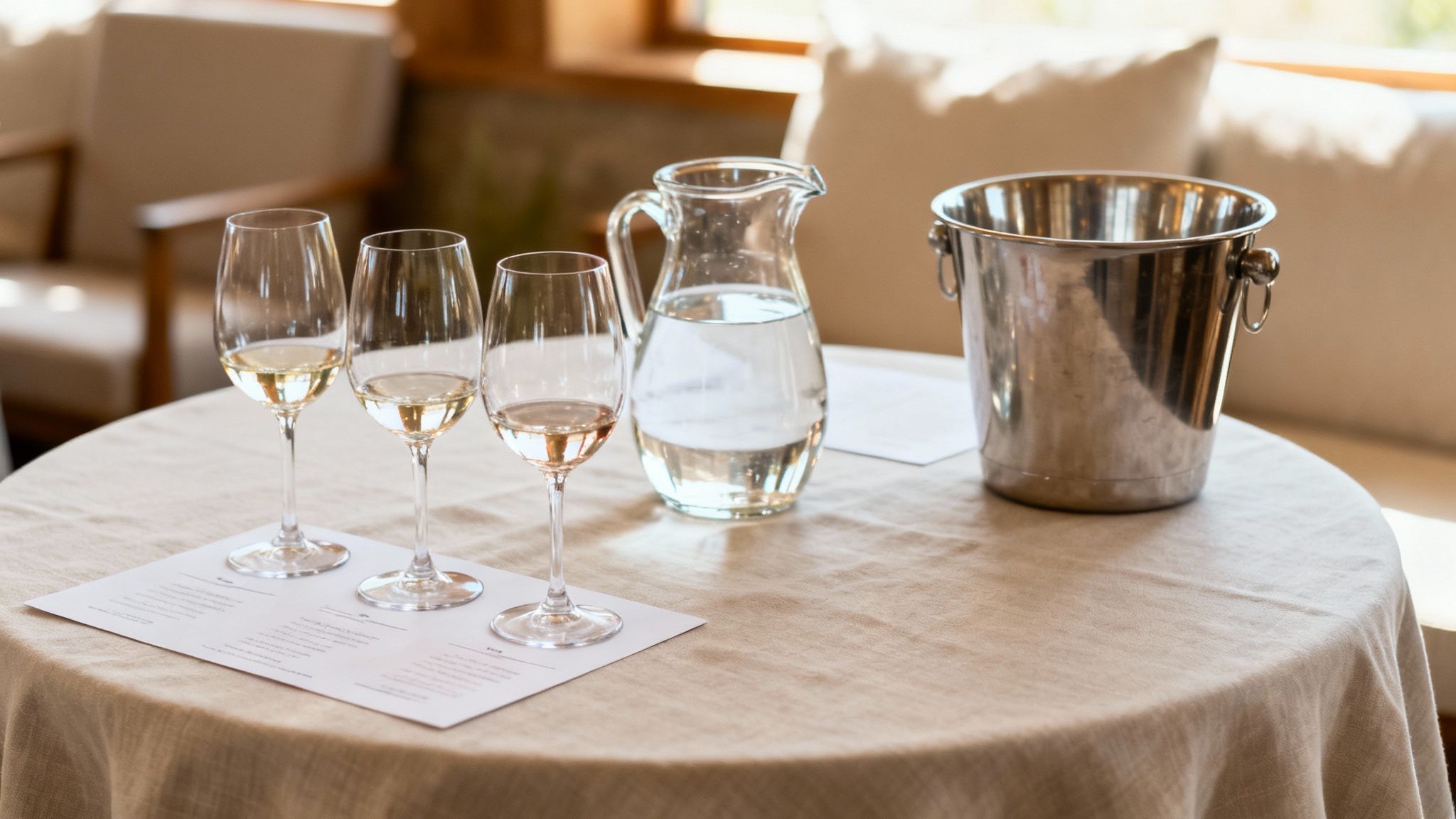
Plain crackers and water throughout, then a cheese and charcuterie board once the tasting itself is over. The distinction matters, because food that's interesting enough to enjoy is also interesting enough to interfere with the wine, and a strongly flavored bite before a delicate white ruins that pour for whoever ate it.
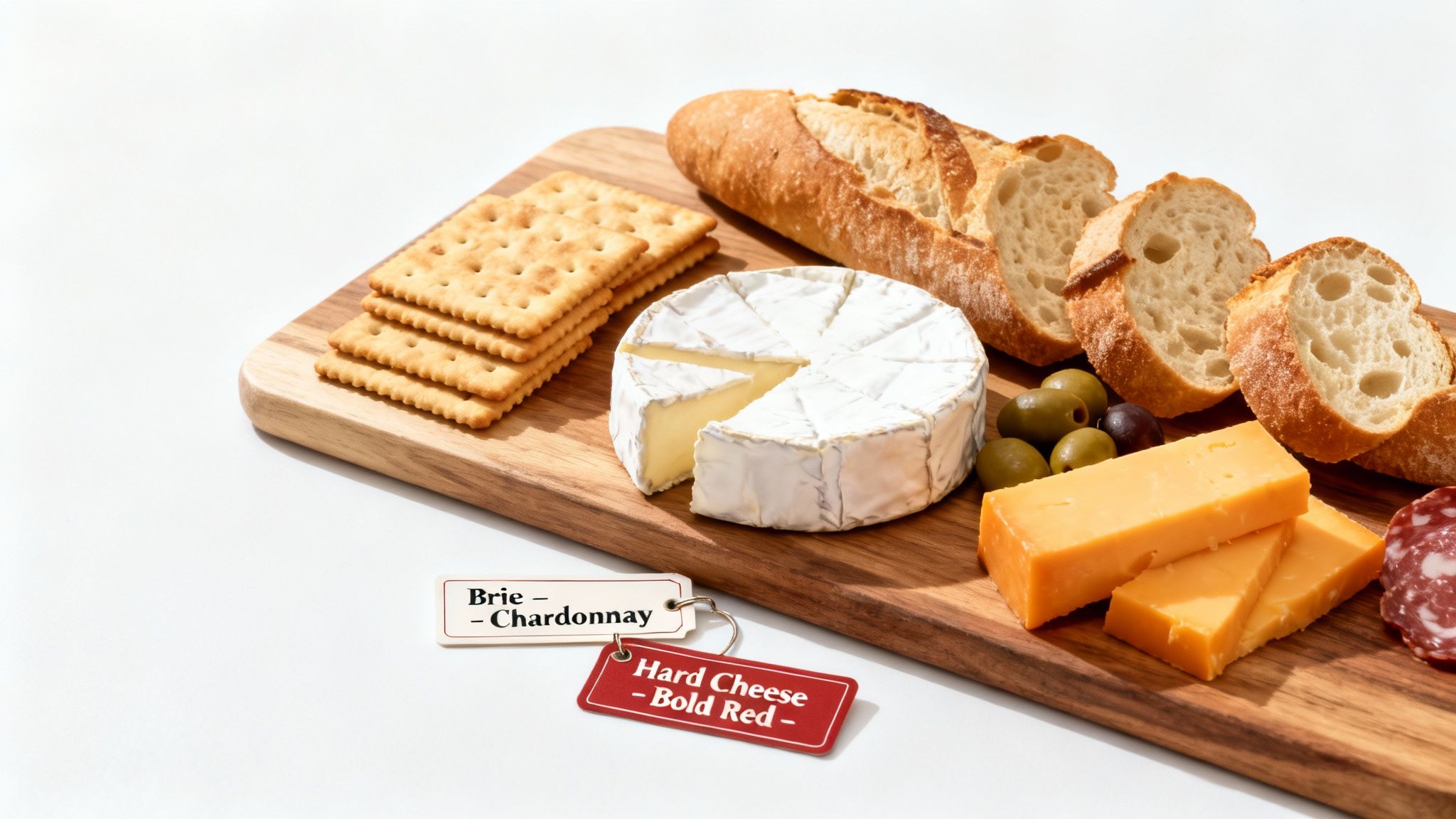
So it helps to think of the food in two separate tiers. Unsalted crackers, plain baguette and water sit on the table the whole time as palate cleansers, and they're the only thing anyone should touch between wines. The board comes out at the end and can be as good as you like: one soft cheese, one hard cheese, a couple of cured meats, olives, nuts and something sweet such as fig jam or honey covers it without any cooking at all.
If the board is the part you actually want to get right, our guide to appetizers for a wine tasting goes through what to put on it and what to leave off, and it's the better place to plan the food than this page is.
What supplies do you actually need?
One glass per guest, a corkscrew, a water pitcher and an opaque bowl, which is the entire list. Tasting kits sold for this purpose add scorecards, aroma wheels and branded glassware, and none of it changes the evening. Any clear glass works, since seeing the color is the only visual part of the exercise, and a single glass rinsed with water between wines is normal practice rather than a compromise.
The opaque bowl is the item people skip and shouldn't. It sits in the middle of the table as a dump bucket for wine nobody wants to finish, and having it there quietly tells the room that leaving some is allowed. Without it, six pours over ninety minutes turns into most of a bottle each whether people meant to or not.
Notes are optional and better when they're informal, so index cards beat scoring sheets. If you'd rather give people something structured, our wine tasting notes template is deliberately simple, and the point of writing anything down is that people remember which bottle they liked well enough to buy it again.
How do you run a blind tasting?
Wrap the bottles in foil or plain bags, number them, and don't reveal anything until every wine has been poured and voted on. Blind tasting is the format that gets the most out of a group, because it removes the two things that skew every opinion in the room, which are the price on the bottle and whether anyone recognizes the label.
The easiest version asks each guest to bring one bottle inside a stated rule, such as any Sauvignon Blanc under $25, and to hand it over already wrapped. You pour in a random order, everyone ranks the wines from favorite to least favorite, and you total the votes before the reveal. It costs you almost nothing and the reveal is reliably the best ten minutes of the night, usually because the cheapest bottle placed higher than someone expected.
Keep the ranking simple, since asking eight people to score wines out of a hundred produces numbers nobody can defend. Ask each person for their top choice and their bottom choice, count both, and you get a clear winner without anyone having to pretend to a precision they don't have. For guests who've never done this before, our wine tasting tips for beginners is a useful thing to send round in advance.
Which wine tasting party games actually work?
The ones built on guessing something the group can verify at the end, which rules out most of what gets sold as a wine game. Guess the grape is the standard, and it works best when you tell people the four options in advance so it's a matter of matching rather than recall. Everyone writes down which glass they think is which, and the reveal settles it.
Guess the price is the cruelest and the most popular. Buy a spread from around $8 to around $40, pour blind, and ask people to rank the wines by what they think each cost. The rankings almost never match the receipt, and watching the room absorb that is a better argument for trusting your own taste than anything a host can say out loud.
A pairing showdown is the one that gets people out of their seats. Put out three or four different bites, give everyone the same two wines, and have each person find their favorite combination and defend it to the table. It produces genuine disagreement rather than polite agreement, and it teaches the one thing that actually transfers to normal life, which is that food changes how a wine tastes far more than most people expect.
Skip the aroma-guessing kits and the hundred-point scorecards. Both of them reward the guest who already knows the most, which is exactly the thing a good tasting party is trying to avoid.
Frequently asked questions
How long should a wine tasting party last?
About two hours, with roughly fifteen minutes on each wine and the rest spent arriving, eating and drinking normally once the tasting is finished. Six wines at that pace fills around ninety minutes, and stretching it much further is where the attention in the room starts to go.
Do you need a different glass for every wine?
No, and almost nobody does it. One glass per guest, rinsed with a little water and tipped into the dump bowl between pours, works fine and saves you washing forty eight glasses afterwards. Rinsing with a splash of the next wine is the version sommeliers use if you want to be precise about it.
What if my guests all like different things?
That's the point of the format rather than a problem with it. A theme naturally spreads across several styles, and the disagreements are what make the evening interesting. Saying out loud at the start that there are no correct answers is usually enough to get the quieter half of the room talking.
Should guests spit out the wine?
At a home tasting almost nobody does, and there's no need to make a thing of it. The dump bowl covers the same ground more gently, since it lets people pour away what they don't want to finish without any of the theatre. Across six two ounce pours the total is roughly two standard glasses each anyway.
How many wines is too many?
Past six or seven your palate stops distinguishing much and the evening gets long. Four is a perfectly good tasting, six is the sweet spot, and eight is where people start losing track of which wine they're on and the notes stop matching the glasses.
Can you host a wine tasting party on a budget?
Yes, and the price ceiling theme is the way to do it. Setting a rule such as best reds under $15 and asking each guest to bring one bottle spreads the cost across the room, and blind tasting cheap wine against slightly less cheap wine is more fun than tasting expensive bottles where everyone is too polite to say they preferred the other one.
Putting the night together
The plan fits in a sentence. Six to eight people, four to six bottles under one theme, poured light to heavy in two ounce measures with water and plain crackers between each, whites out of the fridge and reds into it twenty minutes before anyone arrives, and the good food saved for the end.
What you can't plan is which bottle the room will fall for, and that's the reason to do it at all. Half the value of an evening like this is finding out that the grape you assumed you disliked was fine and the one everybody recommends isn't for you. If the tasting sparks a proper dinner next, our guide to the best wine for a dinner party picks up where this one stops.