
Bring wine that travels well, opens without fuss and goes with one-pot cold-weather food: a good boxed red, a Zinfandel or Malbec for chili and stews, a crisp white for anything cheesy, and a Prosecco for after the slopes. Most of these cost $12 to $20 a bottle, or about $20 to $30 for a 3-liter box. Leave the delicate, expensive bottles at home, since a rental kitchen with mismatched glasses won't show them off.
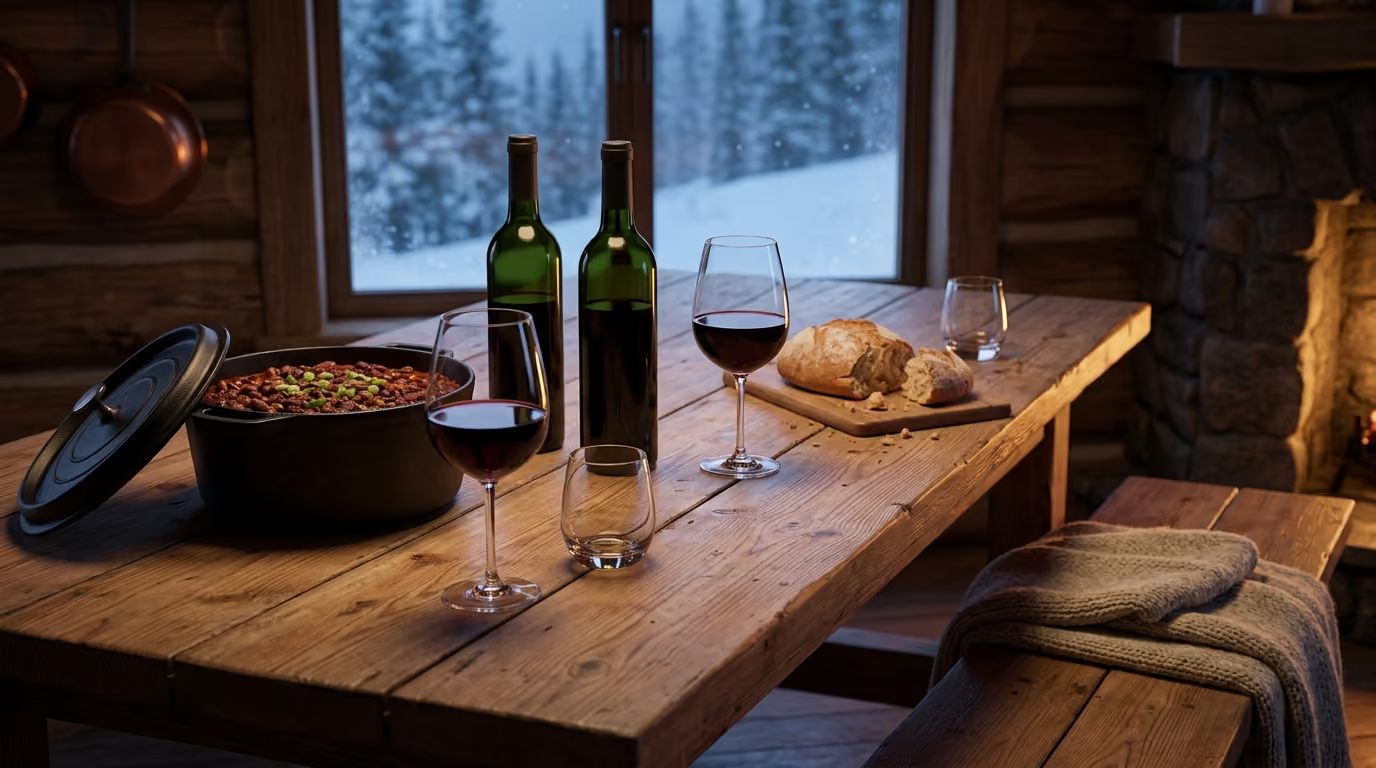
Cabin dinners have a few quirks that matter more than the menu. You may not find a corkscrew, the glasses are whatever's in the cupboard, everyone shares, and the food is usually big and hearty: chili, stew, pasta, fondue or burgers.
What are the best wines for a cabin or ski trip dinner?

A good boxed red, $20 to $30 for 3 liters
A 3-liter box holds the same as four bottles, needs no corkscrew, packs flat in the car and keeps for weeks after opening, so nobody has to finish it on the first night. Bota Box is one widely available brand, and its Old Vine Zinfandel or Cabernet Sauvignon covers a crowd.
Zinfandel, $12 to $20
Its jammy fruit and peppery spice stand up to chili, barbecue and anything with tomato or smoke, which describes most cabin cooking. Bogle Old Vine Zinfandel is easy to find in most US stores, and our Zinfandel guide explains the styles. For the chili itself, see our guide to wine with chili.
Malbec from Mendoza, $12 to $20
It's soft, plummy and easygoing, so it pleases people who like big reds without the drying grip of a young Cabernet, and it's built for burgers and steak off a grill. Alamos Malbec is widely available in the US.
Grüner Veltliner or dry Riesling, $12 to $20
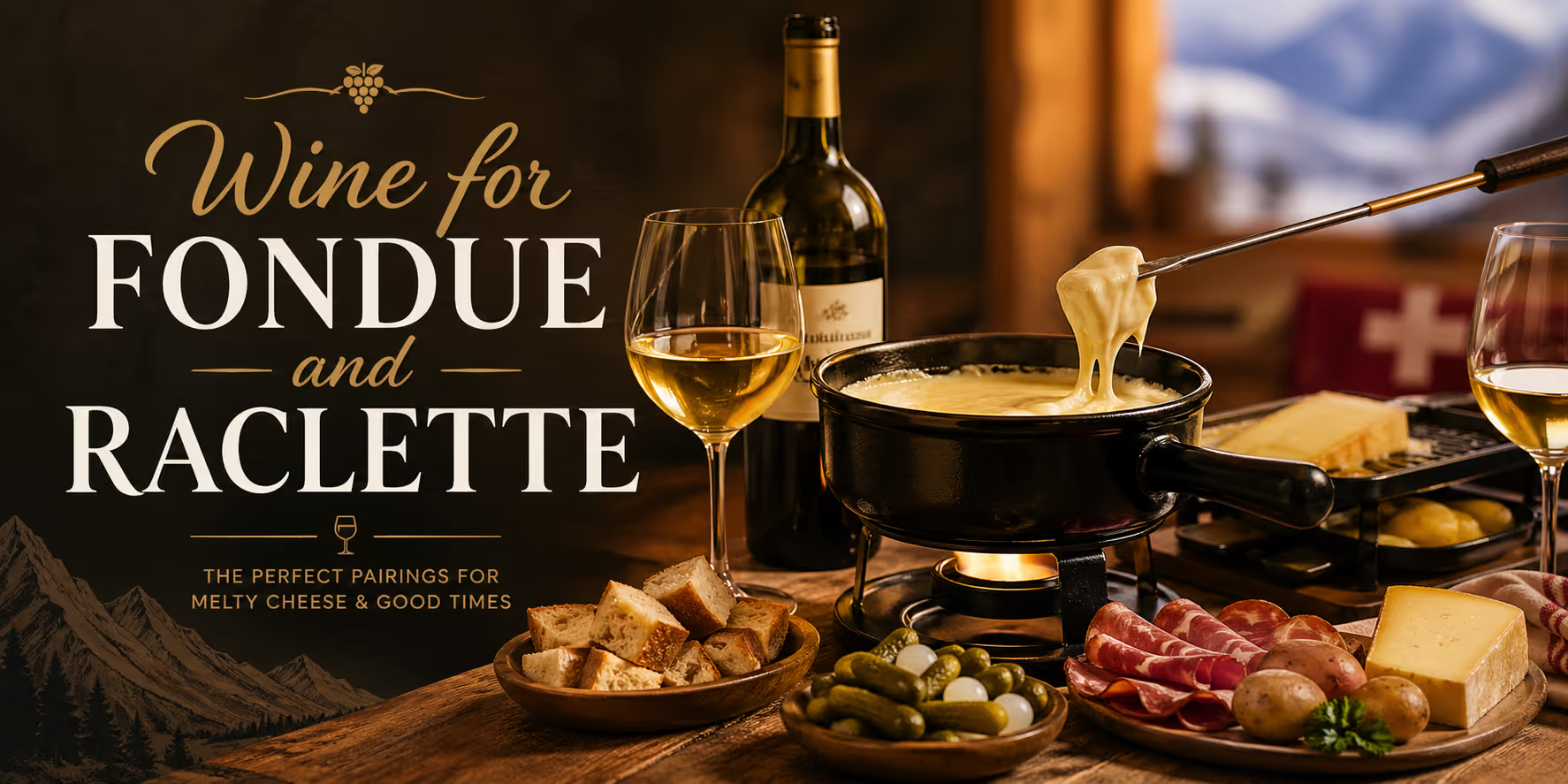
High acidity cuts through melted cheese, cream and butter, which makes either one a better match for fondue, mac and cheese or a creamy pasta than a heavy red. Some Grüner comes in screw-cap liter bottles, which suits a group. Our fondue and raclette pairing guide goes deeper on cheese nights.
Prosecco, $12 to $18
Bubbles are the natural après-ski drink, they work with chips, cheese and anything salty, and a bottle opens without a corkscrew. La Marca Prosecco is widely available in the US.
If they like X, try Y

- If they usually drink IPAs or craft beer, pour the Grüner Veltliner or a Prosecco. Both are crisp and refreshing, closer to a cold beer than a heavy red is.
- If they only drink Cabernet, bring the Malbec. It's in the same bold family, with softer tannin that's friendlier with chili.
- If they like sweet wine, try a Lambrusco labeled amabile or dolce, which is lightly sweet, fizzy and red, and great with pizza.
- If they like cocktails, make mulled wine with the boxed red. It turns an inexpensive wine into something everyone gathers around.
- If they don't drink much, a half-bottle or a few cans of sparkling wine means nothing goes to waste.
What should I pack besides the wine?
Bring a corkscrew even if you think the rental has one, a few sturdy tumblers or stemless glasses, and a cooler bag. Keep the bottles inside overnight rather than in the car.

Frequently Asked Questions
How much wine should I bring for a cabin weekend with friends?
Plan on roughly one bottle per two adults who drink, per night, and round up for longer evenings. A 3-liter box counts as four bottles. Splitting it between a box of red and a few bottles of white and sparkling covers most groups.
Can wine freeze if I leave it in the car overnight?
Yes, on a cold enough night wine left in a car can freeze, and the expanding liquid can push out the cork or crack the bottle. Bring it inside with your luggage.
What's the best wine for mulled wine?
Use an inexpensive, fruity red with soft tannin, such as Zinfandel, Garnacha, Merlot or a boxed red blend. Spices, citrus and sugar cover the details, so an expensive bottle is wasted here. Heat it gently and don't let it boil, which drives off alcohol and turns the spices bitter.
Is boxed wine actually any good?
The good ones are perfectly pleasant everyday wine, which is exactly what a cabin weekend needs. The bag inside the box collapses as you pour, so less air reaches the wine and it stays fresh far longer than an open bottle.
Does wine hit harder at altitude?
Many people say it does, but studies that measured blood alcohol at real or simulated altitude generally haven't found it rising any higher. The likelier culprits are dehydration from dry mountain air and exercise, a long day on the slopes, and the headaches and poor sleep that altitude can cause on its own, which a few drinks make worse. The practical answer is the same either way: drink a glass of water between glasses of wine.