
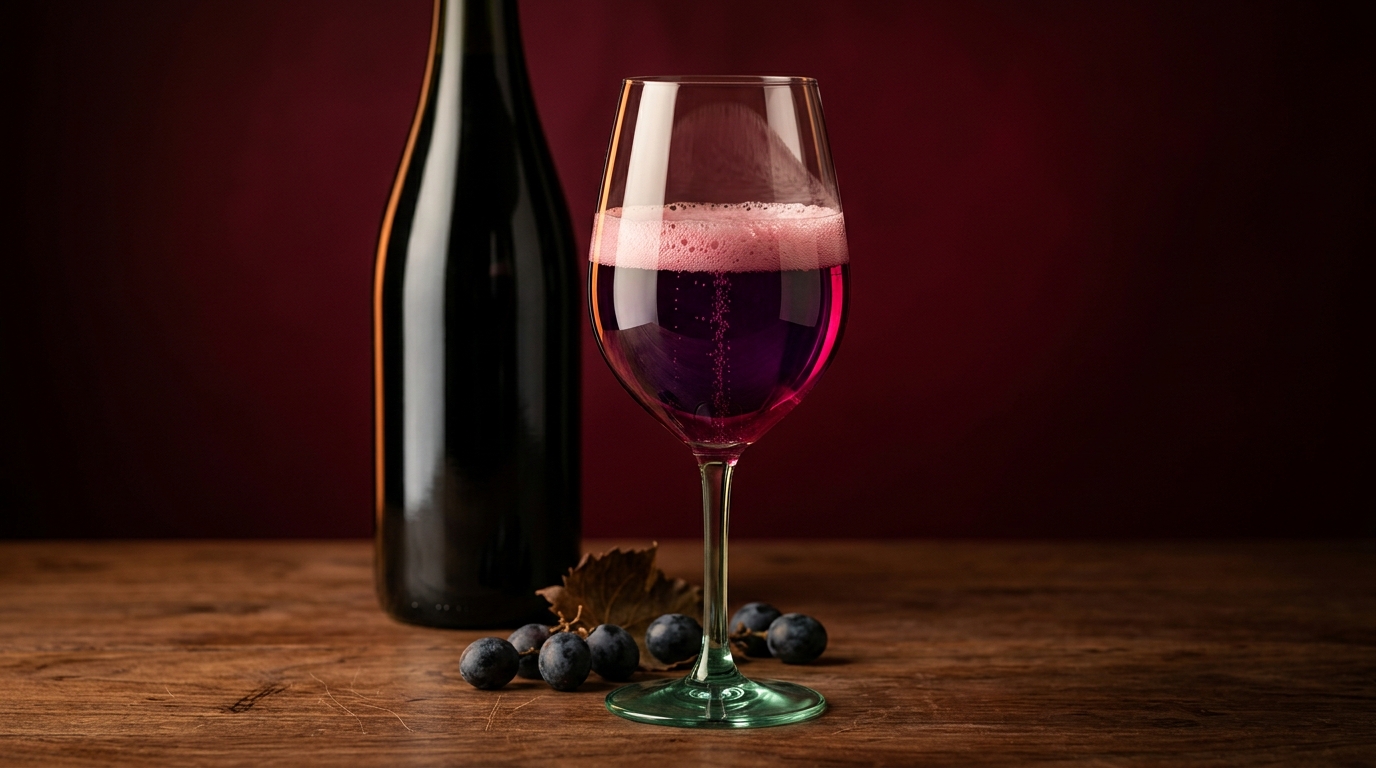

Lambrusco wine can be bone dry or properly sweet, and the bottle will usually tell you which one if you know the single word to look for. Find secco, semisecco, amabile or dolce on the label, running from driest to sweetest in that order, and choose on that rather than on how dark the wine looks. If there's no sweetness word anywhere on the bottle, the style name and the region are your next best clue. And if the label says spumante instead of frizzante, the word "dry" means something quite different, which is where most people get caught out.
Is Lambrusco dry or sweet?
It's both, depending on which bottle you happen to pick up, and that's the whole problem. Lambrusco isn't one wine and it isn't even one grape. It's a family of related red grapes grown mainly around Modena, Parma, Reggio-Emilia and Mantua, and the wine made from them is produced across the entire sweetness range, from genuinely bone dry to dessert sweet. Two bottles sitting beside each other on the same shelf, both saying Lambrusco in large friendly letters, can be as different as lemonade and cola.
Most of what you'll find is lightly sparkling and red, with a foaming pink head and a colour running anywhere from pale rose gold to an opaque purple that stains your teeth. There are eight separate Lambrusco appellations across Emilia-Romagna and Lombardy, and according to Wikipedia's survey of the denominations the most highly regarded wines are the frizzante reds made to be drunk young rather than kept. None of that geography tells you a thing about sugar, though, which is why the label word matters more than anything else on the bottle.
What do secco, amabile and dolce mean on a Lambrusco label?
They're the sweetness terms, and they're defined in law rather than left to the producer's judgement. The European rules that Italian wine is labelled under set an actual gram-per-litre band for each word, so these aren't marketing adjectives and they aren't a matter of house style. Here's the ladder you'll meet on a bottle of frizzante Lambrusco, which is the lightly sparkling style that makes up most of what's sold.
| Label word | Residual sugar | What it tastes like | Good if you want |
|---|---|---|---|
| Secco | Up to 4 g/L (9 g/L if acidity is high) | Genuinely dry, fruity without sugar | A red for dinner |
| Semisecco / Abboccato | Up to 12 g/L (18 g/L if acidity is high) | Just softened at the edges | Dry, but less sharp |
| Amabile | Up to 45 g/L | Clearly sweet, still fresh | Fruity, gentle fizz |
| Dolce | 45 g/L and above | Sweet, closer to a dessert | Sweetness to be the point |
Those bands come straight from Annex 3 of Commission Delegated Regulation (EU) 2019/33, the labelling rules covering sugar content, where the categories are written in English as dry, medium dry, medium sweet and sweet. Italian producers use the Italian equivalents. The acidity proviso in the first two rows is worth understanding, because it lets a high-acid wine carry a little more sugar and still be called dry, on the reasoning that you won't taste it as sweetness anyway.
That's also why two secco bottles can taste noticeably different from one another. Acidity, ripeness and tannin all shift how much sweetness you actually perceive, so the legal band is a floor and a ceiling rather than a promise. It's still the most reliable single piece of information on the bottle. If you've ever puzzled over the equivalent terms on a bottle of fizz, our explainer on what brut means on sparkling wine labels covers the other half of the same system.
Why does "dry" mean two different things on a Lambrusco label?
Because frizzante and spumante are legally separate categories, and each one gets its own sweetness ladder. This is the single most useful thing to know about buying Lambrusco, and almost nobody mentions it.
Frizzante means lightly sparkling, and it sits with still wines for labelling purposes, so the table above applies: secco means up to 4 grams of sugar per litre. Spumante means fully sparkling, and it uses the same ladder Champagne and Prosecco use, where the words run brut nature, extra brut, brut, extra dry, dry, medium dry and sweet. On that ladder, the same regulation puts "dry" between 17 and 32 grams per litre and "extra dry" between 12 and 17.
Read that twice, because it's genuinely strange. A frizzante Lambrusco labelled secco holds at most 4 grams of sugar. A spumante Lambrusco labelled secco, which translates as the same English word, can legally hold eight times that. The Italian word didn't change and the grape didn't change, but the category underneath it did, and "dry" on a sparkling label is one of the sweeter settings rather than the driest one. Someone who bought a spumante secco expecting the dinner-table red they had last week has every reason to feel misled, and they weren't reading the label wrong.
The fix is simple once you know. Check whether the bottle says frizzante or spumante first, then read the sweetness word in that light. On a spumante bottle, brut or extra brut is what gets you a properly dry wine, and Lambrusco di Sorbara's own rules allow spumante at every level from brut nature with no added sugar right through to dolce, as Italian Wine Central's summary of the denomination sets out.
What if the bottle doesn't say secco, amabile or dolce?
Plenty of bottles don't, especially the inexpensive ones sold under the broader Emilia designation, and then you're reading indirect clues. Three of them are worth your attention, in descending order of reliability.
The first is the appellation name. A bottle labelled Lambrusco Grasparossa di Castelvetro is far more likely to be dry and full bodied than a generic Lambrusco Rosso, because the tighter the appellation, the more the producer is aiming at the dinner table rather than the sweet end of the export market. The second is the alcohol figure, which tells you more than it looks like it should. A wine that fermented all of its sugar into alcohol tends to land near 11 percent, while one that was stopped early to keep some sweetness in the glass often sits lower. The third is price, and Taste of Home's look at the category puts plenty of good bottles in the $15 to $25 range, below which you're usually in the mass-market sweet style.
There's also the option of simply asking, which is a normal thing to do and not an admission of anything. A useful line in a restaurant is that you'd like a dry, lightly fizzy red for the pizza, and is this Lambrusco a secco. That gives the server enough to help you without either of you having to decode the whole list.
If you're standing in the aisle with an ambiguous bottle and nobody to ask, this is the moment Label Scan was built for: point your phone at the label and Sommy reads the producer, the appellation and the style, then tells you how the bottle sits against what you already know you like.
Should you buy Sorbara or Grasparossa?
Sorbara if you want something light and tart, Grasparossa if you want a darker red with some weight to it. These are the two ends of the Lambrusco spectrum, and choosing between them is the second decision after sweetness.
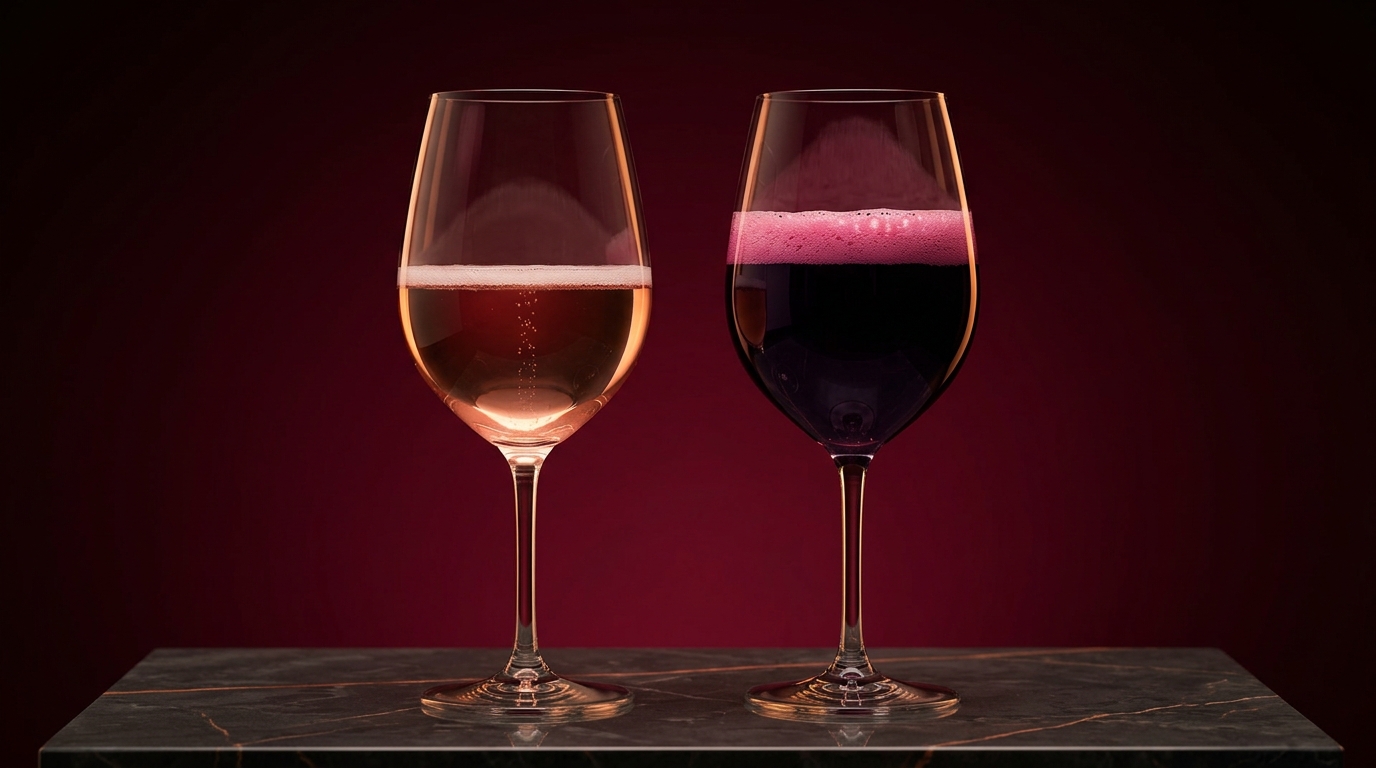
Lambrusco di Sorbara is the palest of the family, sometimes so light it reads as a dark rosé, with high acidity and a floral, red-berry character. It comes from north of Modena, and its rules require at least 60 percent Sorbara grapes. If you like light reds, or you find big wines tiring, start here. Grasparossa di Castelvetro sits at the opposite end: deep purple, fleshier, the most tannic Lambrusco of the lot, with blackberry and black cherry flavours and enough structure to stand up to roast pork. Its appellation requires 85 percent Lambrusco grapes.
Salamino di Santa Croce falls between the two and is the most widely planted variety of all, requiring at least 90 percent Salamino. It's a reasonable default if neither extreme appeals. One thing worth holding onto is that the grape name and the sweetness word are independent of each other. A Grasparossa can be sweet and a Sorbara can be bone dry, so you still need to read both.
What does a glass of Lambrusco actually taste like?
Tart red fruit, a soft foaming fizz and a finish that's much fresher than the colour leads you to expect. The bubbles in most Lambrusco are gentler than in Prosecco, more of a prickle than a rush, and they arrive under a pink mousse that settles within a minute or so of pouring.

Serve it cold, around the temperature you'd give a white wine rather than a red. This is the mistake that ruins more bottles than any labelling confusion: at room temperature a Lambrusco tastes flabby and its sweetness sticks, while at fridge temperature the acidity snaps back into focus and even an amabile reads as refreshing. Twenty minutes in the fridge does more for a mediocre bottle than anything else you can do to it.
Most Lambrusco gets its bubbles in a sealed tank through the Charmat method, the same process behind Prosecco, which keeps the fruit bright and the style consistent. A smaller number are refermented in the bottle and arrive cloudy with sediment, which changes the texture without saying anything about sweetness. If sparkling reds are new territory for you, we've written about how sweet each sparkling red actually is and about sparkling Shiraz, Australia's answer to the style.
What should you eat with Lambrusco?
The food of its own region, first and foremost, which means cured meat, hard cheese and anything rich enough to need cutting through. Lambrusco comes from the part of Italy that produces Parmigiano-Reggiano, prosciutto di Parma and mortadella, and the wine evolved alongside them.
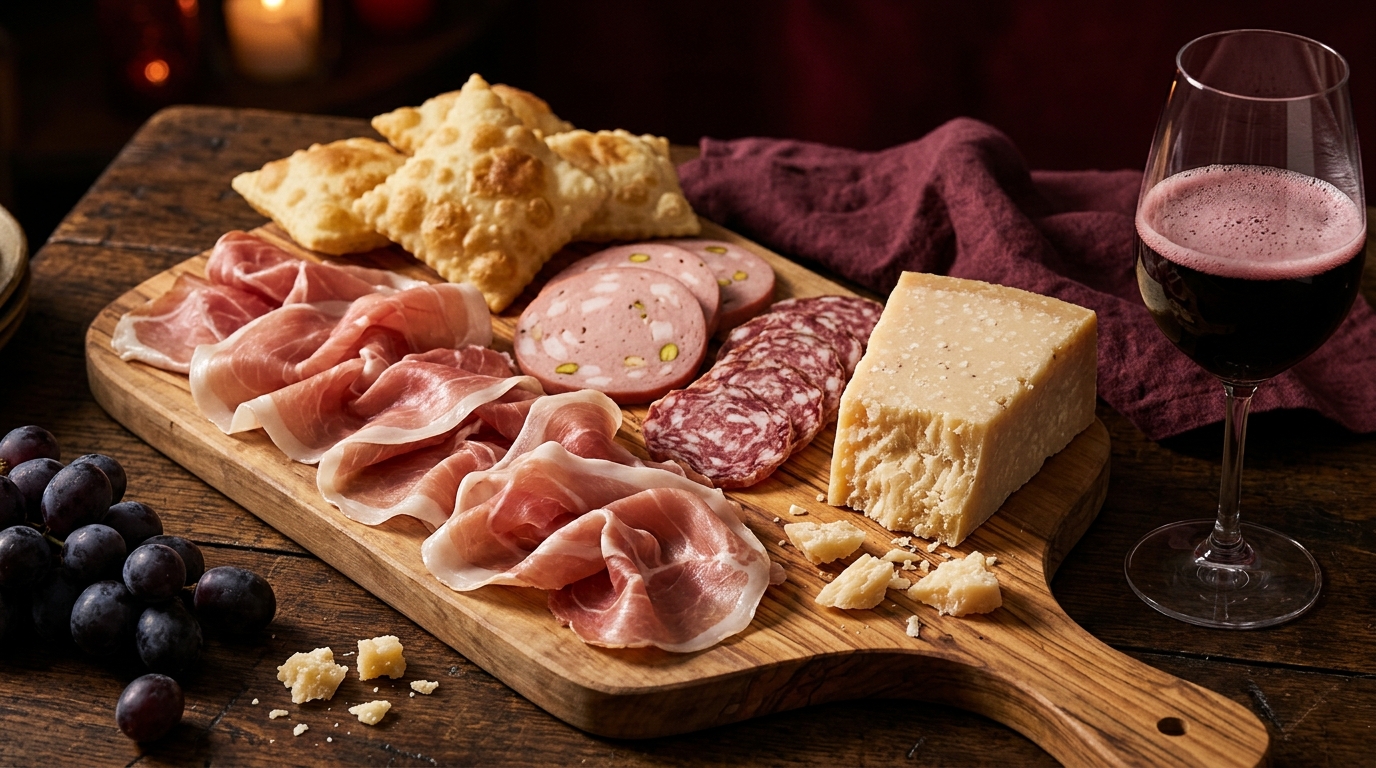
A dry secco is the one to reach for with salty, fatty food. The acidity and the fizz between them reset your palate after a mouthful of prosciutto in a way that a still red simply can't, which is the mechanical reason the pairing works rather than just a regional habit. It's equally good with a sausage pizza, a plate of tagliatelle al ragù, or a burger. Our guide to wine for a charcuterie board of salami and prosciutto goes further into the cured-meat side, and wine with pizza by style covers the toppings question properly.
An amabile earns its place somewhere different. Sweetness handles chilli better than dryness does, so a gently sweet Lambrusco with a spicy pizza or a plate of nduja works where a tart secco would fight it. Dolce belongs with dessert or on its own after dinner, and it makes a genuinely good match for a plain chocolate tart. Serving a dolce as the house red with a savoury meal is how the style got its reputation.
Why do so many people still think Lambrusco is sweet?
Because for about thirty years in the United States, the Lambrusco almost everyone drank genuinely was sweet. Riunite arrived in the American market in 1967 with a wine made deliberately in the amabile style to suit local taste, became the top-selling imported wine in the country by 1973, and stayed there for decades on the back of an advertising campaign most people over fifty can still recite. Those details come from Wikipedia's history of the brand.
So the memory is perfectly accurate, it's just a memory of one commercial style rather than of the whole category, and the dry versions were always being made and drunk at home in Emilia while the sweet ones were being shipped abroad. The reputation followed the export, not the wine.
What's changed is availability rather than the wine itself. Dry Lambrusco is now easy to find in the US, wine bars pour it by the glass, and a generation with no Riunite memory at all is meeting the style through a bone-dry Sorbara. Both versions are still on the shelf, which brings you back to reading the label.
Common questions about Lambrusco
Is Lambrusco wine always red?
Not always, although most of it is. Rosé is common, and a small amount of white Lambrusco is made by limiting how long the juice sits on the grape skins. Colour and sweetness are separate, so a pale pink bottle can be drier than a dark one.
Does frizzante mean the wine is sweet?
It tells you nothing whatsoever about sugar. Frizzante describes how much fizz the wine has rather than how sweet it is. A frizzante Lambrusco can be secco, semisecco, amabile or dolce, and you need the sweetness word as well as the fizz word to know what you're buying.
Can a dry Lambrusco still taste fruity?
Yes, and most of them do. Cherry, blackberry and raspberry flavours come through clearly in a secco bottle even with almost no sugar in it. Fruitiness is about flavour and dryness is about sugar, and wine writing uses the two words for genuinely different things.
How long does an open bottle of Lambrusco last?
About two or three days in the fridge with a sparkling wine stopper on it, though the bubbles fade faster than the flavour does. It won't spoil quickly, but a flat Lambrusco loses most of what makes it worth drinking, so it's a bottle to finish rather than to nurse.
Is Lambrusco wine worth buying if I normally drink dry reds?
It's worth one bottle of Grasparossa secco to find out. Dry Lambrusco gives you the dark fruit and mild tannin of a conventional red with a fizz and a chill on top, and the people who love it most are usually the ones who came to it expecting not to.
Picking your next bottle with confidence
The bottle that gave you pause is easier to choose than it looks, once you know that one word carries almost all the information. Check whether it says frizzante or spumante, read the sweetness word in that context, then use Sorbara or Grasparossa to decide how light or how dark you want the glass to be. Everything else on the label is detail.
Worth remembering too: nobody's palate matches the average. A secco that one person calls refreshing will read as austere to someone who grew up on sweeter reds, and neither of them is wrong about it. The label tells you what's in the bottle, and only your own taste tells you whether you'll enjoy it.
