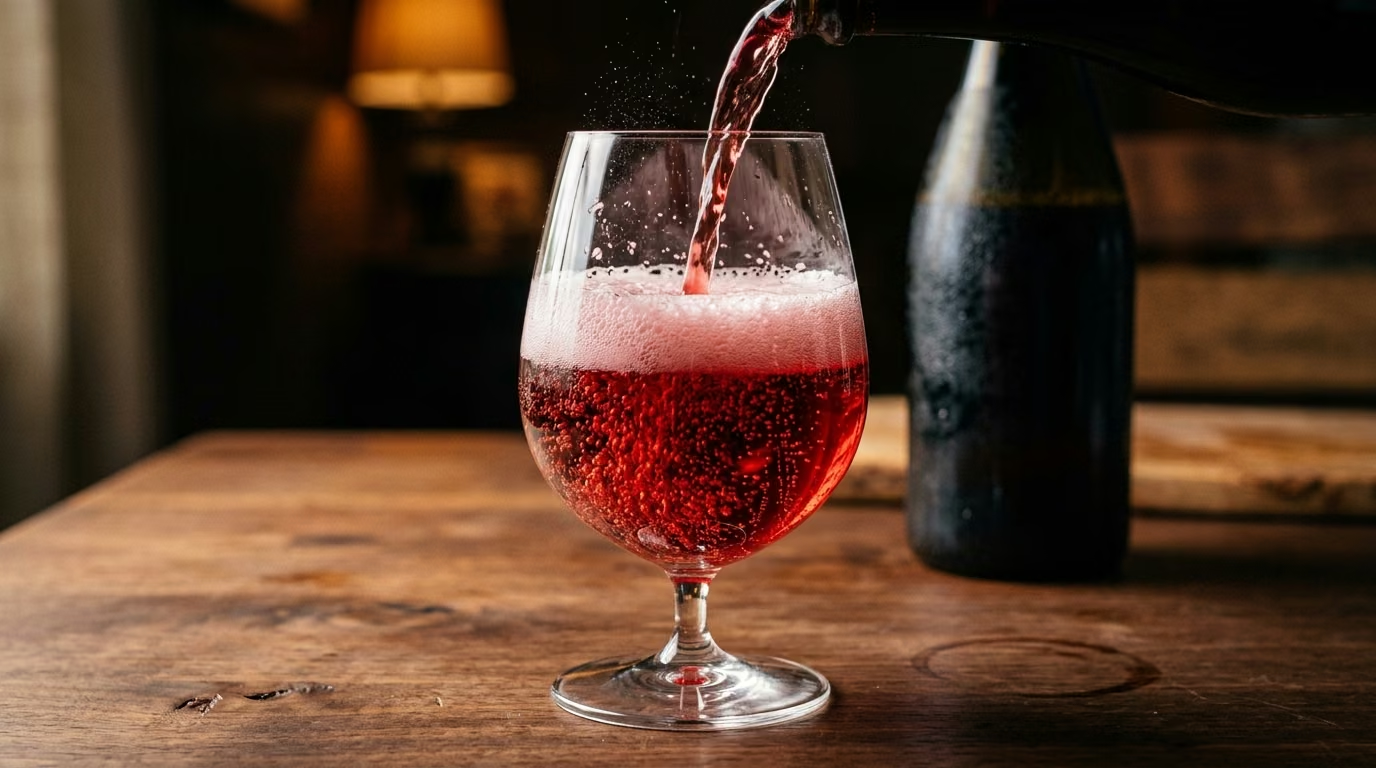
The wines closest to Stella Rosa are sweet, gently sparkling Italian bottles at low alcohol, and the nearest match to Stella Rosa Black is a Brachetto d'Acqui such as Banfi's Rosa Regale, because it's built from the same grape. Roscato Rosso Dolce is the one you're most likely to spot on a grocery shelf, and for the fruity whites you want a Moscato d'Asti. What makes Stella Rosa recognizable isn't only the sugar in it, it's the soft fizz and the alcohol sitting near 5%, so a bottle that misses those two things tastes wrong to you even when it's genuinely sweet.
Why is Stella Rosa so hard to replace?
Because Stella Rosa is a brand rather than a grape or a region, there's no varietal name on the label to search for, which is why so many people end up asking strangers on forums what else tastes like it. The usual method of finding a similar wine, reading the grape off the front and buying another one of those, simply doesn't work here. What you have to match instead is three measurable things, and sweetness is only one of them. Every bottle in the core range is semi-sweet and semi-sparkling, made in Italy, and deliberately low in alcohol. According to Stella Rosa's own product pages, Black sits at 5% alcohol by volume and is made with brachetto grapes, the Moscato d'Asti is also 5% and comes from muscat canelli, and the Strawberry Rosé runs slightly higher at 6.5%. For comparison, most red wine on the same shelf lands somewhere between 13% and 15%, so you're drinking something closer in strength to a strong beer than to a Cabernet.
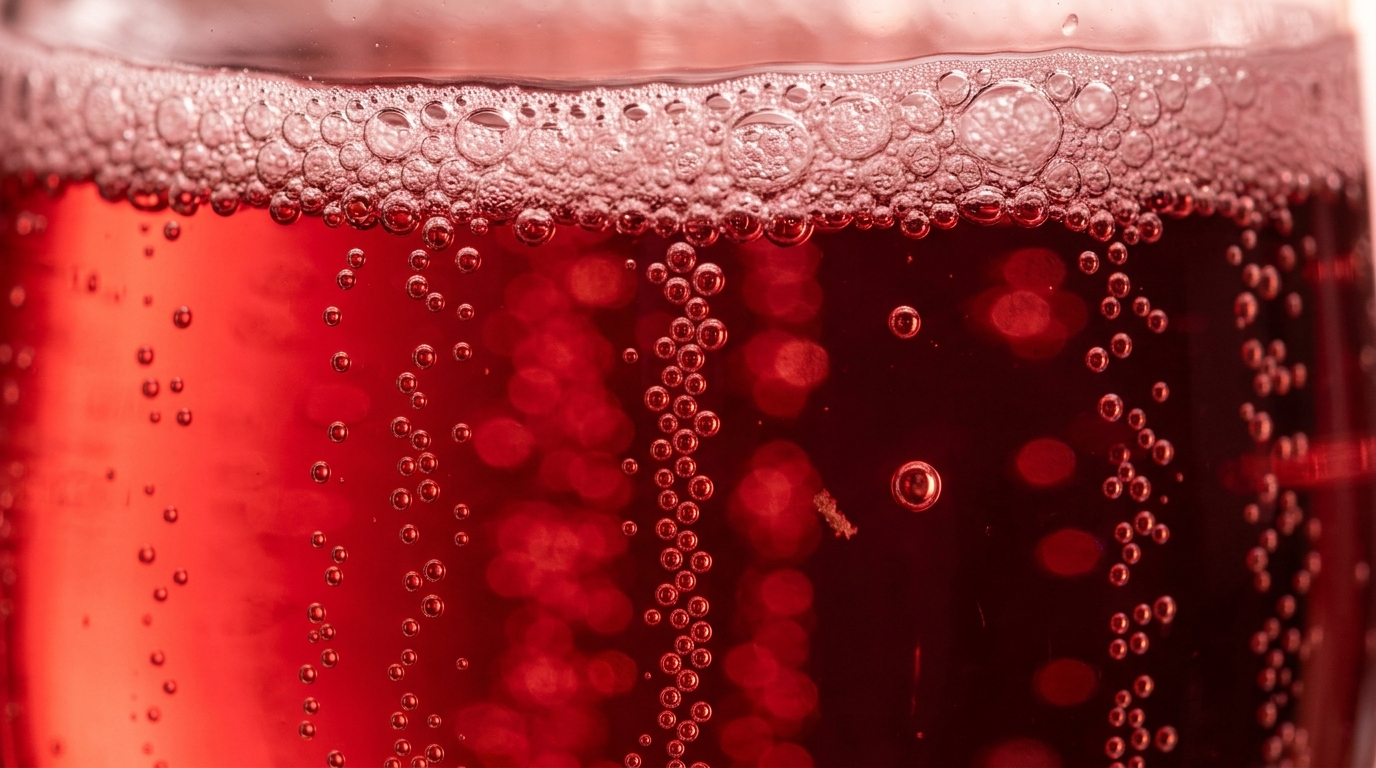
That combination is why the wine feels the way it does in your mouth. The fizz lifts the sugar and keeps it from turning syrupy, and the low alcohol means there's no warmth or bite at the finish to balance against. You can pour a second glass on a Tuesday without much consequence, which is a big part of the appeal and something no ordinary sweet red can offer.
The grapes matter more than most people realize, because they're your shortcut to finding replacements. Brachetto is a red grape from Piedmont in northwest Italy that naturally gives light, low-alcohol, aromatic sparkling wine, and muscat canelli is the same family behind Moscato d'Asti. Once you know that, you're no longer searching for a brand. You're searching for a category, which is a far easier thing to do standing in an unfamiliar aisle.
One distinction is worth getting right, because it changes what you should ask for. Semi-sparkling is not the same as sparkling, and the Italian word you'll see for it is frizzante. A frizzante wine carries roughly half the pressure of a Champagne or a Prosecco, so the bubbles feel like a soft prickle rather than a rush of foam, and the bottle usually has an ordinary cork or screwcap instead of a caged one. Stella Rosa sits firmly in that frizzante category. If you ask a shop for a sweet sparkling red and they hand you something fully sparkling, it'll taste harder and more aggressive than what you're used to, so the word frizzante is the one worth remembering.
For the record, the brand belongs to San Antonio Winery, and the wines themselves are made in Italy rather than at the winery's California home. That split is part of why the range feels consistent from bottle to bottle: it's a house style applied across a lineup, not the product of one vineyard or one vintage.
Which wines are closest to Stella Rosa Black?
The closest match to Stella Rosa Black is Rosa Regale from Banfi, a Brachetto d'Acqui DOCG that Banfi lists as 100% Brachetto at 7% alcohol. It's the same grape as the one in Stella Rosa's reds, grown in the corner of Piedmont that the grape is named after, and made in the sweet sparkling style that DOCG classification exists to protect. If you've been trying to describe what you like about Black and getting nowhere, this is the bottle that answers it.

Rosa Regale is a pale, almost translucent red that smells strongly of raspberry and rose, with the same gentle prickle of bubbles and a finish that stays sweet without going heavy. It's a step up in polish from Stella Rosa and it costs more, so treat it as the good version of what you already drink rather than the everyday swap.
For the everyday swap, Roscato Rosso Dolce is the more practical answer. Its importer Palm Bay describes it as 7% alcohol with "just a touch of sparkle", made in northern Italy under the Trevenezie IGT by Cavit, and calls it America's number one sweet red wine. It's a blend rather than a single grape, and it tastes slightly darker and less floral than Stella Rosa Black, with more blackberry and less raspberry. The texture and the strength are close enough that most people who like one are happy with the other, and it turns up in ordinary supermarkets far more often than any Brachetto d'Acqui does.
Between those two you've covered the range. Rosa Regale is the precise, grape-accurate match, and Roscato is the one you can actually buy on a weekly shop without hunting.
What replaces Stella Rosa Moscato d'Asti, Peach, or Tropical Mango?
For the fruity whites, buy a real Moscato d'Asti, because that's genuinely what Stella Rosa's white range already is. The Moscato d'Asti in their lineup carries the DOCG classification and the same muscat canelli grape as the appellation itself, so you're not switching styles at all. You're just buying the same wine from a different producer.

Risata is the easiest name to look for. Risata's own site lists its Moscato d'Asti as 100% Moscato Bianco di Canelli at 5.5% alcohol, which puts it within half a percent of what you've been drinking. Expect peach, apricot, orange blossom and a light spritz, all of which should feel immediately familiar if Stella Rosa Peach is your regular pour.
Roscato makes a Moscato too, and Palm Bay lists it at 7% alcohol from the same Trevenezie IGT as the Rosso Dolce. It's a little richer and a little stronger than a true Moscato d'Asti, which some people prefer and others find slightly less refreshing. If you like Tropical Mango or Golden Honey Peach, the extra weight tends to suit you.
The rosé side deserves its own note, because it's the one bottle in the range that isn't quite where you'd expect. Stella Rosa's Strawberry Rosé is made from muscat grapes and runs at 6.5% alcohol rather than 5%, which makes it the strongest of the everyday bottles and a little fuller than the whites. Confusingly, the closest match to it isn't another rosé at all. A Brachetto d'Acqui is so pale that it drinks much more like a sweet rosé than a red, and it has the same rose-petal and red-berry aromatics that the Strawberry Rosé leans on, so Rosa Regale does double duty here. Failing that, a Lambrusco rosato labelled dolce gets you into the same territory with more bubble and a touch more acidity.
One honest limitation on the fruit flavors. Stella Rosa's Tropical Mango, Green Apple and Blueberry get their character from added natural fruit flavoring, and traditional Italian producers don't make wine that way. So there's no exact substitute for Green Apple as a flavor. What you can match is the shape of the wine, meaning the sweetness, the fizz and the low alcohol, and then choose the fruit character the grape gives you naturally. Most people find that trade acceptable once they've tried it, but it's a real difference and you should know about it before you spend money.
Is there a sweet sparkling red that tastes less like candy?
Yes, and Lambrusco is the answer. Lambrusco is a sparkling red from Emilia-Romagna that comes in a full range from bone dry to properly sweet, and the sweet versions are labelled dolce or amabile. The Medici Ermete "I Quercioli" Reggiano Lambrusco Dolce is a good place to start, listed by the producer and its US importer Kobrand as 8.5% alcohol from a blend of 50% Marani and 50% Salamino.
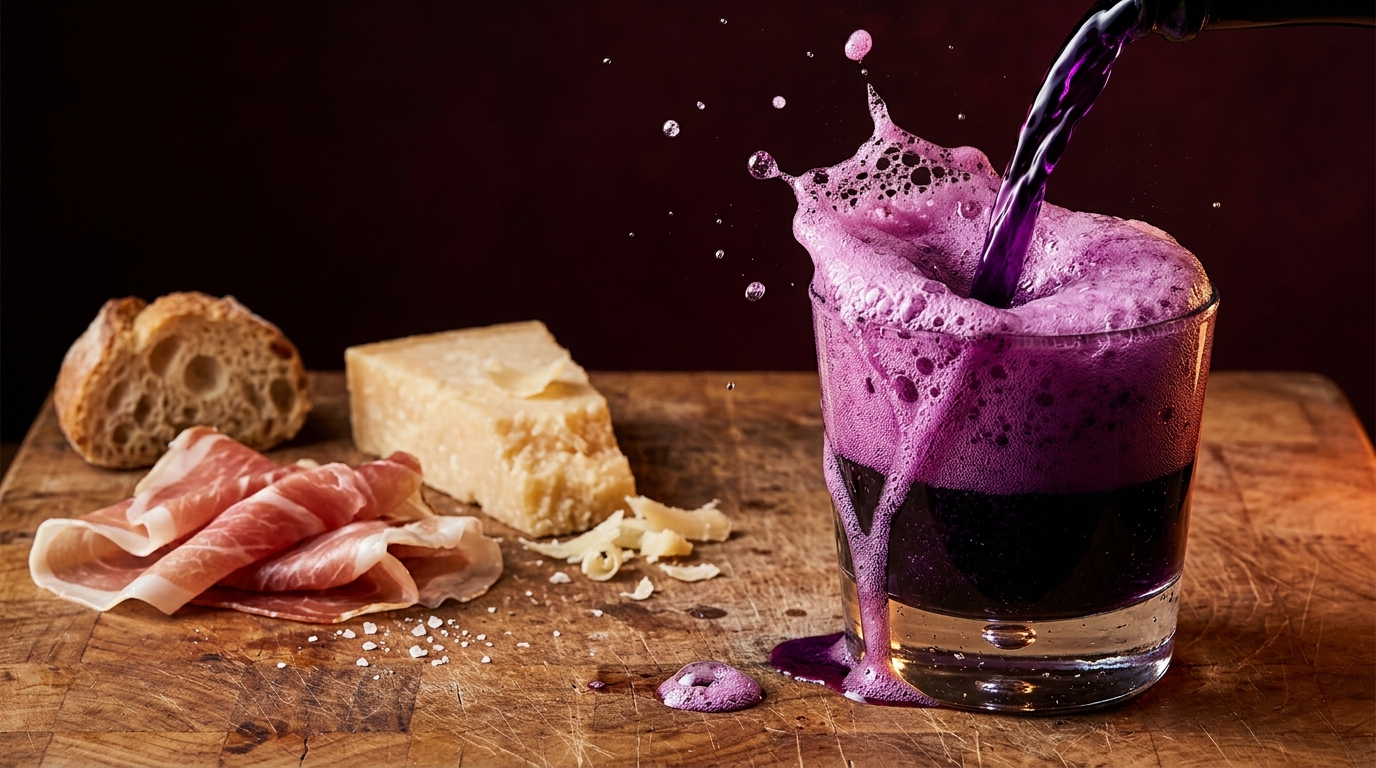
That extra alcohol does something useful. It gives the wine a savory edge and a bit of grip that Stella Rosa deliberately avoids, so the sweetness reads as fruit rather than as sugar. The bubbles are more assertive too, closer to a proper sparkling wine than to a light spritz. If you've started to find Stella Rosa a touch sweet but you still want the same fizzy red idea, this is the direction to move in, and it pays to see how sweet each sparkling red style actually is before you buy.
It also solves a problem at the dinner table. A sweet Lambrusco handles salty and fatty food in a way that lighter sweet reds can't quite manage, so it works with pizza, cured meat and anything off a grill. Stella Rosa's own pairing advice leans toward chocolate and desserts for its reds, which tells you where its balance sits.
Why don't Apothic Red, Barefoot Sweet Red, or Jam Jar match?
Because all three are still wines, and the fizz is the single thing Stella Rosa drinkers miss most. Every list of Stella Rosa alternatives on the internet recommends this same trio, and in live retail listings Apothic Red and Barefoot Sweet Red Blend are both classified as red blends while Jam Jar Sweet Shiraz sits under syrah and shiraz. None of them is sold as a sparkling wine, because none of them is one.
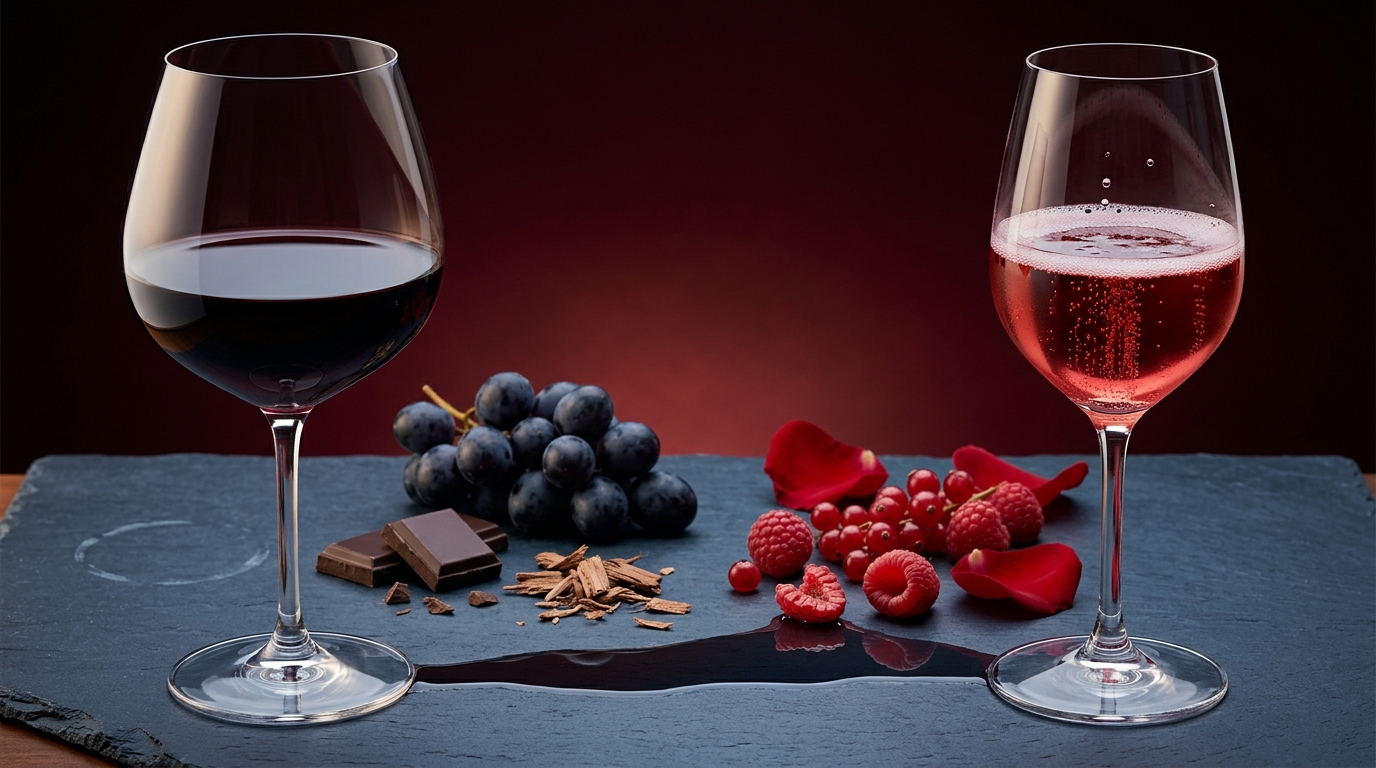
They're also considerably stronger, since these are ordinary table reds in the usual alcohol range, which means the sweetness arrives with warmth and tannin behind it rather than with bubbles and lightness. That's a genuinely different drinking experience, and it's why people who try Apothic on a recommendation often come away feeling that it isn't the same thing at all. They're right, and it isn't a matter of taste or quality. It's a matter of two of the three defining variables being wrong.
None of that makes them bad wine. If you like sweet reds broadly then Apothic has plenty of fans, and we've written about wines like Apothic Red for people whose starting point is that bottle instead. But if what you love about Stella Rosa is the way it feels, a still red at 13% is not the substitute you're looking for.
Here's how the whole set compares on the things that actually decide it:
| Bottle | Style | Alcohol | Replaces |
|---|---|---|---|
| Rosa Regale, Brachetto d'Acqui DOCG | Sweet sparkling red | 7% | Stella Rosa Black, the good version |
| Roscato Rosso Dolce | Sweet, lightly fizzy red | 7% | Stella Rosa Black or Red, everyday |
| Risata Moscato d'Asti | Sweet semi-sparkling white | 5.5% | Stella Rosa Moscato d'Asti or Peach |
| Roscato Moscato | Sweet, lightly fizzy white | 7% | Tropical Mango, Golden Honey Peach |
| Medici Ermete I Quercioli Lambrusco Dolce | Sweet sparkling red | 8.5% | Black, for anyone wanting less sugar |
| Apothic Red, Barefoot Sweet Red, Jam Jar | Still red wine | Table strength | Nothing in the Stella Rosa range |
Frequently asked questions
Which wines like Stella Rosa come closest to Black?
A Brachetto d'Acqui such as Rosa Regale is the closest, because Stella Rosa Black is made from brachetto grapes and Rosa Regale is 100% brachetto at 7% alcohol. Roscato Rosso Dolce is the easier bottle to find and sits at the same strength.
Are there wines like Stella Rosa that aren't as sweet?
A sweet Lambrusco is the usual next step, and the Medici Ermete I Quercioli Dolce at 8.5% keeps the fizzy red character while reading drier than Stella Rosa. Moving to a Moscato d'Asti also helps, since the higher acidity balances the sugar more than the flavored bottles do.
Why is Stella Rosa so low in alcohol?
The fermentation is stopped early, which leaves natural grape sugar in the wine and keeps the alcohol down. That's the traditional method behind Moscato d'Asti and Brachetto d'Acqui as well, which is why the wines that match Stella Rosa best come from those same appellations.
What should I look for on the label if I can't remember the brands?
Look for the words brachetto, Moscato d'Asti, or Lambrusco dolce or amabile, and then check that the alcohol reads somewhere between 5% and 8.5%. Anything above about 10% won't taste like Stella Rosa no matter how sweet the label promises to be.
Is Roscato the same thing as Stella Rosa?
They're separate brands from different producers, though they occupy nearly the same space. Roscato Rosso Dolce is a northern Italian blend at 7% with light sparkle, while Stella Rosa Black is a brachetto wine at 5%, so Roscato tastes a shade darker and slightly stronger.
What type of wine is Stella Rosa considered?
It's a semi-sweet, semi-sparkling Italian wine, and the Italian term for that light fizz is frizzante. The reds are made from brachetto and the whites and rosés from muscat, and the whole core range sits between 5% and 6.5% alcohol, which is roughly a third of the strength of an ordinary red.
Is Stella Rosa considered cheap wine?
It's an inexpensive, widely distributed wine, but the low price isn't what makes it taste the way it does. Stopping fermentation early to leave sugar and gentle bubbles behind is a deliberate traditional method used in Moscato d'Asti and Brachetto d'Acqui too, and some of those bottles cost several times more. If you want the same style made with more care, a Brachetto d'Acqui DOCG is the upgrade rather than a different category.
Does Stella Rosa make a non-alcoholic version?
It does, and the brand lists alcohol-removed versions of several favorites including Black, Peach and Rosé. If low alcohol is the reason you drink it, that range is worth trying before you go looking for substitutes at all.
How to pick your next bottle without guessing
Start from what you actually like about the bottle you already buy, because that decides everything else. If it's the flavor of Black specifically, go to Brachetto d'Acqui and accept that you'll pay more for it. If it's the ease and the price and the fact that it's always in stock, Roscato Rosso Dolce is the sensible pick. If it's the peachy whites, a Moscato d'Asti from Risata or anyone else gets you there almost exactly. And if you've quietly started finding the whole style a bit sweet, a Lambrusco dolce moves you toward real wine territory without giving up the bubbles.
Serve any of them properly cold, which matters more with sweet wine than with anything else. Stella Rosa recommends 45 to 50°F for its lighter bottles and 50 to 55°F for the richer reds, and the same range works for every wine here. Sweet wine served warm tastes twice as sweet and half as interesting, so an extra hour in the fridge does more for your enjoyment than spending another ten dollars on the bottle. If you want to read more about why temperature changes so much, our notes on wine serving temperatures go further into it.
The honest catch with any list like this one is that we're matching wines to a bottle, not to you. Sweetness is the most personal thing in wine, and the line between refreshing and cloying sits in a different place for everybody. This is where Sommy's Find Similar is genuinely useful: you name the bottle you already like, and it works outward from that instead of asking you to describe your taste in words you may not have. It's the same move this article makes, just with your own ratings behind it rather than our general advice.
If you want the wider view of where sweet wine sits, we've mapped out wines similar to Moscato and taken apart what dry and sweet actually mean in numbers. Both are useful background once you've found a couple of bottles you trust and you're ready to push a little further out.