If you like Apothic Red, the wines closest to it are other ripe California red blends with soft tannin and a rounded, faintly sweet finish, and the easiest next step is one of Apothic's own siblings. Beyond the brand, look for Australian red blends, bourbon barrel-aged Cabernet, and Argentine Malbec, all of which give you dark fruit and vanilla without a drying grip. The single word to hunt for on a shelf tag is smooth, and the words to avoid are earthy, firm and mineral.
That's the shortcut, and the reasoning behind it is what makes it portable. Once you can name why Apothic tastes the way it does, you can find something similar in any store, in any state, whatever happens to be in stock that week.
What makes Apothic Red taste the way it does?
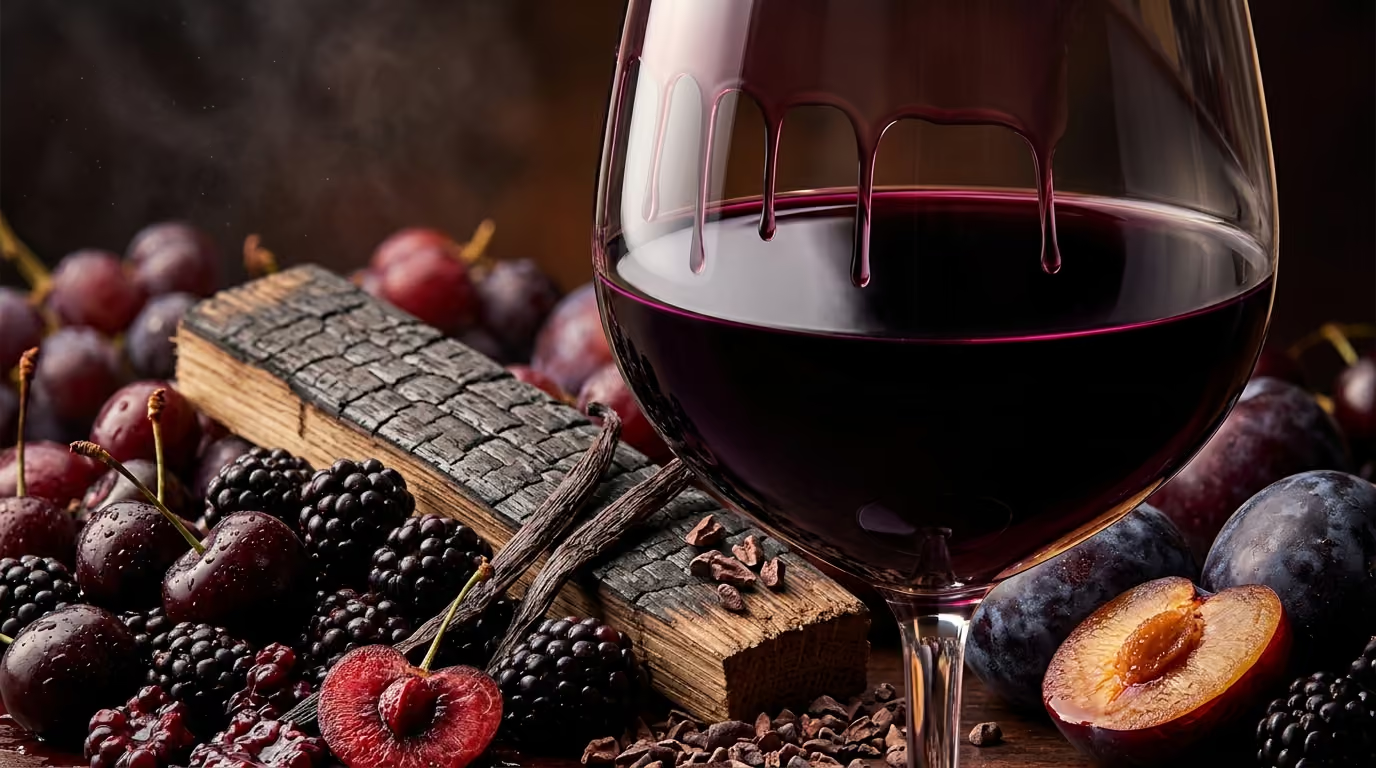
It's a California red blend built for immediate, easy drinking, and the producer describes its own flavor profile as blackberry, cherry and vanilla. The texture matters as much as the fruit: soft tannin, a rounded mouthfeel, and a finish that stays plush instead of turning dry and grippy.
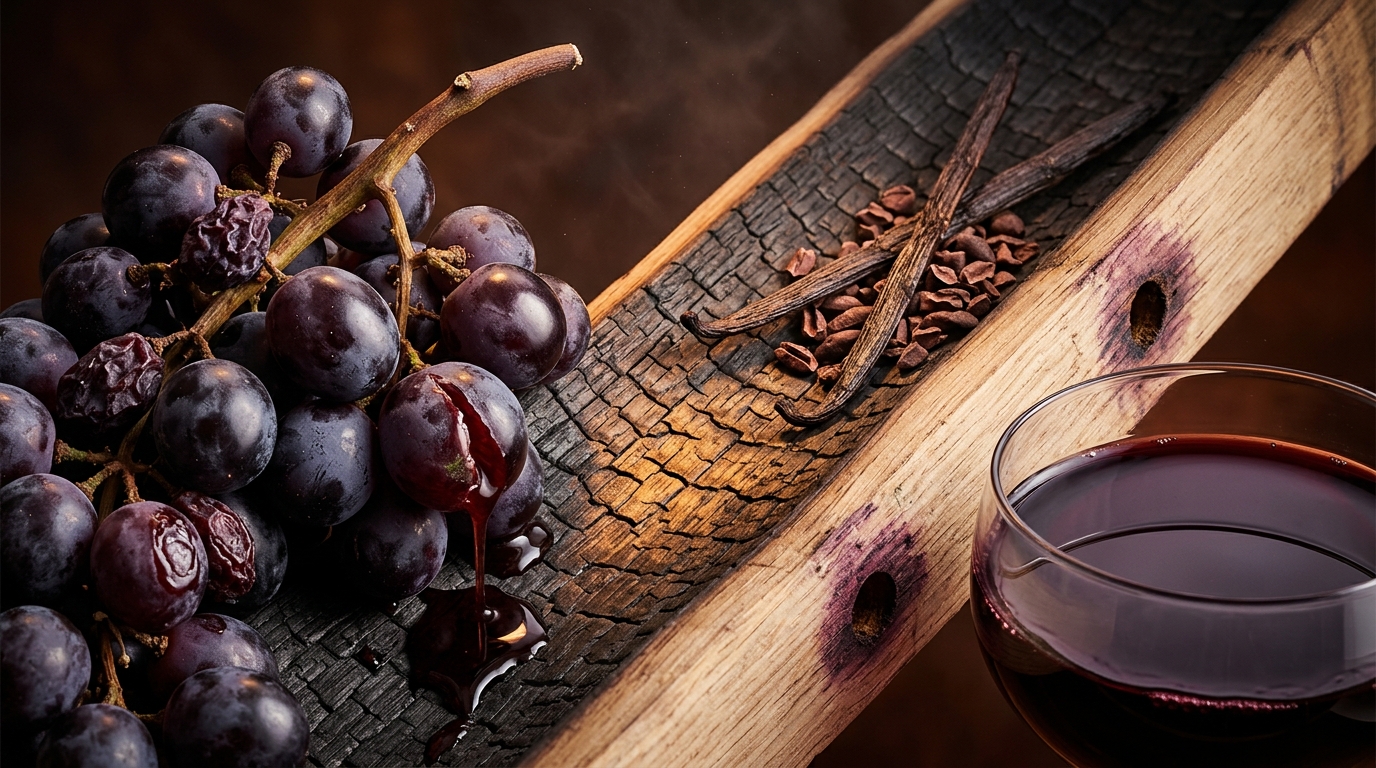
Three things combine to create that effect. The fruit is picked ripe, which gives you jammy blackberry and dark cherry rather than the tarter red fruit of a cooler-climate wine. Oak influence adds vanilla, mocha and baking spice, which our brains read as sweetness even when there isn't much sugar. And the blend is assembled to keep tannin low, so nothing scrapes across your gums the way a young Cabernet does.
Apothic's own marketing frames its range as covering dry, sweet and everything in between, which is a fair description of what the line is doing. Apothic Red sits in the middle of that, and it's the bottle people reach for when they want ripe fruit and a soft landing rather than something that demands attention. There's nothing wrong with that preference, and the wine industry's occasional sneering about it says more about the industry than about your palate.
Understanding this also explains a common confusion. A wine can smell intensely fruity and still be technically dry, and a wine can taste round and generous without any added sugar at all. What you're actually responding to is the combination of ripeness, oak and low tannin, and our guide on telling dry and sweet wine apart covers how to read that before you buy.
Which wines are closest to Apothic Red?
Start inside the brand, then step outward by one variable at a time. The closest matches keep the ripe dark fruit and the soft finish, and differ only in where the grapes grew or how much oak character shows.
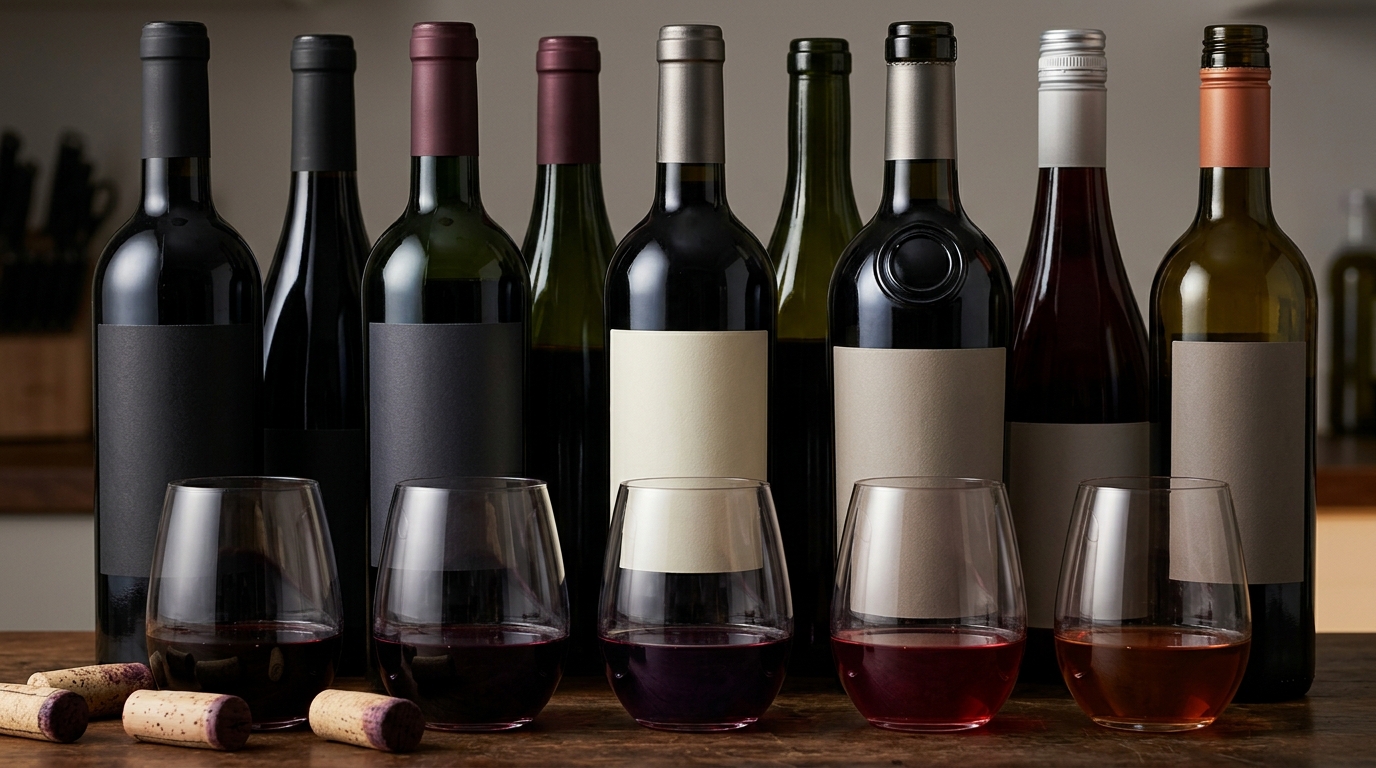
The most reliable swaps are Apothic's own siblings, since they share a winemaking philosophy and a shelf position. Apothic Dark leans further into dark fruit, chocolate and coffee. Apothic Crush swaps in black cherry, raspberry and caramel for something a little brighter. Apothic Inferno adds oak and spice, and Apothic Merlot gives you berries, chocolate and toasted oak in a single-grape version. If you like the house style and just want variety, that's the least risky move available.
Stepping outside the brand, here's where to go and what changes.
| If you want | Look for | What changes |
|---|---|---|
| The same soft, ripe blend feel | An Australian red blend | Slightly firmer, a little more structure, similar plush fruit |
| More vanilla and sweet oak | A bourbon barrel-aged Cabernet | Stronger vanilla and caramel, fuller body |
| Plush fruit with a cleaner finish | Argentine Malbec from Mendoza | Same dark fruit and soft texture, noticeably less sweet |
| A richer California red | A single-vineyard California Cabernet | More concentration and grip, still ripe and generous |
Concrete examples help, so here are bottles currently on shelves that fit those rows. 19 Crimes Red Blend is Australian rather than Californian and gives you the same approachable dark fruit with a touch more backbone. Josh Cellars Reserve Bourbon Barrel-Aged Cabernet Sauvignon is the obvious pick if the vanilla is the part you love, and the standard Josh Cellars Cabernet is a gentler version of the same idea. Juggernaut by Bogle Hillside Cabernet is a step up in concentration while staying firmly in the ripe California camp. Alamos Malbec from Mendoza is the cleanest-finishing option of the group and the one to try if you suspect the sweetness is the part you'd happily lose.
All of these sit in roughly the same everyday price band Apothic occupies, somewhere between twelve and twenty-two US dollars depending on the bottle and the store. Prices and stock vary a lot by state and retailer, so treat the names as directions rather than a shopping list. Our piece on what a red blend actually is covers the category in more depth if you want the background.
How do you spot this style on any shelf?
Read the adjectives, not the region. Shelf tags and back labels use a fairly consistent vocabulary, and four or five words reliably predict whether a bottle will land in the Apothic zone.
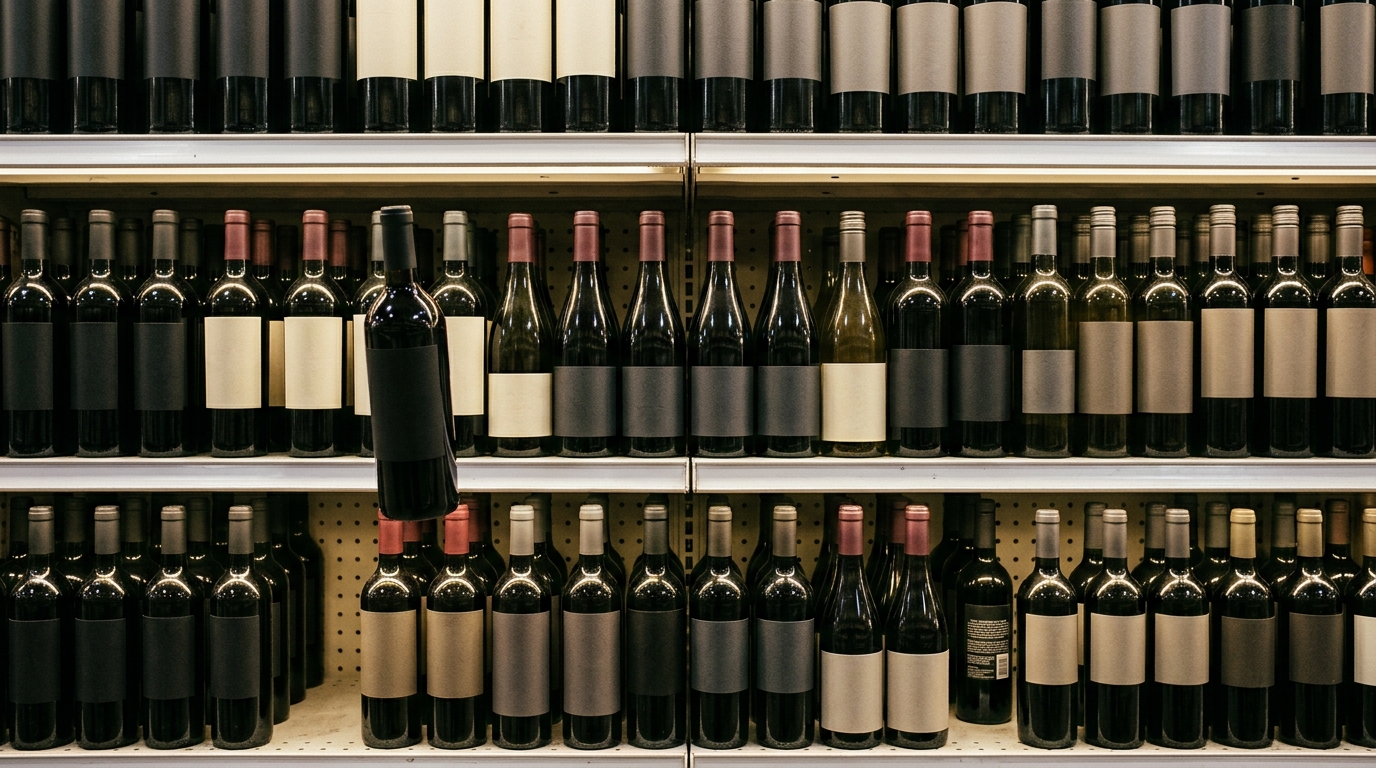
The words that point you toward it are smooth, silky, lush, plush, ripe, jammy, velvety and fruit-forward. Smooth does the most work of those, and what it describes is soft tannin and ripe fruit rather than sugar. Flavor descriptors in the same family include blackberry, black cherry, plum, vanilla, mocha, caramel and baking spice. If a tag stacks three or four of those together, you're almost certainly looking at the right kind of wine regardless of what the grape or region says.
The words that point away are just as useful. Earthy, mineral, firm, structured, austere, lean, savory, herbal and high-toned all signal a wine going in a different direction. None of those are criticisms, and plenty of people specifically hunt for them, but they're the opposite of what you're after here. Our guide on reading wine labels covers the rest of the vocabulary that actually predicts what's in the bottle.
Region helps as a rough filter once you've read the adjectives. California, southeastern Australia, Argentina and southern Italy all tend toward riper fruit and softer texture, while cool northern European regions tend toward the opposite. Alcohol level gives you one more clue, since bottles at fourteen percent and above are usually made from riper fruit and feel fuller in the mouth.
This is also exactly the problem Sommy's Find Similar was built for. Name a bottle you already enjoyed, Apothic Red included, and it surfaces wines that share its character by grape, region and style, so you get a shortlist instead of squinting at forty shelf tags in a shop you don't know.
What if you want the same feel with less sweetness?
Move toward dry wines that are still built on ripe fruit and low tannin. You keep the plush texture and the dark berry flavors, and you lose the rounded, faintly sugary finish that some people eventually tire of.
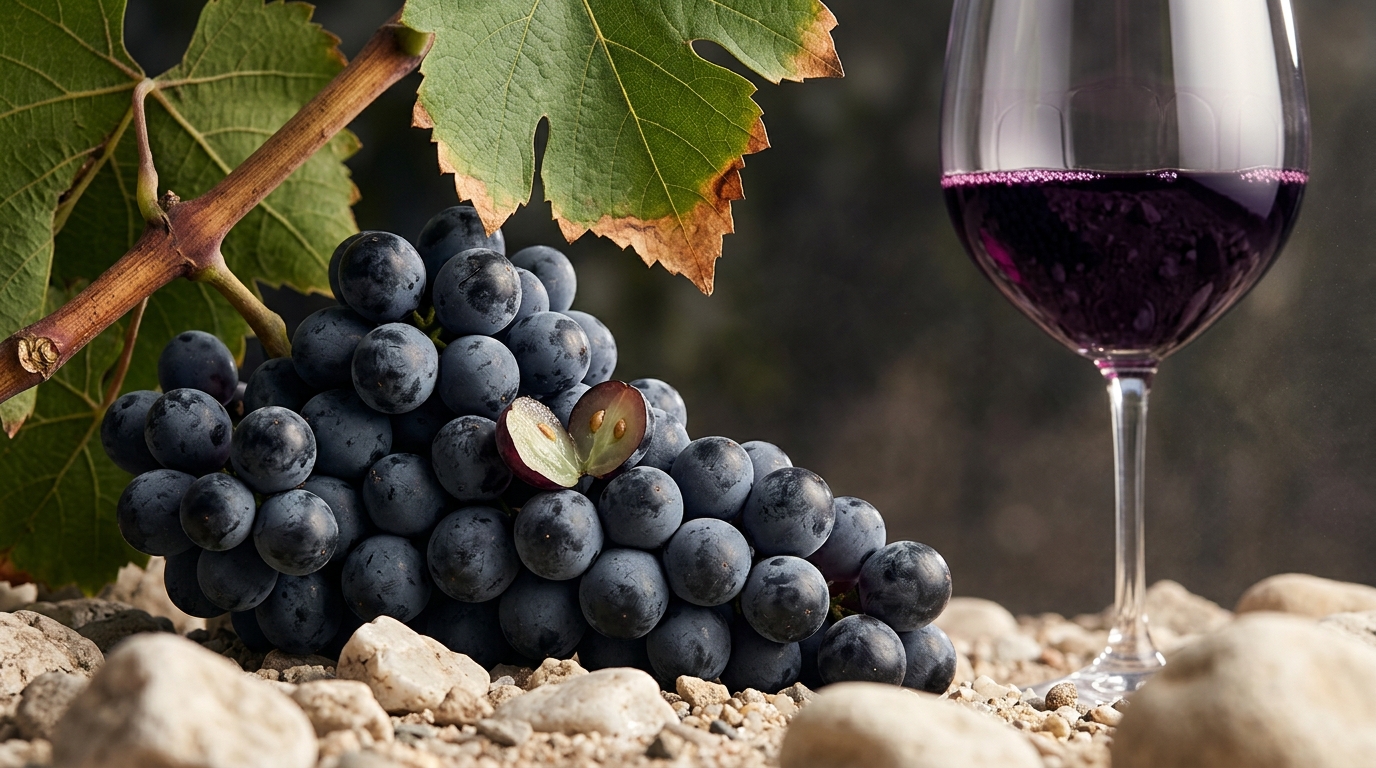
Malbec is the best first move, and Argentine Malbec from Mendoza in particular. It gives you blackberry and plum with a soft, velvety texture and a warm vanilla note from oak, but it finishes clean rather than sweet. We find the wine tastes more generous rather than less once the sugar impression is gone, because the fruit finally has room to show.
Merlot is the other easy step, especially warmer-climate versions from California or Chile. Plum, black cherry and a hint of chocolate, with genuinely soft tannin, is the classic Merlot profile and it overlaps heavily with what Apothic drinkers enjoy. Zinfandel and its Italian relative Primitivo are worth trying too, since both deliver jammy dark fruit and spice with real body, though Zinfandel often runs high in alcohol and can feel hot if it's poorly balanced.
If you'd rather go the other way and lean into the sweetness deliberately, that's a perfectly good choice and there's a whole category built for it. Our guide to finding a good sweet wine covers the options that are honest about what they are, which is generally a better experience than a dry wine pretending. And if the appeal for you is really the ripe California Cabernet side of things, our roundup of Caymus Cabernet alternatives works from the same instinct at a higher price point.
What food goes with a smooth red blend?
Salty, savory, slightly sweet food, which is most of what people actually eat on a Friday night. The soft tannin means nothing turns bitter, and the ripe fruit stands up to bold sauces that would flatten a more delicate wine.
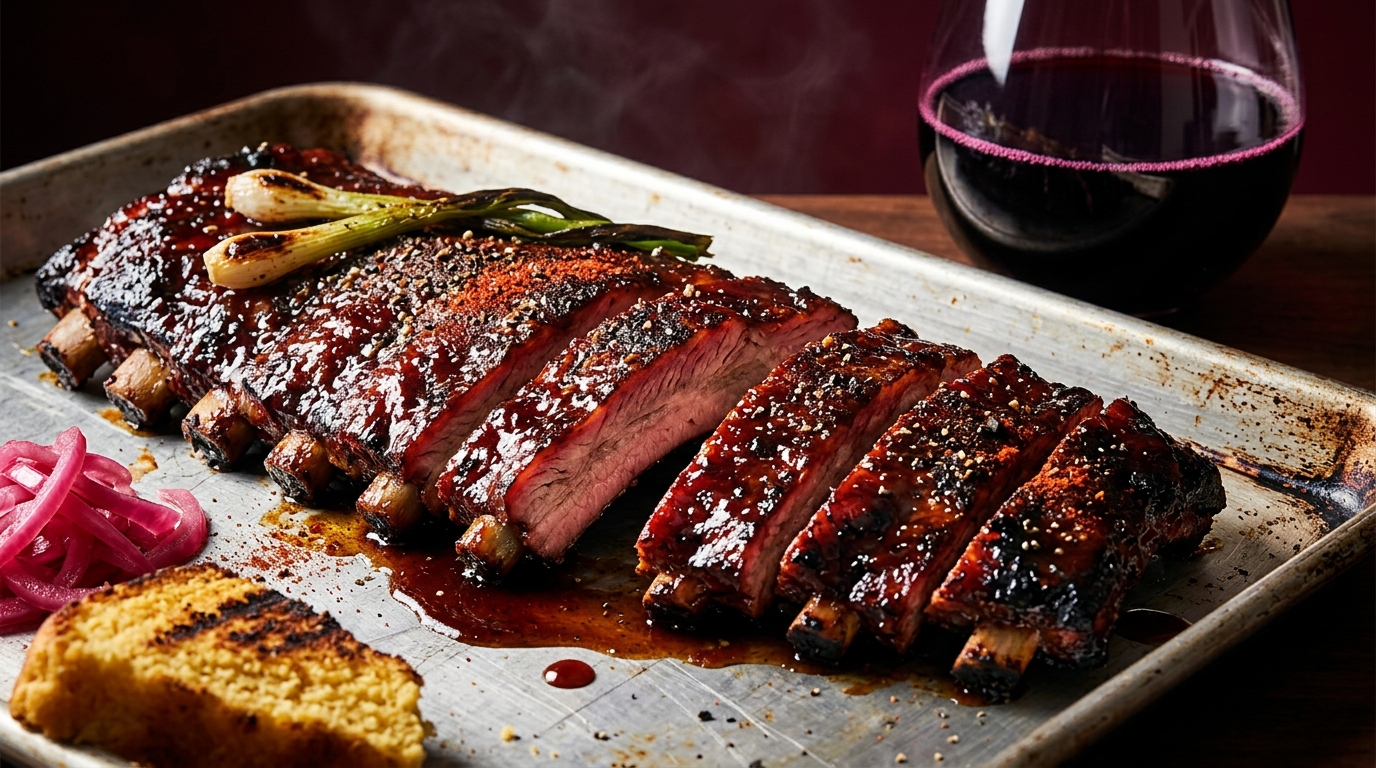
Barbecue is the standout, and it's the one place this style genuinely outperforms fancier wine. A sweet, smoky sauce makes most dry reds taste harsher and more bitter by contrast, while a plush fruit-forward blend meets it on the same terms. Ribs, pulled pork, grilled sausages and a well-charred burger all work beautifully. Pizza, lasagna and anything with a rich tomato sauce are equally comfortable.
Cheese boards are another easy win, particularly with aged cheddar, gouda and other firm, salty cheeses whose fat rounds the wine out further. Dark chocolate is one of the rare desserts that works with red wine, and it works here specifically because the wine has enough ripeness to keep up. Chili, tacos with a mild spice level, and anything glazed or caramelized all sit comfortably in the same range.
The mismatches are the delicate things. White fish, light salads and subtle vegetable dishes get buried under a wine this ripe, and very hot chili heat makes the alcohol feel sharper. For those meals a lighter red or a crisp white is simply the better tool,, so keeping a lighter bottle in the rack alongside your usual red is worth the shelf space.
Frequently asked questions
What wine is most similar to Apothic Red?
Apothic's own siblings are the closest matches, particularly Apothic Dark and Apothic Crush, since they share the same ripe fruit and soft finish. Outside the brand, an Australian red blend such as 19 Crimes Red Blend or a bourbon barrel-aged California Cabernet gets you closest.
Is Apothic Red a sweet wine?
Apothic Red sits toward the rounder, fruitier end of the spectrum rather than being a dessert wine. Its ripe fruit, oak-derived vanilla and low tannin together create an impression of sweetness that's noticeably softer than a classic dry red.
What's a good alternative to Apothic Red that isn't sweet?
Argentine Malbec from Mendoza is the best first swap, since it keeps the dark fruit and velvety texture while finishing clean and dry. A warm-climate Merlot from California or Chile is the other reliable option.
How do I find a smooth red blend at the grocery store?
Read the shelf tag for the words smooth, silky, lush, ripe or fruit-forward, and check the flavor notes for blackberry, plum, vanilla or mocha. Skip anything described as earthy, mineral, lean or firm, which signals a completely different style.
What food goes with Apothic Red?
Barbecue, burgers, pizza, lasagna and aged hard cheeses all work well, because the wine's ripe fruit stands up to smoke, salt and sweet sauces. Avoid delicate white fish and light salads, which the wine will simply overpower.
Is Apothic Red worth drinking?
If you enjoy it, then yes, and no amount of wine snobbery changes that. It does exactly what it sets out to do, and the useful question is not whether it's serious enough but whether you'd enjoy exploring nearby styles that keep what you like about it.
Trust the thing you already know you like
Apothic Red works because it removes friction: ripe dark fruit, a soft finish, and nothing that demands you think hard about it. Anything you buy next should keep those three qualities, and the fastest way to find it is to read shelf adjectives rather than regions.
Buy two bottles on your next trip, one that stays in the sweet plush lane and one Argentine Malbec that doesn't, and drink them a week apart with the same meal. Whichever one you finish first tells you more about your own taste than any recommendation could, and that's the answer worth carrying into the next store.