If you love Moscato, the closest wines to it are Brachetto d'Acqui, off-dry German Riesling, Bugey-Cerdon, semi-sweet Lambrusco, Alsace Gewürztraminer and Vouvray demi-sec. Which one suits you depends on what you actually love about Moscato, because the sweetness, the light fizz, the low alcohol and that peach and orange blossom perfume are four separate things, and each one points somewhere different. Most lists skip that step and hand everyone the same four names. We're going to sort it by what you're chasing instead, with real prices in USD checked against a US retailer in August 2026.
Six wines to try if you like Moscato:
- Brachetto d'Acqui (Piedmont, Italy): sweet, lightly sparkling, low in alcohol, and red rather than white
- Off-dry German Riesling (Mosel or Nahe): apple and apricot sweetness held up by real acidity
- Bugey-Cerdon (Savoie, France): sparkling pink, gently sweet, the lowest in alcohol here
- Lambrusco amabile (Emilia-Romagna, Italy): semi-sweet frizzante red, the best of these with food
- Alsace Gewurztraminer (France): the perfume without the sugar, for anyone chasing the aromatics
- Vouvray demi-sec (Loire, France): quince and honey with sweetness stated plainly on the label
What makes Moscato taste the way it does?
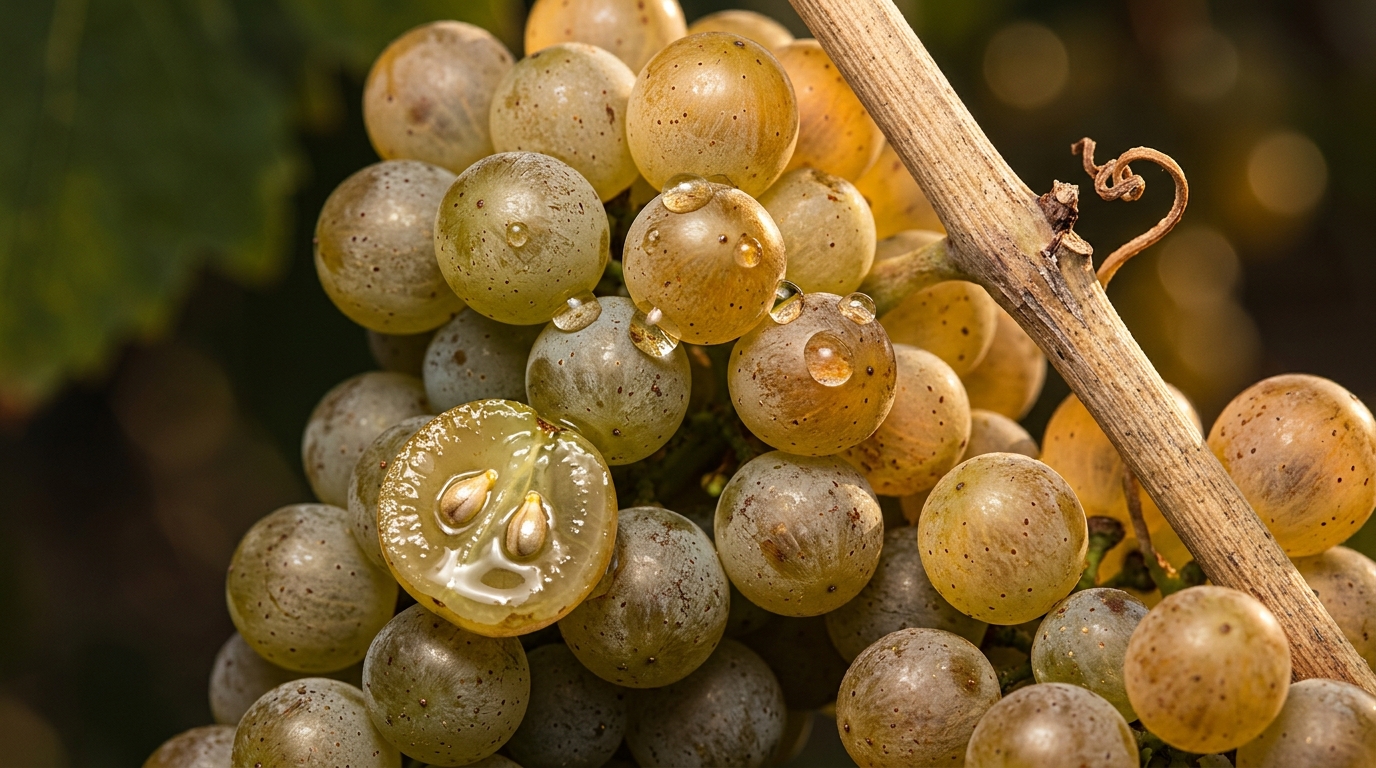
Moscato d'Asti is built from Muscat Blanc à Petits Grains grown across the hills of Piedmont in northwest Italy, and four separate things are happening in your glass at once. There's real sweetness from sugar left in the wine, a soft fizz the Italians call frizzante, an alcohol level low enough that a good bottle from Castiglione Tinella sits around 6 percent, and an aroma of white peach, nectarine, orange blossom and jasmine that's unusually loud for a white wine.
That combination is why Moscato gets dismissed and also why people love it, and the dismissal is mostly snobbery about the sweetness rather than a real judgment about the wine. A benchmark bottle like Saracco or Elio Perrone's "Sourgal" runs $17.99 at a serious shop, and neither one tastes much like the mass-market versions that gave the category its reputation. If the only Moscato you've had came from a supermarket end cap, that matters before you go looking for a replacement, because the honest upgrade might be Moscato itself.
The useful part for finding something similar is that those four traits come apart. A wine can be sweet without bubbles, fizzy without much sweetness, low in alcohol without being aromatic, or intensely perfumed while finishing bone dry. Once you know which of the four you're attached to, the shortlist gets much shorter and a great deal more accurate.
Which part of Moscato do you actually love?
This question does more work than any list of grape names. Ask yourself which part you would miss most if somebody took it away.
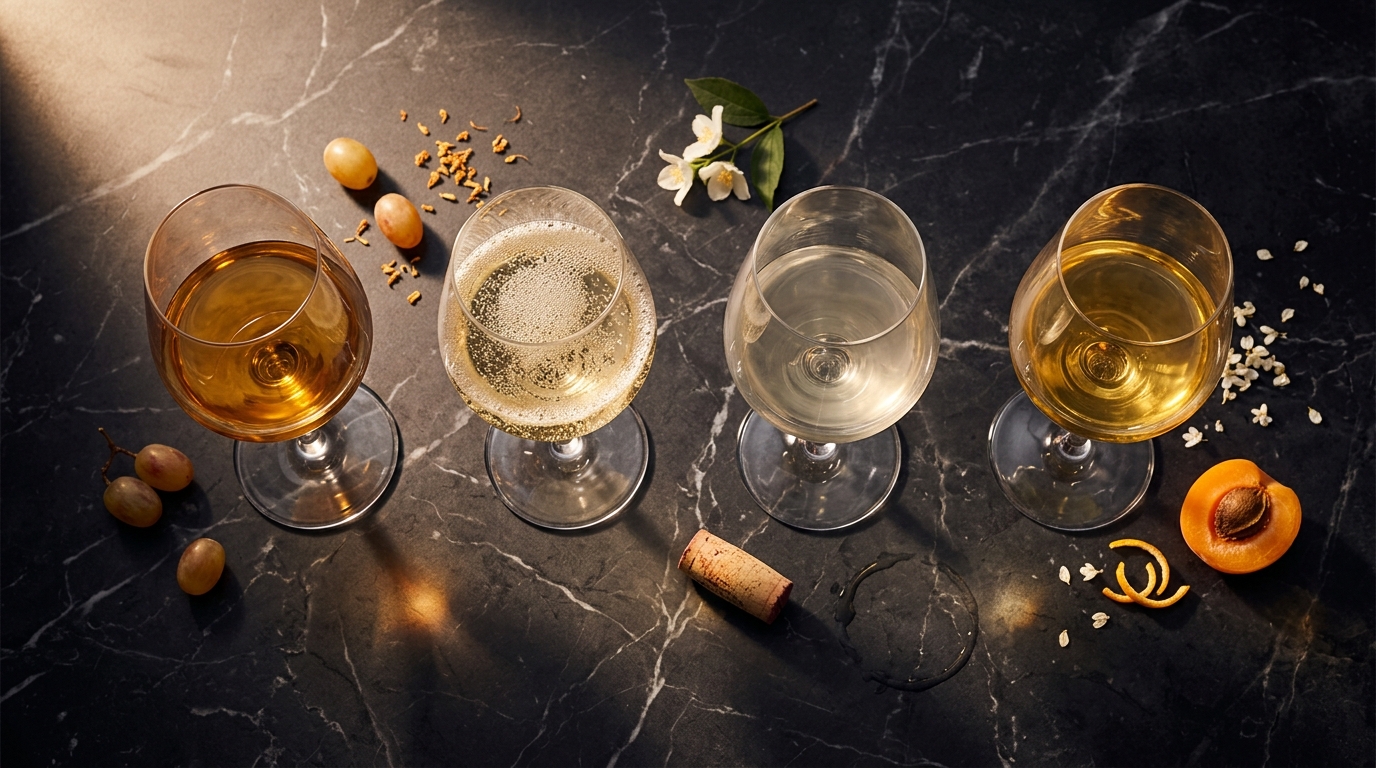
If the answer is the sweetness, you want a wine with genuine sugar left in it, and you'll be let down by anything sold as crisp or dry no matter how fruity the back label sounds. If it's the fizz, you can drop the sweetness a long way and stay happy, because the bubbles carry a lot of the pleasure on their own. If it's the low alcohol, you're after something you can drink through a long afternoon without it flattening you, which narrows the field sharply given that most wine sits between 12 and 14 percent, and it is the same search behind low-alcohol wines for a weeknight dinner. And if it's the perfume, that lift of peach and blossom you get before the wine even reaches your mouth, then you can go completely dry and still keep most of what you came for.
Plenty of people want two of the four, which makes the choice easier rather than harder. Sweetness plus fizz points one way and perfume plus dryness points another, so the sections below are sorted by trait rather than by grape. That is the same split a recommendation has to get right, and it is why naming the trait matters more than naming the grape.
Which wines are similar to Moscato and still properly sweet?
If the sweetness is the whole point for you, the two closest matches are Brachetto d'Acqui and off-dry German Riesling. Brachetto is the one almost nobody mentions and it deserves to go first.
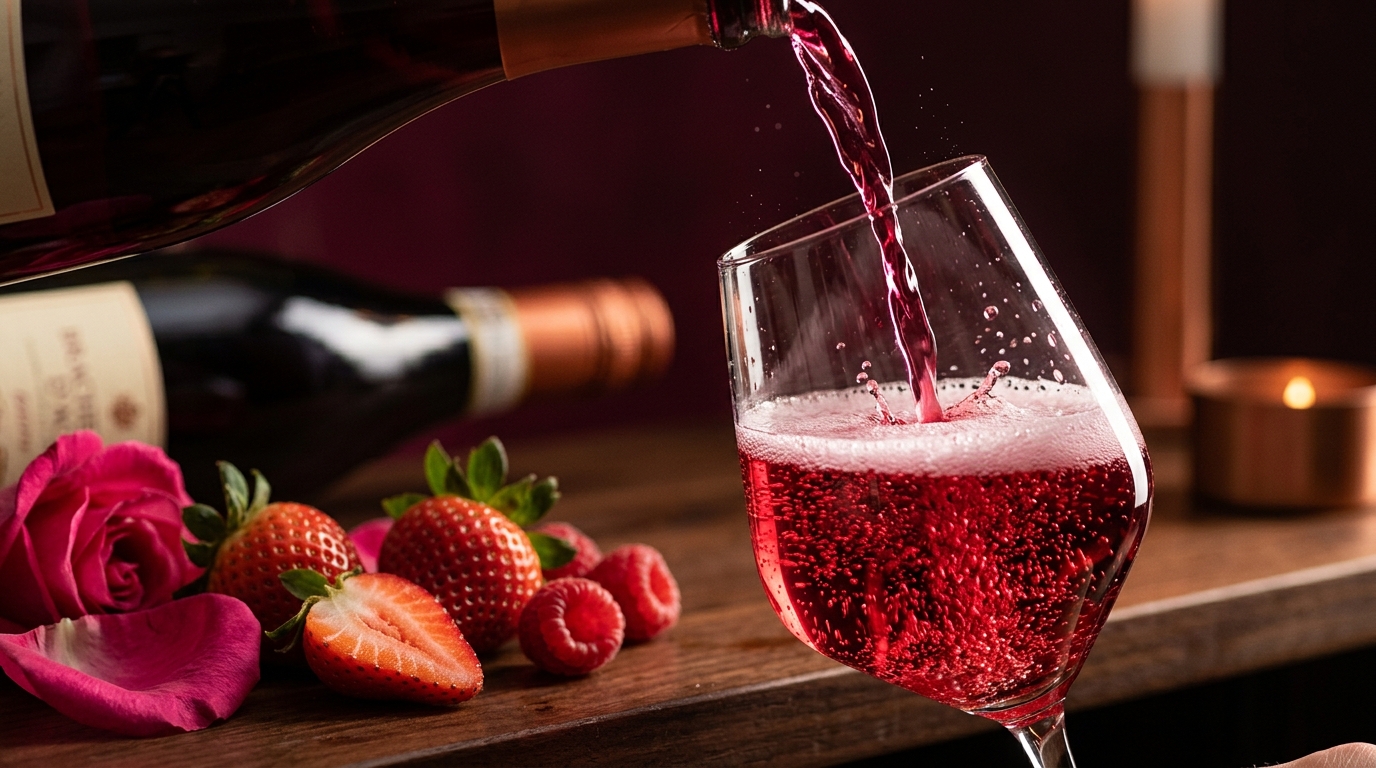
Brachetto d'Acqui comes from the same corner of Piedmont as Moscato d'Asti and it's made in much the same spirit, which is sweet, lightly sparkling and low in alcohol, except that it's red. It smells of strawberries and rose petals where Moscato gives you peach and orange blossom. Braida's bottling runs $24.99, and K&L's own tasting note calls it not dissimilar in style to a Moscato d'Asti, which is about as direct an endorsement of the swap as you'll get from a retailer. If you think you don't like red wine, this is the bottle that changes minds, because the tannin and weight and dryness people object to simply aren't in it.
Off-dry Riesling is the other route, and it's the one every list recommends without ever telling you how to avoid buying a dry one by accident. That risk is real and it gets its own section below. Done right, a sweeter German Riesling gives you apple, apricot and peach with a streak of acidity underneath that stops it turning syrupy, and benchmark bottles from Selbach-Oster, Carl Loewen, Dr. Loosen and Dönnhoff sit between $24.99 and $29.99. It's a genuine step up in complexity without asking you to give up sweetness, and our Riesling vs Moscato comparison goes deeper on how the two differ in the glass.
What if you love the bubbles and the low alcohol?
Then Bugey-Cerdon and Lambrusco are your two, and both will cost you less than a benchmark Riesling.
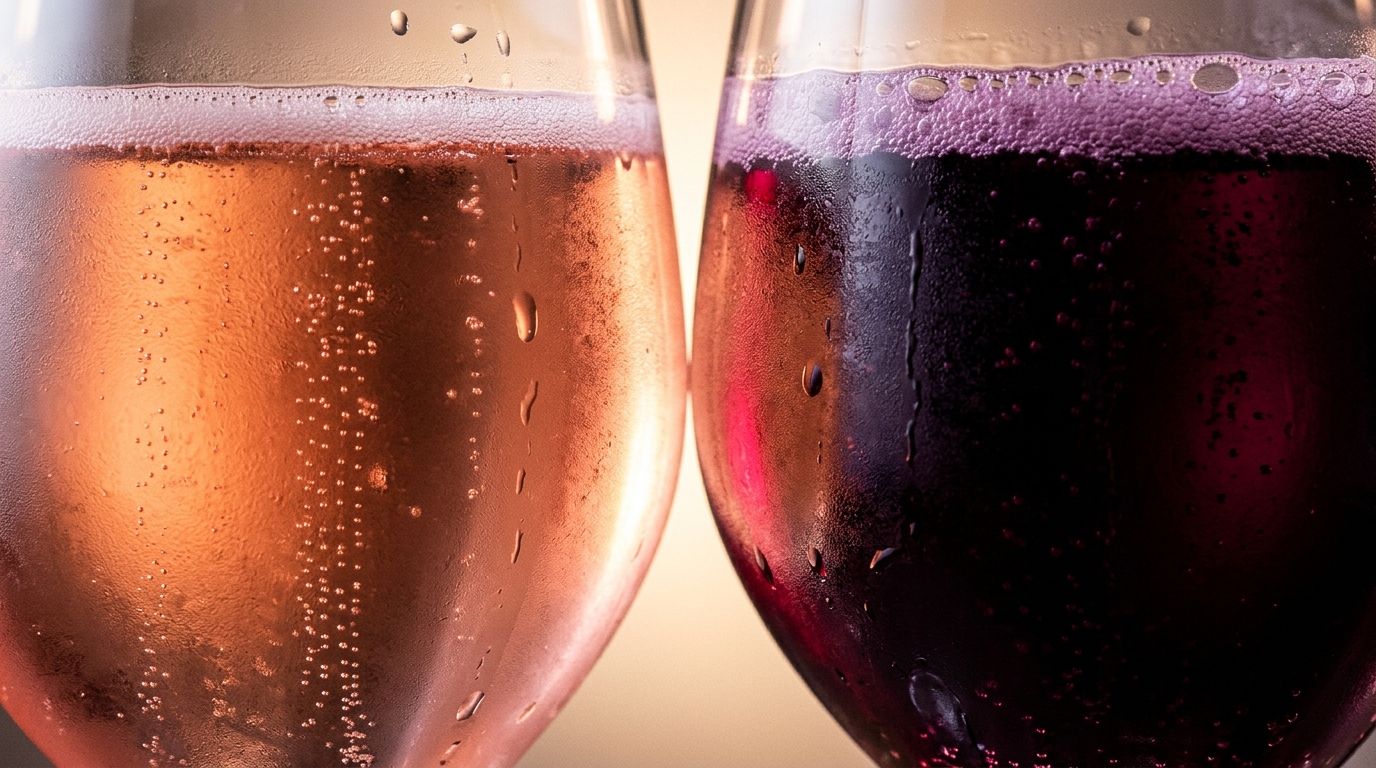
Bugey-Cerdon is a sparkling rosé from the Savoie region of eastern France, made from Gamay and Poulsard by the ancestral method, which is the oldest way of making sparkling wine and leaves it gently sweet and noticeably low in alcohol. It tastes like strawberries and cream with a squeeze of citrus over the top, it arrives a pretty shade of pink, and it's genuinely difficult to dislike. Bottles run $19.99 to $23.99, and Patrick Bottex is the producer that regular drinkers name first. It's the best mimosa replacement at a brunch table, which is a job Moscato never quite does.
Lambrusco is the cheaper and far more food-friendly option, and it's another red. It comes from Emilia-Romagna in northern Italy, it's frizzante rather than fully sparkling, and it runs from bone dry to semi-sweet depending on the bottle in front of you. Prices start around $11.99 and reach $24.99, with Medici Ermete and Paltrinieri among the names worth hunting for. The words you need on the label are "amabile" or "semisecco" for the sweeter styles, because "secco" means dry and will catch you out. Lambrusco handles salty, fatty food better than almost anything else at the price, which makes it a much better dinner wine than Moscato has ever been.
You can also stay put and simply buy better Moscato, which is underrated advice. Moving from a supermarket bottle to a real Moscato d'Asti at $17.99 changes the experience more than switching grapes does.
What if it's the peach and orange blossom perfume?
Then you can go completely dry and still be happy, and Alsace Gewürztraminer is the classic answer to this one.
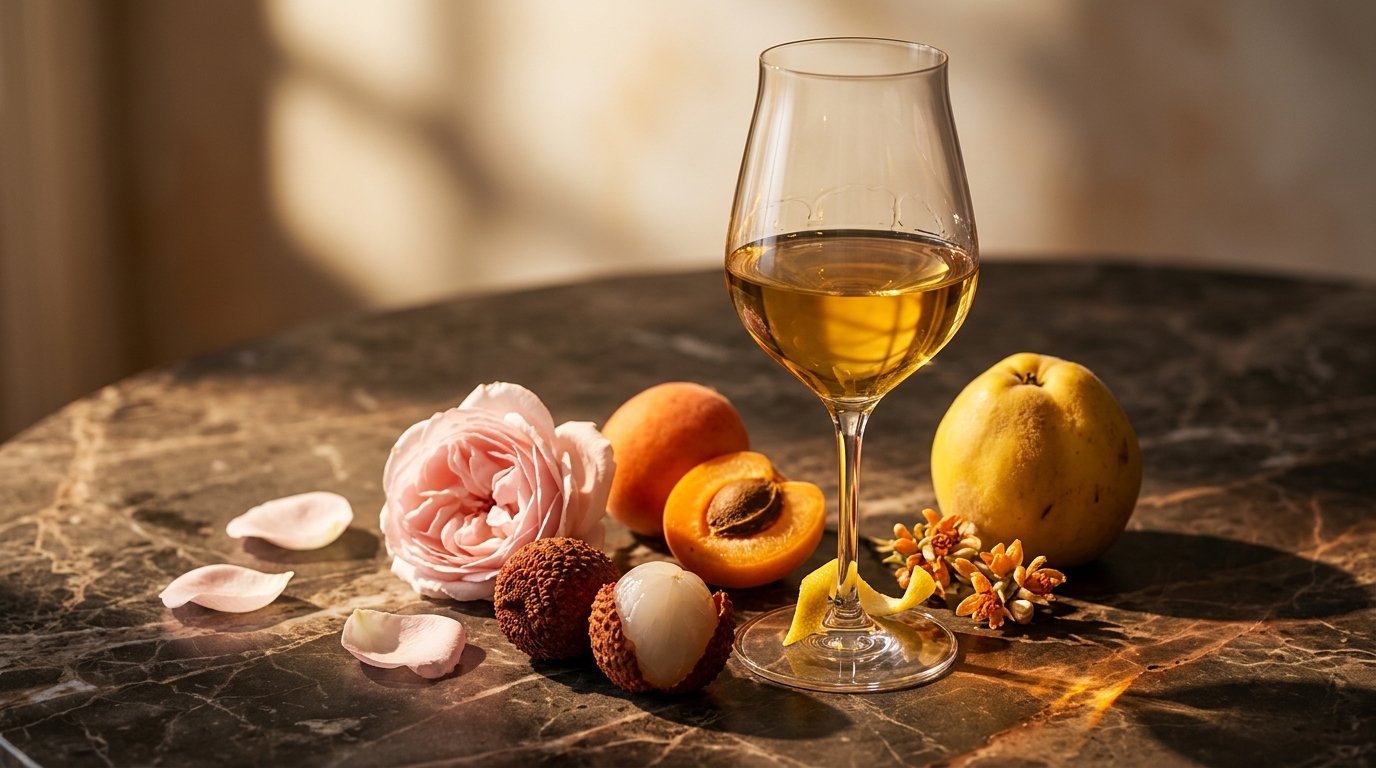
Gewürztraminer grows across Alsace in northeastern France and it's the most aromatic white wine in wide circulation, throwing lychee, rose and stone fruit out of the glass before you've lifted it. It carries more alcohol than Moscato and has lower acidity, so it drinks like a slower and more serious wine rather than something you pour through an afternoon. Pierre Sparr's "Grande Réserve" is $19.99 and Hugel's "Classic" is $22.99, both easy to find and a fair introduction to the style. Trimbach at $31.99 and Zind-Humbrecht's Turckheim at $36.99 are where it gets genuinely good. Sweetness varies a lot between producers and isn't always stated on the label, so this is one to ask about at the counter.
Vouvray demi-sec is the other one, made from Chenin Blanc in the Loire Valley, and the words "demi-sec" tell you plainly that there's sweetness in the bottle without it being a dessert wine. Domaine des Aubuisières' "Cuvée Gérald" is $19.99 and gives you quince, honey and apple with enough acidity to keep everything lively. It also ages well, which Moscato emphatically does not, so it's the first wine on this list genuinely worth buying two of.
Is white Zinfandel similar to Moscato?
Not especially, and this is the question people ask most often without ever getting a straight answer. White Zinfandel is a sweet pink wine, so on paper it looks like an obvious match.
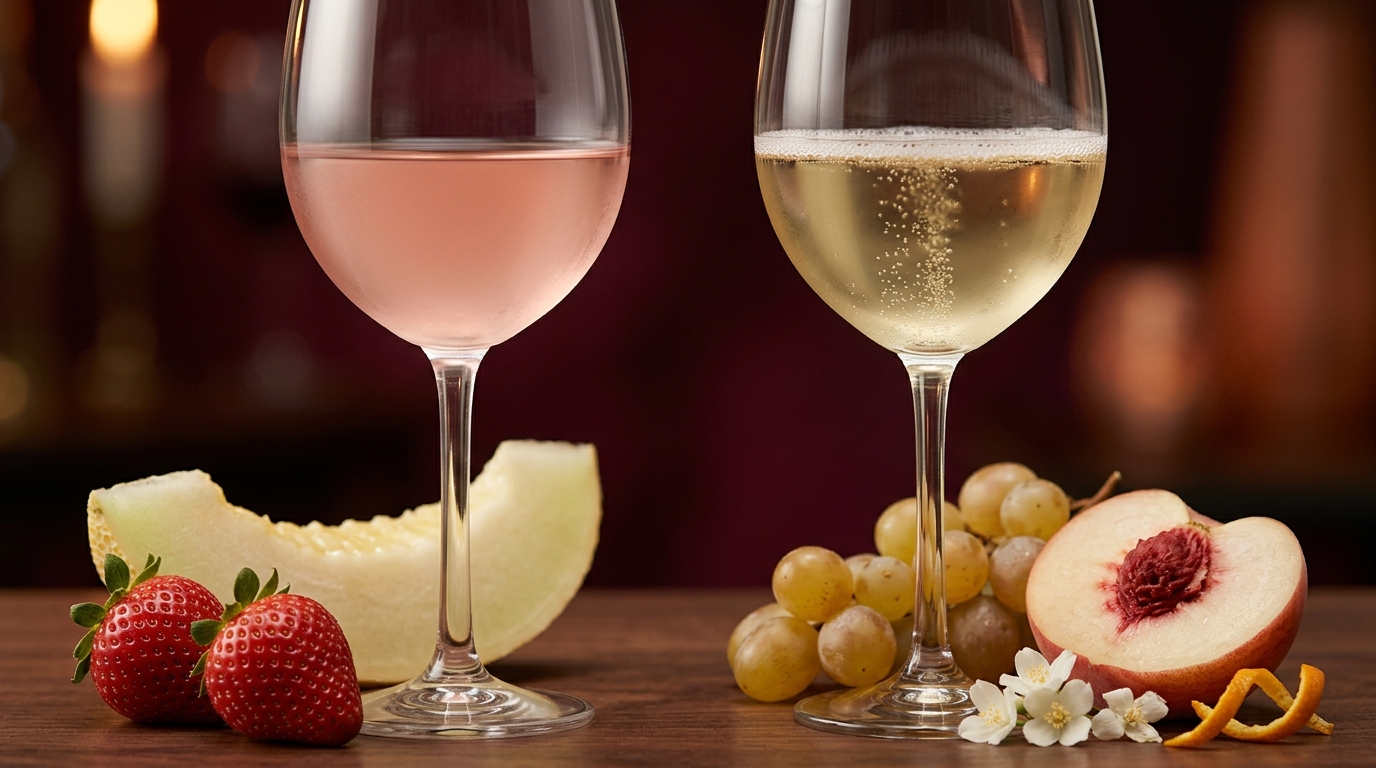
The difference sits in the aromatics and the acidity. Moscato's appeal is that loud floral perfume sitting on top of the sweetness, and white Zinfandel doesn't have it. What you get instead is a simpler strawberry and melon flavor over softer acidity. It also usually carries more alcohol, commonly around 10 percent against the 6 percent of a good Moscato d'Asti, so it drinks heavier while tasting simpler. If sweetness on its own is what you want, it'll do the job and it's cheap. If you'd miss the perfume or the lightness, you'll find it flat by comparison, and Bugey-Cerdon gives you the pink and the sweetness with far more going on inside the glass.
Pink Moscato is the closer option if pink is the part you care about, since it's usually Moscato blended with a small amount of red wine and it keeps the aromatics intact. Our roundup of what makes a good sweet wine covers the wider category if you want to range further.
How do you read a Riesling label without buying a dry one?
This trips up more people than any other part of the search, and the advice you'll usually be given about it is wrong. The common tip is to look for "Kabinett" or "Spätlese" on a German label as a sign of sweetness, and those words don't actually mean that.
The German Wine Institute is explicit on the point. Kabinett, Spätlese, Auslese, Beerenauslese, Eiswein and Trockenbeerenauslese are Prädikat categories, and each is defined by a minimum must weight, which measures how ripe the grapes were at harvest rather than how sweet the finished wine turned out. The Institute describes Spätlese as ripe and elegant with fine fruit "but not necessarily sweet", and says of Auslese that it's "often intense in aromas and taste but not always sweet". A winemaker can take very ripe grapes and ferment them all the way to dry, and plenty of them do exactly that.
The word that genuinely tells you about sweetness sits elsewhere on the label. "Trocken" means dry and is the one to avoid if sweetness is what you're after. "Halbtrocken" and "feinherb" both point to something off-dry with a little sugar left in. American labels often print "off-dry" in plain English, which is easiest of all to read. A Kabinett with no "trocken" anywhere on the bottle is usually your safest bet, and that's the practical version of the advice everybody half-remembers. If labels in general are the obstacle, our walkthrough on how to read wine labels covers the rest of the vocabulary.
This is the exact problem Find Similar was built for. It works from a wine you already like rather than from a category label, which is why it can return a sweet sparkling red from Piedmont when you name a sweet sparkling white from Piedmont, and a shelf filter never will. It gets sharper as your Taste Profile fills in, because that is what lets it tell apart someone who loves Moscato for the sugar from someone who loves it for the perfume. Taste is personal either way, so treat any recommendation as a starting point rather than a verdict.
What do you order when the wine list has no Moscato?
Ask for something off-dry, and use that exact word, because it's the term the trade uses and it gets you taken seriously straight away.
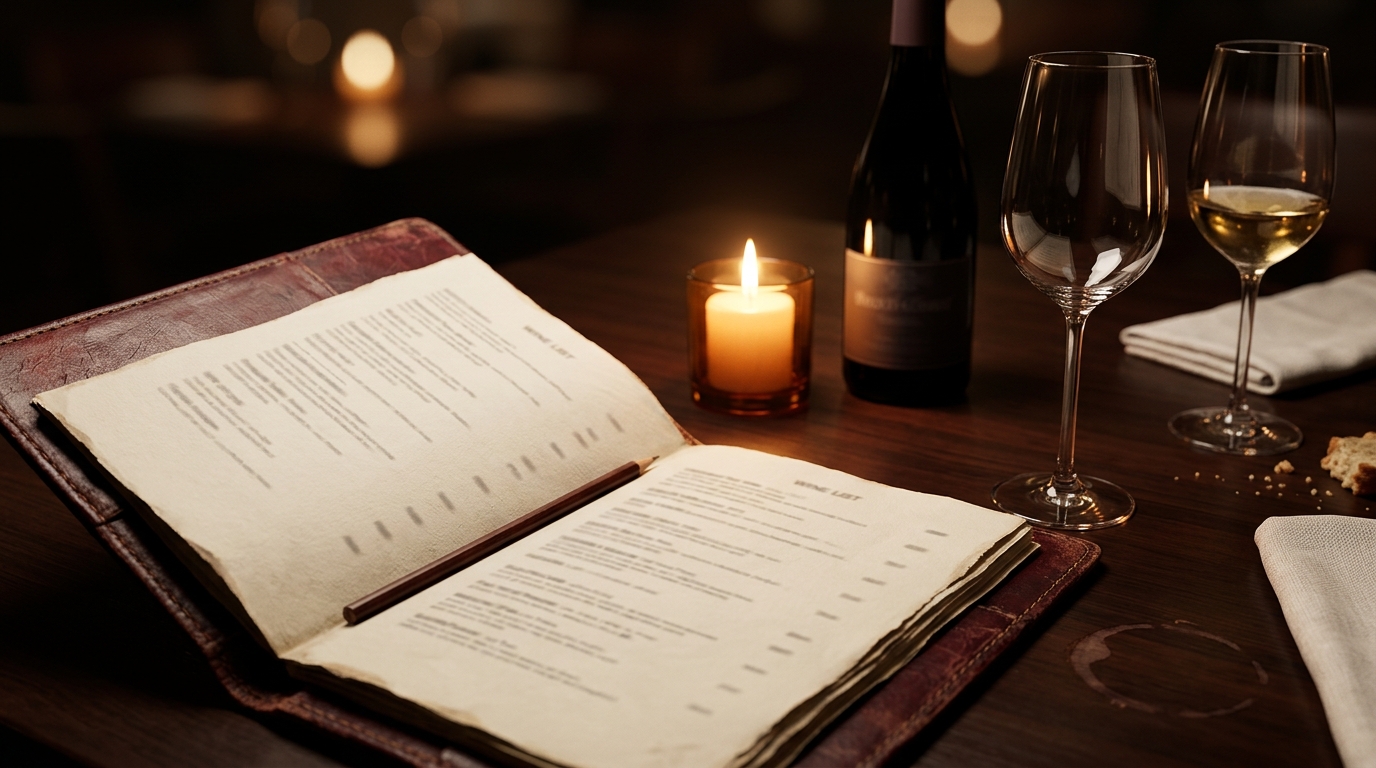
Most restaurant lists carry no Moscato at all, which is the practical problem sitting behind a lot of these searches and something none of the popular articles bother to address. The request that reliably works sounds like this: you like Moscato, so you're after something off-dry and aromatic, ideally lower in alcohol. A decent server or sommelier can work with that immediately, and it spares you the awkwardness of naming a wine the restaurant has deliberately chosen not to stock.
The bottles most likely to be hiding on the list are an off-dry Riesling, which appears far more often than people expect, a Vouvray, or a Gewürztraminer if there's an Alsace section at all. Lambrusco turns up on Italian lists and is frequently the best value on the page. If there's a dessert wine section and you've reached the end of the meal, that's where a Moscato d'Asti will be sitting if the restaurant stocks one anywhere. Our guide on how to read a wine list covers the structure most lists follow if you'd rather find it yourself.
Questions people ask about wines similar to Moscato
What is the closest wine to Moscato?
Brachetto d'Acqui is the closest in construction, because it's sweet, lightly sparkling and low in alcohol from the same part of Piedmont, though it arrives red rather than white. If you'd rather stay with white wine, an off-dry German Riesling is the nearest match you'll find.
Is Riesling sweeter than Moscato?
Usually it isn't sweeter than Moscato, and a good deal of Riesling is fully dry. Look for "off-dry" on American labels, or avoid the word "trocken" on German ones, whenever you want the sweeter style.
What is a good dry wine for someone who likes Moscato?
Alsace Gewürztraminer is the one, because it keeps the loud floral and stone fruit perfume that makes Moscato appealing while finishing dry. Pierre Sparr's "Grande Réserve" at $19.99 is a fair place to begin.
Are wines similar to Moscato expensive?
None of them are expensive by wine standards. The main alternatives run from about $11.99 for Lambrusco to roughly $30 for a benchmark German Riesling, and most of them sit near $20. That's the same range as a good Moscato d'Asti, which is $17.99 for Saracco or Elio Perrone's "Sourgal".
Is Moscato the same thing as Muscat?
Moscato is the Italian name for the grape family, and the version in Moscato d'Asti is Muscat Blanc à Petits Grains. Muscat gets made in dry, sweet and fortified styles all over the world, so the name by itself tells you nothing about how sweet the wine will be.
What food goes with wines similar to Moscato?
Spicy food is the standout answer, since sweetness cools chilli heat in a way that dry wine simply can't. Lambrusco handles cured meats and hard cheese, Brachetto d'Acqui works beautifully with chocolate and berries, and off-dry Riesling is one of the better matches for Thai and Indian cooking.
What can I substitute for Moscato wine?
For drinking, Brachetto d'Acqui if you want the same sweet and lightly sparkling build, or an off-dry German Riesling if you want to stay with white wine. For cooking, where a recipe asks for Moscato, use any inexpensive off-dry white such as a Riesling or a Chenin Blanc, since what the dish wants is the sugar and the acidity rather than the perfume.
Is Pinot Grigio similar to Moscato?
No, and the two get grouped together only because both are light Italian whites. Pinot Grigio is dry, still and deliberately neutral, with none of Moscato's sweetness, fizz or floral perfume, and it carries roughly twice the alcohol. If somebody hands you a Pinot Grigio expecting you to enjoy it for the same reasons, they have misread what you like about Moscato.
Is Moscato considered a cheap wine?
Moscato has a cheap reputation it partly earned through mass-market bottles, but the category is not cheap by definition. A benchmark Moscato d'Asti from Saracco or Elio Perrone was $17.99 when we checked in August 2026, which sits alongside most of the alternatives on this page rather than below them. The dismissal is usually about the sweetness rather than the price.
Is Moscato a beginner wine?
It is a very good first wine, and there is nothing wrong with that. Sweetness, soft bubbles and low alcohol make it forgiving in a way dry wine is not, so it asks nothing of a new drinker. Being a good starting point does not make it a wine to grow out of, and the most useful next step is often a better Moscato rather than a different grape.
Where to start this weekend
If you're only buying one bottle, make it the Brachetto d'Acqui, because it's the closest thing to Moscato that most people have never tried and it costs about $25. If you'd rather stay with white wine, an off-dry Riesling around $25 gives you the largest jump in quality for the money. And if the fizz turns out to be what you were really after all along, Bugey-Cerdon at roughly $20 is the most purely enjoyable bottle on this whole list. And if the Riesling turns out to be the one that sticks, the whites that sit closest to Riesling pick up from there.
The broader point is that "wines similar to Moscato" was never one question, and answering it well means working out first whether you're chasing sweetness, bubbles, low alcohol or perfume. Sommy's Find Similar makes that call from the wines you've actually rated, so your next bottle is a real recommendation rather than a guess dressed up as one. Rate a few of these as you drink your way through them and the list gets more yours every time.