The wines closest to Riesling are Grüner Veltliner, Chenin Blanc, Gewürztraminer, Torrontés, dry Furmint and Albariño, but which one belongs in your glass depends entirely on whether the Riesling you drink is dry or sweet. Those two drinkers want opposite bottles, and almost every list of wines similar to Riesling hands them the same six names anyway. So we're going to sort out which kind of Riesling you've been buying first, and only then get to what should replace it.
Six wines to try if you like Riesling:
- Gruner Veltliner (Wachau or Kamptal, Austria): the same high acid and mineral cut, reliably dry, with white pepper instead of florals
- Chenin Blanc (Vouvray, Loire): the only other white that runs bone dry to properly sweet on the same frame of acidity
- Gewurztraminer (Alsace, France): the perfume turned up and the acid turned down, all lychee and rose
- Dry Furmint (Tokaj, Hungary): smoke, citrus pith and stony weight, still cheap because Tokaj is famous for sweet wine
- Torrontes (Salta, Argentina): Riesling's aromatic lift of rose and peach, usually finishing dry
- Albarino (Rias Baixas, Spain): salt, citrus and stone fruit, built for shellfish
Which Riesling are you actually drinking?
Riesling is made across the entire sweetness range, from bone dry to genuinely sweet, and the label is where you find out which one you've been buying. On a German bottle the word that guarantees dryness is trocken, which the German Wine Institute defines as up to 9 grams per liter of residual sugar, while halbtrocken allows up to 15 grams and lands off-dry. Feinherb means roughly the same thing as halbtrocken and carries no legal definition at all.
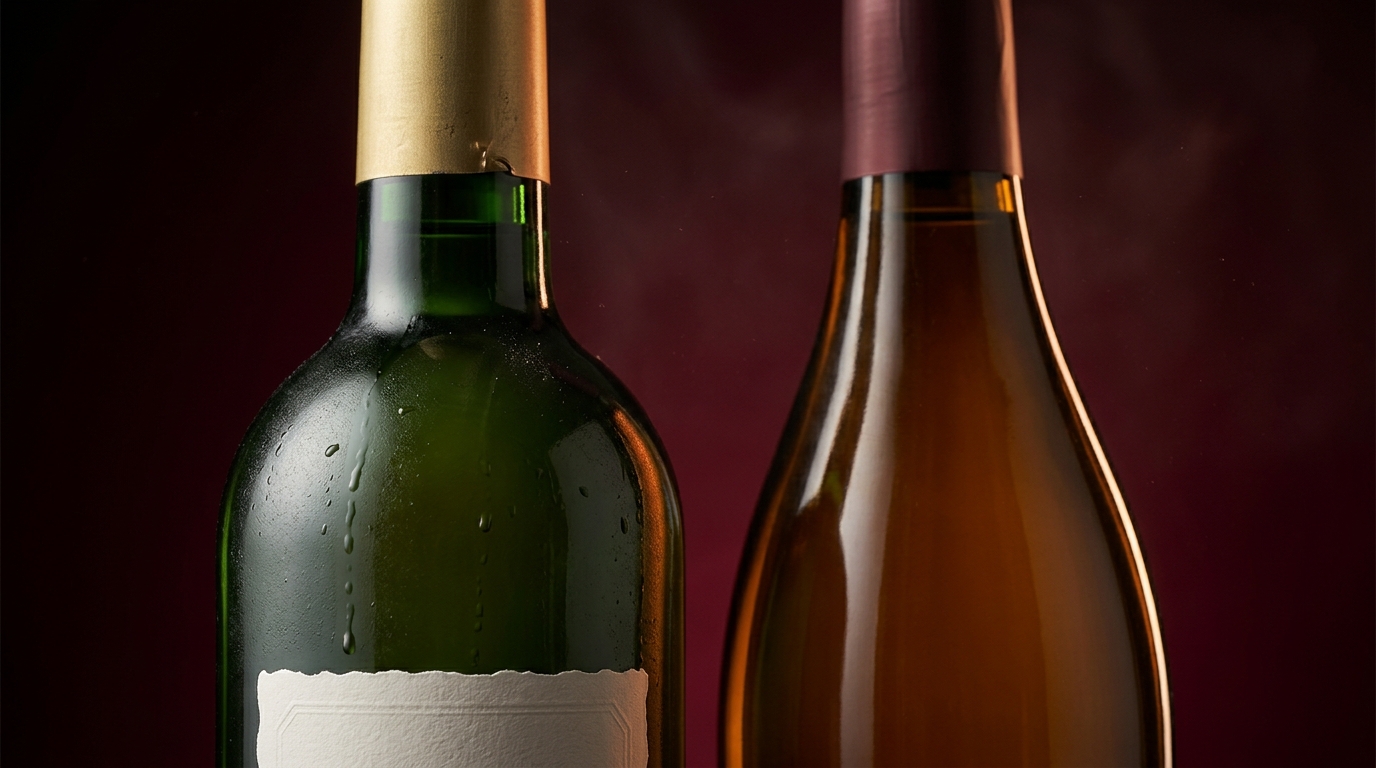
The part that confuses nearly everyone is the Prädikat ladder, those words like Kabinett, Spätlese and Auslese climbing the label. They describe how ripe the grapes were at harvest, not how sweet the finished wine tastes, and the German Wine Institute is blunt about it: a wine can be vinified dry regardless of how ripe the grape was. Kabinett runs light and low in alcohol, dry to off-dry. Spätlese is more concentrated in flavor and, in their own words, not necessarily sweet. A Spätlese trocken is a dry wine wearing a word most people read as sweet.
If the label tells you nothing, the alcohol number will. Fermentation turns sugar into alcohol, so the sugar a winemaker leaves behind is alcohol that never happened, and a Riesling sitting at 8 or 9 percent has kept a lot of it. One at 12 percent or above has almost certainly been fermented dry. That single number on the back label is the fastest read you can do standing in an aisle, and it works on bottles from any country. Our guide to spotting a dry Riesling fast goes deeper on the aisle version of this check.
If you drink dry Riesling, what should you try next?
Dry Riesling drinkers should start with Grüner Veltliner, then work outward to dry Furmint and Albariño, because all three keep the high acidity and mineral cut while dropping the sweetness question entirely. What you're attached to in a dry Riesling isn't fruit, it's tension, that line of acidity that makes your mouth water and carries citrus and wet stone along with it.
Gruner Veltliner, the dry cousin
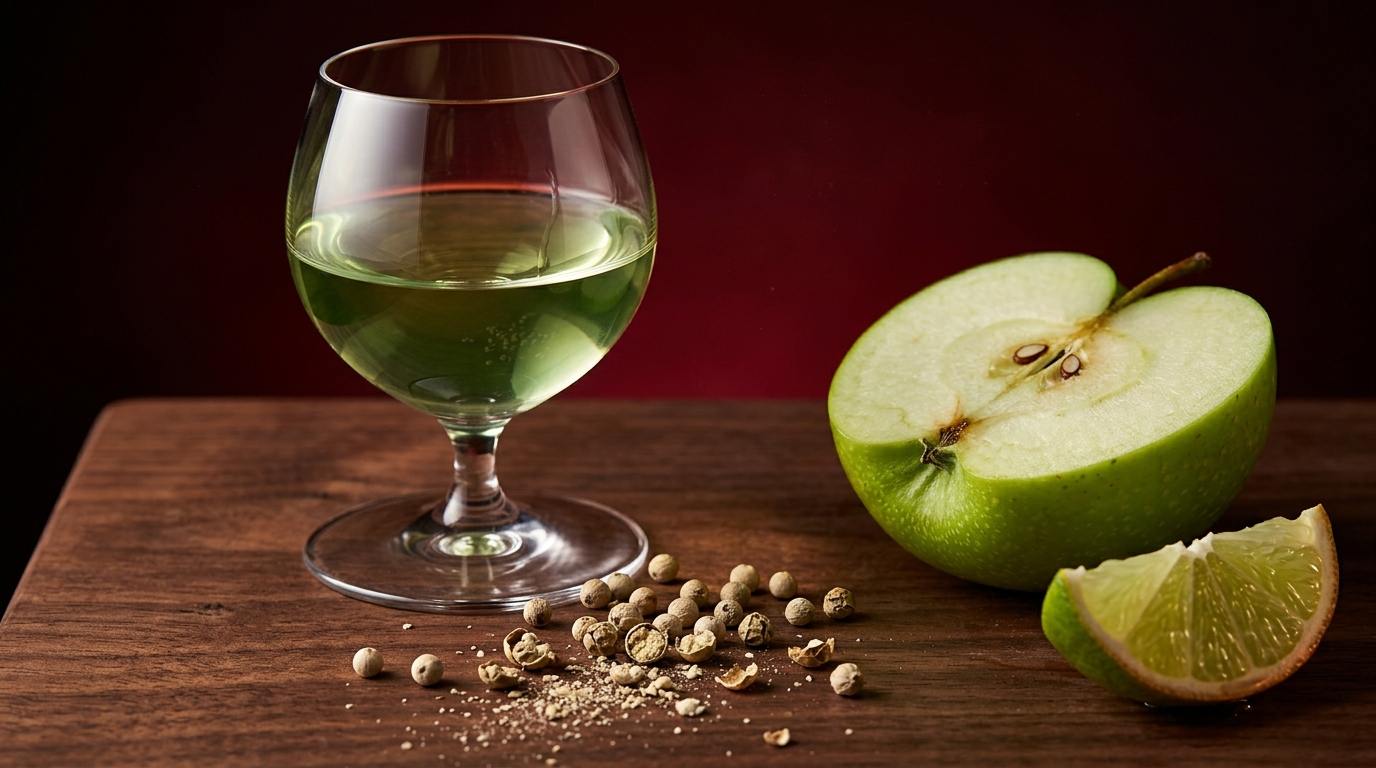
Grüner Veltliner is the cleanest swap available. It's Austria's signature white, it shares Riesling's spine almost exactly, and it's dry by temperament rather than by choice, so you never have to decode a label to find out what you're getting. The trade is that it gives up some of Riesling's floral lift and hands you a savory white pepper note instead, which most dry Riesling drinkers take happily. Look to the Wachau for the weightier, stonier versions and to Kamptal and Kremstal for lighter everyday bottles.
Dry Furmint and Albarino, the two that go further
Dry Furmint from Hungary goes the other direction, adding smoke, citrus pith and a stony intensity with real weight behind it. Tokaj is famous for sweet wine, so its dry bottles have stayed cheap by accident rather than by design, and that gap hasn't closed yet. Albariño from Rías Baixas is the third option and the easiest drinking of them, all salt and citrus and stone fruit, built for shellfish in a way Riesling only sometimes is. If you want the full comparison against its closest rival, we've written about Albariño against Vermentino elsewhere.
If you drink sweet or off-dry Riesling, what should you pour?
Off-dry and sweet Riesling drinkers should look at Chenin Blanc first, then Gewürztraminer and Torrontés, because those three keep the perfume and the sweetness without collapsing into simple sugar water. This group gets served badly by most alternatives lists, which quietly assume everyone wants something dry and then recommend four dry whites in a row.
Chenin Blanc, the shape-shifter
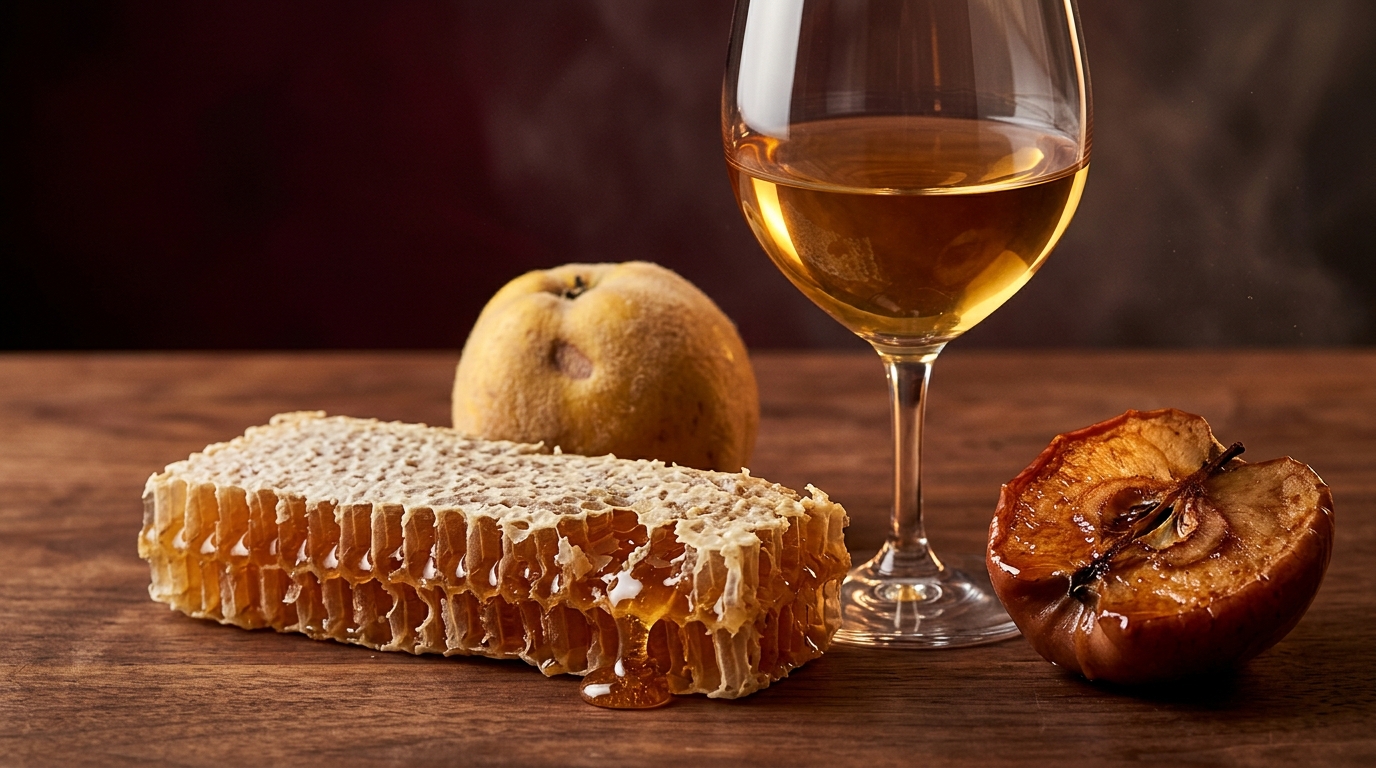
Chenin Blanc is the only other white grape that does what Riesling does with sugar, running the whole distance from bone dry to properly sweet on a frame of bracing acidity. Vouvray in the Loire gives you the full range, and the demi-sec bottles are where an off-dry Riesling drinker lands most comfortably. Expect quince, baked apple and honey where your Riesling gave you lime and peach, with a rounder, waxier texture underneath.
Gewurztraminer and Torrontes, the two aromatic ones
Gewürztraminer turns the perfume up and the acid down, which is either exactly what you wanted or immediately too much. Lychee, rose petal and ginger arrive before you've lifted the glass, and Alsace makes the versions that keep enough freshness to stop it turning soapy. Torrontés from Argentina splits the difference in a useful way, giving you Riesling's aromatic intensity of rose, peach and lemon while usually finishing dry, so it suits someone who loves the smell of sweet Riesling more than the sugar itself. If real sweetness is the whole point for you, our list of wines similar to Moscato covers that end of the range properly, and Riesling against Moscato sorts out how the two actually differ.
Is Moscato or Riesling better?
Riesling is the more versatile of the two and Moscato is the sweeter, so the honest answer depends on whether you want a wine that goes with dinner or a wine that goes with dessert. Moscato is worth naming here precisely because so many people reach for it and then feel let down. It's sweeter than most off-dry Riesling and considerably softer, since it carries far less acidity, and that acidity is doing more work in your Riesling than the sugar ever was. A sweet Riesling tastes fresh rather than syrupy because the acid cuts straight through the sugar, so a wine with the sugar and none of the cut ends up tasting heavier despite being lighter in alcohol. If you've tried Moscato hoping for a sweeter Riesling and found it cloying, that mismatch is the reason, and Vouvray demi-sec is the correction.
Which of these can you actually find in an American store?
Albariño, Gewürztraminer and Chenin Blanc are widely stocked in the United States, Grüner Veltliner is usually there if the shop has any Austrian section at all, and dry Furmint is the one you'll probably need to order or find at a specialist. Most alternatives lists skip this entirely, which is how you end up with a shopping list you can't actually shop.
There's also a much closer answer that almost nobody mentions, which is American Riesling. The Finger Lakes in New York has built its reputation on the grape, with 832 acres of Riesling, about 15 percent of the region's reported bearing acreage and 90 percent of all the Riesling planted in the state according to the New York Wine and Grape Foundation 2024 Vineyard Report, and the region's average producer makes two or three different styles of it every year. Washington State grows a lot of it too, with Riesling sitting among the top varieties of the Columbia Valley, the area that holds over 99 percent of the state's vineyard acreage.
That "two or three styles" detail is the practical one, because it means a single American winery will often sell you a dry, a semi-dry and a sweeter Riesling at nearly the same price. In the Finger Lakes, the winery named for Dr. Konstantin Frank lists its flagship Dry Riesling and its Semi-Dry Riesling at $21.99, and its medium-sweet Reserve Riesling at $27.99, all checked in August 2026. Buying two of those and drinking them side by side will teach you more about your own taste than any article can, this one included, and it costs less than most people spend working it out by accident.
What can you substitute for Riesling in cooking?
For cooking, substitute a dry Riesling with Pinot Grigio, Sauvignon Blanc or unoaked Chardonnay, and substitute a sweet Riesling with a splash of dry white plus a small amount of apple juice or honey. This is a genuinely different question from what to drink, and it's the one the alternatives lists never answer even though people keep asking it.
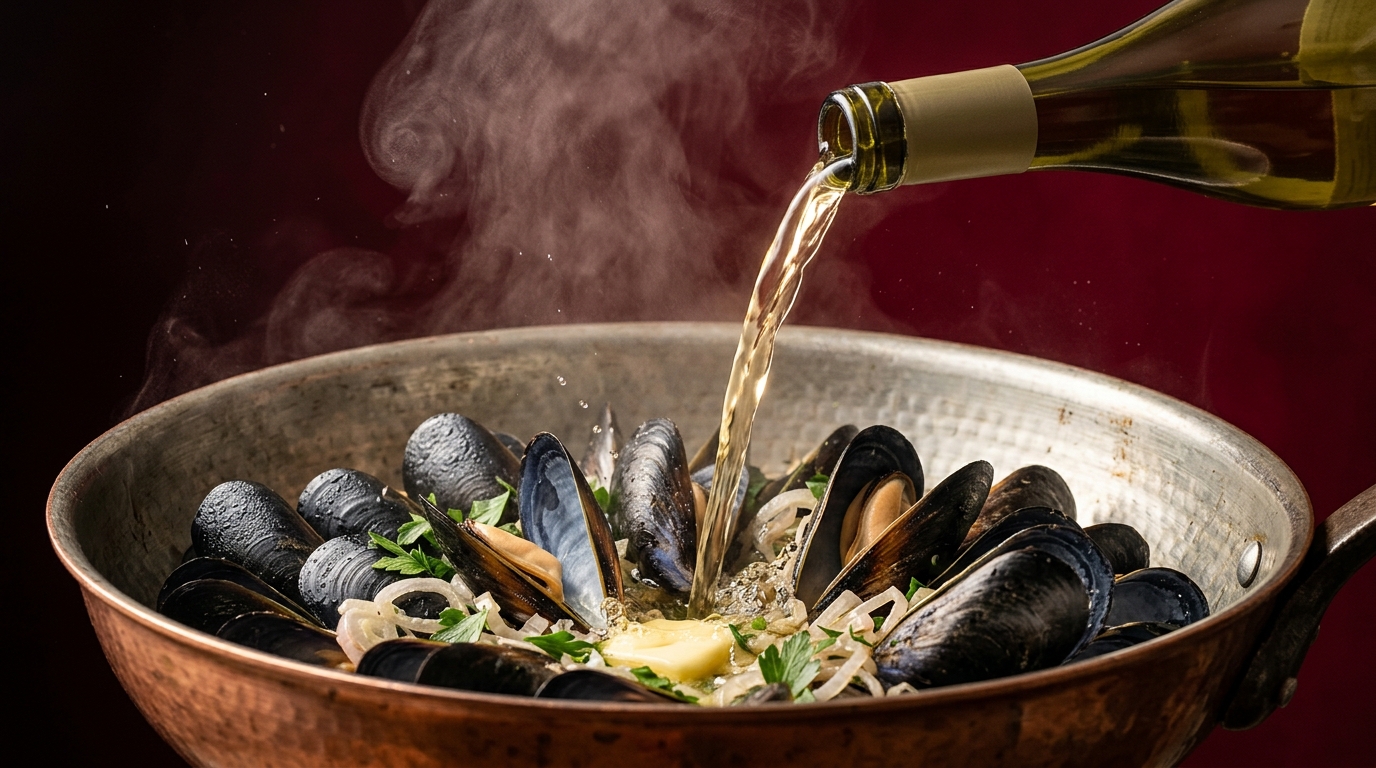
What a recipe wants from Riesling is acidity and a bit of fruit, not the grape's aromatics, because most of the perfume cooks off within a minute of hitting a hot pan. So any crisp, unoaked dry white will do the job in a pan sauce, a mussel pot or a braise. Pinot Grigio is the safest stand-in because it brings acidity without a strong personality of its own, while Sauvignon Blanc adds a green, herbal edge that suits chicken, fish and anything with fresh herbs already in it.
Where you need to pay attention is a recipe that calls for Riesling specifically because of its sweetness, which usually means a pork dish, a fruit-based sauce or something with real chili heat. Dropping a bone dry white into that will leave the dish tasting thin and sharp, so add a teaspoon of honey or a splash of apple juice to a dry white and you'll land much closer. Avoid anything oaked, since oak turns bitter when a sauce reduces, and skip anything labeled cooking wine because the salt in it will wreck your seasoning before you've tasted it. For the drinking side of the same equation, our Riesling food pairing piece covers what to open alongside the meal rather than pour into it.
Is Riesling similar to Sauvignon Blanc or Pinot Grigio?
Riesling is closer to Sauvignon Blanc than to Pinot Grigio, though neither is a genuine match, and Riesling is usually the sweeter of the three. All three share high acidity and get served cold, which is why they end up compared so often, but the resemblance mostly stops there.
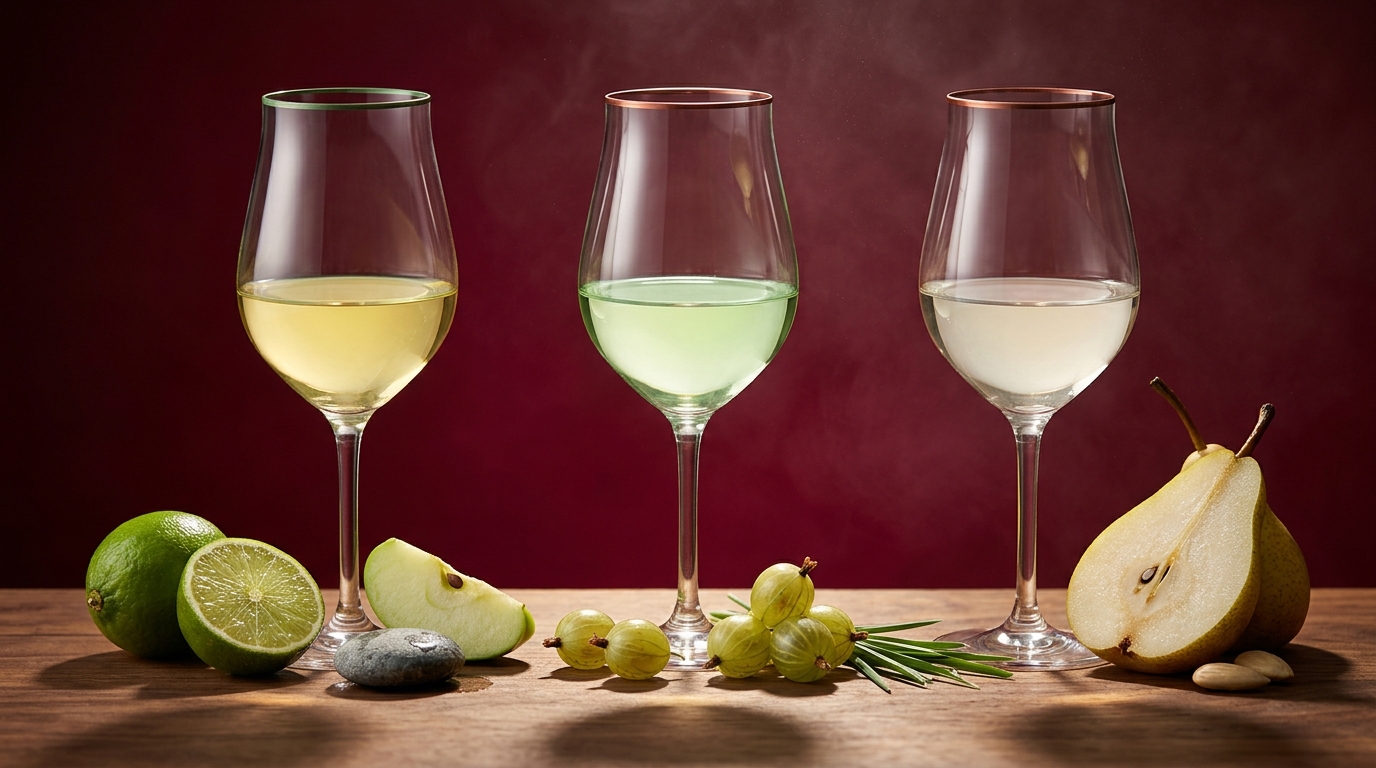
Sauvignon Blanc matches Riesling on aromatic intensity and acidity, so a Riesling drinker rarely finds it dull. The difference is the direction of the aromatics, because Sauvignon Blanc runs green and herbal towards grass, gooseberry and passionfruit, where Riesling runs towards lime, green apple, white peach and wet stone. Sauvignon Blanc is also almost always fermented dry, so if the Riesling you love has any sweetness at all, this swap will feel severe.
Pinot Grigio is the weaker comparison of the two. Italian Pinot Grigio is deliberately quiet, light and clean without much aroma, which makes it a fine dinner wine and a poor substitute for a grape whose whole appeal is how loudly it announces itself. If Pinot Grigio is what you're currently drinking and you want more from it, our comparison of Sauvignon Blanc against Pinot Grigio is the better place to start than this article. On sweetness, Riesling outranks both often enough that the honest answer is yes, Riesling is generally sweeter, with the caveat that a trocken Riesling is drier than plenty of Sauvignon Blanc on the shelf.
How do you know which one you'll actually like?
You don't, not from reading, and that's the real limit of every article on this subject including this one. Sorting Riesling drinkers into a dry camp and a sweet camp gets you much closer than a flat list of six grapes, but there are still three or four credible bottles inside whichever camp you landed in, and nothing on this page can tell you which of them suits the way you personally taste.
The useful thing is that you already have a reference point, because you know at least one Riesling you enjoyed. That's more information than most people bring to a wine shop, and it's the starting point Sommy's Find Similar was built around: name a bottle you liked and it works outward from that specific wine by grape, region and character, rather than from a category average. It's the difference between being told that Riesling drinkers often enjoy Grüner Veltliner and being pointed at the Grüner that resembles the bottle you actually rated.
Whatever you use to choose, buy two bottles rather than one, and open them on the same evening. Tasting a wine on its own tells you whether you liked it, while tasting two side by side tells you what you like, and that second answer is the one that keeps paying off. Write down which you preferred and why, even in a sentence, because six months of those notes will outperform any recommendation engine including ours.
Where to start with your next bottle
If your Riesling says trocken or sits above 12 percent alcohol, buy a Kamptal Grüner Veltliner this week and you'll almost certainly be happy. If it's a Kabinett, a feinherb or anything under 10 percent, buy a Vouvray demi-sec instead. If you're not sure which one you've got, look at the alcohol number before you look at anything else, because it settles the question faster than the rest of the label put together.
And if the honest answer is that you love Riesling specifically, the acidity and the lime and the wet stone and the way it survives a plate of Thai food, then the best wine similar to Riesling is a different Riesling. Try a dry one from the Finger Lakes against a German Kabinett, or a Clare Valley bottle from Australia against a Mosel. The grape covers more ground than most people ever explore, and there's no rule saying the next bottle has to be a departure.
Questions people ask about wines similar to Riesling
What can I substitute for Riesling wine?
For drinking, substitute dry Riesling with Grüner Veltliner and sweet Riesling with Vouvray demi-sec or Alsace Gewürztraminer. For cooking, any crisp unoaked white such as Pinot Grigio or Sauvignon Blanc works in place of a dry Riesling, and a dry white with a teaspoon of honey stands in for a sweet one.
Is Riesling similar to Sauvignon Blanc?
They share high acidity and strong aromatics, so they're related in style, but the aromas point different directions. Sauvignon Blanc runs green and herbal towards grass and gooseberry, while Riesling runs towards lime, green apple and wet stone. Sauvignon Blanc is also nearly always dry, where Riesling spans the full sweetness range.
Is Pinot Grigio similar to Riesling?
They aren't especially close to each other. Italian Pinot Grigio is light, clean and deliberately understated, where Riesling is one of the most aromatic and acid-driven whites in circulation. They're both cold, crisp whites, which is where the comparison starts and mostly where it ends.
Is Sauvignon Blanc or Riesling sweeter?
Riesling is usually sweeter, because Sauvignon Blanc is almost always fermented dry while Riesling is made across the full range. The exception matters though, since a Riesling labeled trocken is a dry wine and can easily finish drier than a fruit-forward Sauvignon Blanc.
What wines are similar to Riesling if I want something completely dry?
Grüner Veltliner from Austria is the closest, followed by dry Furmint from Tokaj for more weight and smoke, and Albariño from Rías Baixas for a saltier, seafood-friendly version. All three are reliably dry, so you avoid the label decoding that dry Riesling usually requires.
What are the three types of Riesling?
There is no official set of three, but the split that actually helps you shop is dry, off-dry and sweet. A dry Riesling says trocken on a German label or sits at 12 percent alcohol or above. An off-dry one says halbtrocken or feinherb and usually lands between 10 and 11.5 percent. A sweet one sits lower still, often at 8 or 9 percent, because the sugar left behind is alcohol that never happened. Those three cover almost every bottle you will meet, and the Pradikat words on the label describe grape ripeness rather than any of them.
What to use instead of Riesling?
Use Gruner Veltliner if the Riesling you drink is dry, and Vouvray demi-sec or Alsace Gewurztraminer if it is off-dry or sweet. Dry Furmint and Albarino are the next two dry options, and Torrontes is the pick if what you love is the perfume rather than the sugar.
Where does the best Riesling come from?
Germany's Mosel and Rheingau are the classic references, with Alsace in France close behind for a richer, drier style. Outside Europe the Clare and Eden Valleys in South Australia make some of the most precise dry Riesling in the world, and in the United States the Finger Lakes in New York and Washington's Columbia Valley are the two regions built on the grape. Any ranked list of individual bottles is somebody's opinion, so shop by region and by sweetness instead.
Are wines similar to Riesling always white?
In practice yes, because the combination of high acidity, aromatic lift and a sweetness range that stretches from dry to dessert doesn't really exist in red wine. The nearest red equivalents are lightly sweet and lightly sparkling, such as Brachetto d'Acqui or a semi-sweet Lambrusco, and they resemble Moscato far more than they resemble Riesling.