

The server is waiting, and the wine list gives you two familiar options: Pinot Grigio or Sauvignon Blanc.
Here’s the answer you need right away. Pinot Grigio is not technically sweeter than Sauvignon Blanc. Both are usually dry white wines. The reason people get stuck is that Pinot Grigio can feel softer and fruitier, while Sauvignon Blanc usually tastes sharper and drier.
If you want the safest fast decision, use this rule: pick Sauvignon Blanc for a zippy, crisp, more mouth-watering white. Pick Pinot Grigio for a lighter, smoother, gentler white.
That Moment You Have to Pick a White Wine
You know the feeling.
You want a white wine that won’t be too sweet. You recognize both names. You also don’t want to order the wrong thing and spend the whole meal wishing you chose the other one.
That stress is normal. Wine lists make simple choices feel bigger than they are.
Many who ask is pinot grigio sweeter than sauvignon blanc are not asking for a chemistry lesson. They’re asking something more practical:
- Will one of these taste obviously sweet?
- Which one feels cleaner and crisper?
- Which one is less risky if I just want a solid glass of white?
Good news. You do not need wine expertise to answer that.
Quick comparison
| Attribute | Pinot Grigio | Sauvignon Blanc |
|---|---|---|
| Actual sweetness | Usually dry | Usually dry |
| Feels like | Softer, smoother | Sharper, crisper |
| Common fruit feel | Pear, apple, light citrus | Grapefruit, lime, passionfruit, green notes |
| Best if you want | Easy, mild, low-drama | Bright, zesty, lively |
| Simple order rule | Choose when you want subtle | Choose when you want crisp |
If your main fear is ordering a sweet white by accident, both are usually safe picks.
The primary difference is not sugar. It’s perception.
Sauvignon Blanc often comes across as more severe, more electric, more refreshing. Pinot Grigio tends to feel calmer and less aggressive. Neither answer is “better.” One just matches your mood better.
That should already lower the pressure. You’re not trying to decode wine. You’re deciding between sharp and soft.
The Simple Answer About Sweetness
Let’s settle the main question clearly.
Both Pinot Grigio and Sauvignon Blanc are classified as dry white wines with minimal residual sugar, typically under 10 to 20 g/L, according to Wine Folly’s wine sweetness chart. So no, Pinot Grigio is not sweeter than Sauvignon Blanc in actual sugar terms.
Actual sugar versus tasted sweetness
Your mouth does not read wine like a lab report.
A wine can have very little sugar and still seem a little rounder or fruitier. Another wine can have a trace of sugar and still taste very dry. That is why people keep asking this question.
Consider it this way:
- A lemon tastes sharp and dry-feeling because of acidity
- An apple tastes softer and sweeter-feeling, even when it is not “sweet” in a dessert sense
Wine works like that too.
Why the confusion happens
Sauvignon Blanc often tastes drier because its acidity is usually higher. Wine Folly notes that some New Zealand Sauvignon Blanc producers may add 2 to 4 g/L residual sugar to balance intense acidity, yet the wine still does not taste sweet because the acidity keeps it brisk and lean.
Pinot Grigio usually doesn’t attack your palate the same way. It feels smoother. So people sometimes mistake that softer finish for sweetness.
If you want a simple explanation of dry versus sweet wine without getting buried in jargon, this guide on dry vs sweet wine is useful.
The takeaway you can use
Ask yourself one question.
Do I mean sugar, or do I mean feeling?
- If you mean actual sugar, neither is meaningfully sweeter in the usual dry styles.
- If you mean what tastes drier, Sauvignon Blanc usually wins.
- If you mean what feels more mellow, Pinot Grigio usually wins.
Most wine stress disappears once you stop treating “sweet” and “fruity” as the same thing.
Why Sauvignon Blanc Often Tastes Drier
Sauvignon Blanc usually feels drier because it has more edge.
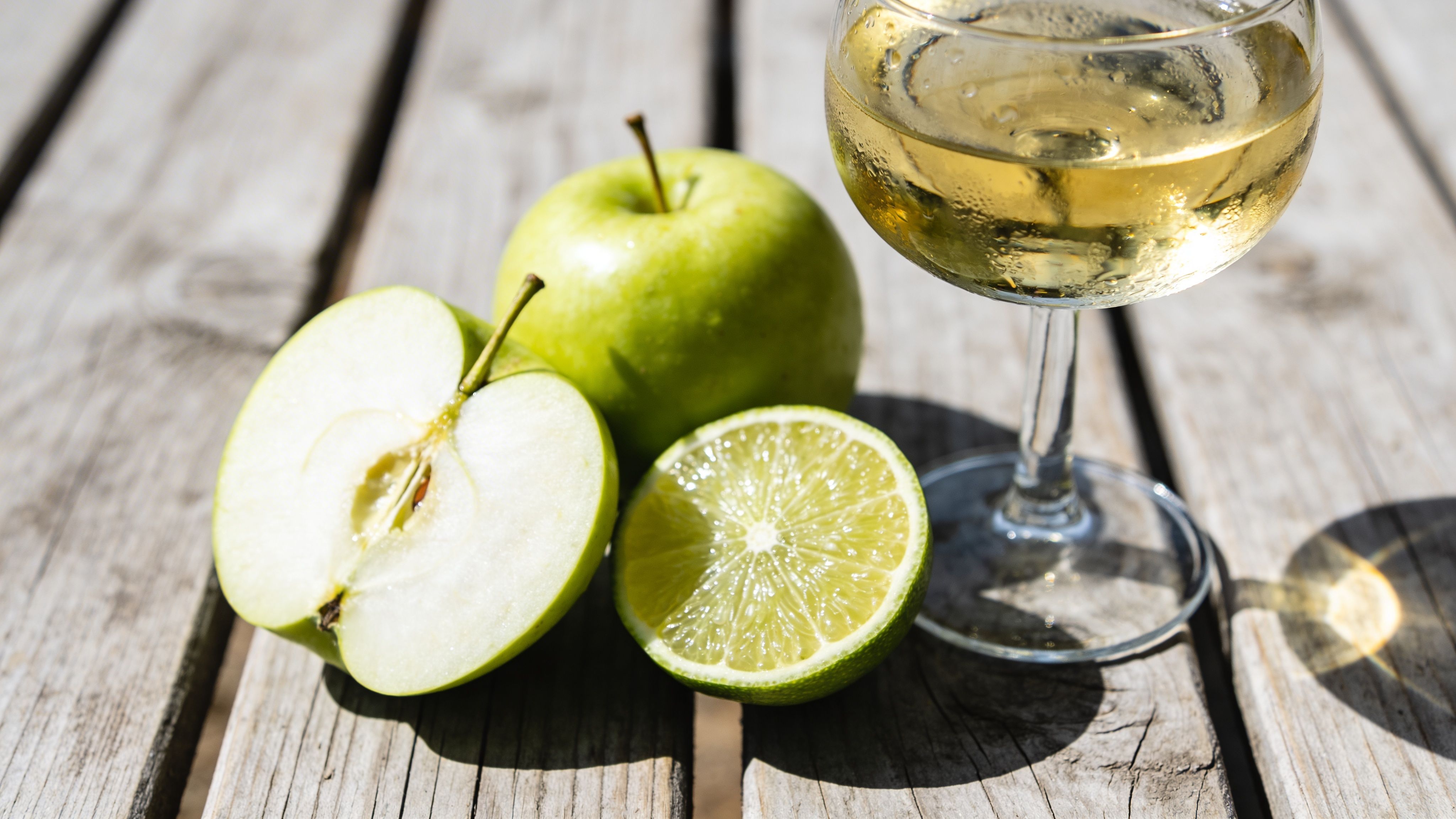
It wakes up your mouth. It tastes bright, crisp, and a little tense in a good way. If Pinot Grigio is the easier conversationalist, Sauvignon Blanc is the one who gets your attention immediately.
Acidity is doing most of the work
The biggest reason is acidity.
According to Paso Robles wine’s comparison of Pinot Grigio and Sauvignon Blanc, acidity benchmarks average 8.2 g/L for Sauvignon Blanc versus 6.5 g/L for Pinot Grigio. That gap matters because higher acidity creates a stronger mouth-watering, almost puckering effect.
That sensation reads as dry.
Not sugary. Not rounded. Dry.
If you’ve ever had a white wine that felt like a squeeze of lime over cold seafood, that’s the basic Sauvignon Blanc experience. If you want a plain-English explanation of how that works, what acidity in wine means breaks it down well.
The aromas push it even further
Sauvignon Blanc also smells and tastes more intense.
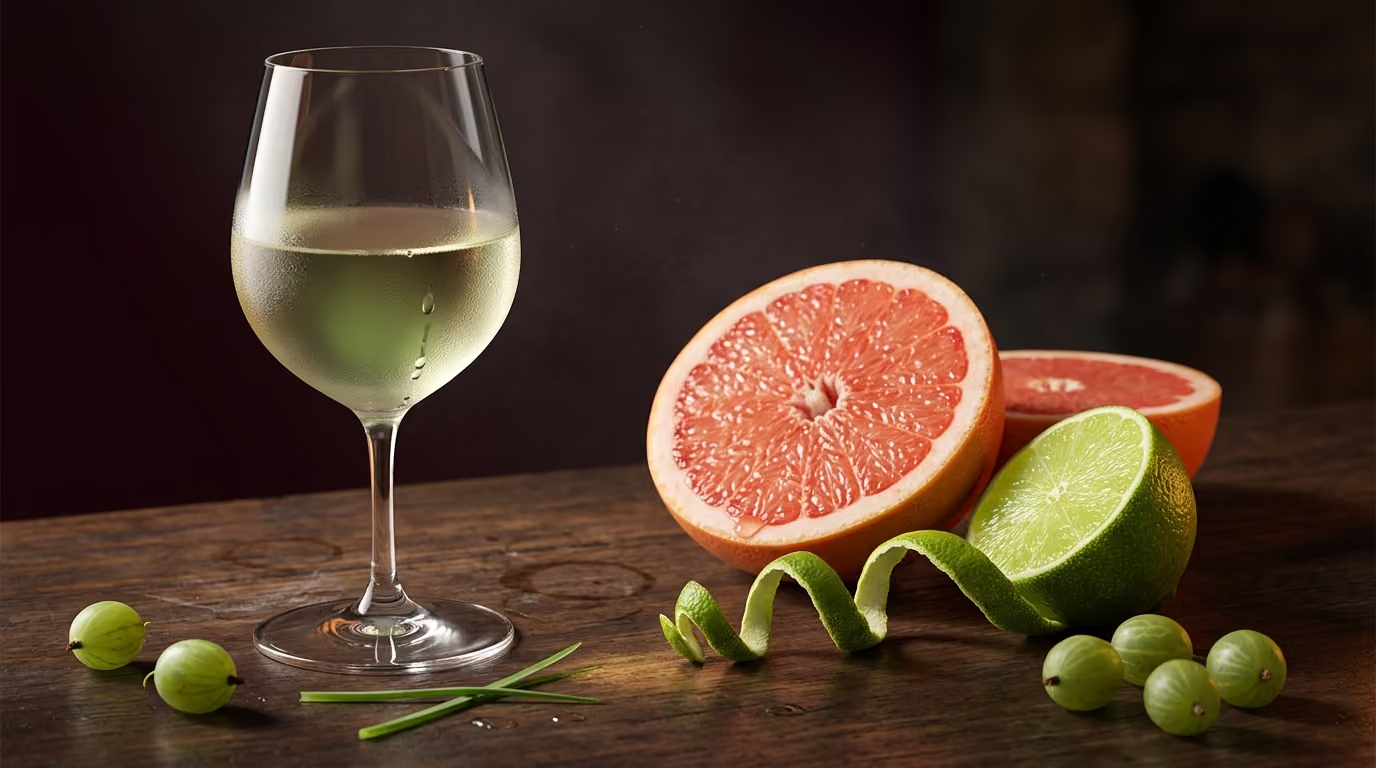
Paso’s comparison notes that Sauvignon Blanc can show 5 to 10x higher methoxypyrazines, with more than 20 ng/L in Marlborough New Zealand Sauvignon Blanc, which is why you often get grapefruit, passionfruit, and grassy notes. Those green, sharp aromas push your brain toward “crisp” and “dry.”
Pinot Grigio usually gives much quieter fruit. Sauvignon Blanc is louder.
That matters because flavor affects expectation. If your nose gets lime, herbs, and grapefruit, your brain braces for a leaner finish.
A quick visual may help if you like hearing the style difference described out loud:
Order Sauvignon Blanc when you want this feeling
Choose Sauvignon Blanc if you want:
- More snap in the glass
- Cleaner contrast with seafood, salads, goat cheese, or herb-heavy dishes
- A stronger “dry” impression
- A wine you notice immediately
Skip it if you hate tartness or that mouth-watering bite.
Sauvignon Blanc is the better pick when you want your wine to feel alive, not quiet.
That same sharpness is why Sauvignon Blanc handles soy sauce, ponzu, lime and fish sauce better than most whites, so it holds up against poke bowls, summer rolls, green papaya salad and a lot of the weeknight takeout that lands somewhere between salty and citrusy. If the food already tastes bright before the wine arrives, matching that brightness keeps the whole plate awake instead of flattening it, which is the same reasoning behind these wine picks for poke bowls.
Why Pinot Grigio Can Feel Softer or Fruitier
Pinot Grigio often feels easier because it doesn’t hit you with the same sharpness.
The fruit is gentler. The finish is smoother. That alone can make people think it is sweeter, even when it is still dry.
Softer does not mean sweet
Pinot Grigio usually lands more in the green apple, pear, light citrus zone. Compared with Sauvignon Blanc, it tends to feel less angular and less intense.
That softer profile is why it often becomes the “safe” restaurant order. It rarely surprises you. It usually fits the table. It doesn’t demand much attention.
For many people, that is a good thing.
Label wording is more significant than often perceived
Here is where a lot of confusion starts.
According to MasterClass on Sauvignon Blanc vs Pinot Grigio, Italian Pinot Grigio is typically fermented in stainless steel for a crisp, dry style. French Pinot Gris from Alsace often uses methods like malolactic fermentation and lees aging, which can create a richer texture and a more aromatic, sometimes off-dry feel.
So if you order “Pinot Grigio,” you are not always getting the same experience.
A simple shortcut
Use the label as a clue:
- Pinot Grigio from Italy usually means lighter, crisper, drier-feeling
- Pinot Gris from Alsace often means richer, fuller, and more likely to seem sweet
- Pinot Gris from Oregon can also lean more textured and expressive than basic Italian Grigio
Gris and Grigio are two names for one grape, so that list is a style guide rather than a translation, and picking between Pinot Gris and Pinot Grigio comes down to how much texture you want.
If you like whites that feel fruit-forward without tasting sugary, these fruity wine ideas can help you find that middle ground.
Pick Pinot Grigio when you want less tension
Choose Pinot Grigio if you want:
- A softer landing
- A milder white for sipping
- Less grassy or herbal flavor
- Something easy with chicken, simple pasta, or delicate seafood
Pinot Grigio is the better answer when Sauvignon Blanc sounds a little too sharp for your mood.
Heat on the plate is the one case where this stops being a question of mood and becomes a question of comfort. A very dry, high-alcohol white makes chili feel hotter rather than cooling it down, because the alcohol carries the burn instead of rinsing it away, so a sharp Sauvignon Blanc can leave a spicy curry or a chili-heavy noodle dish feeling harsher than it did before you poured. Pinot Grigio is usually the calmer choice with that kind of food, and an off-dry Riesling is calmer still when the dish is genuinely fiery.
A Visual Guide to Pinot Grigio vs Sauvignon Blanc
Sometimes the fastest way to decide is side by side.
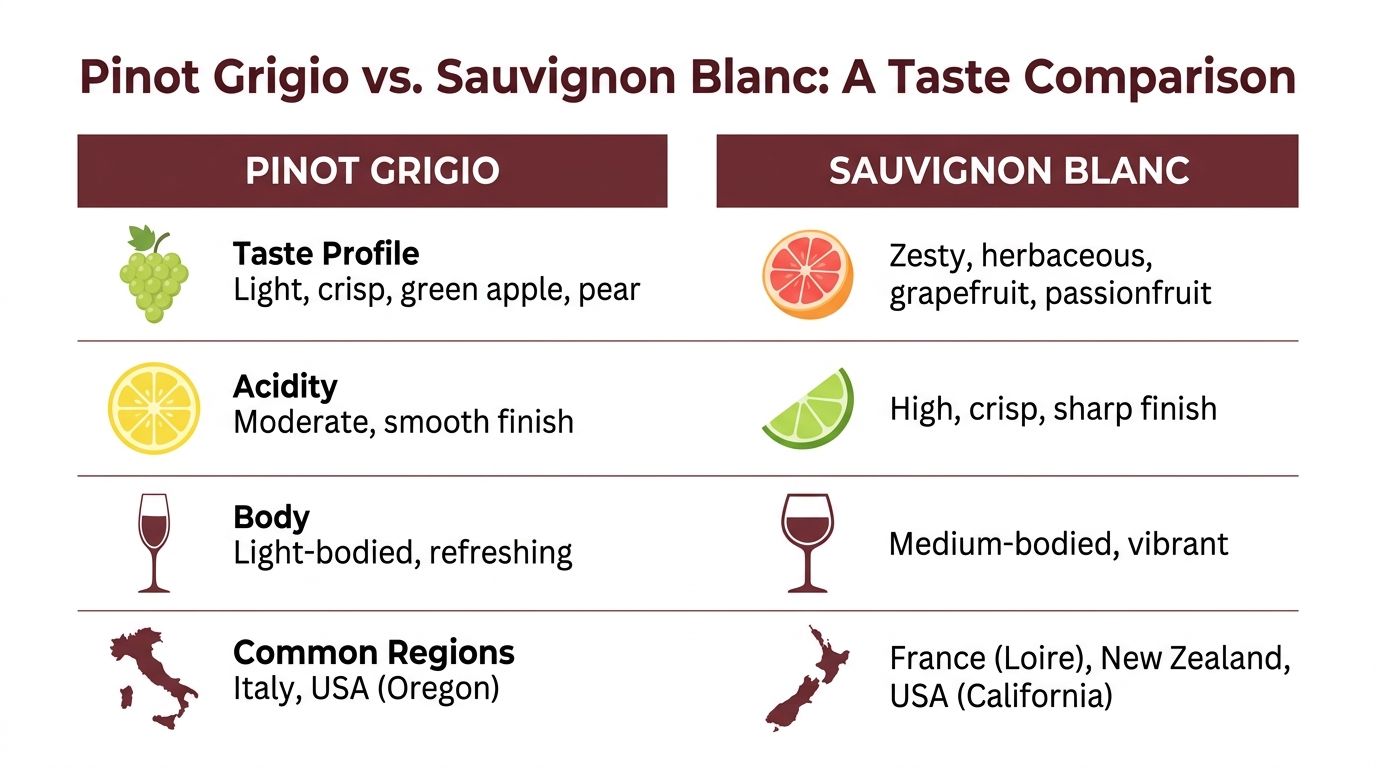
Quick Comparison: Pinot Grigio vs. Sauvignon Blanc
| Attribute | Pinot Grigio | Sauvignon Blanc |
|---|---|---|
| Sweetness level | Dry | Dry |
| Overall feel | Soft, light, smooth | Crisp, sharp, zesty |
| Fruit profile | Pear, green apple, mild citrus | Grapefruit, lime, passionfruit, grassy notes |
| Acidity | Moderate | Higher |
| Body | Light-bodied | Lean to medium |
| Best for | Easy sipping, subtle dishes | Bright food, herbs, tangy flavors |
| Risk if you dislike tart wine | Lower | Higher |
| Best fast order | “Something light” | “Something crisp” |
Use mood, not wine theory
Forget trying to memorize grape details.
Pick based on what you want the wine to feel like right now.
If the table has oysters, goat cheese, a salad with herbs, or anything with citrus, Sauvignon Blanc usually makes more sense. It cuts through those flavors and feels refreshing.
If you’re having grilled chicken, simple pasta, shrimp, or just want a white that won’t take over the meal, Pinot Grigio is usually the safer move.
A dead-simple decision filter
Use this when you have five seconds:
- Choose Pinot Grigio if you want soft, light, and low-pressure.
- Choose Sauvignon Blanc if you want bright, crisp, and lively.
- Avoid assuming “fruitier” means sweeter. That is the trap.
- Check the label wording. “Pinot Gris” can signal a richer style than “Pinot Grigio.”
If you like visual shortcuts when choosing wine, this beginner wine chart is helpful.
The best wine choice is usually the one that matches your mood fastest, not the one with the fanciest description.
How to Pick the Right Bottle at a Store or Restaurant
Once you know the feel you want, picking gets much easier.
You do not need to study producers. You just need a few label clues.
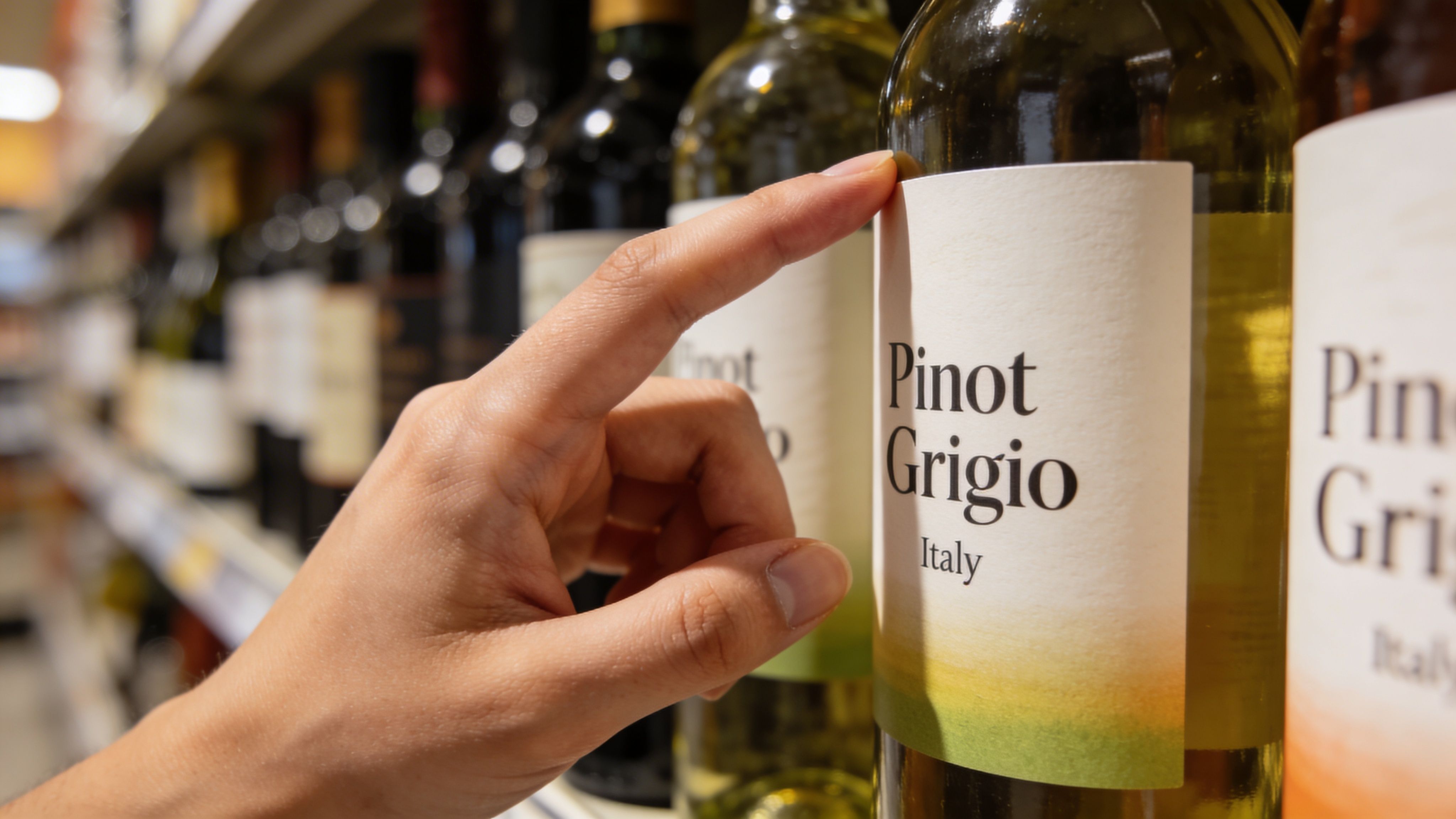
For Pinot Grigio, Italy is the easy safe bet
If you see Italy on a Pinot Grigio label, expect the classic dry style commonly understood when ordering it.
Italy leads Pinot Grigio production, and most of what it exports is made in that classic dry style.
That’s good news for you because it makes the style fairly predictable.
Look for:
- Italy
- Pinot Grigio
- Crisp, light language on the menu or shelf tag
Be more cautious with:
- Pinot Gris
- Alsace
- Richer wording like round, lush, textured, or floral
For Sauvignon Blanc, New Zealand usually means maximum crispness
If the label says Marlborough, New Zealand, expect a very vivid, high-acid Sauvignon Blanc.
Wine Insiders notes that New Zealand’s Sauvignon Blanc exports came to represent 85% of its wine industry, with a high-acidity, low-sugar profile of 3 to 4 g/L max that became a global benchmark for the grape.
That means Marlborough is a smart choice when you want the classic punchy version.
Look for:
- Marlborough
- New Zealand
- Tasting words like citrus, grapefruit, fresh, herbaceous
A fast store and restaurant checklist
Use these cues:
- Want the safest dry white? Choose Sauvignon Blanc from New Zealand or Pinot Grigio from Italy.
- Want softer and less tart? Choose Italian Pinot Grigio.
- Want intense and refreshing? Choose New Zealand Sauvignon Blanc.
- See Pinot Gris from Alsace? Expect more richness and possible sweetness perception.
If wine labels make you freeze up, this guide to reading wine labels helps turn the label into a shortcut instead of a wall of words.
Frequently asked questions
Is Pinot Grigio sweeter than Sauvignon Blanc?
No, and both are usually made dry. Sauvignon Blanc tastes drier because its acidity is higher and its aromas are sharper, so the same amount of residual sugar reads as less sweet in the glass. Pinot Grigio feels rounder and softer, which is what people are usually noticing when they call it sweeter.
Which is drier, Pinot Grigio or Sauvignon Blanc?
Sauvignon Blanc gives the drier impression in almost every side-by-side, even though the sugar numbers are often close enough to be a rounding error. If you want the driest-feeling white you can pick without studying a back label, a Marlborough Sauvignon Blanc will get you there.
Which one should I order with spicy food?
Pinot Grigio, because a very dry, high-alcohol white makes chili heat feel stronger rather than washing it away. Sauvignon Blanc tends to sharpen the burn, and an off-dry Riesling treats a genuinely fiery dish more kindly than either of them.
Sauvignon Blanc vs Pinot Grigio: which is better with seafood?
Both belong at a seafood dinner, and the sauce decides between them. Sauvignon Blanc suits anything arriving with citrus, herbs or a tangy dressing, while Pinot Grigio suits simply cooked fish, shrimp and light pasta where you would rather the wine stayed out of the way.
What do I ask for if I don't want to name a region?
Ask for a dry white that's crisp and zesty when you want Sauvignon Blanc, and a dry white that's light and clean when you want Pinot Grigio. Naming the feeling you want works better than naming a region, because it still gets you the right style off a list you have never seen before.
Is Pinot Gris the same thing as Pinot Grigio?
It's the same grape, and the name on the label is telling you which style to expect. Pinot Grigio from Italy is usually lighter and crisper, while Pinot Gris from Alsace is often richer, fuller and sometimes off-dry.
Stop Guessing and Choose Wine with Confidence
The answer to is pinot grigio sweeter than sauvignon blanc is simple.
No, not in the common understanding of the term. Both are usually dry. Sauvignon Blanc usually tastes drier because it is sharper and more acidic. Pinot Grigio often feels softer because it is gentler and less intense.
That means your choice is not about right or wrong. It’s about preference.
Keep the decision simple
When you’re under pressure, use one line:
- Sauvignon Blanc for crisp, zesty, dry-feeling
- Pinot Grigio for light, smooth, easy-drinking
That is enough to order confidently in most situations.
When the wine list gets bigger
The greater stress is not choosing between one Pinot Grigio and one Sauvignon Blanc.
The greater stress is when the list has six of each, the regions are unfamiliar, and everyone is waiting. You do not need to become a wine expert to fix that.
You just need a simple way to match the bottle to your taste, your meal, and your budget without overthinking it.
Confidence with wine usually comes from having a clear filter, not from knowing more trivia.
That’s the whole point. Wine gets easier the moment you stop trying to impress anyone and start choosing based on how you want the glass to feel.
If you want help choosing wine in the moment, Sommy.ai is built for exactly this kind of decision. It acts like a quiet personal wine decision assistant. You can scan a wine list, shelf, or menu and get a recommendation based on your taste, your meal, and your budget, so you can stop guessing and order with confidence.