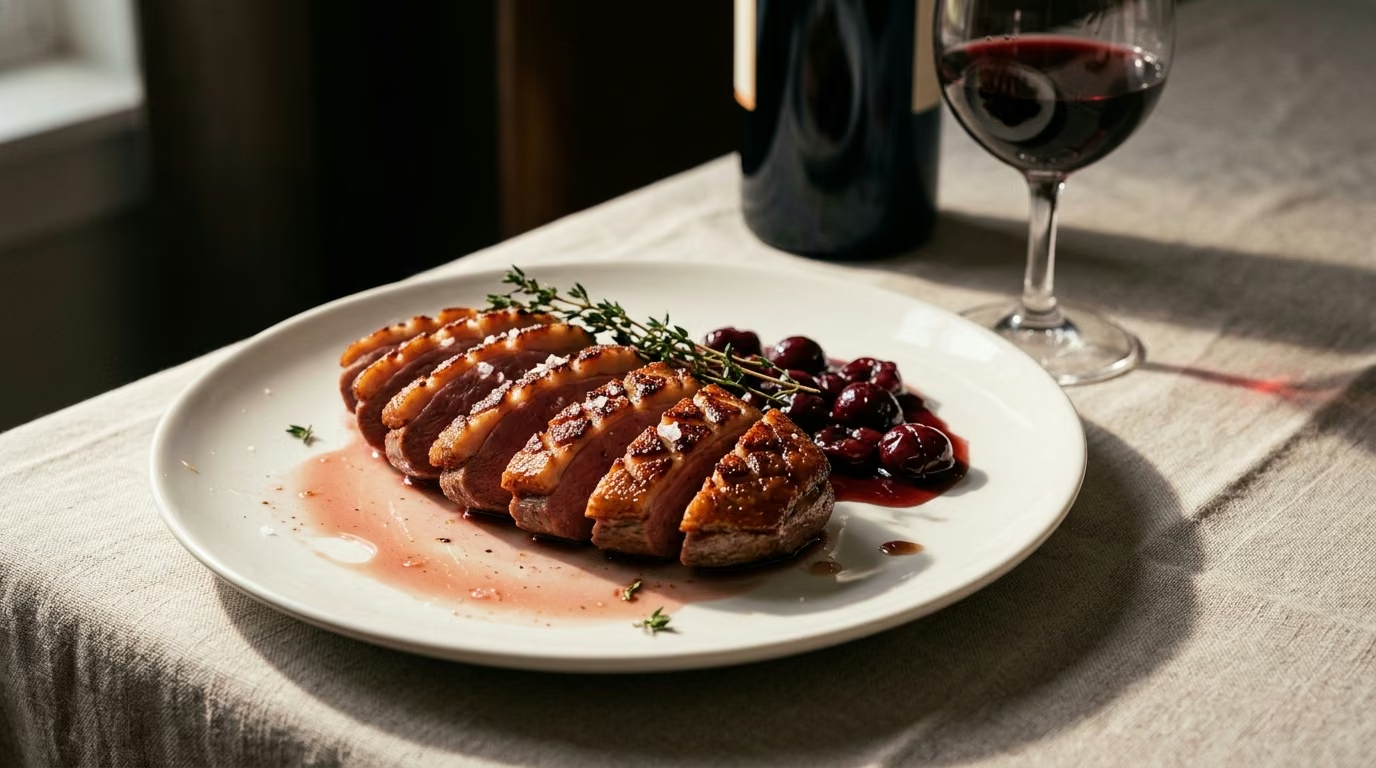

Finding the perfect wine for duck breast with cherry sauce comes down to balancing bright fruit flavors with fresh acidity. Because duck is a rich meat, the best red wine choices are those that provide enough structure to cut through the fat without overpowering the delicate cherry glaze. When pairing wine with duck, Pinot Noir is widely considered the top choice because its natural earthy notes mirror the cherry flavors, lift the sauce, and remain gentle alongside the savory meat.
If you are staring at a menu or shelf, you do not need a complex lesson. You need clear wine recommendations that make dinner feel easy. A few simple cues will help you choose quickly and avoid the heavy reds that often miss the mark when served with this classic dish.
Key Takeaways
- Prioritize Balance: When pairing wine with duck breast and cherry sauce, look for medium-bodied reds that possess bright fruit notes and fresh acidity.
- The Gold Standard: Pinot Noir is the top choice because its inherent earthy undertones and red fruit profile perfectly complement the flavors of the cherry reduction.
- Avoid Overpowering Tannins: Steer clear of high-tannin reds like young Cabernet Sauvignon, as these can turn metallic or harsh when combined with the sweetness of the fruit sauce.
- Focus on the Sauce: Treat the sauce as the primary guide for your pairing; a rich, fruit-forward glaze requires a wine that emphasizes juiciness over heavy oak or spice.
What Wine Goes With Duck?
Pinot Noir, in most cases, whatever you are doing with the bird. Duck sits between chicken and beef in richness and carries more fat than either, so the wine has to bring enough acidity to cut through that fat without heavy tannin fighting the meat. Pinot Noir fits that description before anything else does, which is why it turns up on almost every duck pairing list including this one.
The preparation moves the answer a little:
- Pan-seared duck breast: Pinot Noir, and the rest of this page is about getting that choice right.
- Duck with a fruit sauce: still Pinot Noir, and steer away from high tannin, which turns metallic against the sweetness.
- Roast whole duck: Pinot Noir again, or a Cru Beaujolais when the crisp skin is the point rather than the sauce.
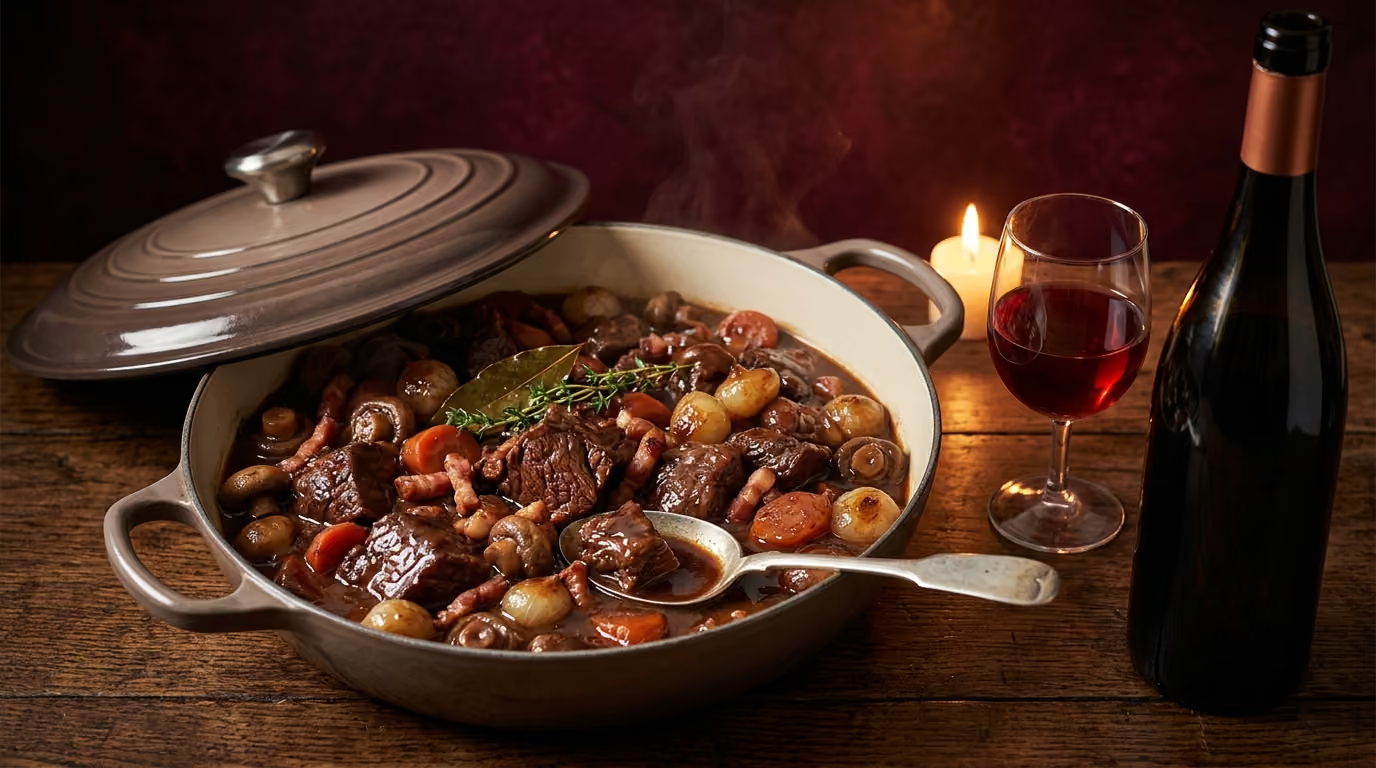
- Duck confit: the salt and rendered fat want acidity more than power, so a Northern Rhone Syrah or a Cru Beaujolais both hold up.
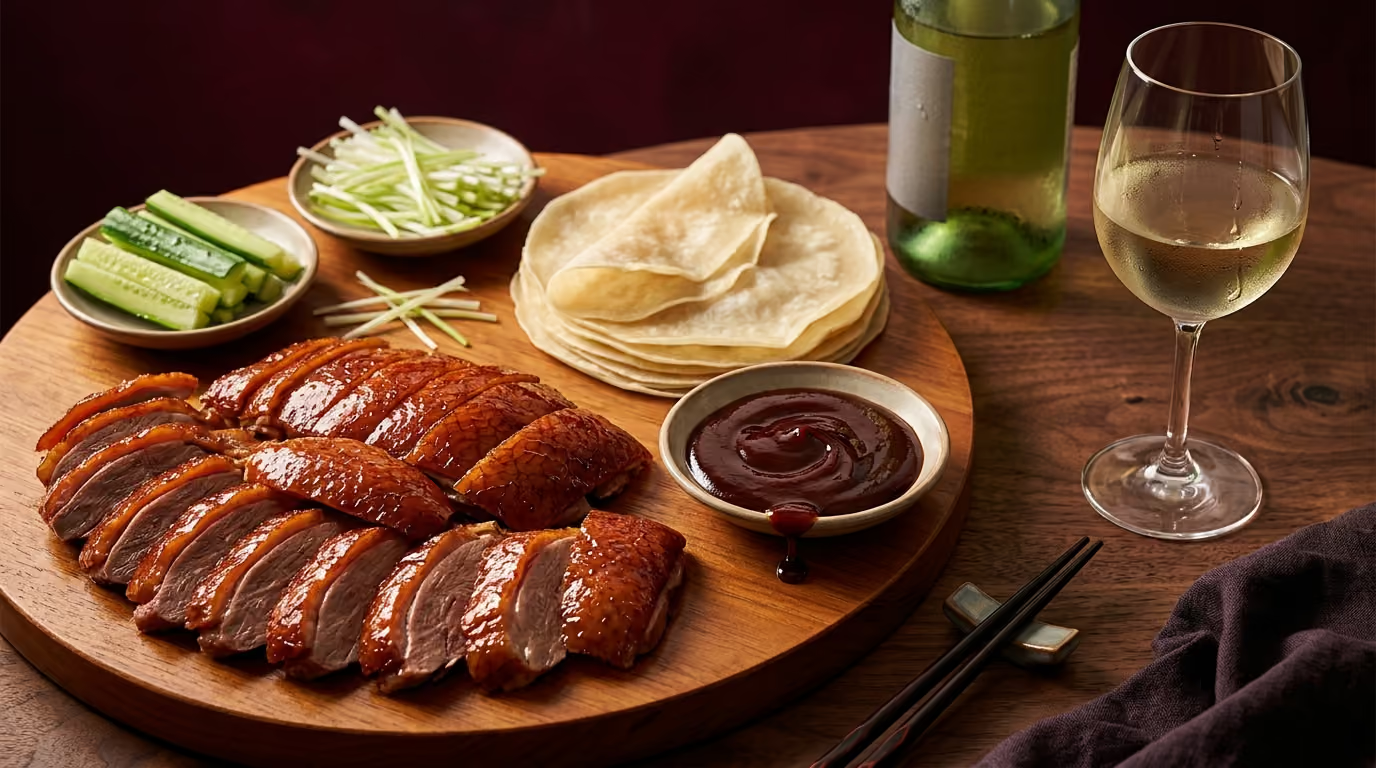
- Peking duck with hoisin: a different problem, because that sauce is sweet and savory at once. We handle it separately.
One rule carries across all of them: match the sauce before you match the meat. Duck is rich enough that the glaze usually decides the pairing, which is exactly what happens with the cherry version below.
Why Pinot Noir usually works best
Duck occupies a unique culinary space. A high quality magret breast offers more richness than chicken, yet it is not as dense as steak. When preparing this dish, the technique used to render the fat is critical to achieving that signature crispy skin. Cherry sauce shifts the flavor profile further by introducing bright fruit and acidity, which requires a thoughtful approach to your beverage selection.
Pinot Noir handles this combination better than most types of red wine. It provides enough body to stand up to the meat, but it is elegant enough that it will not overwhelm the sauce. The inherent red fruit character of a classic Pinot Noir often feels right at home with cherries, while its natural acidity keeps each bite from feeling too heavy.
A short wine pairing guide makes the logic simple: match the weight of the dish, then pay close attention to the sauce. With duck breast, the sauce often dictates the experience more than the meat itself. If you want a broader guide to pairing wine with food, the same rule holds up across most dinners.
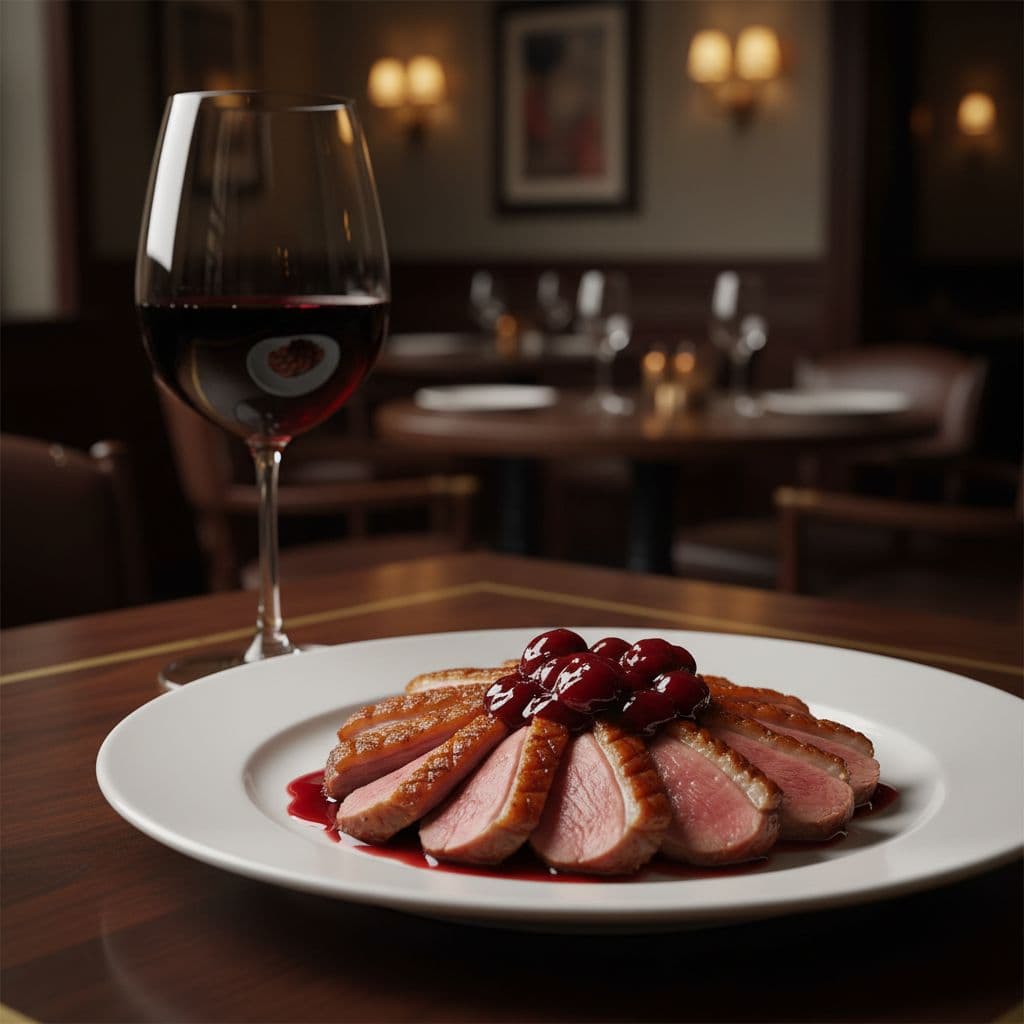
Big, high-tannin reds often struggle here. Cabernet Sauvignon or young Bordeaux can turn sharp or metallic when paired with fruit-forward sauces. Because heavy tannins can clash with the sweetness of the fruit, you are better off seeking balance. You might choose an earthy Burgundy style if you prefer subtle complexity, or a fruit-forward New World wine if you want to emphasize the bright notes of the cherry reduction.
When fruit sauce meets hard tannin, the wine can taste rough even if the bottle is excellent on its own.
Therefore, the best wine recommendations stay in the juicy, medium-bodied lane. Pinot Noir leads the pack, but Gamay, softer Grenache-based reds, and plush Merlot are also excellent companions. A good wine guide for this meal should lower your stress, not add unnecessary theory, so focus on the overall feel and flavor profile rather than memorizing complex regions.
The best bottles and styles to look for
For most people, the easiest answer is still Pinot Noir. A bottle from Burgundy or a similar cool climate featuring cherry, raspberry, or earthy notes feels natural with duck and cherry sauce. Wine writers often land in the same place, as seen in Wine Spectator's duck pairing overview.
Use this quick comparison when you need a fast decision:
| Wine style | Why it works | What it feels like with the dish |
|---|---|---|
| Pinot Noir | Bright red fruit, fresh acidity, soft tannin | Balanced, smooth, and classic |
| Beaujolais or Cru Beaujolais | Juicy fruit, low tannin, lively finish | Fresh, easy, and slightly lighter |
| Grenache-based red | Ripe fruit with gentle spice | Warmer and fuller, good for richer sauce |
| Merlot | Soft texture, plum and cherry fruit | Round, mellow, and crowd-friendly |
Pinot Noir is best when the duck is simply cooked and the sauce leans tart. Beaujolais works when you want something lively and low-stress. Grenache fits a richer plate, especially if the sauce has spice or a darker reduction. Merlot is the safe middle if the list is short and Pinot Noir looks overpriced. For those who prefer dark fruit flavors, Syrah or Zinfandel provide excellent alternatives that stand up to bold, savory glazes.
Readers often want wine tasting notes explained in plain English. For this dish, the notes matter only if they help you decide. Cherry or red berry means the wine will echo the sauce. Earthy notes in a Pinot Noir or Burgundy mean it will suit the savory edge of the duck. Spice means the wine may add warmth, which works best if the sauce is not too sweet.
Plenty of wine content gets lost in detail. You do not need that here. You need wine explained simply, and the key point is easy to remember: choose medium-bodied reds with fresh fruit and soft edges.
How to choose wine at a restaurant or store
A lot of people freeze when the server drops the wine list. Others hit the grocery aisle and see fifty labels that all look the same. That tension is normal, and a few restaurant wine tips or grocery store wine picks can make the choice feel much lighter.
On a restaurant wine list
Start with style, not producer. Scan for Pinot Noir first. If none appear, look for Gamay, Beaujolais, Grenache, or Merlot. Words like "fresh," "red fruit," "bright," or "silky" are helpful, whereas words like "powerful," "full-bodied," or "oak" are less ideal for cherry sauce.
If you are enjoying Peking duck or duck à l’orange, you might want to consider white wine instead. An off-dry Riesling, Pinot Gris, or aromatic Gewürztraminer can handle the sweetness and fat beautifully. If your dish features a creamy sauce, a balanced Chardonnay is a fantastic match. A crisp sparkling wine is an excellent palate cleanser that cuts through the richness of any duck preparation.
Good wine list tips are short enough to use in the moment. Ask for a medium-bodied red with bright fruit and low tannin, and staff will usually know what to bring once you frame it that way.
If you want language you can borrow, keep it simple:
- "I'm having duck breast with cherry sauce. I'd like a medium-bodied red."
- "Do you have a Pinot Noir or Gamay with fresh red fruit?"
- "I'm looking for something juicy and soft, not too oaky."
That kind of phrasing is better than trying to sound like an expert. Good friendly wine advice should calm you down, not make you perform.
In the grocery store
Store shopping follows the same rule. Ignore medals and shelf talkers for a minute. Head to Pinot Noir first to secure the best red wine for the job. Then check Beaujolais, Cotes du Rhone, or Merlot if price or stock gets in the way.
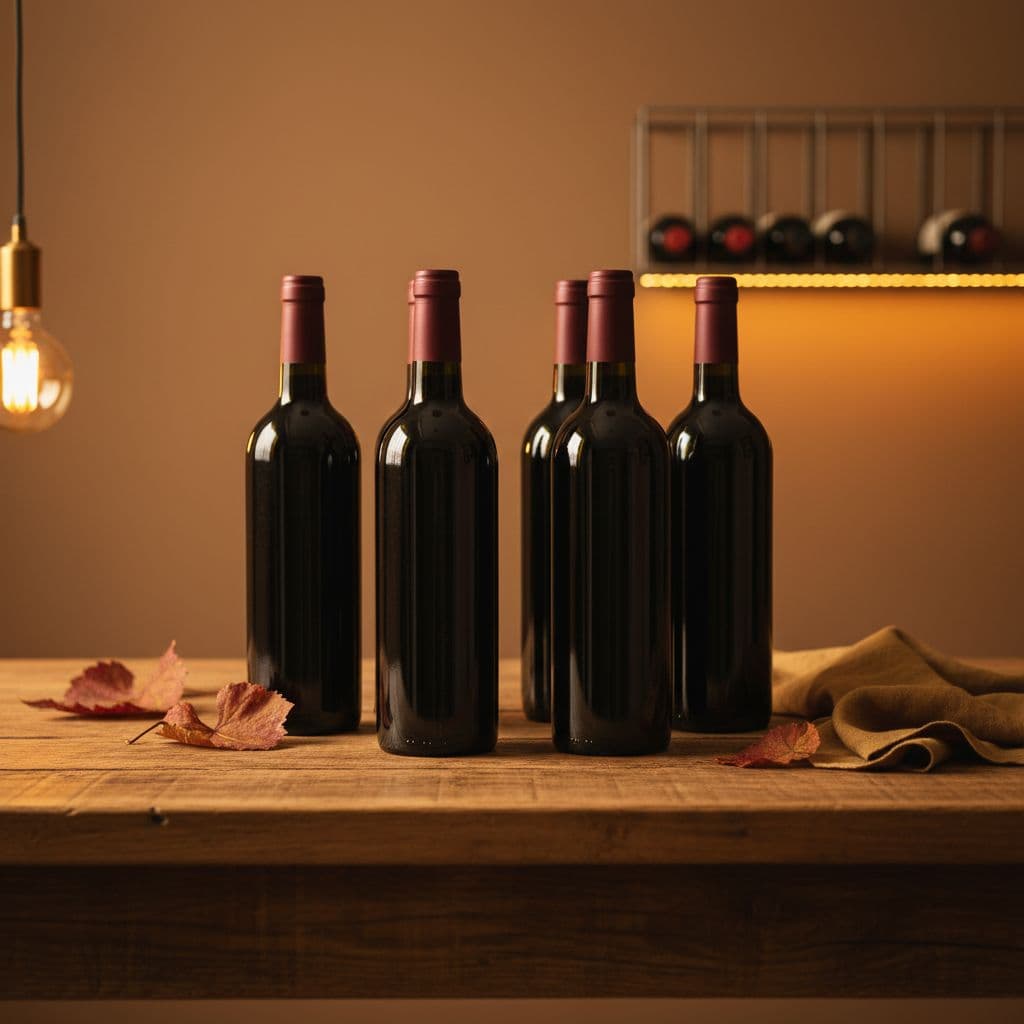
A good modern wine guide for shopping is built on elimination. Skip the biggest reds and skip bottles that brag about heavy oak. Choose a wine that sounds fresh, smooth, and fruit-led. If you want more help with how to choose wine for dinner in general, Sommy's piece on choosing wine with confidence keeps the process short and usable.
Use taste-based help when you don't want to guess
Some nights, even a solid wine pairing guide feels like too much. You are at dinner, you are hungry, and you want the answer without sorting through ten labels or a four-page list. That is where taste-based tools help.
Sommy is an AI wine assistant built for exactly that moment. Instead of turning dinner into homework, it gives smart wine recommendations based on what you like, what you are eating, and how much you want to spend. Those personalized wine picks are essential when you are pairing wine with duck breast served with a sweet-tart sauce, where the wrong bottle could flatten the flavors of the dish.
The tool excels at finding the right red wine for the meal. It might suggest a specific Pinot Noir that highlights the cherry notes, or it can help you read complex tannins or find high acidity wines that cut through the richness of the meat. A lot of people want wine app suggestions because they do not want more theory. They want personalized wine recommendations that feel calm and specific. Sommy learns your taste over time, so the advice gets more useful the more you use it. That means better smart wine picks on a restaurant list, clearer choices in a shop, and less second-guessing when friends are waiting for you to order.
Useful wine help should feel small and practical. That is why simple wine explanations, clear wine recommendations, and everyday wine advice matter more than long lessons. If duck and cherry sauce are on the table, you do not need to become a wine expert for the night. You only need a bottle that fits.
Frequently Asked Questions
Can I serve white wine with duck breast?
Yes, white wine can be a great choice depending on the preparation. If you are serving duck à l’orange or a dish with a cream-based sauce, an aromatic Riesling, Pinot Gris, or even a balanced Chardonnay can provide a refreshing contrast to the richness of the meat.
Why should I avoid heavy, high-tannin wines?
Heavy tannins tend to clash with the sweetness and acidity found in cherry or fruit-based sauces. This interaction often results in a bitter or metallic aftertaste that masks the delicate flavors of the duck.
What if I cannot find a Pinot Noir on the menu?
If Pinot Noir is unavailable, look for alternatives like Gamay, Beaujolais, or Grenache. These varieties typically offer the same juicy, fruit-forward profile that works well with the bright, savory notes of the dish.
Does the duck cooking method change the wine choice?
It can, especially if the preparation varies significantly from a classic sear. While crispy-skinned breasts pair beautifully with light to medium reds, saltier preparations like duck confit or spicier renditions may benefit from slightly more structured wines or even dry, aromatic whites.
Is Pinot Noir the right choice for every kind of duck?
Close to it, and that is unusual for a pairing question. Duck breast, roast duck, duck with a cherry or berry sauce and most restaurant duck dishes all land on the same answer, because they share the same problem of rich fatty meat needing acidity rather than power. The clear exception is Peking duck with hoisin, where the sauce is sweet and savory together and pulls the pairing somewhere else. A heavily sweetened glaze of any kind is the other case worth treating separately.
Conclusion
When deciding on the best wine for duck breast, Pinot Noir remains the classic choice because its bright fruit and elegant structure perfectly complement the richness of the meat. While this pairing is ideal for cherry sauce, keep in mind that the best wine for roast duck or even the saltier notes of duck confit can shift slightly depending on the preparation. If you are serving a decadent appetizer like foie gras, the wine should be chosen to match that intensity. For those experimenting with spicier preparations, a red wine from the Rhone valley or even a vibrant white wine like Riesling can offer a refreshing and balanced contrast to the meal.
Remember to keep the rule simple: match the sauce first, then the meat. Cherry sauce thrives with freshness and fruit rather than hard tannins or heavy oak. If you want help choosing wine in the moment, Sommy can narrow the field to a few personalized options and help you order with confidence.