
Most wine frustration comes from one simple problem: you cannot remember what you liked well enough to repeat it. A quick, personal way to rate wine fixes that. When you rate a bottle based on your own taste, future wine recommendations get sharper, faster, and far less stressful.
While the wine industry often focuses on technical scores and vintage charts, those expert wine reviews can be intimidating and disconnected from your personal palate. Plenty of people want help with how to choose wine, yet they do not want a class on grapes or regions. A useful rating system gives you the one thing that matters most, a clear memory you can use at dinner, in the aisle, or on a restaurant menu.
Key Takeaways
- Your personal wine ratings should prioritize your own enjoyment rather than focusing on objective quality, prestige, or price.
- Creating a library of concise tasting notes is far more valuable for your future palate than simply following generic wine ratings found online.
- A short summary covering taste, mouthfeel, the drinking context, and a clear answer to whether you would buy it again is all you need.
- Leveraging your past feedback leads to better restaurant wine tips, more confident choices from a wine list, and smarter grocery store wine picks.
- An AI wine assistant can synthesize your previous notes into personalized wine recommendations that help you discover new favorites.
Rate your experience, not the bottle
When you rate a wine, you are not judging it for the world. You are building a shortcut for future you. That shift matters because many people rate bottles the wrong way. They get swayed by the label, the price, or the person who poured it. A $22 bottle on pizza night may suit you better than a $90 bottle at a work dinner. Your score should reflect that truth.
It is important to understand that your personal enjoyment depends entirely on your own palate. While professional wine critics often rely on a rigid 100-point scale, these scores can be misleading for the average drinker. A specific Cabernet Sauvignon might earn a high score from a famous expert like Robert Parker or a prestigious publication like Wine Advocate, but that does not guarantee you will enjoy the bottle yourself.
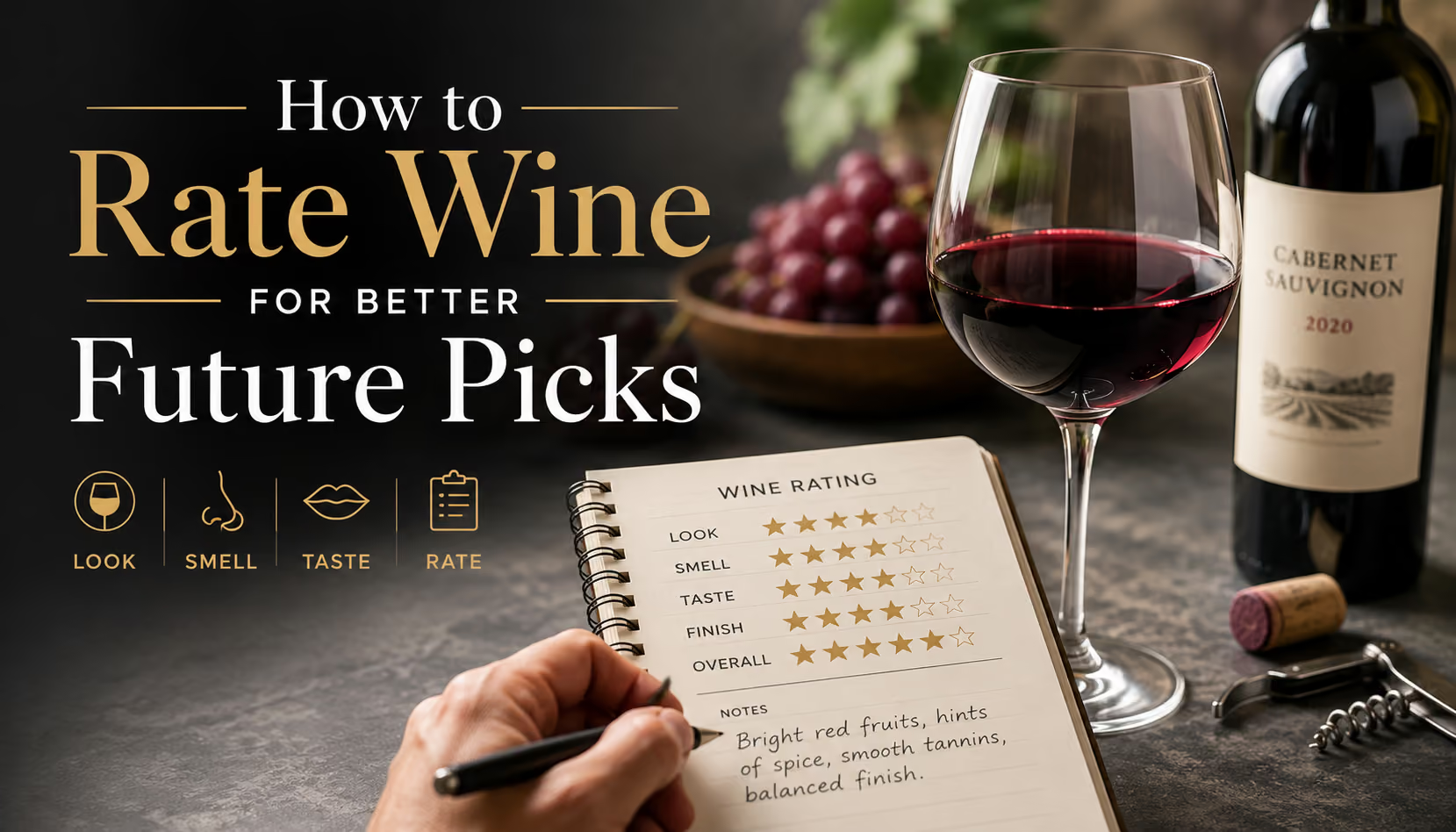
A simple scale keeps your ratings consistent:
Rating | What it means | What to do next |
|---|---|---|
5 | I'd gladly buy or order it again | Save the key traits |
4 | I liked it and would pick it again | Note the meal or setting |
3 | It was fine, but not memorable | Don't chase it |
2 | Something bothered me | Write what missed |
1 | I wouldn't choose it again | Avoid similar descriptions |
Consistency beats precision. A steady personal scale is more useful than a dramatic review. Rate the moment in your glass, not the mythology around the bottle.
Good ratings also keep wine explained simply. You do not need to write a thesis on structure. Instead, note simple clues like the acidity or the level of tannins in the wine. Most people want simple wine tips, not a lecture. "Too sharp," "soft and juicy," or "great with burgers" tells you more than fancy language ever will.
If your goal is to learn how to choose wine with less second-guessing, personal ratings beat memorizing wine facts. That approach turns a vague wine guide into everyday wine advice you can use in real life.
Write notes you can read in 10 seconds
A helpful rating needs a few words, not a diary entry. Short notes work because your brain remembers clues better than speeches.
If you have ever searched for wine tasting notes explained, keep your own version smaller and plainer. Your personal tasting notes do not need to look like formal tasting reports from Wine Spectator or Wine Enthusiast to be effective. Write the words you would say to a friend. That gives you wine explained simply, in language you already trust.
Use this four-step note after each bottle or glass:
- Write your score first. Start with your 1 to 5 rating before outside opinions creep in.
- Add one taste clue. Whether it is a crisp Chardonnay or a light Pinot Noir, use simple descriptors like fruit-forward, dry, earthy, crisp, smoky, jammy, or smooth.
- Add one feel clue. Light, full, soft, sharp, rich, or refreshing works well.
- Add the context. Note the food, the setting, the price, or even your mood.
A note might read like this: "4, crisp and citrusy, light-bodied, great with shrimp tacos." Another might say, "2, too oaky, heavy, okay on its own but bad with pasta." Both are clear. Both help later.
Taste memory improves with repetition, and Tim Gaiser's piece on olfactory and taste memory tools makes that point well. Meanwhile, Napa Valley Wine Academy says much the same in its guide to developing your wine palate. Repetition matters, but plain language matters too.
Simple wine explanations are easier to reuse than technical ones. After a few weeks, patterns start to appear. You may notice you love bright, chillable reds, or that buttery whites wear out their welcome after one glass.
Use your ratings on wine lists and store shelves
Past ratings shine when you are under pressure. A noisy restaurant, a crowded aisle, or a dinner invite at 6 p.m. is not the moment to become a wine expert.
Good restaurant wine tips start with one question: what did I like before that sounds close to this? Scan your notes for two repeat signals. Maybe you like dry, crisp, light whites. Maybe you lean toward smooth, dark fruit, medium-bodied reds. Those patterns become your own wine pairing guide. While you might be tempted to look up professional wine reviews from experts like Decanter or James Suckling, these can feel overwhelming if you do not have your own preferences mapped out. Similarly, while vintage charts and top 100 wines lists are excellent resources, they often lack the personal touch of your own palate. For instance, you might see a high-scoring Napa Valley Cabernet Sauvignon on a list, but if your notes show you prefer lighter profiles, you can confidently skip it.
Menus often bury you in vague terms, so practical wine list tips matter. Look for one familiar clue and ignore the rest. If a server says a red is soft, juicy, and good with roast chicken, that may be enough if your past notes show the same pattern. A long backstory about soil and elevation will not help you order faster.
Grocery store wine picks get easier the same way. A shelf tag that says bright cherry, low oak means more once you have rated a few bottles with similar words. Instead of staring at 80 labels, you start ruling bottles in and out in seconds.
Readers who want a broader reset on how to choose wine can use Sommy's guide on how to choose wine with confidence. The core idea is simple: choose for your taste, your food, and your budget.
Your notes also save you from one common mistake, copying a bottle name without remembering why you liked it. A wine may have worked because it matched salmon, patio weather, and a low-key mood. Context is not extra information. Context is often the reason the bottle landed well.
Let an AI wine assistant remember what you forget
Memory fades fast, especially after busy weeks and crowded dinners. An AI wine assistant helps because it stores your patterns without asking you to become a hobbyist.
Sommy fits that role well. It learns from your quick wine ratings, then turns them into personalized smart wine picks for the moments that usually cause stress. While professional wine scores and expert blind tasting sessions often focus on technical perfection, such as judging the acidity of a Napa Valley Pinot Noir, an AI assistant focuses on your personal preferences. Instead of broad wine app suggestions, you get tailored guidance based on what you have already enjoyed. In practice, that feels like a modern wine guide built from your own habits.
Better still, personalized wine recommendations improve when your inputs stay simple. A 4-star white with "crisp, lemon, great with sushi" gives more value than a paragraph copied from a label. A 2-star red with "too heavy, too much vanilla" is just as useful. Clear signals create clear wine recommendations.
Sommy also helps when you're choosing in motion. Restaurant choices, quick store stops, and last-minute dinner plans all benefit from remembered taste. If you want more background on that approach, Sommy's piece on how to get better wine suggestions connects taste, meal, and budget in a simple way.
Friendly wine advice should lower pressure, not add homework. That's why the best smart wine picks come from honest ratings, short notes, and repeated use. Your goal isn't to become impressive. Your goal is to stop guessing.

Frequently Asked Questions
Do I need to be a wine expert to start rating?
Not at all. The goal is to focus on your own enjoyment rather than technical or industry standards. Simply note how a wine tastes, how it feels in your mouth, and if you would want to drink it again.
How detailed should my tasting notes be?
Keep your notes brief and practical so you can actually use them later. Two or three words about the flavor, a note on the mouthfeel, and a mention of the context, like a meal or setting, are all you need to build a useful personal library.
Why shouldn't I rely on professional wine ratings?
Professional scores are often based on rigid, objective criteria that may not match your unique palate. A wine that an expert loves might not suit your personal preferences, so it is more effective to rely on your own history of what you have enjoyed.
How does an AI assistant help with my wine picks?
An AI wine assistant acts as a memory tool that synthesizes your simple, personal ratings into clear patterns. It saves you from having to memorize facts and helps you make confident, personalized choices in restaurants or at the store based on your own past feedback.
Conclusion
Better wine choices rarely come from knowing more trivia. They come from remembering your own taste with enough detail to repeat what worked. Personal wine ratings provide far more long-term value than simply chasing the highest wine scores you see in magazines.
Whether you are enjoying a crisp Chardonnay, a delicate Pinot Noir, or a bold Cabernet Sauvignon, the best bottle is always the one you truly enjoy. A short personal rating turns blurry memories into useful patterns. Over time, those patterns become better wine recommendations, steadier choices, and less anxiety at the table.
If you want help choosing wine in the moment, Sommy can turn a few quick ratings into personalized wine recommendations that feel calm, practical, and easy to trust. Your next bottle gets better when your last one leaves a clear trail.