
You're at a restaurant, someone orders shrimp scampi, and the server asks for the wine. Or you're in the store holding a bottle and wondering if it'll work with grilled shrimp tonight. That pause of panic is normal.
Good news. Wine pairing with shrimp is much easier than it sounds. You don't need to memorize grapes, regions, or rules from a wine class. You just need one decision point: how the shrimp is cooked.
That Moment You Need to Pick a Wine for Shrimp
A lot of people think the hard part is the wine list. It usually isn't. The hard part is the feeling that you might choose wrong in front of other people, waste money on a bottle you won't enjoy, or flatten a dinner you were excited about.
Shrimp makes that worse because it seems like it should have one obvious answer. It doesn't. Shrimp cocktail, grilled shrimp, shrimp tacos, shrimp scampi, spicy shrimp curry, and a smoky pan of shrimp and sausage jambalaya don't all want the same bottle.
That's why the most useful rule is simple: match the richness of the wine to the preparation of the dish. Lighter shrimp dishes work with crisp, light-bodied wines, while creamy or grilled dishes can handle fuller whites or some rosés, as noted in this seafood wine pairing guide.
Why people freeze at the menu
Shrimp is mild on its own. The cooking method changes everything.
- Cold and simple shrimp feels fresh and delicate
- Garlic butter shrimp feels richer and softer
- Grilled shrimp picks up char and smoke
- Spicy shrimp needs a wine that won't make the heat feel harsher
That's why broad advice like “just get white wine” doesn't always help.
Practical rule: Don't pair the wine to the shrimp alone. Pair it to what happened to the shrimp in the pan, on the grill, or in the sauce.
If you want a shellfish-specific shortcut for other meals too, Sommy has a helpful guide on the best wine with shellfish.
The Only Rule You Need for Shrimp and Wine
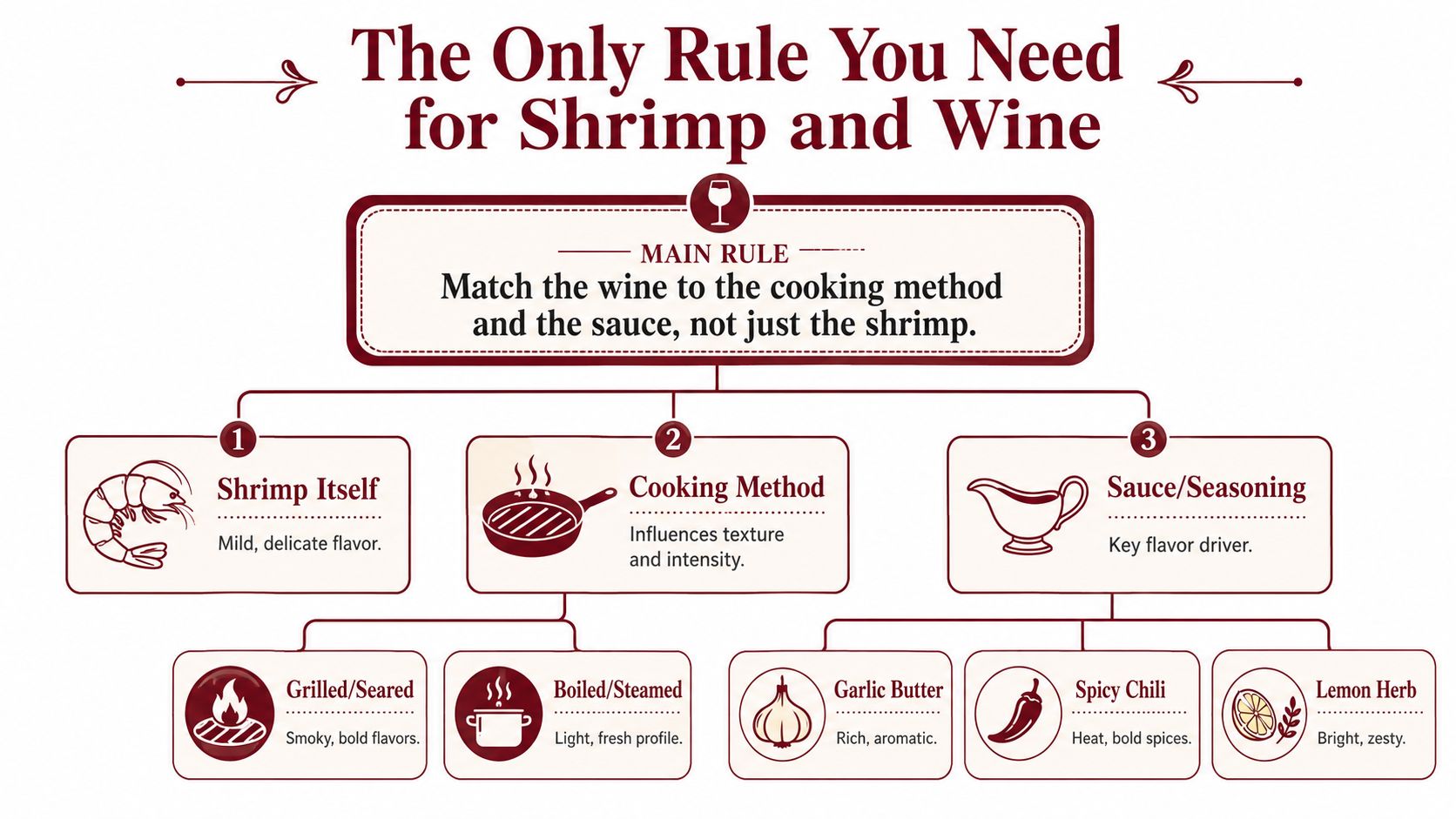
Forget the long wine lecture. Match the wine to the cooking method and the sauce, not just the shrimp.
Shrimp is sweet, mild, and pretty flexible. The butter, spice, lemon, breading, cream, or grill marks usually decide what belongs in your glass. Once you think that way, the choice gets faster.
Think bright before you think fancy
With shrimp, acidity matters more than anything else. A high-acid wine refreshes your palate the way lemon does on seafood. Eddie Merlot's pairing guide puts it plainly: higher-acid wines work especially well with seafood because they act like a “squeeze of lemon” and lift flavor instead of covering it up in this wine and seafood pairing guide.
That's why crisp white wines and dry rosé show up so often. They keep dinner feeling fresh.
If you've ever wondered what people mean by “acidity” in a way that helps at the table, this quick guide on what acidity in wine means makes it much less abstract.
The fast version
Use this mental checklist when you need an answer in seconds:
- If the shrimp is light and clean, choose a light, crisp wine.
- If the shrimp is buttery or creamy, move to a wine with a little more body.
- If the shrimp is spicy, look for a wine with extra freshness or a touch of sweetness.
- If the shrimp is grilled or charred, choose something that can handle smoky flavor.
Shrimp doesn't need a complicated pairing. It needs a wine that meets the dish at the same intensity level.
That's the whole framework. Simple is better here.
Your Pairing Cheat Sheet for Any Shrimp Dish
People don't struggle with shrimp because shrimp is hard. They struggle because the dish names hide what really matters. “Shrimp” on a menu could mean cold and delicate, rich with garlic butter, or fiery with cayenne.
Wine Pairings for Common Shrimp Preparations
| Shrimp Preparation | Wine Style to Look For | Why It Works |
|---|---|---|
| Shrimp cocktail | Crisp, light-bodied white | Keeps the pairing clean and fresh without covering the shrimp |
| Boiled or steamed shrimp | Pinot Grigio or Albariño | Bright citrus and mineral notes fit the delicate texture |
| Shrimp ceviche | Sauvignon Blanc | Zesty character works with lime, herbs, and freshness |
| Grilled shrimp | Sauvignon Blanc or dry rosé | Enough freshness for the shrimp, enough character for the char |
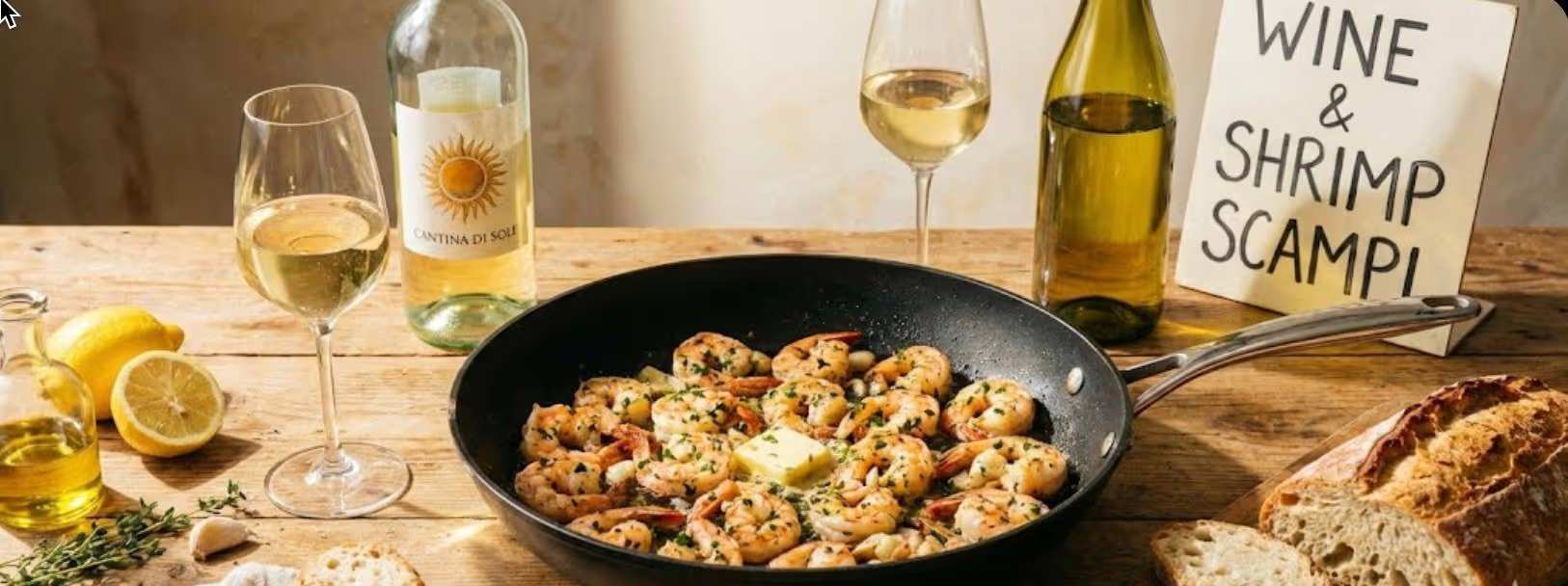
| Shrimp scampi | Unoaked or lightly oaked Chardonnay | Handles garlic butter without feeling too heavy |
| Creamy shrimp pasta | Fuller-bodied white, often Chardonnay | Stands up to the richness of the sauce |
| Cajun shrimp | Off-dry Riesling or aromatic rosé | Softens heat and keeps the meal lively |
| Shrimp tacos with lime and herbs | Sauvignon Blanc or Pinot Grigio | Echoes the bright, sharp flavors in the dish |
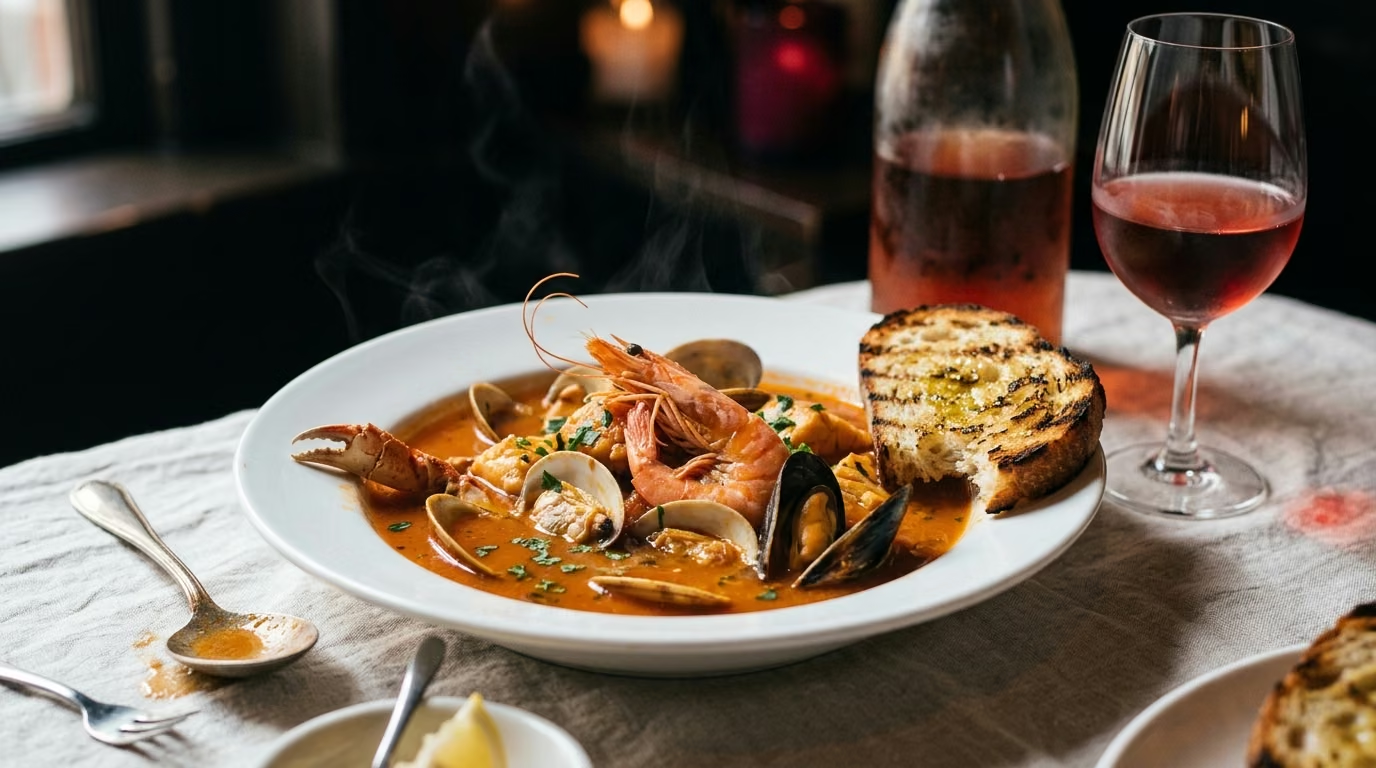
| Seafood paella with shrimp | Dry rosé or sparkling wine | Refreshes the palate and works with mixed seafood flavors |
| Shrimp gumbo or tomato-based shrimp dishes | Light red or fuller white | Matches the deeper, savory style of the dish |
How to use the chart in real life
If you're ordering shrimp cocktail, ceviche, or cooked prawns, stay with crisp whites. Pinot Grigio, Albariño, Muscadet, and Sauvignon Blanc are safe choices because they feel sharp, fresh, and light.
If you're ordering shrimp scampi or shrimp in a butter sauce, don't stay too lean. A very sharp, thin wine can feel a little too severe next to all that richness. A wine with more body, especially Chardonnay when the dish is richer, tends to feel more comfortable.
Where people usually go wrong
The most common mistake is picking wine by protein alone.
- Forgetting the sauce: Garlic butter and cream need more weight than chilled shrimp with lemon.
- Ignoring the spice level: Cajun seasoning, chili, and curry change the pairing fast.
- Treating every white wine the same: Crisp and light is different from creamy and round.
For a practical example, if shrimp scampi is your usual order, this quick guide to shrimp scampi wine pairings can save you from overthinking the list.
Order by preparation, not by seafood category. That one shift makes wine pairing with shrimp much easier.
A few easy defaults when you're stuck
If the menu is vague and you need a safe option, use one of these:
- For clean, fresh shrimp dishes: Pinot Grigio
- For citrusy, herb-heavy shrimp dishes: Sauvignon Blanc
- For richer shrimp dishes: Chardonnay
- For spicy shrimp dishes: Off-dry Riesling
- For mixed seafood plates: Sparkling wine
Sparkling wine is especially useful when you're unsure. Bubbles and acidity usually bring enough lift to handle a lot of shrimp dishes without making the meal feel heavy.
Can You Drink Red Wine with Shrimp
Yes, you can. You just can't pick a heavy, tannic red and expect it to be kind to delicate seafood.
When red works
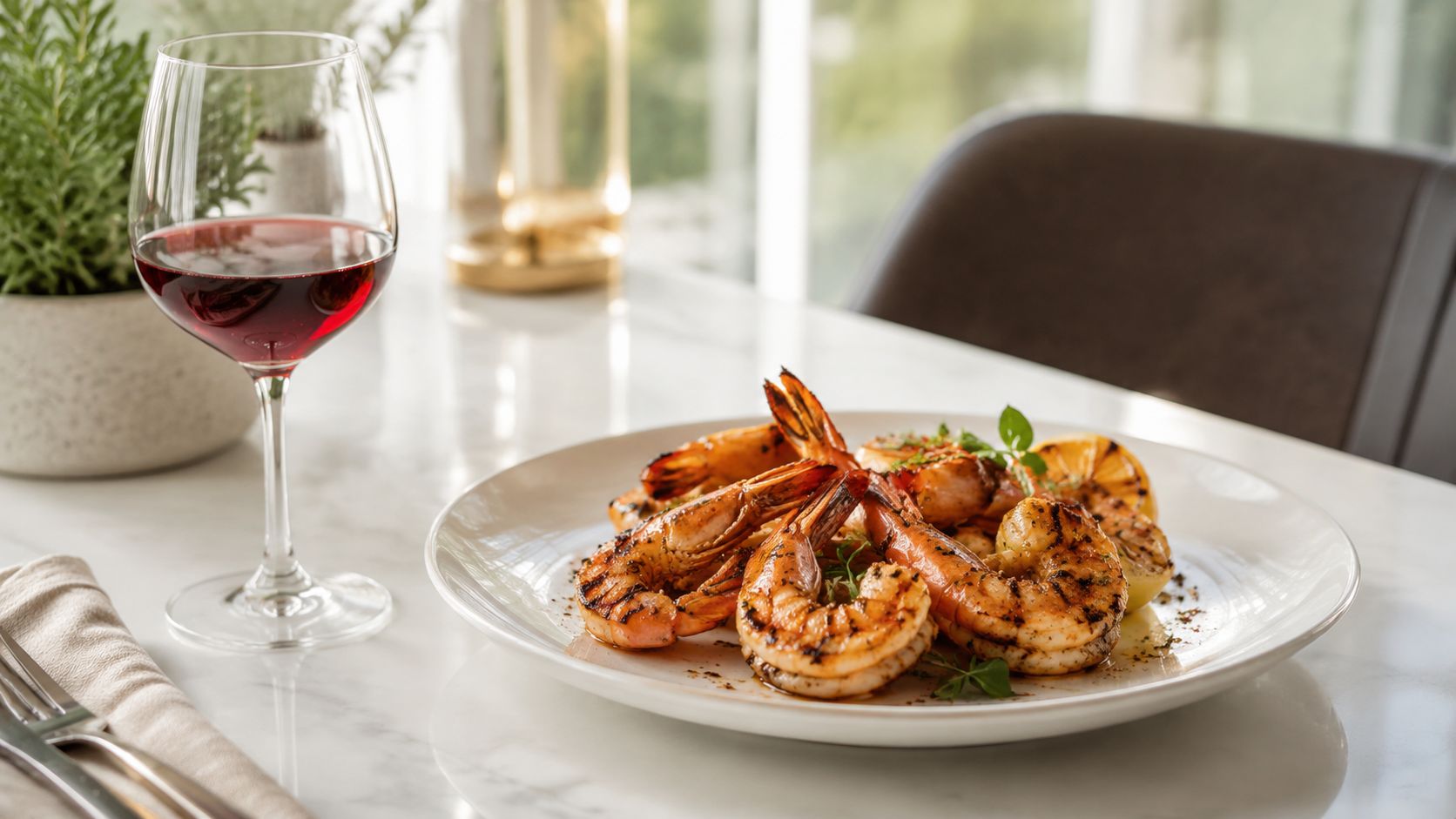
The old “no red wine with seafood” rule is too rigid. What matters is tannin and weight. Lighter-bodied reds with low tannins and high acidity, especially Pinot Noir, can work very well with shrimp when the dish has char or a richer sauce.
Red starts making sense when the shrimp is:
- Grilled or blackened
- Served with tomato-based sauce
- Part of a richer, savory dish
- Cooked with smoky flavors
When red usually fails
A big Cabernet with lots of tannin can flatten shrimp and make the pairing feel harsh. That's why people remember one bad red-and-seafood experience and decide the whole category is wrong.
Keep the red light. Keep it bright. Pinot Noir is the easiest place to start.
If you like red and don't want to guess, here's a useful breakdown of low-tannin red wines that are easier to pair with food.
Red wine with shrimp isn't wrong. Heavy red wine with delicate shrimp is usually the problem.
How to Choose Your Bottle with Sommy
Knowing the rule helps. Remembering it under pressure is harder when a server is waiting or when you're staring at a wall of labels.
Sommy works well in that exact moment because it turns the pairing logic into a quick decision. Instead of trying to translate “spicy shrimp tacos” into the right bottle on your own, you can get a recommendation that fits the dish, your taste, and what's in front of you.
A simple way to use it
The process is straightforward.
- Scan what you're looking at
You can use Sommy with a wine list, store shelf, or menu. - Say what you're eating
Be specific. “Grilled shrimp with lemon,” “shrimp scampi,” or “spicy Cajun shrimp” is much more useful than just “shrimp.” - Choose from the filtered options
Sommy narrows the list so you're choosing from bottles that make sense for the meal instead of starting from everything.
You can see more about how the app handles food-and-wine matching on the Sommy pairing feature page.
Why it feels easier in the moment
Diners don't want a wine lesson at dinner. They want relief. They want someone, or something, to cut through the noise and say, “Pick one of these. You'll be fine.”
That's where a personal wine decision assistant helps. It learns what you tend to enjoy, so the answer isn't just technically correct. It's more likely to feel like your kind of bottle.
A quick look makes the process even clearer.
Feel Confident with Every Wine Choice
Shrimp doesn't need a fancy wine rulebook. It needs a calm decision. Match the wine to the preparation and you'll usually land in the right place.
If the dish is light, go light. If it's creamy, choose more body. If it's spicy, look for freshness or a touch of sweetness. If it's grilled, bring a wine that can stand next to the char.
Keep the decision small
You don't need to become the wine person at the table.
- Read the dish first: Sauce, spice, and cooking method matter more than the protein name.
- Choose for enjoyment: A good pairing should make dinner easier, not more stressful.
- Trust simple matches: Crisp with fresh, rounder with rich, brighter with spicy.
The best wine pairing with shrimp is the one that makes ordering feel easy and dinner taste better.
That's enough. You can walk into a restaurant, look at a shrimp dish, and make a confident call.
If you want help choosing wine in the moment, Sommy.ai is built for exactly this kind of decision. It acts like a quiet personal wine assistant, helping you sort through a wine list or store shelf based on what you're eating and what you like, so you can stop guessing and order with confidence.