Natural wine is wine made with as little added or taken away as possible: organically or biodynamically farmed grapes, fermented by the yeasts already living on the fruit and in the cellar, with little or no added sulfur, and usually bottled without fining or filtering. There's no legal definition and no certifying body behind the term, so it describes an approach to winemaking rather than a guaranteed style in the glass. In practice that means bottles that can look cloudy, taste livelier and more variable than conventional wine, and run from completely familiar to genuinely strange. Whether you enjoy it depends far less on the natural label than on which end of that range someone points you toward.
What is natural wine, in plain terms?
Natural wine is grape juice that's been left alone as much as the winemaker could manage. The working definition almost everyone agrees on is getting the fruit from vineyard to bottle with the fewest possible additions and adjustments, which is why the phrase you'll hear more often in shops and on wine lists is low intervention wine.
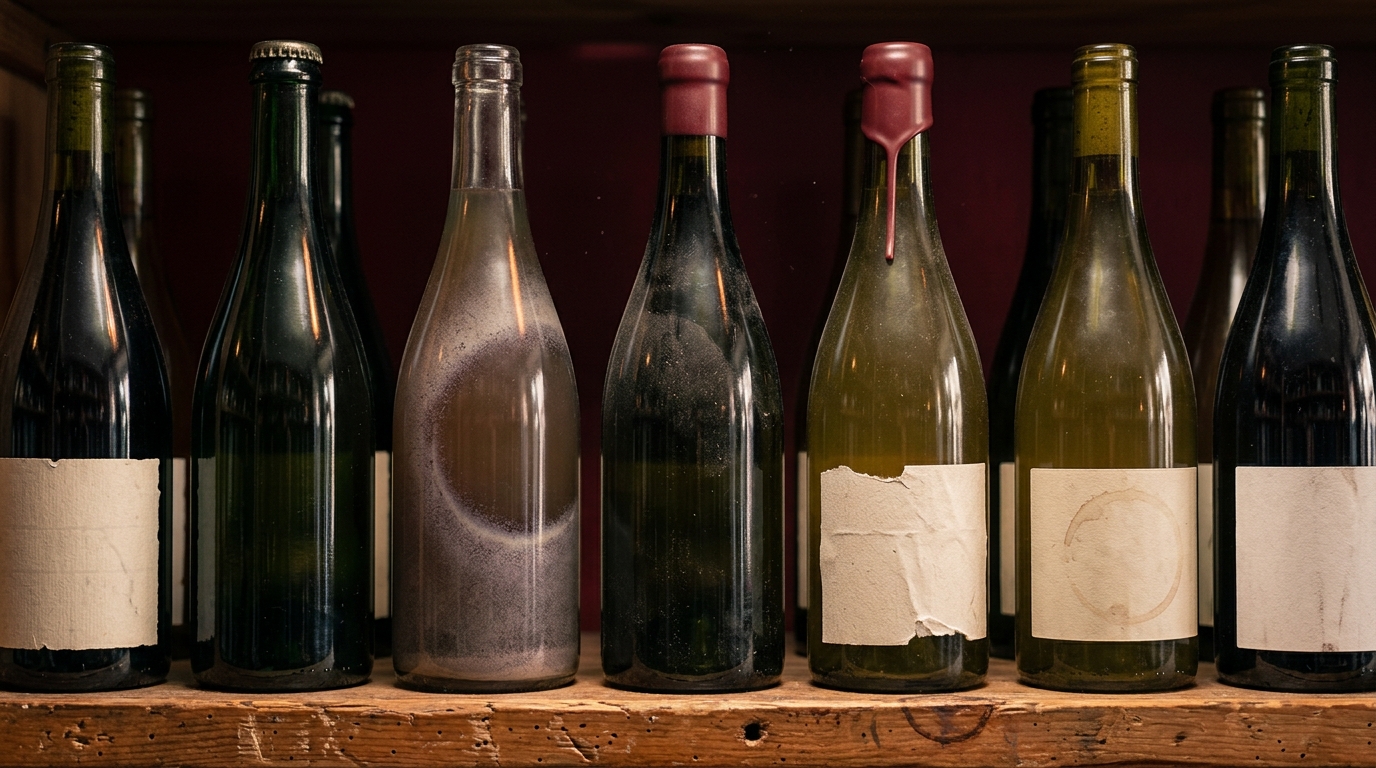
What makes this confusing is that no government or trade body certifies it. Organic and biodynamic wines have official stamps you can look up, and natural wine has nothing of the sort. Some in the trade argue that a certification would give drinkers something reliable to hold onto, and others think rules would sit badly with a category that grew up defining itself against rules. Either way, the practical result for you is the same: the word carries no legal weight, and two bottles both described as natural can be made quite differently.
You'll also rarely see the term printed on a label at all. Producers tend to signal it sideways with phrases like unfined, unfiltered, or minimal intervention, and specialist shops usually group these bottles together in one section. That makes the person who stocked the shelf more useful than anything written on the glass, which is a real weakness of the category and worth knowing before you go looking.
The movement itself isn't new, even though the attention is. It grew out of France in the late 1980s, in the vineyards of Beaujolais and the Loire Valley, among winemakers who felt that post-war winemaking had become industrialized and samey. The négociant Jules Chauvet, who pioneered sulfur-free winemaking in Beaujolais in the mid-twentieth century, is usually named as the thinker the first generation drew on.
How is natural wine made differently?
Three choices in the cellar separate a natural wine from a conventional one, and each has a direct effect on what ends up in your glass.
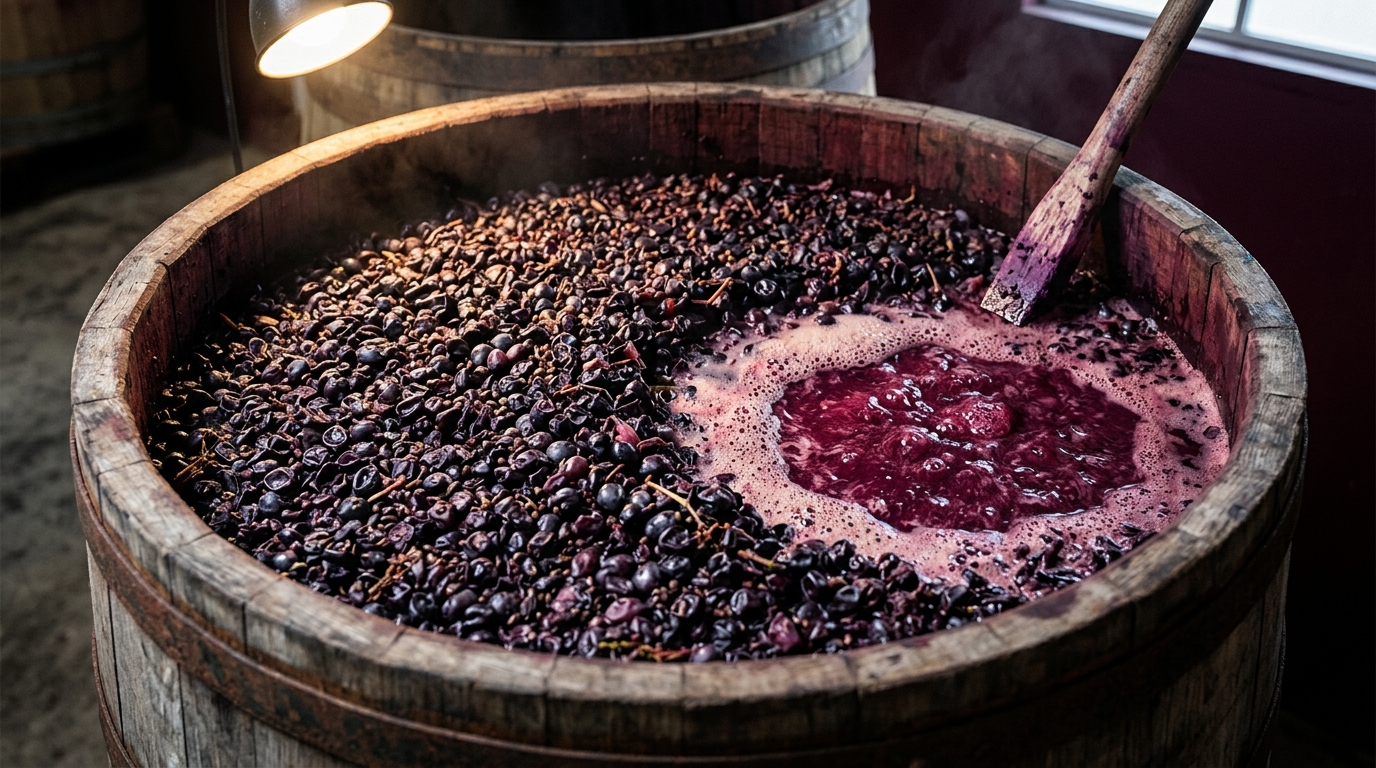
The first is the yeast, and it sets everything else in motion. Conventional winemaking usually adds a commercial yeast strain chosen for predictable behavior, while natural wine relies on the ambient yeasts already present on the grape skins and around the winery. This is called spontaneous fermentation, and it's slower and less predictable, which is exactly the point for the people doing it and exactly the risk for the people paying for it.
The second is sulfur dioxide, the preservative that keeps wine stable and protects it from oxygen. Natural winemakers add very little or none, on the argument that heavy use flattens whatever made the wine specific in the first place. Worth knowing: sulfur dioxide occurs naturally as a byproduct of fermentation anyway, so no wine is truly sulfite-free, a point we go into properly in our piece on wine sulfites.
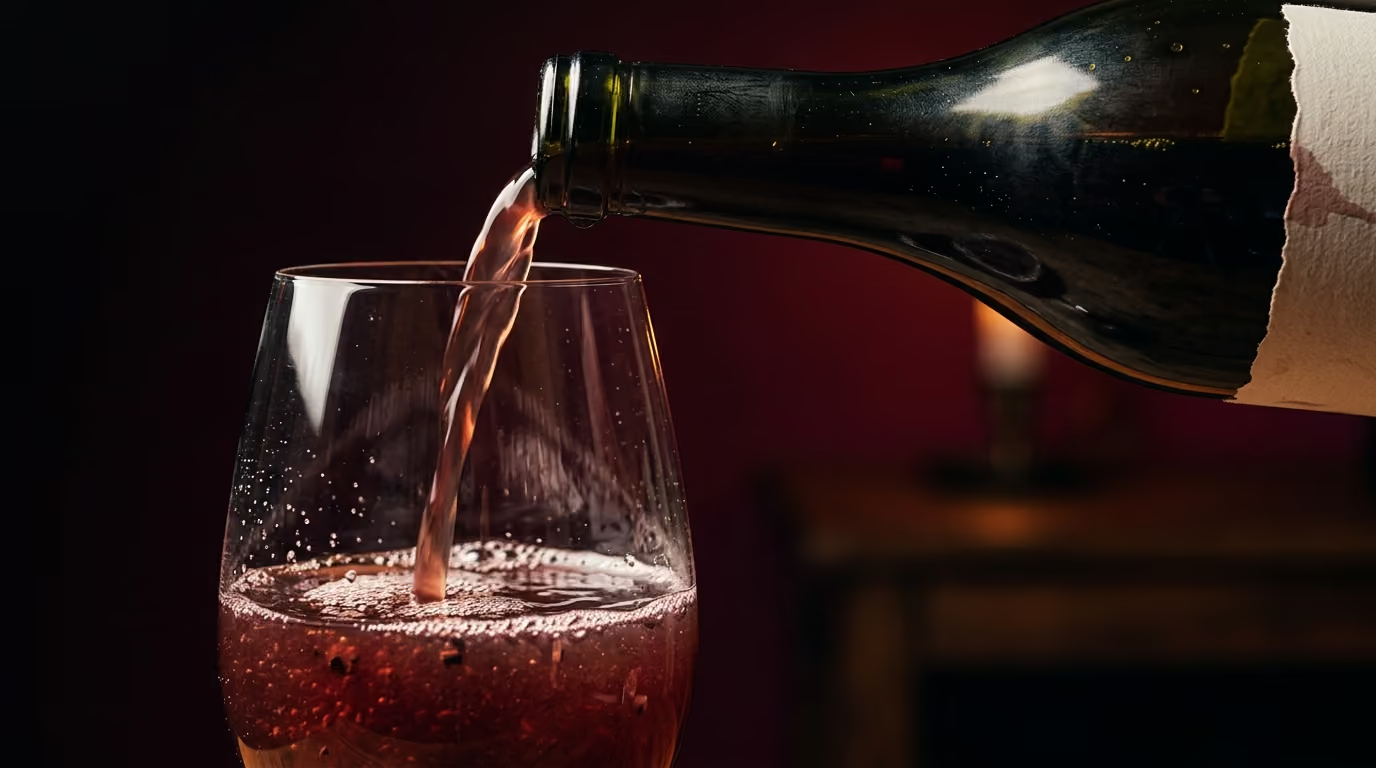
The third is clarification, and it's the one you can see. Most wine is fined and filtered to strip out the suspended solids that make it hazy, and natural wine usually skips both steps. That's why a natural bottle can pour cloudy and leave harmless sediment at the bottom, and it's the single visual cue most people notice first.
Two consequences follow from all this, and they matter more than the theory. Because the winemaker has fewer tools available if something starts to go wrong, the work in the vineyard has to be close to flawless, which is why natural wine tends to come from small producers making tiny quantities by hand. And because so little is being controlled, the same wine from the same producer can taste noticeably different from one vintage to the next, and occasionally from one bottle to the next.
Natural, organic, or biodynamic: what's the difference?
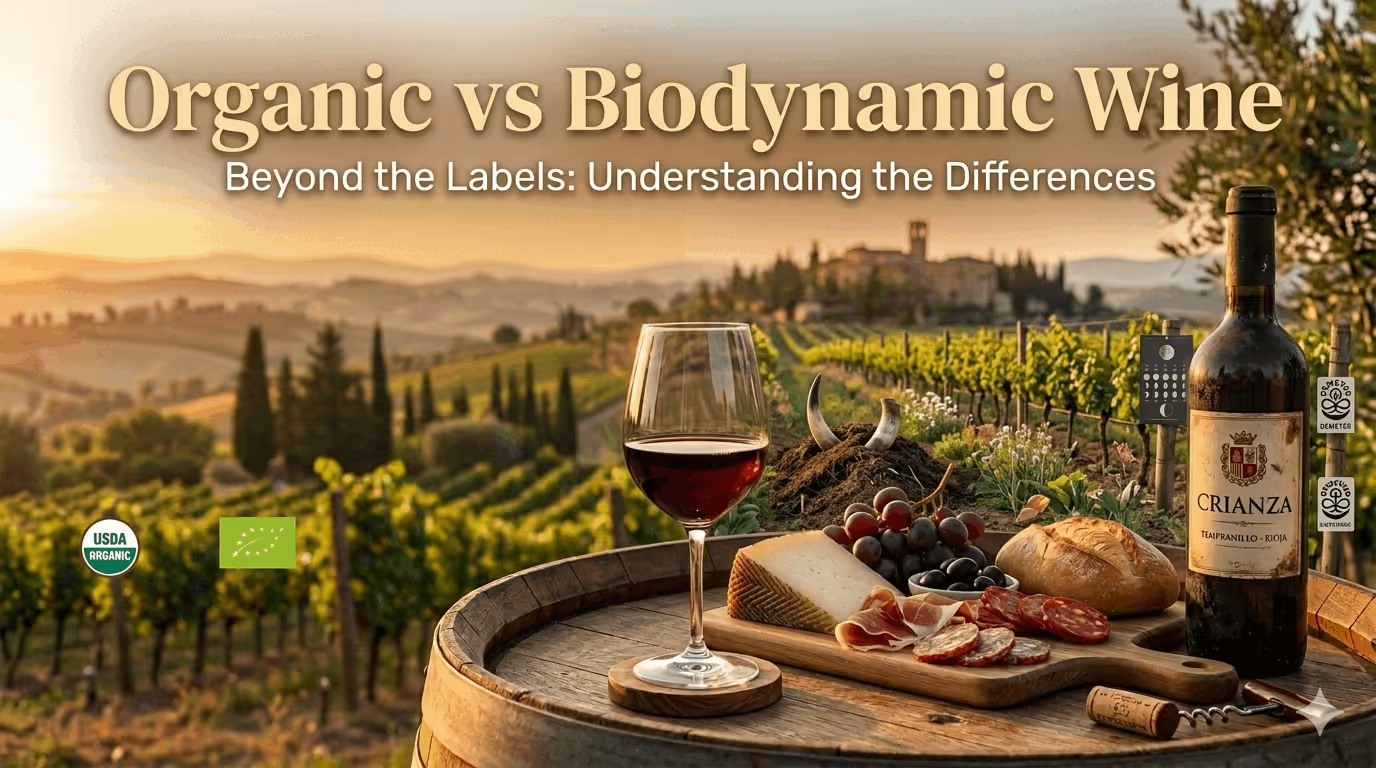
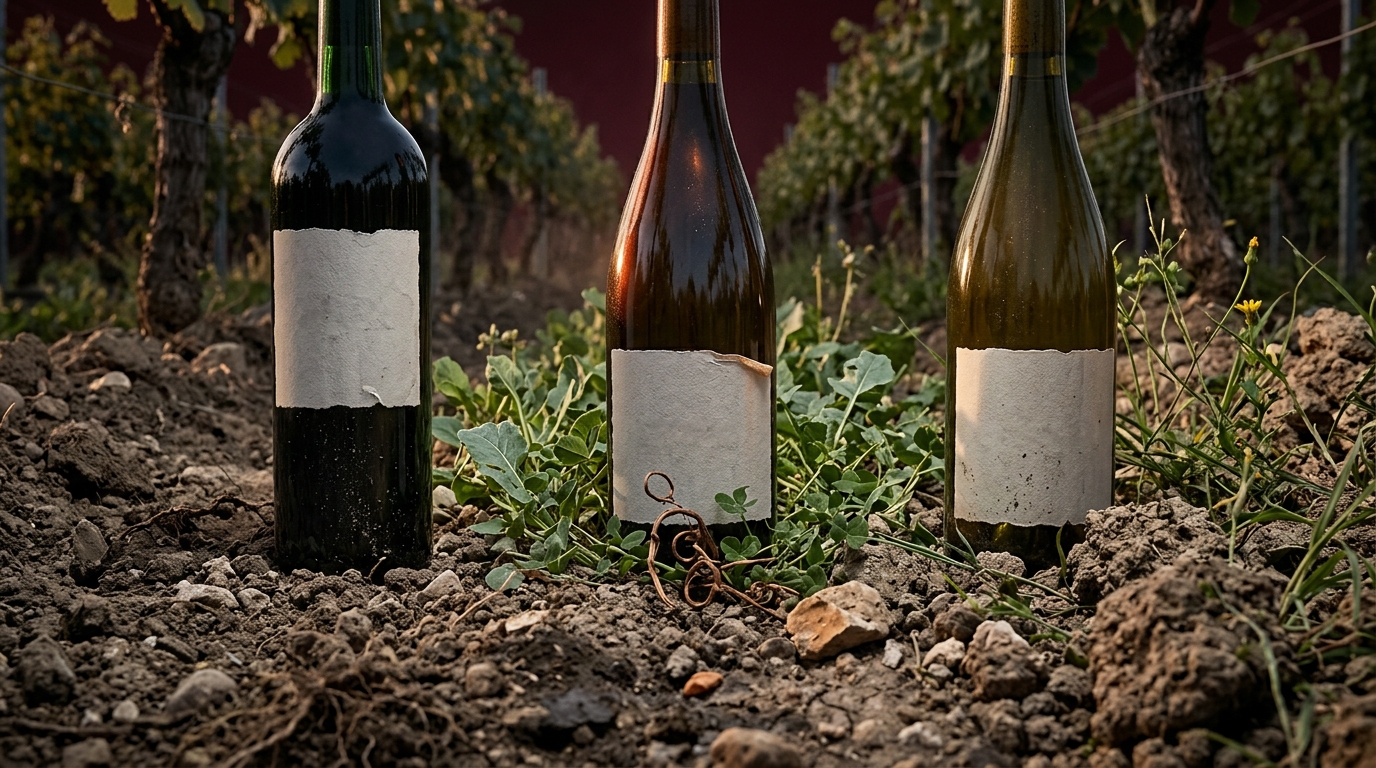
Organic and biodynamic describe how the grapes were farmed, and natural describes what happened after the grapes came inside. That distinction is the one most people get wrong, and it explains why a certified organic wine can still be made with a long list of cellar additives.
| What it governs | Certified? | In the cellar | |
|---|---|---|---|
| Organic | Farming: avoids synthetic herbicides, fungicides and pesticides | Yes, several schemes | Largely unrestricted |
| Biodynamic | Farming: organic practices plus lunar timing and soil preparations | Yes | Largely unrestricted |
| Natural | Farming and winemaking, start to finish | No certifying body | Minimal additions, native yeast, little or no added sulfur |
Biodynamic farming came out of a series of lectures by the Austrian philosopher Rudolf Steiner in the early twentieth century. It follows organic principles and adds herbal preparations, composts, and timing tied to the lunar calendar, with the vineyard treated as one living system rather than a surface for production. Plenty of growers borrow biodynamic techniques without going all in, so the line between organic and biodynamic in practice is blurrier than the certificates suggest. If you want the full comparison of those two, we've written about organic versus biodynamic wine separately.
One wrinkle worth carrying with you: certification costs money, and many of the small producers most committed to this way of working farm organically without ever paying to prove it. The larger the company, the easier those fees are to absorb. So an organic stamp tells you something real about the farming, but its absence doesn't tell you much at all.
What does natural wine taste like?
Natural wine tastes like a much wider range of things than conventional wine does, which is the honest answer and also the frustrating one. Some bottles are wild, sour, cidery, and cloudy enough to startle you. Plenty of others are completely unremarkable in the best sense, and you'd never guess how they were made if nobody told you.
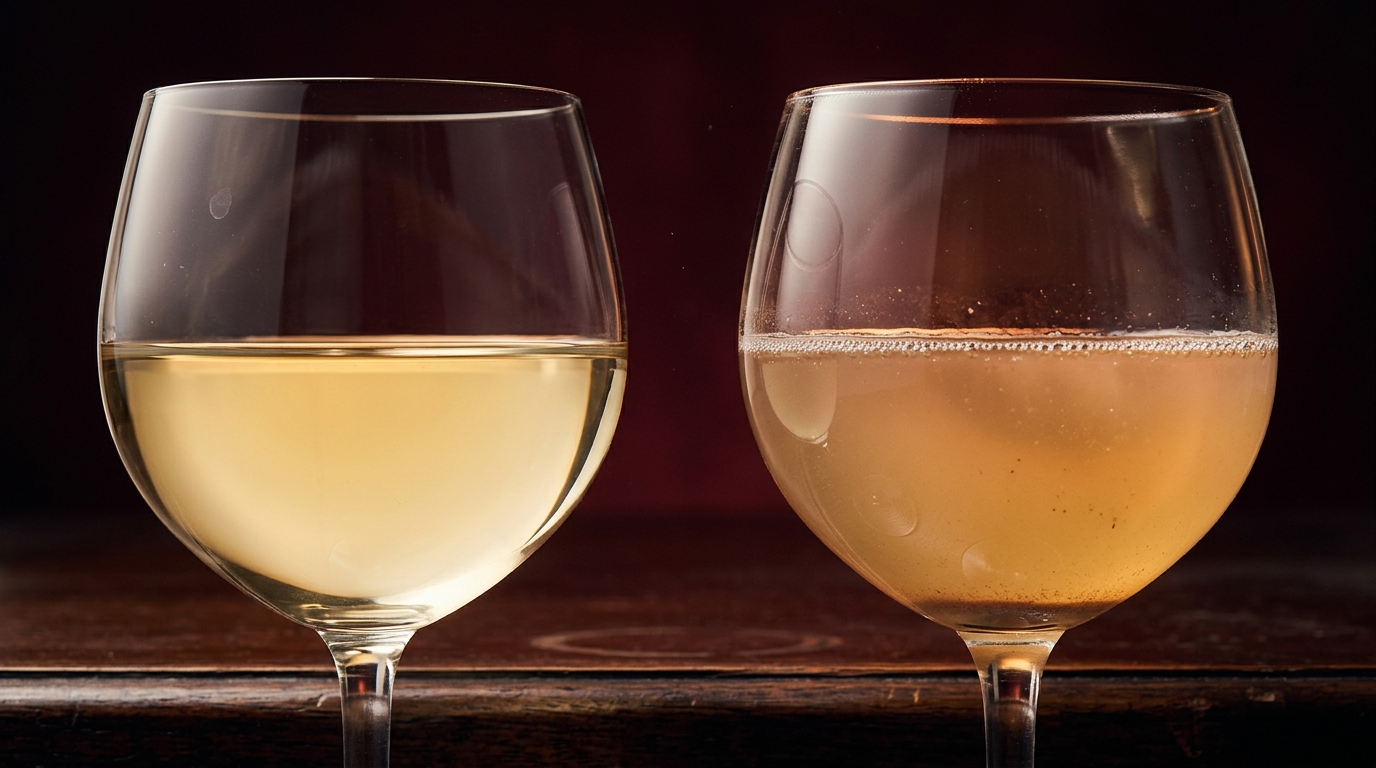
A few tendencies do show up often enough to be useful. Alcohol levels are frequently a little lower than the conventional equivalent, which makes these wines easy to drink on their own rather than only alongside food. Texture often reads as brighter and more energetic, with a faint prickle of carbon dioxide in some whites and lighter reds. Fruit flavors tend toward the tart and savory rather than the ripe and sweet.
The other pattern is grape choice. Natural winemakers gravitate to indigenous and sometimes nearly forgotten varieties, and several have brought grapes back from the edge of disappearing altogether. They also revive old techniques, including fermenting white grapes on their skins the way you would a red, which is where orange wine comes from. If you've never had a wine made from Zelen or Gringet, natural wine is where you're most likely to run into one.
Most of these wines, red and white alike, are better with a spell in the fridge first. Serving a light natural red slightly cool tightens it up and keeps the volatile edges in proportion, and it's the easiest fix if a bottle seems unruly on the first pour.
Will you actually like natural wine?
You'll probably like natural wine if you already reach for tart, light, lower-alcohol styles, and you'll probably find it hard going if what you love is polished, ripe, oaky, and consistent. That's a better predictor than anything about farming or sulfur, and it's the question the rest of the internet keeps skipping.
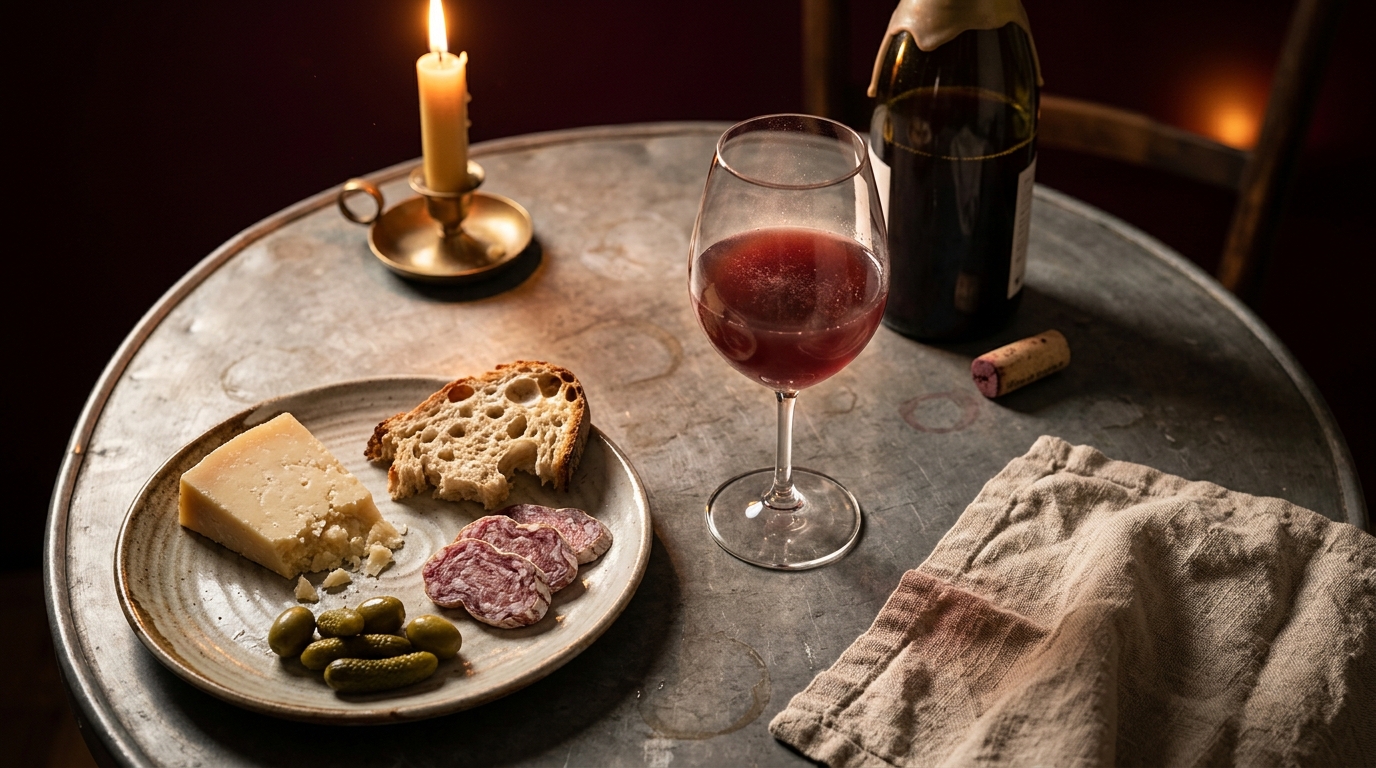
Working from what's already in your rotation gets you there faster. If Beaujolais, Loire Chenin Blanc, Muscadet, dry Riesling, or a crisp Vermentino are the wines you keep buying, natural wine is aimed squarely at your palate, and you can start almost anywhere in the section. If you drink Sancerre and Chablis and like them clean and precise, look for natural bottles described as unfiltered but stable, and skip anything the shop calls funky. If your happy place is Napa Cabernet, buttery Chardonnay, or a soft Argentine Malbec, the honest answer is that most of the category will read as thin and sour to you, and the closest thing worth trying is a natural wine from a warm region like Sicily or the southern Rhône.
The one place this gets genuinely hard is the shop, because the label won't tell you where on that spectrum a bottle sits and the tasting note on the shelf tag is usually written by someone who loves the style already. If you want a second opinion before you commit, Fit Check in Sommy gives you a straight verdict on whether a specific bottle suits your taste, and you can type the producer name or just scan the label while you're standing there. It's the moment natural wine most needs one, because the usual shortcuts, meaning the grape and the region and the price, are all less reliable here than they are elsewhere.
Give the category more than one attempt before you write it off. The variation between producers is so much wider than in conventional wine that a single bad bottle tells you almost nothing about whether the style suits you.
How do you tell funk from a flaw?
Funk is a wine that's alive and strange in a way the winemaker intended, and a flaw is a wine that's broken, and the difference is whether the smell blows off and whether the fruit is still underneath. Natural wine gets blamed for faults it doesn't have and forgiven for faults it does, so it helps to be able to tell them apart yourself.
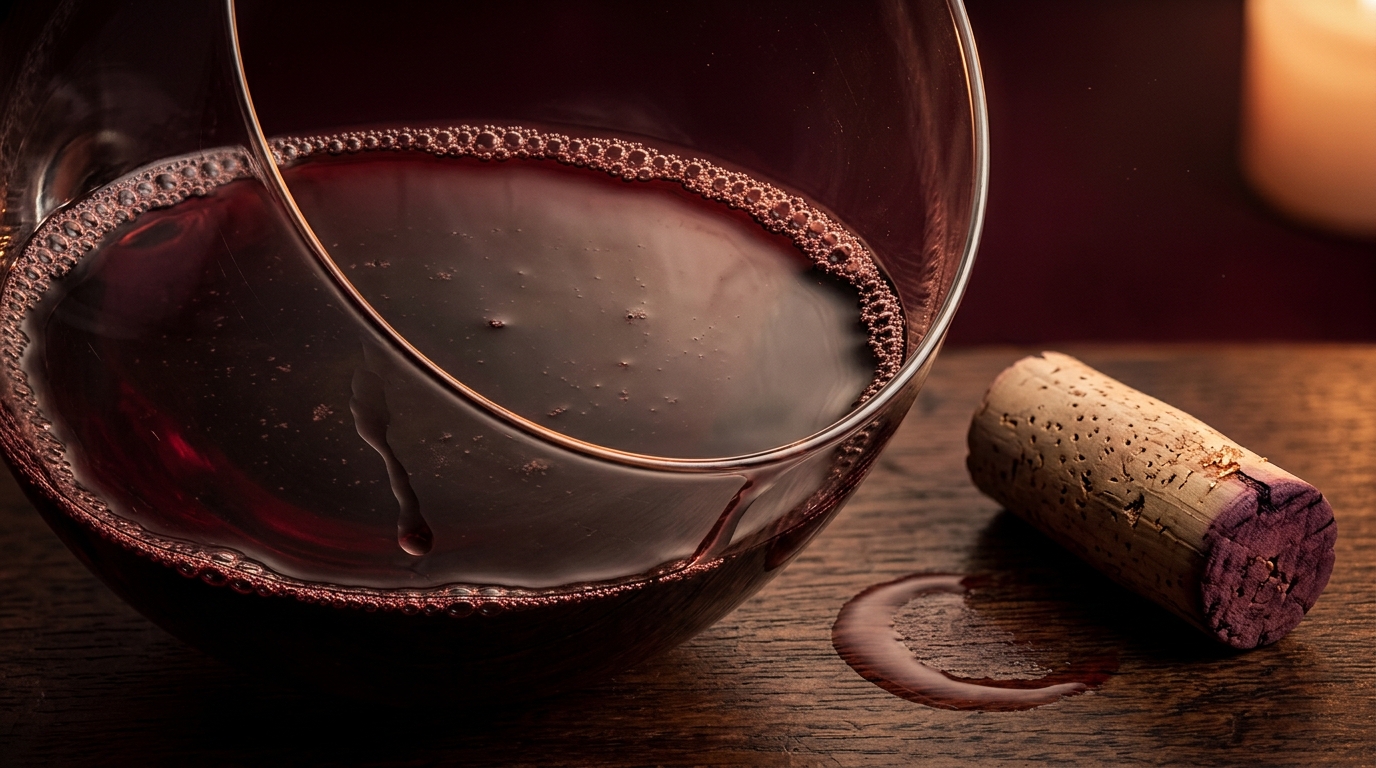
Start by pouring a glass and leaving it alone for fifteen or twenty minutes. A slightly reductive, struck-match, or farmyard smell on opening will very often disappear once oxygen gets to it, and what's left underneath should be recognizable fruit. Swirling hard in the glass does the same job faster. If the wine smells better after twenty minutes than it did at the start, you're dealing with character rather than damage.
The faults worth learning are the ones a natural wine's low sulfur makes more likely. A wine that smells of nail polish remover or sharp vinegar has gone too far down the volatile acidity road, and no amount of air will bring it back. A wine that tastes flat, bruised, and sherry-like has taken on too much oxygen, which we cover in how to spot oxidized wine. And a damp cardboard smell that only gets duller with air isn't a natural wine problem at all, it's cork taint, and spotting corked wine works the same way here as anywhere else.
Cloudiness and sediment are not faults, and neither is a light fizz in a still wine, which is usually fermentation finishing in the bottle. Stand the bottle upright for an hour before you open it and pour gently, and most of the sediment stays where it belongs.
A good shop will take back a bottle that's genuinely faulty, and specialist natural wine merchants tend to be better about this than supermarkets, partly because they know the risk is higher.
What does natural wine cost, and where do you buy it?
Expect to pay from about $20 for an entry-level bottle, with most of the specialist selection sitting between $25 and $55, and cult producers running well past $200. Checking two US natural wine retailers on August 12, 2026, Primal Wine listed bottles from $20 with the bulk of the range between $25 and $40 and a top end around $249, while Verve Wine in San Francisco started at $22, clustered between $22 and $55, and topped out near $390.
That entry point sits noticeably higher than conventional wine, and the reason is structural rather than fashionable. Hand-picking, foot-crushing, basket-pressing, and accepting that some of the vintage may be lost make these wines expensive to produce, and the producers are mostly small operations without the volume to bring costs down. You're paying for labor and risk, not for a premium version of something cheaper.
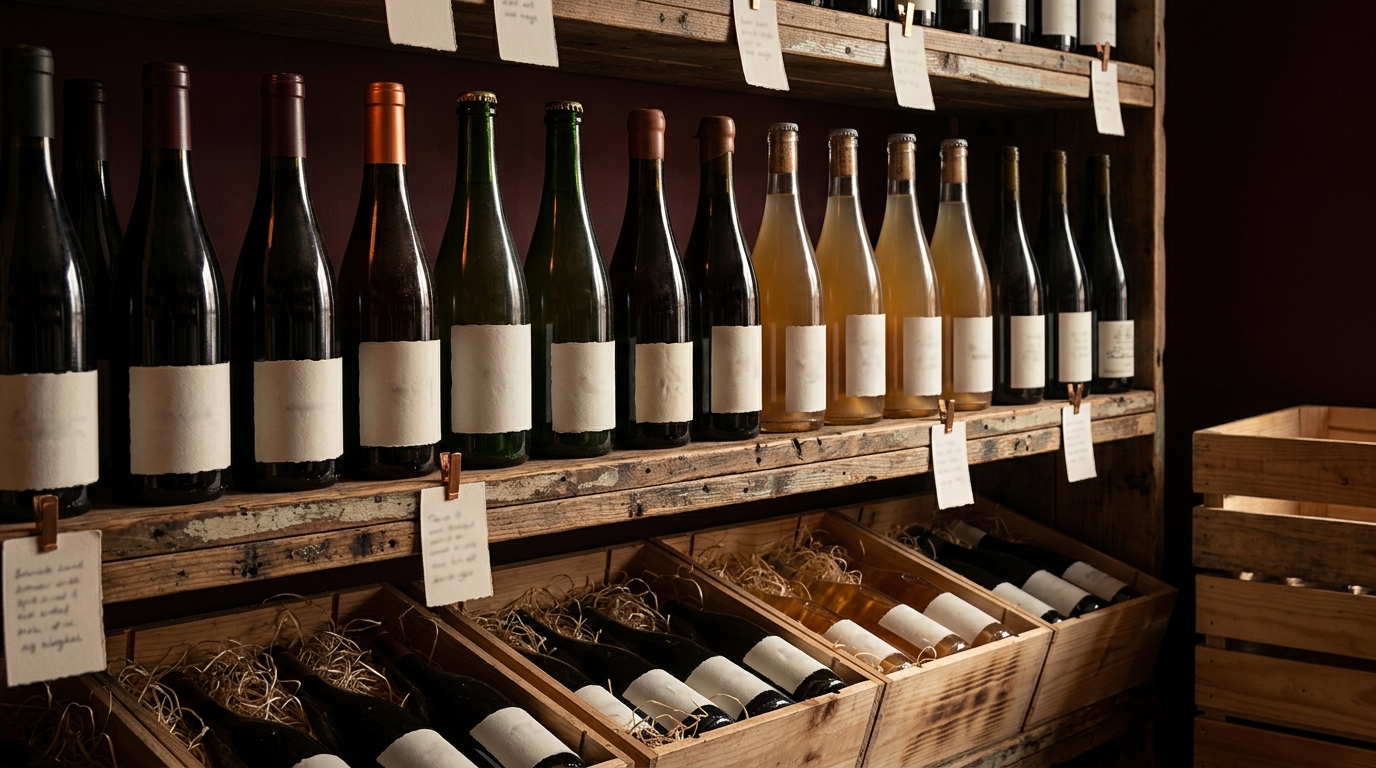
Both of the shops above are specialists, which is where the category really lives. Supermarket natural wine exists and is generally cheaper, but the selection is thin and the labeling is looser, so the odds of ending up with something merely marketed as natural are higher. A shop whose staff chose every bottle is the more reliable route, and the staff themselves are the part you're actually buying.
If you'd rather not rely on a conversation, order from a merchant that writes real tasting descriptions rather than category slogans, and use the wording as your filter. Bottles described as bright, crunchy, or drinkable are aimed at the mainstream end. Bottles described as wild, funky, or challenging mean it, and they're the ones to leave until you know you like the style.
Frequently Asked Questions
Is natural wine the same thing as organic wine?
No, and the difference is where the rules stop. Organic certification covers how the grapes were farmed and leaves the winemaker largely free to add and adjust in the cellar, while natural wine applies the same restraint through fermentation and bottling. An organic wine can be heavily manipulated after harvest, and many are.
Does natural wine contain sulfites at all?
Yes, because fermentation produces sulfur dioxide on its own, so no wine is entirely free of it. Under US rules, any wine with 10 parts per million or more of total sulfur dioxide has to carry a "contains sulfites" declaration on the label, and a wine below that threshold needs a TTB laboratory analysis to be approved without one. A natural wine described as having no added sulfur can still carry that declaration.
Why is my natural wine cloudy, and is it safe to drink?
The cloudiness comes from skipping fining and filtering, the two steps conventional winemaking uses to strip out suspended solids, and it's normal for the category rather than a sign of spoilage. Sediment at the bottom of the bottle is harmless. Stand the bottle upright for an hour before opening and pour slowly if you'd rather leave it behind.
Is natural wine better for you than regular wine?
We don't make health claims about drinking, and nothing about lower sulfur or minimal intervention should be read as one. What natural wine reliably offers is a different flavor and often slightly lower alcohol, and those are taste reasons rather than health reasons.
How should I serve and store a bottle of natural wine?
Serve it cooler than you would the conventional equivalent, including the reds, since a light chill keeps the brighter, more volatile aromas in balance. Store bottles somewhere genuinely cool and stable, because low-sulfur wines are less forgiving of heat than conventional ones. Once opened, they tend to fade faster, so plan on finishing a bottle within a day or two.
What is natural wine's biggest downside for a new drinker?
Inconsistency is the honest answer, without much question. Two bottles of the same wine from the same producer can differ more than you'd ever expect from conventional wine, so a bottle you loved may not repeat, and there's no rating or certification that protects you from that.
Where to start with your first bottle
Natural wine is worth trying if you're curious about how much of a wine's character comes from what wasn't done to it, and it rewards people who already like their wines tart, light, and a little unusual. Go to a shop that specializes, tell whoever's working there what you normally drink and be specific about it, and ask for something at the mainstream end of their selection rather than the wildest thing they stock. Budget around $25 to $30 for a first bottle, chill it, and give it twenty minutes in the glass before you decide anything.
The part worth holding onto is that natural describes a method and not a promise about flavor. Two bottles under the same banner can be as different from each other as a Muscadet is from a Barolo, so treating the category as one thing you either like or don't will steer you wrong. Your own taste is the better guide, and if you want help tracking it, Sommy learns what you actually enjoy and tells you whether a specific bottle fits before you spend the money.