
Learn the 30-second sniff test for corked wine, the key smells to notice, and what to say to get a replacement in restaurants.
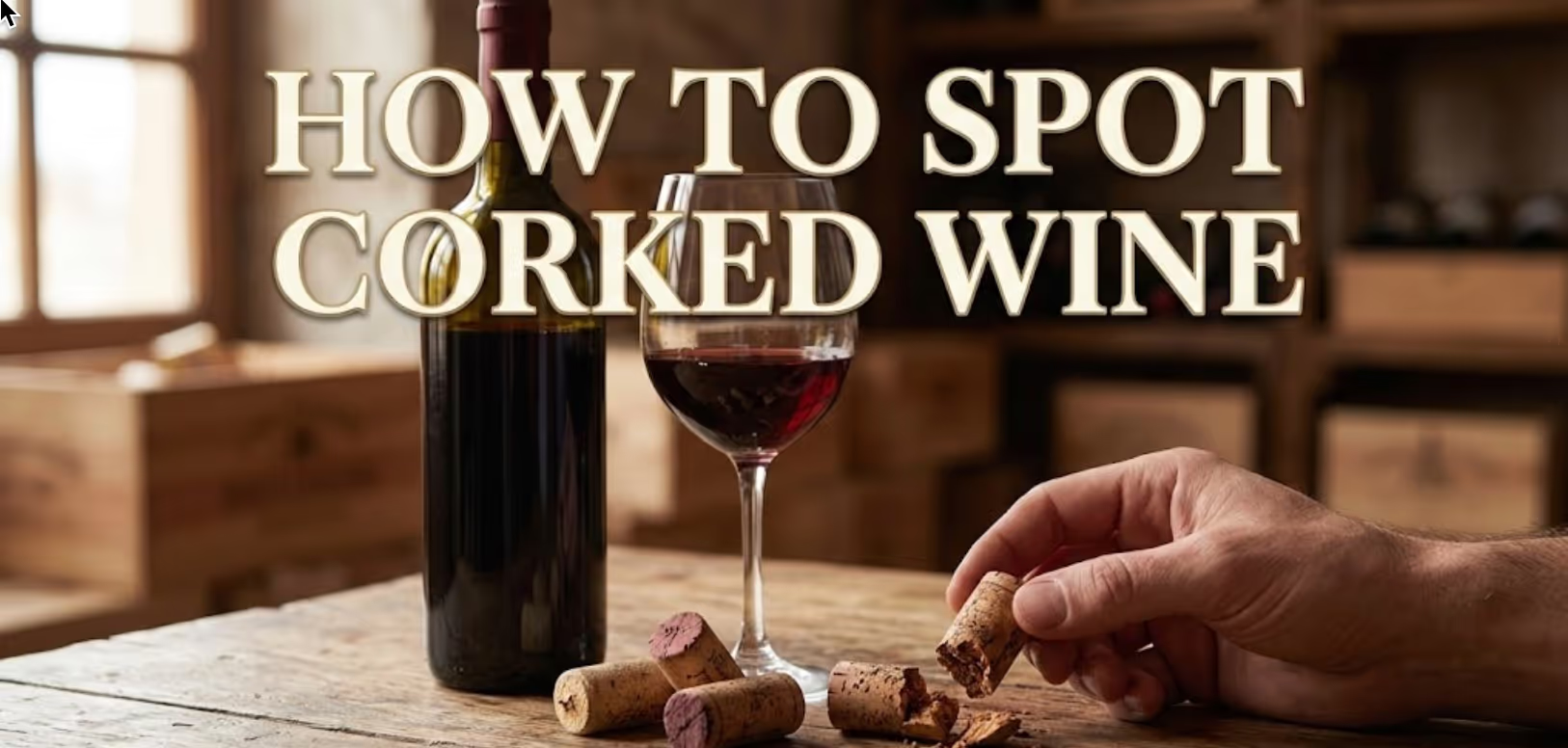
You've got a bottle open, glasses out, dinner's almost ready, and then you smell it. Something's off. The fastest way to catch corked wine is simple: smell the wine in the glass, look for a musty "wet cardboard" note, then take a tiny sip to confirm. You don't need a trained nose, you just need a quick routine.
This guide keeps it calm and practical. No wine theory, no intimidation, just a 30-second check you can use anywhere.
The 30-second corked wine check (sniff, sip, decide)
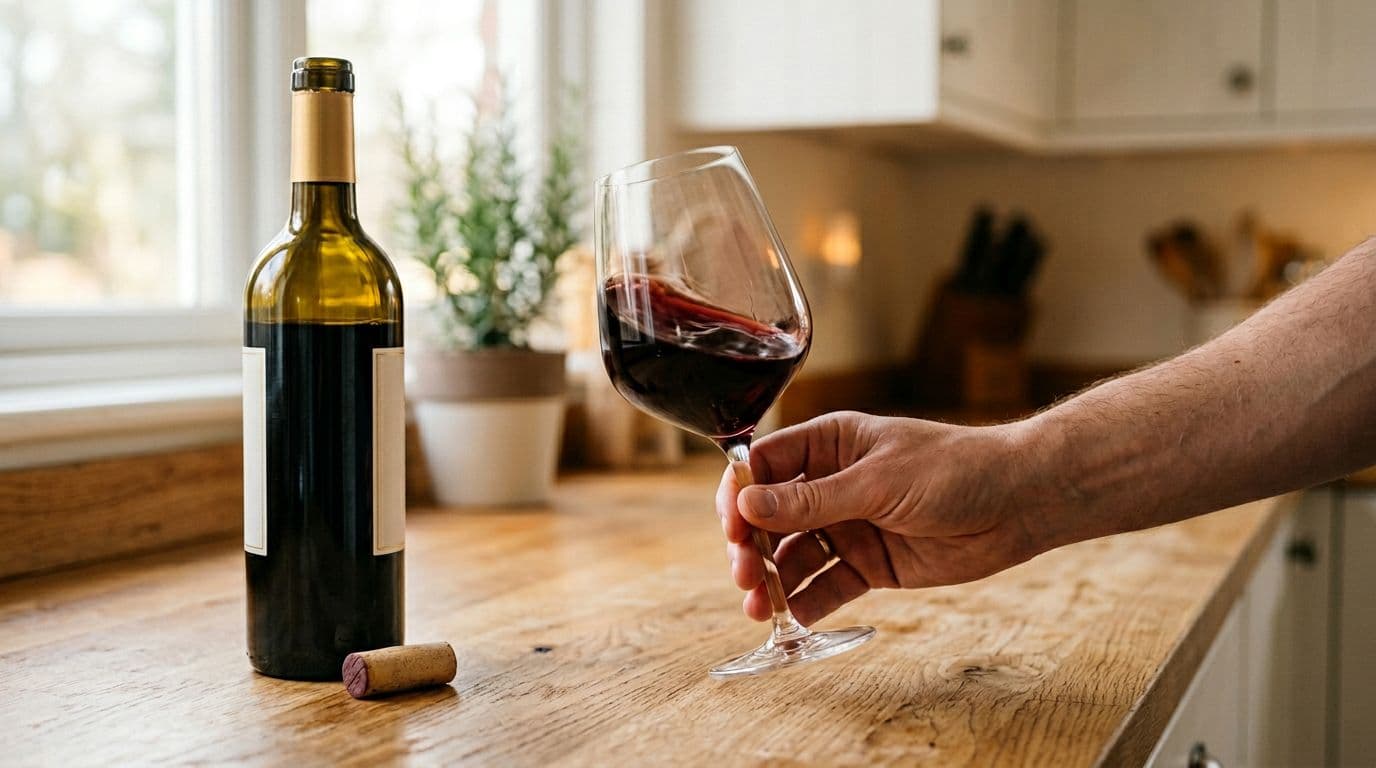
Swirl and sniff first, your nose catches cork taint faster than your tongue.
Most "Is this bad?" moments happen in the first pour. That's good news, because cork taint announces itself early. Here's the quick routine.
- Pour a small splash and swirl (5 seconds).
A quick swirl wakes up aromas. You're not trying to look fancy, you're just moving air through the wine. - Smell the glass (10 seconds).
Put your nose in the rim and take two short sniffs. If the smell is clean, fruity, or even a little earthy, you're probably fine. If it smells like a damp basement, wet cardboard, or moldy paper, pause. - Take a tiny sip and hold it (10 seconds).
Cork taint often tastes like the flavor got turned down. Fruit goes flat. The finish can feel dusty and dull. - Make the call (5 seconds).
If the musty smell is obvious, trust it. If you're unsure, smell again after a minute. Cork taint doesn't "blow off" into something fresh.
If your first thought is "this smells like a wet box in a garage," treat it as corked wine until proven otherwise.
One more calming note: corked wine is usually not unsafe, it's just disappointing. When it's corked, it steals the joy from the bottle.
What corked wine smells like (and what it isn't)
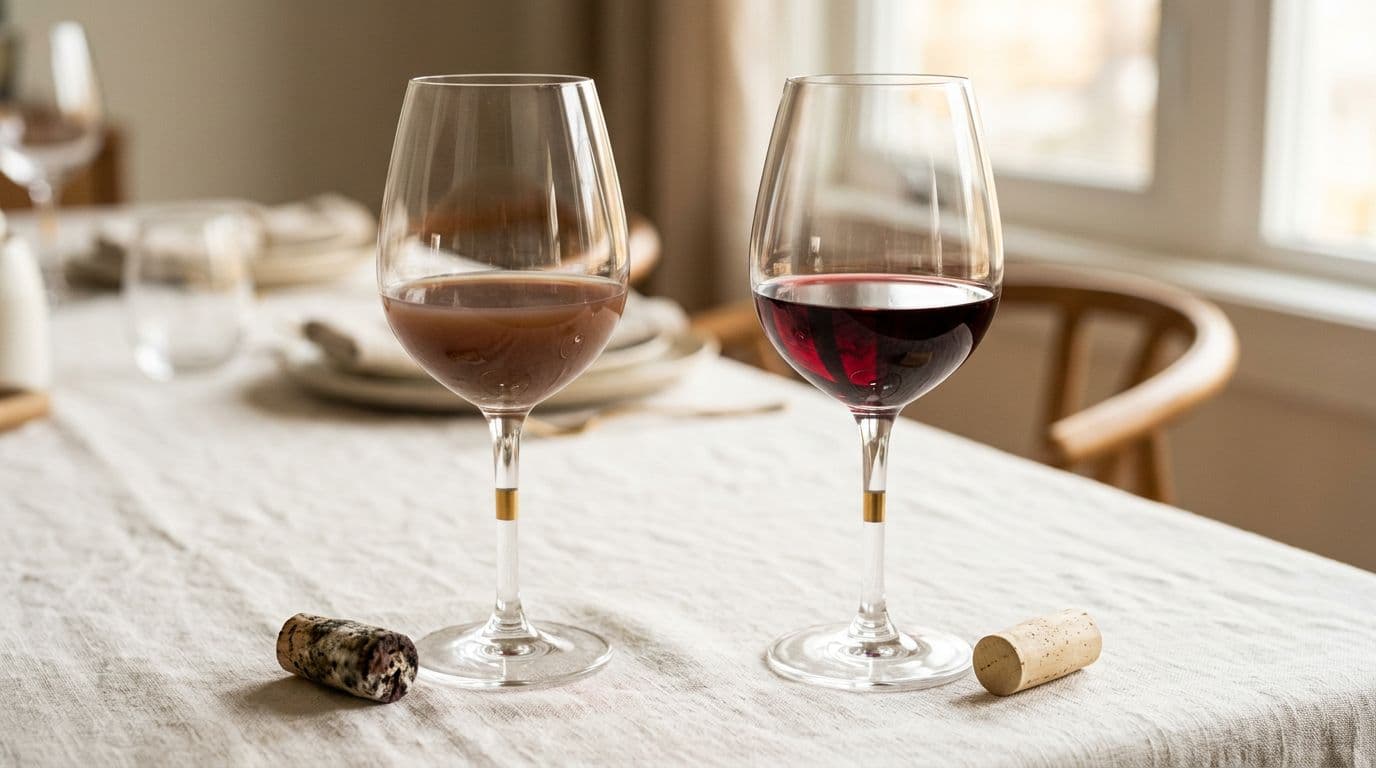
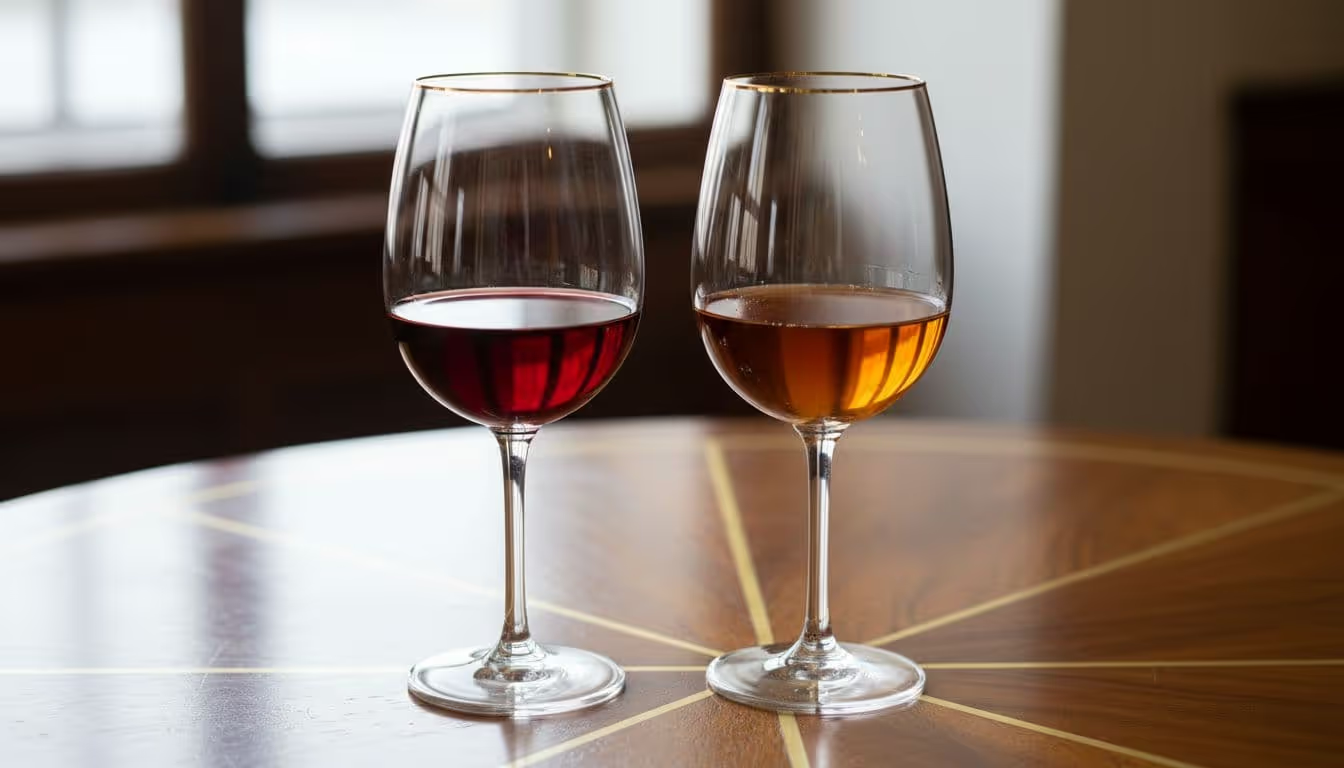
Side-by-side clues: corked often smells musty and tastes muted, while a sound bottle feels alive.
People say "corked" when they mean "something's wrong." But corked wine is specific. It usually comes from a compound called TCA that can contaminate natural cork, then transfer that musty smell into the wine. Coravin's overview of what corked wine is and how to detect it explains the basics without drama.
So what are you actually looking for?
- Musty paper: wet cardboard, old newspaper, soggy bookshelf.
- Damp room smell: basement, mildew, stale towel.
- Muted fruit: the wine tastes less like wine and more like… nothing.
That "wet cardboard" description shows up everywhere for a reason. Here's a plain-language read on what corked wine smells like.
At the same time, don't panic over the wrong signals. A few common things look suspicious but aren't cork taint. VinePair's guide to telling if wine is corked is helpful for separating myths from real signs.
A quick comparison makes it easier in the moment:
| What you notice | More like corked wine | More like "not corked" |
|---|---|---|
| Smell | Musty, moldy paper, damp basement | Fruit, flowers, spice, clean earth |
| Taste | Flavors feel muted, finish seems dull | Flavors feel clear, finish stays lively |
| In the glass | Often normal-looking | Often normal-looking |
Bottom line: looks don't decide it. Smell does. This is also where wine tasting notes explained matters, not as homework, but as a shortcut. If the wine has no "there" there, that's a clue.
What to do next (restaurant, store, or home)
At a restaurant, a calm, clear ask is all you need to get a corked bottle replaced.
If you suspect corked wine, the goal isn't to win an argument. The goal is to get a fresh bottle and move on.
At a restaurant, use this simple line (it works even if you don't know wine words):
"I think this bottle might be corked, it smells musty. Could you please check it?"
That's it. No performance. These are the only restaurant wine tips you need here: be polite, be direct, and don't keep drinking while you debate yourself. If you want extra help ordering in general, Sommy's guide on how to pick wine you'll love is a steady, no-stress framework.
If it's from a shop, re-cork it, take a photo of the receipt, and return it. Most stores will replace a faulty bottle, especially if it's clearly cork taint.
At home with friends, don't over-explain. Pour a second bottle and protect the mood. Simple wine tips like this matter because the best part of wine is the moment, not the analysis.
Finally, here's the confidence piece. A corked bottle can make anyone spiral into "I always pick wrong." That's also when friendly wine advice helps most: one bad cork doesn't mean you're bad at choosing. If you want wine explained simply, a good wine guide focuses on what you like and what you're eating. For pairing, use a plain wine pairing guide approach, match the meal's weight, then fine-tune from there. Sommy's how to pair wine with food does that in everyday language.
If you want help choosing wine in the moment, this is exactly what an AI wine assistant is for. Sommy at https://www.sommy.ai gives smart wine recommendations and personalized wine picks by scanning a list or shelf. Think of it as wine app suggestions that feel like a calm friend, offering personalized wine recommendations, smart wine picks, and clear wine recommendations based on your taste, budget, and meal. That's a modern wine guide built for real life, with simple wine explanations and everyday wine advice you can actually use, whether you need wine list tips at dinner or grocery store wine picks on a rushed Tuesday.
Conclusion
Corked wine is a fast diagnosis, not a long debate. Swirl, sniff for musty "wet cardboard," then confirm with a small sip. If it's corked, speak up and replace it, you're not being difficult, you're protecting your night. Most importantly, keep your confidence, corked wine is a bottle problem, not a you problem.