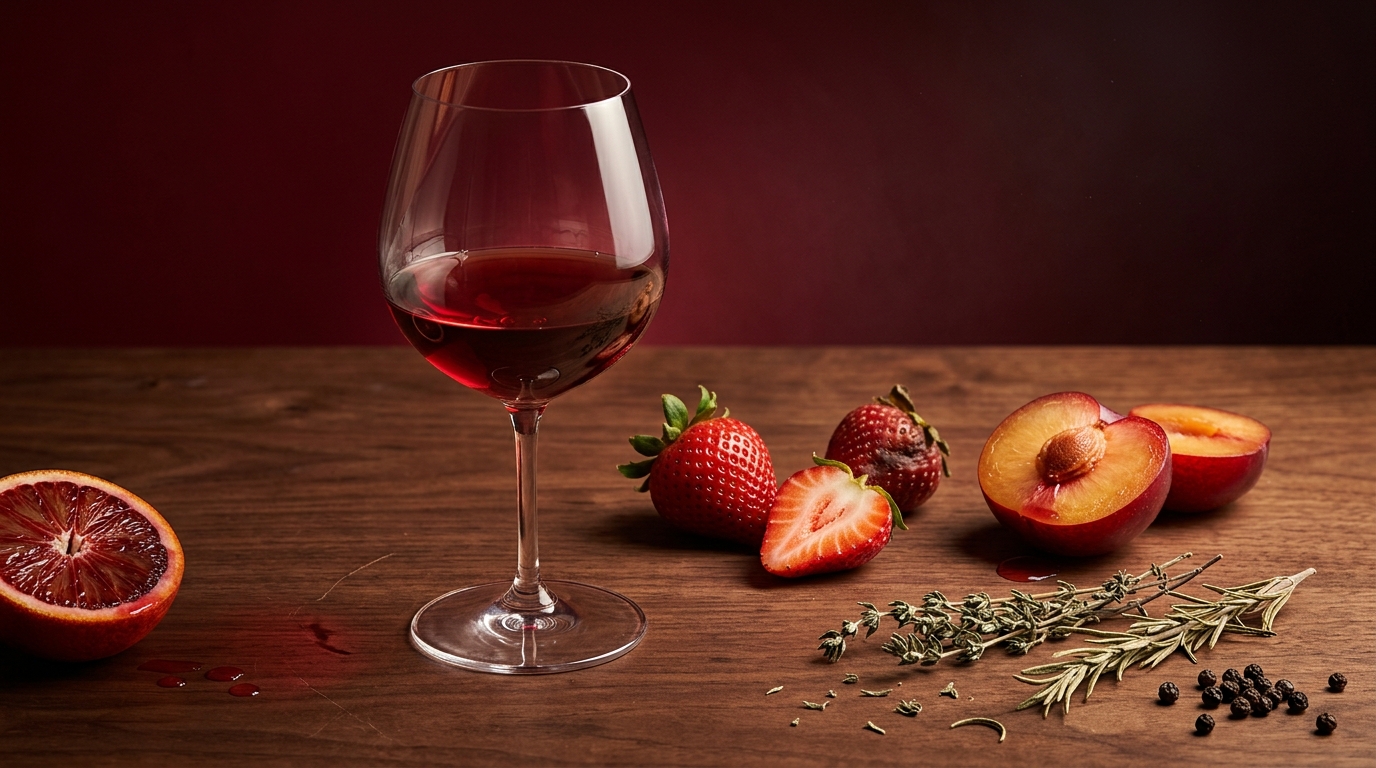
Grenache tastes of ripe strawberry, red plum and dried herbs, with soft tannins, moderate acidity and enough alcohol to leave a warm, round feeling in your mouth. It's made dry almost everywhere it grows, though that ripeness reads as sweetness to plenty of people the first time they try it. Finding it is the awkward part, because most of the Grenache sold in America wears a place name instead of a grape name, so the front label says Côtes du Rhône or Priorat or Cannonau and never mentions Grenache at all. Bottles worth drinking start around $11, and the ones worth opening for company sit between $15 and $50.
What does Grenache taste like?
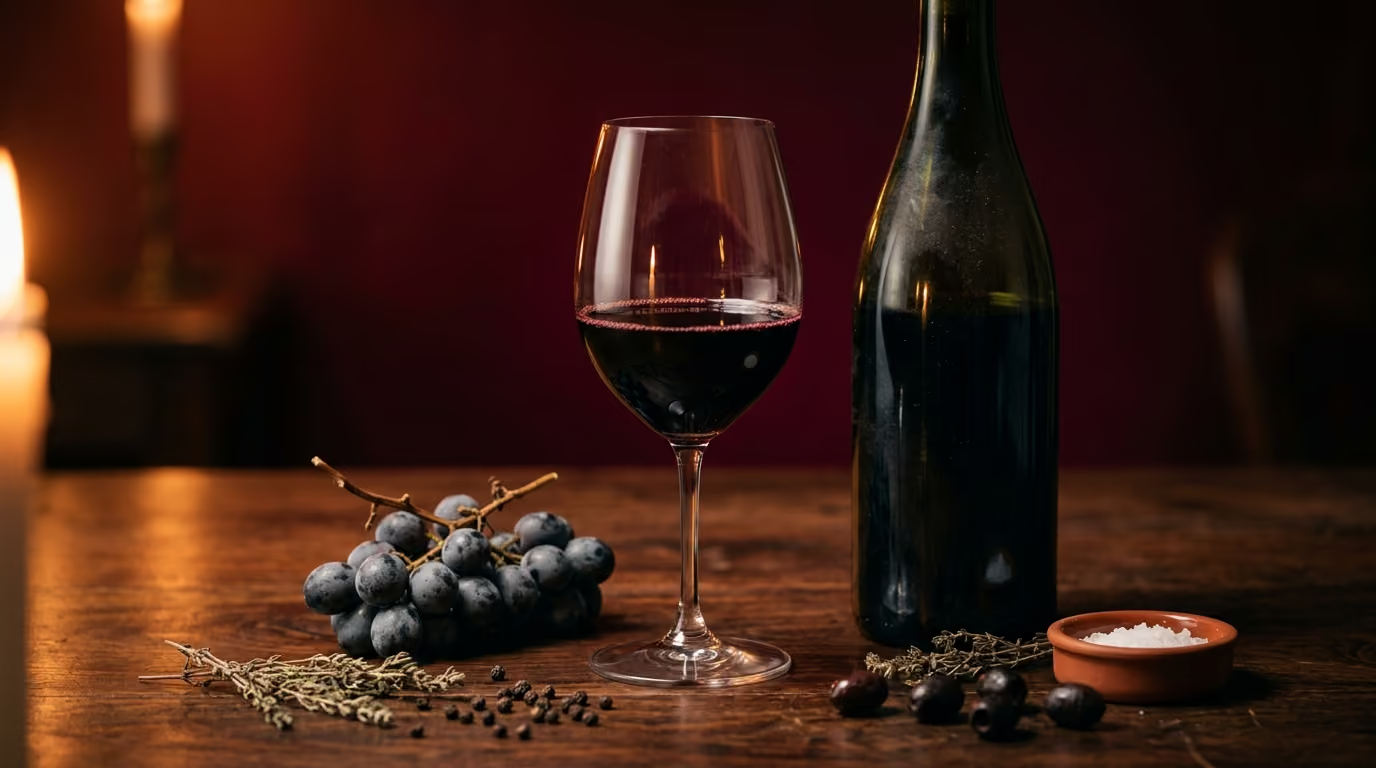
Grenache tastes like ripe red fruit with a dried-herb, savoury edge sitting behind it, and the texture matters as much as the flavour does. Wine Folly's variety card lists stewed strawberry, grilled plum, leather, dried herbs and blood orange as the primary flavours, and describes the wine as dry, medium to full in body, medium in tannin and medium in acidity, with alcohol above 15 percent.
That combination produces something unusual among reds. You get a lot of fruit and warmth without much of the grip that makes people wince at a young Cabernet, because Grenache is thin-skinned and doesn't carry heavy tannin on its own. If you've enjoyed a smooth red wine and wondered what makes it feel that way, Grenache is close to the purest example of the effect, and our explainer on how tannin behaves in your mouth covers the mechanism if the word still feels vague.
The alcohol is the trait that separates Grenache from other red-fruited wines, and it changes the whole experience rather than just the number on the back label. Jancis Robinson notes that extraordinary ripeness is a general characteristic of Grenache everywhere, and that the vine sets relatively little fruit, which concentrates flavour in whatever does ripen. A glass feels weightier than its pale colour suggests and warms you in a way a lighter red never does, which is why serving temperature matters more here than with most bottles.
Where the wine grows shifts the balance a fair amount. Southern French versions lean savoury and herbal, with what the region calls garrigue, the wild scrub of thyme and rosemary growing between the vineyards, while Spanish Garnacha runs more towards bright, juicy raspberry. Australian and Sardinian bottles usually land in between.
Is Grenache sweet or dry?
Grenache is dry in almost every bottle you'll pick up, and the sweetness people taste is ripeness rather than sugar. Jancis Robinson puts it directly in her Grenache profile: if there's one single characteristic of Grenache-based wines, it's a sweet ripeness, coupled with quite tough tannins if yields are low.
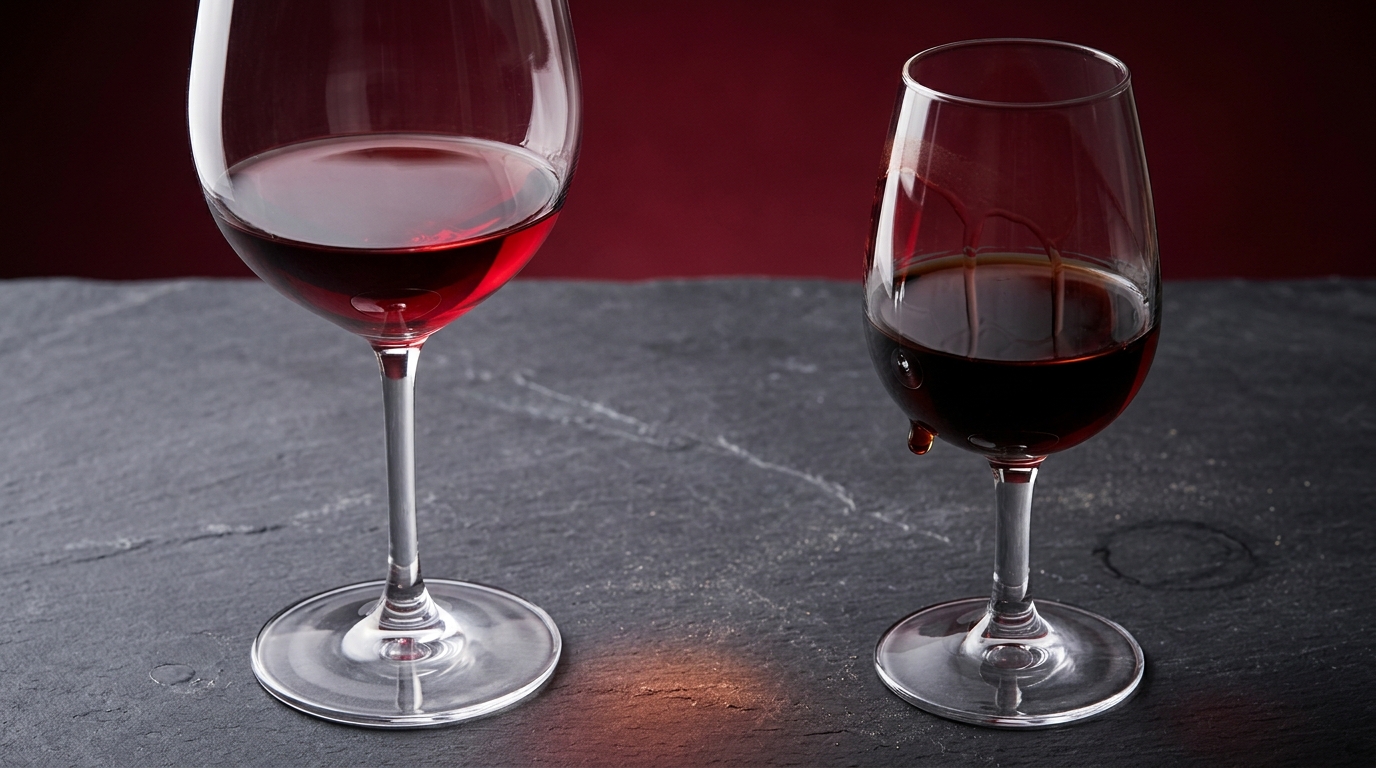
Three things gang up to create that impression. The fruit flavours sit at the jammy end of the spectrum rather than the tart end, the alcohol carries a genuine sweetness of its own on your palate, and there's very little tannin to dry your mouth out and correct the impression. Take away any one of those and the wine would read as obviously dry. Together they fool a lot of experienced drinkers, and there's nothing wrong with your palate if the wine tastes a bit sweet to you.
Genuinely sweet Grenache does exist, and it's the one thing none of the popular guides bothers to mention. In Banyuls and Collioure, on the terraces above the Mediterranean in French Roussillon, Grenache reaches such high ripeness that it becomes the chief ingredient in vins doux naturels, the sweet fortified wines of the region, with Maury and Rivesaltes doing something similar a little further north. Those are dessert wines and they're labelled as such, so you won't buy one by accident. If somebody tells you they had a sweet Grenache and they weren't imagining it, this is probably what they drank.
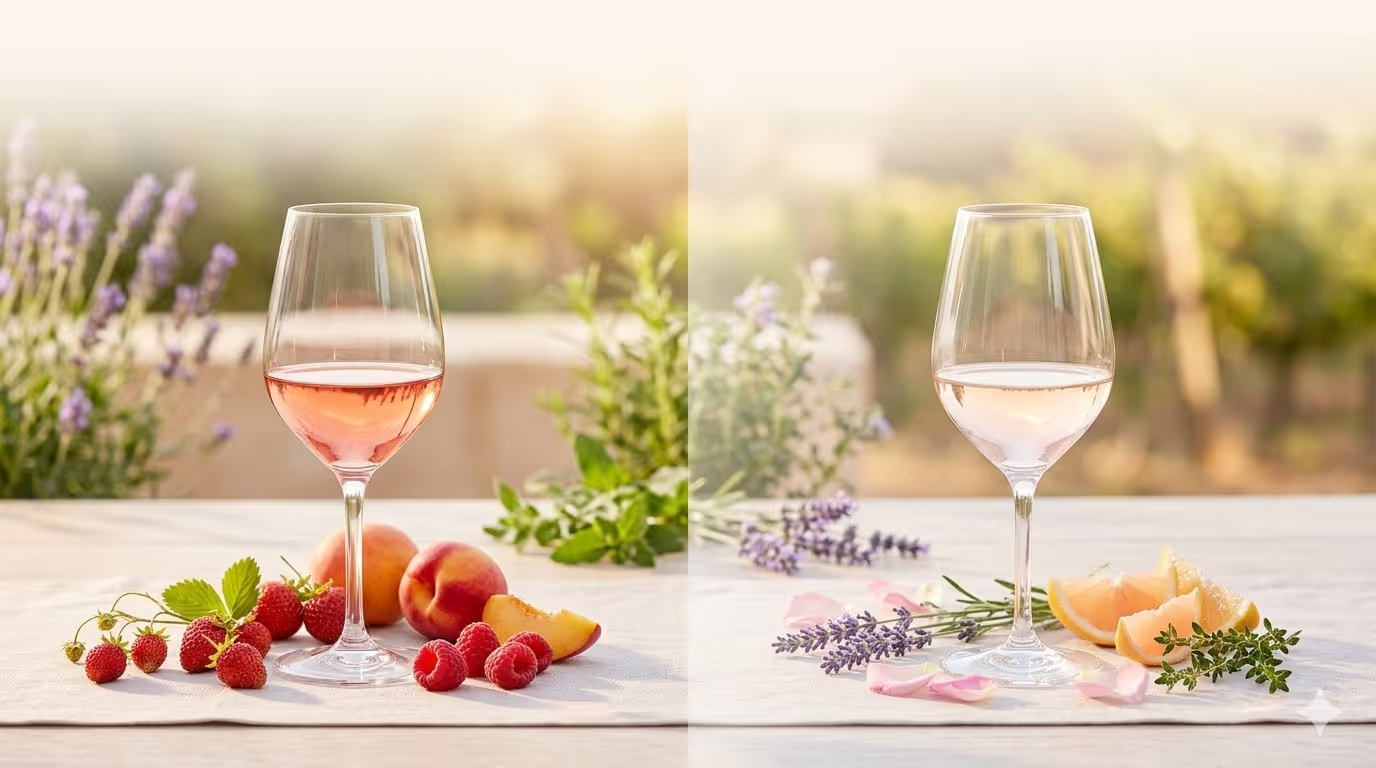
The pink version is dry as well, whatever the colour suggests, since the grape's thin skins have persuaded generations of winemakers to bleed the juice off early and make rosé instead. Our comparison of Grenache rosé against Provence blends covers how those taste.
Why doesn't the label say Grenache?
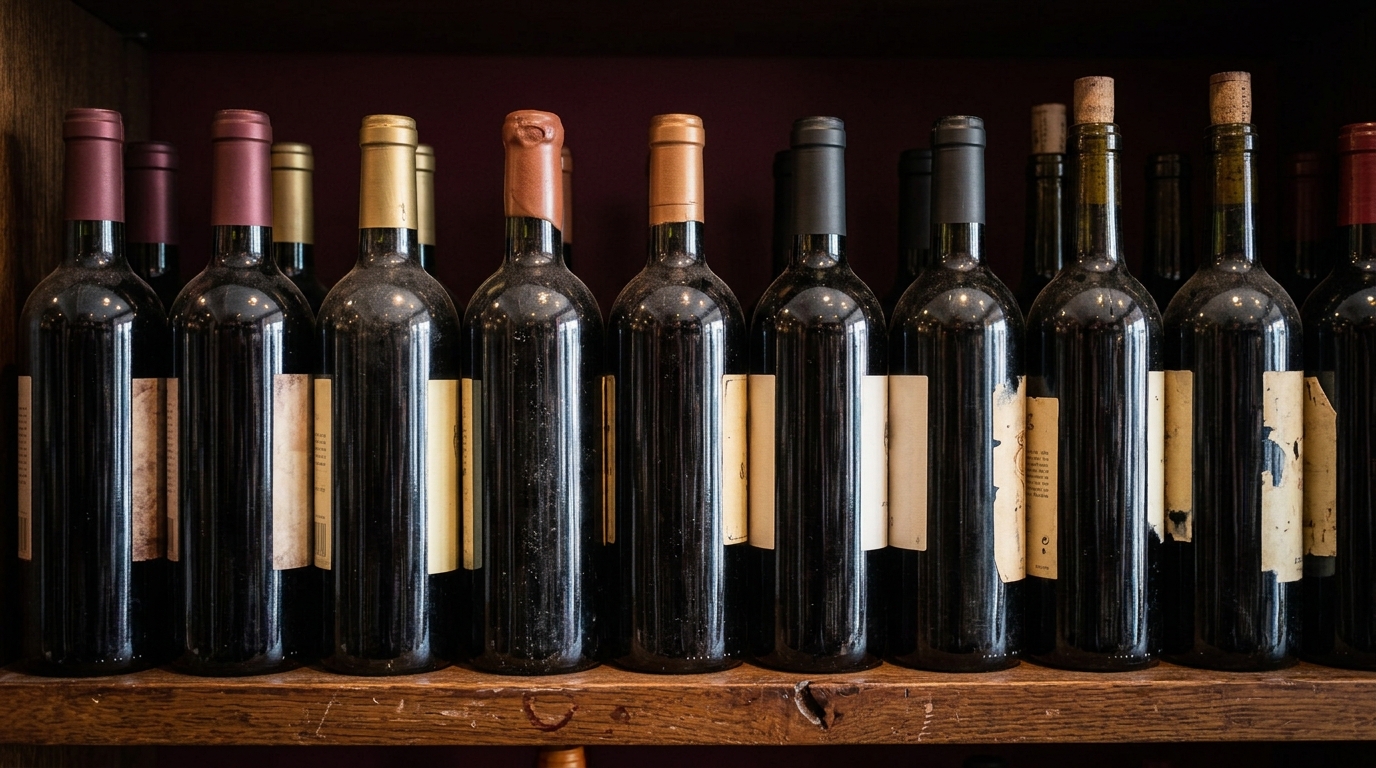
Because most Grenache is sold under the name of the place it came from, and in the classic regions the grape appears nowhere on the front of the bottle. This is the single biggest reason people struggle to buy a wine they've decided they like, and it's the problem the guides tend to skip past in a sentence about synonyms.
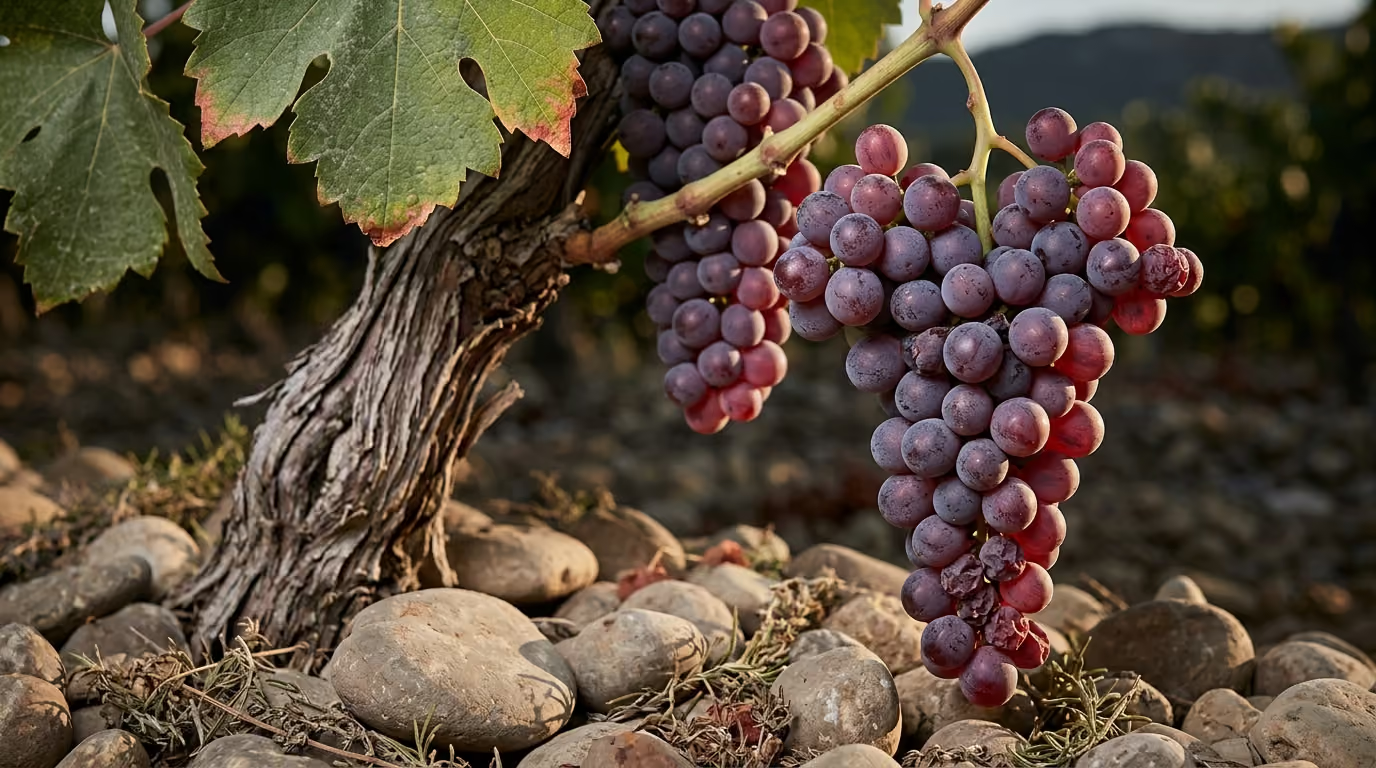
Start with the names for the grape itself. It's Grenache in France, Garnacha in Spain and Cannonau in Sardinia, where locals claim the variety had its roots before being carried to Spain and France while the island belonged to the kingdom of Aragón. All three are the same grape, and there are also Grenache Gris and Grenache Blanc, pale-skinned and green-skinned versions of the same vine that make pink and white wines rather than reds.
One name trips people up badly, so it's worth getting straight. Garnacha Tintorera, sold elsewhere as Alicante Bouschet, is a different grape with red flesh instead of clear, and it isn't Grenache despite the shared first name. Anyone telling you Alicante is just another word for Garnacha has it wrong.
Then there are the place names, which is where most of the volume actually hides. In the southern Rhône, Grenache is the backbone of Châteauneuf-du-Pape, Gigondas, Vacqueyras, Lirac, Rasteau and Cairanne, and it leads the rosé-only appellation of Tavel as well. Inter Rhône's own appellation rules make the point plainly: in Côtes du Rhône Villages, Grenache Noir is a mandatory component of every red blend, and together with Syrah and Mourvèdre the three must make up at least 66 percent of the wine. In Spain, Priorat is built on ancient Garnacha bush vines planted on schist, while Campo de Borja and Calatayud turn out the juicy, affordable style. Garnacha also plays a supporting role in Rioja and Navarra, where it adds flesh to Tempranillo. Sardinia labels it Cannonau di Sardegna, which at least names the grape if you know the translation.
This is exactly the moment Sommy's Vision feature was built for. You're standing in an aisle holding a bottle whose label lists a French village and nothing else, with no idea whether the wine inside is the style you liked last month, so you scan the label and get an answer against your own Taste Profile instead of guessing from the shelf tag.
What is GSM wine, and what does Grenache do in the blend?
GSM stands for Grenache, Syrah and Mourvèdre, and it's the standard trio of the southern Rhône and the Languedoc, with Grenache supplying the fruit and the body while the other two add structure and savour. Jancis Robinson writes that GSM is regarded as the holy trinity in that part of the world, which gives you a sense of how settled the combination is.
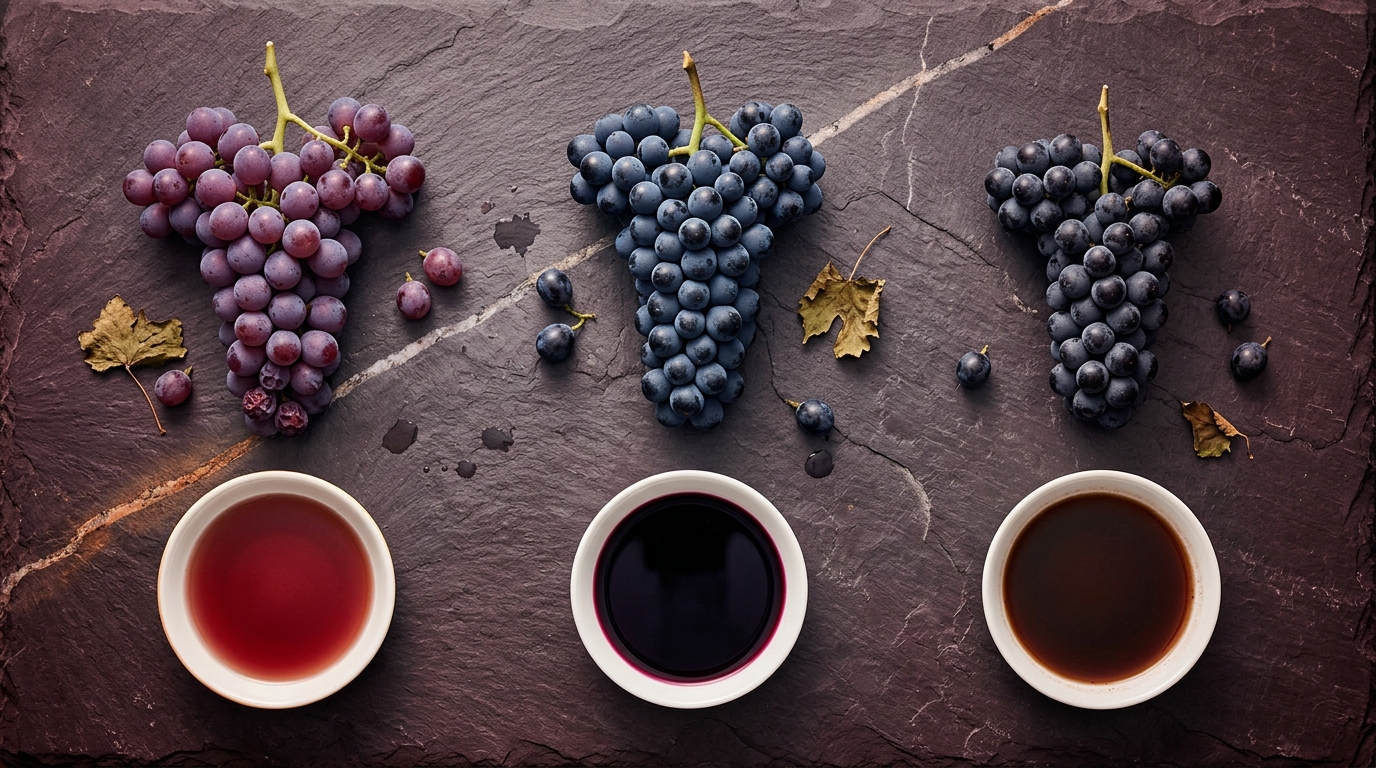
Each grape has a job in the blend. Grenache brings the ripe red fruit, the roundness and most of the alcohol. Syrah contributes darker fruit, black pepper and the tannin that gives the wine a spine and lets it age. Mourvèdre, which Australians call Mataro, adds an exotic, gamey, almost animal note along with backbone. Blend them and you get a wine that keeps Grenache's generosity while gaining the grip it lacks on its own, which is why so few of the great southern Rhône wines are made from a single grape.
Châteauneuf-du-Pape is the famous example, and the rules there are looser than most people realise. Inter Rhône's official appellation page states that Grenache Noir is the dominant variety in the vineyard, and lists eighteen permitted grapes, a number traditionally counted as thirteen because several entries are colour variants of the same vine. Château Rayas, one of the most admired estates there, ignores the other seventeen and makes its red from Grenache Noir alone.
The practical upshot is that a bottle labelled as a red blend from the southern Rhône or the Languedoc is very likely a Grenache wine in disguise, and it'll taste more structured than a straight Garnacha from Spain. If you liked one and not the other, the blend is usually the reason rather than the region.
What does a decent bottle of Grenache cost?
A good everyday Grenache runs about $11 to $19 in the United States, a serious step up sits between $35 and $50, and the benchmark bottles from Châteauneuf-du-Pape climb past $100. All the figures below are average US retail prices checked on Wine-Searcher in August 2026, excluding sales tax, which is the closest thing to a fair national number you'll get.
At the everyday end, Bodegas Borsao's Garnacha from Campo de Borja averages $11 and turns up at around $8 in plenty of shops, which makes it one of the better value reds in any American store. Famille Perrin's Côtes du Rhône Réserve averages $14, with offers near $11, and gives you the blended southern Rhône style rather than the pure Spanish one. Las Rocas de San Alejandro Garnacha from Calatayud averages $15, and Sella & Mosca's Cannonau di Sardegna Riserva averages $19, which is the easiest way to taste the Sardinian version without hunting.
Above that, the price jumps rather than climbing gently, and what you're buying is concentration and old vines rather than a different flavour. Yangarra Estate's Old Vine Grenache from McLaren Vale averages $37, and Domaine Santa Duc's Gigondas Aux Lieux-Dits averages $47. Both are recognisably the same grape as the $11 bottle, with more depth and a longer finish.
The top tier is genuinely expensive and mostly optional. E. Guigal's Châteauneuf-du-Pape averages $62, and Domaine du Vieux Télégraphe's La Crau, one of the appellation's reference wines, averages $131. Those are special-occasion purchases, and nobody needs to spend that to understand what Grenache tastes like. The honest advice is to start at $11, decide whether the style suits you at all, and only then work out whether the $40 version is worth it to you.
What food goes with Grenache?
Grenache goes best with roasted and grilled meat, herbs and anything Mediterranean, because the wine's ripe fruit and soft tannins flatter savoury food without fighting it. Lamb is the classic match, especially with rosemary, thyme or garlic, since the herbal side of the wine meets the herbs on the plate.
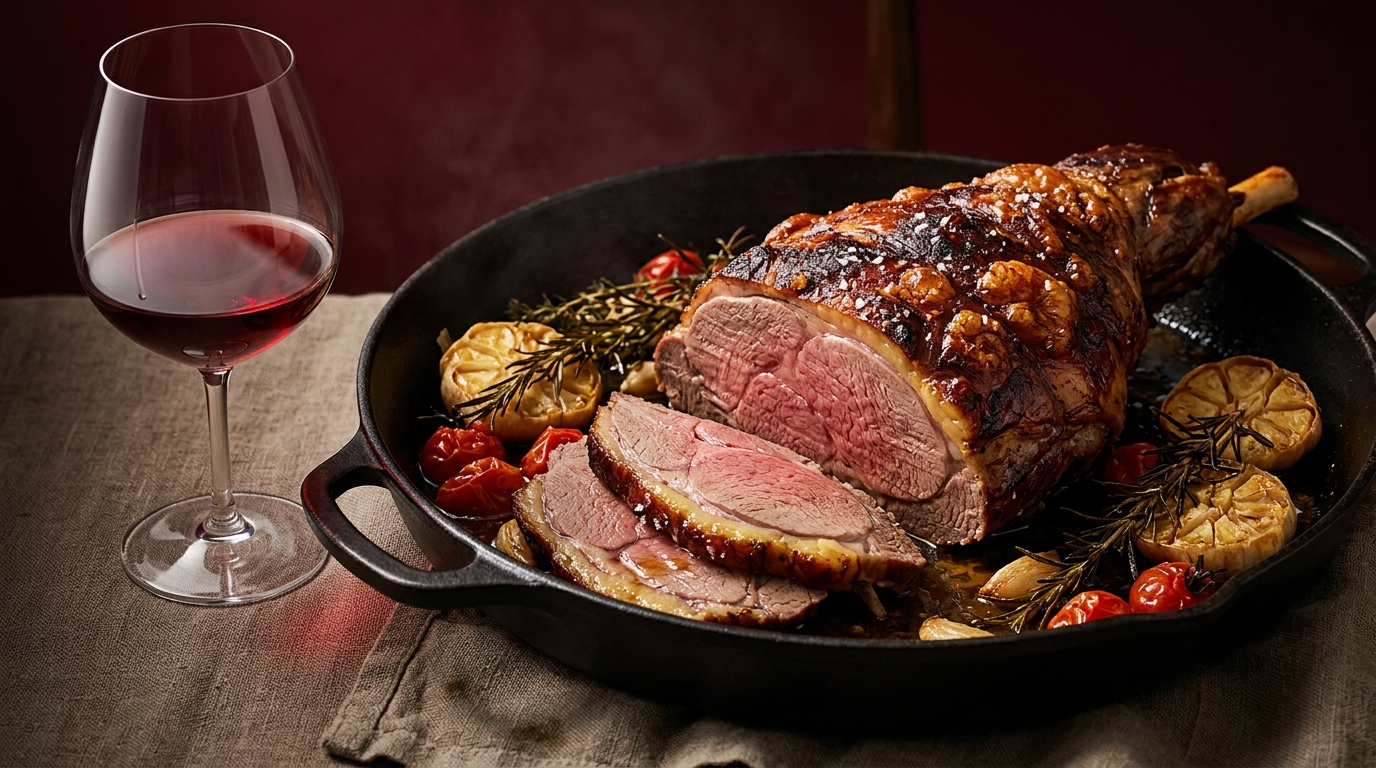
Roast chicken works better than the wine's weight suggests, because there's little astringency to clash with the meat or the fat. Pork shoulder and pork chops with a fruit or mustard sauce are reliable, and sausages with fennel, garlic or paprika are close to a perfect match. Barbecue is another strong one, since the sweet and savoury glaze meets the wine's ripe fruit and sweet spice head on.
Roasted vegetables deserve more attention than they usually get in a pairing list. Eggplant, peppers, squash and tomatoes all take on a caramelised sweetness in the oven that lines up neatly with the fruit in the glass, so a vegetable-heavy Mediterranean table doesn't need a different bottle. Mildly spiced food also does well, because the low tannin means there's nothing in the wine to amplify chilli heat the way a tannic red does.
Where Grenache struggles is delicate food, because a wine with this much alcohol and this little acidity rolls straight over raw fish, briny shellfish or a light salad. Save it for the roasting tray.
How cold should Grenache be, and should you decant it?
Serve Grenache at the cool end of red-wine temperature, around 61 to 64 degrees Fahrenheit, and give a young bottle roughly half an hour of air. Getting the temperature right does more for this grape than for almost any other red, and published advice disagrees enough to be worth sorting out.
Wine Folly's card suggests 60 to 68 degrees, while Decanter's serving-temperature advice puts full-bodied reds between 61 and 64 degrees and adds that cooler is probably better. For Grenache the lower figure is the one to follow, and Decanter explains why: serving red wine too warm accentuates its alcohol and diminishes its acidity, which is precisely the trade a wine above 15 percent cannot afford. Warm Grenache tastes hot and soupy, and the fruit you liked disappears behind the alcohol.
There's a further wrinkle that makes this worse than it sounds. Decanter points out that the US Department of Energy recommends household thermostats be set to 68 degrees, so "room temperature" in an American house is already at or above the top of the acceptable range for any red. Twenty minutes in the fridge before you open the bottle costs nothing and fixes it, and our notes on wine serving temperatures cover the same trick for other styles.
Decanting is optional rather than necessary. Wine Folly suggests about thirty minutes for Grenache, which is a sensible default for a young bottle and enough to soften the alcohol on the nose. Older bottles need a gentler hand, since a wine with fifteen or twenty years on it can lose its aromatics if you knock it about in a decanter. Pour those slowly and drink them without ceremony.
When is Grenache the wrong bottle to open?
Grenache is the wrong choice if you dislike high-alcohol wine, if you want a red with brisk acidity, or if you're pouring for a long lunch. Most write-ups on this grape stop at calling it approachable, so nobody ever tells you who's going to be disappointed by it.
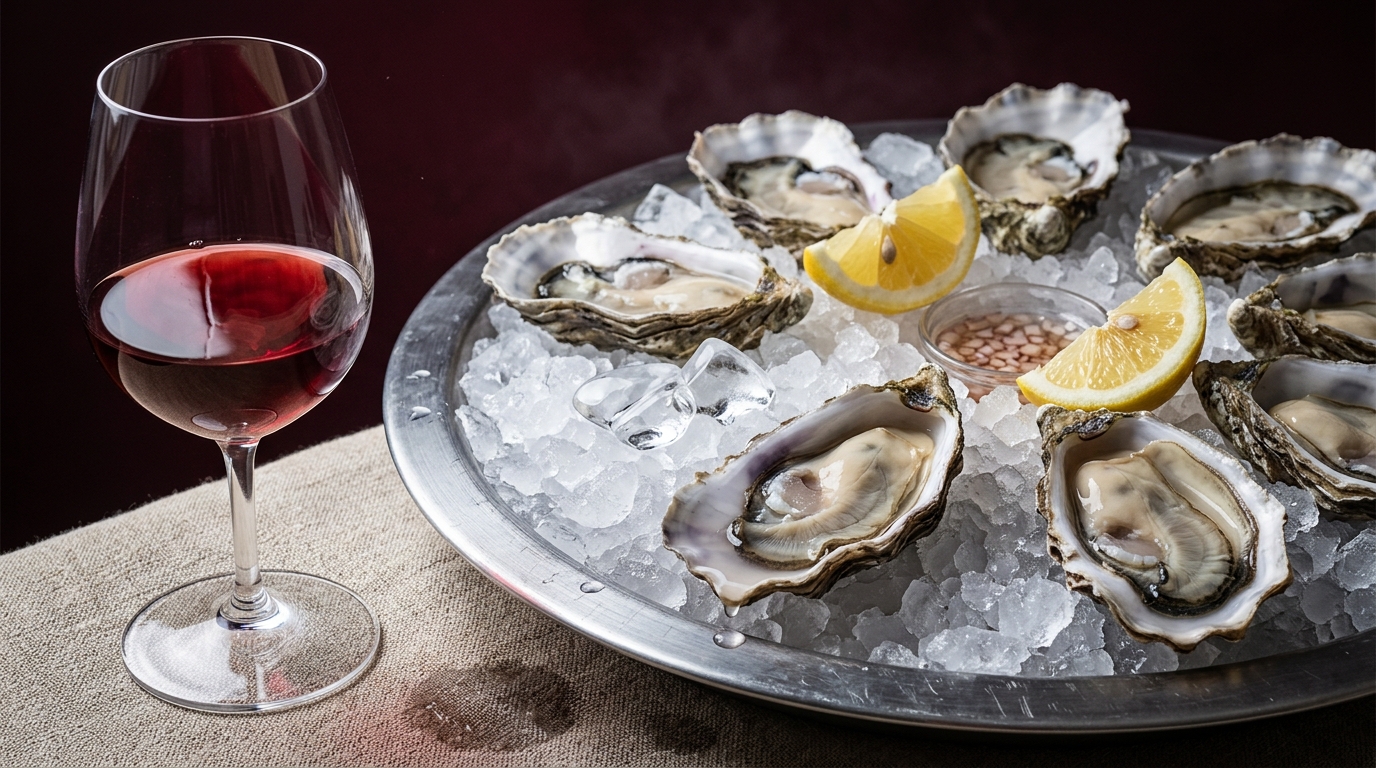
The alcohol is the main issue. A wine that regularly exceeds 15 percent hits harder than the numbers imply, and two generous glasses of Châteauneuf-du-Pape land differently from two glasses of Beaujolais. If you like drinking slowly over three or four hours, this isn't the bottle for it, and there's no shame in reaching for something lighter.
The acidity matters too, and it's why Grenache can feel heavy with certain food. Wines with lower acidity don't cut through fat and salt the way a sharper red does, so a plate of rich pasta or a slab of aged cheese can leave a Grenache tasting flat and syrupy. This is also why the grape gets blended so often, since Syrah and Carignan both push the acidity back up.
The fruit style divides people as well. If your favourite reds are earthy and restrained, the Burgundian end of the spectrum, then Grenache's jammy ripeness may read as too much rather than as generous. Blended southern Rhône wines are the compromise worth trying before you write the grape off entirely, because the Syrah and Mourvèdre pull it in exactly the direction you're after.
Questions people ask about Grenache
What does Grenache wine taste like compared to Pinot Noir?
Both wines lead with red fruit and neither carries heavy tannin, so they get shelved together, but Grenache is riper, rounder and considerably higher in alcohol while Pinot Noir is lighter, more earthy and noticeably fresher on the finish. If you find Pinot Noir a little thin, Grenache is the obvious next step.
Is Grenache the same grape as Garnacha and Cannonau?
Yes, all three names describe the same variety, with Grenache used in France, Garnacha in Spain and Cannonau in Sardinia. Garnacha Tintorera, also sold as Alicante Bouschet, is a different red-fleshed grape and shouldn't be confused with it.
Does the Grenache wine taste change much when it's blended with Syrah?
It does, and usually for the better if you want structure. Syrah adds black pepper, darker fruit and the tannin Grenache lacks, so a GSM blend tastes firmer and more savoury than a straight Grenache and generally holds up longer in the cellar.
How long can you keep a bottle of Grenache?
Most everyday bottles are made to drink young and taste best within a few years of the vintage. Wine Folly puts serious Grenache at ten years or more of cellaring, which applies to old-vine bottlings and structured blends from Châteauneuf-du-Pape, Gigondas and Priorat rather than to an $11 Spanish Garnacha.
Is Grenache a good red wine for a beginner?
It's one of the friendlier reds to start with, since the soft tannins mean nothing in the glass will make you wince. The high alcohol is the one thing to watch, so pour smaller glasses than you would with a lighter wine.
What's the difference between Grenache and Grenache Blanc?
Grenache Blanc is a green-skinned version of the same vine and makes white wine, mostly across southern France, with low acidity, high alcohol and a broad texture. Grenache Gris sits between the two with pale crimson skins.
Where to start with Grenache this weekend
Start with the Spanish bottle rather than the French one. A Garnacha from Campo de Borja or Calatayud at $11 to $15 gives you the grape at its most direct, with no blending partners and no appellation rules in the way, so you learn what Grenache actually tastes like before you spend more. Chill it for twenty minutes, drink it with something roasted, and pay attention to whether the warmth and the ripeness suit you or overwhelm you.
If they suit you, the next stop is a Côtes du Rhône or a Gigondas, where Syrah and Mourvèdre add the structure the Spanish version leaves out. If the ripeness was a bit much, a more Syrah-heavy blend is still the answer. And if the alcohol was the sticking point, that's useful information about your palate rather than a verdict on the grape.
The reason Grenache is worth this effort is that it hides behind more names than almost any other grape, so people drink it constantly without knowing and never build a preference they can act on. Sommy's Taste Profile learns from the bottles you rate rather than the labels you can decode, which means a Côtes du Rhône, a Cannonau and a Calatayud Garnacha all count towards the same picture of your taste. Rate the next few reds you open and the pattern shows up on its own.