Pinot Noir tastes of fresh red fruit, usually cherry, raspberry and strawberry, carried by bright acidity and unusually soft tannin. It's pale in color and light to medium in body, so it feels silky rather than heavy, and older bottles add savory notes of mushroom, tea leaf and forest floor behind the fruit. It's dry, not sweet, even when the fruit smells ripe. Open it when the food is delicate and you want a red that stays out of the way.
That description covers almost every Pinot Noir you'll meet, and yet two bottles of it can taste startlingly different from each other. Understanding why is the difference between buying one you love and buying one you quietly pour away, so it's worth ten minutes of your evening.
What does Pinot Noir taste like?
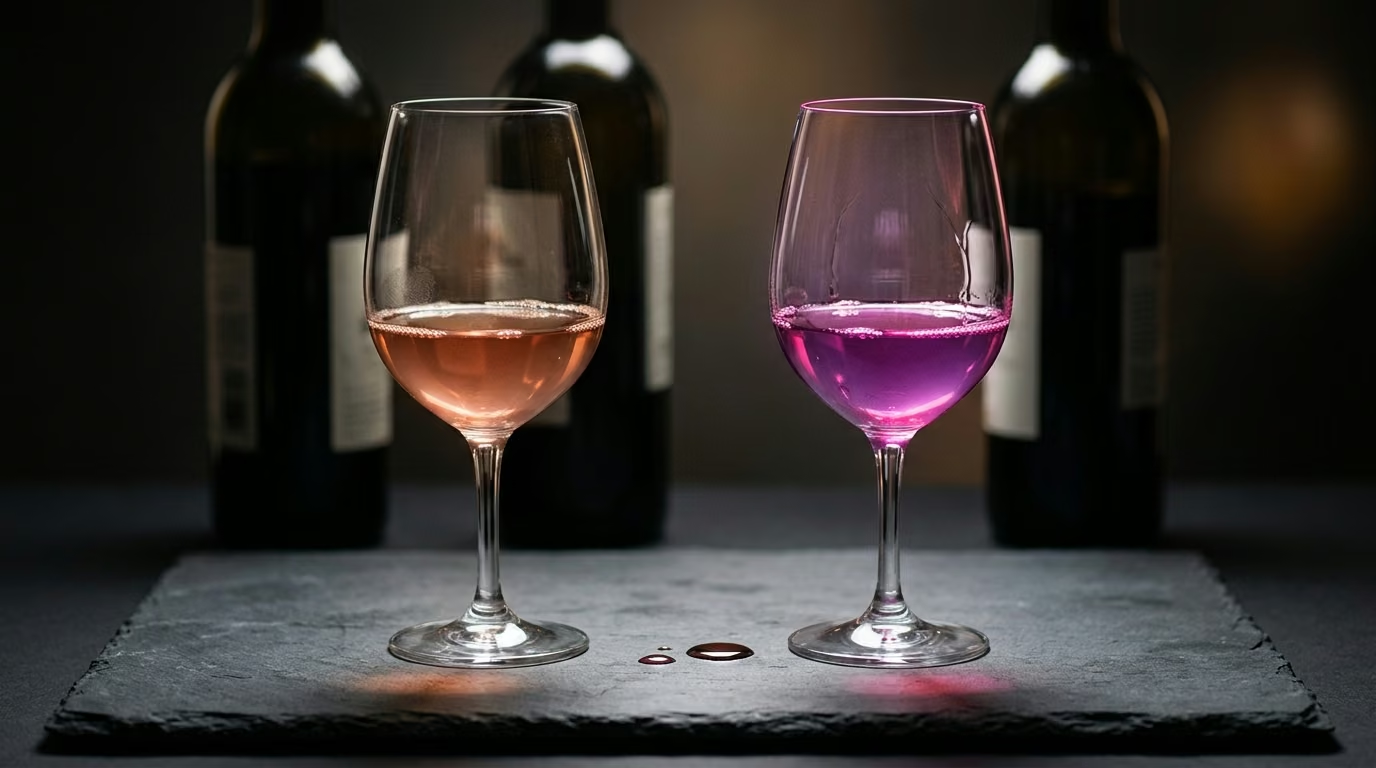
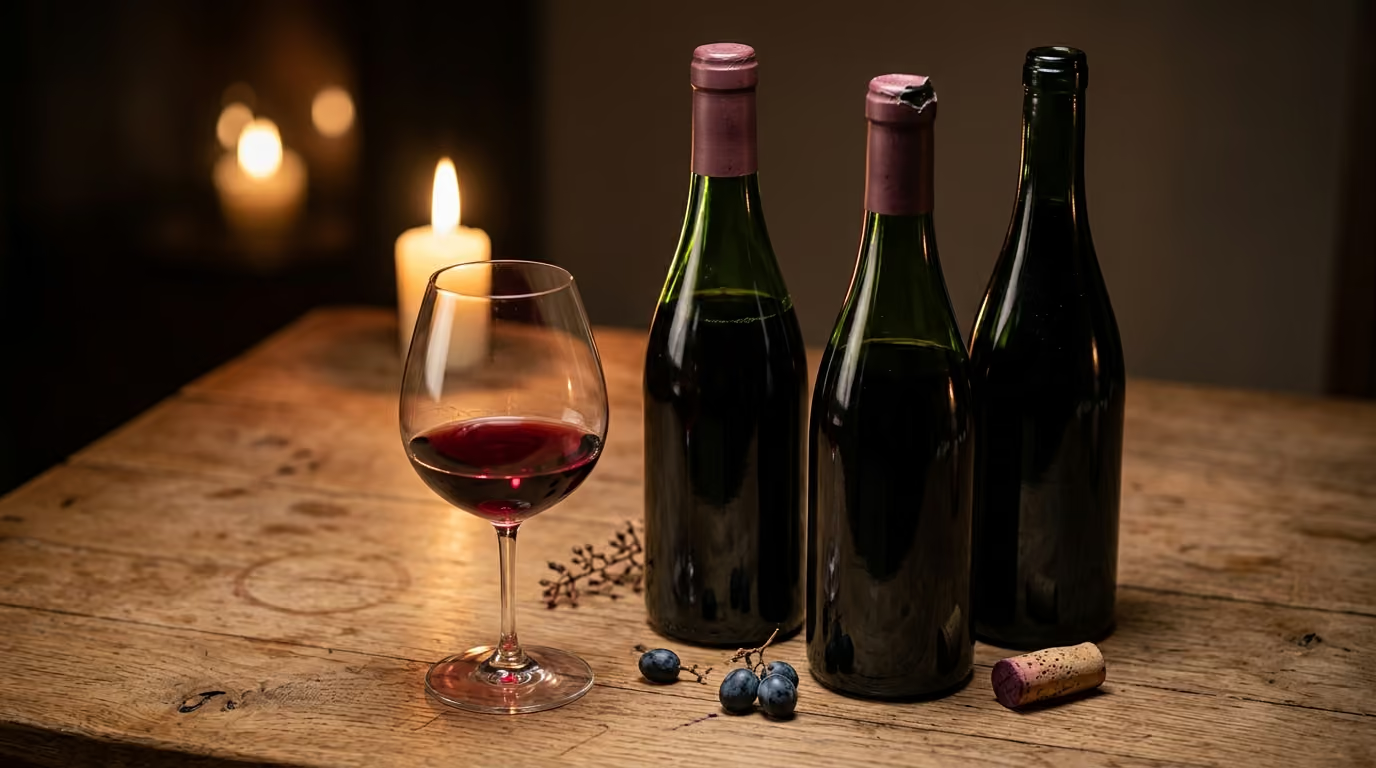
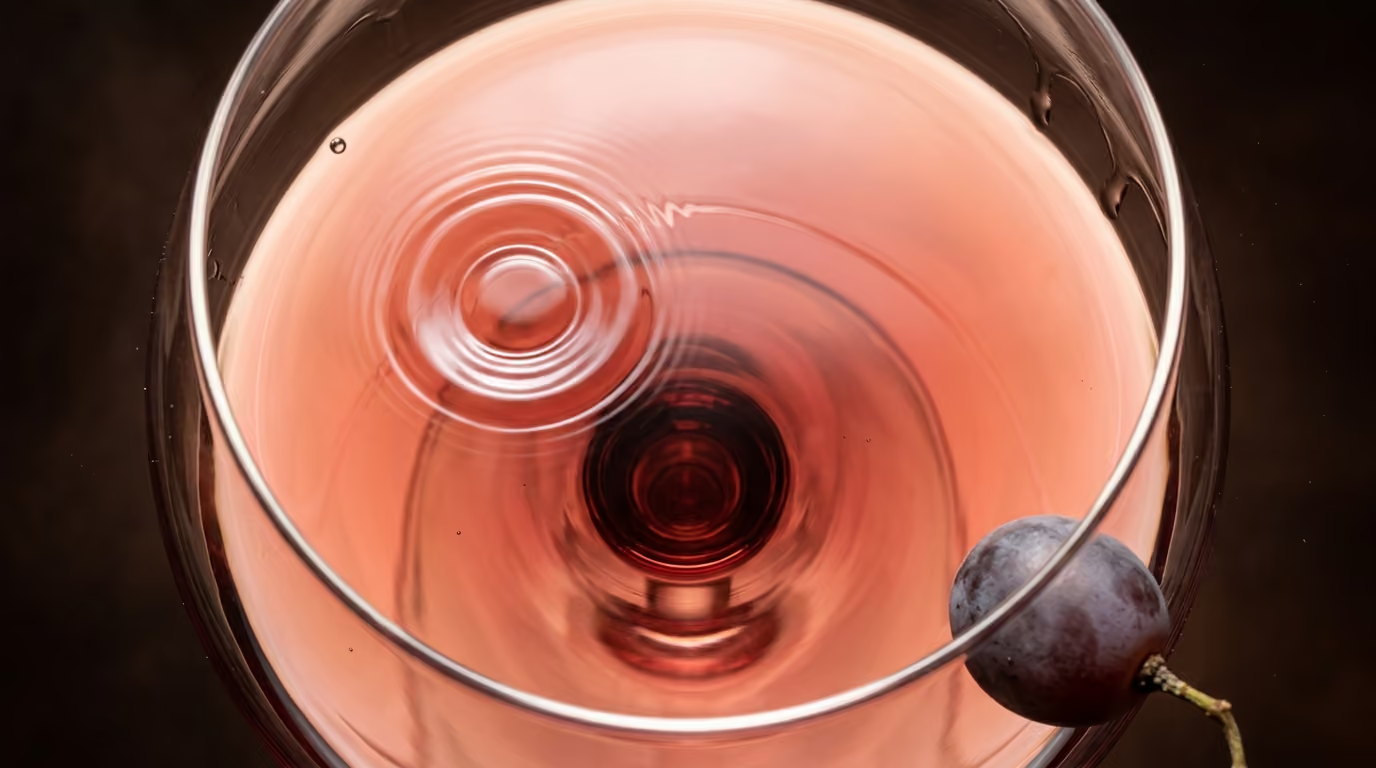
Red fruit leads, and it stays fresh rather than cooked. Young Pinot Noir shows cherry, raspberry and strawberry most often, sometimes with cranberry or pomegranate at the tarter end. The color is a giveaway too, since Pinot pours a pale translucent ruby you can often read a menu through.
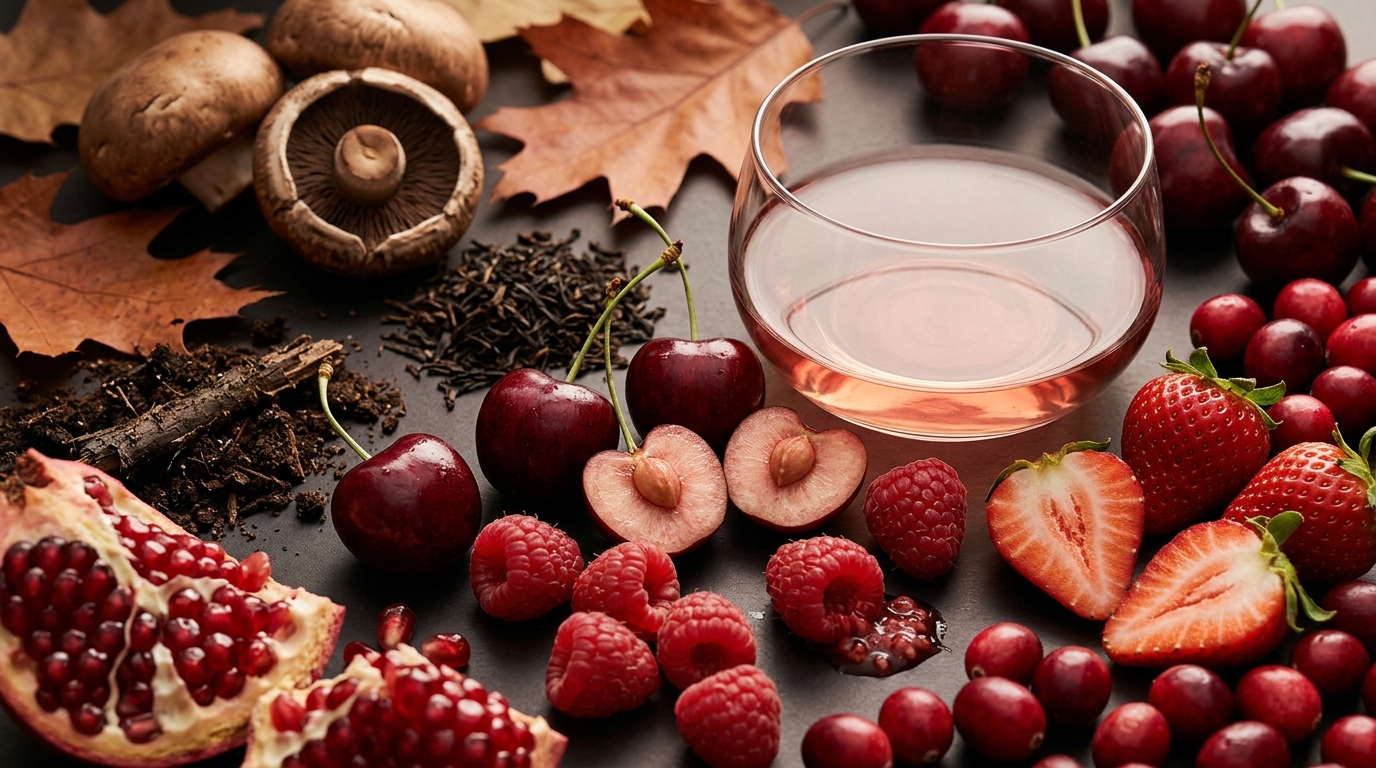
The texture is the reason people fall for it. Pinot Noir grapes have thin skins and low levels of the phenolic compounds that build tannin, so the wine comes out lightly colored, medium-bodied and gentle on your gums. There's no grip, no bitterness, none of the drying sensation that makes a young Cabernet feel like hard work. What holds it together instead is acidity, the bright freshness that keeps each sip lively and makes the wine so good with food. Our explainer on what tannin in wine really is covers why some reds feel rough and this one doesn't.
Age changes it considerably, and this is where Pinot earns its reputation among people who take wine seriously. As the bottle matures, the fresh fruit recedes and vegetal, earthy, faintly farmyard aromas move forward: mushroom, damp leaves, wet soil, black tea, sometimes something closer to a barn. That sounds unappealing written down and tastes wonderful in practice, which is one of the small jokes of wine language. It's also genuinely unpredictable, because Pinot ages unevenly and two bottles from the same case can be in different places.
You'll probably like Pinot Noir if you enjoy fresh berries, roast chicken, mushrooms or any red that doesn't dominate the room. You'll probably find it thin if your usual pour is a plush Napa Cabernet, a jammy red blend or anything you'd describe as bold. Both reactions are completely reasonable, and the useful thing is knowing which one is yours before you spend money. Our comparison of Merlot and Pinot Noir is a good next read if you're weighing up the softer reds.
Why is Pinot Noir so expensive?
Because it's difficult to grow and unforgiving to make. Pinot Noir is widely considered one of the hardest grapes in the world to farm and turn into good wine, and every one of those difficulties costs a producer money that ends up on the price tag.
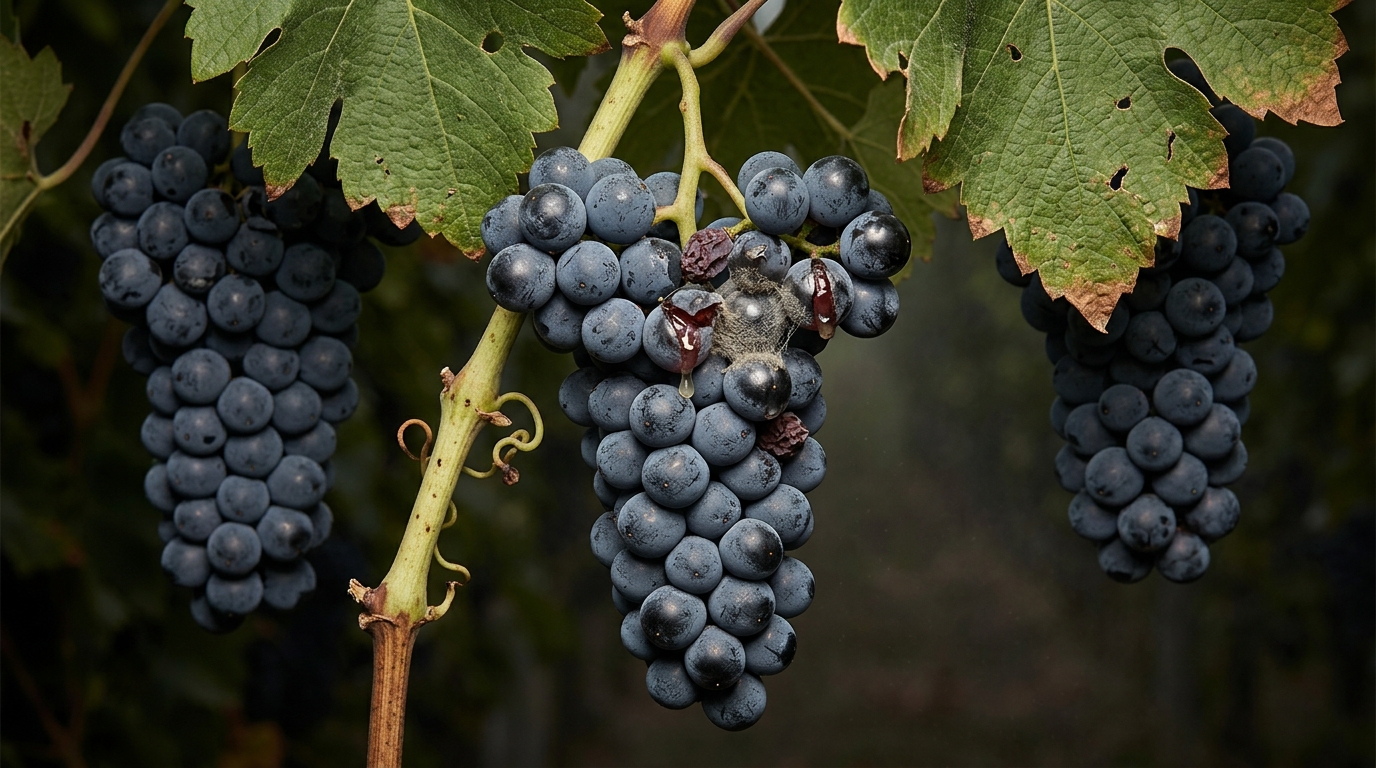
The name itself explains part of the problem. Pinot comes from the French word for pine, because the bunches grow in tight, compact, pinecone-shaped clusters. Packed that closely, the berries trap moisture against each other, which makes the vine highly vulnerable to rot and mildew and forces growers into constant, careful canopy work through the season. Those thin skins that give you such soft tannin also give the fruit very little protection from sun, rain and disease.
It's also fussy about where it will grow at all. Pinot needs a cool climate to keep its acidity and aromatics, but not so cool that the fruit fails to ripen, which leaves a narrow band of suitable places on the planet. Yields have to stay low for the wine to taste of anything. It even mutates readily, so which particular clone a grower planted decades ago still shapes what ends up in your glass today. Researchers sequenced the Pinot Noir genome back in 2007, making it the first fruit crop ever sequenced, which tells you something about how much attention this one grape attracts.
The practical consequence for a shopper is blunt. Cheap Pinot Noir is usually disappointing in a way that cheap Malbec or cheap Shiraz isn't, because there's nowhere for a thin, underripe, over-cropped Pinot to hide. If your budget is tight, you'll often get more pleasure from a different grape and save Pinot for when you can spend a bit more. That's an honest trade-off rather than snobbery.
How does Burgundy Pinot differ from Oregon and California?
Climate and tradition pull them in different directions. Burgundy leans savory and restrained, Oregon lands bright and fresh in the middle, California gives you the ripest and roundest fruit, and New Zealand adds an herbal edge to plenty of dark cherry.
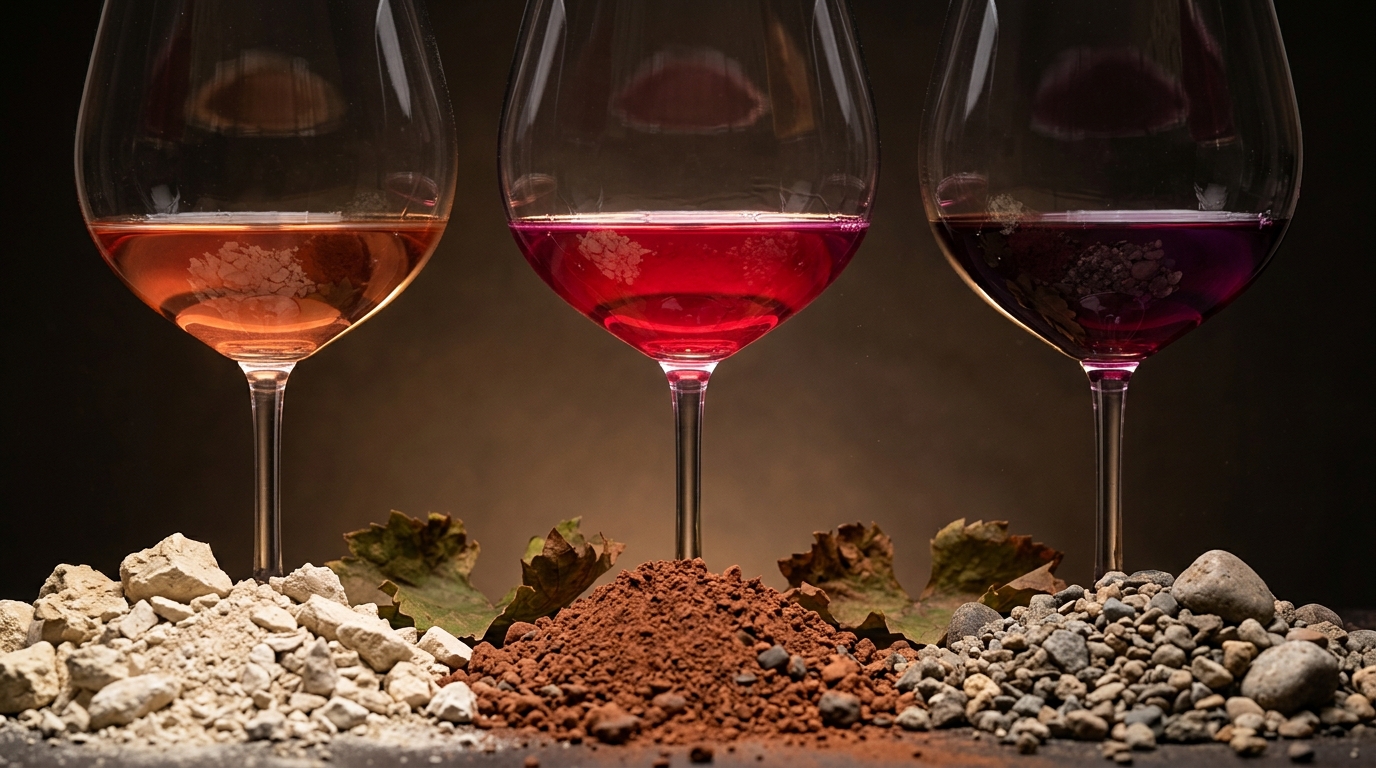
Burgundy, and specifically the Côte-d'Or, is the grape's original home and still the reference point everyone else measures against. Expect fruit that sits behind rather than in front, with dried flowers, mushroom, wet stone and tea leaf sharing the space. Burgundian labels name the vineyard rather than the grape, prices climb steeply, and the wines are genuinely inconsistent between producers, so it's the least predictable place for a first-time buyer to start.
Oregon's Willamette Valley has built a serious reputation over the last few decades and is where a lot of people should begin. The wines tend to keep clear cherry and cranberry fruit while adding herbs, forest floor and a fresh, cool-climate lift. California spreads across a wider range, from the cooler Sonoma Coast, Russian River Valley, Carneros and Anderson Valley to the Santa Lucia Highlands and Sta. Rita Hills further south, and the general direction is riper fruit, rounder texture and a little more sweetness of impression. New Zealand, especially Central Otago, Martinborough and Marlborough, sits somewhere between Oregon and California with a distinctive herbal, almost minty streak.
One more thing worth knowing, because it surprises people. Pinot Noir is the most planted variety used for sparkling wine in Champagne, making up around thirty-eight percent of the vineyard area there. If you've been drinking Champagne, you've been drinking Pinot Noir without realizing it, which is a decent argument for giving the red version a chance.
How do you pick a Pinot Noir at the shop?
Start with the region, since that's the fastest style signal on the label, then set a floor on price rather than a ceiling. Those two moves do more for your odds than anything else on the shelf.
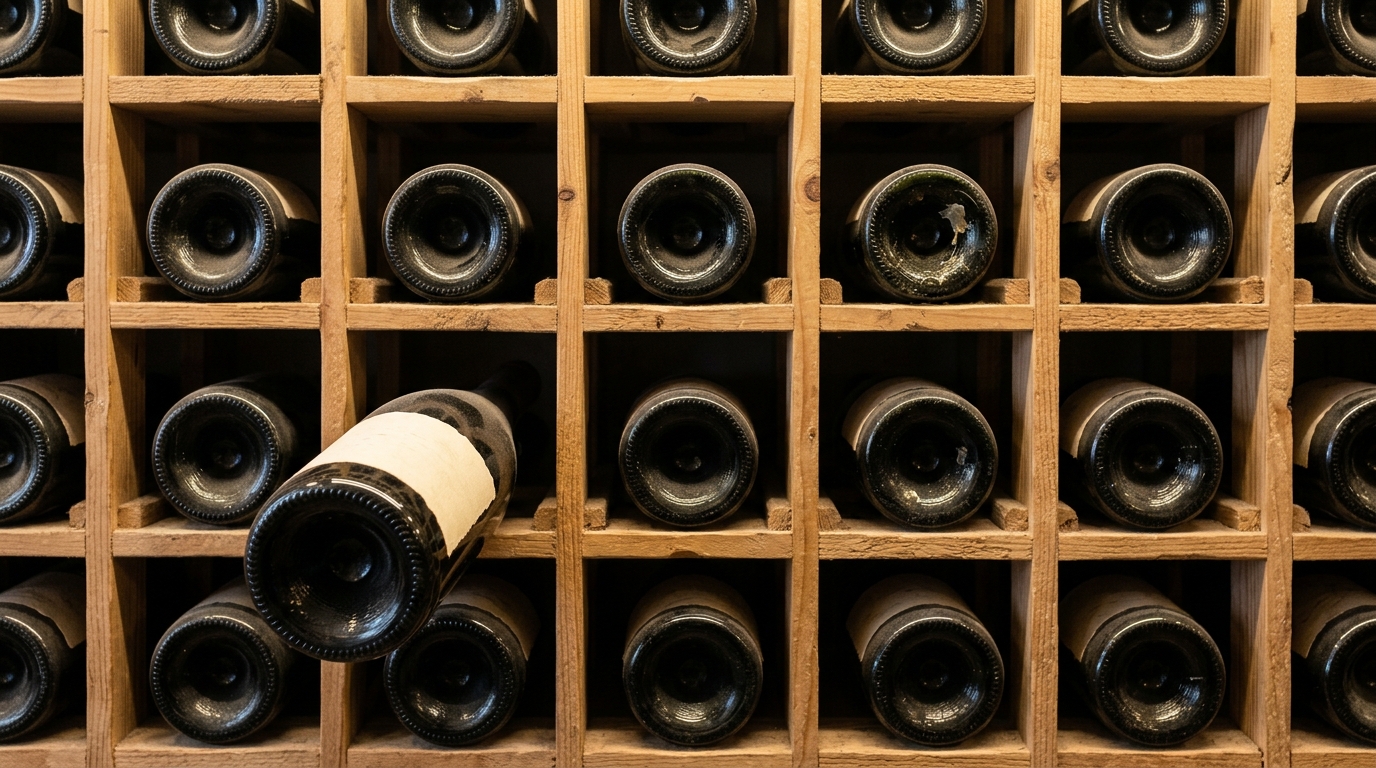
If you want obvious, generous fruit and a soft landing, look for California, and specifically for one of the cooler coastal appellations rather than a bottle that just says California on the front. If you want freshness with a bit of savory character, look for Oregon or New Zealand. If you want the earthy, restrained, layered version and you're ready for it to be a gamble, look for Burgundy and be prepared to spend properly. Reading a label well helps in every one of those cases, and our guide on how to read wine labels covers the terms that actually predict style.
The price floor matters more here than the price ceiling. Very cheap Pinot Noir tends to taste either thin and watery or artificially sweetened to cover the gap, so the bottom shelf is genuinely worth skipping with this grape specifically. Spending a little more buys real fruit concentration instead of dilution, and it's the single change that turns most people's opinion of Pinot Noir around.
Vintage is worth a glance but not an obsession. For everyday drinking, take the most recent year on the shelf unless someone in the shop tells you otherwise. And here's where a personal record pays off: if you loved one Pinot and found the next one thin, that's not bad luck, it's a style difference you can actually name. Sommy's Taste Profile builds a living picture of your palate from every bottle you rate, so those two data points turn into a recommendation instead of a shrug the next time you're standing in the aisle. If you want a wider shortlist to start from, our roundup of the best Pinot Noir bottles is a sensible companion piece.
What food goes with Pinot Noir?
Nearly everything that would be flattened by a bigger red. Pinot Noir's soft tannin means it never turns bitter against tricky ingredients, and its acidity cuts through fat while leaving delicate flavors intact.
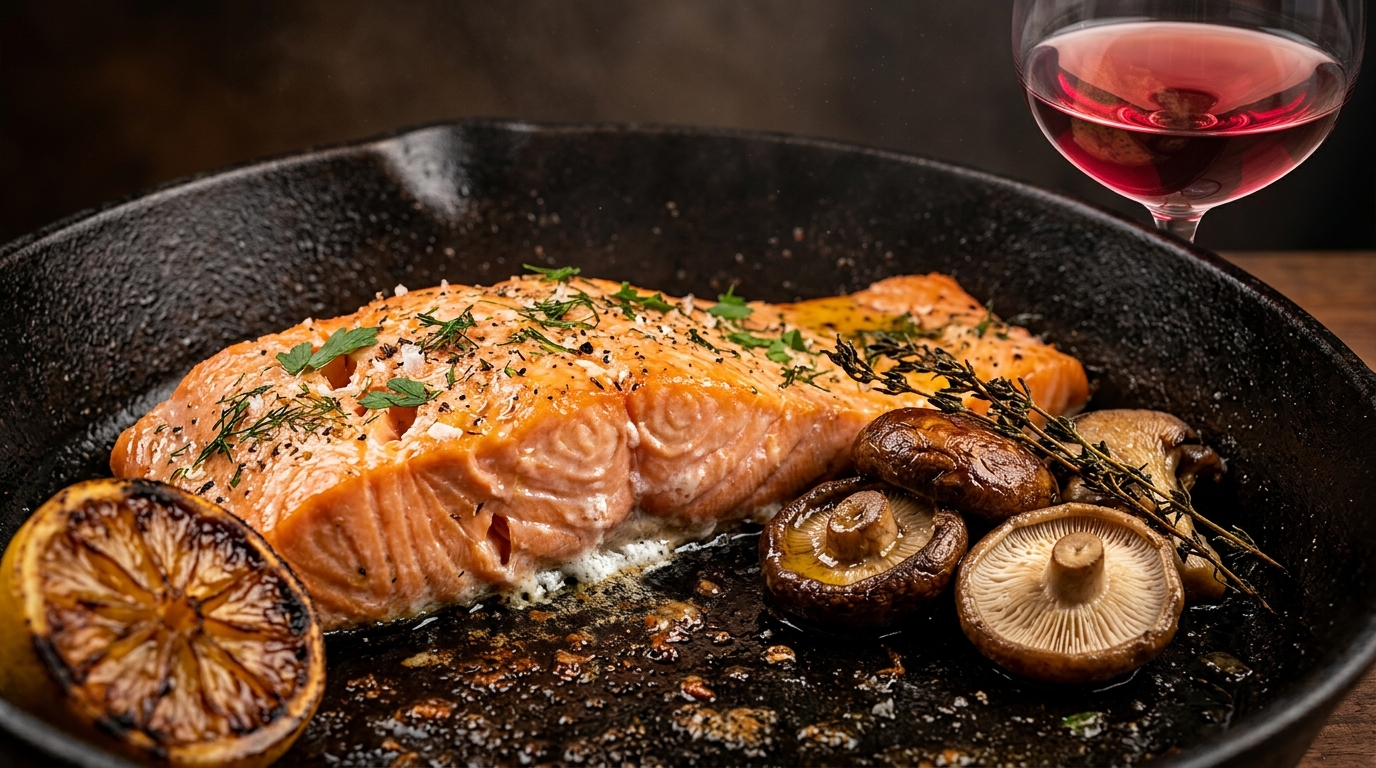
Salmon is the pairing worth knowing first, and it's the classic example of a fish that works with red wine because the oil in it meets the wine's acidity halfway. Roast chicken, turkey, pork tenderloin and duck all sit comfortably in the same range, with duck being the match that makes people understand the grape. Our notes on wine for salmon nights go deeper if that's tonight's dinner.
Mushrooms deserve a mention of their own here. Their savory depth makes tannic reds taste bitter, while Pinot Noir's earthy side meets them halfway and both come out better for it. Anything with mushrooms in it, from a risotto to a simple pan of them in butter, is close to a guaranteed success. Charcuterie, soft and semi-soft cheeses, roasted root vegetables and lentil dishes all work on similar logic.
The things to avoid are the loud ones. Heavy chilli heat overwhelms a wine this delicate, sticky sweet barbecue sauce buries its fruit entirely, and a big charred ribeye will simply walk over it. None of that is a fault in the wine, it's just a mismatch of volume, and the fix is picking a different bottle for those meals rather than a different food for this one.
Frequently asked questions
What does Pinot Noir taste like?
Pinot Noir tastes of fresh cherry, raspberry and strawberry, with bright acidity and very soft tannin giving it a silky, light to medium-bodied feel. Older bottles develop savory mushroom, tea leaf and forest floor notes that sit behind the fruit and add complexity.
Is Pinot Noir sweet?
Pinot Noir is a dry wine with almost no residual sugar. Ripe red fruit aromas can make it seem sweeter than it is, particularly in warmer California styles, but the finish stays dry.
Is Pinot Noir a good wine for beginners?
It's one of the friendliest reds to start with, because its low tannin means nothing about it tastes harsh or bitter. The one caveat is price, since cheap Pinot Noir disappoints more often than cheap examples of other grapes.
Why is Pinot Noir more expensive than other red wines?
The grape grows in tight, compact clusters that trap moisture and invite rot, it has thin skins that offer little protection, and it only ripens well in a narrow band of cool climates. All of that means more work, lower yields and higher costs for the producer.
Should Pinot Noir be chilled?
Give it fifteen to twenty minutes in the fridge before serving, which puts it around 55 to 60 degrees Fahrenheit. Served at modern room temperature it tastes flat and slightly alcoholic, while a light chill sharpens the fruit and the acidity.
What's the difference between Pinot Noir and Merlot?
Merlot is fuller, softer and darker, with plum and chocolate character and a rounder, plusher texture. Pinot Noir is paler, lighter and fresher, with red fruit, more acidity and an earthy savory side that Merlot doesn't have.
Finding the Pinot Noir that suits you
Pinot Noir is pale, fresh, low in tannin and built around red fruit, with an earthy savory character that grows as the bottle ages. The variable that decides whether you love a given bottle is where it grew, so treat the region on the label as your main dial and turn it toward California for ripeness or Burgundy for restraint.
The most useful next step is a two-bottle experiment. Buy one from Oregon and one from a cool California appellation, drink them a week apart with roast chicken, and notice which one you reach back for. That single preference is worth more than any tasting note, because it points straight at the next bottle you'll actually enjoy.