
Is Pinot Noir Sweet? The Sugar Numbers, and What to Buy
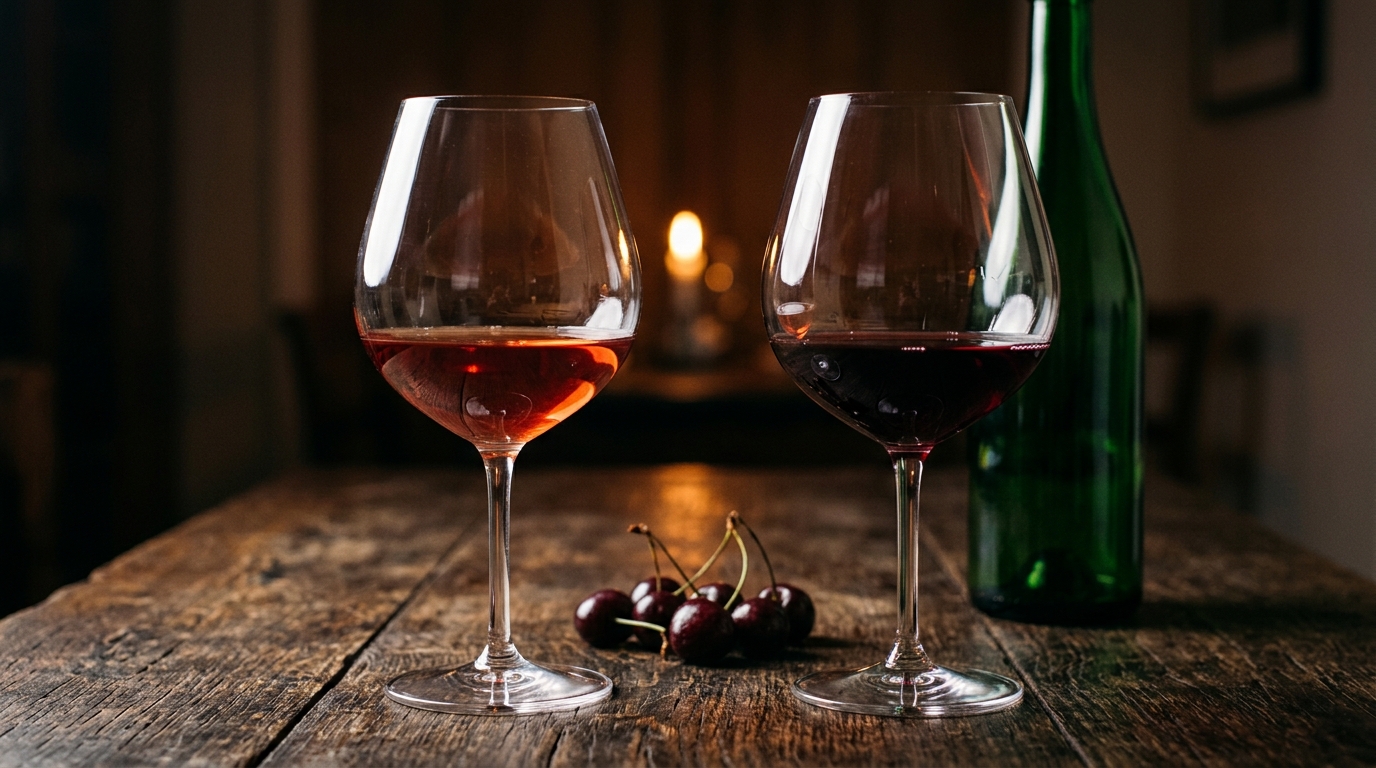
Almost every Pinot Noir you can buy is a dry wine, which means it has next to no sugar left in it. What makes some bottles taste sweet is ripe fruit, softer tannin and a rounder texture, none of which is actual sugar. If you like reds that feel juicy rather than sharp, Pinot Noir can absolutely give you that, but you have to pick the right style of it.
That gap between what a wine measures and what it tastes like is why the question keeps coming up. Nobody searching for a sweet Pinot Noir wants dessert wine with their dinner. They want a red that goes down easily and doesn't dry out their mouth, and the useful answer is about which Pinot Noir to choose rather than a flat correction about sugar.
Is Pinot Noir sweet or dry?
Dry, in the overwhelming majority of cases, and there's a legal number behind that word. Under the EU labelling rules for wine sugar content, a still wine can only be called dry if it carries no more than 4 grams of sugar per litre, or up to 9 grams when the acidity is high enough to balance it. A typical Pinot Noir sits well below even the lower figure.
Put that into a glass rather than a litre and the number gets smaller again. Four grams per litre works out at roughly six tenths of a gram in a five ounce pour, and most Pinot Noir carries a fraction of even that. Yeast eats every gram of sugar in the tank if you leave it alone, so a dry wine is the default outcome and a sweet one takes deliberate work to produce.
The same rules set out where the rest of the scale sits, which is useful because it shows how far Pinot Noir is from anything anyone would call sweet. A still wine can be labelled medium dry up to 12 grams per litre, medium or medium sweet up to 45 grams, and it only earns the word sweet at 45 grams and above. Pinot Noir at 2 grams isn't near the bottom of that scale so much as off the end of it.
There's a second threshold that matters more to your tongue than the legal one does. Our own breakdown of dry versus sweet wine and the numbers that decide it puts the practical dividing line closer to 10 grams per litre, and notes that most people can't consciously taste sweetness below a much higher level than they expect. Plenty of popular wines sit in that gap on purpose, carrying a few grams nobody registers as sugar but everybody registers as smoothness.
Why does a dry Pinot Noir taste sweet to you?
Because your brain reads ripeness, warmth and texture as sweetness, and a glass of wine gives it all three to work with. The sensation is real even when the sugar measurement says there's nothing there.
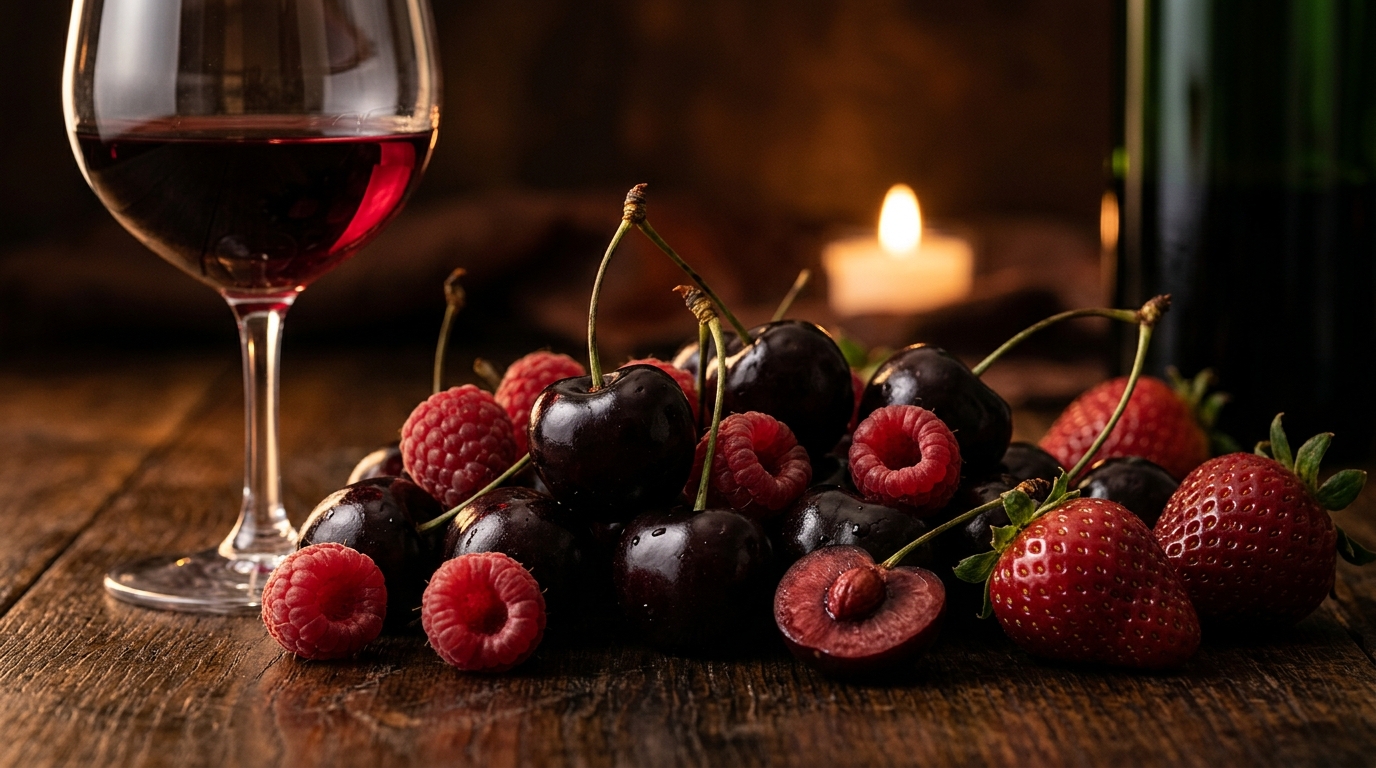
Ripe fruit does most of the work. A cool-climate Pinot Noir tends to smell of cranberry, red currant and sour cherry, which read as tart, while a riper one smells of black cherry, raspberry and jammy strawberry, which read as sweet. No sugar was added in either case, and the difference comes down to how much sun the grapes got and when they were picked. Aroma leads taste far more than most people realise, so a wine that smells like ripe fruit will taste sweeter before it even reaches the middle of your tongue.
Alcohol is the second lever, and it works through texture instead of flavour. A Pinot Noir at the higher end of its range feels broader and warmer across the palate, and that fullness softens the edges of the finish. Many drinkers who say a wine is too dry are describing a thin, angular feel rather than a lack of sugar, and a rounder wine fixes the complaint without a single extra gram.
Oak supplies the third signal, and it's the most literal of the three. Time in barrel gives a wine vanilla, clove, baking spice, toast and sometimes cola, and those are flavours you already associate with things that genuinely are sweet. An oaked Pinot Noir feels friendlier on the first sip for exactly that reason. Acidity then decides whether the whole package reads as bright or as sharp, which is why two wines with identical sugar levels can land completely differently.
Which Pinot Noirs actually taste sweeter?
The riper, warmer-climate ones, and a small number of commercial bottlings that really are sweetened. Those two groups answer different versions of the question, so it's worth knowing which one you're asking.
For the first group, climate is the shortcut. Pinot Noir from Burgundy, Germany, the cooler parts of Oregon and the far edges of the Sonoma Coast tends toward tart red fruit, earth and a firmer finish. Pinot Noir from Monterey, Santa Barbara County, inland California and warmer Australian and Chilean sites tends toward black cherry, plum and a plusher texture. Neither is better made than the other, and if you want the juicy end you want the second list.
The second group is smaller and more interesting. A handful of widely sold Pinot Noirs are finished with genuine residual sugar, deliberately, because the style sells. Meiomi is the one people name most often, and our look at which wines actually taste like Meiomi goes through the sugar figure from its official listing and explains why a standard dry Pinot Noir recommendation tastes thin and sour next to it. If that's the bottle you've been enjoying, you aren't looking for a different Pinot Noir so much as a different sugar level.
Price gives you a rough signal too, though not the one people assume. Inexpensive supermarket Pinot Noir is more likely to be softened with a little sugar and a lot of oak flavouring, because that's what makes a cheap thin wine palatable. Spending more usually buys you precision rather than plushness, so a pricier bottle can easily taste drier and sharper than the one you liked at half the money.
How do you spot the juicier bottle on a shelf or a menu?
Read the style words rather than the grape name, because Pinot Noir is not one thing and the label tells you more than the variety does. The vocabulary splits cleanly once you know which side each word sits on.
| What you see | Points to a leaner style | Points to a riper style |
|---|---|---|
| Region | Burgundy, Germany, cool-coast sites | Monterey, Santa Barbara, inland California |
| Tasting notes | Cranberry, forest floor, mushroom, herbal | Black cherry, raspberry, vanilla, baking spice |
| Descriptive words | Bright, mineral, savory, elegant, taut | Juicy, lush, round, smooth, velvety |
| Stated alcohol | Toward the lower end of the range | Toward the higher end of the range |
| Oak mention | Neutral barrels, unoaked, old oak | Barrel aged, French oak, toasted |
Restaurant wine lists give you less to work with, so ask for what you want instead. Saying "I'd like a Pinot Noir that's juicy and fruit-forward rather than earthy" gets you the right glass far more reliably than asking whether anything is sweet, because the word sweet sends most servers toward dessert wine or toward a bottle you didn't want. Naming the texture works even better than naming the fruit.
You can also settle it before you buy. Fit Check gives you a straight verdict on whether a specific bottle suits your taste, which is the question you're really asking while you stand in the aisle holding two Pinot Noirs that cost the same and tell you nothing. Our guide to reading wine labels without the jargon covers what else on the back label is worth your attention.
What if you actually want a sweet red wine?
Then Pinot Noir is the wrong grape to be arguing with, and there are better answers available. A wine has to carry at least 45 grams of sugar per litre before it can be labelled sweet at all, which is more than ten times what the dry category allows and about twenty times what a normal Pinot Noir contains.
Sweet red styles worth knowing include Lambrusco Dolce, Brachetto d'Acqui, the sweeter Italian red blends sold in American supermarkets, and ruby Port at the fortified end. Each of those is made sweet on purpose rather than by accident, so you get the flavour you wanted without hunting through the Pinot Noir shelf for an outlier bottling that may not exist in your store. Our guide to what makes a good sweet wine walks through the full range by how much sugar each style carries.
There's also a middle path that suits a lot of people better than either extreme. Grenache, Merlot from a warm site, and soft Australian Shiraz all deliver ripe fruit and a rounded finish while staying technically dry, so they scratch the same itch without tipping into dessert territory. If you've been buying Pinot Noir for its silkiness rather than its sweetness, our list of wines similar to Pinot Noir covers the swaps that actually work.
What food goes with a riper Pinot Noir?
Richer and slightly sweet dishes, which is where the juicier style earns its place. Roast pork, duck breast with a fruit sauce, glazed ham, caramelised onions and anything from a barbecue all find a partner in a Pinot Noir that leans plush.
The leaner style wants different food entirely. Roast chicken, salmon, mushroom pasta and soft cheeses suit a wine with more acidity and less weight, because the wine stays out of the way rather than competing. Matching the wine's build to the dish's richness gets you further than memorising a chart, and a riper Pinot Noir with delicate food tends to flatten it.
Temperature is the one adjustment almost everybody gets wrong, and it changes how sweet a wine tastes. A red served too warm reads flat and slightly alcoholic, while a light chill lifts the fruit and makes the whole glass feel fresher. Our Pinot Noir taste guide for first-time buyers has the specifics on how long to give it in the fridge.
Frequently asked questions
Is Pinot Noir sweet or dry?
Pinot Noir is dry in nearly every case, with less than 4 grams of sugar per litre under the standard labelling definition. Ripe fruit flavour and a soft texture can make a dry bottle taste sweet, which is where most of the confusion starts.
Is there such a thing as a sweet Pinot Noir?
A small number of commercial bottlings are finished with noticeable residual sugar, so they genuinely are sweeter than the category norm. They're the exception rather than the rule, and they rarely say so anywhere on the front label.
Which Pinot Noir is the least dry tasting?
Look for warm-climate fruit from places like Monterey or Santa Barbara County, tasting notes that mention black cherry and vanilla, and a stated alcohol at the higher end of the range. Those three signals together point to the plushest style of the grape.
Is Pinot Noir sweeter than Merlot?
They sit at much the same sugar level, since both are made dry, but Merlot usually feels rounder and softer in the mouth because of its fuller body and plummier fruit. If you find Pinot Noir too sharp, Merlot is a sensible next bottle to try.
Does sweet Pinot Noir have more calories?
A few grams of sugar per litre adds almost nothing to the total, because alcohol supplies the large majority of the calories in any wine. A riper, higher alcohol Pinot Noir will carry slightly more energy than a lean one, and the sugar is not the reason.
Why does my Pinot Noir taste sweet when the label says dry?
Ripe fruit aroma, higher alcohol and oak ageing each push your perception toward sweetness without adding any sugar. The wine can also carry a few grams that sit below the level most people consciously detect, which rounds the texture while still measuring as dry.
Finding the Pinot Noir you'll actually enjoy
Pinot Noir is dry, and that's the least useful true thing anyone can tell you about it. The bottle you want is decided by ripeness, alcohol, oak and where the grapes grew, and every one of those is readable on the label once you know which words belong to which style.
Buy toward the warmer regions and the plusher vocabulary if you want a red that feels juicy, and ask for juicy rather than sweet when a server is involved. Getting the style right matters far more than the sugar number, and the sugar number was never what you were asking about.