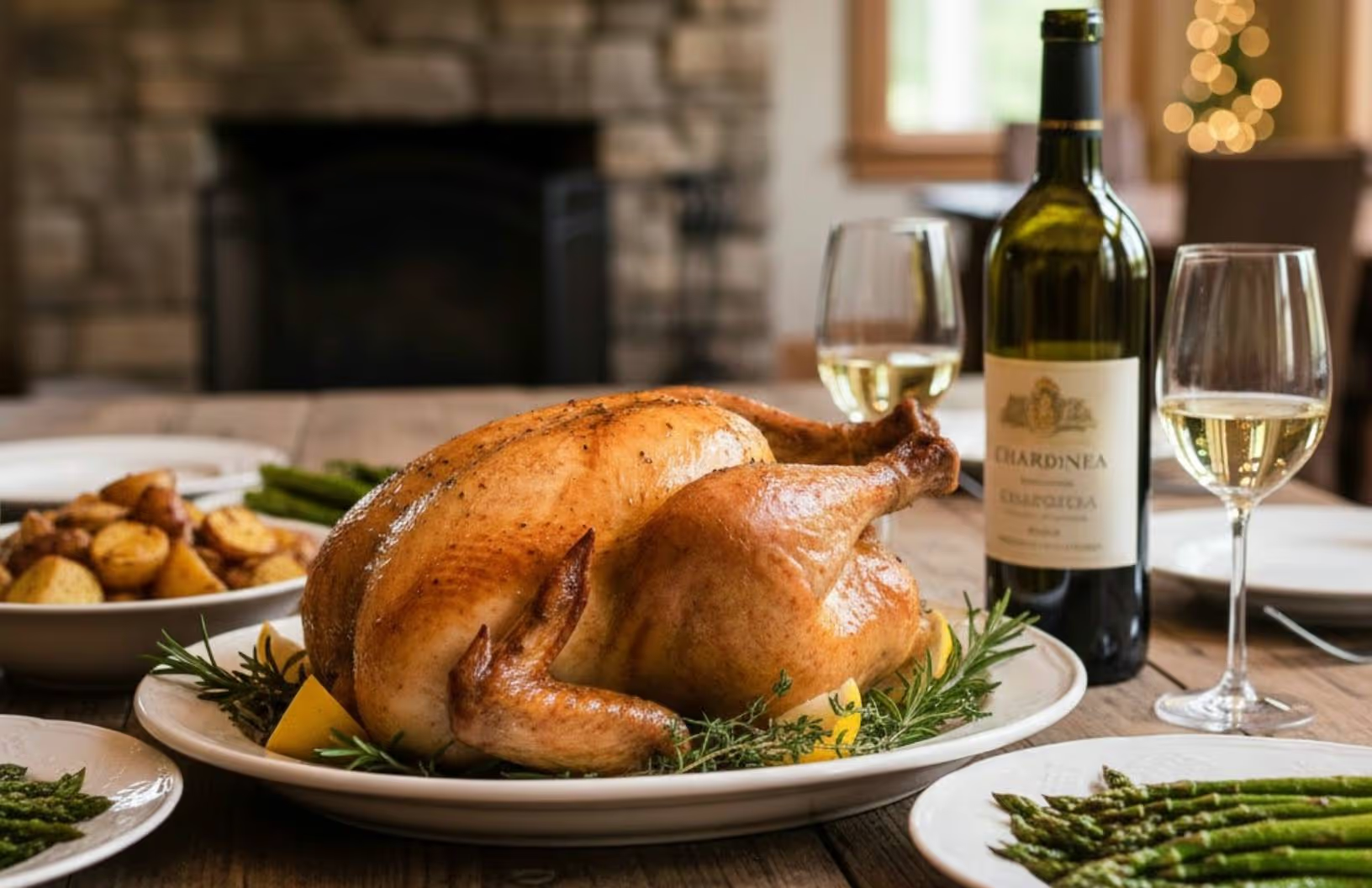

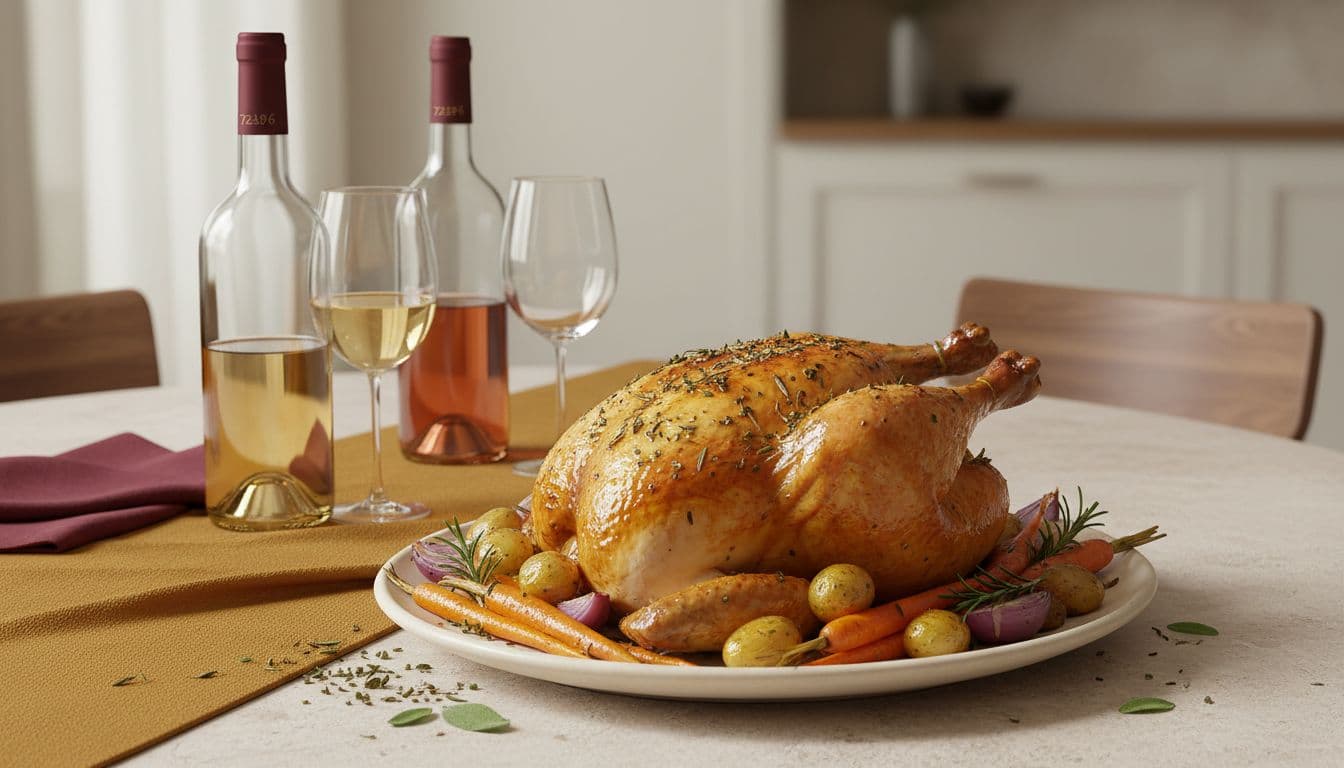
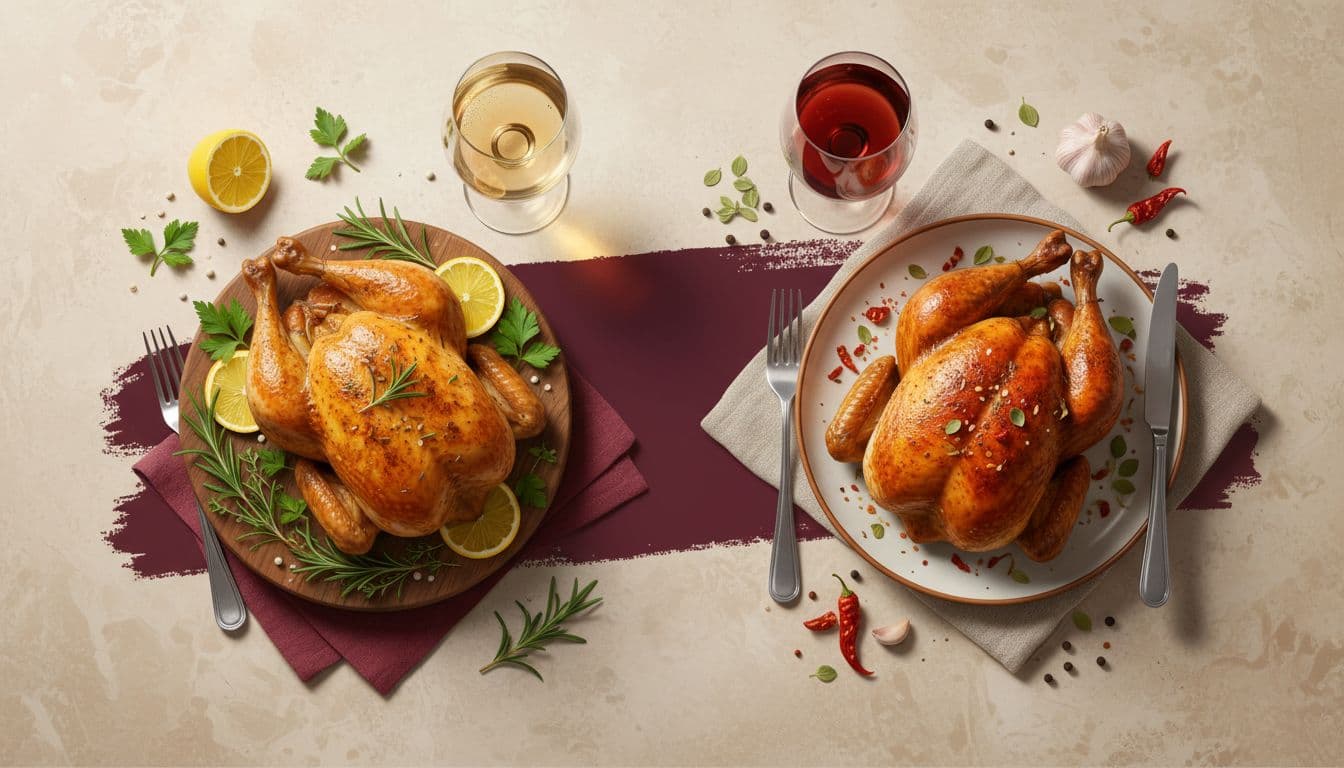
Choose a high-acid white like Chablis, Chenin Blanc or Grüner Veltliner when the chicken is pale and lemony, and a light, high-acid red like Cru Beaujolais or Pinot Noir when the skin is deeply browned and the pan is full of drippings. Roast chicken itself is mild and lean, so the wine isn’t really matching the bird. It’s matching the fat in the skin, the herbs in the rub and whatever roasted alongside it, which is why the same dish can take a white or a red without either being wrong.
Why do sommeliers disagree about roast chicken?
Because roast chicken is close to a blank canvas, and each of them is picturing a different version of it. When Serious Eats put the question to a group of working sommeliers for its roast chicken pairing roundup, the answers came back genuinely contradictory. Roberto Paris of il Buco recommended Pinot Noir with “structure and acidity without too much alcohol, fruit, or tannins that could overpower the meat”, while Caroline Styne of Lucques said the opposite, that “roasted chicken takes on a deep, hearty flavor profile that is perfect for a darker, richer wine”, and reached for Syrah.
Others in the same piece went further afield again, naming an aged Savennières, an oxidative Chardonnay from the Jura, an aged Provence rosé and even Amontillado sherry. None of those answers is wrong, because each sommelier is picturing a slightly different bird. Cara Patricia of Saison made that explicit, saying she looks for savoury character in a wine to meet “the umami flavors or chicken skin and dark meat”, which is a description of a hard-roasted chicken rather than a gently poached one. The useful information isn’t in any single recommendation but in what almost all of those bottles share.
What do the good pairings have in common?
Acidity turns up in nearly every one of their answers. Look across that list of expert picks and the pattern is hard to miss: Grüner Veltliner, Chablis, Cru Beaujolais, Gamay, Barbera, red Burgundy, Savennières and aged dry rosé are all high-acid wines, and several of the sommelier answers say so outright. Andres Loaiza of Aria explained the reasoning plainly in that roundup, describing light to medium bodied reds with higher acid where “the acid levels are great with the fatty elements in the chicken”.
The mechanism behind that is simple enough. Roast chicken is lean meat wrapped in rendered fat and sitting in its own drippings, and acidity is what keeps your palate fresh through a second helping of it. The second shared trait is restraint: almost nothing on the experts’ list is high in alcohol or heavy in oak, because the meat is delicate enough to be buried by either.
Once you know acidity is the requirement, colour becomes a much smaller decision than most pairing guides pretend. A crisp white and a light red can both carry the meal. What decides between them is how dark you took the skin.
What white wine goes with roast chicken?
Chablis is the most dependable white for a classic lemon and herb roast, because it’s Chardonnay grown in a cool enough place to keep its acidity and it’s almost always made without heavy oak. That combination handles the fat without adding weight of its own. If you’re picking Chardonnay from elsewhere, our guide to spotting an unoaked Chardonnay will keep you away from the buttery end of the range, which fights this meal rather than helping it.
Chenin Blanc is the most flexible option on the shelf and worth knowing if your roast varies week to week. It carries apple and honeyed citrus over a firm acid backbone, so it can cope with mustard, tarragon, a squeeze of lemon or a tray of root vegetables without needing you to plan around it. Our piece on whether you’ll like Chenin Blanc covers how much the style shifts between dry and off-dry bottlings.
Grüner Veltliner is the sommelier favourite that home cooks rarely reach for, and it suits a herb-heavy bird particularly well. Matthew Carroll of BRABO told Serious Eats he leans on richer Austrian Grüner because it’s “very forgiving of different spice and seasoning treatments”, which is a fair description of what most people actually want on a Sunday. Vermentino is the other one to look for when rosemary and lemon zest lead the rub, and we compare it with a close cousin in Albariño versus Vermentino.
When should you pour a red instead?
Pour red when the skin is deep golden brown and the pan has real drippings in it, because that roasted, savoury character gives a light red something to hold onto. The rule is to keep the tannin low and the acidity high, which points at a fairly specific group of wines rather than red in general.
Pinot Noir is the standard answer and deserves the reputation, since it brings cherry fruit and a dry finish that sits beside browned skin without flattening it. If you’re new to the grape, our Pinot Noir taste guide explains how much the style swings between regions. Cru Beaujolais is the pick several sommeliers reached for independently, and Gamay more broadly is worth trying if you like juicy red fruit, which we cover in our guide to Gamay.
Barbera is the third option and the one most likely to be cheap and good at the same time. It comes from Piedmont in north-west Italy, it’s naturally high in acidity and naturally low in tannin, and that combination is close to a perfect description of what roast chicken wants from a red. It rarely costs what a decent Burgundy costs, which matters if the roast is a weekly habit rather than an occasion.
Whichever light red you open, give it 15 to 20 minutes in the fridge before pouring. Served at room temperature these wines turn soft and slightly alcoholic on the nose, and a short chill tightens them up so the acidity does its job against the fat.
How do the rub and the vegetables change the pick?
They decide it, more than the chicken does. A lemon and parsley bird with green beans is a different meal from a paprika-rubbed one served with mushrooms, even though both are roast chicken. This table covers the four combinations most Sunday tables actually produce.
| Rub and skin | On the tray | Pour this | What to ask for |
|---|---|---|---|
| Lemon, thyme, parsley, pale skin | Potatoes, green beans | Chablis, Vermentino or dry Chenin Blanc | A crisp white with no oak |
| Rosemary, sage, garlic, golden skin | Carrots, onions, fennel | Grüner Veltliner or lightly oaked Chardonnay | A white with some texture, not buttery |
| Paprika, pepper, smoky and dark | Mushrooms, Brussels sprouts | Pinot Noir, Cru Beaujolais or Barbera | A light red with high acidity |
| Heavily browned with lots of drippings | Root vegetables and gravy | Red Burgundy or an oxidative Jura Chardonnay | Something savoury rather than fruity |
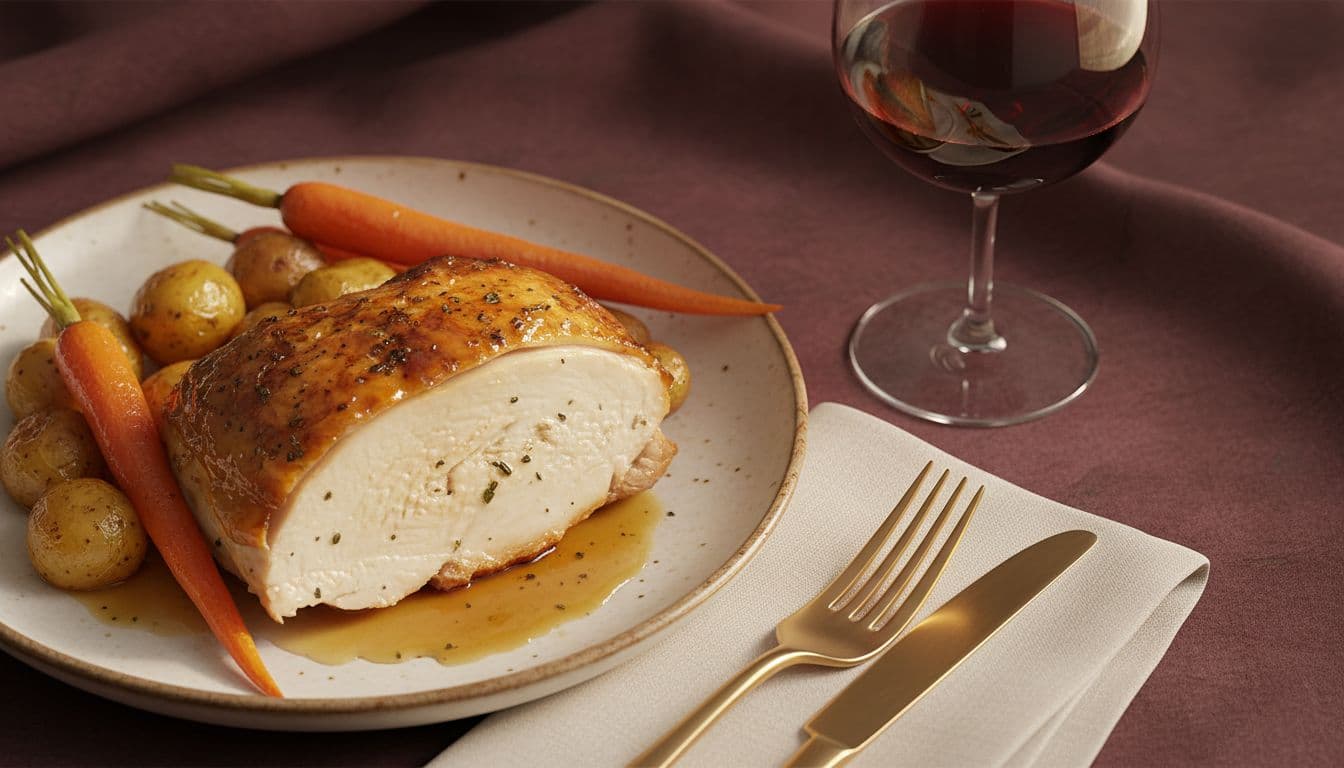
Root vegetables are the detail most people overlook. Carrots, parsnips and onions all caramelise as they roast and add real sweetness to the plate, which makes an austere, bone-dry white taste thinner than it should. That’s the point at which a fuller white or a light red starts to make more sense than the crisp bottle you might have defaulted to.
What should you buy at the supermarket?
Start from the region rather than the grape, because region is the fastest proxy for acidity on a supermarket shelf. Chablis, Sancerre, Muscadet and Austrian Grüner are all cool-climate whites that arrive with their acidity intact, and Beaujolais, Burgundy and northern Italian reds do the same job in red. You don’t have to know why those places work, only that they reliably do.
The alcohol percentage is the next thing to check. Anything from about 12 to 13.5 percent is comfortable territory for this meal, while a red at 15 percent will overwhelm the chicken no matter how well it’s made. Then read the shelf tag or back label for the words that signal the wrong direction: buttery, rich, bold, jammy and heavily oaked are all cues to keep walking for a roast chicken dinner.
If you’d rather buy one bottle that works across several weeknight dinners, a dry Chenin Blanc or a Cru Beaujolais will carry more meals than almost anything else. That flexibility is the same reason both turn up in our sheet-pan dinner pairings, where the vegetables change constantly and the wine has to keep up.
What should you ask for in a restaurant?
Describe the acidity and the weight you want rather than naming a grape, since the list may not carry your first choice. Asking for a crisp white with no oak, or a light red with bright acidity that can take a slight chill, gives a server enough to work with and tends to produce a better bottle than asking for something expensive.
It’s also fair to mention how the chicken is cooked if you know. A roast chicken served with a rich pan sauce or under a blanket of gravy genuinely wants a different wine from one served with lemon and salad, and any competent server will use that detail. If the recommendation comes back as a big Cabernet Sauvignon, it’s reasonable to ask for something lighter with more acidity instead. A by-the-glass pour is the low-risk way to test this, and ordering one glass of white and one of light red for the table settles the argument faster than any pairing chart will.
Does the cooking method change anything?
It changes the pairing as much as the rub does, because different methods produce different amounts of browning and fat. A spatchcocked bird roasted hot and fast develops far more crisp, dark skin than a chicken cooked low and covered, which pushes it toward the red end of the range even with a plain salt and pepper seasoning.
Poached or steamed chicken goes the other way entirely and wants the leanest, crispest white you can find, since there’s no browning and very little rendered fat for a red to work against. A rotisserie bird from the supermarket usually sits in the middle, well browned but often quite salty, which suits a wine with obvious acidity and a little fruit rather than a very austere one.
Match the rub and the pan, not the bird
The reason expert answers to this question look so scattered is that they’re all correct for the version of the dish each person had in mind. Roast chicken doesn’t impose a wine on you, it just asks for acidity and a bottle that isn’t too heavy. Lemon and green herbs point toward a crisp white, deep browning and pan drippings point toward a light red with high acidity, and caramelised root vegetables nudge you toward something with a bit more body either way.
That still leaves the part no pairing guide can settle, which is whether you’ll personally prefer the Chablis or the Beaujolais with the same plate of food. Sommy learns what you actually like as you record what you drink, then makes personalised wine recommendations for the meal in front of you rather than for the average reader of an article.
Questions people ask about wine with roast chicken
Is white or red wine better with roast chicken?
Both work, and the deciding factor is how dark the skin is and how much fat is in the pan. A pale, lemony bird suits a crisp white like Chablis or Chenin Blanc, while a deeply browned one with plenty of drippings suits a light, high-acid red such as Pinot Noir or Cru Beaujolais.
What is the single safest bottle for roast chicken?
A dry Chenin Blanc is probably the most forgiving choice, because it has the acidity the meal needs and enough texture to handle herbs, root vegetables and pan sauce. Chablis is a close second if you prefer something leaner and more mineral in character.
Can I drink Chardonnay with roast chicken?
Yes, though the style matters more than the grape name. An unoaked or lightly oaked Chardonnay works nicely, while a heavily oaked, buttery version adds richness on top of an already rich dish and tends to flatten the chicken rather than lift it.
Should I chill red wine for roast chicken?
A short chill of 15 to 20 minutes helps most light reds considerably. It tightens the acidity and keeps the alcohol from dominating the nose, which is exactly what you want alongside a fatty, savoury roast.
Does the wine choice change if I make gravy?
Gravy pushes the pairing toward red or toward a fuller, more savoury white. The concentrated pan juices add depth and salt that a very light, crisp white can struggle against, so a red Burgundy or an oxidative Chardonnay from the Jura becomes a better match.
What wine goes with roast chicken and stuffing?
Stuffing adds herbs, bread and usually onion, which all point toward a wine with some texture rather than a lean one. A richer Grüner Veltliner or a lightly oaked Chardonnay handles it well, and a Cru Beaujolais works if you’d rather pour red.