

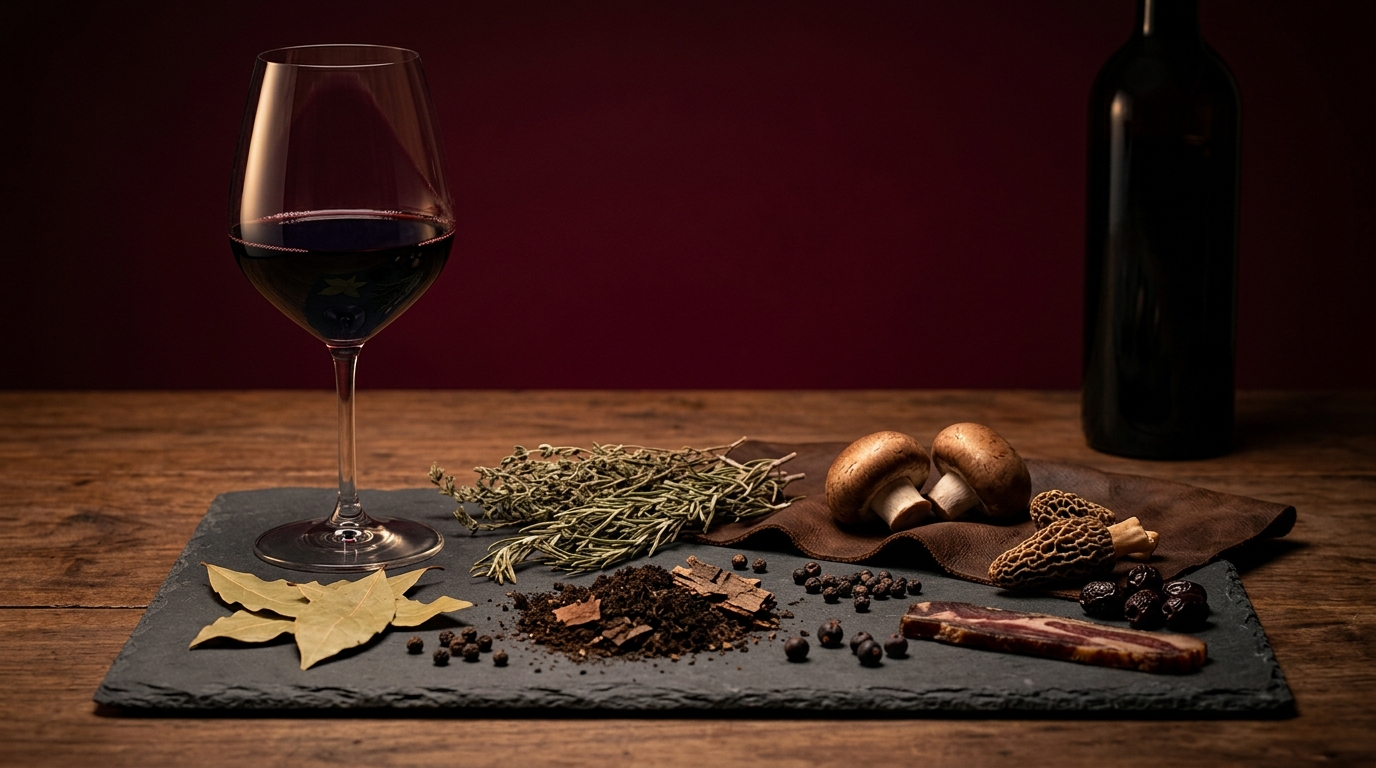
Mourvèdre is a dark, full-bodied red grape that tastes of blackberry and plum wrapped around something savory, closer to dried herbs, black pepper and cured meat than to sweet fruit. It carries firm tannin and a warm finish. If you enjoy Syrah but wish it had more grip and a wilder streak, this is probably your next bottle.
There's a catch, and it explains why most people have never knowingly bought one. The word Mourvèdre rarely appears on the label. The grape travels under three different names and hides inside several famous blends, so plenty of readers have already drunk it without ever seeing it written down anywhere.
So this guide covers the taste first, then spends most of its time on the part other guides skip. Finding the bottle is the hard bit.
What does Mourvèdre wine taste like?
Think dark fruit with a savory shadow behind it. Blackberry, black plum and black cherry sit at the front, and behind them you'll usually catch dried herbs, black pepper, olive, leather or something that reads as roast meat. Wine writer Jancis Robinson describes Mourvèdre as showing wild game or earthy notes alongside soft red fruit, which is a fair summary of why the grape divides people.
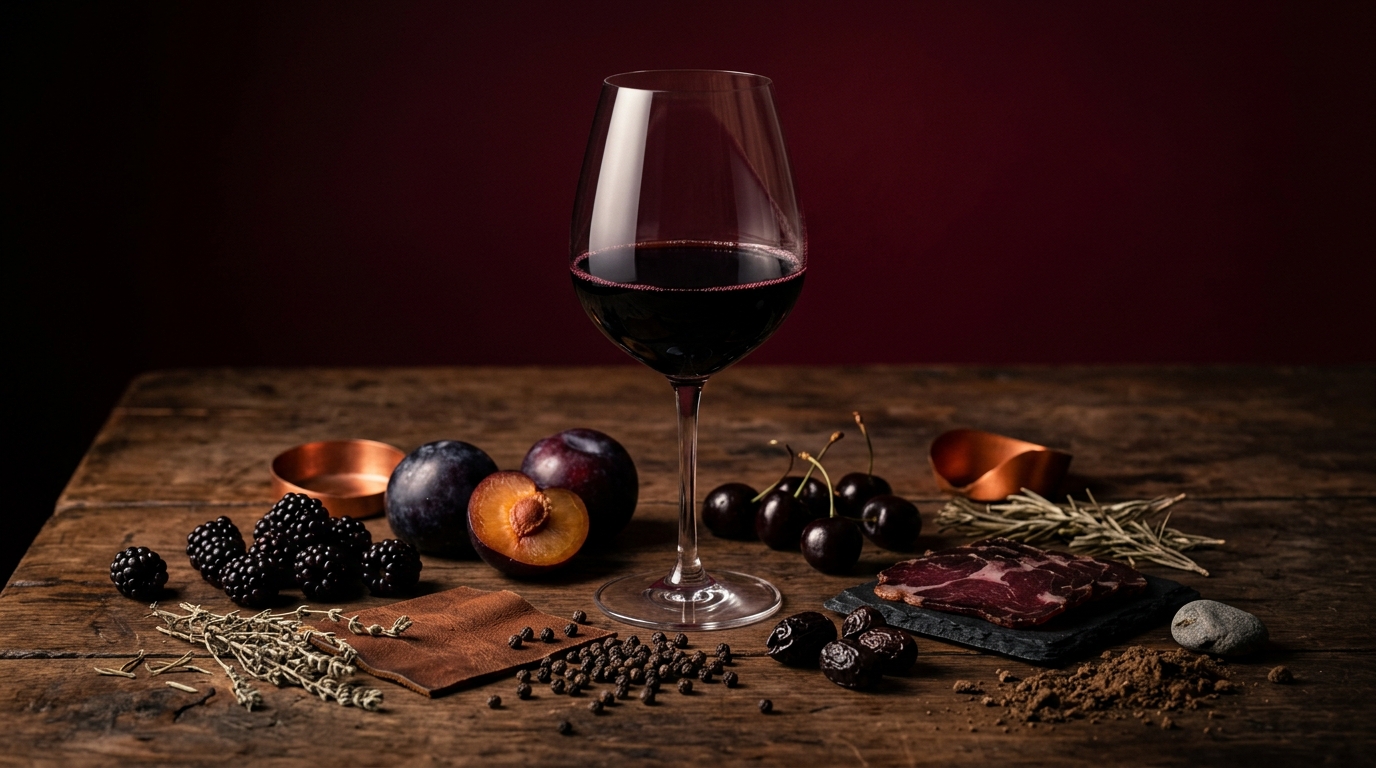
That savory edge is the whole point of the grape. It's what makes Mourvèdre feel like a dinner wine rather than a sipping wine, and it's why the bottle tends to come alive next to food with char on it.
How strongly that edge shows depends almost entirely on where the grapes grew. Warm Spanish sites push the fruit forward and keep the savory note as a background hum. Cooler coastal sites in Provence do the reverse, so the herbs and the leather step in front of the fruit. Oak ageing can layer in cedar or baking spice as well, though that's a decision the winemaker made rather than something the grape does on its own.
The texture matters as much as the flavor
Mourvèdre is thick-skinned and ripens late, so it needs real heat to finish properly. The result is a wine that tends toward high tannin and high alcohol, usually somewhere between 12 and 15 percent. Tannin is the drying, slightly grippy feeling you get from strong black tea, and Mourvèdre has plenty of it. Our guide to what tannin actually is is worth two minutes if that word has always been fuzzy.
Medium to high acidity keeps the weight from turning heavy. The wine is dry almost every time, even when the fruit smells ripe enough to suggest otherwise. Ripeness and sweetness are different things, and Mourvèdre is a good place to learn the difference.
Why does the label almost never say Mourvèdre?
Here is the part that trips everyone up. Mourvèdre is bottled under at least three grape names and two place names, and it's a major component of blends that never name their grapes at all. You can walk past six bottles of it in a shop and not spot one.
The grape almost certainly started on the Mediterranean coast of Spain, probably carried to Valencia by Phoenician traders around 500 BC. The French name comes from Murviedro, a town near Valencia now called Sagunt. The name Mataro comes from Mataró in Catalonia, near Barcelona. Spain itself settled on a third name, Monastrell, for reasons nobody has ever pinned down.
The three names, and who uses which
Monastrell is what you'll see across Spain, especially in the Jumilla, Yecla, Bullas, Alicante and Valencia appellations. Mataro turns up on Australian bottles and on some older Californian ones. Mourvèdre is the French name, and it's also the one California and Washington producers generally use today.
If grape names on labels are a recurring puzzle for you, our explainer on what wine varietals are covers the wider rule this grape keeps breaking.
Then there are the bottles that name a place instead
Bandol, a small appellation on the Provence coast, is the one French wine genuinely dominated by this grape. The rules require at least 50 percent Mourvèdre in both the red and the rosé, and most producers go well beyond that, with Grenache and Cinsault filling the rest. Syrah and Carignan are capped at 15 percent between them. Roughly seven in ten Bandol bottles are red.
The label on that bottle will say Bandol, and it won't say Mourvèdre anywhere on the front or the back. Same story in Châteauneuf-du-Pape and across the southern Rhône, where the grape does quiet structural work inside blends named after their village.
And the blends that hide it in an acronym
GSM stands for Grenache, Syrah and Mourvèdre, and you'll find it on bottles from southern France, South Australia, California and South Africa. Grenache brings the sweet red fruit and the warmth. Syrah brings pepper and dark berry. Mourvèdre brings the backbone and the savory note that stops the whole thing tasting like jam. Our guide to how Grenache tastes is a useful companion here, since the two grapes are so often in the same bottle.
This is exactly the moment Sommy's Label Scan was built for. Point your phone at a bottle or a whole shelf and it reads what's actually in there, including the grapes a place name is quietly hiding from you.
Monastrell, Bandol, or a GSM: which should you buy first?
Your answer depends on how much of the savory character you want on day one. The three main routes into this grape genuinely taste different, and picking the wrong one first is how people decide they dislike Mourvèdre.
| Route in | What it tastes like | Best if |
|---|---|---|
| Spanish Monastrell (Jumilla, Yecla, Bullas) | Ripe, warm, generous black fruit with a soft savory edge | You want the friendliest version, and the best value on the shelf |
| GSM blend (Rhône, Australia, California) | Grenache softens it, Syrah adds pepper, Mourvèdre adds grip | You're curious but not sure you want the full savory hit |
| Bandol (Provence) | Structured, herbal, firm, built to age for years | You already like earthy reds and you're cooking something serious |
Spain grows far more of this grape than anywhere else, and its warm, dry southeast is where Monastrell gets ripe enough to taste generous rather than stern. That combination of ripeness and volume is why Spanish bottles are usually the best value of the three routes, and why they're the sensible first purchase.
Bandol sits at the other end. It's a small appellation making a serious, slow wine, and it's priced accordingly. Expect to pay several times what a good Jumilla costs, which is the clearest price gap inside this grape. Buy one when you already know you like the style, rather than as an experiment.
That gap is worth understanding before you shop, because price here tracks scarcity and ageing potential rather than quality alone. A well-made Monastrell from a warm Spanish appellation can deliver more pleasure per dollar than almost any other red on the shelf, and it will be ready to drink the evening you buy it. Bandol asks for patience and rewards it, though a young bottle can taste tight and unfriendly if you open it too early.
California, Washington, South Australia and New South Wales all grow it too, mostly into GSM blends and occasionally into a varietal bottling worth seeking out.
Will you actually like Mourvèdre?
Most guides skip this question, and it's the one that matters. Mourvèdre is genuinely divisive, and being honest about why saves you a disappointing bottle.
Wine writer Oz Clarke makes a point that's rarely repeated: young Mourvèdre can come across as faulted. The grape often shows reductive, sulfurous, farmyard-like notes in its youth, and those notes mellow with age. So a young bottle can smell odd on first pour without anything being wrong with it.
That's useful to know in advance, because the natural reaction is to assume you got a bad bottle. Give it air and twenty minutes. If the savory note still reads as barnyard rather than roast meat after that, this style probably isn't for you, and that's a perfectly reasonable conclusion.
Good signs you'll enjoy it
You're likely to get on with Mourvèdre if you already reach for peppery reds like Syrah, or if you enjoy the earthy side of Tempranillo and Rioja. Anyone who orders steak au poivre by preference is in the right neighborhood. A taste for olives, cured meat and mushrooms points the same way.
Signs to start with a GSM instead
If you mostly drink soft, fruit-forward reds, a varietal Bandol will feel severe. Readers who love smooth Merlot or juicy Malbec should come at this grape through a GSM blend, where Grenache does the welcoming and Mourvèdre stays in the background. You can always work up from there.
What food goes with Mourvèdre, and how should you serve it?
This grape wants food with weight, salt and browned edges. Fat and protein soften the tannin, and roasted or charred flavors echo the wine's own savory streak, so the pairing works in both directions at once.
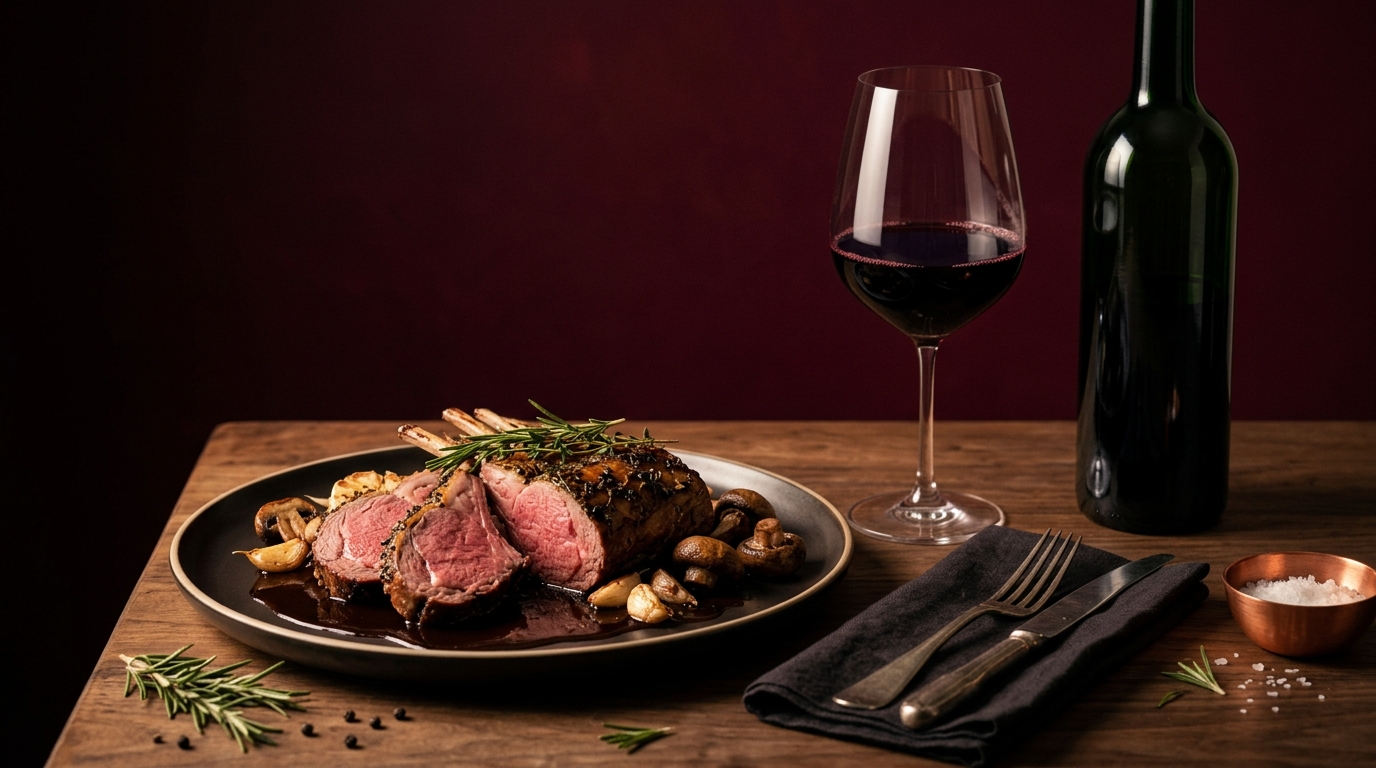
Lamb is the classic match, and our full guide to wine with lamb covers why the pairing is so reliable. Beyond that, reach for braised short ribs, duck, grilled sausages, pepper-crusted steak, or a slow-cooked cassoulet. A ripe Spanish Monastrell handles barbecue and burgers happily.
Vegetarian cooking works well here too, as long as it brings some savory depth. Grilled portobellos, mushroom risotto, lentil stew and roasted eggplant with tomato all give the wine something to answer.
Skip delicate white fish, sharp vinaigrettes and very spicy chili dishes. High tannin and high alcohol both amplify heat, so a fiery curry will make the wine taste harsh and the food taste hotter.
Serving it without any ritual
Serve Mourvèdre slightly cooler than a warm room, around 65 degrees Fahrenheit. Fifteen minutes in the refrigerator is usually enough for a bottle that's been sitting out. Warm red wine pushes the alcohol forward and blurs exactly the savory detail you bought the bottle for.
Young bottles reward a decant, though you don't need special equipment. Pour a small taste, then leave the bottle open for twenty to thirty minutes if the aromas seem closed. Older bottles need a gentler pour, since sediment is common. A standard red wine glass is all the glassware this needs.
Frequently asked questions
Is Mourvèdre the same as Monastrell?
Yes, they're the same grape under different names. Spain calls it Monastrell, France calls it Mourvèdre, and Australia and some Californian producers call it Mataro. The style differs by region and producer, but the grape is identical.
Is Mourvèdre wine sweet?
Mourvèdre is almost always a dry wine. Ripe black fruit and high alcohol can read as sweetness on the first sip, though there's very little residual sugar in the finished wine. If you want something genuinely softer, a GSM blend or a warm Spanish Monastrell will feel more generous than a young Bandol.
Should I decant Mourvèdre?
A young bottle usually improves with twenty to thirty minutes of air, which softens the reductive notes the grape shows in its youth. You don't need a decanter, since an open bottle does much the same job. Taste it first and decide from there.
How is Mourvèdre different from Syrah?
Syrah leans toward black pepper, dark berry, smoke and violet, with a smoother overall impression. Mourvèdre shares some of that and adds more leather, dried herb and roast-meat character, along with firmer tannin. Choose Syrah for peppery fruit and Mourvèdre for savory depth.
Does Mourvèdre make rosé?
It does, and Bandol rosé is one of the most respected pink wines in France. The same 50 percent minimum applies, so these are structured, savory rosés rather than light summer sippers. The grape is also used for port-style fortified wines.
A savory red worth hunting down
Mourvèdre rewards anyone who wants a red with shadows in it. Dark fruit, dried herbs, a firm finish and a savory core that makes dinner better rather than competing with it.
The trick is knowing what to look for. Scan the shelf for Monastrell from Jumilla or Yecla if you want the friendly, affordable version. Look for GSM if you want an easier introduction. Reach for Bandol when you're ready for the serious one. Once you know the grape answers to five different names, you'll start seeing it everywhere.
