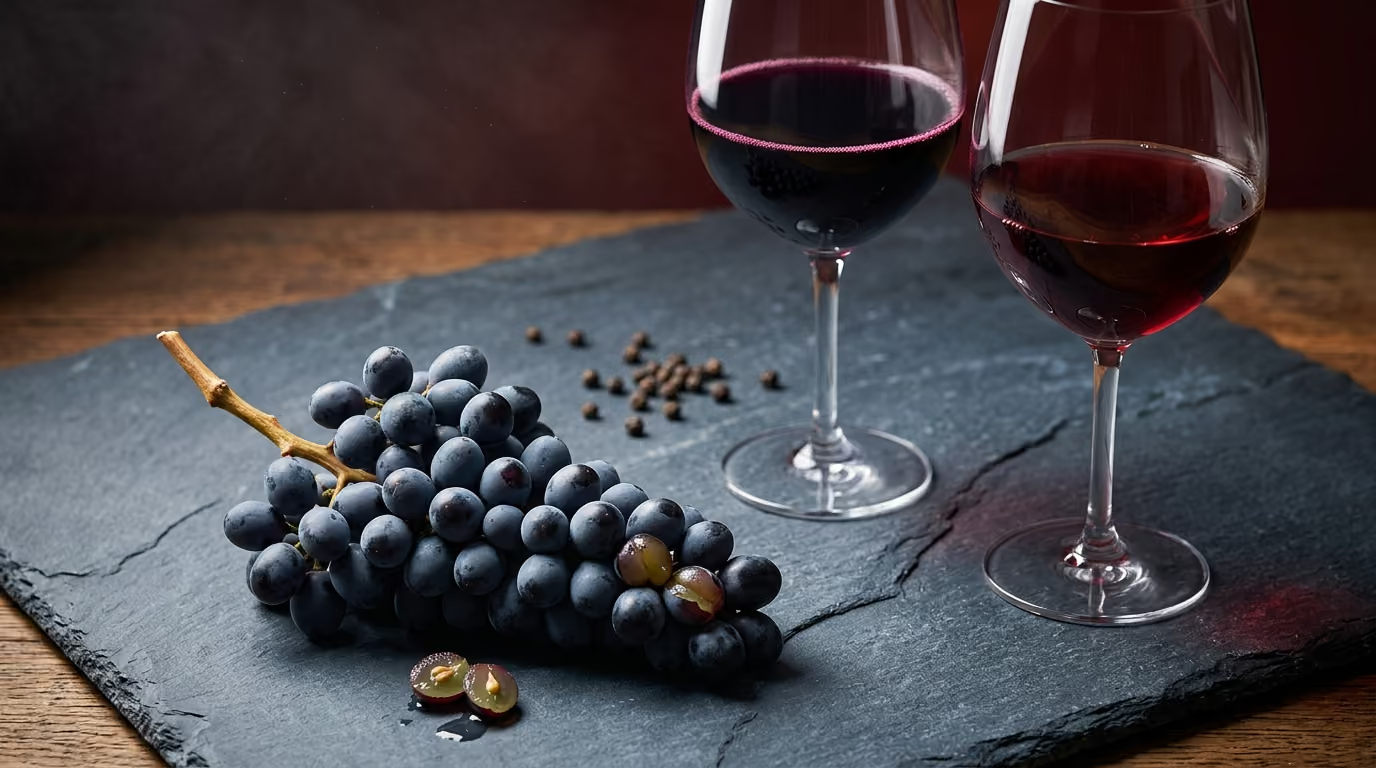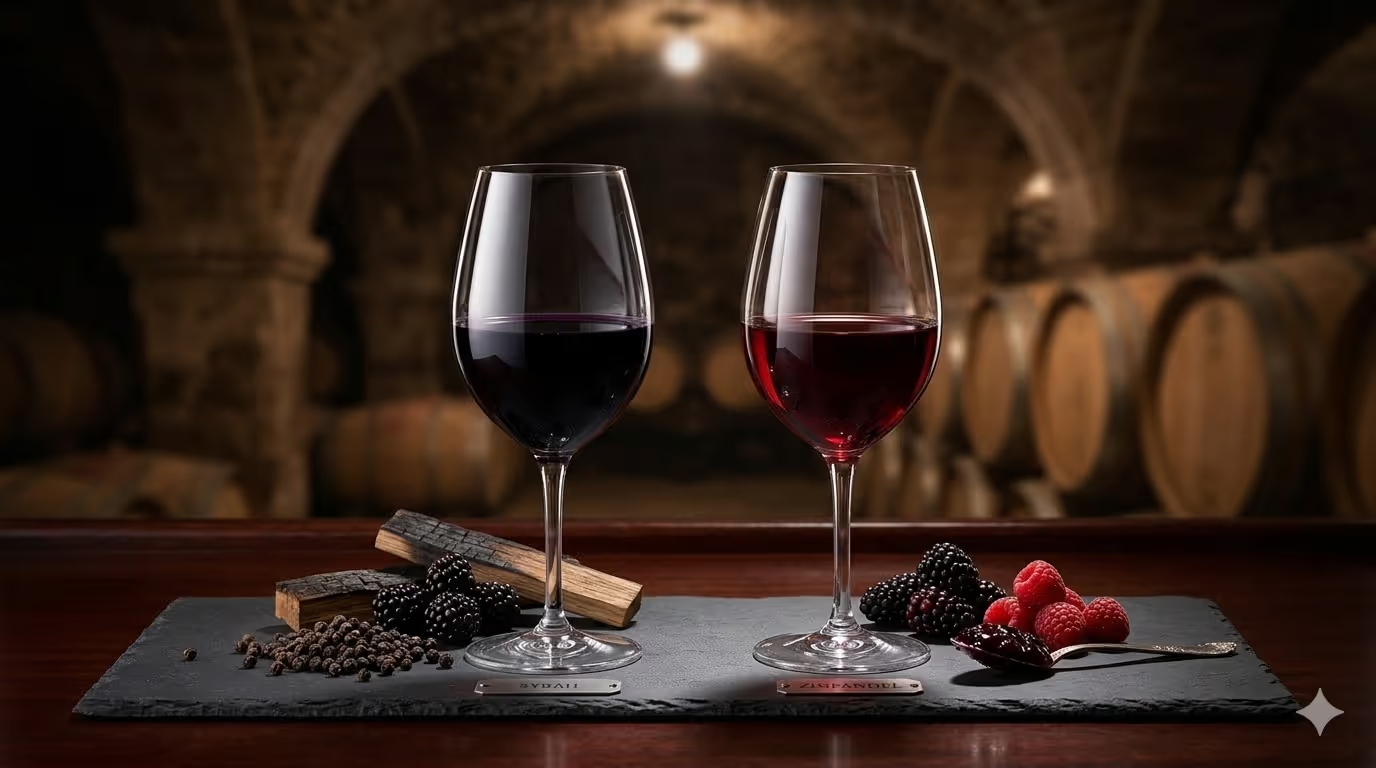
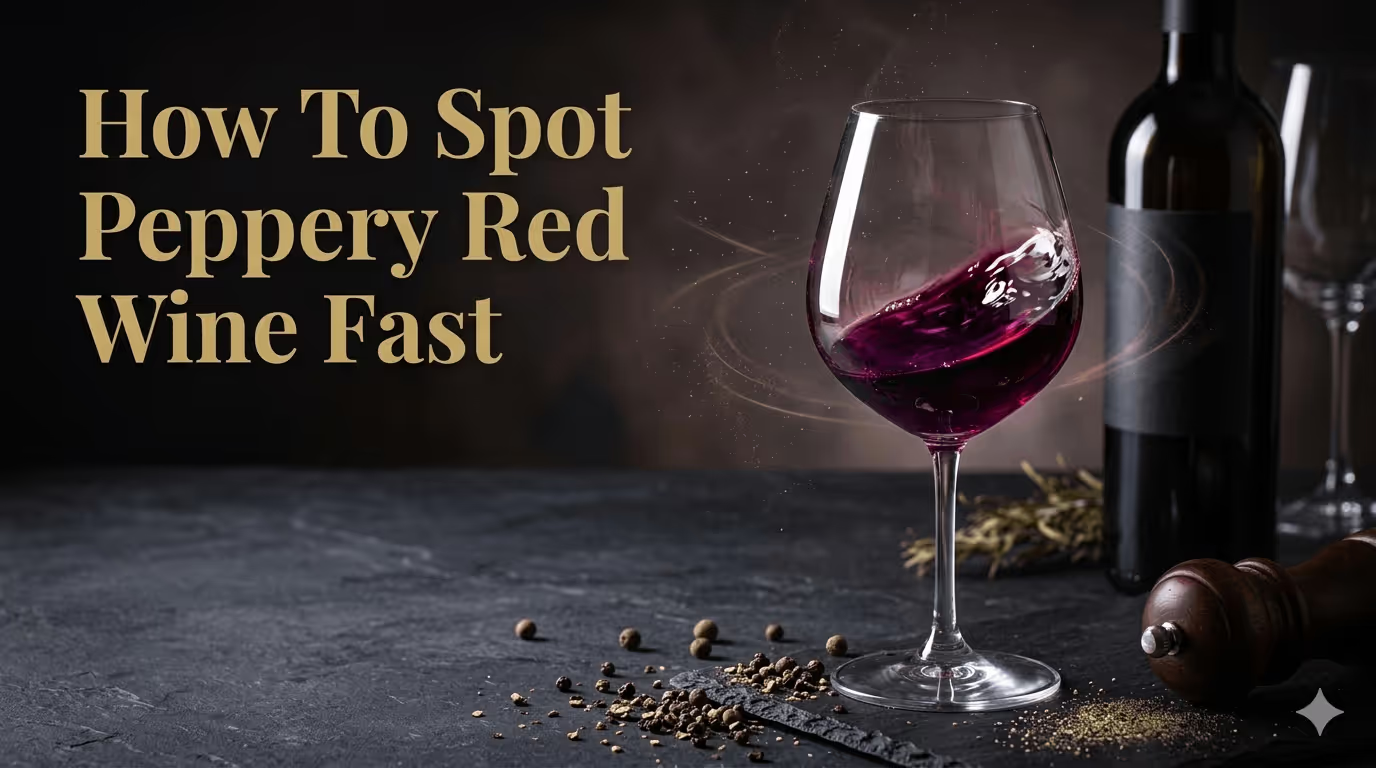

The peppery smell in red wine comes from a single compound called rotundone, and the grape that carries it most reliably is Syrah, sold as Shiraz in Australia. Cool-climate Syrah from the Northern Rhone, from Victoria's Grampians, and from cooler pockets of California and Washington gives the clearest black-pepper character, while the same grape grown somewhere hot tends to swap pepper for ripe blackberry. Grenache, Mourvedre, Blaufrankisch, Zweigelt and Austria's white Gruner Veltliner all show the same note in smaller amounts, so Syrah is the shortcut rather than the whole answer.
If you've ever smelled cracked pepper in a glass and wondered whether you were imagining it, you weren't. That aroma has been traced to one molecule, measured in parts per trillion, and mapped vineyard by vineyard.
What kind of red wine is peppery?
Syrah is the peppery red wine, and every other candidate is a variation on that answer. Australian researchers identified the reason in 2007, when a team at the Australian Wine Research Institute pinned the black-pepper aroma in Shiraz on rotundone, a compound that sits in the grape skins. Wine Australia's account of that work notes that scientists have been chasing its behaviour ever since, because each answer has produced another question.

What makes rotundone unusual is how little of it you need. Published research on Australian Shiraz puts the average human detection threshold at 18 nanograms per liter in red wine, which is a few grams spread across an Olympic swimming pool. Wines from cool growing seasons in that same study reached 116 nanograms per liter, roughly six times the threshold, which is why a peppery Syrah can smell like someone has just turned a pepper mill over the glass.
Beyond Syrah, the grapes that show genuine pepper rather than general spice are Grenache and Mourvedre from the southern Rhone, Blaufrankisch and Zweigelt from Austria and Hungary, and cooler-grown Cabernet Franc. Gruner Veltliner is the odd one out, a white wine whose signature white-pepper note comes from the same compound. Our guide to what Grenache tastes like covers the softer, red-fruited end of that group.
What is a peppery Shiraz, and why is climate the deciding factor?
A peppery Shiraz is one grown somewhere cool enough for rotundone to build up in the skins before harvest. The same clone of the same grape planted in a warm region will give you a rich, dark, jammy wine with very little pepper at all, which is the single most useful thing to know when you're choosing a bottle.
The Australian Wine Research Institute's project on the subject found that the Grampians and Pyrenees regions of Victoria produce Shiraz with substantially higher rotundone than warmer regions like Barossa and McLaren Vale. The same research concluded that the difference comes from site and environment rather than the genetics of the planted vines, and that a very late harvest date matters most of all, because the precursor compound that becomes rotundone only starts forming in quantity well after the grapes change colour. Growers in warm regions rarely get to harvest that late, since the fruit is ripe and ready long before.
Translated to the shelf, that means the words on the label that predict pepper are regional rather than varietal. Northern Rhone appellations, especially Crozes-Hermitage, Saint-Joseph and Cornas, are the European benchmark. In Australia look for Grampians, Pyrenees, Heathcote, Canberra District and the Adelaide Hills rather than Barossa. In the United States, cooler parts of Sonoma Coast, Santa Barbara County and Washington's Columbia Gorge give the same effect. Our comparison of Syrah against Shiraz works through the naming convention, which is really a style signal in disguise.
Is Cabernet Sauvignon peppery?
Cabernet Sauvignon isn't peppery in the rotundone sense, though it often gets described that way. What people usually pick up in Cabernet is green bell pepper, and that comes from a completely different family of compounds called pyrazines, which build up when the grapes don't fully ripen. Bell pepper and black pepper are different aromas produced by different chemistry, and confusing them leads you to the wrong bottle.
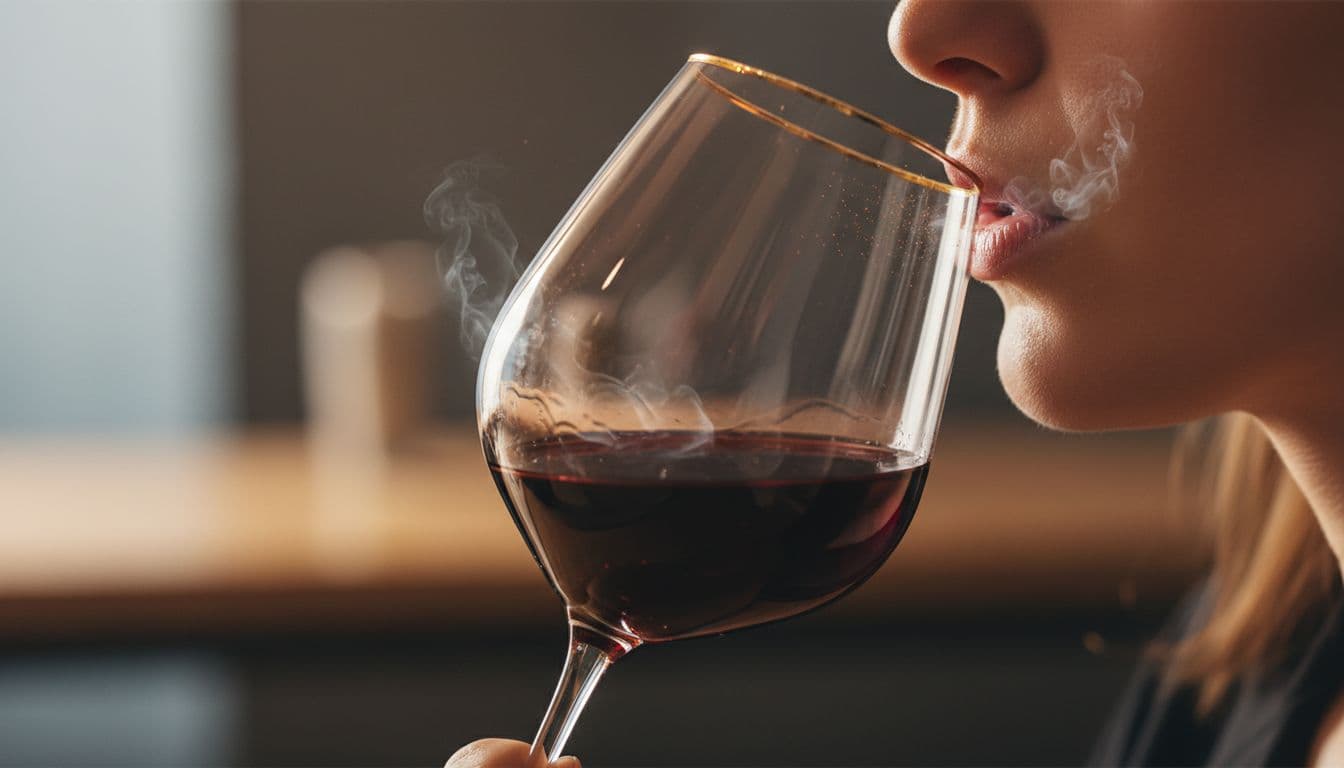
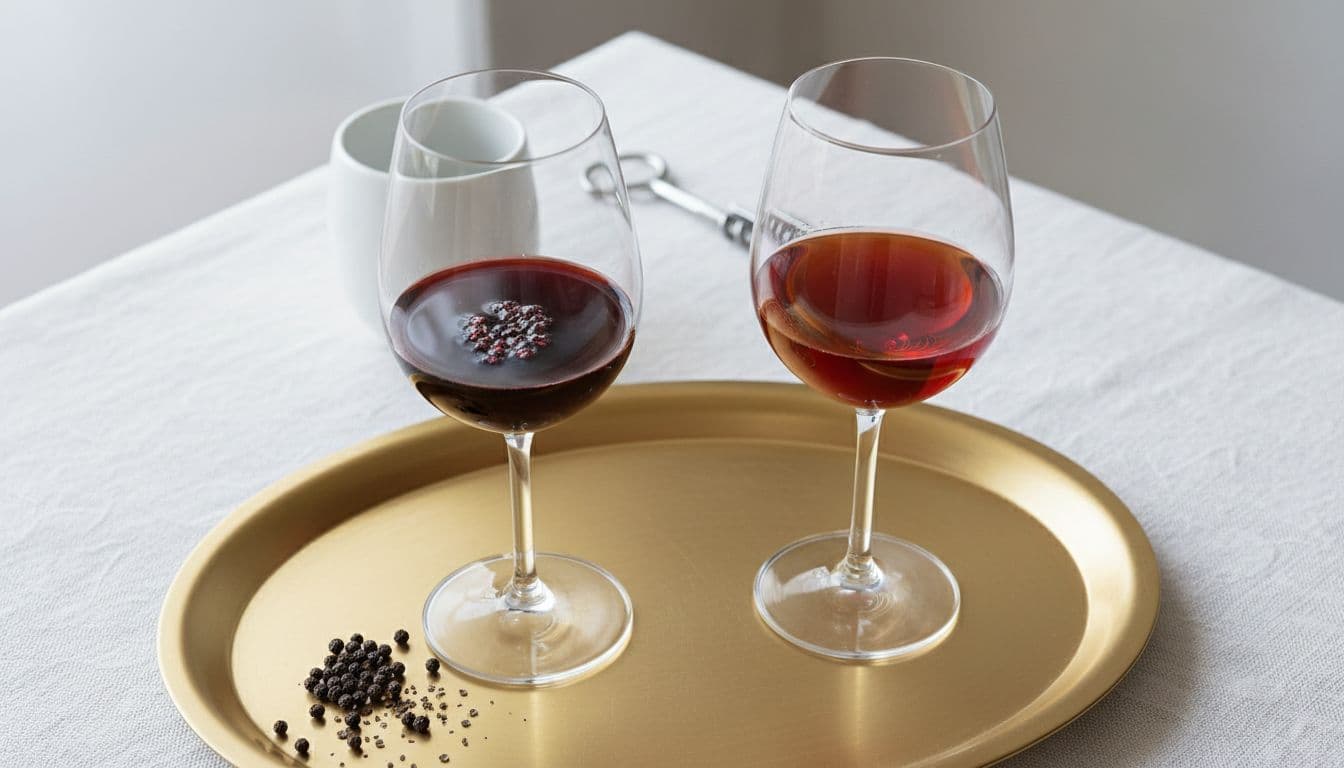
The practical difference is easy to feel once you know to look for it. Pyrazine greenness smells vegetal and slightly stalky, like a capsicum cut open, and it usually arrives alongside firm tannin. Rotundone pepper smells dry and aromatic, closer to a spice grinder than a vegetable, and it tends to sit on the finish rather than the front of the nose. Cabernet Franc sits between the two camps and can show both at once.
A third source of confusion is alcohol. A wine at 15 percent can feel warm and prickly in the throat, and plenty of drinkers file that sensation under spice. Warmth is something you feel rather than smell, so the test is simple: if you get it with your nose out of the glass, it's alcohol rather than pepper.
How do you confirm pepper in a glass in under a minute?
Swirl once, take one short sniff, and ask whether the first impression is closer to steak seasoning or to jam. That single question sorts most reds correctly, because the peppery ones lead with something savoury and dry while the fruit-forward ones lead with sweetness even when the wine itself contains no sugar.
| Clue | Peppery red | Fruit-forward red |
|---|---|---|
| First smell | Cracked pepper, cured meat, olive, smoke | Blackberry jam, plum, vanilla |
| First sip | Savoury and dry, firm through the middle | Plush and rounded, soft edges |
| Finish | Dry, aromatic, a peppery grip that lingers | Ripe and smooth, fades gently |
| Likely origin | Cool site, late harvest, Northern Rhone or Victoria | Warm site, Barossa, Central Valley, Spain's south |
| Serve it with | Lamb, peppered steak, sausage, mushrooms | Burgers, barbecue with sweet sauce, pizza |
Temperature changes the reading more than most people expect. Serve a peppery Syrah too warm and the alcohol dominates the aroma, burying the pepper underneath it, while a slight chill of fifteen minutes in the fridge brings the savoury notes forward. Our guide to serving temperatures by wine type gives the ranges, and they matter here more than they do for softer reds.
One honest caveat about the whole exercise: sensitivity to rotundone varies a lot between people, and a wine that smells emphatically peppery to one person at the table can read as plain dark fruit to another. Neither of you is wrong, which is worth remembering before you argue about it over dinner.
What are spicy wines, and how do they differ from peppery ones?
Spicy is a much broader word than peppery, and most wines described as spicy owe the impression to oak rather than to the grape. Barrel ageing contributes vanilla, clove, cinnamon and baking-spice character, so a heavily oaked Cabernet or Rioja can taste spicy without containing any rotundone at all. That kind of spice sits sweet and warm on the palate.
Grape-derived spice is the other category, and it splits again. Rotundone gives black and white pepper in Syrah, Gruner Veltliner and Blaufrankisch. Gewurztraminer gives a sweeter, more perfumed spice closer to ginger and rose. Zinfandel often shows a brambly, sweet-spiced edge that comes from very ripe fruit rather than from pepper, which is exactly the distinction our Syrah and Zinfandel comparison works through.
Knowing which kind of spice you actually want makes the request at a wine shop far more useful. Asking for a peppery red gets you a Northern Rhone Syrah, while asking for a spicy red might get you a vanilla-heavy Cabernet that misses your point entirely. Say pepper if you mean pepper.
Which specific wines should you look for?
Start with the Northern Rhone crus, because they are the only place in the world where the label legally guarantees you the right grape. Cornas is the purest expression, and Inter Rhone confirms that Syrah is the appellation's only authorised variety, on clay and granite soils recognised as an AOC in 1938. It is also tiny, covering 162 hectares in 2025 and producing 3,871 hectolitres, so the bottles are neither cheap nor easy to find. The appellation's own tasting description ends on leather, musk and pepper, which tells you the character is understood as a regional signature rather than a lucky vintage.
Crozes-Hermitage is the practical choice for most people. It is the largest of the northern appellations at 2,139 hectares across eleven communes in the Drome, producing 69,056 hectolitres in 2025, which is close to eighteen times the volume of Cornas. That scale is exactly why it turns up in ordinary wine shops at ordinary prices while Cornas does not, and the reds are made from Syrah in a lighter, more approachable register. Saint-Joseph sits between the two in both size and intensity.
In Australia the equivalent move is to read the region rather than the producer. Grampians and Pyrenees are the two names the research singles out, with Heathcote, Canberra District and Adelaide Hills close behind, and any of them will tell you more about the style in the bottle than the word Shiraz on the front. Austria offers a different route through Blaufrankisch from Mittelburgenland and Zweigelt from Niederosterreich, both of which give a lighter-bodied peppery red at prices that tend to undercut the French versions. Our roundup of Syrah worth seeking out goes deeper into individual styles.
What food goes with a peppery red wine?
Peppery reds want savoury, herb-driven, slightly fatty food, and they're at their best with lamb. The pepper in the wine and the pepper on the meat reinforce each other rather than competing, which is why a Northern Rhone Syrah with a rosemary-crusted rack of lamb is one of the most reliable pairings in wine. Peppered steak, merguez sausage, and duck with a savoury sauce all work on the same principle.
Mushrooms are the vegetarian equivalent, since their earthiness matches the wine's savoury side rather than fighting it, and roasted eggplant, lentils and anything cooked with thyme or rosemary sit comfortably alongside. What doesn't work is sweetness: a sticky barbecue glaze or a sweet chili sauce makes a peppery red taste hollow and metallic, because there's no residual sugar in the wine to meet it halfway. Our broader guide to what to eat with red wine covers the styles that do handle sweet sauces, and our look at bold reds explains why body and pepper are separate qualities that often get bundled together.
Standing in a shop trying to work out whether a particular Syrah is the peppery kind or the jammy kind is the exact moment Sommy's Fit Check earns its place, since scanning the bottle tells you which style you're holding before you've committed to it.
Frequently asked questions about peppery red wine
What is the most peppery red wine?
Cool-climate Syrah is the most peppery red wine, and within that group the Northern Rhone appellation of Cornas and the Australian regions of Grampians and Pyrenees are the most consistently peppery sources. Australian research measured substantially higher rotundone in those Victorian regions than in warmer Australian areas, so the regional name on the label does more work than the grape name alone.
Does peppery mean the wine is spicy hot?
No, because pepper in wine is an aroma rather than a heat sensation. Rotundone smells like black peppercorns but produces none of the burn that eating pepper does, and any warmth you feel in your throat is alcohol rather than spice. A peppery wine can be perfectly gentle to drink.
Is Malbec a peppery wine?
Malbec is generally not peppery, and it leans toward plum, blackberry and violet with a soft, plush texture. Some cooler high-altitude Argentinian Malbec picks up a savoury edge, but if pepper is what you're after, Syrah remains the more direct route.
Why can't I smell the pepper everyone else does?
Sensitivity to rotundone varies considerably from person to person, so some drinkers register it strongly at low concentrations while others need much more of it before they notice anything. This is a normal difference in how people perceive aroma rather than a gap in your palate training, and it's one of the reasons tasting notes are a poor substitute for finding out what you personally enjoy.
Does a peppery red wine get more peppery with age?
Rotundone is reasonably stable, but the fruit around it fades as a wine ages, so the pepper often becomes more obvious in an older bottle even though the amount hasn't changed. Aged Northern Rhone Syrah is frequently described as more savoury and more peppery than it was on release, and that shift in the balance is why.
Choosing your next bottle
Pepper in red wine is one of the few tasting notes with a clean scientific explanation and a reliable shopping rule attached to it. Look for Syrah, then look for a cool region and a producer who harvests late, and skip anything that markets itself on ripeness and jam. The nose confirms it in about ten seconds once you know what you're checking for.
If you'd rather have an opinion on a specific bottle than a rule to apply, that's what Sommy is built to give you, without the wine list turning into a test.