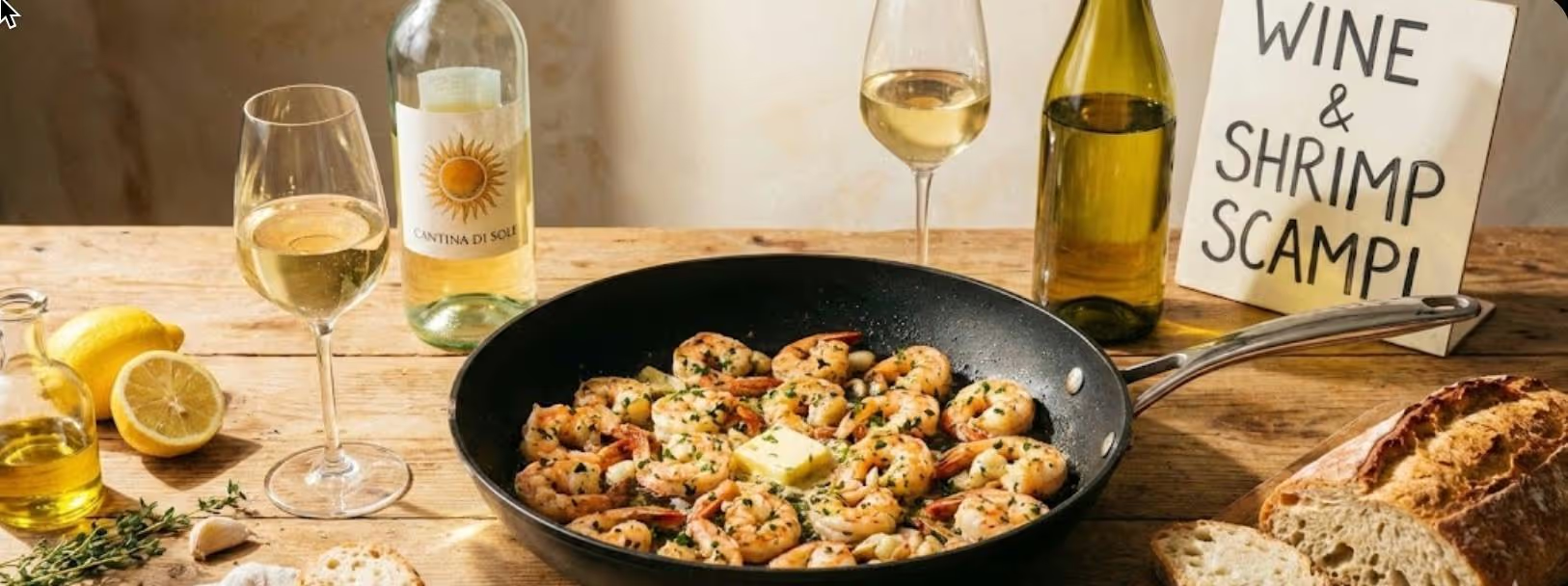

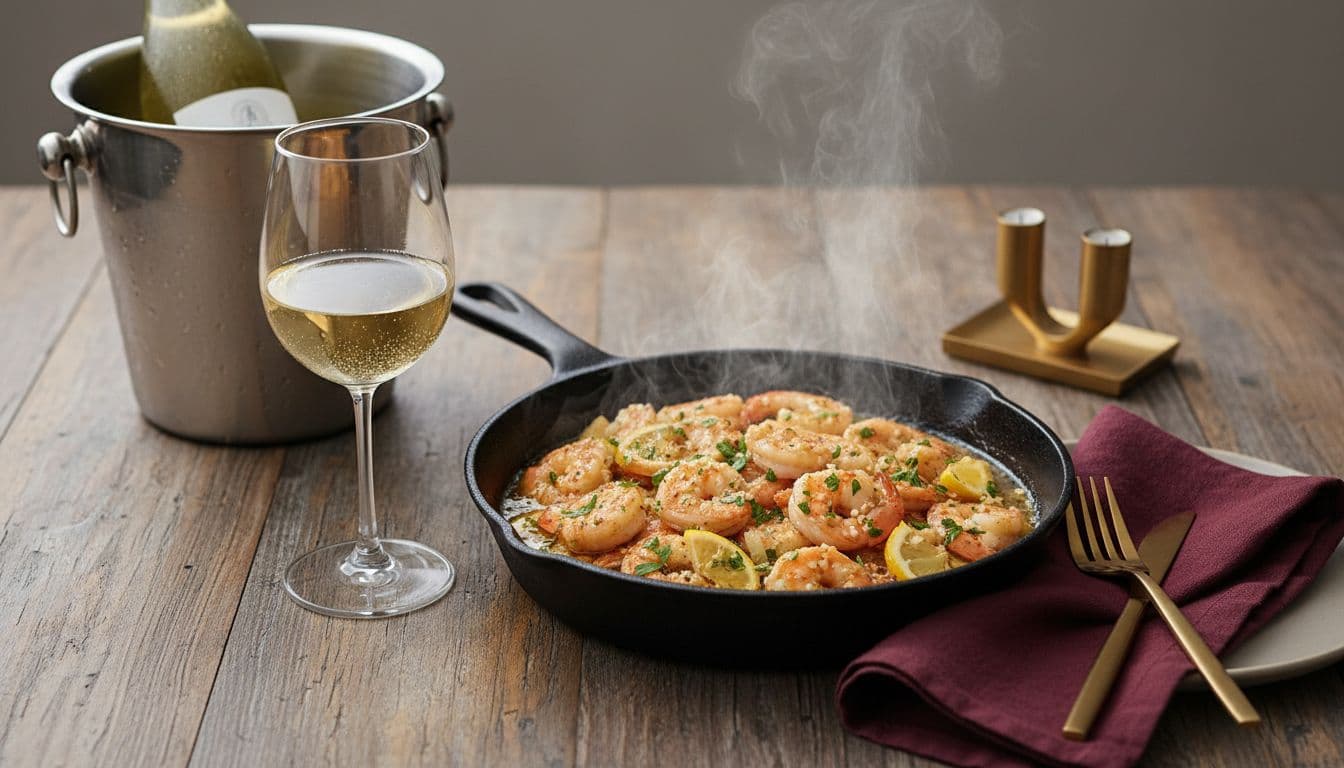
The best white wine for shrimp scampi is a dry, unoaked white with bright acidity: Albariño, Vermentino, Sauvignon Blanc, Pinot Grigio, dry Riesling, or Grüner Veltliner. Skip anything heavy, sweet, or oaky. You want a wine that cuts through butter, stays fresh next to garlic, and echoes the lemon without tasting sour.
If that sounds like a lot, it isn't. Think "refreshing, not rich." Here's how to choose one in the aisle or off a menu, even when you're tired and hungry.
What makes a white wine work with shrimp scampi?
Shrimp scampi is a spotlight on three flavors: garlic, butter, and lemon. Butter brings richness, garlic brings punch, lemon brings lift. Your wine's job is to keep the whole thing feeling bright, like opening a window in a warm kitchen.
Three cues get you there without learning wine theory.
Aim for high acidity and a clean finish. Acidity is what makes a sip feel mouth-watering rather than flat. It balances the richness of the butter and resets your palate so the next bite tastes as good as the first.
Keep the oak low, because new oak adds vanilla and toast that reads like burnt popcorn next to all that lemon. It isn't always awful, but it's rarely the easiest win.
Stay dry, though a little fruit is fine. Actual sweetness fights the garlic and turns the lemon sharp.
You're not hunting for poetry in the glass. You're checking for lemon peel, green apple, salty sea air, or a clean mineral snap. That's enough to make a good call.
Which white wines pair best with garlic, butter, and lemon?
You don't need a perfect bottle. You need one that won't get bullied by the sauce. These are the most reliable styles for scampi night, with plain notes on what to expect in the glass.
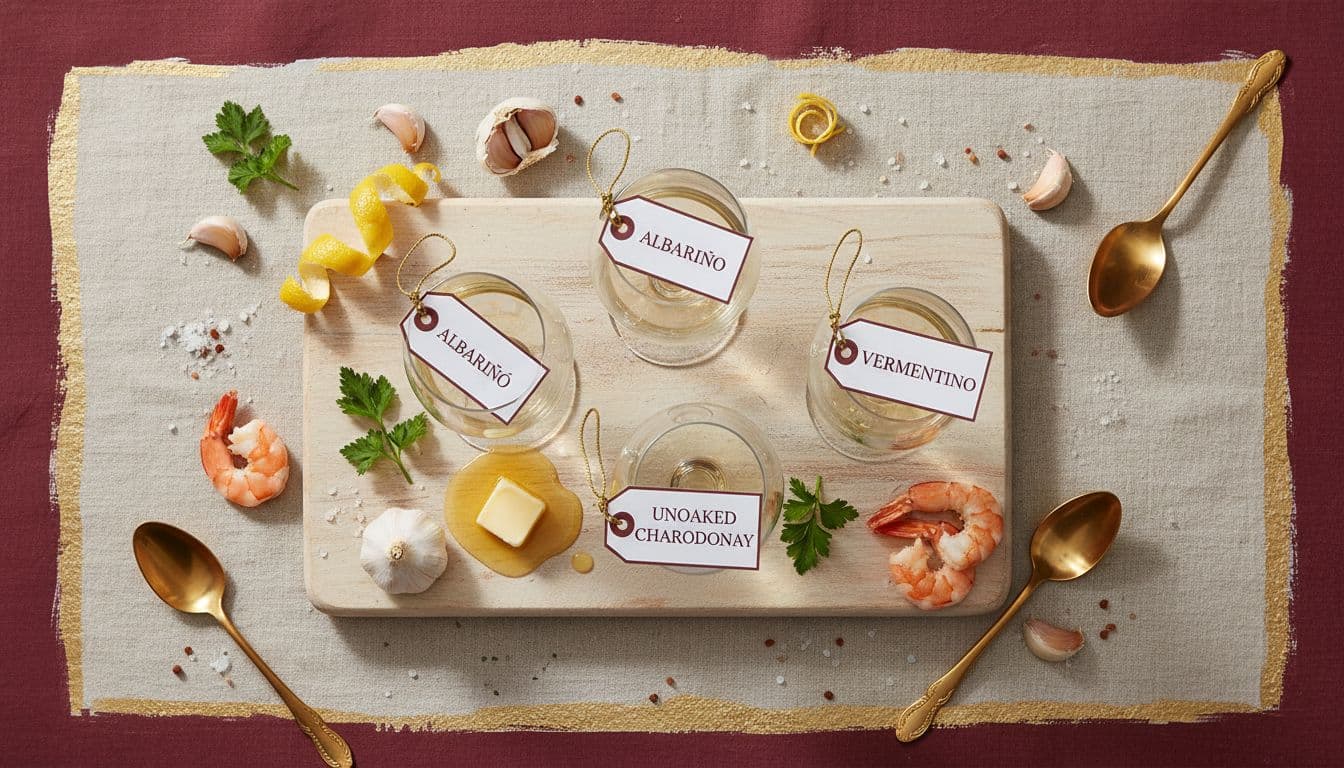
The easiest "yes" wines
Albariño and Sancerre are like a squeeze of citrus over seafood. They taste bright, slightly salty, and clean. They don't need fancy context to work, they just do.
Sauvignon Blanc is another safe bet when you want zip. Look for one that reads more "citrus" than "sweet tropical." Sancerre is the premium end of the Sauvignon Blanc family. If your scampi has extra lemon, Sauvignon Blanc's brightness lines right up with it.
Pinot Grigio is the calm friend at the table. It stays light, doesn't crowd the shrimp, and plays well with garlic.
If you want a little more weight, an unoaked Chardonnay brings stone fruit and gentle body that sits well with the butter. Dry Riesling does the same job with more zing, and both handle herbs, chili flakes, and a little parmesan better than the lighter whites.
Here's the cheat sheet for choosing between them at a glance:
| Wine style | Why it works with scampi | What it tastes like (plain) |
|---|---|---|
| Albariño | Bright and seafood-friendly | Lemon, peach, salty finish |
| Vermentino | Cuts butter, stays fresh | Citrus, herbs, clean snap |
| Sauvignon Blanc | Matches lemon, lifts garlic | Lime, grapefruit, crisp |
| Pinot Grigio | Light, neutral, steady | Pear, lemon, clean |
| Dry Riesling | Handles spice, keeps zing | Citrus, apple, bright |
| Grüner Veltliner | Loves herbs, stays dry | Lime, white pepper, fresh |
These are starting points, not rules carved in stone. If you like softer whites, take the gentler option (Pinot Grigio or unoaked Chardonnay), and if you can't decide between those two, here is how Chardonnay and Pinot Grigio differ. If you like sharper, take the zippier one (Sauvignon Blanc or dry Riesling).
How do you pick a scampi wine at a restaurant or a store?
When you're staring at a wine list or a wall of bottles, anxiety creeps in fast, so don't overthink it.
At a restaurant, one line does the work: ask for a crisp, dry white with no oak. If the server offers two options, take the one described as "bright," "citrus," "fresh," or "mineral." Skip "buttery," "toasty," or "creamy" unless you want a richer pairing on purpose. A dry sparkling wine is a good festive swap. And if the sauce is especially buttery, a very light red served cold can work, though it's the riskier call.
At the store, filter hard on three things:
- Look for "dry" on Riesling labels.
- Avoid "oak aged" if you want the safest match.
- Grab a screw cap if you're prioritizing convenience, not quality. The closure says nothing about what's inside.
Cooking it tonight? This garlic shrimp scampi recipe shows the classic butter, garlic, and lemon profile these wines are built around. Serve it over angel hair so the bright flavors carry.
This is also the moment Sommy's Pairing feature is built for. Photograph the recipe or the finished plate and it recommends wine for that specific dish, weighted to your Taste Profile rather than to a generic list. Standing in front of the shelf instead, Label Scan reads the bottle in your hand and tells you whether it fits.
Frequently asked questions about shrimp scampi wine
Which white wine goes best with shrimp?
A dry, unoaked white with high acidity. Albariño, Vermentino, Sauvignon Blanc, and Pinot Grigio all work across most shrimp dishes. The richer the sauce, the more acidity you want.
What type of white wine is best for cooking seafood?
Use a dry white you'd actually drink. As wine reduces in the pan its flavors concentrate, so anything sweet becomes syrupy and anything oaky turns bitter. Pinot Grigio and Sauvignon Blanc are the usual kitchen workhorses. Skip bottles labeled "cooking wine," which are salted and taste like it.
Can Pinot Grigio be used for shrimp scampi?
Yes, and it's one of the most reliable choices. It's light, dry, and neutral enough to stay out of the shrimp's way while its acidity cuts the butter. It works both in the pan and in the glass, which makes it an easy one-bottle night.
What kind of wine pairs well with shrimp scampi?
Crisp, dry whites with no oak are the reliable answer here. Albariño and Vermentino are the most seafood-native picks, Sauvignon Blanc matches the lemon most directly, and Pinot Grigio is the safest default. Dry Riesling and Grüner Veltliner are worth trying if the dish has chili flakes or a lot of herbs.
Should shrimp scampi wine be the same wine you cook with?
It's the simplest approach and it rarely goes wrong. Cooking with the bottle you're drinking keeps the sauce and the glass speaking the same language, and it means one bottle covers dinner.
The short version
Shrimp scampi doesn't need an expensive bottle, it needs the right feel. Keep the wine crisp, dry, and bright, and the garlic, butter, and lemon all taste clearer. If you want help choosing in the moment, Sommy learns what you actually like and recommends from there, so you're not guessing at the shelf or the table.